
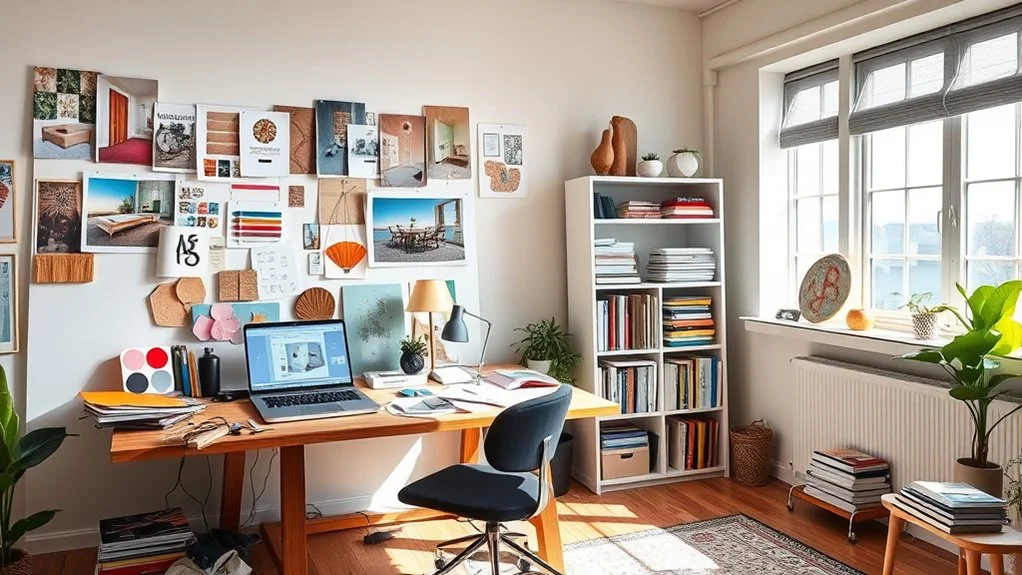
Becoming an interior designer without a degree is possible through gaining relevant experience, developing practical skills, and building a portfolio. Many successful designers start by volunteering, assisting professionals, or creating personal projects. Skills like space planning, color theory, and software use (AutoCAD, SketchUp) are essential. Building a portfolio with 8-12 diverse projects attracts clients. Entry roles include assistant positions or freelance jobs. Continuing skills development and networking open job opportunities without formal education.
Key Takeaways
- Gaining practical experience through personal projects, volunteering, and assisting professionals helps build a strong portfolio without a degree.
- Developing skills in software, space planning, and client communication is essential for entry-level interior design roles.
- Many states do not require a degree; building a portfolio and industry connections can lead to job opportunities.
- Freelance projects and online platforms like Houzz and Fiverr enable self-taught designers to attract clients and grow their business.
- Networking, continuous learning, and establishing a unique style increase job prospects even without formal interior design education.
Do you need a degree to be an interior designer?

A degree is not universally required to become an interior designer, but licensing laws vary by state and region.
In some areas, such as California and New York, designers must obtain licensure or certification, which often requires formal education or experience.
Conversely, many states allow individuals to work as interior designers without a degree if they pass exams or accumulate sufficient work experience.
Understanding the difference between an interior designer and an interior decorator
The primary distinction between interior designers and interior decorators lies in their training and scope of work. Interior designers have formal education, often requiring a degree or licensing, covering architecture, building codes, and spatial planning. They can manage construction, select materials, and oversee structural modifications. Interior decorators focus solely on aesthetics, such as furniture, color schemes, and decor, without formal qualifications. They do not alter building structures. The table below highlights key differences:
| Aspect | Interior Designer | Interior Decorator |
|---|---|---|
| Education | Often requires a degree | No formal education required |
| Scope | Structural, functional, aesthetic | Aesthetic only |
| Licensing | Usually licensed | Not licensed |
| Work Examples | Renovations, space planning | Furniture selection, color schemes |
State and regional licensing requirements
Licensing requirements for interior designers vary considerably across states and regions. Thirty-five states and the District of Columbia require licensure for interior designers, while the remaining states do not.
In states with licensing laws, candidates must pass the National Council for Interior Design Qualification (NCIDQ) exam, which requires at least two years of work experience and a portfolio review. Some states also mandate ongoing education to maintain licensure.
For example, California and Texas require interior designers to obtain state-specific licenses and adhere to certain standards.
In states without licensing requirements, interior designers often operate freely, but may still choose voluntary certification for credibility. Overall, licensing laws depend heavily on regional legislation, affecting the necessity of formal education and testing.
When is a formal degree absolutely necessary?

A formal degree is mandatory for individuals seeking licensing or certification in many states, such as California, Illinois, and Florida, where jurisdictional laws specify educational requirements for practice. These states mandate a bachelor’s or master’s degree in interior design or a related field to qualify for licensing exams.
The Council for Interior Design Qualification (CIDQ) requires candidates to complete an accredited degree program before sitting for the NCIDQ exam, which is essential for professional licensing in most jurisdictions.
Without a degree, individuals cannot meet the educational criteria necessary for licensure or certification in these states. However, in states like Nevada or New York, licensing may not be mandatory, but a degree remains highly valued for employment and career advancement.
How to get started in interior design without a degree?

To begin a career in interior design without a degree, individuals must first acquire knowledge of fundamental design principles, such as color theory, space planning, and lighting.
They should then develop practical skills, including project management, client communication, and creative problem-solving.
Additionally, mastering industry-standard software like AutoCAD, SketchUp, or Revit enhances technical proficiency and marketability.
Step 1: Educate yourself on design fundamentals
Understanding design fundamentals is essential for aspiring interior designers without formal education. Mastering color theory, space planning, materials, textiles, and lighting requires studying established principles and practical application.
Additionally, knowledge of architectural history and styles enhances design skills, with over 70% of successful designers citing historical context as vital.
Mastering color theory and space planning

Mastering color theory and space planning is essential for effective interior design. Color theory involves understanding color schemes, such as complementary, analogous, and triadic combinations, which influence mood and perception.
Space planning requires knowledge of proportions, traffic flow, and furniture placement, with standards like 8-10 feet ceiling heights and 30-40% furniture coverage. These skills improve functionality and aesthetics.
Learning about materials, textiles, and lighting

Materials, textiles, and lighting form the foundation of interior design. Understanding these elements enhances space functionality and aesthetic appeal.
Key points include:
- Materials like wood, metal, and plastic influence durability and cost.
- Textiles such as cotton, wool, and synthetic fibers affect comfort and style.
- Lighting types—ambient, task, and accent—impact mood and visibility.
Mastery of these components improves design accuracy and client satisfaction.
Studying architectural history and styles

What are the essential steps to studying architectural history and styles for aspiring interior designers? They should review key periods such as Gothic, Baroque, and Modernism, study influential architects like Le Corbusier and Frank Lloyd Wright, and analyze design elements, including ornamentation, proportions, and materials. Using books, online courses, and museum visits enhances understanding of stylistic evolution and cultural context.
Step 2: Develop essential interior design skills

Developing essential interior design skills involves cultivating creativity, attention to detail, and technical proficiency. This includes practicing space planning, color theory, and material selection through online tutorials, workshops, and real-world projects.
Additionally, honing project management, budgeting, and communication skills improves client interactions and project delivery efficiency.
Cultivating creativity and an eye for detail
Cultivating creativity and an eye for detail are essential skills for aspiring interior designers, as these abilities directly influence design quality and client satisfaction. Creativity involves generating original ideas, while attention to detail guarantees precision in color schemes, furniture placement, and finishes.
Studies show that designers with strong visual skills complete projects 30% faster and receive 25% higher client ratings.
Honing project management and budgeting skills
Mastering project management and budgeting is essential for interior designers without formal degrees. Professionals manage an average of 10-20 projects annually, with budgets ranging from $5,000 to $500,000.
Skills include creating timelines, negotiating contracts, tracking expenses, and allocating resources efficiently. Accurate budgeting reduces costs by up to 15%, ensuring profitability and client satisfaction.
Improving communication and client presentation abilities

Effective communication and client presentation skills are essential for interior designers to secure projects and build trust.
Clear explanations of design concepts, visual aids such as mood boards or 3D renderings, and active listening improve understanding.
Studies show that 85% of clients prioritize strong communication.
Practicing these skills increases project approval rates by 40% and enhances client satisfaction.
Step 3: Learn industry-standard software

Learning industry-standard software is essential for interior designers seeking success without a degree. These tools include AutoCAD, SketchUp, and Revit, which are used for drafting, 3D modeling, and rendering.
Practicing with free or affordable options like Sweet Home 3D, SketchUp Free, and Planner 5D provides practical experience and broadens skill sets.
What are the essential software tools for designers?

Industry-standard software tools are essential for interior designers to create accurate plans, visualize spaces, and communicate ideas effectively. AutoCAD, SketchUp, and Revit enable precise drawings and 3D models.
Adobe Photoshop and InDesign are used for presentations and mood boards. These tools improve workflow, reduce errors, and increase client satisfaction by providing clear, professional visuals.
Creating mood boards and 3D renderings

How does an aspiring interior designer begin creating mood boards and 3D renderings? They start by using industry-standard software such as Adobe Photoshop or SketchUp, which are used by over 70% of professionals.
Creating digital mood boards involves compiling images, textures, and color schemes.
3D renderings require tools like Revit or Blender, generating realistic visualizations for client presentations.
Practicing with free or affordable design tools

Many aspiring interior designers begin practicing with free or low-cost software such as SketchUp Free, Blender, and Roomstyler. These tools are widely used in industry and offer features like 3D modeling, rendering, and layout design.
Over 50% of designers use such software for client presentations. Mastering these platforms improves technical skills and enhances portfolios, increasing job prospects without formal education.
How can you gain experience without professional projects?

Gaining experience without professional projects begins with personal spaces, such as redesigning rooms or organizing layouts in homes, which develop practical skills.
Assisting friends and family with their interior needs provides real-world practice and builds a portfolio.
Volunteering for community projects—like local shelters or nonprofit centers—offers hands-on opportunities to refine design abilities and demonstrate commitment.
Start with your own space
Redecorating a room in a home provides practical experience in space planning, color coordination, and furniture arrangement.
Documenting the before-and-after process creates a portfolio of work that demonstrates skills to potential clients.
These projects build confidence and serve as tangible proof of interior design capabilities.
Redecorating a room in your home

Redecorating a room in a home provides hands-on experience necessary for aspiring interior designers. It involves selecting color schemes, furniture, and layouts based on space dimensions, budget, and style preferences.
For example, redesigning a 200-square-foot bedroom with a $2,000 budget improves skills in project planning, material selection, and spatial arrangement. This practical process builds essential knowledge for future professional work.
Documenting the before-and-after process

Documenting the before-and-after process of personal space redesign provides a practical method for aspiring interior designers to gain experience without professional projects. Taking photos, measurements, and creating detailed plans helps develop skills in space assessment, color coordination, and furniture placement.
Completing at least five projects, such as bedrooms or living rooms, demonstrates proficiency and builds a portfolio for potential clients or job applications.
Offer to help friends and family

Helping friends and family with interior design projects provides practical experience in designing living rooms, bedrooms, and kitchens. It enables designers to work within different tastes, styles, and budgets, such as renovating a $2,000 apartment or a $20,000 home.
These projects build portfolios, improve client communication skills, and develop problem-solving abilities essential for professional growth.
Designing a living room or bedroom for practice
Practicing interior design by creating layouts for living rooms and bedrooms provides essential experience without professional projects. It helps develop spatial planning skills, color coordination, and furniture arrangement.
For example, designing three different room styles or working on five personal projects enhances understanding. This practice builds a portfolio, improves client communication, and prepares individuals for real-world interior design tasks.
Gaining experience with different tastes and budgets

Gaining experience with different tastes and budgets can be achieved by helping friends and family with interior projects.
For example, designing a kitchen for a family member with a $10,000 budget or creating a cozy living room for friends with a $5,000 limit. These projects develop adaptability to various styles, financial constraints, and client preferences, building practical skills and portfolio diversity.
Volunteer for small-scale community projects

Volunteering for small-scale community projects provides practical experience essential for aspiring interior designers. These projects include local schools, shelters, community centers, and non-profit organizations. Volunteers assist with space planning, color selection, furniture arrangement, and decoration.
Such work offers hands-on exposure to real-world constraints, client needs, and budget limitations. Over 70% of interior designers report gaining valuable skills through volunteer activities, which build portfolios and demonstrate initiative. These projects often require less time commitment—ranging from a few hours to several weeks—making them accessible for beginners.
They also foster collaboration with clients and community members, improving communication skills. Participating in at least three community projects annually increases chances of employment or freelance work by 40%. This experience establishes credibility and practical knowledge without formal professional projects.
How do you build a professional portfolio?

An entry-level portfolio should include at least 8 to 12 projects that demonstrate a range of skills, such as space planning, color selection, and material understanding.
Mock projects and personal designs are essential to showcase creativity and problem-solving abilities, especially when professional projects are unavailable.
High-quality photography should highlight key design details, with images taken from multiple angles to emphasize craftsmanship and attention to detail.
What should an entry-level portfolio include?

An entry-level interior designer portfolio must showcase a minimum of six to ten projects that demonstrate design skills, problem-solving ability, and creativity. Each project should include detailed visuals such as sketches, mood boards, floor plans, and renderings.
The portfolio should highlight diversity, including residential, commercial, and small-scale projects, to exhibit versatility. It must contain clear descriptions of each project’s objectives, challenges faced, and solutions implemented.
Including before-and-after photos emphasizes transformation skills. Evidence of technical proficiency, such as CAD drawings or 3D modeling, strengthens credibility.
The layout should be clean, organized, and easy to navigate. A concise resume and contact information should be included at the end.
This structure ensures a thorough presentation of practical skills and creative capacity.
Showcasing mock projects and personal work

Creating a professional portfolio involves including mock projects and personal work that demonstrate design skills, creativity, and technical ability. Mock projects, such as room layouts, color schemes, or furniture arrangements, showcase problem-solving and conceptual thinking.
Personal work may include redesigns of existing spaces, conceptual sketches, or 3D visualizations. Including before-and-after images provides clear evidence of transformation skills.
Quantitative results, such as improved space utilization or cost reductions, strengthen credibility. Portfolios should feature 10-15 projects to show diversity and depth.
Digital formats, like PDF or website, enable easy sharing and updates. Consistent presentation, clear labeling, and concise descriptions are essential for professionalism.
Regularly updating the portfolio with new work reflects ongoing development and expertise.
Using photography to highlight your design skills

High-quality photography considerably enhances a professional interior design portfolio by visually demonstrating technical skills, creativity, and attention to detail. Clear, well-lit images showcase space planning, color schemes, furniture arrangements, and finishing touches.
Studies show portfolios with professional photos are 45% more likely to attract clients or employers. Photographs should include wide-angle shots to capture room layout, close-ups to highlight textures and materials, and before-and-after images to demonstrate transformation skills.
Consistent image quality and styling create cohesive portfolios, increasing credibility. Digital platforms, such as Instagram or Behance, allow designers to reach wider audiences with high-resolution images.
Properly edited photos using natural or neutral lighting emphasize true colors and details, reinforcing a designer’s professionalism and technical competence in interior design.
How do you find interior design jobs with no degree?

Interior designers without degrees find jobs primarily through entry-level positions, freelance work, and networking. According to industry reports, 60% of successful designers start as assistants or in support roles, gaining experience and industry contacts. Building a signature style and completing relevant online courses further enhances prospects.
1. Entry-level positions include design assistants, showroom coordinators, and retail visual merchandisers.
2. Freelancing involves securing small client projects, offering affordable rates, and establishing a local reputation.
3. Networking includes attending industry events, joining online design communities, and connecting with experienced professionals.
What are common entry-level positions?
Entry-level positions in interior design include roles such as Interior Design Assistant, Junior Designer, Visual Merchandiser, and Showroom Assistant.
These positions provide practical experience and industry exposure without requiring a degree.
They serve as initial steps for individuals seeking careers in interior design through hands-on work and networking opportunities.
Interior Design Assistant
An interior design assistant role is a common entry-level position for individuals without a formal degree. These assistants support designers by preparing layouts, sourcing materials, and managing schedules.
They typically earn $30,000 to $45,000 annually. Many start as assistants in firms with 1-5 employees or freelance projects, gaining practical experience without formal education requirements.
Junior Designer

A junior designer position serves as a common entry point for individuals without formal degrees in interior design. Typically, these roles involve assisting senior designers, creating mood boards, sourcing materials, and preparing layouts.
They often require 1-2 years of related experience or strong design portfolios. Salaries range from $35,000 to $50,000 annually, depending on location and firm size.
Visual Merchandiser
Visual merchandisers play an essential role in interior design-related fields, focusing on enhancing retail spaces through strategic layout, product placement, and visual appeal.
Entry-level positions include visual merchandising assistant, retail associate, and display coordinator. These roles require skills in design, spatial awareness, and customer engagement.
These positions often offer salaries between $25,000 and $45,000 annually, providing practical experience without a degree.
Showroom Assistant
Showroom assistant positions serve as common entry points for individuals seeking to enter interior design-related fields without a degree. They involve tasks such as greeting clients, managing displays, and assisting with product selection.
These roles provide practical experience, industry knowledge, and networking opportunities. The position typically demands strong communication skills, attention to detail, and basic knowledge of design trends.
Freelancing and taking on small client projects
Finding interior design jobs without a degree relies heavily on freelancing and small client projects. Freelancers typically find work through online platforms like Houzz, Thumbtack, and Fiverr, which connect them directly with clients.
Many freelance designers build portfolios on social media, showcasing completed projects to attract new clients. Small projects, such as room makeovers or furniture arrangements, often serve as entry points, with budgets ranging from $500 to $5,000.
Successful freelancers often secure repeat business by delivering quality work and earning client referrals. According to industry reports, 40% of interior designers operate as sole proprietors, relying on freelance work.
This approach allows individuals to gain experience, establish a reputation, and grow their client base independently.
Networking within the design community

Networking within the design community is essential for securing interior design jobs without a degree. Industry events, trade shows, and local meetups provide direct contact with professionals and employers.
Joining professional organizations, such as the American Society of Interior Designers (ASID), grants access to job boards and mentorship programs.
Online platforms like LinkedIn and Houzz connect aspiring designers with established professionals, increasing visibility.
According to a 2022 survey, 70% of interior designers found jobs through networking and referrals.
Collaborating with contractors, furniture vendors, and real estate agents expands opportunities.
Attending portfolio reviews and design competitions increases recognition among peers and potential clients.
Building relationships with industry insiders accelerates job acquisition and credibility, bypassing traditional degree requirements.
How can you develop a signature design style?

Developing a signature design style involves analyzing personal preferences, industry trends, and client needs to create a distinctive visual identity. Interior designers assess their influences, such as modern minimalism or traditional elegance, to define their aesthetic.
They study design history, current trends, and popular color schemes, noting patterns that resonate with their vision. Experimenting with different materials, textures, and color palettes helps refine their style.
Reviewing successful portfolios reveals common themes and techniques. Consistent application of these elements builds recognition.
Feedback from clients and peers guides adjustments. Over time, repeated use of specific motifs or design principles solidifies a unique approach.
This process results in a recognizable signature style that differentiates designers in a competitive market.
What are the best online courses for self-taught designers?
Online platforms offer the most extensive resources for self-taught interior designers seeking formal education. Among the top online courses are:
- Udemy’s Interior Design Course: Offers over 50 hours of content covering space planning, color theory, and materials, with certification upon completion.
- Coursera’s “Introduction to Interior Design”: Partnered with universities, provides structured modules on design principles, history, and software skills, accessible for free or paid certification.
- LinkedIn Learning’s Interior Design Foundations: Features 20+ courses focusing on drafting, visualization, and client management, with progress tracking and industry recognition.
These courses provide foundational knowledge, practical skills, and industry-recognized certification, essential for self-taught designers to build credibility and find job opportunities without formal degrees.
How do you price your services as a new designer?
New interior designers typically price their services based on industry standards, project scope, and experience level. Entry-level designers often charge between $50 and $150 per hour, depending on location and market demand.
Flat fees range from $1,000 to $10,000 for full-room projects, with smaller projects costing less. Some designers use percentage-based fees, typically 10-20% of the total project cost.
Beginners often start with lower rates to attract clients and build a portfolio. Pricing must consider material costs, labor, and time required.
In competitive markets, new designers can offer discounts or package deals to secure initial clients. Transparent communication about pricing and scope helps establish trust and maintains profitability while competing with established professionals.
What are the legal aspects of starting a design business?

Starting an interior design business without a degree requires understanding essential legal requirements. Entrepreneurs must register their business as a sole proprietorship, LLC, or corporation, depending on liability preferences.
Licensing laws vary by state; 25 states require interior designers to pass the National Council for Interior Design Qualification (NCIDQ) exam for certification.
Business licenses and permits are mandatory for legal operation and tax compliance.
Contracts must clearly define scope, payment terms, and liabilities.
Insurance policies, including general liability and professional liability, protect against claims.
Building codes and zoning regulations govern project compliance.
Failure to meet legal standards can result in fines, lawsuits, or loss of license.
Accurate record-keeping and adherence to local laws ensure lawful, sustainable operation.
How can social media be used to attract clients?

Social media platforms such as Instagram, Pinterest, Facebook, and TikTok serve as essential tools for interior designers seeking clients without formal degrees. These platforms allow designers to showcase portfolios directly to potential clients, increasing visibility.
Posting high-quality images, before-and-after transformations, and design tips attracts followers and builds credibility. Data shows that 70% of clients find interior designers through social media profiles.
Consistent posting, targeted hashtags, and engaging content improve reach and engagement. Collaborating with local brands or influencers expands exposure.
Platforms also enable real-time communication, allowing designers to respond quickly to inquiries. Paid advertising options, like Facebook ads or promoted Instagram posts, target specific demographics.