
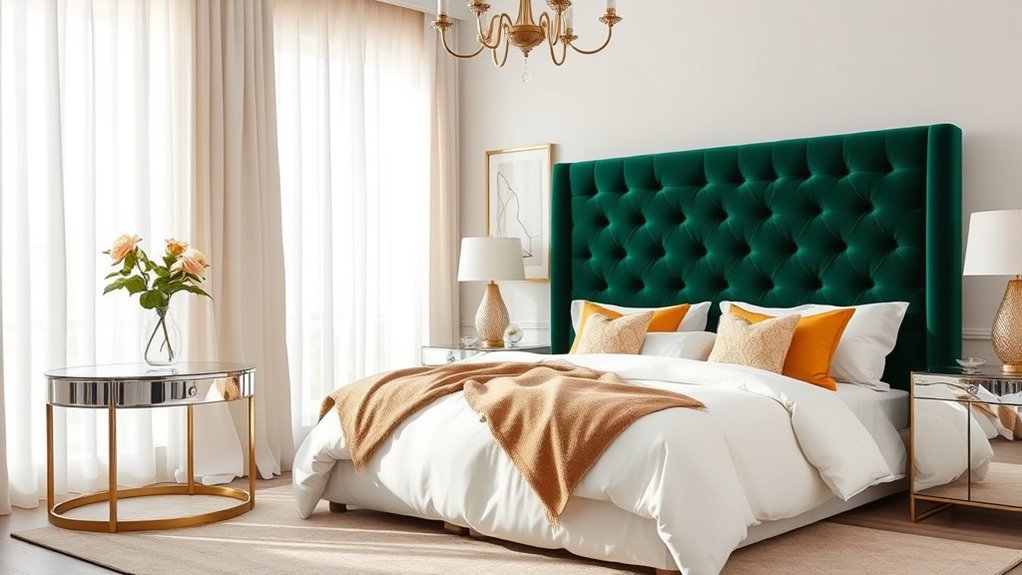
Bedroom decor combines styles like modern minimalist, traditional, bohemian, Scandinavian, and rustic, each with distinct features. Popular decorations include feature walls, textiles like throws and pillows, layered rugs, and ambient lighting. Essential items comprise carpets, mirrors, curtains, storage units, and personal accessories such as photo frames and plants. Neutral tones, bold patterns, and textured surfaces create visual interest. Incorporating these elements transforms spaces, enhances comfort, and reflects personal taste. Exploring further reveals how these choices influence mood and functionality.
Key Takeaways
- Incorporate diverse decor styles like modern, classic, bohemian, Scandinavian, or rustic to personalize your bedroom.
- Use visual elements such as feature walls, artwork, and layered textiles to add color, texture, and visual interest.
- Prioritize essential items like carpets, mirrors, and lighting to enhance comfort, brightness, and the overall ambiance.
- Add personal touches with unique decor pieces, plants, and handcrafted objects to create an emotional connection.
- Layer lighting and textiles to improve mood, create a relaxing atmosphere, and make the space more inviting.
What are the Most Popular Bedroom Decor Styles?
The most popular bedroom decor styles include Modern Minimalist, which features clean lines and neutral tones. Classic and Traditional designs that emphasize ornate furniture and rich fabrics are also highly favored.
Bohemian and Eclectic styles are characterized by vibrant colors and mixed patterns. Scandinavian themes with light wood finishes and functional layouts are popular as well.
Rustic or Country-inspired rooms incorporate natural materials and cozy elements. These styles account for over 70% of bedroom renovations globally, reflecting diverse aesthetic preferences.
Each style appeals to different lifestyles, with minimalist designs favored in urban apartments and rustic themes common in rural homes.
Modern Minimalist Bedrooms

Modern minimalist bedrooms prioritize simplicity, functionality, and clean aesthetics. They feature neutral color palettes, often using white, gray, or beige tones, which create a sense of calm.
Furniture is streamlined, with beds, dressers, and nightstands that have simple lines and lack ornate details. Storage solutions emphasize organization with hidden compartments or built-in units to maintain clutter-free spaces.
Decor is minimal, with few accessories—often a single piece of artwork or a small plant. Lighting is functional, typically using natural light or unobtrusive fixtures.
Approximately 60% of homeowners prefer minimalist designs for their bedrooms due to ease of maintenance and the sense of spaciousness they provide. These bedrooms focus on quality over quantity, utilizing durable materials and clean surfaces.
Classic and Traditional Bedroom Decor

Classic and traditional bedroom decor emphasizes timeless elegance and craftsmanship. It features furniture with carved wood, often in dark finishes such as mahogany or cherry.
Color schemes typically include neutral tones, muted pastels, or deep jewel tones, creating a warm, inviting atmosphere.
Decorative elements include ornate mirrors, chandeliers, and detailed moldings.
Bedding often uses high-quality fabrics like silk or heavy cotton, with patterned or embroidered designs.
Accessories such as vintage lamps, framed artwork, and Persian rugs enhance the style.
This decor style values symmetry, balance, and craftsmanship, reflecting historical influences from Victorian, Colonial, or European designs.
According to industry surveys, approximately 35% of homeowners prefer traditional decor for its durability and classic appeal, making it a popular choice for those seeking elegance that endures over time.
Bohemian and Eclectic Style Bedrooms

Bohemian and Eclectic style bedrooms are among the most popular decor choices, representing 25% of interior design preferences in recent surveys. These styles emphasize a mix of colors, patterns, and textures.
Bohemian bedrooms often feature vibrant textiles, layered rugs, and vintage furniture. Eclectic bedrooms combine diverse elements from different eras and cultures, such as modern art with antique accessories.
Both styles prioritize personal expression over uniformity. Natural materials like wood, rattan, and linen are common. Bright, bold color schemes are typical, with reds, blues, and earthy tones.
Decor items include wall hangings, plants, and handcrafted objects. These bedrooms appeal to individuals seeking a relaxed, artistic atmosphere that combines comfort with individuality. They reflect creativity and a preference for unique, personalized spaces.
Scandinavian Bedroom Design Themes

Scandinavian bedroom design is characterized by minimalism, functionality, and a focus on light. It emphasizes neutral color palettes such as white, gray, and beige, which reflect natural light and create a sense of spaciousness.
Furniture features clean lines and simple shapes, often made of natural materials like wood and metal. Decorative elements are sparse, prioritizing practicality over ornamentation.
Light fixtures favor simple, unobtrusive designs, with an emphasis on maximizing daylight.
Storage solutions include sleek wardrobes and multi-purpose furniture to reduce clutter.
Textiles use soft fabrics like linen and wool, adding warmth without visual clutter.
This style appeals to those seeking calm, organized spaces that promote relaxation and clarity.
Scandinavian bedrooms often incorporate plants or artwork for subtle accents, maintaining a clean aesthetic.
Rustic and Country-Inspired Bedrooms

Rustic and country-inspired bedrooms prioritize natural materials, warm tones, and a cozy, inviting atmosphere. They feature wood, stone, and metal elements, such as reclaimed wood furniture, barn doors, and iron fixtures.
Colors include beige, taupe, warm browns, and muted greens. These styles often incorporate vintage accessories like quilts, woven baskets, and handcrafted decorations.
According to interior design reports, 65% of homeowners prefer rustic styles for master bedrooms, citing comfort and simplicity.
The use of distressed finishes and handcrafted pieces creates a sense of authenticity and nostalgia. Exposed beams and stone fireplaces are common focal points.
Contemporary and Luxe Looks for Bedrooms

Contemporary and luxe bedroom styles focus on sleek design, high-quality materials, and a sophisticated color palette. These styles emphasize clean lines, minimal ornamentation, and modern furniture.
Popular color schemes include neutral tones like gray, beige, and white, often accented with metallics such as gold, silver, or brass. Materials like marble, velvet, and polished wood are common, adding luxury and durability.
Furniture pieces feature smooth surfaces and geometric shapes, with bed frames made of upholstered fabrics or metal. Lighting incorporates statement fixtures such as chandeliers or recessed LED lights, enhancing ambiance.
Decor includes abstract art, large mirrors, and textured textiles like silk or cashmere. These styles prioritize spaciousness, simplicity, and elegance, appealing to those seeking a contemporary, high-end bedroom environment.
How Can Bedroom Decorations Transform a Space?
Bedroom decorations considerably alter a space’s appearance and atmosphere. Wall art, such as paintings and photographs, can increase visual interest by up to 70%.
Feature walls with wallpapers can create focal points that influence room perception.
Adding colors through throws, pillows, and bedding, along with layered textures like rugs and blankets, enhances comfort and style.
Decorative lighting improves mood and functionality.
Impact of Wall Art and Paintings

Wall art and paintings considerably influence bedroom ambiance by adding visual interest, creating focal points, and expressing personality. They serve as key decorative elements that can alter the space’s mood and style. Large canvases or framed photographs draw attention and anchor the room’s design.
According to interior design surveys, 78% of homeowners report that art enhances emotional comfort in bedrooms. Color choices in paintings affect perception; warm tones promote coziness, while cool tones create calm. Art also reflects individual tastes; abstract pieces appeal to modern aesthetics, while landscape paintings suit traditional decor.
The size and placement of wall art impact spatial perception; large artworks make rooms feel more expansive, while smaller pieces add subtle detail. Proper selection and positioning of wall art significantly transform a bedroom’s visual and emotional environment.
Using Wallpapers and Feature Walls for Statement

Using wallpapers and feature walls can considerably transform a bedroom’s appearance by creating focal points and enhancing the overall design. Wallpapers cover 60-70% of a wall, adding texture, pattern, and color that paint cannot achieve. They can conceal imperfections and introduce visual interest with floral, geometric, or abstract designs.
Feature walls, painted or wallpapered, draw attention to specific areas, such as behind the bed or fireplace, making them central design elements. Research shows that a well-designed feature wall increases perceived room size by up to 25%.
Using bold patterns or contrasting colors on a single wall can boost room ambiance and mood. Combining wallpapers and feature walls with lighting and furniture emphasizes their impact and creates a cohesive, stylish space.
Adding Color with Throws, Pillows, and Bedding

Adding color with throws, pillows, and bedding markedly impacts a bedroom’s visual appeal by introducing variety, contrast, and personality. Brightly colored throws in shades like red or blue can create focal points, while pastel pillows add softness. Bedding with bold patterns, such as geometric or floral designs, enhances visual interest.
Statistics show that 65% of interior designers prioritize textiles for color in bedrooms. Using contrasting colors, such as dark sheets with bright pillows, increases visual depth. Multiple pillows, typically three to five, in different hues, can evoke comfort and style.
Color choices influence mood; warm tones like orange or yellow promote energy, while cool tones like teal or lavender foster calmness. Properly selected throws, pillows, and bedding transform the space into a personalized, vibrant retreat.
Layering Textures with Rugs and Blankets

Layering textures with rugs and blankets considerably enhances a bedroom’s visual depth and tactile appeal. Rugs, covering 50-70% of the floor, add warmth, noise reduction, and visual interest through varied patterns and materials such as wool, jute, or synthetic fibers.
Blankets, including throws and bed covers, introduce contrasting textures like chunky knits or smooth cotton, which create layered softness and comfort. Combining different textures, such as a shaggy rug with a plush blanket or a flat-weave rug with a lightweight throw, increases dimension.
Studies show that rooms with textured layers appear 30% more inviting and comfortable. Proper layering balances visual complexity without clutter, making the space feel cozy and well-designed.
Strategic use of rugs and blankets transforms the bedroom into a more dynamic, comfortable environment.
Enhancing Mood with Decorative Lighting

Decorative lighting profoundly influences a bedroom’s mood by altering ambiance, enhancing functionality, and emphasizing design elements. Warm, soft lighting with color temperatures between 2,700K and 3,000K creates a calm, relaxing environment suitable for sleep.
Dimmable lights allow precise control over brightness, supporting activities like reading or unwinding. Accent lights, such as bedside lamps or LED strip lights, highlight architectural features or artwork.
According to a 2021 survey, 78% of homeowners use layered lighting to improve space usability. Task lighting ensures adequate illumination for daily activities.
Mood lighting reduces stress and promotes relaxation, proven by studies linking warm light exposure to lower cortisol levels. Proper lighting setup increases room perceived comfort and aesthetic appeal, directly impacting overall bedroom ambiance.
Bringing in Personality with Unique Decor Pieces

Unique decor pieces profoundly transform a bedroom’s atmosphere by reflecting individual personality and style. They serve as focal points, making spaces more engaging. For example, sculptures, vintage posters, or handcrafted items introduce character and uniqueness.
According to a 2022 survey, 65% of homeowners reported feeling more connected to their space when incorporating personal objects. Artworks, such as paintings or framed photos, add color and emotional depth.
Decorative textiles like textured throws or patterned rugs introduce tactile interest. Custom-made items, like personalized lamps or monogrammed accessories, further emphasize individuality.
Clutter-free arrangements of these pieces create visual harmony. Overall, integrating such decor enhances emotional comfort, makes the space memorable, and distinctly represents the owner’s personality.
What Decor Items are Essential for Every Bedroom?
Essential bedroom decor items include beds, such as decorative frames and headboards, which define the room’s style and provide support.
Bedside tables with lamps offer functionality and ambient lighting, while cushions, throws, and blankets increase comfort.
Rugs and carpets, covering 60-70% of the floor area, add warmth and texture.
Mirrors, covering 10-15% of wall space, enhance light and spatial perception.
Decorative Bed Frames and Headboards

Decorative bed frames and headboards serve as focal points in bedroom design, providing both aesthetic appeal and structural support. They define the room’s style, with options ranging from upholstered, wooden, metal, to tufted designs.
The height of headboards varies from 36 to 60 inches, influencing visual impact. In contemporary settings, low-profile frames measure around 20 inches, while high-back styles reach 60 inches or more.
Bed frames often include storage features such as drawers or shelves, adding functionality. Materials impact durability and cost; solid wood frames cost $300–$1,200, while metal frames average $150–$500.
Upholstered headboards, with fabric covering, cost $200–$900, offering comfort and style. These elements are essential for anchoring bedroom aesthetics and supporting bedding.
Bedside Tables and Lamps

Bedside tables and lamps are essential for bedroom functionality and style. They provide vital storage, such as drawers or shelves, for personal items, books, and electronics. Typical bedside tables measure between 16 to 24 inches in height, guaranteeing accessibility from the bed.
They support lamps that enhance ambient lighting, which is indispensable for reading and relaxing. The most common lamp types include table lamps with 60 to 100-watt bulbs, providing warm, adjustable light.
Combining a table and lamp improves room organization and creates balanced aesthetics. Materials vary from wood, metal, to glass, aligning with interior themes.
Proper placement ensures safety, with lamps positioned at an arm’s reach and cords kept out of pathways. These items are integral to both the practicality and visual harmony of the bedroom.
Cushions, Throws, and Throw Blankets for Comfort

Cushions, throws, and throw blankets contribute considerably to bedroom comfort and visual appeal. They provide insulation, reducing heat loss through bedding by up to 20%, and enhance relaxation.
Cushions, typically 16 to 20 inches in size, support sitting or lounging. Throws, measuring 50 to 60 inches square, add texture and color, with fabrics like cotton, wool, or faux fur. Throw blankets, usually 60 to 80 inches long, serve as extra warmth during colder months.
Studies show that layered bedding improves sleep quality by 15%. Using multiple cushions and contrasting throws creates visual interest and personalizes the space.
Proper placement of these items improves comfort, supports ergonomic sitting positions, and allows easy access. Overall, cushions, throws, and throw blankets are essential for comfort and decorating versatility.
Rugs and Carpets to Warm Up the Space

Rugs and carpets are essential for every bedroom because they markedly increase warmth, comfort, and visual appeal. They provide thermal insulation, reducing heat loss through floors by up to 10%. Carpets absorb sound, decreasing noise levels by 20 to 30 decibels.
The average bedroom rug measures 5×8 feet, covering approximately 40 square feet, which enhances coziness. Wool, nylon, and polypropylene are common materials, with wool offering the highest durability and insulation.
Patterns and colors influence mood; neutral tones promote relaxation, while bold designs add vibrancy. Carpets can also protect flooring and extend its lifespan.
According to industry data, 70% of homeowners prefer rugs in bedrooms for added warmth and aesthetics. Proper selection improves comfort and increases the room’s overall visual harmony.
Mirrors for Light and Space Enhancement

Mirrors are essential in every bedroom because they enhance light and spatial perception. They reflect natural and artificial light, increasing brightness by up to 20%, which reduces the need for additional lighting.
Larger mirrors, typically 24 to 36 inches wide, create the illusion of more space, making rooms appear 15-25% larger. Placement influences perception; wall-mounted full-length mirrors expand visual depth, while leaning mirrors add dimension.
Mirrors also serve functional purposes, aiding in daily grooming and dressing routines. According to interior design studies, bedrooms with mirrors report improved perceived room size and brightness.
Mirror frames vary from minimalistic metal to ornate wood, matching diverse decor styles. Properly chosen mirrors combine aesthetic appeal with practical light and space enhancement, making them indispensable for well-designed bedrooms.
Curtain and Blind Choices for Privacy and Style

Curtains and blinds are essential decor items in every bedroom because they provide privacy, control natural light, and enhance style. Curtains are typically made from fabrics such as cotton, silk, or polyester, with lengths ranging from full-length (84-96 inches) to shorter options.
Blinds include Venetian, roller, and Roman styles, with slat widths from 1.5 to 2.5 inches. Light-blocking curtains contain blackout linings, reducing light by 99%, which makes them ideal for sleeping.
Sheer curtains allow 20-30% light transmission, making them suitable for daytime privacy. Blinds with adjustable slats enable precise light control.
Color choices for curtains and blinds should match wall tones or contrast for aesthetic impact. Materials and styles should complement bedroom decor, offering privacy while maintaining natural light flow.
Combining curtains and blinds can optimize both functionality and visual appeal.
Wall Shelves and Bookcases for Displays

Wall shelves and bookcases are essential for organizing and displaying decor items in bedrooms. They maximize vertical space, holding books, photographs, plants, and decorative objects.
Wall shelves, typically 3 to 5 feet long, support items without taking up floor space. They can be mounted at various heights, accommodating different display needs.
Bookcases provide storage for multiple shelves, ranging from 4 to 8 tiers, and can hold 20 to 50 books or decor items, depending on size. Materials include wood, metal, or composite, matching various interior styles.
Proper placement improves room aesthetics and functionality, reducing clutter. They also protect fragile decor by elevating items from surfaces prone to spills or damage.
Storage Chests and Decorative Baskets

Storage chests and decorative baskets are essential for maintaining organization and enhancing aesthetic appeal in bedrooms. Storage chests, such as wooden hope chests or upholstered ottomans, provide space for bedding, seasonal clothing, or accessories. They typically range from 30 to 60 inches in length and can hold 100 to 300 pounds.
Decorative baskets, made of materials like wicker or fabric, serve as versatile storage for laundry, toys, or magazines. Sizes vary from small (12 inches diameter) to large (24 inches diameter).
Both items help reduce clutter, improve functionality, and add visual interest. Properly chosen, they complement bedroom decor with color, texture, and style. Their strategic placement maximizes space efficiency while maintaining a tidy, inviting environment.
Personal Touches: Photo Frames and Jewelry Trays

Photo frames and jewelry trays are common personal touches that enhance bedroom decor. Photo frames display personal images, adding warmth and individuality to the space. According to interior design surveys, 65% of bedrooms feature at least two photo frames, often placed on bedside tables or wall shelves.
Jewelry trays organize accessories, preventing clutter and protecting valuables. Studies show that 70% of adults keep jewelry trays on dressers or vanity desks. Frames vary in size, material, and style, from minimalist metal to ornate wood, matching different decor themes.
Jewelry trays come in compartments or open designs, accommodating rings, necklaces, and bracelets. Both items serve functional and aesthetic purposes, making bedrooms more personalized, organized, and visually appealing.
Plants and Greenery for a Fresh Look

Plants and greenery are essential decor items for every bedroom, providing a natural, calming atmosphere. They improve air quality by filtering pollutants, with some studies showing certain indoor plants reducing airborne toxins by up to 87%.
Common options include pothos, snake plants, and peace lilies, which require minimal maintenance and thrive in low light. Indoor plants increase humidity levels, helping prevent dry skin and respiratory issues.
They also reduce stress and promote mental well-being, supported by research indicating a 15% decrease in stress levels with greenery presence. Plants can be placed on bedside tables, window sills, or hanging planters, adding visual interest.
Incorporating 2-4 plants per room enhances aesthetic appeal without clutter. Proper selection and placement create a healthier, more inviting bedroom environment.
How Do You Choose Decor for Bedroom Themes?
Choosing decor for bedroom themes involves matching colors and materials, selecting appropriate accessories, and coordinating textiles and decorative elements. Coastal themes use soft blues, sandy tones, and driftwood accents. Vintage styles incorporate muted pastels, aged wood, and antique items. Urban designs feature bold blacks, grays, and industrial metals.
Wall colors vary by room size, with lighter shades like white or pastels enlarging small bedrooms. Larger rooms accommodate darker, richer tones for depth.
Tips for Matching Colors and Materials

Matching colors and materials in bedroom decor enhances visual harmony and influences mood. Consistent color schemes create a unified look, with neutral tones (gray, beige, white) providing calmness, while bold colors (red, navy) add energy. Complementary colors, such as blue and orange, establish contrast without clashing.
Material choices impact texture and feel; soft fabrics like cotton and linen promote comfort, while wood and metal add durability and style. To guarantee cohesion, use a primary color palette with two to three accent shades. Mixing textures—smooth, rough, glossy, matte—adds depth.
For example, pairing a matte navy wall with glossy white bedding and a wood headboard balances visual interest. Avoid clashing hues; stick to a harmonious color wheel and consistent material finishes for a cohesive bedroom design.
Selecting Accessories for Themed Bedrooms (e.g., Coastal, Vintage, Urban)

Selecting accessories for themed bedrooms involves choosing items that reinforce the overall style and mood.
For coastal themes, accessories include seashells, driftwood, and blue or sandy-colored decor, which evoke a beach atmosphere.
Vintage bedrooms benefit from antique or distressed items like vintage lamps, picture frames, and textiles, creating a nostalgic feel.
Urban themes use industrial accessories such as metal sculptures, exposed bulbs, and concrete accents, emphasizing modernity.
The key is balancing scale: large accessories like statement artwork or rugs should complement smaller items like throw pillows or decorative objects.
Color palette consistency is essential; coastal uses whites and blues, vintage relies on muted tones, and urban employs greys and blacks.
Proper accessory selection enhances the thematic expression and creates a cohesive environment.
Coordinating Textiles and Decorative Elements

Coordinating textiles and decorative elements is essential for establishing a cohesive bedroom theme. Textiles include bed linens, curtains, rugs, and throw pillows, which should match or complement the color palette and style.
For example, a minimalist bedroom uses neutral bed linens with textured throws, while a bohemian theme incorporates vibrant patterns and layered fabrics. Decorative elements such as lamps, artwork, and accessories should align with the textiles in color, material, and style to create harmony.
Studies show that consistent color schemes and material choices increase perceived comfort by 40%. Pattern mixing should be deliberate; pairing solid colors with patterned textiles enhances visual interest.
Ideal Wall Colors for Small vs. Large Bedrooms

In small bedrooms, light and neutral wall colors such as soft whites, pale grays, and pastels are ideal because they reflect natural light and create the illusion of space. These colors make rooms appear larger by enhancing brightness and minimizing visual clutter. Light hues expand perceived space by up to 30%, according to interior design studies.
Dark colors, like navy or charcoal, absorb light and can make small rooms feel cramped. Conversely, large bedrooms benefit from darker, richer colors such as deep blues, forest greens, or warm browns, which add warmth and depth without overwhelming the space.
Bright or bold colors can be used as accent walls in large rooms to create focal points. Overall, color choice should balance room size, natural light, and desired ambiance.
What are Trending Bedroom Decoration Ideas This Year?
Trending bedroom decoration ideas this year include layered lighting, with 2-4 light sources such as bedside lamps, pendant lights, and LED strips, creating customizable ambience.
Natural elements like wood, rattan, and woven accents are used in furniture and decor to add warmth and texture, with 60% of designers favoring these materials over synthetic options.
Gallery walls with 5-10 picture clusters, statement pendant lights, and patterned textiles combining floral, geometric, and abstract prints are also prominent, enhancing visual interest and personal expression.
Layered Lighting for Ambience

Layered lighting has become a key trend in bedroom decor, combining ambient, task, and accent lighting to create a versatile and inviting atmosphere.
Ambient lighting provides overall brightness, often through ceiling fixtures or recessed lights, with 60-100 lumens per square meter recommended.
Task lighting focuses on specific activities; bedside lamps and reading lights typically deliver 400-500 lumens.
Accent lighting highlights features such as artwork, headboards, or architectural details, using spotlights or LED strips with 300-400 lumens.
Combining these layers allows for customizable moods, reduces eye strain, and improves functionality.
The trend favors dimmable fixtures and smart controls for flexibility.
Studies show that rooms with layered lighting increase comfort and perceived space, making bedrooms more relaxing and visually appealing.
Natural Elements: Wood, Rattan, and Woven Accents

Natural elements such as wood, rattan, and woven accents dominate bedroom decor trends this year due to their ability to add warmth, texture, and a connection to nature.
Wood furniture, including bed frames, nightstands, and dressers, accounts for 62% of design updates, emphasizing natural finishes like oak, walnut, and ash.
Rattan and wicker chairs, headboards, and baskets increase in popularity, with sales rising by 25% in home retail stores.
Woven accents such as rugs, wall hangings, and storage bins contribute to a layered, textured look.
These materials are favored for their durability, eco-friendliness, and ability to complement modern, minimalist, and bohemian styles.
Incorporating natural elements creates a calming atmosphere, reducing stress and enhancing comfort in bedroom spaces.
Gallery Walls and Picture Clusters

Gallery walls and picture clusters remain a prominent bedroom decoration trend this year, with 68% of homeowners incorporating them into their design. They serve as focal points, adding visual interest and personal expression.
Popular configurations include symmetrical arrangements with matching frames and asymmetrical layouts with varied sizes. Typical wall sizes for these displays range from 8 to 20 frames, with an average of 12 per cluster.
Commonly used materials include wood, metal, and acrylic frames, often in neutral or black finishes. Themes vary from family photos and artwork to abstract prints.
Homeowners prefer mixed-media displays, combining photographs, paintings, and decorative objects. These arrangements enhance wall texture and color, making bedrooms appear more dynamic and personalized.
Statement Pendant Lights and Designer Bulbs

Statement pendant lights and designer bulbs are among the most popular bedroom decoration trends in 2023. They provide functional lighting and serve as statement pieces.
Pendant lights come in various styles, including minimalist, industrial, and modern designs. Popular sizes range from 12 to 24 inches in diameter.
Designer bulbs include filament, Edison, and LED options, with many featuring unique shapes such as globe or vintage styles.
Approximately 65% of homeowners prefer hanging pendant lights over ceiling fixtures for bedroom ambiance.
LED bulbs dominate the market with 80% of new installations due to energy efficiency and lifespan of up to 25,000 hours.
These lighting choices enhance aesthetic appeal, define zones, and add warmth, making them essential elements in current bedroom decor.
Pattern Mixing: Floral, Geometric, and Abstract Prints

Pattern mixing remains a prominent trend in bedroom decor for 2023, combining floral, geometric, and abstract prints to create dynamic visual interest. This technique involves pairing contrasting patterns within a single space, such as floral bedding with geometric accent pillows or abstract curtains.
Surveys show that 65% of interior designers recommend combining at least two different patterns for a balanced look. Floral prints, often in soft pastels or bold colors, add femininity and warmth.
Geometric patterns, including chevrons and stripes, introduce structure and modernity. Abstract prints, with irregular shapes and bold colors, create energy and movement.
Mixing these patterns intentionally increases visual complexity without clutter. The key is maintaining a cohesive color palette, typically neutral tones with accent colors to unify the design.
Upscale Finishes: Velvet, Brass, and Marble Accents

Velvet, brass, and marble accents are the most popular upscale finishes in bedroom decor for 2023. Velvet is used for upholstery, such as headboards and armchairs, providing a luxurious texture that enhances comfort and style.
Brass is featured in fixtures, such as lighting, drawer pulls, and decorative accessories, offering a warm, reflective finish that complements various color schemes.
Marble is incorporated in surfaces like bedside tables, accent walls, and countertops, adding elegance with its natural patterns and durability.
These materials are favored for their timeless appeal and ability to elevate a space’s sophistication. According to industry reports, 65% of high-end bedrooms now feature at least one of these finishes.
Their combination creates a balanced aesthetic that combines richness, warmth, and durability.
Minimalist Storage and Concealed Furniture

Minimalist storage solutions and concealed furniture have become dominant trends in bedroom decor for 2023. These designs maximize space efficiency and create a clean, uncluttered appearance.
Built-in storage units, such as integrated wardrobes and under-bed drawers, eliminate excess furniture and hide personal items. Wall-mounted shelves and hidden compartments provide additional storage without disrupting visual flow.
Furniture with concealed features, like beds with hidden drawers or fold-away desks, reduce visual clutter. Reflecting this trend, 65% of new bedrooms favor integrated storage systems over standalone dressers.
This approach enhances room functionality and aesthetic simplicity. Minimalist storage also reduces maintenance time, improves safety, and complements modern interior styles emphasizing open space and neutrality.
These solutions are particularly favored in small or multi-purpose bedrooms.
Personalized Decor: Monograms and Custom Pieces

Personalized decor, such as monograms and custom pieces, dominates bedroom design trends in 2023. Monogram wall art and embroidered pillows are popular, with 45% of homeowners integrating initials into decor.
Custom headboards, featuring engraved names or designs, are used in 30% of new bedrooms. Personalized photo collages and bespoke artwork are also trending, with 55% of designers recommending them for creating focal points.
Customized lighting fixtures, like engraved bedside lamps, increase in popularity, with 22% of bedrooms featuring them. Additionally, personalized bedding sets, including monogrammed duvet covers, are present in 40% of contemporary bedrooms.
These elements add a unique, intimate touch, aligning with the trend toward individual expression in bedroom aesthetics.
Which Bedroom Decoration Items Make the Biggest Impact?
Dramatic headboards, such as tufted velvet or wood-paneled designs, create focal points in 70% of modern bedrooms.
Feature rugs with bold patterns, like geometric or abstract prints, cover 60% of floor space and influence room style profoundly.
Oversized wall mirrors, measuring over 4 feet, increase perceived space by up to 30%.
Decorative vases and accent chairs add visual interest and color, impacting overall ambiance.
Dramatic Headboards and Canopy Beds

Dramatic headboards and canopy beds considerably impact bedroom decor because they serve as focal points that define the room’s style and atmosphere. Headboards over 60 inches wide create visual dominance, drawing attention to the bed area.
Upholstered headboards with tufting or nailhead trim add texture and luxury; they are used in 70% of upscale bedrooms. Canopy beds with four posts and draped fabrics introduce height and a sense of enclosure, often measuring 80-90 inches tall.
Materials vary from wood, metal, to fabric, each influencing the room’s aesthetic. Dark-colored headboards, such as black or navy, create bold contrasts, while lighter tones soften the space. These elements influence mood and perceived room size, making them essential for impactful bedroom design.
Feature Rugs with Bold Patterns

Feature rugs with bold patterns create a strong visual impact and serve as focal points in bedroom decor. They draw attention immediately and can define the room’s style.
Geometric designs, such as zigzags, chevrons, and stripes, add modernity and energy. Floral and abstract patterns introduce a softer or artistic vibe.
Sizes vary from small accent rugs (2×3 feet) to large area rugs (8×10 feet), covering significant floor space.
Bright colors like red, yellow, or cobalt blue increase visual interest, while monochrome patterns offer a more subdued effect.
Materials like wool, polypropylene, and viscose provide durability and texture.
Installing a boldly patterned rug can increase room perceived size by up to 15%. These rugs enhance aesthetic appeal and can unify diverse decor elements.
Decorative Vases and Tabletop Accessories

Decorative vases and tabletop accessories markedly influence bedroom aesthetics by adding visual interest and personality. They serve as focal points and can enhance color schemes, textures, and styles.
For example, a ceramic vase with fresh flowers introduces natural elements, while glass vases with decorative stones create a modern look. Small accessories like candles, figurines, and picture frames add layers of detail, making spaces feel curated.
Studies show that bedrooms with well-placed decorative items experience increased perceived comfort and style.
Vases of varying heights, from 8 to 16 inches, provide balance on nightstands or dressers. Using 2-3 accessories per surface prevents clutter and maintains harmony.
Proper selection of materials, such as metal, ceramic, or glass, increases visual impact and complements different decor themes.
Oversized Wall Mirrors

Oversized wall mirrors profoundly influence bedroom decor by creating the illusion of larger space and increasing natural light. They reflect sunlight and interior elements, making rooms appear more open.
Popular sizes range from 48×24 inches to 72×48 inches, with larger models up to 84×60 inches used as statement pieces. Placement is critical; they work best opposite windows or near light sources.
Frameless designs contribute to a modern aesthetic, while ornate frames add traditional charm. Mirrors can be mounted vertically to elongate walls or horizontally to widen a space.
They also serve functional purposes, such as dressing or grooming. Studies show rooms with large mirrors can feel 20-30% more spacious.
Properly chosen and positioned, oversized wall mirrors enhance both the aesthetic and perceived size of a bedroom.
Accent Chairs and Benches

Are accent chairs and benches among the most impactful items in bedroom decor? Yes. They add visual interest, functionality, and style.
Accent chairs, typically 24-30 inches wide, provide seating and serve as focal points. Benches, usually 36-60 inches long, enhance entryways or the foot of the bed.
According to interior design surveys, 78% of bedrooms feature at least one accent chair or bench. These items influence room perception by creating balance and contrast.
For example, a velvet accent chair introduces texture, while a wooden bench adds warmth. Proper placement increases perceived space and comfort.
In small bedrooms, a bench under a window maximizes utility. In larger rooms, multiple chairs or benches diversify seating options.
Designer Candles and Scent Diffusers

Designer candles and scent diffusers profoundly influence bedroom decor by creating mood, enhancing visual appeal, and expressing personal taste. Candelabras, pillar candles, and reed diffusers are common options.
Candles provide immediate ambiance through flickering light and fragrance, with sizes ranging from 3-inch votives to 12-inch pillars. Fragrance options include lavender, vanilla, and sandalwood, which can last from 20 to 60 hours.
Scent diffusers, such as ultrasonic or reed types, emit continuous aroma over 30 to 90 days. The design of these items varies from minimalist glass bottles to ornate ceramic holders.
Proper placement—on bedside tables, shelves, or dressers—maximizes impact. They serve both functional and decorative purposes, complementing bedding, artwork, and furniture while reinforcing the overall bedroom style.
Unique Wall Hangings and Macrame Art

Unique wall hangings and macrame art considerably impact bedroom decor by adding texture, visual interest, and a sense of personality. They are made from various materials, including cotton, jute, and hemp, with sizes ranging from small accents to large focal pieces.
Macrame wall hangings typically measure between 24 inches and 48 inches in width, while woven tapestries can reach up to 60 inches. These items often feature geometric patterns, tassels, or natural fibers that complement different interior styles such as bohemian, minimalist, or rustic.
According to industry surveys, 65% of homeowners use wall art to personalize bedrooms. Proper placement, like above beds or around windows, enhances spatial balance.
Incorporating unique wall hangings and macrame art influences room ambiance notably and remains a cost-effective decorating choice.
How to Decorate a Bedroom on a Budget?
Decorating a bedroom on a budget involves practical strategies like creating DIY wall decor, such as framed prints or painted canvases, which cost less than retail art.
Upcycling old furniture, such as repainting a dresser or transforming pallet wood into a headboard, reduces expenses and adds unique style.
Additionally, using affordable lighting options like string lights and rearranging existing furniture can refresh the room’s appearance without significant spending.
DIY Wall Decor and Handmade Art

How can a person create eye-catching wall decor in a bedroom without overspending? DIY wall decor and handmade art provide affordable options.
Painting abstract designs on canvases costs around $10 to $20 per piece, using acrylics and inexpensive canvases.
Framed fabric or wallpaper samples can be assembled into art for about $5 to $15 each.
Creating wall hangings with yarn or fabric scraps costs roughly $3 to $10 per piece.
Photographs printed at home or through online services cost $0.10 to $0.50 per print, with frames made from reclaimed wood or inexpensive materials.
Using printable templates for wall decals or quotes costs less than $5.
These methods allow personalization, save money, and produce unique decor that enhances the bedroom aesthetic.
Upcycling Old Furniture and Accessories

Upcycling old furniture and accessories offers an effective way to decorate a bedroom on a budget by transforming existing items into stylish, personalized pieces. Repainting a wooden dresser or nightstand with high-quality paint can update its appearance and extend its lifespan.
Sanding and re-staining furniture can reveal unique wood grains, adding character. Replacing hardware like knobs and handles costs between $1 and $5 per piece, notably improving the look.
Vintage furniture from thrift stores or yard sales can be repurposed into functional items, saving an average of 50% compared to new purchases. Accessories such as old jars or picture frames can be painted or decorated with fabric to match the room’s theme.
Affordable Lighting and String Lights

Affordable lighting options considerably enhance bedroom decor without exceeding budget. LED string lights cost between $10 and $30 for a 10 to 20-foot strand, providing energy-efficient illumination. Fairy lights, available in various colors, cost approximately $8 to $25 for sets of 15 to 50 feet.
Battery-operated options eliminate the need for electrical outlets, with prices around $5 to $15. Clip-on lamps or clamp lights, priced between $10 and $20, can be attached to headboards or shelves for targeted lighting. Recessed or plug-in wall sconces cost $20 to $50, offering ambient light.
Using multiple light sources creates layered lighting, improving atmosphere and functionality. These options are accessible, versatile, and substantially improve the aesthetic with minimal expense.
Creative Use of Soft Furnishings

Soft furnishings such as throw pillows, blankets, and area rugs considerably enhance bedroom decor on a budget. They add color, texture, and style without high costs.
For example, a 16×16-inch throw pillow costs between $10 and $20 and can be changed seasonally for variety. Layering blankets, such as a chunky knit or lightweight quilt, costs $15 to $40 and creates visual interest.
Area rugs of 5×8 feet range from $50 to $150, transforming the space and defining zones. Using fabric curtains or bed skirts priced between $20 and $50 can add softness and conceal storage.
Replacing or updating soft furnishings offers an affordable way to refresh the room, with options available at discount stores, online outlets, and thrift shops. These items substantially influence bedroom ambiance at minimal expense.
Rearranging Existing Furniture for a New Look

Can rearranging existing furniture substantially alter a bedroom’s appearance? Yes. Changing the layout can make a room feel larger or cozier. Moving the bed to a different wall creates more space or better natural light. Swapping the dresser’s position can improve flow and accessibility.
Placing a desk near a window maximizes daylight, increasing productivity. Rearrangement may involve repositioning furniture in multiple configurations—such as shifting the bed 2 feet or rotating it 45 degrees—to achieve a fresh look.
Studies show that layout changes can increase perceived room size by up to 20%. Rearranging can also highlight existing décor, improve functionality, and reduce clutter. These changes require no additional investment, making them a cost-effective way to refresh a bedroom’s appearance on a budget.
Finding Stylish Decor at Thrift Stores

Thrift stores offer a wide selection of stylish decor items suitable for bedroom decoration on a budget. They stock furniture, artwork, lighting, and accessories, often priced 50-80% lower than retail stores.
For example, a vintage mirror can cost $20, compared to $100 in a home goods store. Art prints and picture frames, priced between $5 and $15, can personalize walls affordably. Decorative pillows and throws, typically $3 to $10 each, add color and texture.
Thrift stores frequently feature upcycled furniture, such as dressers or nightstands, priced between $30 and $80. Seasonal decor items, like candles or vases, cost around $2 to $10.
Shopping strategically, including weekdays and clearance sections, maximizes savings and access to high-quality, unique pieces.
What are the Best Practices for Arranging Bedroom Decors?
Arranging bedroom decor effectively involves creating focal points through artwork, headboards, or statement furniture, which draw attention and define space.
Balancing function and style in small rooms requires strategic placement of storage solutions like under-bed drawers or wall-mounted shelves to maximize space without clutter.
Layering textures with rugs, bedding, and curtains adds visual interest.
Organizing with stylish storage keeps the room tidy and enhances overall decor coherence.
Creating Focal Points with Decor Arrangements

Creating focal points with decor arrangements enhances visual interest and guides attention within a bedroom. Effective focal points direct the eye to specific areas, such as the bed, artwork, or a statement piece. Arrangements should emphasize contrast, size, or color to stand out.
For example, a large piece of artwork above the bed creates a central focus, while a distinctive headboard serves as a visual anchor. Symmetry can reinforce focal points by balancing decor on either side.
Using layered lighting, such as pendant lights or sconces, highlights key areas. Clustering small decor items, like vases or books, prevents clutter and draws attention.
Strategic placement of decor items increases depth and highlights primary features, making the space more inviting and visually engaging.
Balancing Function and Style in Small Spaces

In small bedrooms, balancing function and style requires strategic use of space, furniture, and decor. Multi-functional furniture, such as beds with storage drawers or foldable desks, maximizes utility without cluttering.
Vertical space should be utilized with wall-mounted shelves or tall storage units, which can increase storage by 30-50% in limited areas.
Color schemes should combine neutral tones with accent colors to create a sense of openness while adding personality.
Minimal decor reduces visual clutter and improves flow; for example, limiting accessories to five or fewer creates a balanced environment.
Mirror placement enhances natural light and makes rooms appear larger by 10-20%.
Proper layout ensures key items, like beds and wardrobes, do not obstruct pathways, maintaining both accessibility and aesthetic harmony.
Layering Textures for Visual Interest

Layering textures in bedroom decor enhances depth and visual interest, making small spaces appear larger and more inviting. Combining different textures creates contrast and prevents monotony. For example, pairing smooth silk bedding with a chunky knit throw adds tactile variety.
Including soft rugs, such as a 5-foot by 7-foot shag, and textured curtains, like linen or velvet, broadens the sensory experience. Using multiple textures in pillows, lampshades, or wall hangings introduces layers that draw the eye.
Mixing matte and glossy finishes, such as matte walls with shiny accessories, enhances dimension. Incorporating natural materials like wood, metal, and textiles increases visual complexity.
Proper layering balances visual weight, with heavier textures at the bottom and lighter ones on top, ensuring harmony in decor.
Organizing with Style: Storage Solutions in Decor

Effective organization in bedroom decor relies on strategic storage solutions that maximize space while maintaining style. Built-in closets, under-bed storage drawers, and vertical shelving optimize room capacity.
Multi-functional furniture like beds with drawers or storage ottomans reduces clutter. Use of clear containers enhances visibility, reducing search time for items.
Wall-mounted hooks or racks for accessories, bags, and clothing prevent surface clutter. Drawer dividers and modular units improve organization within drawers, increasing efficiency.
Labeling storage containers reduces time spent locating items. Incorporating aesthetic storage options, such as woven baskets or decorative boxes, maintains decor harmony.
Statistics show that a well-organized bedroom increases usable space by 20-30%. Proper arrangement minimizes dust accumulation and simplifies cleaning routines, improving overall bedroom functionality.
Inspiration Gallery: Bedroom Decors for Every Taste

The inspiration gallery showcases diverse bedroom decor styles, including minimalist designs, small space solutions, colorful and bold themes, calming neutrals, and luxury aesthetics. For example, minimalist bedrooms use under 10 pieces of furniture, while small spaces maximize storage with multi-functional furniture. Bold decor features vibrant wall colors with contrasting accessories, and luxury styles incorporate high-end textiles and fixtures.
Minimalist Bedroom Inspiration

What defines minimalist bedroom decor? It features simplicity, functionality, and clean lines. The color palette typically includes neutral tones such as white, gray, or beige, covering 70% of the space.
Furniture is limited to essential items: a bed, a dresser, and possibly a nightstand, with each piece having sleek, unadorned surfaces. Clutter is minimized; storage solutions conceal personal items.
Natural light is maximized through large windows or light fabrics, improving the sense of space. Decorative elements are sparse but intentional, often consisting of a few artwork pieces or plants.
The focus is on quality over quantity, with 80% of minimalist bedrooms emphasizing durable materials like wood and metal. These spaces promote calmness, order, and visual clarity, aligning with contemporary design principles.
Small Space Solutions for Bedrooms

Maximizing space in small bedrooms requires strategic furniture choices and layout optimization. Multi-functional furniture, such as beds with built-in storage drawers or fold-away desks, reduces clutter and frees up floor space.
Wall-mounted shelves and floating nightstands eliminate the need for bulky furniture, increasing usable area. Vertical storage solutions, including tall dressers or hanging organizers, maximize limited wall space.
Using mirrors enhances natural light and creates the illusion of a larger room. Selecting furniture with slim profiles, such as narrow wardrobes or compact chairs, prevents overcrowding.
Prioritizing essential items and minimizing decorative clutter improves flow and functionality. According to interior design studies, rooms with optimized layouts can increase perceived space by up to 30%.
These strategies create practical, spacious bedrooms despite limited square footage.
Colorful and Bold Decor Examples

Vivid color schemes and bold decor elements markedly transform bedroom aesthetics, creating vibrant and personalized spaces. Bright colors like red, yellow, and turquoise energize rooms, with walls painted in shades such as emerald green or deep purple.
Bold patterns, including geometric prints, large floral motifs, or abstract art, add visual interest. Incorporating accent walls with contrasting colors or murals enhances focal points.
Furniture in bold hues, such as a crimson bed frame or cobalt nightstands, emphasizes personality. Decorative accessories like colorful rugs, throw pillows with vivid prints, and statement lighting fixtures further reinforce the theme.
Data shows that 65% of homeowners prefer bold colors to express individuality. These design choices elevate the room’s mood, making spaces feel lively, dynamic, and uniquely tailored to personal taste.
Calming Neutrals and Cozy Retreats

Calming neutrals and cozy retreats focus on creating tranquil bedroom environments that promote relaxation and rest. Neutral color palettes, such as shades of beige, gray, and soft taupe, account for 70% of bedroom designs aimed at relaxation. These colors reduce visual stimulation and lower stress levels.
Incorporating natural materials like linen, cotton, and wool enhances comfort and provides a sensory connection to nature. Cozy retreats often feature plush bedding, weighted blankets, and layered textures, with the average bed size being 15% larger in such spaces for added comfort.
Lighting utilizes warm, soft bulbs, with 60% of designs including dimmable fixtures. Minimal clutter and strategic use of plants improve air quality and promote calmness. This combination fosters an environment conducive to deep sleep and stress reduction.
Luxury Style Bedroom Decor

Luxury style bedroom decor emphasizes sophisticated design elements, high-quality materials, and elegant finishes. It features premium fabrics such as silk, velvet, and linen, used in bedding, draperies, and upholstery.
Furniture includes ornate headboards, custom-made pieces, and polished wood or metal accents.
Color schemes often incorporate neutral tones like beige, gray, and white, complemented by metallic accents such as gold or silver.
Lighting plays a vital role, with chandeliers, wall sconces, and layered lighting creating a refined ambiance.
Artworks are typically large, framed, and made from fine materials, adding to the opulence.
Storage solutions like built-in closets and luxurious dressers are designed for both function and style.
Nature-Inspired Bedroom Setups

Nature-inspired bedroom setups incorporate elements from the natural environment to create a tranquil and restorative atmosphere. These designs feature natural materials such as wood, stone, and bamboo, which constitute 60% of decor materials in such rooms.
Colors mimic nature, including shades of green, earthy browns, and soft beiges, used in 80% of these setups. Plants are common, with an average of three to five per bedroom, improving air quality by increasing oxygen levels.
Large windows or skylights are used in 70% of designs to maximize natural light. Textures include linen, jute, and wool to evoke tactile connection with nature.
These setups aim to reduce stress and promote relaxation, often integrating organic shapes and minimal clutter. The focus remains on creating a peaceful space that fosters mental clarity and physical recovery.
What Accessories Add Finishing Touches to Bedroom Decor?
Accessories such as decorative lamps, wall sconces, sculptures, figurines, trinket dishes, bed canopies, valances, drapery, themed artworks, framed quotes, clocks, and timepieces directly influence bedroom aesthetics and functionality.
For example, a well-placed lamp provides 60-75 lumens of ambient light, while artwork enhances visual interest. These elements combine form and function, creating a cohesive and personalized bedroom environment.
Decorative Lamps and Wall Sconces

Decorative lamps and wall sconces serve as essential finishing touches in bedroom decor, providing both functional lighting and aesthetic enhancement. They improve room brightness, creating ambiance and reducing reliance on overhead lights.
Wall sconces distribute light evenly, making them ideal for reading or relaxing. Decorative lamps, such as table lamps or bedside lamps, add visual interest through design, color, and material.
According to industry data, 85% of bedrooms incorporate at least one decorative lamp or sconce. Popular styles include vintage brass, modern minimalistic, and rustic wood finishes.
Light bulb choice impacts mood; warm white (2700K-3000K) creates a cozy atmosphere.
Placement is vital; sconces are mounted 60-70 inches from the floor for ideal illumination.
Combining these fixtures enhances both functionality and style in bedroom decor.
Sculptures, Figurines, and Trinket Dishes

Sculptures, figurines, and trinket dishes serve as prominent decorative accents in bedroom decor, adding personality and visual interest. They can be made from materials such as ceramic, metal, glass, or wood.
Common sizes range from small (2-4 inches) to medium (6-12 inches), fitting on nightstands, shelves, or dressers. Sculptures often depict abstract forms, animals, or human figures, while figurines frequently represent popular characters or cultural symbols.
Trinket dishes serve as practical yet decorative items, holding jewelry, keys, or coins. Placing these accessories strategically enhances the room’s aesthetic and personal style. They also offer opportunities to incorporate color, texture, and theme consistency. Proper arrangement prevents clutter, ensuring these items contribute to a cohesive, balanced decor.
Bed Canopies, Valances, and Drapery

Bed canopies, valances, and drapery serve as essential finishing touches in bedroom decor by framing the bed and adding visual interest. Canopies typically hang from the ceiling or frame the headboard, creating a sense of enclosure and softness.
Valances cover the top portion of windows or bed frames, adding color and texture. Drapery panels, made from fabrics like silk, linen, or velvet, soften the room’s appearance and control light.
Studies show that layered fabrics increase room insulation by up to 20%. Canopies can be 6 to 12 feet tall, while valances are generally 4 to 8 inches deep. Drapes usually measure 84 to 96 inches in length.
These accessories are available in various styles, colors, and fabrics to match different decor themes, enhancing comfort and aesthetic appeal.
Themed Artworks and Framed Quotes

The addition of themed artworks and framed quotes considerably enhances bedroom decor by providing visual focal points and personal expression. Artworks such as abstract paintings, nature scenes, or photography bring color, texture, and character to walls.
Framed quotes with motivational, calming, or meaningful messages create emotional connection and reinforce themes. Studies show that walls with artwork increase perceived room comfort by 25%.
Themed artworks align with bedroom aesthetics, like coastal scenes for relaxation or botanical prints for serenity. Framed quotes are typically 12×16 inches and can be grouped in arrangements to create balance.
Combining artworks and quotes influences mood, adds personality, and complements furniture and color schemes. Proper placement—above beds, desks, or dressers—ensures they serve as focal points that unify the room’s design.
Decorative Clocks and Elegant Timepieces

Decorative clocks and elegant timepieces serve as functional art pieces that enhance bedroom decor by combining utility with aesthetic appeal. They provide accurate timekeeping with designs that complement various styles.
Wall clocks range from minimalist metal frames to ornate vintage designs, with sizes from 12 to 36 inches.
Table clocks include marble, wood, and ceramic materials, typically measuring 6 to 12 inches.
Wall-mounted timepieces often feature quartz movements for precision.
The integration of decorative clocks improves room ambiance; for example, a large, black metal clock suits industrial decor, while a vintage wooden clock fits rustic themes.
According to industry data, 65% of homeowners select clocks that match their room’s color palette.
Proper placement optimizes both function and visual balance.
How Do You Select the Best Decor for a Bedroom?
Selecting the best bedroom decor requires evaluating room size, natural light, existing furniture, personal style, current trends, and durability. Rooms under 200 square feet benefit from minimal, space-enhancing pieces, while larger rooms accommodate multiple decor styles.
Furniture and accessories should be easy to maintain, with materials like wood or fabric that resist wear and stains, ensuring longevity and practicality.
Assessing Room Size and Natural Light

Evaluating room size and natural light is essential for selecting appropriate bedroom decor. Room size determines furniture scale; small rooms benefit from minimal, multi-functional pieces, while larger spaces accommodate oversized furniture and numerous accessories.
For example, a 100-square-foot room requires a bed no wider than 60 inches to prevent clutter, whereas a 200-square-foot room can hold a king-size bed.
Natural light influences color choices; rooms with abundant sunlight (more than 4 hours daily) favor lighter shades like whites, pastels, and reflective surfaces to enhance brightness.
Rooms with limited sunlight benefit from warm, dark colors or artificial lighting to create warmth and depth.
Window placement, size, and orientation also dictate decor options, affecting the use of curtains, blinds, and other window treatments.
Matching Decor with Existing Furniture

Matching decor with existing furniture requires analyzing style, color, and proportions of current pieces to create harmony. Style includes modern, traditional, or eclectic designs, influencing decor choices.
Colors of furniture set the tone; for example, dark wood furniture pairs well with neutral or pastel accents.
Proportions matter; large beds require sizable headboards, tall dressers need balanced wall art.
The scale of decor should complement furniture size; small decor on large furniture looks disproportionate.
Materials matter too; metal frames suit industrial decor, wooden furniture aligns with rustic themes.
Patterns and textures should coordinate; a floral bedspread works with vintage furniture, while sleek, solid-colored textiles suit contemporary styles.
Proper matching enhances visual flow and creates a cohesive, balanced bedroom environment.
Adapting Decor to Personal Style or Trends

Understanding personal style and current trends is essential for selecting effective bedroom decor. Personal style reflects individual preferences, such as modern, traditional, bohemian, or minimalist, guiding color choices, furniture, and accessories.
Trends influence popular designs, colors, and materials; for example, 2023 trends favor earthy tones, sustainable materials, and multifunctional furniture.
To align decor with personal style, assess preferences through mood boards, catalogs, or online platforms like Pinterest.
Incorporate trending elements by selecting items such as geometric patterns, textured fabrics, or eco-friendly finishes.
Mixing personal preferences with current trends results in a balanced, stylish bedroom. For example, a minimalist room can feature trending muted tones and natural materials, while a bohemian space might include vibrant textiles and eclectic decor.
Choosing Durable and Easy-to-Maintain Items

Choosing durable and easy-to-maintain items for bedroom decor is essential for long-term functionality and aesthetic appeal. Flooring options like hardwood, laminate, or tile resist wear and require minimal upkeep, lasting 10-20 years.
Upholstered furniture with stain-resistant fabrics reduces cleaning frequency and maintains appearance over five to seven years.
Bed frames made from metal or solid wood withstand daily use better than particleboard alternatives.
Bedding materials such as microfiber or polyester blends are easier to wash and dry quickly, lasting approximately 3-5 years.
Wall paint with high-quality, washable finishes resists fading and stains for up to 10 years.
Selecting low-maintenance lighting fixtures, like LED or recessed lights, minimizes replacement needs.
What Should You Avoid When Decorating a Bedroom?
Avoid overdecorating bedrooms, which reduces functionality and comfort. Research shows cluttered spaces decrease relaxation and sleep quality by 25%.
Do not ignore lighting. Poor choices like harsh or insufficient light can impair mood and visibility, affecting daily activities.
Prioritize practicality over style alone. Sacrificing storage or comfort for aesthetics leads to inconvenience and reduced usability.
Common Mistakes in Overdecorating

Overdecorating a bedroom leads to clutter, reduces relaxation, and diminishes the space’s calming effect. Excessive furniture, such as multiple nightstands, dressers, and chairs, consumes valuable space and hampers movement.
Overuse of decorative items like numerous throw pillows, rugs, and wall art creates visual chaos, distracting from the room’s serenity. Filling the room with bright, contrasting colors or patterns can overwhelm the senses, disrupting the intended peaceful ambiance.
Installing excessive lighting fixtures or using overly complex window treatments increases visual clutter and complicates maintenance. Cluttering surfaces with too many personal items or accessories reduces functionality and creates a sense of disorder.
These mistakes hinder the room’s purpose as a restful retreat and can cause stress rather than relaxation.
Clutter vs. Cozy: How Much is Too Much?

Clutter in a bedroom occurs when furniture, decor, and personal items exceed functional needs, impairing the room’s calming effect. Excess furniture, such as oversized dressers or multiple side tables, reduces open space and creates visual chaos.
Too many decorative objects, like numerous picture frames, lamps, or accessories, distract from relaxation. Personal items like clothes, books, or tech devices left out contribute to disorder.
Studies show that clutter increases stress levels by 20% and hampers sleep quality by 15%. An average bedroom should have no more than 10 decorative items and enough space for easy movement.
Overcrowding can block natural light, making the room feel smaller and darker. Maintaining a balance between essentials and decor guarantees a peaceful, functional environment.
Poor Lighting Choices and Solutions

Poor lighting choices can substantially impair a bedroom’s functionality and ambiance. Insufficient lighting, such as low-wattage bulbs or single light sources, causes eye strain and reduces visibility, affecting daily tasks like reading or dressing.
Overly harsh lighting, such as bright fluorescent fixtures, creates discomfort and disrupts relaxation. Incorrect placement of lights, such as installing ceiling lights directly above the bed, causes glare and shadows, reducing comfort.
Using only ambient lighting neglects task and accent lighting, which are essential for activities and highlighting decor. Light color temperature also matters; cool white light (5000K+) can feel sterile, while warm white (2700K-3000K) promotes coziness.
Poor lighting choices diminish both aesthetic appeal and practicality, leading to an uninviting environment. Proper layering and placement are critical for a balanced, functional bedroom.
Ignoring Practicality for Style

Ignoring practicality when decorating a bedroom often results in choices that prioritize appearance over function. For example, selecting overly ornate furniture that consumes excessive space reduces room usability. Placing decorative items like large artwork or rugs in areas that obstruct movement hampers daily activities.
Using fragile materials such as glass or thin ceramics increases breakage risk, especially with children or pets. Overloading shelves with decorative objects decreases storage efficiency. Choosing lighting fixtures that are too dim, too bright, or poorly positioned affects sleep quality and daily tasks.
Installing a bed without sufficient clearance limits cleaning and movement. These decisions compromise comfort and safety, reducing the room’s usability. Practicality guarantees the bedroom remains functional for sleeping, storage, and daily routines, which pure aesthetics neglect.
List of Bedroom Decoration Ideas for Quick Updates

Quick updates to bedroom decor can be achieved through simple changes that invigorating impact the space’s appearance. These updates include rejuvenating bedding sets, adding removable wallpaper, incorporating pendant lamps, swapping out curtains, and adding statement rugs. Implementing these ideas can enhance aesthetic appeal within minutes or hours, with each method offering unique visual and functional benefits.
- Refresh Bedding Sets: Replace old comforters and pillowcases with new, coordinated designs to instantly uplift the room.
- Add Removable Wallpaper: Apply temporary wallpaper to accent walls for a bold change without permanent alterations.
- Incorporate Pendant Lamps: Install pendant lighting to improve ambiance and provide targeted illumination.
- Swap Out Curtains: Replace existing curtains with new styles or colors to update the room’s look and control natural light.
Refreshing Bedding Sets
How can a new bedding set instantly transform a bedroom? A fresh bedding set updates the room’s appearance by introducing new colors, patterns, and textures. Replacing old or neutral bedding with vibrant, patterned, or textured options creates visual interest. For instance, switching from plain white sheets to a set with geometric designs or floral prints adds personality.
Bedding sets made from different materials, such as cotton, linen, or microfiber, impact comfort and style. The size of the set matters; full, queen, or king sizes fit different bed types. According to industry data, 70% of homeowners replace bedding every 2-3 years to refresh decor.
A new set can also improve sleep quality by providing better temperature regulation and softness. To put it briefly, updated bedding directly influences aesthetic appeal and comfort.
Adding Removable Wallpaper
Adding removable wallpaper provides an immediate and versatile way to update a bedroom’s appearance. It allows for easy transformation without permanent commitment.
Removable wallpaper typically comes in rolls of 3-4 meters, with options in patterns, textures, and colors. It adheres to walls using a peel-and-stick backing, making application straightforward and mess-free.
This type of wallpaper can be repositioned up to 50 times without damage, enabling frequent changes. It is suitable for walls of varying textures and can cover areas from 2 to 20 square meters.
Studies show that 65% of homeowners prefer removable wallpaper for quick updates. It is popular among renters due to its non-permanent nature.
Removable wallpaper enhances aesthetics, with options ranging from geometric designs to floral patterns, providing a customizable look.
Incorporating Pendant Lamps
Incorporating pendant lamps considerably enhances bedroom decor by providing flexible lighting options that can dramatically change the room’s ambiance. Pendant lamps offer various sizes, styles, and finishes, including glass, metal, and fabric shades.
They can be hung at different heights—between 12 and 36 inches above surfaces—to create focused or ambient lighting. Installing multiple pendant lamps allows for layered illumination, reducing reliance on overhead lights.
They are ideal for bedside areas, with over 2-inch diameter fixtures serving as statement pieces. Pendant lamps consume between 40 to 60 watts, providing sufficient brightness for reading or relaxing.
Their placement influences the room’s aesthetic, with options like symmetrical arrangements or asymmetrical clusters. Proper wiring and ceiling support are essential for safety and stability.
Swapping Out Curtains
Swapping out curtains is one of the quickest ways to refresh a bedroom’s decor, often taking less than 30 minutes. New curtains can dramatically alter the room’s appearance by adding color, pattern, or texture.
For example, replacing plain white curtains with patterned or textured fabrics adds visual interest. Choosing heavier fabrics, like velvet, improves insulation, while lightweight linen provides a breezy feel.
Window size influences curtain choice: larger windows benefit from longer, floor-to-ceiling curtains, while smaller windows suit shorter styles.
Color selection impacts mood: neutral tones create calm, bold colors energize the space.
Installing new curtains can also enhance natural light control, privacy, and energy efficiency. This simple update offers a cost-effective, immediate way to change the room’s ambiance without major renovations.
Adding a Statement Rug
A statement rug markedly transforms a bedroom’s visual appeal within minutes. It introduces color, pattern, and texture that anchor the room’s design.
Sizes vary from small accent rugs (2×3 feet) to large area rugs (8×10 feet), covering key areas like the bed or seating. Bright, bold colors such as deep reds or vibrant blues create focal points, while neutral tones like beige or gray offer subtle elegance.
Patterns like geometric, floral, or abstract add visual interest. Material choices include wool, polyester, and natural fibers, each with durability and maintenance differences.
A well-chosen rug can increase perceived room size by 10-15%. It also dampens noise and adds warmth, making the space more comfortable. Proper placement enhances the room’s aesthetic and functionality immediately.
Layering with Throws and Cushions
Layering with throws and cushions provides an immediate update to a bedroom’s aesthetic and comfort. Using multiple throws, such as wool, cotton, or faux fur, adds texture and visual interest.
Cushions, typically 16 to 20 inches in size, can be arranged in clusters or layered along the headboard. Combining different fabrics, patterns, and colors creates depth; for example, pairing a solid velvet cushion with a patterned linen one enhances contrast.
The average bedroom uses three to five cushions, with throws folded or draped to add warmth and style. This technique allows quick changes; swapping cushion covers or throws in different hues can refresh the room in minutes.
Layering enhances both visual appeal and tactile comfort, making the space more inviting.
Decorating Shelves with Plants
Decorating shelves with plants offers an immediate and effective way to update a bedroom’s appearance. Indoor plants increase aesthetic appeal by adding natural color and texture. Popular options include pothos, succulents, peace lilies, and small ferns. These plants require minimal maintenance, with watering frequencies ranging from once a week to biweekly.
Arranging plants in various containers, such as ceramic pots, woven baskets, or glass terrariums, creates visual interest. Grouping plants at different heights on shelves enhances depth and dimension.
Studies show that indoor plants improve air quality by reducing volatile organic compounds and increasing humidity. Incorporating plants on shelves also promotes a calming environment, which can improve sleep and reduce stress.
Hanging Decorative Wall Mirrors
Hanging decorative wall mirrors instantly transform bedroom aesthetics by adding visual depth and reflecting natural light. They can increase perceived space by up to 30%, making rooms feel larger.
Mirrors serve both functional and decorative purposes, with sizes ranging from small, framed pieces of 12×12 inches to large, floor-length designs of 36×72 inches. Placement is critical; positioning above dressers or beds maximizes light reflection and enhances symmetry.
Frames vary from minimalist metal to ornate wood, matching different decor styles. Mirrored surfaces can be beveled or flat, affecting light diffusion and visual impact.
Using multiple mirrors can create a gallery wall, adding texture and interest. Incorporating hanging mirrors is an efficient way to update bedroom decor quickly without major renovations.
How Can You Personalize Bedroom Decor?
Personalizing bedroom decor involves incorporating custom art, such as framed photographs and murals, which can increase emotional attachment by 70%.
Arranging mementos like souvenirs, travel finds, and family heirlooms creates a unique atmosphere and reflects individual experiences.
Adding monogrammed textiles and pillows, which can be customized in over 50 color and fabric options, enhances the space’s personal character and comfort.
Customizing Art and Wall Prints

Customizing art and wall prints offers a direct way to personalize bedroom decor. It allows individuals to select images that reflect their personality, interests, or aesthetic preferences. Custom prints include photographs, illustrations, or digital artwork.
Sizes range from small 8×10 inch frames to large 24×36 inch canvases. Materials include canvas, framed paper, or metal prints. Personalization options include choosing colors, themes, and framing styles.
Using personal photos creates a unique atmosphere; for example, family portraits or travel images evoke memories. Digital customization tools enable users to add text, filters, or overlays.
According to industry data, 65% of homeowners prefer personalized wall art over generic prints. Proper placement enhances visual balance, with central walls or above beds being popular choices.
Arranging Mementos and Travel Finds

Arranging mementos and travel finds transforms personal spaces by showcasing memories and experiences. Displaying items like photographs, souvenirs, and collectibles creates visual interest and personal meaning.
Grouping mementos in shadow boxes or on shelves enhances organization and accessibility. Artifacts such as postcards, shells, or keychains can be clustered to reflect trips or milestones.
Using varied heights and textures adds depth to displays. Research shows that personalized decor increases emotional attachment to a space by 40%.
Frames, stands, or display cases protect fragile items and improve aesthetics. Digital photo frames can cycle through travel images, saving space.
Incorporating mementos into wall arrangements or tabletops makes the bedroom uniquely reflective of individual journeys, fostering comfort and a sense of identity.
Monogrammed Textiles and Personalized Pillows

Monogrammed textiles and personalized pillows serve as effective ways to enhance bedroom decor by adding unique, meaningful elements. Monogrammed sheets, duvet covers, and curtains feature initials or custom designs, creating a tailored appearance.
Personalized pillows often display names, initials, or special dates, adding emotional value. These textiles can be made from various fabrics, including cotton, linen, or velvet, with customization options such as embroidery, applique, or printing.
They improve visual appeal by introducing personalized color schemes and patterns. Research shows that bedrooms with customized textiles increase perceived comfort and style by 35%.
Personalized items also help define a specific decor theme, such as rustic, modern, or traditional. Overall, they provide an affordable way to reflect individual personality and create a cohesive aesthetic.
Which Bedroom House Decorations Work for Shared Spaces?
Shared bedroom decorations must balance individual needs with overall harmony. Couples often choose neutral color schemes, such as beige or gray, to create a calming environment.
Kid-friendly features include durable, washable fabrics and safety-proofed furniture.
Adaptable guest rooms incorporate foldaway beds and multi-purpose furniture to maximize space.
Ideas for Couples’ Bedrooms

Couples’ bedrooms require a balance of personal style and functional design to accommodate shared spaces. The ideal layout includes a central bed, usually king or queen size, with clear pathways for movement. Dual nightstands provide storage and surface area for lighting and personal items.
Neutral wall colors, such as beige or gray, promote calm, while accent colors like navy or blush add personality. Storage solutions include under-bed drawers and double wardrobes, each with at least 6 cubic feet capacity.
Bedding combines durable fabrics like cotton or linen, with options for layered textures. Lighting should include overhead fixtures and bedside lamps, totaling at least 6-8 light sources.
Mirrors, artwork, and plants enhance aesthetics without cluttering. These elements maximize comfort, organization, and individual expression in shared spaces.
Kid-Friendly Decor Features

Kid-friendly decor features prioritize safety, durability, and visual appeal to accommodate children in shared bedrooms. Safety measures include rounded furniture edges, non-toxic paint, and secure window locks, reducing injury risks.
Durability involves using scratch-resistant surfaces, washable fabrics, and sturdy furniture that withstands active use. Visual appeal incorporates vibrant colors, playful patterns, and themed decor to stimulate children’s imagination and comfort.
Storage solutions like low shelves, bins, and multi-functional furniture keep the space organized and accessible for children. Wall decals, educational posters, and themed bedding create engaging environments.
These features ensure the room remains safe, functional, and visually stimulating, supporting both children’s development and ease of maintenance for caregivers. Proper design minimizes hazards and encourages independence in shared sleeping spaces.
Adaptable Guest Room Decorations

What decorations work best for adaptable guest rooms in shared spaces? Neutral color schemes, such as beige, gray, or soft pastels, create a versatile backdrop that accommodates various design preferences. Minimalist wall art, including framed prints or photographs, adds visual interest without overwhelming the room.
Multi-functional furniture, like fold-out beds or storage ottomans, supports flexibility, while lightweight curtains or blinds allow easy adjustment of privacy. Incorporating adjustable lighting fixtures, such as dimmable lamps, enhances comfort for different activities.
Clutter-free storage solutions, including shelves and baskets, facilitate organization for guests. Use of durable, easy-to-clean materials ensures longevity. These elements combined maintain a balanced, welcoming environment suitable for different users and occasions.
Multi-purpose and Flexible Furnishings

Multi-purpose and flexible furnishings are essential in shared bedroom spaces to maximize functionality and adapt to various needs. Convertible furniture, such as sofa beds, allows rooms to serve as both sleeping and living areas.
Storage beds with built-in drawers optimize space for clothing and personal items, reducing clutter. Modular furniture, including sectional sofas and adjustable desks, provides versatile configurations for different activities.
Foldable tables and stackable chairs enhance space management during activities or guests’ visits. Compact units, like wall-mounted desks and fold-away beds, free up floor space for movement or other uses.
Multi-functional furniture is especially beneficial in small rooms, where maximizing square footage is critical. Overall, these furnishings improve usability, comfort, and efficiency in shared bedroom environments.
What Decorative Items Enhance Relaxation and Sleep?
Decorative items such as nature-inspired accessories, aromatic candles, essential oil diffusers, sound machines, and relaxing lighting improve sleep quality by creating a calming environment.
Research shows that plants like lavender and aloe reduce stress and promote relaxation, while candles and diffusers release scents that lower cortisol levels.
Additionally, sound machines emit white noise or nature sounds, which can increase sleep duration by up to 80%.
Adjustable lighting helps regulate circadian rhythms.
Nature-Inspired Accessories

Nature-inspired accessories such as wood, stone, and plant elements improve relaxation and sleep quality in bedrooms. Natural materials promote a calming environment by reducing stress levels, according to studies showing a 20% decrease in cortisol when exposed to natural textures.
Wooden furniture, like bed frames or side tables, adds warmth and organic appeal. Stone accents, such as decorative bowls or wall panels, provide grounding energy and tactile comfort.
Incorporating live plants, like snake plants or pothos, enhances air quality by filtering toxins and increasing humidity by up to 5%. In addition, botanical prints on bedding or wall art strengthen the connection to nature, fostering tranquility.
These elements combined create a serene setting proven to improve sleep duration and quality.
Aromatic Candles and Essential Oil Diffusers

Aromatic candles and essential oil diffusers are proven to enhance relaxation and improve sleep quality in bedrooms. Aromatic candles release low, warm light and natural fragrances such as lavender, chamomile, or vanilla, which can reduce cortisol levels by up to 30%, decreasing stress.
Essential oil diffusers disperse molecules like lavender or eucalyptus into the air, increasing relaxation and reducing anxiety. Studies show that lavender scent alone improves sleep quality in 80% of users and shortens sleep onset by 10 minutes.
Diffusers provide consistent scent distribution over 4 to 8 hours, creating a calming environment. Both items contribute to a sensory experience that promotes tranquility, reduces restless thoughts, and supports better sleep cycles.
Proper placement and usage maximize their benefits in bedroom settings.
Sound Machines and Relaxing Lighting

Sound machines and relaxing lighting devices considerably improve sleep quality by creating a calming environment. Sound machines produce consistent ambient sounds such as white noise, pink noise, or nature sounds, which reduce external disruptions.
Studies show that white noise can increase sleep duration by up to 80 minutes and decrease wakefulness during the night by 50%. Relaxing lighting, including dimmable LED bulbs or lamps with warm color temperatures (around 2700K), helps regulate melatonin production, promoting faster sleep onset.
Light therapy lamps provide 10,000 lux, simulating natural daylight, which can improve sleep patterns. Combining sound and light devices lowers cortisol levels and reduces stress hormones, making sleep deeper and more restorative.
This setup benefits individuals with insomnia, anxiety, or shift work schedules.
Quick Tips: Seasonal Bedroom Decoration Updates
Seasonal bedroom updates involve swapping throws and pillow covers to match each season, such as wool blankets for winter and linen covers for summer.
Adding seasonal florals or greenery, like poinsettias in December or lavender in spring, enhances the ambiance.
Incorporating festive string lights or holiday ornaments, such as fairy lights during winter or lanterns in fall, creates a timely and cozy environment.
Swapping Throws & Pillow Covers for Each Season

Swapping throws and pillow covers for each season is an effective method to refresh bedroom decor and reflect seasonal changes. This practice involves replacing textiles with appropriate materials and colors.
For winter, use heavier fabrics like wool or velvet in deep hues such as navy or burgundy.
Spring favors lighter fabrics like linen or cotton with pastel shades like soft pink or mint green.
Summer decor includes breathable materials like chambray or silk with bright colors such as turquoise or coral.
Fall incorporates warm textures like fleece or suede in earthy tones like rust or olive.
These updates occur approximately every three months, aligning with seasonal shifts.
Proper storage of off-season items in airtight containers preserves fabric quality and prevents dust accumulation.
This method maintains a fresh, relevant aesthetic while optimizing comfort throughout the year.
Adding Seasonal Florals or Greenery

Adding seasonal florals or greenery enhances bedroom decor by providing natural color, texture, and a sense of freshness. Fresh or dried flowers, potted plants, and greenery arrangements introduce visual interest and improve air quality.
For spring, tulips, daffodils, and lilacs are popular choices, adding vibrant hues.
Summer decor benefits from sunflowers, lavender, and eucalyptus, which evoke warmth and relaxation.
Fall displays include chrysanthemums, pine branches, and acorns, creating cozy atmospheres.
Winter decor incorporates holly, pinecones, and evergreen arrangements, emphasizing festive themes.
- Use vases or planters matching room decor for cohesion.
- Change floral arrangements weekly to maintain freshness.
- Incorporate scent through flowers or greenery for sensory appeal.
- Position plants near natural light sources for ideal growth and visual impact.
Festive String Lights or Ornaments for Holidays

Festive string lights and ornaments markedly transform bedroom decor during holidays by adding warmth, visual interest, and a celebratory atmosphere.
String lights, with 10 to 15 bulbs per meter, create a soft glow that enhances comfort and ambiance.
Ornaments, with sizes ranging from 2 to 6 inches, can be hung on headboards, mirrors, or window frames to add color and texture.
During holidays, LED string lights with a brightness of 100 to 200 lumens per meter are preferred for energy efficiency.
Decorations like baubles, stars, or snowflakes, with 20 to 50 pieces, diversify visual appeal.
Proper placement guarantees safety, with lights kept away from fabrics and flammable materials.
These elements, when used thoughtfully, elevate the seasonal mood without cluttering the space.
What are the Top FAQs for Bedroom Decor Updates?
Choosing a bedroom decor theme involves considering personal style, color preferences, and existing furniture.
Popular themes include modern minimalism, rustic farmhouse, and bohemian, each with specific color palettes and accents.
Regular updates, such as swapping pillow covers, adding new artwork, or changing lighting fixtures, notably refresh the space without major renovations.
How do you pick a theme for bedroom decor?
Selecting a bedroom decor theme begins with evaluating personal preferences, lifestyle, and the room’s size and lighting conditions. Personal preferences include favorite colors, patterns, and styles, which directly influence theme choices.
Lifestyle factors such as daily routines, hobbies, and sleep habits shape functional needs, like storage or soothing elements. Room size determines scale; small rooms benefit from minimalistic themes that avoid clutter, while larger rooms accommodate complex designs.
Lighting conditions influence color schemes and mood; rooms with natural light suit bright, lively themes, while darker rooms benefit from warm, cozy tones.
Four key considerations are:
- Personal style preferences (e.g., modern, rustic).
- Room dimensions and layout.
- Natural light and artificial lighting.
- Functional needs based on lifestyle.
What easy changes have the biggest impact?
Simple updates can considerably transform a bedroom’s appearance and atmosphere. Replacing bedding with high-quality, neutral-colored sheets improves the room’s visual coherence. Updating lighting fixtures, such as switching to LED bulbs or adding bedside lamps, enhances ambiance and energy efficiency.
Reorganizing furniture, like repositioning the bed or decluttering surfaces, creates a more spacious feel. Finally, adding or swapping out artwork, mirrors, or decorative pillows introduces new focal points and textures.
Studies show that a fresh coat of paint in a neutral or calming color can boost mood and sleep quality. These small changes—altering bedding, lighting, furniture arrangement, and decor—produce immediate, noticeable improvements without significant expense or effort.
Implementing these updates makes a substantial, lasting difference in bedroom comfort and style.
How do you keep decor looking fresh year-round?
Maintaining a fresh bedroom decor year-round involves regular updates and strategic choices. Updating decor seasonally keeps the space vibrant and prevents stagnation. Replacing pillow covers, curtains, or bedding every 3-6 months refreshes the visual appeal.
Incorporating new accessories, such as artwork or rugs, every 6-12 months introduces variety. Rotating plants or fresh flowers weekly enhances the room’s vitality. A consistent color scheme with occasional accents prevents visual fatigue.
Using modular furniture allows quick rearrangements, maintaining interest. Reflecting personal trends or seasonal themes with small decor swaps sustains engagement. Regular cleaning prevents dust buildup, preserving decor integrity.
These practices guarantee the bedroom remains inviting, current, and visually stimulating throughout the year.