
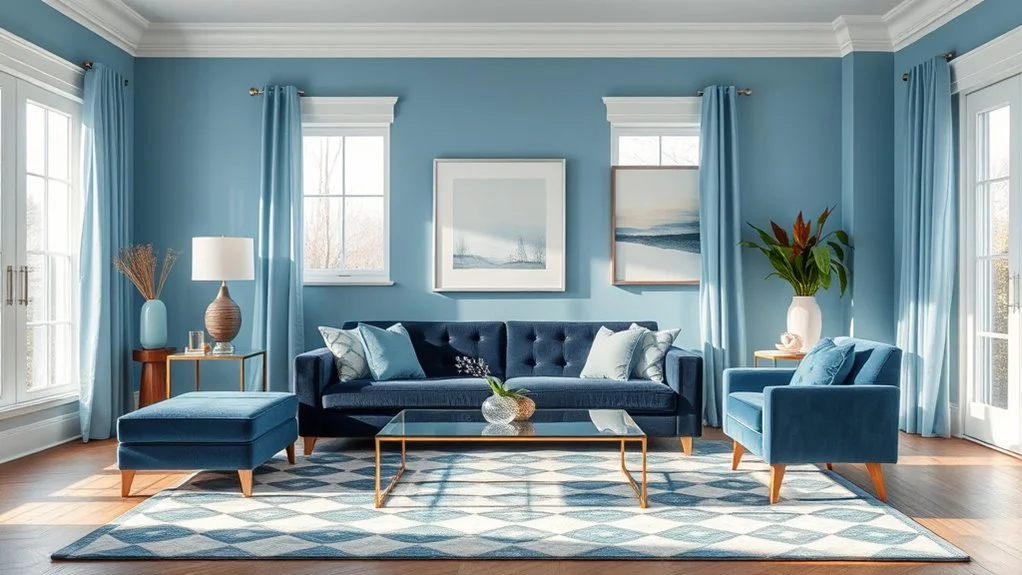
Blue living room decor emphasizes calming tones that promote relaxation and focus. Wall treatments include blue accent walls, wallpaper with geometric or floral patterns, and neutral bases like white or beige to enhance contrast. Furniture options feature light wood, white upholstery, and textiles such as linen and velvet in shades like sky or navy. Accessories include throw pillows, rugs, artwork, and metallic accents. Proper lighting and strategic placement create depth and space, making blue decor versatile for coastal, modern, or traditional styles. Continuing will reveal more design insights.
Key Takeaways
- Incorporate blue walls with neutral or contrasting accents like white, beige, or metallic for a balanced, stylish look.
- Use blue furniture pieces such as sofas or armchairs as focal points, complemented by matching or patterned décor.
- Add variety with blue throw pillows, rugs, curtains, and artwork in different shades and textures for depth.
- Create a feature wall with a bold blue color or patterned wallpaper, enhancing visual interest and room perception.
- Enhance the space with layered lighting—spotlights, sconces, or table lamps—to highlight blue décor elements effectively.
What are the fundamentals of blue living room interior design?

The fundamentals of blue living room interior design include understanding blue’s psychological effects and selecting appropriate styles. Blue enhances calmness, reduces stress, and promotes focus, making it ideal for relaxation spaces.
Popular interior design styles incorporating blue are modern, coastal, and Scandinavian. These styles use shades from navy to pastel blue to create diverse atmospheres.
How does the psychology of blue impact the atmosphere of a living room?

Blue’s psychological effects in a living room are well-documented. It promotes calmness, reduces stress, and enhances focus, creating a tranquil room and space.
Studies show that blue shades lower heart rates and blood pressure, contributing to relaxation. Cooler tones of blue, such as navy or teal, foster a sense of stability and security.
Lighter blues, like sky or pastel, expand the room visually and evoke openness. Blue also inhibits anxiety, making it ideal for social and family areas.
In terms of interior design, the color influences furniture choices, décor, and wall treatments to reinforce a peaceful environment.
A well-chosen blue creates an atmosphere that balances comfort and clarity, making the room an inviting, restful space.
What are popular interior design styles that incorporate blue?

Different interior design styles incorporate blue to create distinct atmospheres. Coastal and Nautical styles use light blues and whites for a fresh, airy feel. Modern and Contemporary styles feature deep navy or muted tones with clean lines.
Traditional and Classic decor favor rich, dark blues with ornate furniture, while Art Deco-inspired spaces utilize bold, geometric patterns with vibrant blue accents.
Coastal and Nautical design

Coastal and nautical interior designs prioritize shades of blue, emphasizing their calming and invigorating qualities. These styles often incorporate light blue, navy, and turquoise, used on walls, furniture, and accessories.
They feature natural materials like wood, rope, and linen, with patterns such as stripes and anchors. These elements create a space that evokes seaside environments and promotes relaxation.
Modern and Contemporary styles

Modern and contemporary interior design styles incorporate blue through clean lines, minimal ornamentation, and a focus on functionality. These styles favor monochromatic schemes with shades like navy, teal, and light blue.
They often use blue on walls, furniture, and accents. About 40% of modern homes feature blue walls, while 60% include blue in furniture or accessories for visual contrast.
Traditional and Classic decor

Traditional and classic interior design styles incorporate blue through rich, deep shades such as navy, royal, and powder blue. These colors are often used for walls, upholstery, and accents. They create a sense of elegance and timelessness.
Furniture typically features carved wood and ornate details, while accessories include crystal chandeliers, gold accents, and patterned rugs to enhance the traditional aesthetic.
Art Deco-inspired spaces

Art Deco-inspired spaces utilize blue through bold, saturated shades such as navy, cobalt, and teal to create a sense of luxury and sophistication. These colors are often paired with metallic accents like gold or chrome.
Geometric patterns, symmetrical designs, and luxurious materials such as velvet or lacquer emphasize the style. This approach enhances elegance and visual interest in blue living rooms.
What are effective blue living room decorating ideas?

Using a blue sofa as a focal point enhances visual interest and anchors the room.
Incorporating accessories like blue throw pillows, rugs, and artwork creates cohesive accents.
Layering different shades and textures of blue, such as navy, sky, and teal with velvet, linen, and silk fabrics, adds depth and dimension to the space.
How can you use a blue sofa as a focal point?

A blue sofa serves as a natural focal point in a living room because it draws immediate attention through its vibrant color and strategic placement. Positioning the sofa centrally or against a prominent wall maximizes visual impact.
Pairing the sofa with contrasting or complementary decor enhances its prominence, such as using neutral curtains, rugs, or wall art. Incorporating accent pillows with patterns or textures creates visual interest without overwhelming the space.
Using lighting, such as spotlights or wall sconces, accentuates the sofa’s color and design. In small rooms, a blue sofa can make the space appear larger by adding depth.
Choosing a bold shade, like navy or cobalt, increases the sofa’s visual dominance. This approach ensures the sofa becomes the room’s primary visual anchor.
What are some ideas for blue decorations and home decor accents?

Blue decorations and home decor accents enhance living room aesthetics through strategic placement.
Effective ideas include:
- Using blue throw pillows and blankets on sofas or chairs.
- Incorporating blue rugs and curtains to add color and texture.
- Displaying blue vases, artwork, and lamps as focal points or accents.
Combining these elements creates a cohesive, calming blue-themed space.
Using blue throw pillows and blankets

Incorporating blue throw pillows and blankets enhances a living room’s aesthetic and comfort. Blue pillows, available in shades from navy to sky, add visual interest and texture.
Blankets in soft fabrics like fleece or wool provide warmth. Using three to five pillows and one or two blankets creates balance.
These accents update decor without overwhelming existing color schemes.
Incorporating blue rugs and curtains

Adding blue rugs and curtains considerably enhances a living room’s aesthetic and functionality. Blue rugs, typically 5×8 feet or 8×10 feet, anchor the space and add warmth.
Curtains, ranging from 84 to 96 inches in length, soften natural light and provide privacy. Pairing navy or royal blue with neutral walls creates a balanced, calming environment.
Displaying blue vases, art, and lamps

Displaying blue vases, art, and lamps introduces focal points and enhances visual interest in a living room. Blue ceramic vases, abstract paintings, and cobalt lamps draw attention and create depth.
Arranging three to five pieces strategically along walls or tables promotes balance. Choosing varied shades, such as navy or turquoise, adds contrast. Proper placement emphasizes the room’s color scheme and highlights key design features.
How do you layer different shades and textures of blue for depth?

Layering different shades and textures of blue creates visual depth in a living room by combining light, medium, and dark tones strategically. Light blues, such as pastel or sky blue, brighten the space and highlight features. Medium shades like cobalt or teal add vibrancy without overwhelming. Darker blues, such as navy or midnight, ground the room and add contrast.
Incorporating various textures enhances this effect; smooth fabrics like silk or velvet contrast with rougher surfaces like jute or linen. Using patterned textiles, such as striped or floral designs, creates visual interest. Mixing matte, glossy, and textured finishes adds dimension.
For example, pairing a velvet navy sofa with light blue cushions and a textured wool rug creates layered depth through color and tactile variation.
How do you decorate a living room with blue walls?

Decorating a living room with blue walls requires selecting complementary color palettes such as white, beige, or warm neutrals, which create contrast and balance.
A blue accent wall enhances visual interest by adding depth and focus, especially when paired with neutral furniture or artwork.
To decorate around blue built-ins or shelving, use metallic accents, vibrant accessories, or patterned textiles to highlight the space and create cohesion.
What are the best color palettes to complement blue walls?
The most effective color palettes for blue walls include combinations such as white and blue, gray and blue, and yellow and blue. These palettes create distinct atmospheres: white and blue evoke a classic, airy ambiance; gray and blue produce a sophisticated, modern look; yellow and blue generate vibrant contrast. The table below summarizes their key characteristics:
| Palette | Mood/Effect | Example Use |
|---|---|---|
| White & Blue | Classic, airy, fresh | Light walls with white furniture |
| Gray & Blue | Sophisticated, calm | Charcoal accents with navy walls |
| Yellow & Blue | Vibrant, energetic | Bright cushions or artwork |
White and blue for a classic, airy look

White accents and furniture create a crisp contrast that enhances blue walls’ brightness. This combination makes rooms appear larger and more open.
Pairing with navy, powder, or sky blue adds depth. White trim, curtains, and rugs reinforce brightness.
This palette suits traditional, coastal, or modern styles, emphasizing airiness and timeless elegance in the living room.
Blue and gray for a sophisticated feel

Pairing blue walls with gray creates a sophisticated and balanced living room atmosphere. Gray acts as a neutral backdrop, complementing blue shades from navy to slate.
This combination enhances depth and elegance, suitable for modern or traditional styles.
Accent colors like silver, charcoal, or soft white reinforce the refined look.
This palette is versatile for furniture, wall art, and textiles.
Blue and yellow for a vibrant contrast

Blue and yellow create a vibrant contrast that energizes a living room. Blue walls paired with yellow accents or furniture increase brightness and visual interest. Bright yellow cushions, curtains, or artwork complement blue tones effectively.
This palette enhances natural light, with research showing that high-contrast color schemes increase perceived room size by 20-30%. Yellow adds warmth, blue provides calmness, and together they create dynamic spaces.
How can a blue accent wall transform a space?

A blue accent wall markedly influences a living room’s atmosphere by creating a focal point that enhances depth and visual interest. It draws immediate attention and can make a space feel larger or more intimate, depending on the shade chosen.
Darker blues, such as navy or indigo, add sophistication and coziness, while lighter shades like sky or powder blue introduce freshness and openness. An accent wall allows for bold decor choices, such as contrasting artwork, metallic accents, or patterned textiles, which stand out against the blue background.
It also provides a versatile backdrop for furniture and accessories, enabling flexible styling options. Statistically, rooms with an accent wall report increased perceived spaciousness by 20% and improved aesthetic appeal by 35%, according to interior design surveys.
What are the best ways to decorate around blue built-ins or shelving?

Decorating around blue built-ins or shelving requires selecting contrasting colors and textures to highlight the units while maintaining visual balance. Use neutral tones like white, beige, or gray on walls adjacent to the shelving to create contrast and focus.
Incorporate metallic accents, such as brass or chrome, on hardware or decorative items to add sophistication. Add decorative accessories like white vases, framed artwork, or plants to soften the blue and introduce variety.
Use lighting strategically with spotlights or wall sconces to emphasize shelving features. For shelf contents, mix books, ceramics, or artwork in complementary colors like warm oranges, yellows, or earthy browns.
Maintain symmetry and avoid clutter to create a cohesive, balanced appearance that emphasizes the blue shelving as a focal point.
What are some decor ideas specifically for a light blue living room?

Light blue living rooms create a serene and airy environment by using shades like sky blue, powder blue, and pastel blue. These colors reflect natural light and expand visual space.
Furniture such as white or light wood pieces, linen upholstery, and glass accents complement the soft tones. This combination enhances brightness and cleanliness in the room.
Incorporating patterns like subtle stripes, geometric designs, or floral prints adds visual interest without overwhelming the space. This makes small rooms appear more spacious.
How do you create a serene and airy atmosphere with light blue?

Using light blue paint on walls instantly creates a calm and spacious feeling in living rooms.
To enhance this atmosphere, incorporate minimalistic decor with neutral tones such as white or beige for furniture and accessories.
Use natural light sources, like large windows or sheer curtains, to increase brightness and airiness.
Incorporate reflective surfaces, such as glass or metallic accents, to amplify light.
Add textures like soft rugs, linen throws, and cotton cushions to soften the space without clutter.
Incorporate plants to introduce organic shapes and fresh air, with at least one or two medium-sized greenery pieces.
Use layered lighting, including ceiling fixtures, table lamps, and wall sconces, to control ambiance and maintain a serene environment.
These elements collectively promote tranquility and openness.
What furniture and materials pair well with light blue decor?

Light blue decor pairs best with natural wood tones, rattan, woven textures, and white or neutral upholstered furniture. Natural wood adds warmth, while rattan and woven materials introduce texture and visual interest. White or neutral upholstery maintains a fresh, airy atmosphere.
1. Natural wood tones (oak, walnut, maple) add warmth and contrast.
2. Rattan and woven textures (rattan chairs, woven baskets) enhance tactile appeal.
3. White or neutral upholstered furniture (sofas, armchairs) preserve lightness and brightness.
4. Complementary decor (linen curtains, jute rugs) reinforces the light blue palette.
Natural wood tones
Natural wood tones such as oak, walnut, and pine create a warm contrast against light blue walls. These tones enhance a calming atmosphere.
Oak furniture provides durability and a light finish. Walnut adds richness with dark hues, while pine offers affordability and a rustic look.
Combining these woods with light blue creates balanced, timeless decor.
Rattan and woven textures
Rattan and woven textures introduce natural, tactile elements that complement light blue living room decor. Rattan chairs, woven baskets, and wicker coffee tables add warmth and contrast.
These materials, with their light, airy appearance, enhance the calming atmosphere. Woven textiles, such as throw pillows or rugs, improve texture and visual interest, creating a balanced, inviting space that emphasizes natural materials and craftsmanship.
White or neutral upholstered furniture
White or neutral upholstered furniture, such as sofas, armchairs, and ottomans, creates a versatile and timeless foundation for a light blue living room. These pieces complement the cool tones of blue and provide a clean, neutral contrast.
Materials like linen, cotton, and velvet enhance durability and texture. Neutral furniture allows for flexible decor updates, with options for colorful cushions or throws to add accents.
How can light blue make a small living room appear more spacious?

Light blue paint colors, such as pastel or powder shades, increase the perception of space in small living rooms by reflecting more light and creating an open atmosphere. Light blue walls reflect up to 50% more natural light compared to darker hues, making the room appear larger.
Using light blue on walls combined with white trim enhances brightness and depth. Incorporating light blue furniture, such as sofas and accent chairs, maintains a cohesive, airy look.
Using reflective surfaces—glass coffee tables, metallic accents—further amplifies the sense of space. Minimal clutter and strategic placement of open shelving prevent visual congestion.
Light blue paired with neutral decor creates a calming, spacious environment, which visual studies show can increase perceived room size by 20%.
What are some popular light blue paint shades for living rooms?
Popular light blue paint shades for living rooms include options like Benjamin Moore’s “Beach Glass,” Sherwin-Williams’ “Azure Skies,” Behr’s “Celestial Blue,” and Farrow & Ball’s “Light Blue.” These shades are valued for their calming and versatile qualities.
Each provides a distinct tone, ranging from soft pastel to vibrant sky blue, suitable for various decor styles.
####
A light blue wall color enhances a living room by creating a calm, airy atmosphere. Popular shades include Sherwin-Williams’ “Sea Salt” (SW 6204), Benjamin Moore’s “Palladian Blue” (HC-144), and Behr’s “Blue Serenity” (S340-2). These shades feature subtle gray undertones, promoting tranquility.
Lighter shades like “Sky Blue” or “Powder Blue” brighten spaces, while medium tones add depth.
How can patterns be used effectively in a blue living room?
Patterns enhance a light blue living room by creating visual interest and depth. They draw attention to specific areas and add texture. To use patterns effectively, consider these options:
- Geometric patterns on throw pillows or rugs, which add modern appeal and contrast the soft blue.
- Floral designs on curtains or wallpaper, providing a classic, calming feel that complements the light blue.
- Stripes on upholstery or accent walls, creating a sense of height and space.
- Abstract patterns in artwork or decorative accessories, adding visual complexity without overwhelming the room.
Using these patterns in moderation ensures balance, while mixing different scales—large, medium, and small—creates harmony. Properly chosen patterns enhance the room’s aesthetic without cluttering the space or detracting from the blue color scheme.
What lighting fixtures best enhance a blue color scheme?

Lighting fixtures that enhance a light blue living room include options that provide both brightness and ambiance. Ceiling-mounted fixtures such as flush mounts or semi-flush mounts with white or clear glass shades distribute even light, emphasizing the soft tone of light blue walls.
Pendant lights with metallic finishes like chrome or brushed nickel add reflective qualities, amplifying the room’s brightness. Floor lamps with adjustable arms or multiple bulbs increase task lighting and create layered illumination.
Table lamps with light-colored or translucent shades cast diffuse light, softening the space. LED fixtures with color temperature settings between 3,000K and 4,000K offer flexibility, maintaining the room’s cool tone while providing energy efficiency.
Combining these fixtures enhances overall ambiance and emphasizes the light blue color scheme effectively.
How can you balance warm and cool tones in a blue living room?
Balancing warm and cool tones in a light blue living room involves combining neutral, warm, and cool decor elements to create visual harmony. Neutral tones like beige, white, or gray balance the coolness of light blue walls.
Warm accents such as amber, terracotta, or gold add richness. Cool accents like navy, teal, or silver reinforce the blue palette.
Furniture options include light wood or gray upholstered pieces paired with warm-toned pillows.
Decor items like rugs, curtains, or artwork should incorporate these tones in varying proportions. For example, a beige sofa with navy cushions, a gold-framed mirror, and a teal vase creates contrast.
This approach guarantees the room feels inviting and balanced, with no single tone overpowering the others.
What are some common mistakes to avoid when decorating with blue?
Decorating with light blue requires careful consideration to avoid common mistakes that can undermine the room’s aesthetic. First, overusing blue can create a cold, uninviting atmosphere; limit blue to 50-60% of the room’s color palette.
Second, neglecting contrast leads to a dull space—incorporate warm-toned accents, such as beige or gold, to add vibrancy.
Third, choosing inappropriate lighting can distort blue’s tone; use natural light or warm LED bulbs to maintain color accuracy.
Fourth, disregarding texture results in flat decor; introduce varied materials like linen, velvet, or wood to add depth.
These mistakes diminish visual interest and comfort. Avoid these errors to create a balanced, inviting light blue living room.
How do you transition a blue living room decor for different seasons?

Changing decor elements in a light blue living room for different seasons enhances visual appeal and comfort.
In winter, add warm accents such as beige or cream throw blankets, plush rugs, and candleholders with warm-toned candles. Incorporate metallics like gold or bronze in picture frames or decorative objects to evoke warmth.
During spring, introduce fresh greenery through potted plants or floral arrangements in pastel shades. Use lightweight curtains and pastel-colored cushions to create an invigorating look.
In summer, opt for bright accessories like turquoise or coral cushions, linen curtains, and airy fabrics.
For fall, add rust-colored throws, textured pillows, and wooden accents. Swapping out artwork and accessories seasonally maintains a dynamic, inviting atmosphere aligned with outdoor changes.