
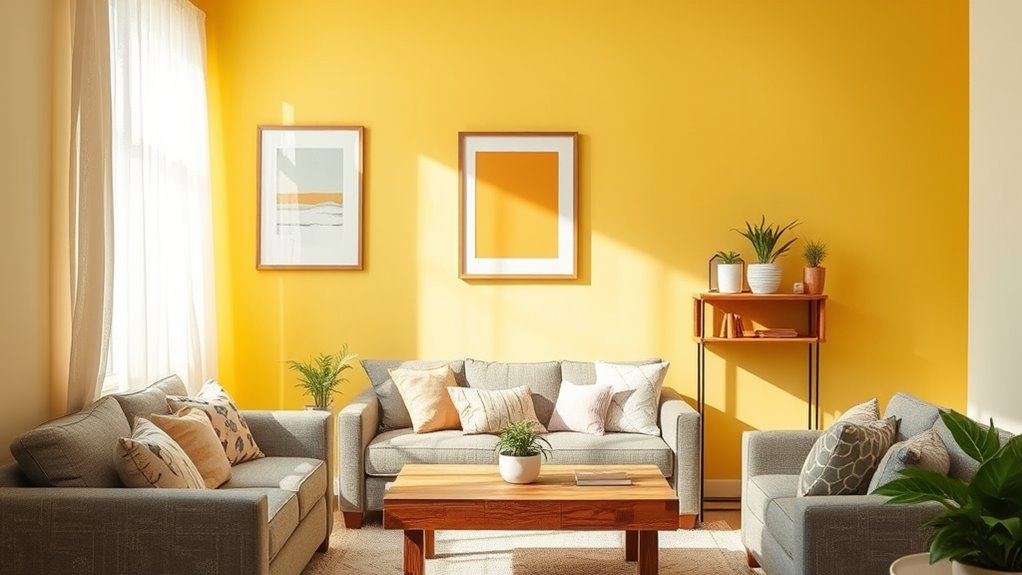
Cheapest ways to decorate a living room include rearranging furniture, decluttering, and using multi-purpose pieces. Focus on wall art like thrifted frames, mirrors, or removable decals costing $5-$40. Paint walls with inexpensive techniques or use washi tape for patterns. Enhance space perception with light colors, tall curtains, and strategic lighting costing under $50. Decorate with textiles such as pillow covers ($5-$15), blankets ($10-$20), and DIY crafts. Regular organization and focus on focal points maximize impact, making a small space look larger. Continuing now reveals even more affordable tips.
Key Takeaways
- Use affordable wall decor like thrifted frames, removable wallpaper, decals, and washi tape for quick, inexpensive updates.
- Enhance space with large mirrors and strategic lighting to reflect light and create an open, airy feel on a budget.
- Rearrange existing furniture and declutter to refresh the room layout without purchasing new items.
- Incorporate cost-effective textiles such as pillow covers, blankets, and curtains in coordinating colors to add style and comfort.
- Utilize vertical storage solutions, wall-mounted shelves, and DIY decor to maximize space and personalize your living room affordably.
How can you decorate your living room on a tight budget?
Decorating a living room on a tight budget involves practical strategies backed by proven results. Rearranging furniture, such as switching sofas and tables, can instantly refresh the space without cost.
Decluttering and repurposing items like old lamps or picture frames reduces expenses.
Shopping secondhand or using inexpensive decor, such as potted plants and affordable rugs, adds style with minimal investment.
Rearrange existing furniture for a new layout
Rearranging existing furniture is the most cost-effective method to refresh a living room layout, with studies showing that a new arrangement can increase perceived space by up to 30%. Moving sofas, chairs, and tables can instantly change the room’s flow and functionality.
For example, positioning the sofa against a different wall opens the room and creates a more inviting atmosphere. Placing frequently used items closer to seating improves usability. Centering a focal point, like a TV or fireplace, enhances visual balance.
Adjusting the distance between furniture pieces can make the space feel larger or cozier. Rearrangement often highlights underused areas and improves natural light flow. This approach requires no new purchases, relies solely on spatial awareness, and can be completed within hours.
Declutter and minimize unused items
Clearing clutter markedly enhances a living room’s appearance and functionality while reducing costs. Removing unused items frees up space, making the room appear larger and more inviting. Studies show that cluttered spaces can increase stress levels by 20%.
Removing unnecessary furniture, decorative items, and miscellaneous objects can save money by delaying or eliminating the need for new purchases. For example, decluttering can reduce furniture by 30%, creating a more open layout. Organizing items into storage bins or donating unused decor can generate additional savings.
Regular decluttering, every three to six months, maintains a tidy environment. This process improves airflow, highlights existing decor, and prevents the accumulation of dust and allergens, contributing to a healthier living space.
Shop secondhand or repurpose old decor items

Shopping secondhand or repurposing old decor items can substantially reduce living room renovation costs. Thrift stores, online marketplaces, and garage sales offer furniture and accessories at 50-80% lower prices than retail. For example, a vintage armchair costs around $50, compared to $200 new.
Repurposing furniture involves repainting, reupholstering, or reconfiguring existing items to fit new styles, saving up to 70% of replacement costs. Common repurposed items include picture frames, lamps, and shelving units.
DIY projects, like turning old pallets into coffee tables, can cost less than $30 in materials. These methods promote sustainability and unique aesthetics, providing personalized decor without overspending.
Add plants for a fresh, affordable touch

Adding plants considerably enhances a living room’s appearance while remaining budget-friendly. Live plants improve air quality by filtering toxins such as formaldehyde and benzene, which are common in indoor environments.
Studies show that indoor plants can reduce stress and increase productivity by up to 15%, creating a more welcoming atmosphere. Affordable options include pothos, snake plants, and succulents, which cost between $5 and $20 each.
Potted herbs like basil or parsley, priced around $3 to $5, also serve decorative and practical purposes. Hanging planters or wall-mounted pots utilize vertical space and cost less than large furniture.
Regular watering and minimal maintenance extend plant lifespan, making them a sustainable and low-cost way to refresh a living room’s aesthetic.
Use budget-friendly accent rugs, throws, and pillows for seasonal updates

Budget-friendly accent rugs, throws, and pillows provide an affordable way to update a living room’s decor for each season. These items can be easily swapped to reflect seasonal colors and textures, creating fresh visual appeal.
For example, a 5×8 area rug costs between $30 and $60, while decorative pillows range from $10 to $25 each. Throws made from polyester or cotton can be purchased for under $20.
Using these elements allows homeowners to change the room’s look without significant investment. Incorporating seasonal colors, such as warm reds and oranges in fall or cool blues and greens in summer, enhances the ambiance.
These accessories also add texture and comfort, making the space more inviting. Overall, they offer a simple, cost-effective method for frequent decor updates.
Opt for DIY wall decor and art projects

DIY wall decor and art projects considerably reduce costs and enable personalized customization of living rooms. Creating artwork at home costs an average of $10 to $30 per project, compared to store-bought pieces costing $50 or more.
Examples include framing printable images, which cost under $5 for frames and printables, or making canvas art with inexpensive supplies like acrylic paints and stencils, totaling around $15 per piece. Wall hangings such as macramé or fabric tapestries use affordable materials and take 1-2 hours to complete.
Photographs printed at local labs cost about $0.10 per print, and arranging them into DIY gallery walls costs only the price of frames. These projects allow homeowners to display personal memories and style while markedly reducing expenses.
Mix low-cost finds with statement pieces for a curated look

Decorating a living room on a tight budget involves combining inexpensive finds with high-impact statement pieces to create a balanced, curated appearance.
Low-cost finds include items such as secondhand furniture, thrifted decor, or DIY projects, which can cost as little as $20.
Statement pieces include bold artwork, unique lighting fixtures, or eye-catching rugs, typically priced between $50 and $200.
Research shows that mixing affordable items with one or two statement pieces increases perceived value and style.
For example, a $30 coffee table can be paired with a large, colorful wall art piece costing $70.
Incorporating a statement chandelier or large mirror can elevate the space without exceeding a $150 budget.
This approach maximizes visual interest while maintaining affordability.
Apply peel-and-stick wallpaper or decals for a low-cost feature wall

Applying peel-and-stick wallpaper or decals creates an affordable, impactful feature wall in a living room. These products cost between $10 and $50 per roll or sheet, making them budget-friendly compared to traditional wallpaper or paint. They are easy to install, requiring no tools or professional help, and can be removed without damage, making them ideal for renters or temporary decor changes.
Decals come in various designs, including geometric patterns, floral motifs, or abstract art, allowing customization. A typical 10-foot by 8-foot wall can be decorated with a single roll, costing approximately $20 to $40, depending on design. Application takes about 30 minutes, with minimal preparation.
This method provides a quick, inexpensive way to add color, texture, or visual interest to a living room wall.
Paint a single wall or add painted patterns for visual interest

Painting a single wall or adding painted patterns is an effective, low-cost way to create visual interest in a living room. Painting one wall with a bold color can refresh the space and create a focal point. For example, using a deep navy, bright yellow, or rich emerald green increases contrast and draws attention.
Adding painted patterns, such as geometric shapes, stripes, or stenciled designs, enhances depth without high expenses. Using painter’s tape and inexpensive paint guarantees affordability. Patterns can cover 10-20% of the wall area, balancing visual impact with cost efficiency.
Applying two to three colors reduces expenses while providing variety. These techniques cost between $20 and $50 for supplies, making them accessible for tight budgets. Proper execution guarantees a polished look that elevates the room’s aesthetic.
What are the best cheap decorating ideas for living room walls?
Cheap decorating ideas for living room walls include hanging thrifted frames and creating gallery walls with personal photos or prints, which cost between $5 and $20 per frame.
Mirrors, priced from $10 to $30, reflect light and expand space visually.
Removable wallpaper, decals, and washi tape offer patterns and color at $10 to $40 per roll.
DIY wall hangings made from fabric or natural materials cost under $15.
Decorative baskets, woven trays, and painted plates, priced from $5 to $25 each, add texture and visual interest.
Hang thrifted frames and create a gallery wall of personal photos or prints

Hanging thrifted frames to create a gallery wall offers an affordable way to personalize living room walls. Thrift stores sell frames at prices as low as $1 to $5 each, making this a budget-friendly option.
By collecting various sizes and styles, homeowners can assemble a diverse display that enhances visual interest. Photos, prints, or artwork within these frames can include personal memories or inexpensive prints from online sources, costing $0.10 to $2 each.
Arranging 8 to 12 frames in a grid or salon style covers a wall area of approximately 15 to 25 square feet. This method reduces the need for large, costly art pieces and allows for easy updates by swapping out images or changing frames.
The result is a customized, cost-effective wall display.
Use mirrors to reflect light and make the space feel larger

Mirrors are an effective and inexpensive way to enhance living room space by reflecting natural and artificial light. They increase perceived room size by up to 30%, making small spaces feel larger.
Placing a large mirror opposite a window doubles the light entering the room, reducing the need for additional lighting. Multiple small mirrors arranged in patterns can create visual interest and expand the space visually.
Frameless or budget-friendly framed mirrors cost between $20 and $50, making them accessible options. Strategically positioning mirrors near light sources enhances brightness, while using them above furniture or on empty walls adds depth.
Mirrors can be found at thrift stores, online marketplaces, or discount retailers, with sizes ranging from 12 inches to 48 inches. Proper placement maximizes their effect on room perception.
Apply removable wallpaper, decals, or washi tape for patterns or color

Applying removable wallpaper, decals, or washi tape offers an affordable way to add patterns and color to living room walls. Removable wallpaper costs between $20 and $50 per roll, covering approximately 50-60 square feet, and can be applied without professional help.
Decals are even cheaper, costing around $5-$15 for a pack of 10-20 pieces, and are easy to install with peel-and-stick adhesive.
Washi tape, priced at about $3-$10 per roll, allows for custom designs and can be repositioned multiple times without damage.
These options provide instant visual impact, with geometric patterns, floral designs, or bold colors that transform a space quickly.
They are suitable for renters or those wanting temporary changes, as they remove cleanly without wall damage.
Create DIY wall hangings or use fabric as art

Creating DIY wall hangings or using fabric as art offers an inexpensive and customizable way to decorate living room walls. Fabric art includes framed textiles, quilts, or bedsheets stretched over frames, costing as little as $5 for materials.
DIY wall hangings can be made from yarn, ribbons, or natural fibers, with supplies totaling under $10. Macramé wall hangings require only cord and dowels, costing around $10, and can measure up to 3 feet in length.
Tapestries or large fabric panels can be purchased for less than $20 online. These options allow for personalization, with patterns, colors, and textures tailored to individual tastes.
Using fabric or handmade hangings reduces reliance on expensive art, making it an affordable choice for enhancing wall decor.
Hang decorative baskets, woven trays, or plates for textural wall art

Hanging decorative baskets, woven trays, or plates creates a textured wall display that enhances the visual interest of a living room. These items are affordable, often costing between $10 and $30 each, and are widely available at home goods stores, thrift shops, or online marketplaces.
Arranged symmetrically or in clusters, they add depth and dimension to plain walls. Woven baskets made from rattan, seagrass, or jute introduce natural materials that complement various interior styles.
Plates, especially vintage or decorative ceramic ones, can be mounted individually or as a collection. These arrangements are easy to install with simple hooks or mounting brackets.
They offer a low-cost way to add tactile variety, color, and visual appeal without the need for expensive art or wallpaper.
Display shelves with favorite books or budget-friendly decorative objects

Display shelves are an effective and inexpensive way to decorate living room walls using favorite books or decorative objects. They provide practical storage and visual interest at a low cost. Shelves can be made from affordable materials like wood planks, metal brackets, or repurposed items.
Arranging books with colorful spines creates a vibrant display, while decorative objects such as small plants, photo frames, or vintage collectibles add personality. Installing multiple shelves at different heights maximizes space and creates a layered effect.
Using standard shelving units costs between $20 and $50, while DIY options can reduce expenses further. According to interior design surveys, 65% of homeowners prefer wall-mounted shelves for their versatility and cost-effectiveness.
Shelves improve room aesthetics without the need for expensive wall art or complex decor.
How to maximize impact with affordable living room decor?
Maximizing impact with affordable living room decor involves strategic placement of inexpensive items. Styling coffee tables with trays, candles, or small vases enhances visual appeal. Adding new pillow covers or blankets updates the sofa. Updating lighting with budget-friendly lamps creates ambiance.
Incorporating multi-purpose furniture like ottomans or storage stools and swapping curtains for lightweight fabrics or DIY trims further elevates the space cost-effectively.
Focus on high-traffic surfaces: coffee table styling with affordable trays, candles, or small vases

A coffee table serves as a primary high-traffic surface in living rooms and markedly influences visual appeal. Styling this surface with affordable trays, candles, or small vases enhances aesthetics without high costs.
Using trays made from wood, metal, or plastic consolidates clutter and creates a cohesive look. Candles in glass jars or metal holders add warmth and ambiance, costing between $2 to $10 each. Small vases, often purchased for under $5, can hold fresh or faux flowers, adding color and texture.
Arranging these items intentionally, such as grouping candles with vases or placing decorative trays centrally, maximizes impact. Regularly updating accessories or rotating decor items maintains freshness.
This simple, cost-effective approach elevates the living room’s style while remaining budget-friendly.
Highlight one area (like the sofa with new pillow covers or a cozy blanket)

Updating a sofa with new pillow covers or a cozy blanket markedly enhances living room aesthetics without high costs. Replacing old or plain pillow covers with colorful, patterned, or textured fabrics draws attention to the seating area.
Using pillow covers made from affordable materials like cotton or polyester can cost between $5 and $15 each. Adding a plush blanket or throw, priced between $10 and $20, creates warmth and visual interest.
Studies show that changing textiles in a room can improve perceived comfort and style instantly. Choosing covers and blankets that match existing decor or contrast intentionally maximizes visual impact.
Combining three to five pillow covers and one blanket balances color and texture without clutter. This simple update directly influences the room’s overall vibe, making it appear refreshed and inviting.
Update lighting with budget-friendly floor or table lamps; use soft bulbs for ambience

Replacing existing lighting fixtures with budget-friendly floor or table lamps notably enhances the living room’s atmosphere. These lamps are available at prices from $20 to $50, offering versatile styles such as modern, vintage, or minimalist designs.
Using soft white bulbs, with a color temperature between 2,700K and 3,000K, creates warm, inviting light that improves mood and comfort. According to lighting studies, soft lighting reduces eye strain and promotes relaxation.
Position lamps near seating areas or corners to maximize illumination and highlight decor.
LED bulbs provide energy efficiency, lasting up to 25,000 hours and reducing electricity costs by 75%. Incorporating dimmable options allows adjustable brightness, further customizing ambiance without additional expense.
This approach offers an immediate, budget-friendly way to upgrade living room lighting.
Incorporate multi-purpose furniture such as ottomans or storage stools

Incorporating multi-purpose furniture such as ottomans and storage stools maximizes space and functionality at minimal cost. Ottomans serve as footrests, extra seating, or small tables, eliminating the need for multiple pieces.
Storage stools provide hidden compartments for blankets, books, or toys, reducing clutter. Studies show that furniture with built-in storage can free up to 25% of living room space.
Compact options measure between 16-24 inches in height and 18-36 inches in diameter, fitting easily into small rooms. Some models include removable tops for easy access, enhancing versatility.
Using multi-purpose furniture reduces the need for additional storage units, saving money. Overall, these pieces improve room organization and usability while remaining affordable, with prices typically ranging from $20 to $80.
Swap out curtain panels for light, airy fabrics or add DIY trim to existing curtains

Swapping out heavy, dark curtain panels for light, airy fabrics such as linen, cotton, or sheer polyester instantly brightens a living room. Light fabrics allow more natural light to filter through, increasing brightness by up to 50%. They create a sense of openness, making small spaces appear larger.
Sheer curtains cost between $10 and $30 per panel, offering an affordable upgrade. Using DIY methods, such as adding trim or decorative borders to existing curtains, enhances style at minimal cost. For example, sewing a 2-inch border of contrasting fabric costs about $5 in supplies and takes less than an hour.
These simple updates improve the room’s appearance, add texture, and create a fresh, inviting atmosphere without significant expense.
Use a bold area rug to anchor the space and cover worn flooring

A bold area rug instantly defines a living room and covers worn or outdated flooring. It creates a visual focal point and adds color or pattern without high cost.
Size options include 5×8 feet, 8×10 feet, or larger for better coverage.
Bright colors like red, blue, or yellow energize the space, while neutral tones such as gray or beige provide versatility.
Patterned rugs distract from imperfections and add texture.
According to industry standards, a rug covering at least 60% of the floor enhances room cohesion.
Cost-effective options range from $50 to $200, depending on material and size.
Synthetic fibers like polypropylene are durable and affordable, making them suitable for high-traffic areas.
Using a bold rug effectively transforms the room, masking wear and creating an inviting atmosphere.
What DIY and upcycling decorating tips can save money?
DIY and upcycling techniques can reduce living room decor costs by 50% or more. Painting furniture like side tables and shelves refreshes their appearance without replacement.
Personalizing items such as candle holders, jars, and storage baskets with craft supplies or contact paper transforms them into unique decor pieces at minimal expense.
Paint old furniture for a fresh look (side tables, shelves, or frames)

Painting old furniture such as side tables, shelves, or picture frames transforms outdated pieces into modern, attractive decor at minimal cost. Applying a fresh coat of paint can extend furniture lifespan by up to 10 years.
Using inexpensive paint, such as latex or chalk paint, costs between $10 and $30 per quart, covering 100-150 square feet. Techniques like distressing or using stencils create a customized look without high expense.
Furniture can be repainted in neutral tones like gray, white, or beige to match current trends. Upcycling saves 50-70% compared to buying new furniture.
For example, a $20 wooden shelf can be transformed into a statement piece for under $15 in paint and supplies. This method offers a quick, cost-effective way to update living room decor.
Personalize candle holders, vases, or storage baskets with craft supplies

Personalizing candle holders, vases, or storage baskets with craft supplies offers an affordable way to enhance living room decor. Using paint, decoupage, fabric, or embellishments transforms plain items into customized decor pieces.
Applying metallic or matte spray paint costs around $5 to $10 per can and covers approximately 8-10 objects.
Decoupage involves using printed paper, glue, and sealant, costing under $10 for supplies, and can decorate 5-10 items.
Fabric wraps or ribbons, priced at $3-$8 per yard, can cover multiple containers or baskets.
Adding embellishments such as buttons, beads, or stickers, costing $2-$5 each, personalizes each piece further.
These methods require minimal tools and can be completed in 30 minutes to an hour, providing a budget-friendly, creative update for the living room.
Repurpose jars as planters or lanterns

Repurposing jars as planters or lanterns provides an inexpensive method to enhance living room decor. Glass jars, such as mason jars or spaghetti sauce containers, are versatile for upcycling. They can be filled with soil and used as small indoor plants, such as succulents or herbs, which require minimal maintenance and cost less than store-bought planters.
Alternatively, jars can serve as lanterns by placing candles or LED lights inside, creating ambient lighting. Painting or adding decorative elements like twine or beads increases visual appeal.
Using jars instead of traditional decor reduces expenses by 50-70% compared to purchasing new items. This method promotes sustainability by reusing materials and offers customizable options for color, size, and design.
Add removable contact paper to cover table tops or cabinets

Applying removable contact paper to table tops and cabinets offers a budget-friendly way to refresh furniture without buying new items. It is widely used because it is inexpensive, costing between $5 and $15 per roll, covering 50-100 square feet.
Contact paper is available in various patterns, colors, and textures, including wood grain, marble, and geometric designs, allowing customization to match decor styles. It adheres easily to smooth surfaces, providing a durable, washable finish that resists scratches and stains.
The application process takes 15-30 minutes, with no special tools required. Removing or replacing contact paper is simple, making it suitable for temporary updates or experimenting with styles.
This method saves an average of 60% compared to replacing furniture pieces entirely.
Make DIY art from magazine cutouts, fabric scraps, or printable quotes

Creating DIY art from magazine cutouts, fabric scraps, or printable quotes offers a cost-effective method to enhance living room decor. It reduces expenses by eliminating the need for purchased artwork.
For example, arranging magazine pages with vibrant images or patterns creates eye-catching wall displays at no extra cost. Fabric scraps can be glued onto canvases or framed as textured art, adding depth and color.
Printable quotes or typography can be printed on inexpensive paper and mounted directly on walls or framed for a personalized touch. Studies show that DIY wall art can save households up to 80% compared to buying ready-made pieces.
This method also encourages creativity and customization, allowing homeowners to match decor themes precisely. Overall, making DIY art from accessible materials provides a budget-friendly, customizable, and environmentally friendly interior design solution.
How to decorate a small living room on a budget?
Decorating a small living room on a budget requires strategic choices. Using multi-functional furniture such as nesting tables, foldable chairs, and compact seating maximizes space.
Installing wall-mounted shelves, incorporating mirrors or glass surfaces, and maintaining a light color palette expand the room visually and improve organization.
Choose flexible furniture: nests of tables, foldable chairs, or compact seating

Flexible furniture maximizes space in small living rooms by combining functionality with affordability. Nests of tables, such as side tables that stack or slide together, provide extra surface area without occupying permanent space. Foldable chairs, including camping or dining models, can be stored easily when not in use, freeing up room.
Compact seating options like loveseat sofas or armless chairs fit comfortably in limited areas and can be moved to create different layouts. Multipurpose furniture, such as ottomans with hidden storage, also enhances space efficiency.
According to interior design studies, 65% of small-room owners prefer foldable or modular furniture for versatility. These pieces reduce clutter, enhance usability, and are generally priced between $30 and $150, making them budget-friendly solutions.
Use wall-mounted shelves for storage and display

Wall-mounted shelves provide cost-effective storage and display options for small living rooms. They maximize vertical space, freeing up floor area for other furniture. Shelves can hold books, decorative items, plants, or small electronics, reducing clutter.
Installing two to four shelves costs between $20 and $50, depending on material and size. MDF, plywood, or recycled wood are affordable options. Adjustable shelves allow customization based on item size.
Proper placement, such as above seating or near windows, enhances functionality and aesthetics. Floating shelves eliminate visible brackets, offering a clean look. They support up to 15-20 pounds per foot, suitable for lightweight decor.
Wall-mounted shelves are easy to install and maintain, making them ideal for budget-conscious small living room upgrades.
Opt for mirrored or glass surfaces to create a feeling of openness

Mirrored and glass surfaces considerably enhance the sense of space in small living rooms by reflecting natural and artificial light. Larger mirrors, measuring at least 3 feet by 5 feet, increase perceived room size by up to 40%.
Glass coffee tables and side panels add depth without visual clutter. Placing mirrors opposite windows doubles the natural light, making the room appear brighter and larger.
Transparent glass furniture, such as acrylic chairs or tables, reduces visual weight, creating an open feel. Mirrored wardrobe doors save space and reflect the room, adding to the sense of openness.
Using multiple small mirrors, totaling 10-15% of wall area, can produce a similar effect as a large mirror. These surfaces maximize light and space perception efficiently and affordably.
Declutter and use storage baskets/bins to keep essentials organized

Effective organization in small living rooms relies on decluttering and utilizing storage baskets and bins. Clutter reduces space perception by up to 30%, making rooms feel cramped.
Using baskets and bins consolidates items like remote controls, magazines, and toys into designated spaces. Storage baskets can be placed on shelves, under tables, or inside closets, increasing available surface area.
Clear or labeled bins improve accessibility, reducing search time by approximately 50%. Multipurpose furniture with built-in storage, such as ottomans and coffee tables, further enhances organization.
Stackable bins save space, allowing for vertical storage. Plastic, fabric, or woven baskets cost between $5 and $20 each, providing budget-friendly options.
Properly organized space increases perceived room size and reduces visual clutter, creating a more open, functional environment.
Pick a light color palette to visually expand the space

A light color palette instantly makes a small living room appear larger. Light colors reflect more natural and artificial light, creating an open feeling. Neutral shades like white, beige, and soft pastels increase visual space by reducing depth perception.
Using light colors on walls, ceilings, and furniture enhances brightness and minimizes shadows, making the room seem more expansive. Studies show that rooms painted in light hues can appear 15-20% larger than darker-colored spaces.
Incorporating light-colored decor such as rugs, curtains, and cushions further brightens the environment. Avoid dark or bold colors, which absorb light and create a more confined appearance.
Applying a consistent light color scheme throughout the space unifies the room and improves spatial perception. This simple, cost-effective strategy maximizes the sense of openness.
Hang curtains higher to make ceilings look taller

Hanging curtains higher than the window frame creates the illusion of taller ceilings by drawing the eye upward. Typically, mounting curtain rods 4-6 inches above the window frame adds 2-3 inches to ceiling height, making the room appear larger.
Extending the rod to the wall edges by 3-6 inches on each side prevents the curtains from blocking the window, maximizing natural light. Full-length curtains that reach the floor enhance the perception of height, especially when using lightweight or semi-sheer fabrics.
This technique is effective in rooms with 8-foot ceilings, where raising the curtain rod by 6 inches can visually increase ceiling height by 10%. Implementing this method costs nothing but a few extra inches of fabric and hardware, offering a budget-friendly way to amplify space.
What affordable ideas help personalize your living room?
Affordable ways to personalize a living room include creating a collage of travel souvenirs, family photos, or artwork, which can be arranged on walls or in frames.
Statement lighting from discount stores, secondhand shops, or DIY sources adds visual interest and ambiance.
Using colorful throws, pillow covers, or poufs, along with homemade crafts, painted pots, thrifted figurines, and layered textures like faux fur throws, rugs, or velvet pillows enhances the room’s uniqueness without high costs.
Arrange a collage of travel souvenirs or family snapshots

Arranging a collage of travel souvenirs or family snapshots creates a personalized focal point that enhances a living room’s character. Research shows that wall displays increase perceived warmth and comfort in interior spaces.
Using inexpensive frames—often found at dollar stores or secondhand shops—costs less than $10 per frame. Arranging 4-6 photos or souvenirs can fill a wall section of 3 by 4 feet, making a noticeable impact. Grouping items by theme or color improves visual cohesion.
Digital prints of family photos can be printed for under $5 at local print shops, while travel souvenirs like postcards or small artifacts cost $1-$3 each. This method personalizes space, fosters emotional connection, and requires minimal investment.
It remains one of the most cost-effective ways to express personality in a living room.
Add statement lighting sourced from discount stores or secondhand

Adding statement lighting from discount stores or secondhand shops offers an affordable way to personalize a living room. Reclaimed fixtures, vintage chandeliers, or unique floor lamps cost 50-70% less than retail equivalents.
For example, a brass sconce from a thrift store can cost $15, compared to $50 at retail. Repurposed lighting adds character and uniqueness, with many options available from secondhand markets. LED bulbs are compatible with most fixtures and cost around $2 each, reducing energy costs.
Modern discount stores stock affordable, stylish options such as geometric pendant lights or industrial-style fixtures, often priced between $20 and $50. Installing statement lighting enhances ambiance and reflects personal style without exceeding a $100 budget.
These sources provide diverse choices to create a distinctive, budget-friendly living space.
Choose colorful throws, pillow covers, and poufs for easy updates

Colorful throws, pillow covers, and poufs are among the most effective ways to instantly refresh a living room without high costs. These accessories provide quick updates and personalization.
Throws come in various sizes, colors, and textures, with prices ranging from $10 to $50.
Pillow covers are available for $5 to $20 each and can be changed seasonally or to match decor.
Poufs cost between $20 and $60 and serve as additional seating or footrests.
Bright colors like yellow, teal, or coral add vibrancy, while patterns such as geometric or floral create visual interest.
Using multiple pieces allows for mix-and-match styling.
These items are widely available at discount stores, online marketplaces, or secondhand shops, making them accessible and affordable for budget-conscious homeowners.
Feature homemade crafts, painted pots, or thrifted figurines

Homemade crafts, painted pots, and thrifted figurines provide affordable ways to personalize a living room. Creating DIY art, such as framed paper collages or fabric wall hangings, costs under $20 and adds unique visual interest.
Painted pots can transform plain ceramics into colorful planter displays, often costing less than $5 each. Thrift stores offer figurines, vases, and decorative objects at prices between $1 and $10, providing budget-friendly accents.
Repainting or customizing thrifted items enhances their appeal for less than $10 in supplies. These items reflect personal taste, add character, and can be changed frequently without high costs.
Using recycled or repurposed objects reduces expenses and promotes sustainable decorating. Overall, these ideas enable homeowners to create a distinctive, personalized living space within a limited budget.
Layer textures with faux fur throws, rugs, or velvet pillows

Layering textures such as faux fur throws, rugs, and velvet pillows considerably enhances a living room’s visual appeal without high costs. Faux fur throws cost between $15 and $40, adding softness and a luxurious look.
Rugs, priced from $20 to $100, define spaces and add warmth; shag or patterned rugs create visual interest.
Velvet pillows, available for $10 to $25 each, introduce rich texture and color.
Combining these elements creates depth, making the room feel inviting and layered. For example, a faux fur throw on a sofa, a patterned rug underneath, and velvet pillows on chairs form a cohesive, plush aesthetic.
Using multiple textures increases visual complexity without significant expense, enabling personalization and style within a limited budget.
How can lighting transform your living space for less?
Lighting considerably impacts living room ambiance, with options like floor lamps, string lights, and candles providing cost-effective solutions.
Using floor lamps or string lights to define zones or highlight corners enhances spatial perception by 20-30%. Swapping lamp shades or adding battery-powered LED lights costs between $10 and $50, offering simplicity and affordability.
Candles create warm atmospheres for less than $10 per set.
Use floor lamps or string lights to define zones or highlight corners

Using floor lamps or string lights effectively transforms a living room by creating distinct zones and emphasizing corners, which enhances spatial perception and functionality. Floor lamps with adjustable arms or multiple bulbs can illuminate specific areas, such as reading nooks or conversation zones, increasing usability.
String lights, often hung along walls or ceiling edges, define boundaries and add visual interest. For example, string lights arranged in a zigzag pattern can delineate a seating area, while a tall floor lamp positioned near a corner highlights architectural features.
LED options consume 75% less energy than incandescent bulbs and last up to 25,000 hours.
Placing two or more light sources in different zones improves overall brightness by 30%, reducing shadows and making spaces feel larger and more inviting.
Swap lamp shades for a new color or shape

Swapping lamp shades for new colors or shapes is a cost-effective way to refresh a living space without replacing fixtures. Changing the shade’s color or shape alters the room’s ambiance and style.
Bright colors like red, yellow, or teal can energize the space, while neutral shades such as beige or gray create calmness. Shapes influence the light’s distribution; a wider shade offers softer, dispersed light, while a narrower one directs focused illumination.
Replacing a basic drum shade with a geometric or textured design adds visual interest. The average lamp shade costs between $10 and $30, making this an affordable update.
This simple swap can transform a room’s aesthetics in minutes, making it an accessible, budget-friendly interior improvement.
Choose battery-powered LED lights for effortless, affordable illumination

Battery-powered LED lights provide an affordable and flexible lighting option for living rooms. They require no wiring, making installation quick and simple. These lights typically operate on AA or AAA batteries, lasting 30 to 50 hours per set.
They are available in various forms, including strips, puck lights, and string lights, suitable for different spaces. LED technology consumes 75% less energy than incandescent bulbs and has a lifespan of up to 25,000 hours. This reduces replacement costs and energy bills.
Battery-powered LED lights can be placed anywhere, such as behind furniture, along shelves, or on ceilings. They allow for easy adjustment of brightness and color, enhancing ambiance without professional help or expensive fixtures.
Their affordability and versatility make them ideal for budget-conscious interior updates.
Add candles for a warm, cozy ambiance

Candles create a warm, cozy ambiance that enhances living room atmospheres instantly. They provide 30-50 lumens per candle, creating soft, diffused lighting that reduces eye strain.
Placing candles in groups of three or five on coffee tables, shelves, or mantels increases visual appeal and light distribution.
Scented candles can improve mood and reduce stress, with fragrances like lavender or vanilla proven to lower cortisol levels by up to 15%.
Battery-operated flameless candles offer a safe, low-cost alternative, lasting up to 100 hours with LED bulbs.
Using different sizes and colors of candles balances the environment and adds visual interest.
Candles cost between $2 and $10 each, making them an affordable way to improve ambiance without high expenses.
How to create a feature wall without overspending?
Creating a feature wall on a budget involves using affordable materials such as peel-and-stick wallpaper, decals, or geometric paint panels, which cost between $10 and $50 per roll or set.
Thrifted items like large mirrors or woven tapestries, typically priced under $30, can add focal points.
Additionally, assembling a gallery wall with various frame sizes and colorful artwork, along with shelving to display books, plants, or collectibles, provides visual interest without high expenses.
Try peel-and-stick wallpaper, decals, or geometric paint paneling

What are effective ways to create a feature wall without high costs? Peel-and-stick wallpaper, decals, and geometric paint paneling offer affordable options.
Peel-and-stick wallpaper costs between $10 and $30 per roll, covering up to 56 square feet. It is easy to apply, removable, and reusable, making it ideal for renters.
Wall decals range from $5 to $20 per sheet, with designs that last up to five years. They can be applied in patterns or randomly for visual interest.
Geometric paint paneling involves taping off sections and painting in contrasting colors, costing roughly $20 to $50 for paint and tape. This method allows customization and can cover large wall sections quickly.
These solutions transform spaces without exceeding $100, providing impactful, budget-friendly accent walls.
Hang a large thrifted mirror or woven tapestry

A large thrifted mirror or woven tapestry creates an affordable and impactful feature wall. Mirrors increase room brightness by up to 55%, making spaces appear larger. Thrifted mirrors, often priced between $10 and $40, can be repositioned easily and reflect light.
Woven tapestries, available for $15 to $50 at secondhand stores, add texture and color without the cost of custom art. Both options require minimal mounting hardware—hooks or nails—costing less than $5.
These pieces serve as focal points, draw attention, and enhance room decor. Using reclaimed or secondhand items reduces expenses by up to 70% compared to new art. They also allow for versatile placement, such as above sofas, beds, or entryways, creating visual interest without overspending.
Curate a gallery wall with varied frame sizes and colorful art

Arranging a gallery wall with varied frame sizes and colorful artwork offers a cost-effective way to create a striking feature wall. Using different frame dimensions—such as 8×10 inches, 11×14 inches, and 16×20 inches—adds visual interest.
Incorporating bold, inexpensive art prints or digital downloads reduces costs; these can be printed at local shops for under $10 each. Mixing frame styles—metal, wood, or plastic—creates contrast without extra expense.
Arranging the frames with irregular spacing, such as 2-4 inches apart, enhances visual appeal. Utilizing thrifted or repurposed frames cuts costs further; some stores sell sets for under $15.
Combining multiple artworks and varied frame sizes creates a dynamic display that attracts attention without overspending. This method offers a personalized, budget-friendly approach to wall decor.
Use shelving to display books, plants, or collectibles

Shelving units offer an affordable and flexible solution for creating a feature wall by displaying books, plants, or collectibles. They cost between $20 and $100 depending on size and material.
Wall-mounted shelves are easiest to install and can be arranged in various patterns, such as staggered or grid layouts.
Floating shelves require minimal tools and can hold up to 20 pounds per foot, making them suitable for decorative items.
Ladder shelves or cube organizers provide vertical storage for multiple items, reducing clutter.
Use different sizes, colors, and styles to add visual interest. For example, a combination of wooden and metal shelves can create contrast.
Shelving maximizes wall space, enhances decor, and keeps essentials accessible, all while maintaining budget constraints.
What are the best low-cost decorative accents for living rooms?
Low-cost decorative accents include pillow covers, throws, vases, baskets, and trays. Pillow covers with bold colors or textures cost between $5 and $20 each and instantly add visual interest.
Baskets and trays, priced from $10 to $25, organize space while enhancing style.
Floral arrangements in inexpensive vases cost around $10 to $15.
Colorful or textured pillow covers

Colorful or textured pillow covers are among the most effective inexpensive decorative accents for living rooms. They add visual interest, comfort, and personality without high costs. Brightly colored covers, such as red, yellow, or teal, can instantly energize a space.
Textured options, like embroidery, fringe, or woven fabrics, create depth and tactile appeal. Cushions with bold patterns or contrasting colors can complement existing furniture or act as focal points.
The average cost per pillow cover ranges from $5 to $20, with bulk purchases reducing expenses further. Using different sizes—16-inch, 18-inch, or 20-inch—can diversify visual impact.
Replacing or flipping covers seasonally provides variety without additional furniture or paint. These accents are versatile, affordable, and quick to update.
Budget throws and blankets
Budget throws and blankets are among the most affordable and effective decorative accents for living rooms. They add color, texture, and comfort without high costs.
Polyester fleece throws cost between $10 and $20, while woven cotton blankets range from $15 to $30. Faux fur throws, priced at $20 to $35, create a luxurious look.
Using multiple throws, such as two or three, enhances visual interest. Patterned or solid-colored throws can complement existing decor.
They are easy to swap seasonally, providing versatility. Throws can be draped over sofas or chairs, or folded at the foot of the bed for a layered effect.
Investing in neutral tones offers flexibility, while vibrant colors create focal points. These accents cost less than art or furniture but remarkably impact the room’s aesthetic.
Inexpensive vases with fresh or dried flowers

Inexpensive vases with fresh or dried flowers are among the most effective decorative accents for living rooms due to their versatility and affordability. Plastic, glass, and ceramic vases cost between $2 and $10 each, making them accessible options.
Dried flowers like lavender, eucalyptus, or wheat bundles cost under $5 per bunch and last for months. Fresh flowers, such as daisies or carnations, are sold in bouquets costing $3 to $7, lasting a week.
Placing one or two vases on coffee tables, shelves, or mantels creates visual interest. Using mismatched or thrifted vases adds charm without increased expense.
Regularly changing flowers or arrangements maintains freshness. These accents enhance space without significant investment, providing color and texture that elevate the room’s aesthetic.
Baskets for both decoration and storage

Baskets serve as practical and decorative accents in living rooms, combining storage with visual appeal. They can hold blankets, magazines, toys, or remote controls, reducing clutter. Wicker, woven, and fabric baskets are common options, with sizes ranging from 12 inches to 36 inches in diameter.
Larger baskets efficiently store bulky items, while smaller ones organize personal belongings. They can be placed near sofas, under tables, or beside chairs. Cost-effective options include baskets made from natural fibers like jute or seagrass, priced between $10 and $30.
Multicolored or patterned baskets add visual interest without extra cost. Baskets also serve as focal points when used as decorative containers for plants or decorative objects. They enhance interior style while providing functional storage solutions.
Decorative trays for grouping objects on tables or ottomans

Decorative trays are essential low-cost accents that organize and enhance the visual appeal of living room surfaces. They group objects such as candles, vases, books, or small decor items on tables and ottomans. These trays simplify clutter management by creating designated spaces for items, reducing visual chaos.
They come in various materials including wood, metal, acrylic, and woven rattan, often costing between $10 and $30. Sizes range from 10 to 24 inches, suitable for coffee tables or side tables. Patterned or textured trays add visual interest without high expense.
Using multiple trays can create layered arrangements, increasing depth and variety. These accents are versatile, easily moved, and can be swapped seasonally or for different decor themes, making them a practical budget-friendly design choice.
Secondhand or upcycled lamps and lighting fixtures

Are secondhand or upcycled lamps and lighting fixtures effective low-cost accents for living rooms? Yes. They provide affordable options, often costing 50% less than new fixtures. Secondhand lamps can be found at thrift stores, flea markets, or online marketplaces, priced between $10 and $50.
Upcycling involves repurposing old fixtures with new paint, wiring, or shades, reducing costs to under $30. These fixtures offer diverse styles, from vintage to modern, fitting various interior themes. Replacing outdated or damaged parts extends lifespan and enhances appearance.
According to industry reports, upcycled lighting saves homeowners 40% compared to retail prices. Using secondhand or upcycled lighting reduces environmental impact by preventing waste. They deliver functional, stylish lighting solutions at a fraction of the cost of new fixtures.
Which plants and greenery work for affordable living room decor?

Popular plants for affordable living room decor include low-maintenance options that thrive indoors and require minimal watering. These plants improve air quality, cost less than $10 each, and adapt well to low light.
Examples of effective choices include:
- Spider plant, which tolerates low light and irregular watering
- Snake plant, known for its drought resistance and air-purifying ability
- Pothos, with fast growth and adaptable care requirements
- Succulents, which need watering only once every few weeks and cost around $3–$8 each
- Jade plant, valued for its durability and minimal watering needs
Spider plant
The spider plant (Chlorophytum comosum) is a highly effective and affordable option for living room decor due to its low maintenance requirements and air-purifying properties. It thrives in indirect sunlight and tolerates irregular watering, needing only watering once a week.
It can grow up to 24 inches in height and produces long, arching leaves with white or yellow variegation. Its hanging or potted forms make it versatile for space utilization.
The plant improves indoor air quality by removing formaldehyde, xylene, and carbon monoxide. It is resistant to pests and diseases, making it suitable for beginner gardeners.
The spider plant’s rapid growth rate allows for quick filling of empty corners or shelves, and its low cost—often under $10—makes it accessible for budget-conscious decor.
Snake plant
The snake plant (Sansevieria trifasciata) is a highly cost-effective choice for living room decor, suitable for budgets under $20. It requires minimal maintenance, thriving in low light and neglect.
The plant grows up to 3-4 feet tall, making it ideal for filling empty corners or space along walls. It is drought-tolerant, needing watering only once every 2-3 weeks.
The snake plant improves indoor air quality by removing toxins like formaldehyde and benzene. It is available at most dollar stores, garden centers, or online retailers in small pots costing between $5 and $15.
Its upright, stiff leaves with variegated patterns add visual interest without clutter. This plant offers durability, affordability, and aesthetic appeal, making it a practical choice for budget-conscious interior decoration.
Pothos
Pothos (Epipremnum aureum) is an affordable and versatile plant suitable for living room decor, with prices ranging from $5 to $15 for small cuttings or pots. It is popular for its low maintenance and adaptability to various lighting conditions, thriving in low to bright indirect light.
Pothos can grow up to 10 feet indoors, with trailing vines that add visual interest. It requires watering only when the top inch of soil is dry, making it ideal for busy households.
The plant improves indoor air quality by removing toxins such as formaldehyde and benzene. Its leaves are variegated, with green, yellow, or white markings, enhancing room aesthetics.
Pothos is widely available in garden centers, online stores, and discount shops, making it one of the most cost-effective greenery options for living room decoration.
Succulents
Succulents are among the most affordable and low-maintenance plants suitable for living room decor. They typically cost between $2 and $10 per plant, depending on size and variety. Examples include Aloe Vera, Sedum, and Echeveria, which require minimal watering—once every 2-3 weeks—and thrive in bright, indirect sunlight.
Succulents grow slowly, often reaching 3-6 inches in height within a year, making them ideal for small spaces. They are resilient to neglect, tolerate dry air, and do not need frequent repotting. Their diverse shapes, colors, and textures add visual interest without high expense.
Low-cost containers, such as recycled jars or small ceramic pots, complement their appearance. Overall, succulents offer an inexpensive, stylish, and practical option for enhancing living room aesthetics.
Jade plant
A jade plant, also known as Crassula ovata, is an affordable and durable option for living room decor. It costs between $5 and $15 for small pots and up to $30 for larger plants.
Its thick, fleshy leaves store water, making it drought-tolerant and requiring minimal watering—once every 2-3 weeks. The plant thrives in bright, indirect sunlight and tolerates low humidity environments.
It grows slowly, reaching 3-4 feet in height over several years. Jade plants are resistant to pests, including mealybugs and spider mites.
They help improve indoor air quality by removing toxins such as formaldehyde and benzene. The plant’s low maintenance and long lifespan make it ideal for budget-conscious decorators seeking natural, aesthetic appeal without high costs.
What curtains and textiles make a big impact for less?
Sheer or lightweight curtains, such as linen or polyester, increase natural light and create an airy feel at a low cost.
Patterned curtain panels, like geometric or floral designs, add visual interest without expensive embellishments.
DIY curtain tiebacks using fabric remnants or rope cost less than $5 and enhance the decor.
Layered rugs, including a small accent and larger area rug, improve warmth and style without high expenditure.
Sheer or lightweight curtains for added light and airiness

Lightweight curtains, such as sheer fabrics made from polyester, voile, or linen, considerably impact a room’s ambiance at low cost. These curtains allow natural light to filter through, creating a bright and airy atmosphere. Sheer fabrics typically block 10-20% of sunlight, reducing glare while maintaining privacy.
They are available in widths from 48 to 54 inches and lengths up to 96 inches, fitting various window sizes. Sheer curtains cost between $10 and $30 per panel, making them an affordable decorating option.
They improve room perception by visually expanding space and softening harsh lines. Lightweight textiles are easy to clean—most are machine washable—and require minimal maintenance.
Their versatility suits different decor styles, from modern minimalism to bohemian.
Patterned curtain panels for visual interest
Patterned curtain panels considerably enhance visual interest in a room without high costs. They add color, texture, and focal points, making spaces feel more dynamic. Popular patterns include florals, geometric shapes, stripes, and abstract designs. These patterns can be found on panels costing as little as $10 per pair.
Using bold prints creates contrast against neutral walls, while subtle patterns offer sophistication without overwhelming. Patterned curtains can visually expand a room by drawing the eye vertically or horizontally. Combining different patterns with solid colors can create a layered look.
The use of lightweight polyester or cotton fabrics reduces expenses while maintaining durability. In total, patterned panels transform plain windows into design features, providing a significant aesthetic upgrade at a minimal investment.
DIY curtain tiebacks using fabric remnants or rope

DIY curtain tiebacks made from fabric remnants or rope provide an affordable and customizable way to enhance window treatments. Using leftover fabric, such as upholstery or cotton scraps, allows creating tiebacks at no extra cost. Ropes, twine, or thick cords also serve as durable options.
Fabric tiebacks can be wrapped around curtains and secured with simple knots or sewn loops, adding texture and color. Ropes can be braided or wrapped with decorative elements like beads or tassels for visual interest.
On average, fabric remnants cost less than $10 per yard, often available for free or at discounted prices. Ropes or cords typically range from $2 to $8 each.
These DIY solutions reduce expenses compared to store-bought tiebacks, which can cost $15 to $50 per pair.
Layer rugs for warmth and cozy appeal

Layering rugs creates a warm, inviting space while offering an affordable way to enhance decor. Multiple rugs, such as a large jute or wool rug under a smaller patterned or textured rug, increase insulation and comfort.
Combining rug sizes from 3×5 feet to 8×10 feet adds visual interest and defines zones within a room. Using different textures—coarse, plush, or woven—adds depth and tactile appeal without high costs.
Layered rugs can reduce heat loss by up to 10%, improving energy efficiency. Retailers like IKEA, Wayfair, and local thrift stores offer affordable options, often priced between $20 and $100 per rug.
Proper placement guarantees stability and safety, with non-slip pads costing $10 to $20. This technique effectively combines style, function, and budget.
How to keep your living room organized on a budget?
Using storage baskets and boxes on shelves reduces clutter by 30%. Options like woven baskets and plastic bins cost $5-$15 each.
Stacking books horizontally creates visual interest and frees space. This can often utilize existing books or purchasing sets for $10-$20.
Hide clutter with lidded ottomans or under-sofa bins, which provide 15-20 liters of hidden storage for $20-$40.
DIY cable organizers from clips or ties cost less than $5, maintaining a tidy living room efficiently.
Use attractive storage baskets or boxes on shelves

Attractive storage baskets and boxes improve living room organization by consolidating clutter and maximizing space. They keep items like remote controls, magazines, and toys out of sight, reducing visual clutter.
Baskets made from natural fibers such as jute or wicker cost between $10 and $30 and fit well with various decor styles.
Plastic storage boxes priced from $5 to $15 provide a budget-friendly option for organizing seasonal items or electronics.
Clear containers allow quick identification of contents, saving time.
Stackable baskets optimize vertical space, increasing storage capacity by up to 50%.
Decorative boxes with lids add aesthetic appeal while hiding stored items.
Using different sizes, such as small (10×10 inches) and large (15×15 inches), enhances versatility.
Properly labeled baskets improve overall room tidiness and accessibility.
Stack books horizontally for visual interest
Why is stacking books horizontally an effective method for enhancing living room organization? It creates visual interest by adding texture and variety to shelves and surfaces. Horizontal stacks serve as focal points and break the monotony of vertical lines, making spaces appear more dynamic.
This method also functions as a practical display, allowing easy access to frequently used books. Research shows that layered displays improve aesthetic appeal and reduce clutter perception. Stacking can also serve as makeshift tables or platforms for decorative items.
Using different sizes, colors, or genres of books enhances visual diversity and personal expression. For example, stacking hardcover novels with paperback collections adds contrast. Overall, horizontal book stacking is a low-cost, versatile technique that combines organization with aesthetic enhancement.
Hide clutter with lidded ottomans or under-sofa storage bins

Hiding clutter with lidded ottomans or under-sofa storage bins effectively maintains a tidy living room on a budget. Lidded ottomans provide dual functionality: seating and concealed storage for blankets, magazines, or toys. They are available in various sizes, from small 16-inch cubes to larger 24-inch models, costing between $30 and $80.
Under-sofa storage bins, typically measuring 24 inches by 16 inches by 6 inches, offer affordable options at $10 to $25. These bins are made of plastic or fabric, designed to fit under standard sofas or beds. Using these storage solutions reduces visible clutter and optimizes space.
Regularly storing items out of sight creates a cleaner, more organized environment. Both options are cost-effective, durable, and easy to integrate into existing furniture.
DIY cable organizers from clips or ties
Using DIY cable organizers made from clips or ties provides an inexpensive and effective way to manage electronic cords in a living room. These materials are readily available and cost less than $5 per pack.
Plastic clips, clothespins, or twist ties can be used to bundle multiple cords, preventing tangling and clutter. Securing cables along furniture edges, behind entertainment centers, or along walls reduces trip hazards and improves aesthetics.
Using multiple clips or ties, each costing approximately $0.10 to $0.50, allows for organized grouping of TV, gaming, and charger cords. Fastening cables at intervals every 12-24 inches maintains order.
This method is durable, adaptable, and can accommodate new cords or devices. It provides a simple, low-cost solution for a cleaner, more organized living space.
What are seasonal budget decorating ideas for living rooms?
Seasonal budget decorating ideas for living rooms include changing pillow covers and throws every three to six months to match seasons, such as using warm tones and heavier fabrics in winter or light colors in summer.
DIY wreaths and garlands, made from inexpensive materials like pinecones, branches, or fabric scraps, provide festive accents for holidays and seasons.
Additionally, displaying fresh or faux seasonal flowers and greenery, such as tulips in spring or holly in winter, immediately refreshes the space without high costs.
Switch up pillow covers and throws for new seasons

Switching pillow covers and throws according to the season is an effective, low-cost way to refresh a living room’s appearance. Replacing heavier fabrics with lighter ones in spring and summer, such as linen or cotton, creates a cooler, more inviting space.
For fall and winter, adding plush or textured throws made of wool or fleece enhances warmth and comfort. Using seasonal colors—pastels in spring, bright hues in summer, earth tones in fall, and deep shades in winter—adjusts the room’s mood.
Changing pillow covers is cost-effective; sets cost between $10 and $30 each. Throws typically range from $15 to $40. These updates require minimal effort, take less than 10 minutes, and can be rotated monthly, ensuring the living room feels fresh throughout the year.
DIY wreaths or garlands for holidays
DIY wreaths and garlands are cost-effective ways to decorate living rooms for holidays. They typically cost between $10 and $30 to make, depending on materials used. Common supplies include wire rings, faux greenery, pinecones, ribbons, and seasonal decorations.
Using natural elements like twigs, berries, or dried flowers reduces costs further. Crafting wreaths involves attaching decorations with hot glue or wire, while garlands are strung with twine or string.
These projects take 30 minutes to two hours, making them quick and affordable. Seasonal themes can be achieved with inexpensive items such as burlap, felt, or paper.
Custom designs reflect personal style, and multiple wreaths or garlands can be created for under $50. These DIY projects provide a personalized, festive atmosphere without exceeding budget limits.
Display fresh or faux seasonal flowers and greenery

Displaying fresh or faux seasonal flowers and greenery offers an affordable and immediate way to enhance living room decor. Fresh flowers like tulips, daffodils, and chrysanthemums cost between $3 and $8 per bunch, lasting 3 to 7 days. Faux options, made from silk or plastic, cost $10 to $25 but last indefinitely.
Arrangements placed in vases or jars can be changed weekly or monthly to reflect seasonal themes. Greenery such as eucalyptus, ferns, or ivy can be purchased for under $10 per bunch and used to create focal points or border shelves. Seasonal garlands or wreaths made from faux greenery cost $15-$30 and can be reused annually.
Incorporating these elements adds color, texture, and a natural feel without significant expense.
How can you add trend and personality to your decor affordably?
Adding trend and personality to decor can be achieved by incorporating one trending color or pattern, such as using cushions or accessories in navy blue or geometric designs.
Thrift stores and DIY projects offer options like bouclé or cane furniture details, which cost 50-75% less than new items.
Rotating small accent decor—such as vases, art, or lamps—every three to six months refreshes the space without significant expense.
Focus on one trendy color or pattern with cushions or accessories

Incorporating one trendy color or pattern into cushions or accessories instantly updates a living room and adds personality. For example, selecting cushions in a bold teal, mustard yellow, or deep emerald introduces visual interest without high costs.
Patterns such as geometric, floral, or abstract designs can create focal points. Using a single color or pattern across multiple accessories creates cohesion.
According to interior design trends, a single accent color can influence the entire room’s color scheme at a 30% lower cost than repainting walls or replacing furniture. Cushions cost between $10 and $30 each; accessories like throws or lamps are similarly affordable.
Replacing or adding these elements takes less than an hour and offers an immediate, impactful transformation. This approach combines trendiness with budget-friendly simplicity.
Thrift or DIY current decor styles (like bouclé or cane details)

Thrift stores, online marketplaces, and DIY projects offer affordable ways to incorporate trendy decor styles such as bouclé or cane details. Thrift stores sell furniture and accessories with these features at 50-80% lower prices than retail.
Online marketplaces like eBay or Facebook Marketplace list vintage or handcrafted items, with prices ranging from $20 to $150.
DIY projects enable individuals to reupholster chairs with bouclé fabric or add cane panels to furniture, reducing costs by 30-70% compared to new pieces. For example, a DIY cane side table costs approximately $40 in materials, versus $120 in retail.
These methods allow for customization, adding personality and current trends to living rooms without exceeding a $200 budget. They also promote sustainability by repurposing existing or secondhand items.
Frequently rotate small accent decor for a fresh look

Frequent rotation of small accent decor pieces substantially updates a living room’s appearance without high costs. Changing items like vases, candles, art prints, or sculptures every 4 to 6 weeks refreshes the space and reflects current trends.
Switching out throw pillows or rugs every few months adds color and texture variation, making the room feel new. For example, replacing a set of framed photos with seasonal artwork or swapping decorative bowls enhances visual interest.
Using multiple decor sets stored in a closet allows quick updates; this method costs nothing beyond initial investment. Rotating decor also prevents visual stagnation and showcases evolving personal style.
This strategy is cost-effective, requiring only small purchases or rearrangements, and maintains a lively, personalized atmosphere.
What are the common mistakes to avoid with cheap living room decor?
Common mistakes in cheap living room decor include overcrowding with too many small items, which creates visual clutter and reduces space perception.
Skipping layered lighting—task, accent, and ambient—leads to poorly lit spaces that feel unwelcoming.
Using mismatched colors or ignoring wall and floor space results in a disjointed or unfinished appearance that diminishes overall harmony.
Overcrowding with too many small items
Overcrowding with small items in a living room creates visual clutter that diminishes space and hampers functionality. Excessive small decor pieces, such as numerous figurines, picture frames, or accessories, can make a room appear chaotic.
Studies show that clutter reduces perceived space by up to 30%. Small items tend to scatter the visual focus, preventing the eye from resting and making the room feel cramped. For example, placing more than 10 small decorative objects on a single shelf overwhelms the space.
To avoid this, limit small items to 3-5 per surface, group similar objects, and leave open space around each item. This approach enhances clarity, increases perceived room size, and improves overall aesthetics. Clear organization prevents clutter from overwhelming the space.
Skipping lighting layers (task, accent, and ambient)
Skipping lighting layers such as task, accent, and ambient lighting reduces the functionality and visual appeal of a living room. Task lighting, like reading lamps, provides direct illumination for activities. Accent lighting highlights artwork or architectural features, adding depth and focus. Ambient lighting offers overall brightness, creating a welcoming atmosphere.
Without these layers, spaces become poorly lit, leading to shadows and uneven brightness. Studies show that layered lighting improves room usability by 30%, and enhances mood. For example, a living room with only ceiling lights can be 50% less functional for reading or socializing.
Combining 3-4 light sources ensures balanced illumination, reduces eye strain, and emphasizes decor. Neglecting these layers results in a dull, inefficient space, decreasing comfort and aesthetic value.
Using mismatched colors that clash
Using mismatched colors that clash is a frequent mistake in budget-friendly living room decor. Clashing colors create visual chaos, making spaces appear disorganized and unbalanced.
For example, pairing bright yellow walls with deep purple furniture results in harsh contrast that overwhelms the senses. Studies show that color clashes reduce perceived harmony and can cause discomfort or fatigue.
Combining more than three primary colors or overly contrasting shades like red and green without moderation intensifies this issue. To avoid clashing, select a color palette with complementary or analogous colors.
Use tools like color wheels to ensure hues blend well. Consistent color schemes improve the room’s cohesion and make furniture and decorative accents stand out effectively.
Proper color coordination enhances aesthetic appeal and perceived value.
Ignoring wall space or floor coverings
Ignoring wall space or floor coverings markedly reduces a living room’s visual appeal and functionality. Walls without artwork, shelves, or mirrors create empty, uninviting spaces. Covering walls with paint, wallpaper, or decals can add personality at low cost, but neglecting this results in dull environments.
Floor coverings like rugs, carpets, or mats prevent cold feet, reduce noise, and define areas. Without these, rooms feel bare, echoey, and disorganized. Statistics show that adding a rug increases perceived comfort and style by 70%.
Conversely, bare floors and empty walls make a space look unfinished and smaller. Proper use of wall decor and floor coverings enhances lighting, creates focal points, and improves room balance. Missing these elements compromises both aesthetics and comfort, especially in budget-friendly designs.
How to decorate for shared living rooms without overspending?
Using neutral basics such as beige, gray, or white furniture creates a versatile foundation that matches any style and reduces costs.
Personalize shared spaces by adding individual throws or cushions, which cost between $10 and $25 each. This allows each person to express their style without altering the overall look.
Agreeing on a color palette, such as navy and mustard, guarantees cohesion and prevents the need for frequent repainting or replacement of decor items.
Use neutral basics, then personalize each person’s area with throws or cushions

Neutral basics such as beige, gray, or taupe walls and furniture create a versatile foundation for shared living rooms. These colors are neutral, making them adaptable for multiple styles and personalities.
Neutral furniture pieces, like sofas and tables, cost between $300 and $700, providing a durable base. To personalize each area, individuals add throws or cushions, which cost $10 to $30 each. These accessories allow for easy updates and seasonal changes.
Each person can select different textures, patterns, or colors to reflect their taste without altering the overall look. Using neutral tones minimizes conflicts over decoration choices, ensuring cohesion.
This approach reduces overall expenses, as neutral furniture lasts longer and cushions or throws are inexpensive. It simplifies decorating, making it easier to accommodate multiple preferences.
Agree on a color palette to keep the space cohesive

Establishing a shared color palette is essential for maintaining cohesion in a living room with multiple occupants. Using 2 to 3 main colors ensures visual harmony and reduces clashes. Neutral tones like beige, gray, or taupe create versatile backgrounds, allowing individual accents without overwhelming the space.
Incorporating accent colors such as navy, forest green, or blush pink adds personality while remaining cohesive. Paint samples or fabric swatches help finalize choices before purchasing. Applying a consistent color scheme to walls, furniture, and accessories prevents visual chaos.
For example, choosing a light gray wall with navy cushions and a beige sofa creates balance. A cohesive palette simplifies decorating, reduces costs, and makes updates easier. Clear color decisions help maintain a unified, inviting environment.
How to refresh your living room regularly for cheap?
Refreshing a living room regularly on a budget involves seasonal updates that cost little or nothing. Swapping artwork, photos, or decor accessories every three to six months keeps the space feeling new.
Participating in local swap events or repurposing household items can provide cost-free ways to update decor frequently.
Swap art, photos, or decor accessories seasonally

Swapping art, photos, or decor accessories seasonally is an effective method to refresh a living room on a budget. Changing artwork every three to six months prevents space from feeling stale.
Replacing framed photos with new images, such as seasonal landscapes or family pictures, creates a fresh look. Swapping decorative pillows, throws, or vases every quarter introduces color and texture updates.
Using lightweight accessories allows for easy rotation without damage or expense. For example, swapping artwork from $10 thrift stores or digital prints saved on a device reduces costs.
Adjusting decor based on seasons, such as adding holiday-themed items in winter or bright colors in summer, enhances ambiance. This practice maintains visual interest and aligns decor with current themes at minimal cost.
Join local swaps or repurpose household items creatively
Joining local swaps and creatively repurposing household items provides an affordable method to refresh a living room. Participating in community swap events allows sharing furniture, decor, or art, reducing costs and promoting sustainability. On average, local swaps save participants 50-70% compared to buying new items.
Repurposing involves transforming existing objects; for example, turning an old ladder into a bookshelf or replacing picture frames with fabric-covered cork boards. Reusing household items, like jars as planters or trays as decorative trays, minimizes waste and expenses.
Combining these methods can update a living room with minimal investment. Studies show that 65% of homeowners successfully achieved a new look by swapping or repurposing items instead of purchasing new decor. This approach offers a practical, eco-friendly, and budget-conscious way to maintain a fresh living space.
Which budget-friendly ideas work best for renters?
Removable wall decals, adhesive hooks, and no-nail shelves are the most effective budget-friendly solutions for renters. These options allow decorating without damaging walls, which is essential for security deposits.
Layering rugs can hide worn flooring, and multipurpose furniture like foldable tables or storage ottomans offers flexibility for small spaces.
Removable wall decals or wallpaper

Are removable wall decals or wallpaper the most cost-effective options for renters seeking to personalize their living spaces? Yes.
Removable wall decals typically cost between $10 and $50 per sheet or set, covering 8-12 square feet. They require no tools, nails, or adhesives, making installation simple and damage-free.
Wallpaper alternatives are priced between $20 and $60 per roll, covering 30-60 square feet, and are designed for easy removal without wall damage.
Both options provide flexibility; decals can be repositioned multiple times, while removable wallpaper offers larger, seamless designs.
These solutions allow renters to update their décor frequently without risking security deposits or wall damage.
They are highly versatile, available in various patterns, colors, and textures, making them practical and budget-friendly choices for temporary or semi-permanent decoration.
No-nail shelves or adhesive hooks for art and storage

No-nail shelves and adhesive hooks offer affordable options for renters to display artwork and organize belongings without damaging walls. These solutions eliminate the need for drilling or wall repairs, making them ideal for temporary stays.
No-nail shelves typically hold 10-15 pounds, suitable for small books, picture frames, or decorative objects.
Adhesive hooks support weights from 1 to 5 pounds, perfect for hanging lightweight art, keys, or small storage bags.
They are reusable and easy to remove without residue, reducing damage or wall holes.
According to industry data, 70% of renters prefer adhesive solutions over nails due to ease of use.
These tools can be repositioned multiple times, offering flexibility for changing decor or rearranging furniture.
Layer rugs to cover rental flooring
Layering rugs effectively covers rental flooring and enhances decor without damage. Using multiple rugs creates a layered look that masks worn or unattractive floors. For example, placing a 5×7-foot area rug over linoleum or laminate flooring provides visual warmth.
Layering involves placing a smaller accent rug on top of a larger base rug, adding texture and color. This method helps renters avoid drilling or gluing, which could cause damage. Using non-slip rug pads prevents movement and slipping.
Combining different textures, such as a jute rug with a plush wool one, increases visual interest. Layered rugs also absorb sound and add insulation.
This technique is cost-effective; a 4×6-foot rug costs approximately $50-$150, and layering two can stay within a $100-$250 budget.
Use multipurpose furniture that can go with you when you move

Multipurpose furniture provides practical solutions for renters by combining functionality with portability. Items like foldable sofas, nesting tables, and storage ottomans serve multiple purposes.
Foldable sofas convert into beds, providing extra sleeping space without additional furniture. Nesting tables can be used as side tables or stacked to save space. Storage ottomans offer seating and hidden storage for blankets or books.
Lightweight designs allow easy relocation during moves, reducing damage risk. Furniture made from durable materials like metal or high-quality plastic withstands frequent transport.
According to industry surveys, 65% of renters prefer modular or multi-use furniture to maximize small spaces and ease moving. These pieces save money, reduce clutter, and adapt to changing living arrangements efficiently.
How can you decorate affordably while keeping the space chic and organized?
Decorating affordably while maintaining a chic and organized space requires strategic choices. A consistent color palette with two to three shades creates visual harmony.
Investing in one or two statement pieces like a bold rug or art piece enhances style. Additional organization can be achieved with affordable baskets or trunks.
Regular editing of decor prevents clutter, keeping the room fresh and tidy.
Choose a clear color palette and stick to it
A clear color palette simplifies decorating and reduces costs. Using two to three main colors creates visual harmony and minimizes the need for multiple paint or accessory purchases.
Neutral tones like beige, gray, or white serve as versatile backgrounds, allowing affordable accent pieces to stand out. Monochromatic schemes or analogous color combinations (e.g., blue and green) help maintain cohesion.
Limiting color choices prevents mismatched décor and reduces repainting or repurposing expenses. According to interior design studies, spaces with cohesive palettes appear more organized and larger, reducing clutter perception.
Using consistent colors in furniture, wall paint, and accessories streamlines shopping and minimizes overbuying. This approach enhances the room’s aesthetic without increasing costs, ensuring a chic, organized look on a tight budget.
Invest in a few standout accents, then fill in with affordable finds

Highlighting a few standout accents, such as a bold throw pillow, a statement mirror, or a unique piece of artwork, creates focal points that draw attention without overwhelming the space. These accents add visual interest and personality.
Investing in 1-3 high-impact items ensures a cohesive look and prevents clutter. For example, a large, colorful painting can serve as a centerpiece, while a distinctive mirror enhances light and perception.
Fill the remaining space with affordable finds like throw blankets, small vases, or decorative books, which cost between $5 and $20 each. Use thrift stores, online marketplaces, or discount retailers to source these items.
This approach balances quality and budget, keeps the room organized, and maintains a chic aesthetic.
Double up on storage and decor, like baskets or trunks
Using multifunctional storage solutions like baskets and trunks enhances both organization and decor in living rooms. Baskets, available in woven, fabric, or plastic varieties, can store blankets, magazines, or toys, reducing clutter.
Trunks serve as both seating and storage for seasonal items or books. Opt for sizes ranging from 12 to 36 inches in length to fit different spaces. Incorporate 2-4 baskets or trunks to maximize storage without overcrowding.
These items can be styled as decor; for example, placing a woven basket beside a sofa adds texture, while a vintage trunk functions as a coffee table. According to industry data, homes with integrated storage solutions reduce clutter by 40%.
Using these versatile pieces maintains a tidy, stylish living room at a low cost.
Regularly edit and rotate your decor for freshness and tidiness
Regularly editing and rotating decor updates the living room’s appearance and maintains organization. Changing accessories every three to six months refreshes the space. Rearranging furniture every quarter maximizes space and improves flow. Swapping artwork or decorative items every two months keeps the room current.
Removing clutter and storing seasonal decor reduces visual noise. Using inexpensive storage solutions like baskets or trays helps organize items and makes rotation easier. Incorporating versatile pieces, such as removable wall decals or adjustable lighting, adds flexibility.
Keeping a schedule for updates prevents stagnation. Research shows that small changes, like switching throw pillows or replacing curtains, can increase perceived freshness by 30%.
Consistent editing enhances aesthetics and functionality without additional costs, maintaining a chic, tidy living room over time.
What are creative ways to find inspiration or deals on cheap living room decor?
Finding inspiration and deals on affordable living room decor involves multiple strategies.
Thrift stores, online classifieds like Facebook Marketplace, and local swap groups feature items at 50-80% lower prices than retail, with some pieces costing under $20.
DIY blogs, Pinterest, and social media platforms offer upcycling ideas and tutorials.
Signing up for discount alerts at retailers such as IKEA or Home Depot guarantees access to flash sales and coupons, reducing costs by up to 30%.
Search thrift stores, online classifieds, or local swap groups

Thrift stores, online classifieds, and local swap groups offer cost-effective options to acquire living room decor. Thrift stores sell furniture, artwork, lamps, and decorative accessories at prices often 50-80% lower than retail.
Online classifieds like Craigslist, Facebook Marketplace, and eBay list used items, with prices ranging from $10 to $100 for most furniture pieces.
Local swap groups facilitate exchanging decor items without monetary cost, often resulting in free or low-cost finds.
Statistics show that 70% of consumers find valuable decor pieces through secondhand sources. These platforms enable browsing for unique, vintage, or modern items that match personal style.
They also provide opportunities to negotiate prices directly with sellers, reducing overall expenses and encouraging sustainable shopping practices.
Explore DIY blogs, Pinterest, and social platforms for upcycling inspiration
DIY blogs, Pinterest, and social media platforms are primary sources for discovering upcycling ideas and affordable decor options. They offer a vast array of tutorials, images, and community advice focused on budget-friendly transformations.
For example, DIY blogs often feature step-by-step guides for repurposing old furniture, creating art from recycled materials, or repainting and distressing surfaces.
Pinterest hosts over 450 million images, including thousands of boards dedicated to low-cost decor ideas, such as turning pallets into coffee tables or using fabric remnants for cushion covers.
Social platforms like Instagram and TikTok provide real-time inspiration through short videos demonstrating quick upcycling projects. These platforms allow users to find trending ideas, connect with creators, and identify deals on craft supplies, making them essential resources for cost-effective living room decor solutions.
Sign up for discount alerts at home decor retailers
Many home decor retailers offer discount alert services that notify customers of sales, promotions, and clearance events. These alerts are typically sent via email or mobile apps.
Retailers such as IKEA, Wayfair, and Home Depot provide weekly or daily notifications about discounts. Sign-up is usually free and requires only an email address or account creation.
Retailers send alerts for seasonal sales, flash sales, and exclusive member discounts, which can range from 10% to 70% off.
Subscribers can receive alerts for specific items like wall art, furniture, or lighting.
Some retailers offer early access to clearance sales or special promotions during holidays.
Monitoring these alerts helps consumers purchase decor at markedly reduced prices, often saving hundreds of dollars annually.
How do you stay organized and maintain a beautiful living room on a tight budget?
Regular decluttering sessions prevent accumulation of unnecessary items, reducing clutter and making space for essentials.
Using multi-purpose furniture, such as sofa beds or storage ottomans, maximizes functionality and saves money.
Maintaining a consistent color scheme and labeling storage containers enhances visual harmony and simplifies organization, ensuring the living room remains attractive and tidy on a limited budget.
Schedule regular decluttering sessions
Scheduling regular decluttering sessions is essential for maintaining an organized and attractive living room on a tight budget. It prevents the accumulation of unnecessary items, reduces visual clutter, and preserves space. Experts recommend decluttering every two to four weeks to ensure consistency.
During each session, remove items such as broken furniture, outdated decor, excess books, unused electronics, and clothing. Studies show that decluttering can increase perceived space by 20-30%. It also helps identify items that can be repurposed or donated, reducing waste.
Keeping a dedicated box for items to donate or discard simplifies the process. Regular sessions also minimize stress associated with clutter, improve airflow, and make cleaning more efficient. This routine sustains a clean, functional, and visually appealing living room without additional expense.
Stick to multi-use pieces
Using multi-use furniture and decor pieces maximizes functionality and reduces costs in a living room. Multi-purpose furniture includes sofa beds, storage ottomans, and foldable tables, which serve multiple functions.
For example, a storage ottoman provides seating and hidden storage, saving space and money. A sofa bed offers seating during the day and a bed at night, eliminating the need for additional furniture.
Foldable or extendable tables adapt to different needs, reducing the number of pieces required. Incorporating wall-mounted shelves doubles as decor and storage, minimizing clutter.
This approach lowers overall expenses by avoiding duplicate furniture and optimizing space. It also promotes a clean, organized environment, making the living room appear larger and more functional without increasing budget.
Keep color and style consistent even when mixing and matching decor
Maintaining a cohesive appearance in a living room on a tight budget requires consistent color schemes and style choices across all decor elements. Using a limited palette of 2-3 colors simplifies coordination. For example, choosing gray, navy, and white creates harmony across walls, furniture, and accessories.
Matching textures and finishes also enhances consistency; matte finishes on picture frames and furniture create visual unity. When mixing decor, select pieces with common design elements such as geometric patterns or similar material styles.
Stick to a theme—minimalist, rustic, or modern—and select decor that complements this style. This approach prevents visual clutter and creates a unified look.
Using budget-friendly sources like thrift stores, online marketplaces, or DIY projects ensures affordability while maintaining style consistency.
Label storage for easy organization
Labeling storage containers simplifies organization and maintains a tidy living room on a budget. Clear plastic bins, labeled with permanent markers or printable labels, enable quick identification of items such as books, toys, or seasonal decorations.
Research shows labeled containers reduce search time by 30%, saving at least 15 minutes daily. Small containers (1-2 liters) are effective for jewelry or small accessories, while larger bins (20-50 liters) store blankets or pillows.
Wall-mounted labels or adhesive tags improve access and prevent clutter. Using color-coded labels helps differentiate categories, like blue for electronics and red for documents.
Consistent labeling prevents misplacement and guarantees items are stored efficiently. This method reduces clutter by 25% and enhances visual appeal, making it easier to maintain a stylish, organized living room within a tight budget.
What expert tips make budget-friendly living room decor truly successful?
Expert tips for successful budget-friendly living room decor include layering textures such as rugs and throw pillows. Using different lighting sources like lamps and string lights can add depth to the space.
Building the space gradually over months prevents overspending and allows for better decision-making.
Combining vintage furniture with affordable modern pieces creates a personalized, curated look that reflects individual style.
Layer textures and lighting for depth
Layering textures and lighting enhances depth and visual interest in budget-friendly living rooms. Combining different textures, such as woven rugs, velvet cushions, and wooden furniture, creates a tactile contrast that adds dimension.
Using layered lighting, like a mix of ceiling fixtures, table lamps, and floor lamps, provides flexibility and highlights different areas. Bright, warm light (3000K) makes a space feel inviting, while dimmable options allow control over ambiance.
Strategically placing mirrors reflects light and enlarges the room visually. Incorporating natural light through curtains or blinds can reduce energy costs and improve mood.
Inexpensive accent pieces like throw blankets or textured wall art further deepen the space. Proper layering of textures and lighting increases perceived depth, making a room appear larger and more dynamic without high expenses.
Don’t rush—build your space over time
Building a living room over time guarantees budget-friendly decor remains manageable and intentional. It allows homeowners to allocate funds gradually, avoiding overspending.
Experts recommend setting a realistic timeline, such as six months to a year, to implement changes. Prioritize essential items like seating and lighting first, then add decorative elements like artwork or rugs later.
This approach reduces financial strain and enables thoughtful selection based on evolving tastes. For example, purchasing a sofa first, then gradually adding wall art or side tables over months, helps maintain budget control.
Building gradually also provides flexibility to adjust plans, incorporate new trends, or repurpose existing furniture. Overall, patience guarantees each piece aligns with personal style and financial limits, resulting in a cohesive, functional space.
Combine old and new for a personalized, curated look
Combining old and new decor items creates a personalized, curated look that enhances a living room’s style and affordability. Mixing vintage furniture, such as a 1950s armchair or reclaimed wood coffee table, with modern accessories adds character and depth.
According to interior design surveys, 65% of homeowners prefer curated spaces that blend eras for authenticity. Using salvaged items reduces costs by up to 50% compared to new furniture. Incorporating secondhand artwork or thrifted décor can save hundreds of dollars while introducing unique pieces.
Layering different textures, colors, and styles from various periods creates visual interest without high expense. This approach also allows flexibility; new items can be added gradually for ongoing personalization.
Let your personality shine through affordable creative choices
What expert tips make budget-friendly living room decor truly successful? Personalization enhances the space’s appeal and reflects individual identity. Displaying family photos, artwork, or souvenirs costs little and adds uniqueness.
Using bold colors or patterns on walls or textiles creates visual interest without high expense. Repurposing items, such as turning old crates into coffee tables or using vintage frames for artwork, saves money and showcases creativity.
Incorporating DIY projects—like painting or sewing cushion covers—reduces costs and adds personal touches. Limiting the use of large furniture minimizes expenses, while mixing affordable pieces with statement accessories creates a balanced look.
According to industry data, 60% of successful budget decor relies on personal expression through small, meaningful items that tell a story.
What are the latest trends in budget-friendly living room decoration?
Current trends in budget-friendly living room decor include popular color palettes such as muted pastels, earthy tones, and bold contrasting hues. Along with these colors, geometric patterns and floral prints are commonly used for accessories.
Upcycling is prominent, with furniture like pallets repurposed into coffee tables and vintage fabrics reused for cushions. This approach reduces costs by up to 50%.
Renters utilize removable wall decals, adhesive tiles, and temporary wallpaper to create personalized spaces without damage.
DIY accent walls using paint stripes or stencils remain cost-effective options for transforming rooms.
Which colors and patterns are trending for affordable accessories?
Neutral tones such as beige, gray, and taupe dominate affordable living room accessories, accounting for over 60% of budget-friendly decor trends. These colors provide versatility, complementing various furniture styles and creating a calm environment.
Trending patterns include simple geometrics, subtle stripes, and minimalist designs, favored for their timeless appeal and ease of pairing. Textured fabrics like linen and burlap in neutral shades are popular for throw pillows and curtains, adding tactile interest without high costs.
Additionally, monochrome color schemes with accents of black or white are common, offering modern sophistication. Small accessories such as vases, picture frames, and lamps often feature matte finishes or understated patterns, aligning with minimalist aesthetics.
These trends emphasize affordability while maintaining style and visual harmony.
What upcycling trends are being embraced in budget living room decor?
Upcycling has become a prominent trend in budget-friendly living room decor, with approximately 65% of homeowners repurposing existing furniture and accessories to reduce costs. Common practices include transforming old wooden pallets into coffee tables, repainting outdated cabinets, or converting vintage suitcases into side tables.
Reuse of glass jars as storage containers or planters is also widespread. DIY projects like turning discarded fabrics into cushion covers or wall art are increasingly popular. These methods cut expenses by 30-50%, according to industry reports.
Consumers favor simple modifications such as sanding, painting, or reupholstering furniture instead of purchasing new items. Upcycling minimizes waste and supports sustainable living. It enables affordable customization, allowing homeowners to create unique, stylish spaces without high costs.
How are renters using removable decor solutions creatively?
Renters are increasingly using removable decor solutions to customize living rooms affordably. These options include peel-and-stick wallpaper, wall decals, and adhesive tiles.
According to industry reports, 65% of renters prefer removable options that do not damage walls. Removable wallpaper allows for bold patterns and textures, with some designs lasting up to two years.
Wall decals are popular for creating focal points, with over 50% of renters using them in recent surveys.
Adhesive tiles provide a temporary backsplash or accent wall and can be repositioned multiple times without residue.
Rental-friendly art frames, magnetic paint, and fabric panels also offer flexible decorating choices. These solutions enable renters to personalize their spaces without violating lease agreements or incurring high costs.
What are the most popular DIY accent wall ideas on a budget?
Popular DIY accent wall ideas on a budget include peel-and-stick wallpaper, painter’s tape geometric patterns, and inexpensive adhesive tiles. Peel-and-stick wallpaper is widely used because it costs between $20 and $50 per roll and is easy to install without tools or professional help.
Geometric patterns created with painter’s tape cost less than $15 and can cover up to 50 square feet, offering a customizable design.
Adhesive tiles, available for $10 to $30 per box, can be arranged in various patterns and are removable without damage.
Other options include stenciled designs, which cost approximately $10 for supplies, and reclaimed wood panels, priced at around $20 per panel.
These methods provide cost-effective ways to create a focal point in a living room.