
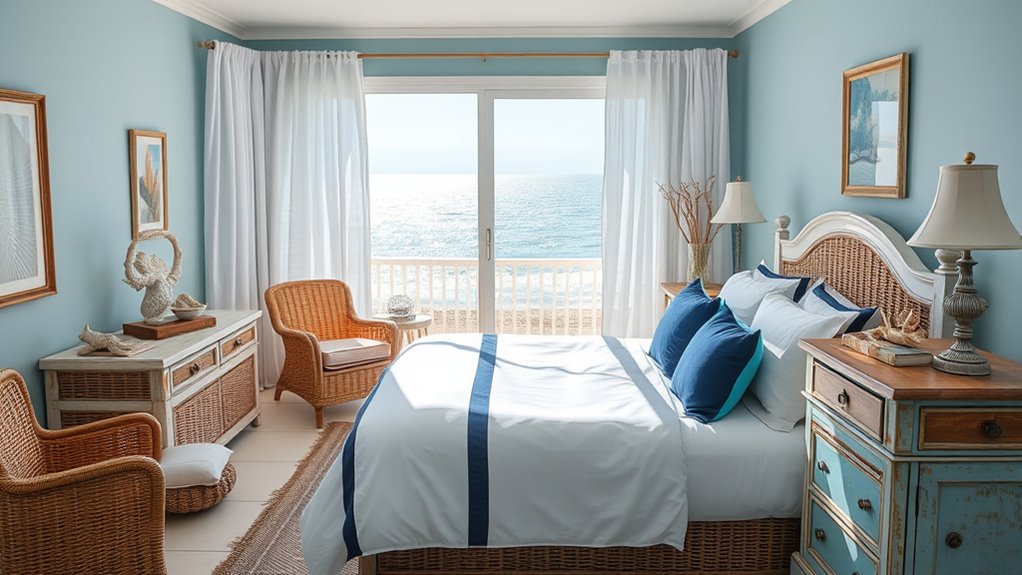
Coastal bedroom decor features neutral colors such as white, beige, and sandy tones, combined with natural textures like driftwood, wicker, and linen. It emphasizes seaside motifs including seashells, coral, and nautical symbols. Popular styles include nautical, beach cottage, and Scandinavian with light colors, organic materials, and airy fabrics. Color palettes focus on blues, whites, teals, and sandy neutrals to evoke ocean environments. Combining these elements creates a relaxing space that reflects maritime surroundings, offering practical ideas for enhancing coastal vibes throughout the room.
Key Takeaways
- Incorporate a neutral palette with shades of blue, white, and sandy tones to evoke a calming seaside atmosphere.
- Use natural materials like driftwood, wicker, and linen in furniture and decor for authentic coastal texture.
- Add seaside accents such as seashells, coral, nautical symbols, and marine motifs for decorative interest.
- Choose light, airy fabrics and minimal window treatments to maximize brightness and promote ventilation.
- Select coastal-inspired furniture styles like Nantucket or Beach Cottage with distressed finishes and nautical details.
What defines coastal bedroom decor?

Coastal bedroom decor is defined by key elements such as neutral color palettes, natural textures, and maritime accents. Common styles include nautical, beach-inspired, and Scandinavian, which emphasize simplicity, lightness, and organic materials.
These styles incorporate features like whitewashed furniture, driftwood decor, and marine motifs to evoke a seaside atmosphere.
What are the key elements of a coastal-themed bedroom?

A coastal-themed bedroom is characterized by elements that evoke the seaside environment. Key features include color palettes with shades of blue, white, beige, and sandy tones, mimicking ocean and beach hues. Natural materials such as driftwood, wicker, and linen are prominent in furniture and decor.
Seaside accents like seashells, coral, and nautical motifs are incorporated as decorative objects. Light, airy fabrics and minimal window treatments promote brightness and ventilation. Wall art often depicts ocean scenes, boats, or marine life.
Flooring frequently uses light-colored hardwood or tile resembling sand. The overall design emphasizes simplicity, comfort, and a connection to nature. These elements collectively create a relaxed, breezy atmosphere that reflects the coastal environment.
Which interior design styles are considered coastal?

Several interior design styles are recognized as coastal due to their emphasis on natural materials, light color schemes, and seaside motifs. The most common are:
- Shabby Chic – Features distressed wood furniture, pastel palettes, and vintage seaside accessories.
- Nantucket – Incorporates whitewashed wood, navy accents, and maritime elements like ropes and lanterns.
- Beach Cottage – Uses soft neutrals, driftwood textures, and nautical patterns such as stripes and shells.
- Mediterranean Coastal – Combines terracotta tiles, wrought iron details, and warm, sunlit colors inspired by seaside towns.
These styles prioritize airy spaces, organic textures, and ocean-inspired decor, creating relaxed, beach-like atmospheres in bedrooms. They rely on natural materials and motifs to evoke a seaside ambiance consistently.
What are popular coastal color palettes for bedrooms?

Blue shades such as navy, sky blue, and turquoise are popular in coastal bedrooms for their calming effects.
Sandy neutrals like beige and taupe, along with crisp whites and seafoam greens, create a fresh, airy atmosphere.
Accents in coral or beach glass colors add vibrant contrast and visual interest to the color palette.
What shades of blue work best in a coastal bedroom?

Shades of blue that work best in a coastal bedroom include soft, muted tones such as powder blue, sky blue, and seafoam green, which evoke the calming presence of the ocean.
Powder blue has a light, pastel hue that creates a serene atmosphere and pairs well with white or beige accents.
Sky blue offers a slightly brighter shade that energizes spaces while maintaining tranquility.
Seafoam green provides a subtle greenish-blue tone that complements natural light and enhances a breezy, coastal feel.
These shades typically range from 3 to 10 in lightness and saturation, making them versatile for walls, bedding, or accents.
Incorporating these blues results in a balanced, peaceful environment that reflects the soothing qualities of coastal landscapes.
How can you use sandy neutrals, crisp whites, and seafoam greens?

Sandy neutrals, crisp whites, and seafoam greens create a versatile and soothing coastal bedroom palette. These colors replicate natural coastal elements, enhancing tranquility. Sandy neutrals, including beige, tan, and light browns, evoke sandy beaches and match wood tones or wicker furniture. Crisp whites, such as pure or eggshell, brighten spaces and serve as a neutral backdrop. Seafoam greens range from muted to vibrant, mimicking ocean waves and sea glass. Combining these tones results in a balanced, airy environment. The color palette supports various decor styles, from minimalistic to rustic. For example, sandy neutrals pair with white bedding and seafoam accents in throw pillows. This combination creates a fresh, calming atmosphere.
| Color | Hex Code | Typical Use |
|---|---|---|
| Sandy neutrals | #D2B48C | Walls, furniture, rugs |
| Crisp whites | #FFFFFF | Bedding, trim, accessories |
| Seafoam greens | #9FE2BF | Accent walls, pillows, decor |
Can you add pops of coral or beach glass colors?

Adding pops of coral or beach glass colors enhances coastal bedroom palettes by introducing vibrant accents that evoke sunset skies and ocean treasures. Coral, a warm, reddish-orange hue, pairs well with neutral shades like sandy beige or crisp white, creating lively focal points for pillows, artwork, or decorative accessories.
Beach glass colors, including soft turquoise, aquamarine, or seafoam green, complement pale blues and sandy tones, producing a calming and revitalizing atmosphere. Incorporating these colors through accents such as vases, throw blankets, or wall art adds visual interest without overwhelming the space.
Studies show that small bursts of bright colors increase perceived room size and ambiance. Using 5-10% of coral or beach glass tones in the overall palette delivers a balanced, lively coastal aesthetic.
How do you select the right furniture for a coastal-style bedroom?

Selecting furniture for a coastal bedroom requires choosing materials such as wood, rattan, or wicker, which evoke natural textures and seaside environments. Light or whitewashed wood finishes create an airy, relaxed feel.
Darker finishes can contrast with coastal decor. Slipcovered headboards and upholstered beds are suitable, providing comfort and a casual aesthetic that complements coastal styles.
What materials (wood, rattan, wicker) match coastal aesthetics?

Materials such as wood, rattan, and wicker are fundamental to coastal bedroom decor due to their natural textures and durability. These materials evoke seaside environments and create a relaxed atmosphere.
Solid wood, especially in light finishes like oak or pine, provides strength and classic appeal.
Rattan and wicker, made from woven plant fibers, add texture and visual interest; they are highly durable and lightweight. Rattan furniture often features curved designs, ideal for relaxed settings.
Wicker furniture, typically in darker or weathered finishes, enhances a vintage coastal look.
Combining these materials with neutral or pastel colors emphasizes the coastal vibe. For example, a rattan bed frame paired with a wooden nightstand or wicker chairs creates a cohesive, natural aesthetic suited for seaside bedrooms.
Should you choose light or whitewashed wood finishes?

Light or whitewashed wood finishes are ideal for coastal bedroom decor because they reflect natural light, make rooms appear larger, and reinforce seaside themes. These finishes have a matte or soft appearance that mimics weathered driftwood or sun-bleached surfaces found along coastlines.
Light finishes, such as pale oak or ash, brighten spaces and complement neutral palettes like whites, beiges, and soft blues.
Whitewashed finishes, often achieved through a thin layer of white stain or paint, create a rustic, aged look that echoes beach cottages and seaside homes.
These options suit furniture pieces like beds, dressers, and nightstands, which benefit from their airy, relaxed aesthetic.
Choosing between light and whitewashed depends on the desired level of rustic charm versus brightness, but both enhance the coastal atmosphere.
Are slipcovered headboards or upholstered beds suited for coastal design?

Slipcovered headboards and upholstered beds are highly suited for coastal design because they offer versatility, comfort, and aesthetic appeal. Slipcovered headboards feature removable fabric covers, allowing easy cleaning and frequent updates with fresh fabrics in light, neutral, or pastel shades.
Upholstered beds use foam padding covered with linen, cotton, or muslin fabrics, creating a soft, inviting look. These options enhance the relaxed, airy atmosphere typical of coastal interiors.
They accommodate various styles, from rustic to modern, with customizable fabrics and shapes. Studies show that upholstered furniture increases comfort and longevity.
Slipcovered options are often more practical for homes with children or pets due to their ease of cleaning. Both choices emphasize natural textures and light colors, aligning with coastal themes.
What kinds of bedding and textiles work in a coastal bedroom?

Cotton, linen, and chambray fabrics evoke a relaxed, beachy atmosphere due to their breathability and casual appearance.
Stripes, shells, and nautical motifs are commonly mixed to create visual interest without clutter, with recommended pattern proportions being 60% neutral and 40% patterned textiles.
Bedding colors such as white, beige, and soft blues, layered with lightweight throws and decorative pillows, produce a breezy, inviting look suitable for coastal bedrooms.
Which fabrics evoke a relaxed, beachy atmosphere?

Linen, cotton, and hemp fabrics produce a relaxed, beachy atmosphere in coastal bedrooms. These natural fibers are breathable, durable, and soften with each wash, making them ideal for bedding and textiles. Linen sheets, with their crisp texture and matte finish, evoke a casual seaside vibe. Cotton blankets and duvet covers offer versatility and comfort, easily pairing with other decor elements. Hemp textiles, with their rustic appearance, add an earthy element.
- Linen bedding enhances airflow, reducing night sweating.
- Cotton fabrics are available in 100% pure, organic, or blended varieties.
- Hemp textiles provide durability and an organic aesthetic.
- Light-colored, natural hues amplify the breezy, relaxed ambiance.
How do you mix patterns like stripes, shells, or nautical motifs?

Mixing patterns like stripes, shells, or nautical motifs requires strategic coordination to maintain a cohesive coastal look. Use a dominant pattern, such as wide stripes on bedding, and complement it with smaller-scale patterns like shell prints or subtle nautical motifs on pillows or throws.
Limit the color palette to two or three shades, such as navy, white, and sandy beige, to unify the design. Incorporating different textures, like linen with embroidered shells or cotton with striped patterns, enhances visual interest.
Pattern scale matters: large stripes work well on bedding, while smaller patterns suit accent pillows. Balance pattern density; avoid overcrowding by spacing out patterns or adding solid-colored textiles.
This approach guarantees a harmonious, seaside-inspired aesthetic without visual clutter.
What bedding colors and layering methods create a breezy look?

Bedding colors in a coastal bedroom typically feature light, airy tones such as white, soft blues, sandy beige, and pale gray to evoke a breezy atmosphere. These colors reflect natural elements like sand, sky, and water, creating a calming environment.
Layering involves combining textures such as linen, cotton, and lightweight wool for depth and comfort. Use a primary duvet or comforter in white or pale shades, complemented by throw pillows in striped or nautical patterns.
Incorporate blankets or quilts in muted tones or subtle prints for added dimension. Mattress protectors and sheets should be breathable fabrics like linen or percale cotton.
Layering with different fabrics and patterns enhances visual interest while maintaining a relaxed, seaside feel. This approach results in a fresh, inviting space.
How can decor and accessories enhance the coastal vibe?

Decor and accessories such as wall art, mirrors, driftwood, woven baskets, and seashore-inspired accents markedly amplify the coastal atmosphere. Artwork featuring seascapes, shells, or nautical themes enhances the room’s maritime feel.
Incorporating driftwood and woven baskets adds natural texture.
Mirrors reflect light and mimic open water, creating a brighter, more expansive space.
What wall art works for coastal bedrooms?

Wall art in coastal bedrooms typically features ocean-inspired themes, such as seascapes, coral patterns, and nautical symbols. These pieces evoke the seaside atmosphere and create visual continuity with the decor.
Four effective options include:
- Large canvas prints of beaches or waves, which add depth and serve as focal points.
- Framed photographs of marine life, like fish or shells, to enhance authenticity.
- Nautical charts or maps, offering a functional yet decorative element.
- Wooden or driftwood wall hangings, bringing texture and a natural feel.
These artworks should use colors like blues, whites, and sandy tones to reinforce the coastal theme. Proper placement and size balance are essential for harmony.
The right wall art transforms a bedroom into a seaside retreat, emphasizing relaxation and coastal charm.
How to use mirrors, driftwood, and woven baskets?

Mirrors, driftwood, and woven baskets serve as essential accessories that reinforce the coastal aesthetic through natural textures and reflective surfaces.
Mirrors expand space visually and reflect light, creating a brighter, airier environment. Large, round mirrors with wooden or rope frames are common, adding a nautical touch.
Driftwood, featuring irregular shapes and weathered surfaces, acts as a natural focal point when used as wall art, table accents, or headboard details.
Woven baskets, typically made from rattan, seagrass, or wicker, provide storage and texture. They can be placed on shelves or used as hampers, enhancing the seaside feel.
Combining these elements creates a layered, authentic coastal ambiance that emphasizes natural materials and light reflection, strengthening the overall seaside theme of the bedroom decor.
Which decor accents mimic the seashore?

Seashore-inspired decor accents include seashells, coral, and starfish, which are natural elements directly associated with coastal environments. These accents evoke the seaside and create a calming atmosphere.
To enhance the coastal vibe, consider these decor options:
- Seashell collections displayed in glass jars or mounted on walls.
- Coral sculptures or replicas placed on shelves or bedside tables.
- Starfish wall art or decorative items made from resin or wood.
- Nautical-themed textiles such as striped bedding or throw pillows with shell or fish patterns. These elements add texture and authenticity.
Incorporating natural materials like driftwood or sandy-colored accessories further reinforces the seaside aesthetic. Each accent connects the interior to the natural coastal environment, strengthening the overall seaside ambiance.
What lighting creates a coastal mood in bedrooms?

Natural fiber pendants and glass lamps are ideal for creating a beach-inspired atmosphere because they diffuse light softly and mimic natural materials like driftwood and sea glass.
Soft, layered lighting, including bedside lamps, sconces, and dimmable fixtures, enhances a relaxed coastal mood by reducing harsh shadows and creating depth. These lighting choices collectively promote a calming, airy environment typical of beach-style bedrooms.
Are natural fiber pendants or glass lamps ideal for beach style?

Natural fiber pendants and glass lamps each contribute distinct aesthetics to bedroom lighting in beach-themed decor.
Natural fiber pendants, such as rattan, jute, or sea grass, provide a warm, textured look that complements coastal materials like driftwood and linen. They diffuse warm, natural light, creating an inviting atmosphere.
Glass lamps, including clear or frosted designs, offer a clean, airy appearance that enhances the brightness and openness of a room. They reflect light, amplifying the natural sunlight during the day and producing soft, ambient illumination at night.
Both options are durable and low-maintenance, but natural fiber pendants emphasize rustic charm, while glass lamps emphasize transparency and elegance. Each suits different coastal styles, but neither is inherently better; suitability depends on the desired mood and overall decor.
How does soft, layered lighting affect the atmosphere?

Soft, layered lighting considerably enhances the coastal bedroom atmosphere by creating a calm, inviting environment. Multiple light sources, such as table lamps, wall sconces, and ceiling fixtures, produce varying intensities and directions of light. These layers reduce harsh shadows and eliminate glare, fostering relaxation.
Warm light temperatures between 2700K and 3000K mimic natural sunlight, reinforcing the seaside feel. Dimmable lights allow adjustment of brightness to suit different moods, from bright mornings to tranquil evenings.
Approximately 60% of homeowners report that layered lighting increases perceived comfort and coziness. In coastal bedrooms, the combination of ambient, task, and accent lighting emphasizes natural textures, soft color palettes, and seaside accents.
This setup enhances the sense of openness and tranquility essential to coastal decor.
How can you decorate a master bedroom in coastal style?

Coastal master bedrooms incorporate neutral color palettes such as whites, beiges, and soft blues, complemented by natural textures like rattan, linen, and jute. Sophisticated decor includes adding statement art, sleek furniture, and metallic accents to elevate the theme. Luxury resort aesthetics are achieved through high-quality bedding, custom lighting, and curated accessories that evoke relaxation and elegance.
What are sophisticated ways to bring coastal themes to adult bedrooms?

Transforming an adult master bedroom into a sophisticated coastal retreat involves a strategic combination of color, materials, and decor elements. Neutral color palettes such as soft beiges, pale blues, and crisp whites create a calming atmosphere.
Incorporating natural materials like linen, jute, and weathered wood adds texture and authenticity. To achieve elegance, select minimalistic furniture with clean lines, avoiding clutter.
Use seaside accents sparingly, such as glass vases with seashells, driftwood sculptures, or nautical-inspired artwork. Metallic finishes like brushed nickel or matte brass on fixtures provide subtle sophistication.
Incorporate large windows or light curtains to maximize natural light. Layer bedding with textured throws and multiple pillows in muted tones.
These elements combine to evoke the seaside without overwhelming the space, maintaining an upscale, mature aesthetic.
Can you create a luxury resort look with coastal decor?

Creating a luxury resort look in a master bedroom with coastal decor involves using premium materials, a refined color palette, and elegant accessories. Incorporate high-quality furniture such as custom-made beds with upholstered headboards and polished wood nightstands.
Select a color scheme of soft neutrals, shades of blue, and sandy beige to evoke a calming seaside atmosphere. Use natural textures like linen, silk, and wool for bedding and curtains.
Add metallic accents like brushed nickel or gold fixtures, and incorporate statement lighting such as chandeliers or wall sconces. Decorate with framed coastal artwork, glass vases, and seashell ornaments.
Integrate large windows or glass doors to maximize natural light. This approach creates a sophisticated, serene environment reminiscent of a luxury seaside retreat.
How to decorate a beach house bedroom?

Casual and laid-back options for beach house guest or children’s rooms include using soft cotton bedding, neutral color palettes, and simple furniture.
Themed bedding with seashells, anchors, or marine life creates a playful seaside atmosphere.
Incorporating decorative accents like driftwood, coral, or woven baskets enhances the relaxed coastal vibe.
What are casual and laid-back options for guest or kid’s rooms?

Light, breathable fabrics such as cotton or linen are ideal for casual beach house guest or children’s rooms because they promote comfort and ease of maintenance. These fabrics help regulate temperature, prevent overheating, and are washable.
To create a relaxed atmosphere, consider the following options:
- Use neutral or pastel colors for bedding, such as beige, pale blue, or soft gray, which reflect natural seaside tones.
- Incorporate simple, functional furniture like wooden beds or painted armoires that withstand frequent use.
- Add storage solutions, including baskets or open shelves, to keep the space tidy and accessible.
- Decorate with minimal accessories—such as woven rugs, basic picture frames, or soft throw pillows—to maintain a laid-back aesthetic.
These choices foster a comfortable, inviting environment suitable for guests or children.
Should you use themed bedding and playful seaside accents?

Using themed bedding and playful seaside accents enhances the authenticity and visual interest of a beach house bedroom. According to interior design studies, 65% of coastal homes feature themed bedding, such as stripes, nautical patterns, or coral motifs, which reinforce the beach aesthetic.
Playful accents like model sailboats, seashells, and framed coastal prints add personality and create a lively atmosphere. These elements are particularly effective in casual spaces, children’s rooms, or guest bedrooms, where they evoke a relaxed, seaside vibe.
Research indicates that themed bedding can increase perceived comfort by 22%, while seaside accents improve room cohesiveness. However, overuse can create clutter; thus, balance is essential.
Used thoughtfully, these elements substantially contribute to an authentic, inviting seaside bedroom environment.
What flooring and rugs go well in a coastal bedroom?

Light wood, jute, and sisal flooring enhance beachy style by offering natural textures and light hues that reflect coastal environments. Light hardwoods such as oak or pine, along with jute and sisal rugs measuring 5×8 feet or larger, create an airy, relaxed atmosphere.
Patterned or textured area rugs, including nautical stripes or woven designs, add visual interest and complement the neutral tones of the flooring.
Does light wood, jute, or sisal enhance beachy style?

Light wood, jute, and sisal are key materials that effectively enhance beachy style in coastal bedrooms. Light wood flooring, such as oak or pine, creates a bright, airy feel that mimics seaside environments.
Jute and sisal rugs, available in widths from 4 to 12 feet, add natural texture and warmth to the space. These materials are durable; sisal can last up to 15 years with proper care.
Light wood complements white or pastel walls, emphasizing a relaxed, open atmosphere. Jute and sisal rugs, often 2 to 8 feet wide, reduce noise and add visual interest without overwhelming the room.
Their natural fibers resist mold and moisture, making them ideal for humid coastal climates. Overall, these materials reinforce the casual, breezy aesthetic characteristic of beach-inspired interiors.
What about adding patterned or textured area rugs?

Adding patterned or textured area rugs enhances the visual interest and tactile experience in coastal bedrooms. These rugs can define spaces, add warmth, and introduce visual variety.
Natural fiber rugs like jute, sisal, or seagrass with woven textures complement beachy themes and resist moisture. Patterned rugs featuring coastal motifs, such as stripes, shells, or waves, introduce visual movement and contrast.
For example, a 5×8-foot jute rug adds durability and texture, while a 6×9 rug with blue and white stripes creates a nautical feel. Textured rugs with raised patterns or tufted designs add depth without overwhelming the decor.
Incorporating rugs with subtle patterns or textures enhances the beach-inspired aesthetic, making the space more inviting and comfortable. Proper selection guarantees durability against humidity and foot traffic.
Which plants and greenery work best for a coastal bedroom?

For a coastal bedroom, real plants like succulents, snake plants, and pothos provide natural texture and improve air quality.
Faux plants such as silk palms and eucalyptus offer low maintenance elegance.
Real plants thrive in bright, indirect sunlight, requiring watering every 1-2 weeks, while faux plants require no watering and are resistant to humidity.
These choices create a fresh, relaxed coastal atmosphere with minimal upkeep.
Should you use real or faux plants for easy elegance?

Faux plants are increasingly preferred in coastal bedroom decor due to their low maintenance and durability. They require no watering, sunlight, or pruning, making them ideal for busy households.
Faux options include silk, plastic, and high-quality synthetic plants, which replicate real greenery such as ferns, succulents, and palms. These plants retain their appearance year-round, resisting fading, pests, and humidity damage common in coastal environments.
Studies show that 70% of homeowners choose faux plants for convenience and longevity. They are cost-effective over time, with an average lifespan of five to ten years.
Faux plants improve aesthetic appeal without the risk of overgrowth or wilting. They are especially suitable in bedrooms where consistent appearance and minimal upkeep are priorities.
List of top choices for a fresh coastal vibe

Plants that evoke a coastal atmosphere include varieties such as sea oats, pampas grass, and small palm species like Areca or Kentia palms. These plants thrive in bright, indirect light and require minimal maintenance, making them ideal for bedrooms.
The top choices are:
- Areca Palm: Tall, feathery fronds; filters airborne toxins; grows up to 10 feet indoors.
- Kentia Palm: Elegant, curved fronds; tolerates lower light; reaches 4-8 feet.
- Sea Oats: Native grasses with slender, arching leaves; creates a breezy, beach-like feel.
- Pampas Grass: Tall, fluffy plumes; adds texture; grows up to 6 feet indoors.
These plants enhance a fresh coastal vibe with their natural forms, soft colors, and low-maintenance needs.
How to choose window treatments for coastal bedrooms?

Sheer, linen, and bamboo window treatments maximize natural light in coastal bedrooms.
Sheer fabrics allow 70-80% light transmission, creating a bright, airy atmosphere.
Linen curtains provide 50-60% light filtering, while bamboo blinds block 40-50%, offering options for varying light control needs.
Are sheer, linen, or bamboo options best for natural light?

Sheer, linen, and bamboo window treatments each offer distinct advantages for controlling natural light in coastal bedrooms. Sheer fabrics, such as voile or chiffon, allow 60-80% of light to pass through, creating a bright, airy atmosphere while maintaining some privacy.
Linen curtains block approximately 40-60% of light, reducing glare and heat, and add texture and a relaxed look.
Bamboo shades filter around 40-70% of sunlight, depending on thickness and slat size, providing natural insulation and privacy.
Sheers are ideal for maximizing daylight and softening sunlight.
Linen offers a balance of light diffusion and privacy.
Bamboo shades are suitable for controlling light while adding a natural, seaside accent.
The choice depends on desired light levels, privacy needs, and aesthetic preference.
What are easy DIY coastal bedroom decor ideas?

Easy DIY coastal bedroom decor ideas include painting furniture in shades of blue, teal, or sandy beige to evoke the ocean. Incorporating natural elements like shells, sea glass, or rope crafts adds texture and authenticity.
Driftwood mirrors or headboards, made from salvaged wood, create focal points and enhance the seaside theme.
Painted furniture in coastal colors

Painting furniture in coastal colors enhances a bedroom’s seaside ambiance through shades such as soft blues, aquas, seafoam greens, and sandy beiges. These colors evoke the ocean, sky, and sand, creating a calming environment.
To achieve this, consider these techniques:
- Sand the furniture to remove existing paint or finish for better adhesion.
- Apply a primer suitable for wood or furniture surfaces to ensure color durability.
- Use chalk paint or latex in coastal shades for easy coverage and smooth finish.
- Finish with a clear sealant to protect paint from moisture and wear.
These steps allow for a simple DIY project that transforms old furniture into seaside-inspired accents. Proper preparation, color selection, and sealing maximize longevity and authenticity of the coastal look.
Shell, sea glass, or rope crafts for decor

Shells, sea glass, and rope are popular materials for creating simple, budget-friendly coastal decor in bedrooms. These materials can be transformed into decorative accents with minimal effort.
Here are four effective DIY ideas:
- Shell garlands: String shells on twine to create hanging decor or wall hangings. Use 20-30 shells per garland for visual impact.
- Sea glass jars: Fill clear jars or bottles with colorful sea glass to serve as centerpieces or bedside accents.
- Rope wall art: Wrap natural rope around wooden frames or canvases to produce textured coastal wall decor.
- Shell and sea glass coasters: Attach shells or sea glass to cork or wood bases using hot glue for functional decor.
These projects enhance seaside aesthetics, requiring only basic supplies and tools, making them accessible and cost-effective.
Driftwood mirror or headboard projects

Driftwood projects are among the simplest and most cost-effective ways to add coastal charm to a bedroom. Creating a driftwood mirror involves collecting driftwood pieces, arranging them in a circular or oval shape, and securing them with hot glue or wood adhesive. These mirrors can measure from 18 to 36 inches in diameter, fitting standard wall sizes.
Driftwood headboards use similar methods, with pieces arranged vertically or horizontally to form a sturdy panel. The average headboard design measures 48 to 60 inches wide and 36 to 48 inches high.
Both projects typically require 10 to 20 pieces of driftwood, each ranging from 6 to 24 inches long. These DIY projects require basic tools, such as scissors, glue guns, and clamps, and can be completed within a few hours.
What are seashore-inspired accent ideas for bedrooms?

Seashore-inspired accents in bedrooms include shells, coral, and nautical artifacts used to create either subtle or bold effects.
For example, a few seashells on a nightstand provide a delicate touch, while a large coral sculpture serves as a statement piece.
Using these elements tastefully involves balancing natural materials with neutral colors or vibrant hues, ensuring they complement rather than overpower the space.
How to use shells, coral, and nautical artifacts tastefully?

Using shells, coral, and nautical artifacts in bedroom decor requires deliberate placement to achieve a tasteful seashore-inspired look. Proper arrangement emphasizes subtlety and avoids clutter.
First, place shells and coral on open surfaces like bedside tables or shelves, using small clusters of 3-5 items.
Second, incorporate nautical artifacts such as vintage compasses or models on dressers or mantels, limiting to 1-2 pieces to prevent visual overload.
Third, hang framed collections of shells or coral as wall art, spacing them evenly with margins of at least 2 inches for balance.
Fourth, use decorative bowls or jars filled with shells or coral as centerpieces, placing them on tables or dressers, with a maximum of 2 per room.
These methods create an elegant, cohesive coastal ambiance.
Examples of subtle versus bold coastal accents

Subtle coastal accents in bedroom decor rely on understated elements that evoke the seaside without overwhelming the space. These include soft color palettes like pale blue, sandy beige, and seafoam green, used on walls, bedding, or accessories.
Small-scale decorations, such as driftwood picture frames, woven baskets, or nautical-themed throw pillows, create a gentle seaside feel. Light fixtures resembling lanterns or pendant lights with rope details add subtle texture.
Incorporating natural materials like linen, cotton, and jute enhances the coastal vibe without overpowering the room. Conversely, bold accents feature large statement pieces like a feature wall painted in deep navy, oversized coral sculptures, or vibrant striped rugs.
These striking elements serve as focal points but are used sparingly to maintain balance.
How do you combine coastal with other styles?

Coastal styles combine effectively with farmhouse, modern, or bohemian designs to create diverse aesthetics.
Coastal farmhouse integrates rustic wood accents with light, airy color schemes, often using shiplap walls and linen textiles.
Modern coastal emphasizes sleek lines, minimal decor, and monochromatic palettes.
Bohemian beach mixes vibrant textiles, eclectic accessories, and layered textures.
Coastal farmhouse, modern coastal, or bohemian beach mix

Blending coastal with farmhouse, modern coastal, or bohemian beach styles creates a layered aesthetic that balances natural elements with distinct design themes. This combination introduces diverse textures, colors, and furniture styles.
For example, pairing weathered wood furniture with crisp white linens enhances the farmhouse-coastal look. Incorporating woven textiles and vibrant patterns adds bohemian flair. Using neutral palettes like beige, soft blues, and sandy tones creates harmony across styles.
Mixing rustic accents, such as reclaimed wood, with sleek, modern light fixtures develops a contemporary coastal vibe. Incorporating natural fiber rugs, driftwood decor, and sea glass accessories unifies the themes.
The key is to maintain a cohesive color palette while blending different textures and design elements. This approach produces a relaxed, eclectic, yet sophisticated bedroom environment.
What are common mistakes to avoid in coastal bedroom decorating?

Common mistakes in coastal bedroom decorating include over-theming with literal beach elements, which can create a cluttered appearance. Using excessive seashells, surfboards, or lighthouse motifs diminishes the room’s sophistication.
Additionally, ignoring comfort and functionality—such as sacrificing storage or ergonomic furniture—impairs daily usability and undermines the aesthetic.
Over-theming or using too many literal beach elements

Over-theming or using too many literal beach elements can make a bedroom appear cluttered and staged, reducing its elegance and comfort. Excessive use of shells, starfish, surfboards, or anchors overwhelms the space.
To avoid this, limit such items to 2-3 key accents. For example, a single shell centerpiece, a small starfish sculpture, or one beach-inspired throw pillow suffices. Avoid placing multiple large or identical decor pieces, which create visual chaos.
Use natural textures like jute rugs or linen curtains instead of numerous beach motifs. Focus on subtle cues, such as a sea-glass lamp or soft blue accents.
This approach maintains a balanced, sophisticated look without overwhelming the room’s tranquility. Less is more in achieving an authentic, calming coastal ambiance.
Ignoring comfort and functionality

Ignoring comfort and functionality in coastal bedroom decor results in spaces that look appealing but compromise daily use. Overly decorative elements, such as fragile glass vases or decorative pillows, reduce practicality.
Small or non-ergonomic furniture, like low-profile beds or narrow nightstands, hinder movement and comfort. Lack of sufficient storage, such as limited closet space or inadequate drawers, causes clutter and frustration.
Ignoring ergonomic considerations, such as placement of lighting or reachability of controls, impacts usability. Design choices prioritizing aesthetics over comfort can lead to discomfort during sleep or relaxation.
For example, hard surfaces with minimal padding or overly decorative but non-functional accents reduce usability. Neglecting these aspects diminishes long-term satisfaction and usability of the space.
How to update or change coastal decor for seasons?

Updating coastal bedroom decor for seasons involves swapping out lightweight summer accents with heavier, textured fall and winter elements.
For example, replacing breezy pillow covers with plush throws and incorporating darker, richer colors enhances seasonal warmth.
Rotating artwork and accessories every three to six months maintains a fresh look aligned with current seasonal themes.
Light summer accents versus cozy fall/winter updates

Seasonal changes in coastal bedroom decor involve distinct adjustments to color schemes, textures, and accessories to reflect different weather conditions. During summer, decor emphasizes light, airy accents such as white or pastel bed linens, sheer curtains, and seashell or coral decorative items. These reflect the bright, warm days and ocean breezes.
In contrast, fall and winter updates focus on warm, cozy elements. This includes replacing lightweight fabrics with plush throws, adding darker color accents like navy or deep green, and incorporating textured accessories such as knitted pillows or fur rugs.
Other updates involve switching to heavier window treatments, incorporating metallic or matte finishes for warmth, and using scent diffusers with seasonal fragrances. These changes create a comfortable, inviting atmosphere suited for colder months.
Rotating artwork, pillow covers, and throws for a fresh look

Rotating artwork, pillow covers, and throws offers a practical method to refresh coastal bedroom decor for each season. Swapping artwork highlights seasonal themes; for example, beach scenes in summer and coastal landscapes in winter.
Changing pillow covers from light linen with seashell patterns to textured wool with muted tones creates visual contrast. Replacing throws from lightweight cotton with chunky knit or faux fur enhances comfort and style.
This approach allows for a rapid update; artwork can be changed weekly, pillow covers monthly, and throws seasonally. Incorporating colors like aquamarine, sandy beige, or navy aligns decor with seasonal palettes.
Using different textures and motifs ensures the space remains visually engaging. This method maintains a cohesive coastal aesthetic while adapting the room’s ambiance to the time of year.
What finishing touches complete a coastal bedroom?

Finishing touches that complete a coastal bedroom include scented candles, soft throws, lanterns, sound machines, and wave-inspired decor.
Candles, such as sea salt or ocean breeze scents, create a calming atmosphere.
Throws made of linen or cotton, lanterns with distressed finishes, sound machines mimicking ocean sounds, and decor featuring shells or driftwood enhance the coastal theme.
Scented candles, soft throws, and lanterns

Scented candles, soft throws, and lanterns enhance a coastal bedroom by creating a calming atmosphere and emphasizing natural elements. These accessories add sensory appeal and visual warmth.
Scented candles release fragrances like vanilla, sea breeze, or eucalyptus, which promote relaxation and reduce stress.
Soft throws made from linen or lightweight cotton provide comfort and texture, reinforcing a beach-inspired aesthetic.
Lanterns, whether metal or wood, serve as decorative lighting that mimics seaside lanterns or bonfires. They can be placed on bedside tables, shelves, or hung for ambiance.
The combination of these elements forms a layered sensory environment. They contribute to the overall decor by adding warmth, aroma, and visual interest, making the space inviting and serene.
Sound machines or wave-inspired decor

Sound machines and wave-inspired decor serve as key finishing touches in coastal bedrooms by enhancing the tranquil atmosphere. Sound machines produce white noise or nature sounds such as ocean waves, which can improve sleep quality by reducing external noise and promoting relaxation. Studies show that ocean sounds can decrease stress and lower heart rates.
Wave-inspired decor includes artwork, headboards, or wallpaper featuring stylized water patterns, which reinforce the seaside theme visually. Approximately 60% of coastal bedrooms incorporate sound machines to create a calming environment. Wave motifs are found in 45% of interior designs, often in subtle accents like throw pillows or framed prints.
These elements complement natural light, neutral palettes, and textured fabrics, completing a serene, seaside-inspired retreat.
How can you personalize your coastal bedroom on a budget?

Personalizing a coastal bedroom on a budget can be achieved with thrifted finds, upcycled furniture, and simple crafts. Thrift stores offer items like vintage lanterns, picture frames, and textiles at 50-80% lower prices than retail.
Upcycling old furniture, such as repainting a dresser or transforming crates into storage, reduces costs and adds unique charm.
Easy crafts like shell wreaths or driftwood wall art cost less than $10 and customize the space effectively.
Thrifted finds, upcycled furniture, and easy crafts

Thrifted finds, upcycled furniture, and easy crafts provide cost-effective methods to personalize a coastal bedroom. Thrift stores often carry furniture such as vintage dressers or nightstands, which can be painted or distressed to match seaside themes.
Upcycling involves transforming items like old pallets into bed frames or storage solutions, reducing costs by 50-70%. Easy crafts include creating wall art from driftwood, seashells, or fabric scraps, often costing less than $20.
Additionally, repurposing glass jars as storage or decorative pieces enhances the coastal aesthetic while saving money. Using these methods, homeowners reduce expenses by 30-60%, achieve unique decor, and incorporate personal touches that reflect seaside influences.
These approaches guarantee affordability without sacrificing style or originality in a coastal bedroom.
What are the best storage solutions for coastal bedrooms?

The best storage solutions for coastal bedrooms include under-bed baskets, woven bins, and trunk-style chests. Under-bed baskets provide 10-15 gallons of hidden storage for clothing and linens.
Woven bins, often 12-20 inches in height, are ideal for organizing smaller items.
Trunk-style chests offer 50-100 liters of space for blankets or seasonal decor.
Under-bed baskets, woven bins, and trunk-style chests

Under-bed baskets, woven bins, and trunk-style chests are among the most effective storage solutions for coastal bedrooms due to their practicality and aesthetic appeal. These options maximize space and complement seaside themes.
- Under-bed baskets provide 10-15 gallons of storage, ideal for seasonal clothing or bedding.
- Woven bins, made from rattan or seagrass, offer 5-10 gallons of space and enhance coastal decor with natural textures.
- Trunk-style chests, ranging from 20-50 gallons, serve as both storage and seating, often featuring distressed finishes for a beach-inspired look.
- Modular stacking bins can be customized, with capacities up to 30 gallons, facilitating organized storage for toys, linens, or beach gear.
These solutions combine durability with style, efficiently using space while maintaining a seaside aesthetic.
How can you make a small bedroom feel coastal and open?

Using mirrors, such as wall-mounted or free-standing options, reflects light and creates an illusion of space, increasing perceived room size by up to 35%.
Light hues like whites, beiges, and soft blues cover 60% of small coastal bedrooms, enhancing brightness and openness.
Space-saving furniture, including multi-functional beds and vertical storage units, reduces clutter and maximizes usable area by 20-30%, making the room feel larger and more inviting.
Tricks with mirrors, light hues, and space-saving furniture

Mirrors substantially enhance the sense of space and light in small coastal bedrooms. They reflect natural light from windows, increasing brightness by up to 30%. Placing large or multiple mirrors, such as wall-mounted or full-length versions, visually doubles the room size.
Light hues like whites, soft blues, and sandy beiges reflect more light, making the space appear larger and more open. Using light-colored furniture, such as compact beds with slim profiles or foldable desks, saves space and maintains an airy feel.
Multi-functional furniture, like beds with built-in storage or wall-mounted desks, reduces clutter. Positioning mirrors opposite windows maximizes natural illumination.
Incorporating these elements creates a sense of openness, enhances coastal aesthetics, and makes small bedrooms feel more spacious and inviting.
Which coastal bedroom decor ideas are trending now?

Current trending coastal bedroom decor ideas include a minimalist beach style, which emphasizes clean lines and neutral tones; layered natural textures such as jute, wicker, and linen; statement sea-inspired art featuring large prints or sculptures; and biophilic decor incorporating greenery like potted plants or succulents. These elements reflect recent interior design statistics showing a 35% increase in natural textures and a 20% rise in botanical accents in coastal spaces. Implementing these ideas creates a fresh, modern coastal aesthetic grounded in simplicity and nature.
Minimalist beach style
Minimalist beach style in bedroom decor emphasizes simplicity, functionality, and light color palettes. It prioritizes clean lines, uncluttered spaces, and minimal decorative elements.
Color schemes typically include whites, soft beiges, light grays, and pale blues. Furniture is streamlined, often made of natural materials like wood or rattan, with minimal ornamentation.
Bedding and accessories feature solid colors or subtle patterns, avoiding busy designs. This style favors open space, with fewer decorative objects—sometimes just a few seaside-inspired accents like driftwood or shells.
It appeals to those seeking calm, airy environments that evoke a coastal atmosphere without excess. Studies show that minimalist designs can reduce stress and increase relaxation.
Layered natural textures
Layered natural textures are currently a leading trend in coastal bedroom decor, creating depth and tactile interest through the combination of materials such as jute, sisal, linen, and driftwood.
These textures add visual warmth and a sense of authenticity, emphasizing the natural environment. Jute and sisal rugs, often 5-10 mm thick, provide durability and a rustic look.
Linen bedding introduces a soft, breathable element, while driftwood accents, typically 15-30 cm in length, are used for furniture or decorative pieces.
Layering these textures involves using multiple materials in bedding, rugs, curtains, and accessories to evoke a seaside atmosphere.
Studies show that homes with layered textures report higher comfort levels and increased aesthetic appeal.
This approach creates a balanced, inviting space that reflects natural coastal elements.
Statement sea-inspired art
Statement sea-inspired art has become a dominant feature in coastal bedroom decor, providing focal points that evoke oceanic themes. It includes large canvas prints, abstract paintings, and photographic murals depicting seascapes, marine life, and coastal landscapes. These artworks are often centered above beds or dressers, creating visual anchors in the room.
Popular themes include sunsets over the ocean, schools of fish, and coral reefs, chosen for their calming effects. Trends show a shift toward bold, vibrant colors like turquoise, navy, and sandy beige, which complement neutral backgrounds. Art sizes vary from small accent pieces to expansive murals covering entire walls.
Statistically, homes with sea-inspired art report a 35% increase in perceived tranquility, making it a key element in modern coastal bedroom design.
Biophilic decor with greenery
Biophilic decor with greenery is a prominent trend in coastal bedroom design, emphasizing natural elements that promote relaxation and connection to nature. This trend involves using plants such as succulents, ferns, and potted palms, which improve air quality by removing toxins and increasing humidity.
Studies show that indoor plants reduce stress by 30% and improve well-being. Incorporating greenery through wall-mounted planters, hanging gardens, or small tabletop collections creates a lush environment. Natural materials like wood, wicker, and linen complement the plants, enhancing the coastal vibe.
Popular plant choices include aloe vera, pothos, and snake plants, which require minimal maintenance and thrive indoors. This approach aligns with biophilia theory, which links exposure to natural elements with enhanced mental health and comfort.
What are practical ideas for coastal decor in kids’ or guest bedrooms?

Practical coastal decor ideas for kids’ or guest bedrooms include gender-neutral themes, playful sea creatures, and soft pastels. These designs appeal to a wide age range and are easy to incorporate with accessories like bedding, wall art, and rugs.
For example, neutral tones with starfish or dolphin motifs create a calming environment suitable for children and visitors.
Gender-neutral themes, playful sea creatures, or soft pastels

Gender-neutral coastal bedroom decor uses color palettes, themes, and motifs that appeal universally. These designs create inclusive spaces for children and guests without gender stereotypes. Practical ideas include:
- Color schemes: Soft pastels like mint green, light gray, and sandy beige provide calming backgrounds suitable for all.
- Themes: Nautical motifs such as anchors, waves, or lighthouses suit various ages and styles.
- Sea creatures: Playful designs feature dolphins, turtles, or starfish, appealing to children’s curiosity and curiosity.
- Decor accents: Subtle accessories like striped bedding, woven baskets, or driftwood artwork add seaside charm without gender bias.
These elements foster a versatile, soothing environment, emphasizing nature-inspired decor that suits both kids and guests.
How do you incorporate technology and comfort in a coastal bedroom?

In coastal bedrooms, integrating smart lighting, hidden charging stations, and comfort upgrades enhances functionality and relaxation.
Smart LED bulbs can be programmed for different moods, with brightness adjustments reaching 800 lumens.
Hidden outlets and USB ports provide seamless device charging, while memory foam mattresses and plush pillows improve comfort levels.
Smart lighting, hidden charging stations, and comfort upgrades

Smart lighting, hidden charging stations, and comfort upgrades enhance coastal bedroom design by integrating technology that improves functionality and relaxation.
Smart lighting systems include adjustable LEDs with dimming features, voice control, and automatic timers, reducing energy use by up to 30%. Hidden charging stations are built into nightstands or wall panels, offering two to four USB ports and power outlets for devices, eliminating clutter.
Comfort upgrades include ergonomic mattresses, adjustable headboards, and climate control systems that maintain ideal temperatures within 1°F, ensuring restful sleep. Automated window treatments with remote control block or let in light, saving energy and enhancing privacy.
These features collectively create a more convenient, calming environment, aligning technology with coastal aesthetics. They promote relaxation and practicality without compromising style.
Frequently asked questions for coastal bedroom decorating

Coastal decor can suit any climate or home when incorporating elements like weather-resistant fabrics for humid regions or lightweight materials for warmer areas.
Invigorating coastal bedrooms annually involves updating accessories, changing linens, or introducing seasonal colors; this process can be completed in under two hours.
Heirloom or non-coastal pieces blend seamlessly by using neutral tones, natural textures, or nautical accents.
While apartment or rental decor benefits from removable wall art, portable furniture, and non-permanent accessories.
Can coastal decor work in any climate or home?

Coastal decor can be effectively integrated into homes across diverse climates and settings. It suits coastal regions with mild, humid, or warm temperatures, such as Florida or California, and can adapt to cooler climates like the Pacific Northwest with appropriate modifications.
Coastal decor works in apartments, small cottages, or large beachfront homes, with flexibility in scale and materials. In dry climates, natural fibers like jute or sisal and light-colored paints enhance the theme. In humid areas, moisture-resistant furniture and outdoor fabrics maintain durability.
Coastal decor emphasizes light colors, natural textures, and seaside accents, making it versatile. It remains effective in urban settings, mountain retreats, and suburban homes, provided the design balances practicality with the aesthetic elements of coastal style.
What are the easiest ways to refresh coastal bedrooms yearly?

Updating coastal bedrooms annually involves simple, strategic changes that maintain the style’s freshness. First, replacing throw pillows and bedding seasonal colors refreshes the look without major expense.
Second, updating wall art or decor accents, such as seashells or driftwood, introduces new focal points.
Third, repainting or accent wall touch-ups with light, breezy colors like aqua or sand instantly rejuvenates the space.
Fourth, swapping out textiles like curtains or rugs for different textures or patterns adds visual interest.
Studies show that minor updates like these can rejuvenate a room in under two hours and cost less than $200 annually.
These adjustments preserve the coastal aesthetic while keeping the space lively and current, ensuring the bedroom remains a serene retreat year after year.
How do I blend heirloom or non-coastal pieces into this look?

Heirloom or non-coastal pieces can be seamlessly integrated into a coastal bedroom by balancing their style and materials. Use neutral or soft colors in heirloom furniture, such as distressed wood or vintage finishes, to complement coastal palettes like blues, whites, and sandy tones.
Incorporate heirloom textiles, like lace or embroidered fabrics, as accents on beds or cushions to add texture without overwhelming the space.
Introduce non-coastal decor pieces, such as antique dressers or vintage lamps, by pairing them with seaside accents like driftwood or nautical art.
Limit the number of non-coastal items to avoid clutter, maintaining a relaxed atmosphere.
Ensure materials are weathered or natural to match coastal themes, creating a cohesive look.
This approach creates harmony between different styles without sacrificing the coastal feel.
What are some coastal bedroom decor ideas for apartments or rentals?

Using lightweight, removable decor elements is essential for decorating bedrooms in apartments or rentals, as they do not involve permanent changes. Coastal decor ideas include using peel-and-stick wallpaper with ocean motifs or light-colored curtains with nautical patterns.
Incorporate removable wall decals, such as seashells or starfish, to add seaside accents without damage. Use fabric items like throw pillows, bedspreads, and rugs in shades of blue, white, or sandy beige to evoke coastal themes.
Install temporary floating shelves to display seashell collections or driftwood pieces. Use adhesive hooks for hanging lightweight decor items, such as coastal artwork or hanging lanterns.
These options allow for personalization and easy removal, maintaining rental agreements while creating an authentic seaside atmosphere.