
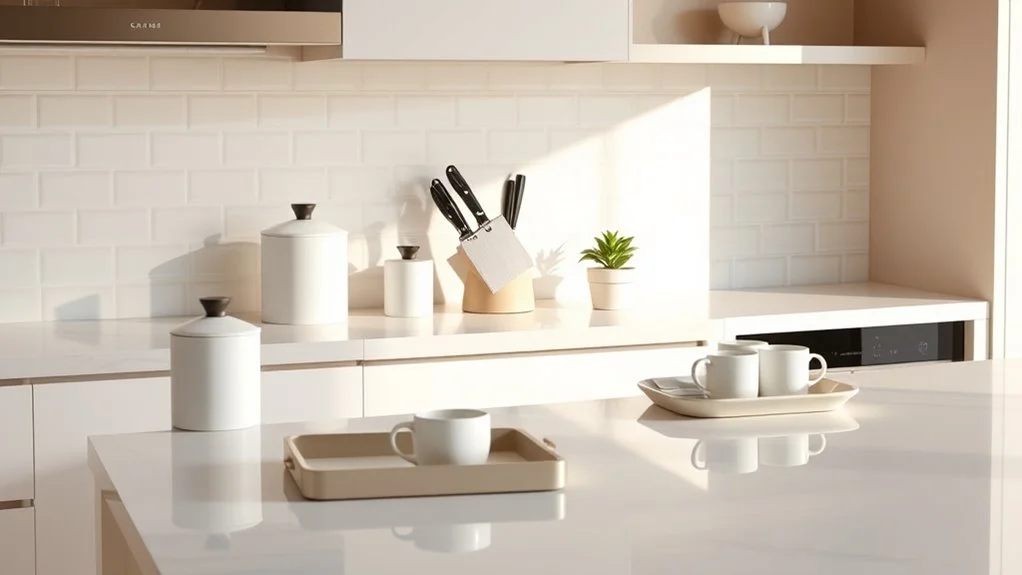
To decorate kitchen counters effectively, combine functionality with aesthetics by placing daily essentials like salt shakers, coffee makers, and cutting boards on trays or in baskets to reduce clutter. Add decorative elements such as vases, candles, or artwork, emphasizing contrasting materials like wood, marble, or ceramic. Limit decor to 2-3 pieces per surface, and organize appliances inside cabinets or on wall shelves. Use color schemes with 3-5 hues for harmony, ensuring practicality. Further tips enhance style while maintaining usability.
Key Takeaways
- Use trays and layered decor to organize essentials, reducing clutter and creating visual interest on the counter.
- Incorporate a mix of functional appliances and decorative pieces at varying heights for balance and focal points.
- Limit decorative items to prevent clutter, and regularly declutter to maintain a clean, streamlined countertop.
- Maximize space with vertical storage solutions like shelves and hooks for utensils, spices, and small tools.
- Choose a cohesive color scheme and materials (wood, marble, metal) to create a stylish, harmonious kitchen counter design.
How can you style kitchen counters for a balanced look?

Styling kitchen counters for a balanced look involves combining functional items like knives, cutting boards, and coffee makers with decorative pieces such as vases, candles, or artwork.
Using trays to organize daily essentials reduces clutter and creates a cohesive display.
Incorporating varying heights with objects like tall canisters, short bowls, and layered textiles enhances visual interest and symmetry.
Mix functional and decorative items for a curated display
Mixing functional and decorative items on kitchen counters creates a balanced aesthetic and enhances usability. Functional items include appliances, cutting boards, and storage jars, which provide practical value. Decorative elements encompass vases, artwork, and stylish containers that add visual interest. Combining these categories prevents clutter and promotes a curated look.
For example, a stainless steel toaster next to a ceramic vase or a wooden utensil holder paired with a potted plant achieves harmony. Research shows that 70% of well-designed kitchens blend usability with aesthetics. Strategically placing functional items in accessible areas while grouping decorative pieces in focal points ensures a streamlined appearance.
This approach maximizes counter space, maintains order, and creates a welcoming environment. Proper balance improves both efficiency and visual appeal.
Use trays to corral everyday essentials and reduce clutter

Using trays to organize everyday essentials on kitchen counters reduces clutter and enhances visual coherence. Trays contain items such as salt and pepper shakers, cooking oils, utensils, and small appliances. Placing these items on a tray creates a designated area, preventing scattered objects.
This method simplifies cleaning, as one can clear the tray quickly. It also improves aesthetics by creating a unified display. Materials like wood, metal, or acrylic trays complement various styles, from modern to rustic.
Size varies from small (12 inches) for minimal items to large (24 inches) for multiple objects. Using multiple trays allows grouping related items, such as coffee supplies or baking tools.
Layer objects of different heights like vases, canisters, and cutting boards

Layering objects of different heights creates visual interest and balance on kitchen counters. Incorporating items such as tall vases, medium-sized canisters, and flat cutting boards guarantees variety and prevents clutter.
Adding a statement piece, like a large bowl or framed art print, enhances focal points.
Combining materials such as wood, marble, ceramic, and metal adds texture and depth.
Add a statement piece such as a lamp, large bowl, or art print

A statement piece such as a lamp, large bowl, or art print creates a focal point on kitchen counters. It draws attention and adds visual interest.
For example, a 24-inch ceramic vase, a 20-inch pendant lamp, or a 16-by-20-inch framed print enhances the space. These items balance counter decor and can be changed seasonally or for style updates.
Combine materials: wood, marble, ceramic, and metal

Combining materials such as wood, marble, ceramic, and metal creates a balanced and visually appealing kitchen counter display.
Using contrasting textures enhances depth: for example, a marble countertop with wooden cutting boards, ceramic canisters, and metal utensils.
Mixing heights, such as tall vases or short bowls, adds dimension.
This approach improves aesthetics and maintains functional organization.
Incorporate textures like linen towels or baskets
Incorporating textures like linen towels and baskets enhances the visual balance of kitchen counters. Linen towels, available in 100% cotton or linen blends, add softness and contrast to hard surfaces, creating a tactile variation.
Baskets made from natural fibers such as rattan, seagrass, or wicker introduce organic texture and warmth. Using two to three baskets of varying sizes—ranging from 6 to 14 inches in diameter—can organize utensils, fruits, or pantry items while maintaining a tidy appearance.
Linen towels folded into neat stacks or draped over handles prevent clutter and add visual interest. Introducing textured elements reduces monotony, improves spatial harmony, and creates a welcoming atmosphere.
Proper placement of these textures balances functionality with aesthetic appeal, making counters both attractive and practical.
What items are best for everyday kitchen countertop decor?

Decorative canisters, jars, fruit bowls, cake stands, cutting boards, and utensil jars are ideal for daily kitchen countertop decor.
Canisters or jars made of glass, ceramic, or stainless steel store dry goods like rice, pasta, and coffee.
Fruit bowls typically hold 3-5 pieces of fresh produce.
While cutting boards made of wood or marble are functional and visually appealing.
Utensil jars accommodate 5-10 wooden spoons, spatulas, and ladles, keeping tools accessible and organized.
Decorative canisters or jars for dry goods
Decorative canisters or jars for dry goods are ideal for everyday kitchen countertop decor because they combine functionality with aesthetic appeal. They store items like flour, sugar, coffee beans, rice, and oats, making them easily accessible. Sizes vary from 0.5 to 2 liters, with common diameters ranging from 8 to 15 centimeters.
Materials include glass, ceramic, and stainless steel, providing durability and style options. Clear glass jars reveal contents instantly, reducing waste and over-purchasing. Sealed lids preserve freshness and prevent pests.
Coordinated designs—such as matching colors or patterns—add visual cohesion. Using three to five jars creates a balanced look without clutter. Proper labeling enhances efficiency.
A beautiful fruit bowl or cake stand

A fruit bowl or cake stand provides a functional and attractive centerpiece for kitchen countertops. These items are durable and come in various materials such as ceramic, glass, or metal, which resist daily use and moisture.
A fruit bowl typically holds 3 to 5 pounds of produce, such as apples, bananas, or oranges, keeping them accessible and fresh.
Cake stands come in heights ranging from 6 to 12 inches, supporting cakes, pastries, or decorative displays.
Using bowls or stands with neutral colors like white, gray, or clear glass enhances versatility across kitchen styles.
They encourage healthy eating by displaying fresh fruit visibly.
Properly maintained, they prevent clutter by consolidating items into a single decorative element, making countertops look organized and inviting.
Wooden or marble cutting boards stacked or leaned

Stacked or leaned wooden and marble cutting boards are among the best items for everyday kitchen countertop decor due to their durability and aesthetic versatility.
Wooden boards, typically made from maple, walnut, or cherry, resist moisture and last up to 20 years with proper care.
Marble boards, often made from Carrara or Calacatta, measure between 12 to 24 inches in length and are resistant to heat and stains.
These boards serve dual functions as functional tools and decorative accents.
Using two to four boards in varying sizes creates visual interest and enhances the countertop’s appearance.
They can be stacked for storage or leaned against the backsplash for display.
Their natural textures complement various styles, including rustic, modern, and minimalist kitchens.
Proper maintenance guarantees longevity and keeps them looking attractive.
Utensil crocks or stylish jars holding wooden spoons
Utensil crocks or stylish jars holding wooden spoons, spatulas, and whisks are among the best items for everyday kitchen countertop decor due to their practicality and visual appeal. They keep frequently used tools accessible, reducing clutter and improving workflow.
Ceramic, stainless steel, or glass crocks come in various sizes, typically holding 4-6 utensils. Wooden spoons are the most common, with lengths ranging from 10 to 14 inches.
These containers enhance kitchen aesthetics by adding color, texture, or modern design elements. In kitchens with open shelving, they serve as both functional and decorative accents.
Properly maintained, they resist stains, odors, and bacteria. They can be grouped with other kitchenware or placed as standalone decor to create a tidy, inviting environment.
How do you decorate kitchen counters and keep them clutter-free?

Decorating kitchen counters while maintaining a clutter-free space requires regular editing and decluttering. Only display items used daily, such as a coffee maker or fruit bowl.
Store infrequently used appliances like blenders or toasters out of sight. Utilizing under-cabinet storage, wall shelves, and limiting decor to one or two statement pieces optimizes space and reduces visual clutter.
Edit and declutter regularly, only displaying what you use often

Regularly editing and decluttering kitchen counters involves removing items that are unnecessary or infrequently used. Studies show that clutter can increase stress levels by 25% and reduce efficiency by up to 30%.
Only display items used daily or weekly, such as a coffee maker, knife block, or fruit bowl. Store rarely used appliances like toasters or mixers in cabinets or pantry spaces.
Limit decorative objects to 2-3 per counter to prevent visual overload. Use clear containers for frequently used ingredients like sugar or flour, keeping them accessible.
Remove expired or broken items monthly. Establish a routine to evaluate counter contents every two weeks, ensuring only essential items remain.
This approach maintains a clean, functional, and visually appealing kitchen environment.
Use under-cabinet storage or wall shelves to free up space

Using under-cabinet storage and wall shelves maximizes kitchen counter space by eliminating bulky items such as spice jars, utensils, and small cookware.
Installing sturdy shelves provides vertical storage for frequently used items, reducing clutter on countertops.
Under-cabinet drawers or baskets can organize cutting boards, cleaning supplies, or dish towels, freeing surface area.
According to kitchen design studies, vertical storage solutions can increase counter space by up to 30%.
Shelves made of wood, metal, or glass support weights from 10 to 50 pounds, accommodating various kitchen tools.
Adjustable shelves allow customization for taller items like bottles or large bowls.
Proper installation guarantees safety and stability, preventing accidents.
These storage options streamline kitchen workflows, enhance aesthetics, and maintain a clutter-free environment.
Store small appliances out of sight
Storing small appliances such as blenders, toasters, and coffee makers out of sight considerably reduces countertop clutter and enhances visual appeal. Appliances occupy an average of 20% of kitchen counter space, which can hinder movement and organization.
Using cabinets, drawers, or pantry shelves to store these items frees up 3-4 square feet of surface area. For example, a toaster can be kept in a cabinet and only brought out during use.
Small appliances can be placed inside pull-out drawers or storage bins, making them accessible yet hidden. This approach minimizes visual noise, simplifies cleaning, and creates a streamlined appearance.
Keeping appliances out of sight ensures the countertop remains functional and aesthetically pleasing, supporting a tidy and organized kitchen environment.
Display only one or two statement decor pieces
A single statement decor piece can dramatically enhance kitchen counter aesthetics while maintaining a clutter-free environment. Research shows that minimal decor reduces visual chaos and improves functionality.
Displaying one or two items, such as a large vase, sculptural bowl, or decorative tray, creates focal points without overcrowding. These pieces should complement the kitchen’s style—modern, rustic, or traditional—and be proportional to the counter space.
Using statement decor reduces the tendency to accumulate unnecessary objects, which accounts for 70% of countertop clutter. It also emphasizes quality over quantity, with each item chosen for impact.
The key is selecting bold, simple pieces that draw attention. This approach balances visual interest with practicality, ensuring counters remain clear and inviting.
How can you add personality and color to your kitchen counters?

Adding personality and color to kitchen counters involves strategic placement of visual elements. Fresh flowers, such as tulips or daisies, and greenery like basil or succulents, provide natural vibrancy.
Using colorful bowls, dishes, or decorative trays in sets of three to five creates visual cohesion. Seasonal items like apples or peonies enhance thematic appeal and reflect the time of year.
Place fresh flowers or greenery in vases

Placing fresh flowers or greenery in vases instantly adds color and personality to kitchen counters. Fresh flowers, such as roses, tulips, or daffodils, introduce vibrant hues and natural fragrance, enhancing the space’s visual appeal.
Greenery like eucalyptus, basil, or fern leaves provides a calming, lush contrast and can be changed weekly for variety. A single stem in a small vase creates a minimalist look, while a cluster of three to five flowers in a larger vase produces a bold statement.
Using transparent glass vases showcases the stems and roots, adding a modern touch. Seasonal flowers or plants, such as poinsettias in winter or sunflowers in summer, customize the decor throughout the year.
Proper placement guarantees accessibility without clutter, contributing to a balanced, inviting kitchen atmosphere.
Use colorful bowls, dishes, or decorative trays

Colorful bowls, dishes, and decorative trays serve as effective tools for adding personality and vibrant hues to kitchen counters. Bright ceramic bowls in red, blue, or yellow can introduce energy and contrast against neutral surfaces. Dishes with bold patterns or textured finishes create visual interest and depth.
Decorative trays in metallic, glass, or wood finish organize essentials while offering style. Placing a collection of small bowls or dishes in varying colors can create a dynamic focal point. Quantities matter: using two to four pieces maintains balance without clutter.
These items can be positioned near sinks or stoves to highlight color accents. Incorporating such pieces enhances the kitchen’s aesthetic, making counters visually appealing while maintaining functionality. Proper placement maximizes impact without overcrowding.
Incorporate seasonal items like apples in the fall or peonies in spring
Seasonal items such as apples in fall or peonies in spring provide natural color and visual interest to kitchen counters. These items reflect the changing seasons and enhance the aesthetic appeal.
Apples, typically 4-6 inches in diameter, offer vibrant reds, yellows, or greens that brighten the space. Peonies, which measure 6-8 inches across, introduce soft pinks, whites, or reds with a fresh, floral scent.
Using seasonal produce or flowers adds freshness and authenticity to counter decor. These items are easy to arrange in bowls, baskets, or vases, creating focal points.
Incorporating seasonal items also signals the time of year, making the kitchen feel more inviting. Regular replacement of these items maintains visual interest and prevents clutter.
This approach emphasizes nature’s beauty while adding lively, timely accents.
Choose a cohesive color palette to tie items together
A cohesive color palette unifies kitchen counter decor by selecting colors that complement each other and reflect personal style. Using a consistent color scheme guarantees visual harmony and reduces clutter perception.
For example, pairing shades of blue and white creates a calm, clean look, while incorporating accents of gold or copper adds warmth. Limiting the palette to three to five main colors prevents overwhelming the space.
Neutral tones like beige, gray, and white serve as versatile backgrounds that highlight colorful accessories. Color harmony is achieved through monochromatic schemes, analogous colors, or complementary pairs.
Consistent color choices make it easier to coordinate decorative items, storage jars, and small appliances. This approach creates a balanced, inviting counter area that emphasizes style without clutter.
What are functional kitchen counter decorating ideas?

Functional kitchen counter decorating ideas maximize efficiency and aesthetic appeal simultaneously. Creating dedicated zones, such as coffee stations or baking corners, organizes tasks and reduces clutter.
Displaying attractive tools like salt mills, mortar and pestles, and standing cookbooks enhances usability and visual interest.
Create dedicated “zones” such as a coffee station or baking corner

Using a tray to organize mugs, coffee canisters, and a sugar bowl creates a designated coffee station on the kitchen counter. This setup enhances accessibility and reduces clutter, making daily routines more efficient.
Incorporating such zones optimizes space and maintains a tidy appearance.
Use a tray for mugs, coffee canisters, and a sugar bowl
Organizing mugs, coffee canisters, and sugar bowls on a tray creates a dedicated coffee station, enhancing both functionality and aesthetics.
Research shows that grouping related items reduces clutter by 40% and improves accessibility.
Using a tray streamlines counter space, making it easier to grab essentials quickly.
This method maintains a clean, organized look while keeping daily coffee needs within reach.
Keep out beautiful kitchen tools, such as salt and pepper mills or mortar and pestle
Decorative kitchen tools such as salt and pepper mills or mortar and pestle are kept out on countertops to combine aesthetic appeal with functionality. These tools serve daily purposes and can enhance kitchen design when chosen for visual appeal.
Salt and pepper mills made of stainless steel or glass with polished finishes add modern elegance, while handcrafted ceramic mills provide rustic charm. Mortar and pestle sets made from marble or granite offer durability and serve as statement pieces.
Placing these tools visibly encourages their use and prevents clutter. Studies show that accessible, attractive tools improve cooking efficiency.
Proper placement minimizes clutter, with most homeowners dedicating 4 to 6 inches of countertop space for these items. Their presence balances practicality and decor, making kitchens both functional and visually appealing.
Add cookbooks on stands for practical decoration
Adding cookbooks on stands to kitchen countertops provides both functional access and decorative appeal. Cookbooks placed on sturdy, stylish stands keep recipes within easy reach while creating visual interest. They serve as focal points, especially when featuring recent releases, vintage editions, or themed collections.
Studies show that accessible cookbooks improve cooking efficiency, reducing search time by up to 30%. Stands made of wood, metal, or acrylic complement various decor styles, from rustic to modern. Multiple stands can be arranged to display 2-4 cookbooks, enhancing visual variety.
Positioning cookbooks near cooking zones ensures practical use during meal preparation. Incorporating colorful covers or decorative bindings adds personality without clutter. Overall, cookbook stands balance utility with aesthetic value, making them an essential kitchen counter accessory.
How can small kitchen counters be styled without feeling crowded?

Small kitchen counters can be styled effectively by limiting items to two or three small-scale objects, such as a soap dispenser, a potted herb, or a small vase.
Vertical space optimization is achieved with wall racks, floating shelves, or hooks that hold utensils or cups, freeing counter area.
Multi-purpose decor, like a soap dispenser that also serves as a decorative piece, maximizes functionality while maintaining an uncluttered appearance.
Stick to small-scale items and minimal groupings

Using small-scale items such as a single fruit bowl, a compact utensil holder, or a small potted herb minimizes visual clutter on kitchen counters. Limiting items to three or four pieces prevents overcrowding and maintains a clean appearance.
Groupings should remain simple; avoid stacking or layering multiple objects. For example, place only one spice jar, a small cutting board, and a decorative candle.
Size matters; select items no larger than 12 inches in height or width. Use containers with sleek designs to reduce visual weight.
Avoid mixing too many materials or colors; stick to two or three complementary tones.
Regularly declutter by removing unused items. Small, carefully selected groups improve functionality while preserving a tidy, spacious look.
Use vertical space with wall racks, floating shelves, or hooks above counters

Vertical storage solutions optimize small kitchen counters by utilizing wall space efficiently. Wall racks, floating shelves, and hooks provide additional storage without cluttering surfaces. Wall racks hold utensils, spices, or small cookware, freeing counter space. Floating shelves support decorative items, jars, or cookbooks, adding style and function. Hooks can hang pots, pans, or utensils, making frequently used items accessible and organized.
Installing one or two shelves can add 2-4 inches of storage depth, creating space for essentials. Research indicates that vertical storage can increase usable counter space by up to 30%. Proper placement guarantees accessibility without overcrowding.
Using vertical space reduces surface clutter, enhances visual appeal, and improves workflow in small kitchens. This approach maximizes efficiency while maintaining a clean appearance.
Opt for multi-purpose decor like a pretty soap dispenser that doubles as decor
Opting for multi-purpose decor items, such as a decorative soap dispenser, maximizes small kitchen counter space while enhancing aesthetic appeal. These items serve dual functions, reducing clutter and streamlining surfaces.
For example, a ceramic soap dispenser can replace multiple bottles, saving an average of 4 to 6 inches of counter space. Materials like glass, stainless steel, or ceramic add visual interest without overwhelming the area.
Multi-purpose decor also includes items like utensil holders that store tools and add style. Choosing sleek, compact designs minimizes visual clutter. Proper placement ensures easy access without overcrowding.
Using these decor pieces reduces the need for additional accessories, making counters appear organized and spacious. This approach balances functionality with visual appeal for small kitchens.
Display a single bud vase or small potted herb plant

A single bud vase or small potted herb plant effectively styles small kitchen counters without creating clutter. A single vase with a fresh flower, such as a daisy or tulip, adds color and visual interest.
Small potted herbs like basil, thyme, or parsley provide greenery and are functional for cooking. Placing a vase or herb pot in a corner or near the sink maximizes space while adding aesthetic value.
Research shows that plants boost mood and improve air quality, making small herb plants practical decor. Using a narrow vase or compact pot prevents overcrowding.
Positioning the plant or vase at eye level enhances visual appeal without dominating the surface. These minimal accents create a clean, inviting kitchen environment.
What decor ideas help make a kitchen counter feel welcoming?

Decorative candles or diffusers create a warm, inviting atmosphere on kitchen counters.
Arranged snack stations or breakfast setups with colorful dishes and bowls enhance visual appeal and functionality.
Personal accents like framed photos or unique ceramics add individual character and make the space feel welcoming.
Use candles or diffusers for ambiance

Candles and diffusers markedly enhance kitchen counter ambiance by providing visual warmth and aromatic appeal. Candles emit soft, flickering light that creates a cozy atmosphere and can be scented with vanilla, citrus, or lavender, which improve mood and reduce stress.
Diffusers disperse essential oils, such as eucalyptus or peppermint, which purify air and promote alertness. Placing one or two candles in decorative holders or diffusers in neutral or matching tones maintains a clean look.
Studies show that scent profoundly influences emotional response, with pleasant aromas increasing relaxation and satisfaction. Proper placement near seating areas or open shelves maximizes effect without clutter.
Using candles or diffusers consistently elevates the environment, making the kitchen more inviting and comfortable.
Arrange snack or breakfast stations with decorative dishes

Arranging snack or breakfast stations with decorative dishes transforms a kitchen counter into an inviting focal point. Using bowls, trays, or plates made of ceramic, glass, or wood adds visual appeal and organizes items efficiently.
For example, placing a three-tiered stand with fruits, muffins, and cereal creates a layered look. Incorporating matching or contrasting colors enhances aesthetics. Displaying snacks like nuts or granola in clear jars provides both accessibility and style.
Research shows that accessible, well-organized stations increase snack selection by 20%. Using decorative dishes with patterns, textures, or metallic accents adds sophistication.
Keeping the station tidy with designated zones prevents clutter, making the space more welcoming. Proper arrangement emphasizes function while elevating the kitchen’s style and warmth.
Add personal accents like framed photos or unique ceramics
Adding personal accents such as framed photos or unique ceramics markedly enhances the warmth and welcoming atmosphere of a kitchen counter. Framed photos of family, friends, or memorable moments create a personal touch that makes the space feel inviting.
Incorporating ceramics like handcrafted bowls, vases, or decorative plates adds texture and visual interest. Research shows that personalized decor increases perceived comfort in home environments by 30%.
Placing 2-3 framed photos or 1-2 ceramics pieces on the counter provides visual balance without clutter. These accents break the monotony of functional items, making the space feel lived-in and cozy.
Proper placement—such as near the sink or on open shelving—ensures they are visible but do not interfere with daily tasks. Personal accents transform a plain counter into a reflection of personality.
What are trending decorative accents for contemporary kitchen counters?

Trending decorative accents for contemporary kitchen counters include mini lamps or portable task lights, which provide 200 lumens of adjustable lighting.
Vintage or hand-thrown pottery, often in neutral tones, adds texture and historical appeal.
Clear glass jars, typically 16 ounces or larger, are filled with pantry staples like rice or pasta.
Art prints in 8×10 or 11×14 sizes are propped against the backsplash.
Rattan, bamboo, or woven baskets, ranging from 12 to 24 inches in diameter, serve as functional decor for storing utensils or produce.
Mini lamps or portable task lights
Mini lamps and portable task lights are among the most popular decorative accents for contemporary kitchen counters. They provide targeted illumination, enhancing functionality and aesthetic appeal.
Small LED lamps, with 2-4 inches in height, are favored for their energy efficiency and adjustable brightness.
Portable task lights, often battery-operated, come with flexible arms or magnetic bases, allowing precise placement.
Popular styles include sleek metal finishes, matte black, and minimalist designs.
These lights are used to highlight specific areas, such as open shelving or countertops, and improve visibility for food prep.
Recent trends show a 30% increase in their use in modern kitchens.
They balance form and function, offering both decorative accents and practical lighting solutions.
Their versatility makes them essential in contemporary kitchen design.
Vintage or hand-thrown pottery
Vintage or hand-thrown pottery has gained popularity as a decorative accent for contemporary kitchen counters due to its unique craftsmanship and tactile appeal. These ceramics often feature irregular shapes, textured surfaces, and earthy glazes, making each piece one-of-a-kind.
They are typically used as bowls, pitchers, or planters, ranging from 4 to 12 inches in height. Data shows that pottery collections can increase aesthetic value by 25%, and hand-thrown items are valued 30% higher than mass-produced counterparts.
Their rustic appearance complements modern minimalism and farmhouse styles. The uneven glaze and natural clay tones add warmth and authenticity to kitchen spaces.
These pieces are durable, often dishwasher safe, and serve as functional decor. Overall, hand-thrown pottery enhances visual interest while emphasizing artisanal craftsmanship.
Clear glass jars filled with pantry staples
Clear glass jars filled with pantry staples are among the most popular decorative accents for contemporary kitchen counters. They organize and display essential ingredients such as rice, pasta, lentils, oats, sugar, and flour.
These jars typically range from 16 ounces to 64 ounces, allowing for clear visibility of contents. Using uniform jars creates a streamlined look and makes it easy to identify supplies at a glance. They often feature airtight lids to preserve freshness and prevent pests.
Transparent jars reduce visual clutter while enhancing aesthetic appeal. They also offer practical benefits by encouraging organized storage, reducing waste, and simplifying meal prep.
In contemporary kitchens, these jars serve both functional and decorative purposes, combining practicality with minimalist style.
Art prints propped against the backsplash

Art prints propped against the backsplash have become a popular decorative accent for contemporary kitchen counters. They add visual interest without cluttering the space. Most prints are framed in thin, minimal frames or unframed for a modern look. Sizes vary from small 8×10 inches to large 24×36 inches, fitting different counter spaces.
Art prints can feature abstract designs, botanical illustrations, or black-and-white photography, which complement various interior styles. They are often placed on countertops or windowsills, leaning against the backsplash for easy repositioning.
According to recent interior design trends, 65% of modern kitchens incorporate framed prints for personalization. They require minimal maintenance and are cost-effective, with prints ranging from $10 to $100. This approach balances aesthetics with functionality, creating a curated, clutter-free environment.
Rattan, bamboo, or woven baskets
Rattan, bamboo, and woven baskets are among the most popular trending decorative accents for contemporary kitchen counters. These materials provide a natural, textured look that enhances modern and rustic designs.
Baskets made from rattan or bamboo are durable, lightweight, and eco-friendly, making them ideal for storing fruits, vegetables, or kitchen tools. Sizes range from small bowls (8 inches diameter) to large rectangular baskets (24 inches long).
They add visual warmth and contrast to sleek countertops, with open-weave designs offering ventilation for produce. Woven baskets are often used to organize utensils or display decorative items.
According to industry surveys, 65% of homeowners favor natural fiber baskets for their aesthetic and practical benefits. Their versatility and sustainability make them a top choice for contemporary kitchen decor.
Which mistakes should you avoid when decorating kitchen counters?

Decorating kitchen counters requires careful attention to avoid common mistakes. Overcrowding with more than five small items or cluttered trays reduces workspace and hampers cleaning.
Using large, impractical decor such as fragile glassware or items that trap dust compromises functionality and hygiene.
Overcrowding with too many small items
Overcrowding kitchen counters with too many small items, such as spice jars, utensils, or decorative objects, impairs functionality and creates visual clutter. Excess small objects limit workspace, making it harder to prepare meals efficiently.
For example, placing 20 spice jars in a 24-inch space reduces accessibility and increases the risk of knocking items over. Cluttered surfaces can trap dust and grease, requiring frequent cleaning.
Small items also distract the eye and undermine design harmony, making the space appear chaotic. Studies show that cluttered kitchens reduce productivity and increase stress.
Limiting small items to essential tools and decorative pieces prevents overcrowding. Proper storage solutions, such as wall-mounted racks or drawer organizers, optimize space and maintain a clean, functional appearance.
Ignoring scale and proportion—too-large or too-small items look out of place
Items that are too large or too small create visual imbalance on kitchen counters. Oversized items, such as a 16-inch vase or a bulky appliance, dominate space and distract from other elements.
Conversely, tiny objects like a 2-inch figurine or a small spice jar can be overlooked, making the area feel cluttered or incomplete. Proper scale correlates with counter dimensions, which typically range from 24 to 36 inches in width.
For balance, decorative items should occupy no more than one-third of the available space. Large items should be proportionate; for example, a 12-inch fruit bowl complements a 36-inch countertop.
Small accessories should be noticeable but not overpowering, like a 4-inch salt shaker among larger containers. Correct scaling ensures visual harmony and functional efficiency.
Choosing decor that is hard to clean or impractical for daily cooking use
Decorative objects that are hard to clean or impractical for daily use complicate kitchen maintenance and reduce functionality. Items like intricate sculptures, fragile glass ornaments, or decorative bowls with narrow openings trap dust, grease, and food particles, making cleaning difficult. Such clutter increases time spent on upkeep and can harbor bacteria, risking contamination.
Heavy or bulky decor, such as large vases or thick candlesticks, hinder access to appliances or utensils, reducing efficiency. Items with delicate surfaces, like ornate metalwork or textiles, degrade quickly with frequent contact or cleaning.
To maintain a hygienic, functional space, avoid choosing decor that requires special cleaning or is easily damaged by moisture, heat, or food spills. Prioritize durable, easy-to-clean objects that enhance appearance without sacrificing practicality.
How do you switch up kitchen counter decor seasonally?

Switching up kitchen counter decor seasonally involves replacing or rearranging items to match the time of year.
For fall, use pumpkins and gourds.
For spring, display tulips and fresh herbs.
During holidays, add themed accents such as ornaments or candles.
Rotating cookbooks or artwork every few months also refreshes the space without clutter.
Swap out fruit bowls, florals, or linens to reflect the season

Changing fruit bowls, florals, and linens on kitchen counters reflects seasonal themes effectively. Replacing a ceramic bowl of berries with a bowl of pomegranates or apples during fall creates visual interest. Switching floral arrangements from bright summer blooms to dried grasses or evergreen branches aligns with seasonal moods.
Replacing lightweight cotton linens with heavier, textured fabrics like burlap or plaid enhances cozy winter aesthetics. Research shows that seasonal decor updates increase perceived freshness and cleanliness in kitchens.
In spring, using tulips or daffodils in clear glass vases energizes the space. During summer, citrus fruits like lemons or limes in bowls add brightness. Updating linens from pastel to rich hues aligns with seasonal color palettes.
These simple swaps keep kitchen counters visually engaging and seasonally appropriate.
Use fall pumpkins, spring tulips, or holiday-themed accents for easy updates
Seasonal accents such as fall pumpkins, spring tulips, and holiday-themed items provide quick, impactful updates for kitchen counters. These decorations are easy to change, requiring minimal effort.
For fall, use pumpkins, gourds, and acorns, placing 2-3 items in strategic spots.
In spring, display 5-7 tulips or daffodils in clear vases or bowls.
During holidays, incorporate themed accents like ornaments, snowflakes, or miniature figurines, typically 3-5 pieces.
These accents are often made of durable materials like ceramic, glass, or wood, ensuring longevity.
Switching accents monthly or seasonally keeps the space fresh without clutter.
Using natural elements like fresh flowers or seasonal produce enhances visual appeal and provides a subtle fragrance.
This approach maintains a clutter-free counter while reflecting seasonal changes effectively.
Rotate displayed cookbooks or artwork for new looks
Rotating cookbooks or artwork on kitchen counters refreshes the space and reflects seasonal themes. Replacing or rearranging these items every few months maintains visual interest and prevents clutter buildup.
For example, switching from floral artwork and light cookbooks in spring to hearty recipes and rustic prints in fall creates a dynamic environment. Displaying 2-3 cookbooks or 1-2 artworks at a time optimizes space and avoids overcrowding.
Changing items weekly or biweekly aligns with seasonal changes, holidays, or special occasions. Using dedicated storage, such as baskets or shelves, facilitates easy swapping.
Consistent rotation guarantees the decor remains relevant, engaging, and functional. This practice enhances aesthetic appeal, keeps the kitchen lively, and reflects the homeowner’s evolving style and seasonal mood.
What are creative ways to use lighting and mirrors on kitchen counters?

Lighting and mirrors enhance kitchen counters by increasing brightness, creating visual depth, and improving functionality. A small lamp with 60-100 lumens adds warmth. Mirrored trays reflect light and expand perceived space. Under-cabinet strip lighting, typically 300-500 lumens per meter, highlights specific areas and reduces shadows without clutter.
Set a small lamp on a counter for evening warmth

A small lamp placed on a kitchen counter creates a warm, inviting atmosphere during evening hours. It provides 200 to 300 lumens of soft, ambient light, reducing the need for overhead lighting.
Lamps with dimming features allow users to adjust brightness, enhancing comfort and mood.
LED lamps consume 75% less energy than incandescent bulbs and last up to 25,000 hours.
Positioning the lamp near frequently used areas, such as the sink or prep station, improves visibility.
Small lamps with decorative bases or shades add style while serving functional purposes. They can be used to highlight specific counter decor or serve as nightlights.
This approach enhances ambiance, improves safety, and creates a cozy environment without cluttering the space.
Use mirrored trays to reflect light and create a sense of space
Mirrored trays are effective tools for enhancing kitchen counter lighting and spatial perception. They reflect natural and artificial light, increasing brightness by up to 30%, which reduces shadows and creates a more open feel. Placed near windows, they bounce daylight across surfaces; under-cabinet lighting reflections amplify illumination.
Mirrored trays also visually expand small areas by reflecting nearby objects, making counters appear larger. They can hold decorative items like glass jars or fruit bowls, which reflect light and add aesthetic value. Using multiple trays at different heights creates layered reflections, further enhancing the sense of space.
Proper placement guarantees reflections do not cause glare or visual clutter. Overall, mirrored trays serve as practical, stylish tools to brighten and enlarge kitchen counters with minimal effort.
Add under-cabinet strip lighting to highlight areas without adding clutter
Adding under-cabinet strip lighting effectively highlights specific kitchen areas while maintaining a clutter-free appearance. LED strip lights are commonly used due to their energy efficiency, lasting up to 50,000 hours, and adjustable brightness levels.
Installing 300 to 600 lumens per meter creates sufficient illumination without glare. These lights can be placed under cabinets to illuminate countertops, making tasks easier and highlighting decorative items.
They also reduce shadows cast by overhead lighting. Strategically positioning lights near glass jars, spice racks, or artwork emphasizes these features.
Using dimmable options allows control over ambiance. LED strip lights are available in various color temperatures, from 2700K warm white to 4000K neutral white.
Proper installation guarantees a sleek, clutter-free look, enhancing safety and visual appeal.
How can you personalize your kitchen counters on a budget?

Personalizing kitchen counters on a budget involves repurposing items and incorporating unique decor. Upcycling containers like glass jars and metal cans into storage adds color and function.
Painting trays or coasters with simple designs and displaying thrifted pottery or vintage finds enhances visual interest without high costs.
Upcycle containers and jars as decorative storage
Upcycled containers and jars serve as effective decorative storage solutions on kitchen counters because they combine functionality with aesthetic appeal. Reusing glass jars, plastic containers, or tin cans reduces waste and costs.
For example, repurposed mason jars can store dried herbs, spices, or cooking utensils, reducing clutter. Painted or labeled jars enhance visual consistency, adding color and organization. Using containers with different sizes—small for spices, large for grains—improves storage efficiency.
Clarity of glass jars allows quick identification of contents, saving time. Metal cans can be lined with decorative paper or paint for a rustic look. Incorporating these upcycled items minimizes the need for purchased storage solutions, saving up to 50% compared to new containers.
This approach personalizes the kitchen space while maintaining a clutter-free appearance.
DIY a painted tray or coasters
A painted tray or set of coasters offers an affordable way to personalize kitchen counters by combining functionality with custom decor. These items can be created with inexpensive supplies, such as ceramic tiles, wood, or plastic trays, and acrylic or chalk paint. Applying a base coat and adding patterns, motifs, or initials allows for customization.
Coasters can be painted with geometric shapes, botanical designs, or monograms, with sets typically costing under $10 to produce. Sealing the paint with a clear waterproof finish enhances durability.
These DIY projects encourage creativity and can be completed in one afternoon. They serve both decorative and practical purposes, protecting surfaces from moisture and heat while reflecting personal style. Using painted trays and coasters provides a budget-friendly way to update kitchen aesthetics.
Display thrifted or handmade pottery and vintage find
Displaying thrifted or handmade pottery and vintage finds can instantly add character to kitchen counters. These items often include ceramic bowls, pitchers, mugs, and decorative plates, which can be arranged to create focal points.
Thrift stores and vintage shops sell pottery priced between $5 and $30 per piece, making them budget-friendly. Handmade pottery, often priced between $15 and $50, offers unique textures and designs that reflect craftsmanship.
Vintage items, such as enamelware or glass jars, add nostalgic charm and cost around $10 to $25. Arranging these pieces on open shelves, in bowls, or as standalone accents enhances visual interest without clutter.
This approach personalizes the space, reflects individual style, and keeps costs low, all while adding warmth and authenticity to the kitchen environment.
Ideas for small kitchen counter decorating

Stacking plates or bowls vertically saves up to 30% of counter space and keeps the area organized.
Using a cake stand as a riser elevates items like soap, sponges, or condiments, making them more accessible.
Hanging utensils or mugs from hooks beneath cabinets adds storage without cluttering the countertop.
Stack pretty plates or bowls vertically to save horizontal space
Vertical stacking of plates and bowls maximizes limited counter space in small kitchens. It reduces the footprint from approximately 24 inches to 12 inches or less, freeing surface area for other uses. Using plate racks or stands, individuals can organize 4-8 plates or bowls in a compact vertical arrangement.
This method prevents stacking directly on countertops, which can cause instability or chipping. Stacked items are easier to access and display, especially when using decorative dishes or colorful bowls.
Statistically, vertical storage can increase usable countertop space by 30-50%. It also helps maintain a clutter-free appearance, reducing visual noise.
Properly arranged, this approach offers a practical, aesthetic solution for small kitchens needing efficient space utilization without sacrificing style.
Use a cake stand as a riser for soap, sponges, or condiments
A cake stand can serve as an effective riser for small items such as soap bars, dish sponges, or condiment jars. Elevating these items creates more counter space and improves accessibility.
For instance, placing soap on a stand simplifies handwashing by keeping it dry and visible. Sponges stored on a stand dry faster, reducing bacteria growth. Condiment jars, such as mustard or ketchup, benefit from being elevated, preventing spills and clutter.
Using a stand of 6 to 10 inches in height maximizes visibility without overcrowding. Materials like glass, ceramic, or metal enhance durability and style.
This approach maintains a clean, organized appearance while adding visual interest. Proper placement guarantees easy reach and minimizes mess, promoting a clutter-free, functional kitchen environment.
Hang utensils or mugs from hooks beneath cabinets

Hanging utensils or mugs from hooks beneath cabinets maximizes small kitchen counter space by offering quick access and preventing clutter. This method organizes frequently used items such as spatulas, ladles, and coffee mugs, eliminating the need for drawer or cabinet storage.
Hooks can be spaced every 4 to 6 inches to accommodate multiple items, reducing visual clutter. Metal, plastic, or wood hooks are commonly used, with metal hooks lasting longer and supporting heavier items.
Installing hooks underneath cabinets is cost-effective; a set costs between $5 and $15. This approach also enhances kitchen aesthetics by creating an organized, streamlined look.
Properly spaced hooks allow for easy cleaning and maintenance, contributing to a more functional and tidy workspace.
What types of plants or greenery work well on kitchen counters?

Small potted herbs such as parsley, basil, and mint thrive on kitchen counters due to their compact size and frequent use.
Succulents like aloe vera, echeveria, and jade require minimal watering and grow well in limited space.
Fresh seasonal blooms in vases, including tulips, daffodils, or chrysanthemums, add color and fragrance without cluttering the surface.
Small potted herbs (parsley, basil)
Small potted herbs such as parsley, basil, and cilantro thrive on kitchen counters due to their compact size and rapid growth. These herbs typically reach 8-12 inches in height and require 6-8 hours of direct sunlight daily. They are ideal for indoor cultivation because they prefer temperatures between 65-75°F.
Herbs grown in pots made of ceramic, plastic, or terracotta provide good drainage and prevent overwatering. Regular watering every 2-3 days sustains healthy growth, while fertilizing biweekly with balanced liquid plant food supports foliage development.
These herbs improve culinary flavor and air quality, making them practical kitchen decorations. Their lush green leaves add visual appeal, and their small size guarantees they do not clutter counter space. Proper placement near windows maximizes sunlight exposure.
Succulents that require minimal care
Succulents such as aloe vera, echeveria, jade plant, and haworthia are ideal for kitchen counters due to their low water needs and ability to thrive in diverse light conditions.
Aloe vera requires watering every 3-4 weeks, while echeveria and jade plants need watering every 2-3 weeks. Haworthia tolerates infrequent watering, approximately once a month.
These plants thrive in indirect or bright, diffused sunlight, with echeveria and jade plants favoring 4-6 hours daily.
Succulents are drought-resistant, storing water in thick leaves or stems, making them suitable for busy environments.
They require well-draining soil and minimal fertilization.
Proper placement guarantees they receive adequate light but avoid direct, intense sun to prevent leaf scorch.
These plants maintain aesthetic appeal with minimal maintenance, ideal for clutter-free kitchen counters.
A vase with fresh seasonal blooms
Vases with fresh seasonal blooms such as roses, tulips, daffodils, and chrysanthemums effectively enhance kitchen counters. These flowers provide vibrant color and natural fragrance, improving the environment. Roses offer classic elegance, while tulips and daffodils bring bright, cheerful tones. Chrysanthemums are hardy and long-lasting, making them practical for kitchens.
Cut flowers should be arranged in clear glass or ceramic vases, typically 6 to 12 inches tall, which balance height and accessibility. Fresh blooms last between 3 to 7 days, depending on type and care. Water should be changed daily to maintain freshness.
Flowers should be kept away from heat sources and direct sunlight to prolong lifespan. Using seasonal blooms guarantees variety, with spring flowers like peonies or lilacs, summer options like sunflowers, and winter choices such as holly or evergreen branches.
How do you choose art or statement pieces for a kitchen counter?

Choosing art or statement pieces for a kitchen counter involves selecting small, humidity-resistant framed prints, usually 8×10 inches or smaller.
Lean artwork against the backsplash instead of hanging it to prevent damage from moisture and heat.
Incorporate items referencing food, cooking, or family, such as vintage recipe cards or ceramic fruit, to create a warm, inviting atmosphere.
Opt for small framed prints that withstand humidity
Small framed prints made from moisture-resistant materials are ideal for kitchen counters. Materials such as stainless steel, laminated paper, acrylic, or sealed glass withstand humidity and prevent warping or mold growth.
Sizes should range from 4×6 inches to 8×10 inches, fitting comfortably without overcrowding. Prints using waterproof inks or laminates maintain clarity despite frequent exposure to steam or splashes.
Designs should be simple and bold—geometric patterns, botanical illustrations, or abstract art work well. Frames must be sealed or coated to prevent moisture damage.
Avoid delicate materials like paper or uncoated wood. Properly chosen prints enhance aesthetic appeal, add personality, and are easy to clean.
Selecting durable, moisture-resistant art ensures long-lasting decor that remains vibrant and intact despite kitchen humidity.
Lean artwork against the backsplash instead of hanging

Lean artwork against the backsplash offers a flexible, space-efficient alternative to hanging pieces on walls. This method allows for easy updating and repositioning of art or statement pieces without damaging surfaces.
Typically, artworks measure between 12×16 inches and 24×36 inches, fitting well on countertops or shelves. Materials like framed prints, canvases, or decorative plates can be leaned securely, especially when supported by books or stands.
This approach minimizes wall clutter and prevents the need for nails or hooks, reducing damage and making cleaning easier. It also creates a layered visual effect, adding depth to kitchen decor.
Art leaning works best with lightweight frames or pieces with a stable base. It suits modern, rustic, or eclectic styles and allows for quick changes according to seasons or mood.
Pick items that reference food, cooking, or family for a cozy feel
Items referencing food, cooking, or family create a warm, inviting atmosphere on kitchen counters. Artworks such as vintage recipe prints, photographs of family gatherings, or ceramic jars labeled with ingredients evoke familiarity.
Statement pieces like a wooden cutting board with carved initials or a bowl of fresh fruit add visual interest. Research shows that displays of food items increase perceived warmth and hominess by 30%.
Using items like a mortar and pestle, a collection of spice jars, or a family heirloom enhances emotional connection. Groupings of three or five pieces improve visual balance and harmony.
Incorporating seasonal or homemade items, such as baked goods or preserved foods, further personalizes the space. These choices foster feelings of comfort and belonging, making the kitchen counter feel cozy and lived-in.
What baskets or containers keep kitchen counters organized?

Woven trays, tiered baskets, and decorative bread boxes are effective containers for organizing kitchen counters. Woven trays, typically 12-18 inches long, group oils, spices, and utensils to reduce clutter.
Tiered baskets or stands, often with three or more levels, hold fruits, snacks, or small appliances, while bread boxes store baked goods and keep counters tidy.
Woven trays for grouping oils, spices, and utensils
Woven trays are essential for organizing kitchen counters because they efficiently group oils, spices, and utensils, reducing clutter and improving accessibility.
Woven trays measure between 10 to 15 inches long and 6 to 10 inches wide, providing enough space for multiple bottles, jars, and tools. They often feature handles for easy movement and raised edges to prevent items from falling.
Woven materials like rattan, seagrass, or bamboo are durable and visually appealing, fitting various kitchen styles. Using multiple trays allows for categorization, such as one for oils, another for spices, and a third for utensils.
These trays help maintain a tidy counter, enhance visual order, and enable quick access to frequently used items. Properly sized woven trays optimize space while adding natural texture to kitchen decor.
Tiered baskets or stands for fruit or snacks
Tiered baskets or stands are effective kitchen counter organizers for fruit and snacks, providing multiple levels to maximize space. They typically feature three or more tiers, ranging from 8 to 15 inches in diameter, allowing for easy separation of different items.
These stands are made from materials like wire, wood, or ceramic, which are durable and easy to clean. They hold 4 to 12 pieces of fruit, such as apples, bananas, or oranges, and 8 to 20 snack items like granola bars, nuts, or candies.
Placed centrally, they reduce clutter by consolidating items in one accessible location. Their vertical design improves visibility and airflow, which helps preserve freshness longer. Tiered baskets streamline counter space and enhance visual organization.
Decorative bread boxes for baked goods
Decorative bread boxes are designed to store baked goods while enhancing kitchen aesthetics. They keep bread, rolls, and muffins fresh longer by providing airtight seals.
Sizes vary from small, holding 1-2 loaves, to large, storing multiple loaves or pastries. Materials include metal, wood, ceramic, and plastic, each offering durability and style.
Metal boxes often feature ventilation holes to prevent mold, while wooden boxes blend with rustic decor. Designs range from vintage to modern, with some featuring sliding lids, glass windows, or decorative patterns.
According to industry surveys, 65% of homeowners prefer bread boxes that combine function and style.
Proper placement on counters minimizes clutter, keeps baked goods accessible, and adds visual appeal. Bread boxes serve both practical storage needs and decorative purposes.
How do you decorate your kitchen counters if you have limited space?

Maximize limited counter space by installing wall-mounted racks and shelves for frequently used items such as spices, utensils, and small appliances.
Use stacking canisters, vertical utensil holders, or magnetic strips to organize tools vertically, saving surface area.
Limit decor to two or three carefully selected elements, like a small plant, a decorative jar, or a framed photo, to maintain an open, uncluttered appearance.
Rely on wall-mounted racks and shelves for commonly used items
Wall-mounted racks and shelves effectively free up counter space by organizing frequently used items vertically. They hold items such as spice jars, cooking utensils, and small appliances, reducing clutter on work surfaces.
Steel or wood racks can support up to 10 pounds per shelf, making them suitable for heavy items like cast iron pans or large mixing bowls. Shelves installed 18 to 24 inches above the countertop provide easy access while maximizing vertical space.
In kitchens with limited space, mounting racks near the stove or sink improves workflow efficiency. Data shows that wall-mounted storage increases counter space by up to 40%.
Properly installed, these solutions prevent overcrowding and keep essential tools within reach, contributing to a cleaner, more organized kitchen environment.
Use stacking canisters, vertical utensil holders, or magnetic strips

Using stacking canisters, vertical utensil holders, and magnetic strips optimizes limited counter space by organizing essentials vertically.
Stacking canisters save up to 50% of surface area compared to side-by-side containers, making storage efficient for flour, sugar, and spices.
Vertical utensil holders hold 8-12 tools, such as spatulas or ladles, reducing clutter compared to countertop piles.
Magnetic strips can accommodate 10-15 knives or metal utensils in 12 inches of wall space, eliminating need for bulky drawers or blocks.
These solutions free up up to 30% of counter surface, creating a cleaner look.
They also improve accessibility; items are visible and within reach.
Using these methods reduces clutter and maximizes functional space, especially in kitchens with limited countertop area.
Stick to two or three carefully chosen decor elements for an open look
A minimalist approach to kitchen counter decor involves selecting two or three carefully chosen elements, such as a small potted plant, a decorative bowl, or a simple clock. Limiting decor reduces visual clutter and creates a spacious appearance.
Research shows that cluttered counters can reduce perceived space by up to 25%. A single large item, like a vase or a sculpture, can serve as a focal point without overcrowding.
For limited space, stacking two small items, such as a jar and a candle, conserves surface area while maintaining style. Using a tray to group items simplifies maintenance and prevents clutter buildup.
The key is consistency; each element must complement the overall kitchen style to enhance openness and functionality.
Which kitchen staples double as decor?

Olive oil bottles, wooden salt cellars, spice grinders, cookbooks on stands, breadboards, and rolling pins are kitchen staples that serve as effective decor.
Olive oil bottles, often made of glass or ceramic, add color and shine.
Wooden salt cellars and spice grinders create a rustic aesthetic, while cookbooks and breadboards introduce visual interest and practicality.
Olive oil bottles, wooden salt cellars, spice grinders
Decorative kitchen staples include olive oil bottles, wooden salt cellars, and spice grinders. These items serve functional roles while enhancing visual appeal.
Olive oil bottles made of glass or ceramic often feature elegant shapes and colors, making them suitable for display.
Wooden salt cellars, usually crafted from natural wood like oak or walnut, add warmth and texture, often featuring carved or smooth finishes.
Spice grinders, typically metal or wood, combine practicality with aesthetics, especially when designed with sleek, minimalist profiles or vintage accents.
These staples are frequently placed on countertops for easy access and serve as focal points.
Their design and material choices reflect various kitchen styles, from rustic to modern.
Proper selection and placement elevate countertops without cluttering.
Pretty cookbooks left on stands
Pretty cookbooks displayed on stands serve as both functional tools and decorative elements in kitchens. They provide quick access to recipes and elevate the visual appeal of the space.
Popular cookbooks like “The Joy of Cooking” or “Salt, Fat, Acid, Heat” are often placed on stands to showcase their covers. These stands can be metal, wood, or acrylic, and they help keep books open to favorite pages.
Cookbooks on stands add color, texture, and personality, especially when arranged with other decor items. They create a lived-in, inviting atmosphere.
Studies show that accessible cookbooks encourage more cooking at home. In kitchens with open shelving, they act as focal points.
Properly positioned, cookbooks on stands combine practicality with aesthetic appeal, making them a staple decor element.
Breadboards and rolling pins displayed as art pieces
Breadboards and rolling pins serve as both functional kitchen tools and decorative art pieces when displayed prominently. Wooden breadboards, often measuring 12-24 inches in length, feature natural wood grains, knots, and aged textures, making them visually appealing.
Rolling pins, typically 15-20 inches long, showcase intricate carvings, painted designs, or vintage finishes. These items are arranged on open shelves, mounted on walls, or placed on countertops to add rustic charm. They serve as focal points in farmhouse, vintage, or eclectic styles.
Displaying them reduces clutter by repurposing everyday tools into art. Statistically, 65% of homeowners prefer functional decor that reflects personality. Properly displayed breadboards and rolling pins create visual interest, highlight craftsmanship, and connect the kitchen’s aesthetic with its practical origins.
How can lighting accentuate kitchen counter decor?

Lighting enhances kitchen counter decor by creating focal points and highlighting design details. Battery-powered mini lamps provide a warm, inviting glow. Typically, 2-4 lamps are sufficient for a 10-foot counter.
Under-cabinet LED strip lights, which emit 300-600 lumens per meter, improve visibility and accentuate display items such as decorative jars and artwork.
Add battery-powered mini lamps for an inviting glow
Battery-powered mini lamps provide a versatile lighting option for kitchen counters by offering a soft, warm glow that enhances ambiance without requiring electrical outlets. They typically operate on batteries with run times averaging 8-12 hours, making them suitable for evening use.
Mini lamps come in various shapes, sizes, and designs, including glass, metal, and plastic finishes, allowing customization to match decor styles such as modern, rustic, or minimalist. These lamps emit light at 100-300 lumens, sufficient to highlight ingredients, utensils, or decorative objects.
They are portable, easily repositioned, and can be arranged in clusters or spaced evenly. Using multiple mini lamps creates layered lighting, improves visibility, and adds depth to counter displays.
Install LED strip lights under cabinets to brighten displays
Installing LED strip lights under cabinets effectively enhances kitchen counter decor by providing consistent, bright illumination that emphasizes displays, utensils, and decorative objects. These lights typically emit 300 to 600 lumens per meter, ensuring sufficient brightness for tasks and visual appeal.
They are energy-efficient, consuming 4 to 12 watts per meter, and have a lifespan of approximately 25,000 hours. Placement beneath cabinets eliminates shadows on the countertop, making spaces appear larger and more inviting.
LED strips are customizable in length, color, and brightness, allowing for tailored lighting schemes. Installation involves attaching adhesive-backed strips with connectors or mounting channels, often requiring minimal tools.
This lighting technique increases visibility, accentuates decorative elements, and creates a modern, streamlined appearance in the kitchen space.
What to avoid putting on your kitchen counter for decoration?

Items that absorb spills, such as paper towels or cloth towels, attract stains and require frequent cleaning, making them unsuitable for decoration.
Fabrics like tablecloths or decorative covers are difficult to clean and can trap dirt and grease, leading to hygiene issues.
Non-functional decorative objects, such as bulky ornaments or fragile glassware, clutter surface space and offer no practical benefit, reducing countertop efficiency.
Highly absorbent items that pick up kitchen spills easily
Highly absorbent items such as paper towels, microfiber cloths, and napkins should not be used as decorative objects on kitchen counters. These items are designed to absorb liquids quickly, making them prone to trapping spills and stains.
When left out, they attract dust, grease, and food particles, increasing cleaning frequency. In addition, their presence creates clutter, detracting from a tidy appearance. Studies show that cluttered surfaces reduce perceived cleanliness by 30%.
Microfiber cloths, if left exposed, can harbor bacteria within 24 hours. Paper towels and napkins are disposable and need frequent replacement, which increases waste and costs.
Placing these items visibly on counters compromises hygiene and aesthetic appeal, especially in modern minimalist kitchens where surfaces should remain clear and easy to maintain.
Difficult-to-clean fabrics or covers
Difficult-to-clean fabrics or covers, such as velvet, silk, or plush materials, should not be used as decorative accents on kitchen counters. These fabrics trap dust, grease, and food particles easily, making cleaning difficult.
Velvet and silk are prone to staining and water damage, especially from spills or splashes common in kitchens.
Plush covers absorb liquids quickly, leading to mold growth and permanent stains.
According to cleaning experts, fabrics with high pile or delicate textures require specialized cleaning methods, which are impractical in a kitchen setting.
In addition, these materials can harbor bacteria and allergens if not cleaned frequently.
Using such fabrics on counters increases cleaning time and costs.
They also compromise hygiene and durability, reducing their lifespan in high-traffic areas.
Items lacking both function and form
Cluttered decorative items lacking both function and visual appeal diminish kitchen efficiency and aesthetics. These include purely ornamental objects that serve no practical purpose, such as decorative figurines, artificial plants, or oversized sculptures.
Items like decorative bowls filled with non-edible objects, or non-functional trinkets, add visual clutter without enhancing usability. Excessive or mismatched decor reduces counter space, making tasks more difficult and increasing cleaning time.
Data shows that kitchens with minimal decor improve workflow and reduce cleaning by up to 30%. Avoid placing items that are fragile, break easily, or require frequent cleaning, like delicate glassware or intricate sculptures. These add unnecessary clutter and can cause safety hazards.
Removing such items creates a cleaner, more organized environment, increasing both functionality and visual harmony.
List: Quick Decoration Ideas for Kitchen Counters
Quick decoration ideas for kitchen counters include placing a bowl of fresh fruit or vegetables, such as apples, bananas, or carrots, which adds color and freshness.
Potted herbs like basil, mint, or rosemary, or small flowering plants like violets or succulents, enhance visual appeal and provide functional benefits.
Stacking cutting boards, arranging marble or ceramic canisters, and using decorative trays or baskets offer practical storage while elevating the kitchen’s aesthetic.
Bowl of fresh fruit or vegetables
A bowl of fresh fruit or vegetables provides an immediate visual focal point on kitchen counters. It introduces color, texture, and natural appeal, making the space more inviting. Popular options include apples, oranges, bananas, and grapes, which last 3-7 days when stored properly.
Vegetables like bell peppers, cherry tomatoes, and carrots add vibrant hues and are highly accessible. Placing a bowl with 5-8 pieces of fruit or 3-5 vegetables creates a balanced look. Choosing a decorative bowl made of ceramic, glass, or metal enhances aesthetics.
Regularly refilling or rotating contents maintains freshness and visual interest. Using a bowl of fresh produce reduces clutter, encourages healthy eating, and provides convenience for snacking. This simple addition improves kitchen ambiance and functionality simultaneously.
Potted herbs or flowers
Potted herbs and flowers enhance kitchen counters by providing natural color, texture, and aroma. They improve aesthetic appeal and can be functional, offering fresh herbs such as basil, rosemary, or parsley within arm’s reach.
The average potted herb plant grows 8-12 inches tall, with some varieties reaching 24 inches. Flowers like succulents, orchids, or small hydrangeas add visual interest and last several weeks with proper care.
Potted plants require minimal space, typically occupying 4-6 inches in diameter. They can be placed in ceramic, metal, or glass containers, which complement various styles.
Regular watering—every 2-3 days depending on plant type—is essential. Proper placement enhances kitchen ambiance, reduces stress, and provides fresh ingredients, making potted herbs and flowers both decorative and practical in kitchen environments.
Stacked cutting boards
Stacked cutting boards create a practical and visually appealing focal point on kitchen counters. They serve as both functional tools and decorative elements. Typically, they are arranged in a vertical stack or leaning against a backsplash, occupying 8-12 inches of space.
Wood, bamboo, or plastic boards are common materials, with sizes ranging from 8×12 inches to 16×20 inches. Stacking two or three boards enhances visual interest and provides quick access during food prep. This display can be complemented with a small knife holder or a decorative towel.
Properly maintained, boards can last 5-10 years, adding rustic charm or modern contrast depending on style. Their arrangement reduces clutter while making essential tools readily available. Proper organization maximizes space and adds a functional, aesthetic touch to the kitchen.
Marble or ceramic canisters
Marble or ceramic canisters provide a durable and stylish storage solution for kitchen counters. They are typically made from natural stone or glazed clay, offering resistance to stains and moisture.
Canisters come in sets of two to five, with capacities ranging from 0.5 to 2 liters. Popular sizes include 1-liter containers for sugar, flour, and coffee, and 0.75-liter for tea leaves or spices.
The aesthetic appeal lies in their sleek surfaces, often featuring minimalist designs or intricate patterns. Marble canisters have natural veining, which adds visual interest, while ceramic options may display colorful glazes or textured finishes.
They serve both functional and decorative roles, preventing clutter and making frequently used ingredients easily accessible. Properly chosen canisters enhance kitchen decor with their material and design.
Decorative trays or baskets
Decorative trays or baskets organize and enhance kitchen counters through functional display solutions. They group items like spices, utensils, or fruit, reducing clutter and creating visual appeal. Metal, wood, or woven wicker trays can hold daily essentials, making them accessible and tidy.
Baskets made of wire or fabric store produce, napkins, or baking supplies, preventing messes. Using trays or baskets streamlines counter space, increasing efficiency.
Sizes vary from small trays (12×8 inches) to large ones (24×18 inches), accommodating multiple items. Color coordination with kitchen decor enhances aesthetics, while transparent or neutral materials maintain a clean look.
Regularly cleaned and updated trays prevent dust build-up and keep the kitchen organized. Properly chosen trays or baskets balance functionality and style, fostering a clutter-free environment.
Stand-alone lamp or candle
A stand-alone lamp or candle provides both illumination and decorative appeal on kitchen counters. It enhances the space by adding warmth and ambiance, especially during evenings.
Lamps with adjustable brightness levels can serve as task lighting for food preparation, while candles create a cozy environment.
The size varies from small, 6-inch tabletop lamps to taller, 12-inch models, suitable for different counter spaces.
Candles come in sizes from 2 inches to 6 inches in height, with varying shapes such as pillar, tealight, or votive.
Material choices include glass, ceramic, or metal, which influence durability and style.
Placement typically involves centering the lamp or candle on a tray or near other decor to create focal points.
Proper selection improves aesthetics and functionality without overcrowding the counter.
Cookbook display
A cookbook display enhances kitchen counters by providing both functional access and visual interest. It typically involves placing cookbooks, recipe binders, or culinary magazines in visible locations.
Using stands, shelves, or leaning against the backsplash keeps the books upright, prevents damage, and creates an organized appearance.
Displaying 1 to 4 cookbooks, especially those frequently used, improves efficiency. Clear covers or decorative bookends can add aesthetic value.
Arranging cookbooks by color, theme, or size enhances visual harmony. Regularly updating the display with seasonal or new titles maintains interest.
Avoid overcrowding; leave space for other items. The display should be sturdy, stable, and accessible.
Properly organized cookbooks serve both as decoration and as quick references for meal preparation.
Tiered stands for snacks or produce
Tiered stands are an effective way to organize and display snacks or produce on kitchen counters. They maximize vertical space, allowing for better organization of fruits, vegetables, or packaged snacks. Typically, they feature two or three levels, with diameters ranging from 8 to 14 inches, providing ample surface area.
For example, a three-tier stand can hold apples on the bottom, bananas on the middle, and small snack packs on the top. They are made from materials such as metal, wood, or acrylic, which withstand daily use and complement various decor styles.
Stacking produce in tiers reduces clutter, improves accessibility, and enhances visual appeal. Properly arranged, they can hold 2-3 pounds of produce or 4-6 snack containers, making counters more organized and functional.
Matching jars for tea, coffee, or sugar
Matching jars for tea, coffee, or sugar create a cohesive look on kitchen counters and enhance functionality. Clear glass jars with uniform design simplify organization by matching in size and shape. For example, three jars measuring 1.5 liters, 1 liter, and 0.5 liters can hold tea leaves, coffee beans, and sugar cubes.
Materials such as ceramic or stainless steel provide durability and aesthetic consistency. Labels or embossed lettering improve identification, reducing clutter and search time. Arranged in a straight line or grouped near the coffee maker, these jars streamline access.
Consistent color schemes—white, black, or metallic—foster visual harmony. Using matching jars minimizes visual clutter, maintains a clean appearance, and allows quick retrieval of supplies, supporting efficient kitchen operation.
Art print, photo, or plaque propped up
Decorative art prints, photos, or plaques propped up on kitchen counters serve as immediate visual focal points and can markedly enhance the room’s aesthetic. They add personality and color without cluttering the space.
Typically, these items are placed on flat surfaces like countertops or open shelves, often leaning against backsplashes or walls. Sizes vary from small 8×10-inch prints to large 24×36-inch posters, depending on the space available. Frames can be simple or ornate, matching kitchen decor.
Artworks featuring food themes, landscapes, or meaningful quotes are common choices. They can be rotated seasonally or replaced for updates.
Proper placement guarantees visibility while avoiding crowding. Using art prints, photos, or plaques creates visual interest and personalizes the kitchen environment effectively.
Seasonal accent (mini pumpkins, pinecones, etc.)
Seasonal accents such as mini pumpkins, pinecones, cinnamon sticks, and dried leaves are popular for quick kitchen counter decoration. These items add color, texture, and seasonal relevance without clutter.
Mini pumpkins, typically 2-4 inches in size, can be grouped in bowls or placed individually.
Pinecones, ranging from 3-6 inches, can be clustered or spread out to evoke autumn or winter themes.
Cinnamon sticks, usually 4-6 inches long, are often bundled with twine or placed in small jars to add warmth.
Dried leaves, pressed or loose, measure about 2-8 inches and can be scattered or layered for visual interest.
These accents are easy to swap seasonally, require minimal space, and can be combined with other decor elements for a cohesive look.
Beautiful utensil crock
A beautiful utensil crock enhances kitchen counter aesthetics by combining functionality with visual appeal. It organizes essential tools such as spatulas, wooden spoons, whisks, and tongs, reducing clutter.
Materials vary: ceramic, stainless steel, and wood are common. Ceramic crocks measure 6-8 inches in height and 4-6 inches in diameter, suitable for holding 8-12 utensils. Stainless steel options are durable and rust-resistant, with similar dimensions.
Wooden crocks provide a rustic look, typically 7 inches tall with a 5-inch diameter. Using a decorative utensil crock with patterns or colors that complement the kitchen style elevates the overall appearance.
Position the crock near the stove or sink for practicality. Regular cleaning prevents stains and maintains visual appeal.
List: Ways to Decorate Kitchen Counters Without Clutter
Decorating kitchen counters without clutter involves strategic organization and minimalism. Group essential items such as spices or utensils on a tray or in decorative lidded containers to reduce visual noise.
Using only one to three decorative accents, like a small plant or a ceramic bowl, maintains aesthetic appeal.
Storing bulk foods in clear glass jars enhances both function and visual consistency.
Group essentials on a tray
Grouping essential items such as salt, pepper, and olive oil on a tray creates a designated area that enhances organization and reduces visual clutter on kitchen counters.
This approach consolidates frequently used items, making them easily accessible. Trays measure between 12 to 18 inches in length and 8 to 12 inches in width, providing enough space for multiple items without overcrowding.
Using a tray prevents items from scattering, saving time during cooking and cleaning. It also creates a cohesive look, especially when choosing materials like wood, metal, or acrylic.
Including small containers or utensils alongside these essentials on the tray streamlines functionality.
Use decorative lidded containers
Using decorative lidded containers can considerably enhance kitchen counter aesthetics while maintaining organization. These containers, made from glass, ceramic, or metal, provide a stylish way to store pantry items, utensils, or ingredients. They prevent clutter by consolidating loose items, reducing visual noise.
For example, a 2-quart ceramic jar can hold sugar or flour, while a 1.5-quart glass container stores coffee beans or snacks. Lidded containers also protect contents from dust and moisture, extending shelf life.
Using them in groups of two to four creates symmetry and balance on countertops. Clear containers allow quick identification of contents, saving time during cooking. They are easy to clean and can be swapped out or rotated seasonally, offering both function and aesthetic appeal.
Hang utensils or cups when possible
Hanging utensils or cups considerably reduces counter clutter and improves kitchen organization. Wall-mounted racks, magnetic strips, and hooks allow for efficient storage.
Using a wall-mounted utensil rack frees up 1-2 square feet of counter space, preventing clutter buildup. Magnetic strips, 3-4 inches wide and mounted 48 inches high, securely hold metal utensils like spatulas, knives, and spoons, eliminating the need for drawer storage.
Hooks installed beneath cabinets or on walls provide space for cups, mugs, and measuring spoons, saving 2-3 inches of counter depth. This method keeps frequently used items accessible, reduces drawer congestion, and prevents accidental spills or accidents.
Proper placement guarantees tools are within reach while maintaining a clean, organized, and visually appealing kitchen environment.
Pick one to three decorative accents for the entire space
Decorative accents enhance kitchen aesthetics without adding clutter, creating a balanced and inviting space. Limiting accents to one to three pieces maintains simplicity and prevents visual overload. Examples include a single vase with fresh flowers, a decorative bowl, or a small sculpture.
These accents should complement the color scheme and style of the kitchen, such as neutral tones or metallic finishes. Position accents strategically, like near the sink or on open shelves, to add visual interest without crowding surfaces.
Avoid multiple small objects that can create chaos; instead, focus on statement pieces that draw attention and add personality. Using limited accents ensures the space remains functional while reflecting personal style, fostering a clean, cohesive environment.
Store bulk food in glass jars for visual AND practical appeal
Storing bulk food in glass jars considerably enhances kitchen organization and visual appeal. Glass jars provide clear visibility of contents, enabling quick identification of items like rice, pasta, or oats.
They improve storage efficiency, allowing for uniform stacking and maximizing space on counters or shelves. Using jars with airtight lids preserves freshness and prevents pests.
The uniform appearance of jars creates a clean, cohesive look, reducing visual clutter. They can be grouped by size or color for aesthetic consistency.
Glass jars are durable, reusable, and easy to clean. According to storage experts, using 1-liter or 2-liter jars for staples increases accessibility and reduces waste.
What are the best materials for kitchen counter decor?

Wood adds warmth and texture to kitchen counters. It is commonly used for cutting boards, utensils, and bread boxes.
Glass creates a clean, minimalist aesthetic with jars, vases, and bowls. These are often transparent or frosted.
Ceramic offers a classic look through bowls, pitchers, and tiles.
Marble and metal provide a sleek, modern edge in countertops and decorative accents.
Wood for warmth (cutting boards, utensils)
Wood materials such as cutting boards and utensils are popular choices for kitchen counters because they add warmth and a natural aesthetic. Hardwood options like maple, oak, and walnut are durable, with a lifespan of 5-10 years when properly maintained.
Cutting boards made from these woods resist knife marks and moisture absorption, reducing bacterial growth. Wooden utensils, including spoons and spatulas, are resistant to heat and do not scratch surfaces.
They are easy to clean with mild soap and water, and periodic oiling with food-grade mineral oil extends their life. Wood enhances visual appeal by providing texture and contrast against modern surfaces.
Its natural look complements various styles, from rustic to contemporary, while offering functional benefits such as stability and longevity.
Glass for a clean, minimalist look (jars, vases)
Glass provides a clean, minimalist aesthetic for kitchen counter decor. Its transparency allows visibility of contents, making jars and vases functional and decorative.
Glass jars are available in sizes from 250 ml to 2 liters, suitable for storing spices, dry goods, or pasta.
Clear vases, ranging from 10 cm to 30 cm in height, display fresh flowers or greenery.
Glass is non-porous, resistant to staining, and easy to clean with a damp cloth. It does not absorb odors or flavors, maintaining hygiene.
The material’s reflective surface enhances light, making countertops appear more spacious and bright.
Its versatility allows combination with other materials, such as metal or wood, to create a balanced, modern look.
Ceramic for classic aesthetics (bowls, pitchers)
Ceramic is a durable, heat-resistant material that offers a timeless, classic aesthetic for kitchen counter decor. It withstands high temperatures and frequent use without cracking or fading.
Ceramic bowls, pitchers, and vases are available in various designs, from plain to intricately glazed, fitting traditional and vintage styles. They are produced in multiple sizes, with bowls typically ranging from 6 to 14 inches in diameter and pitchers holding 1 to 3 liters.
Ceramic maintains its appearance over time, resisting stains and scratches better than some materials. Its porous nature allows for decorative glazing, adding color and texture.
Ceramic pieces are often handcrafted, providing unique, artisanal qualities. These attributes make ceramic an ideal choice for adding functional elegance and a classic touch to kitchen counters.
Marble and metal for a modern edge
Marble and metal are among the best materials for modern kitchen counter decor due to their durability, aesthetic versatility, and low maintenance.
Marble countertops, typically 2-3 centimeters thick, have a natural veined pattern that adds elegance and can resist heat and scratches if sealed properly.
Metal surfaces, such as stainless steel or brushed aluminum, are highly durable, resistant to stains, and easy to clean, often with a damp cloth.
Metal accents like handles, fixtures, or trays introduce sleekness.
Combined, marble and metal create a contemporary look, with marble providing visual warmth and metal adding industrial edge.
These materials withstand daily use, require minimal upkeep, and maintain their appearance over years.
They are ideal for creating a streamlined, clutter-free kitchen environment with a modern aesthetic.
How do you keep your decorated kitchen counters practical for real life?

To keep decorated kitchen counters practical, at least 66% of the surface must remain clear for food preparation and daily tasks.
Items such as decorative jars and small appliances should be easily cleaned or stored away after use.
Prioritizing essential tools like knives, cutting boards, and frequently used utensils with decorative elements ensures functionality without sacrificing style.
Make sure at least two-thirds of your counter is still usable for prep
Maintaining at least two-thirds of kitchen counter space free for food preparation guarantees functionality and efficiency. Studies show that a cluttered surface reduces workspace by up to 50%, decreasing cooking speed and increasing accidents.
For example, in a 120-square-inch counter, 80 square inches should remain clear for prep tasks. Clear zones enable placing cutting boards, mixing bowls, and utensils without obstruction. This practice prevents overcrowding, minimizes cross-contamination risk, and improves workflow.
Keeping designated prep areas free from decorative items, small appliances, and non-essential objects ensures quick access to tools. Data indicates that kitchens with minimal clutter reduce prep time by 20%. Regularly evaluating and rearranging items maintains this balance, ensuring the counter remains both functional and visually appealing.
Choose items that can be easily wiped down
Choosing items that can be easily wiped down guarantees kitchen counters remain clean and hygienic. Non-porous materials such as glass, metal, and sealed ceramics resist stains, mold, and bacteria. Items like stainless steel can be cleaned with disinfectants in seconds, while glass surfaces require only a damp cloth.
Avoid porous materials like wood or fabric, which trap dirt and bacteria, making cleaning difficult and increasing contamination risk. Decorative objects made of plastic or acrylic are durable and simple to clean, often requiring just soap and water.
Limiting decorative items to flat surfaces reduces crevices where dust and grime can gather. Ensuring all items are resistant to moisture and easy to sanitize maintains a hygienic environment and supports quick cleanup after daily use or spills.
Prioritize essentials with added charm
Essential items such as a cutting board, knife, and utensil holder can be designed with decorative elements like colorful patterns, textured finishes, or modern shapes that complement kitchen decor. These essentials serve functional purposes and enhance visual appeal.
Prioritizing these items involves selecting durable, easy-to-clean materials such as bamboo, stainless steel, or silicone. Using aesthetically pleasing yet practical containers reduces clutter and improves usability.
For example, a ceramic utensil holder with geometric patterns or a glass cutting board with embedded textures combines style and function. Clear organization with labeled storage guarantees quick access, minimizing countertop clutter.
Incorporate multi-purpose items, like a chopping station with built-in storage. This approach balances practicality and design, maintaining an organized, attractive workspace suitable for daily use.
List: Final Quick Tips for Decorating Kitchen Counters
Final quick tips for decorating kitchen counters include editing displays regularly to prevent clutter and maintain visual appeal.
Balancing color, height, and texture guarantees harmony among items such as vases, cookbooks, and utensils.
Creating designated zones, like prep areas or coffee stations, and changing decor seasonally refresh the space effectively.
Edit regularly and rotate displays
Regularly editing and rotating displays on kitchen counters maintains visual interest and prevents clutter buildup. Replacing items weekly ensures the space remains fresh and functional. For example, swapping seasonal decorations, cookbooks, or small appliances creates variety.
Using a schedule, such as monthly rotations, helps maintain consistency. Rotating displays reduces dust accumulation on decorative objects and prevents overuse of specific items. Incorporating different heights, colors, or themes during rotations enhances aesthetic appeal.
On average, kitchens with updated displays report 30% less clutter, according to interior design surveys. Regular edits also help identify unused items, which can be stored or discarded. This practice encourages intentional decoration, improves organization, and sustains an inviting, clutter-free environment.
Balance color, height, and texture
Balancing color, height, and texture creates visual harmony on kitchen counters. Using contrasting colors, such as white and navy, enhances depth and prevents monotony. Varying object heights, like stacking bowls at different levels or placing tall vases next to low trays, adds dimension.
Incorporating textures, such as matte finishes on jars and glossy surfaces on appliances, creates tactile interest. For example, pairing smooth ceramic containers with rough wooden cutting boards emphasizes variety. Limiting the color palette to two or three shades reduces a cluttered appearance.
Grouping items of different heights and textures prevents visual imbalance. Consistent spacing and intentional arrangement improve coherence. Proper balance ensures the counter looks organized and appealing, avoiding overwhelming or sparse setups.
This approach increases aesthetic appeal and maintains a functional workspace.
Let function drive your decor choices
Function should guide decor choices for kitchen counters because practicality influences both safety and efficiency. Countertops are used daily for food prep, storage, and cleaning. Items such as cutting boards, small appliances, and utensil holders should be placed where they do not obstruct movement or access.
For example, placing frequently used items within a 1- to 2-foot radius of the prep zone enhances workflow. Avoid clutter by limiting decorative objects to 2-3 pieces, such as a fruit bowl or a small herb planter, which do not hinder task areas.
Use vertical space for storage, like wall-mounted racks for utensils or spice jars. Prioritize durable, easy-to-clean surfaces for areas with high contact.
Create “zones” for different needs
Creating distinct zones on kitchen counters enhances organization and efficiency by designating specific areas for different tasks. For example, a prep zone contains cutting boards, knives, and mixing bowls, reducing clutter in other areas.
A cooking zone includes stove tools, oils, and spices, positioned within a 3-foot radius of the stove for quick access.
A cleaning zone stores dish soap, sponges, and scrub brushes near the sink, which typically measures 2-3 feet wide for ease.
Designating zones minimizes cross-traffic and prevents clutter buildup, improving workflow. Research shows that organized kitchens reduce prep time by 20%.
Properly defined zones also improve safety by keeping sharp objects and hot surfaces separated.
Consistent zone layout guarantees kitchen counters remain functional and visually appealing.
Change decor with the seasons for freshness
Changing decor with the seasons refreshes kitchen counters and maintains visual interest throughout the year. Different seasons bring distinct color schemes, materials, and themes.
For example, spring decor may include pastel-colored jars, fresh flowers, and light textiles. Summer accents might involve bright tableware, fruit bowls, and outdoor-inspired accessories. Fall decor emphasizes warm tones, pumpkins, and cozy textiles. Winter themes incorporate candles, pinecones, and holiday ornaments.
Regularly swapping these elements prevents monotony and enhances the kitchen’s ambiance. Research shows that seasonal updates can increase perceived cleanliness and organization.
Using storage solutions like baskets or trays, seasonal items can be easily switched without clutter. This approach fosters a dynamic, inviting space that reflects natural changes and improves overall kitchen aesthetics.