
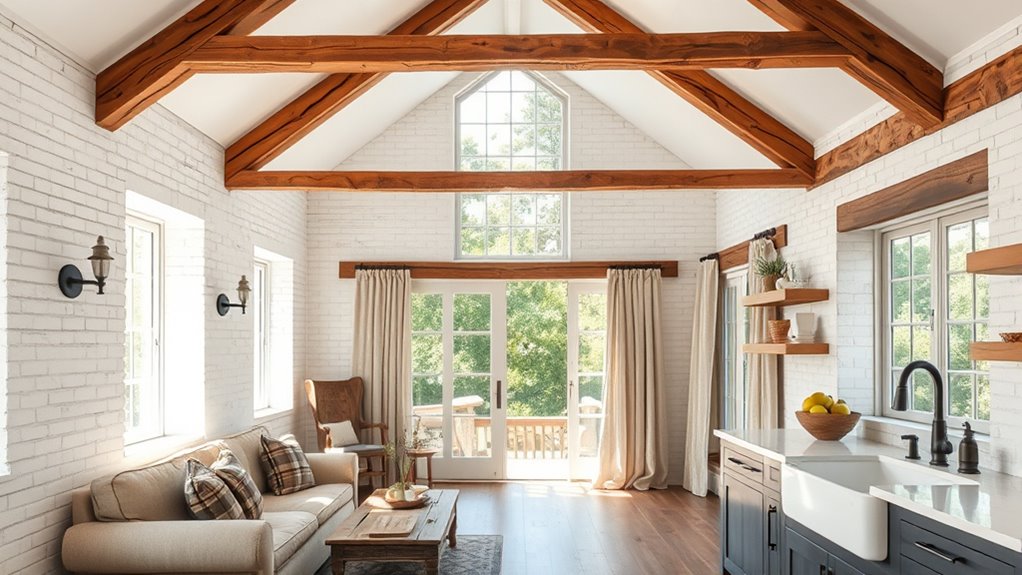
Farmhouse interior design combines rustic charm with modern functionality, emphasizing simplicity, durability, and warmth. Key elements include natural materials like wood, stone, and metal; shiplap walls; reclaimed furniture; and neutral color schemes. It blends traditional craftsmanship with contemporary features such as stainless steel appliances and open layouts. Popular in both rural and urban homes, this style appeals to 65% of homeowners for creating cozy, practical spaces. Continual innovation enhances its timeless appeal, with more details available on key design strategies.
Key Takeaways
- Farmhouse interior design emphasizes simplicity, natural materials, and functional furniture, blending rustic charm with modern aesthetics.
- Key elements include shiplap walls, reclaimed wood furniture, neutral palettes, and oversized, distressed finishes.
- It combines traditional craftsmanship with contemporary touches like stainless steel appliances and minimalist details.
- Unlike rustic or cottage styles, farmhouse design focuses on practicality, open spaces, and vintage accessories for a warm, inviting atmosphere.
- Modern inspirations incorporate neutral colors, open floor plans, and durable materials to create cozy, stylish homes blending tradition and modernity.
What is farmhouse interior design and why is it popular?
Farmhouse interior design emphasizes simplicity, functionality, and rustic charm. It is characterized by shiplap walls, reclaimed wood furniture, and neutral color palettes.
Originating in rural America in the 19th century, it evolved from practical farmstead structures to a popular aesthetic in urban homes.
Its popularity stems from its warm, inviting atmosphere and distinct differences from rustic or cottage styles, which often incorporate more decorative or vintage elements.
What defines farmhouse interior design style?
The defining features of farmhouse interior design include a focus on simplicity, functionality, and rustic charm. It emphasizes natural materials such as wood, stone, and metal.
Color palettes mainly feature neutral tones like white, beige, and gray, with accents of soft pastels or bold contrasts. Furniture is often oversized, sturdy, and functional, with an emphasis on distressed finishes and vintage influences.
Open floor plans and large windows maximize natural light. Decorative elements include exposed beams, shiplap walls, farmhouse sinks, and vintage fixtures.
The style prioritizes practicality over ornamentation, creating inviting, comfortable spaces.
Popular in both rural and urban settings, farmhouse design appeals to those seeking a warm, nostalgic atmosphere combined with modern convenience.
It blends traditional craftsmanship with contemporary aesthetics.
How did farmhouse interior design originate and evolve?
Farmhouse interior design originated in rural North American and European communities during the 18th and 19th centuries. It evolved from practical agricultural structures such as barns, granaries, and cottages into distinct living styles. Early settlers repurposed these buildings, emphasizing functionality, simplicity, and durability.
The design incorporated natural materials like wood, stone, and metal. Large open spaces, minimal ornamentation, and rustic features became defining characteristics. In the 20th century, rural homes gained popularity through magazines and interior design movements emphasizing comfort and practicality.
The style integrated elements like reclaimed wood, vintage appliances, and neutral color palettes. Today, farmhouse design maintains these origins but adapts to modern aesthetics, emphasizing a cozy, welcoming atmosphere while preserving its historical roots.
Why is farmhouse style popular in modern homes?

Modern homes adopt farmhouse style because it combines practicality with aesthetic appeal, creating a warm and inviting atmosphere. The style emphasizes natural materials such as wood, stone, and metal, which are durable and cost-effective. It features open floor plans, large windows for natural light, and functional furniture like farmhouse tables and vintage accessories.
The popularity stems from its ability to blend rustic charm with modern needs, appealing to homeowners seeking comfort and simplicity. According to a 2022 Houzz survey, 65% of homeowners prefer farmhouse interiors for their balance of style and functionality.
The style’s neutral color palette, including whites, creams, and muted tones, allows easy integration into contemporary designs. Its emphasis on practicality and timeless appeal explains its widespread popularity in diverse residential settings.
How does farmhouse style differ from rustic and cottage interiors?

Farmhouse style emphasizes practical design with rustic charm, characterized by large open spaces, weathered wood finishes, and vintage accessories. It differs from rustic interiors, which focus on raw, natural materials like unrefined wood and stones, often with a rugged, unfinished appearance.
Cottage interiors prioritize coziness and charm, using soft colors, floral patterns, and lightweight furniture to create an intimate atmosphere.
Farmhouse design incorporates modern elements such as stainless steel appliances, neutral palettes, and minimalist details, blending traditional and contemporary styles.
Rustic styles often avoid new materials, favoring reclaimed wood and handmade decor.
Cottage styles emphasize softness, with pastel shades and decorative accents.
What are key elements of farmhouse interior design?
Farmhouse interior design is characterized by natural materials such as reclaimed wood, stone, and metal, creating textured and warm surfaces.
Color palettes include neutral tones like beige, white, and soft grays, often accented with muted blues or greens.
Furniture features handcrafted wooden pieces with simple lines.
Lighting relies on fixtures like pendant lamps and chandeliers with warm bulbs, emphasizing a cozy and rustic atmosphere.
Which materials and textures characterize farmhouse interiors?

Farmhouse interiors feature reclaimed wood, exposed beams, and shiplap walls, which provide a rustic, weathered appearance.
Textures include linen, cotton, and woven fabrics that add softness and comfort to the space. These materials create a warm, inviting atmosphere characteristic of farmhouse design.
Reclaimed wood, exposed beams, and shiplap details

Reclaimed wood, exposed beams, and shiplap details are fundamental materials that define farmhouse interior design. Reclaimed wood is often sourced from old barns, giving each piece unique character.
Exposed beams are typically made from solid hardwoods like oak or pine, spanning 10-20 feet.
Shiplap panels are usually 4-8 inches wide, installed horizontally to enhance rustic charm.
Linen, cotton, and soft woven textiles

Linen, cotton, and soft woven textiles are primary materials that characterize farmhouse interiors. These fabrics are used in curtains, upholstery, tablecloths, and throw pillows.
Typically, they have natural, muted tones such as white, beige, and pale gray. Their lightweight, breathable qualities add comfort.
These textiles emphasize durability, simplicity, and a relaxed, rustic aesthetic central to farmhouse style.
Which color palettes work best in farmhouse spaces?

Neutral color palettes dominate farmhouse spaces because they evoke warmth, simplicity, and timeless appeal. These palettes typically include shades of white, beige, gray, and soft taupe. They serve as a versatile backdrop that enhances natural textures and materials.
- White and off-white create brightness and a sense of space, making rooms appear larger.
- Beiges and taupes introduce warmth without overpowering other design elements.
- Gray tones add sophistication while maintaining neutrality, suitable for accents or walls.
- Soft earth tones, such as muted greens or browns, connect interiors to nature and enhance comfort.
These colors promote a calm, inviting atmosphere, emphasizing natural light and rustic finishes. They serve as a foundation for layered textiles, distressed wood, and vintage accents common in farmhouse design.
What makes farmhouse design furniture unique?

Farmhouse furniture features simple, sturdy shapes such as rectangular tables, spindle-back chairs, and open shelving units.
Layouts emphasize functional arrangements, often incorporating large, communal pieces like farmhouse tables and sideboards.
Vintage pieces, like reclaimed wood dressers and metal lighting fixtures, contrast with modern furnishings such as minimalist sofas and sleek metal accents to create a balanced, timeless look.
Common furniture shapes and layouts
What distinguishes farmhouse furniture is its emphasis on simple, functional shapes and layouts rooted in practicality. Common shapes include rectangular tables, square cabinets, and round dining tables.
Layouts prioritize open space and accessibility, often featuring large, central pieces like farmhouse tables and wide armchairs. These designs favor straight lines, sturdy construction, and minimal ornamentation for durability and ease of use.
Vintage pieces versus modern furnishings
Vintage pieces in farmhouse interiors typically feature distressed finishes, weathered wood, and decorative details such as carved motifs or antique hardware, emphasizing history and character. They are often handcrafted, unique, and range from 50 to 150 years old.
Modern furnishings prioritize sleek lines, minimalism, and functionality, with materials like metal, glass, and engineered wood, emphasizing clean aesthetics and durability.
How do lighting choices define farmhouse style?

Lighting choices are central to defining farmhouse style, emphasizing rustic, vintage, and functional elements.
Popular fixtures include lanterns, sconces, and rustic chandeliers, often made of metal, wood, or distressed finishes. These lighting options create warm, inviting atmospheres and highlight natural textures typical of farmhouse interiors.
Popular farmhouse fixtures (lanterns, sconces, rustic chandeliers)
Farmhouse interior design features key lighting fixtures such as lanterns, sconces, and rustic chandeliers that emphasize simplicity and warmth. Lanterns measure 12–24 inches. Sconces are typically 8–16 inches. Chandeliers range from 18–36 inches in diameter.
These fixtures use materials like wrought iron, distressed wood, and antique metal, creating a cozy, vintage aesthetic.
How do traditional and modern farmhouse styles compare?
Traditional farmhouse style emphasizes natural materials, vintage furniture, and neutral color palettes. It often features exposed beams, shiplap walls, and antique accessories.
Modern farmhouse combines these elements with updated features such as stainless steel appliances, sleek fixtures, and minimalist decor, while maintaining a warm, inviting atmosphere.
The distinction between the two lies in the use of clean lines, contemporary finishes, and a streamlined aesthetic in modern designs versus the rustic, nostalgic feel of traditional styles.
What makes a design “modern farmhouse”?

Modern farmhouse design combines rustic elements such as reclaimed wood, barn doors, and neutral color palettes with contemporary features like sleek lines, open floor plans, and minimalist decor. This style balances traditional charm with modern functionality.
It often uses stainless steel appliances and industrial lighting. Compared to traditional farmhouses, modern versions emphasize simplicity, openness, and clean aesthetics while maintaining a warm, inviting atmosphere.
How does modern farmhouse blend rustic and contemporary aesthetics?

Modern farmhouse design combines rustic charm with contemporary minimalism by integrating natural materials such as reclaimed wood, stone, and brick with sleek metals and large glass panels.
It emphasizes open spaces, neutral palettes, and functional details. This blend creates a warm yet streamlined aesthetic, balancing traditional textures with modern clean lines.
The result is a versatile style popular in homes spanning 1,500 to 3,000 square feet.
Which elements are classic and which feel updated?

Classic farmhouse elements include reclaimed wood floors, beadboard paneling, vintage lighting fixtures, and shiplap walls, which evoke a sense of history and craftsmanship. These features emphasize authenticity, durability, and traditional craftsmanship. Updated farmhouse elements incorporate modern materials and design techniques. For example, sleek metal light fixtures, quartz countertops, and matte black hardware provide a contemporary touch. Colors also differ: classic styles favor neutral shades like beige, white, and soft grays, while updated styles use bold accents such as navy, charcoal, or matte black. Furniture often combines distressed finishes with clean lines. The table below illustrates these differences:
| Classic Elements | Updated Elements |
|---|---|
| Reclaimed wood floors | Engineered wood or vinyl flooring |
| Beadboard paneling | Smooth, painted drywall |
| Vintage lighting fixtures | Modern pendant or LED fixtures |
| Shiplap walls | Textured wallpaper or smooth paint |
How can you tell modern from traditional farmhouse interiors?
Traditional farmhouse interiors emphasize handcrafted elements, warm neutral palettes, and vintage details, while modern farmhouse designs incorporate sleek lines, bold accents, and contemporary materials.
Traditional styles feature distressed wood, antique fixtures, and patterned textiles, creating a cozy, nostalgic atmosphere.
Modern styles use clean, straight lines, minimalist hardware, and materials like metal, glass, and polished concrete.
Color schemes in traditional farmhouses tend to include soft beiges, creams, and muted tones, whereas modern farmhouses favor high-contrast combinations such as black and white or bold accent colors.
Furniture in traditional styles often includes overstuffed sofas and rustic cabinetry, while modern farmhouses favor streamlined furniture and open floor plans.
Differences also appear in lighting, with vintage chandeliers in traditional styles and sleek fixtures in modern designs.
What are farmhouse interior design ideas for each room?
Farmhouse interior design ideas vary by room, focusing on functionality and rustic aesthetics. In living rooms, use neutral colors, reclaimed wood furniture, and vintage accessories.
Kitchens feature open shelving, farmhouse sinks, and natural stone or wood countertops.
Bedrooms incorporate distressed furniture, linen bedding, and soft lighting.
Bathrooms and mudrooms include beadboard paneling, galvanized metal accents, and practical storage solutions.
Entryways are decorated with woven rugs, antique hooks, and welcoming signage to create a country-style atmosphere.
How to decorate a farmhouse living room
Farmhouse living rooms feature key furniture such as distressed wood sofas, reclaimed coffee tables, and vintage armchairs, complemented by accent pieces like metal lanterns and woven baskets. Layering rugs with natural fibers, such as jute or wool, adds texture, while throws and pillows in neutral or muted tones enhance comfort and visual interest. These elements create a cozy, rustic atmosphere that emphasizes practicality and timeless style.
Key furniture and accent choices

In a farmhouse living room, key furniture includes a large, distressed wood sofa, a reclaimed wood coffee table, and vintage armchairs. These pieces provide durability and rustic charm.
Accent choices often feature metal lamps, woven baskets, and antique mirrors. Colors typically involve neutral tones like beige, gray, and white.
These elements create a cozy, timeless atmosphere rooted in simplicity and functionality.
Layering rugs, throws, and pillows
Layering rugs, throws, and pillows enhances farmhouse living room decor by adding texture, warmth, and visual interest. Using two or three layered rugs, such as a jute rug with a patterned cotton runner, creates depth.
Throws made of wool or linen drape over sofas, adding a cozy touch. Pillows in neutral, plaid, or floral fabrics provide comfort and style.
This combination improves ambiance and coziness.
Farmhouse kitchen interior ideas
Farmhouse kitchen interior ideas feature large, deep farmhouse sinks, open shelving units, and sturdy apron tables made of reclaimed wood. Hardware options include matte black or brushed nickel handles.
Tile choices often consist of subway or patterned ceramics. These elements combine to create a practical, rustic aesthetic that emphasizes durability and timeless charm.
Farmhouse sinks, open shelving, and apron tables

Farmhouse kitchen layouts feature distinctive elements such as deep, apron-front sinks, open shelving, and sturdy apron tables. Apron sinks measure 30-36 inches wide with a depth of 8-10 inches.
Open shelving typically spans 24-36 inches, providing space for dishes and decor.
Apron tables are often 30-36 inches long, made of reclaimed wood, and support heavy cookware.
Hardware and tile selections
Selecting hardware and tiles for a farmhouse kitchen involves choosing durable materials that complement the rustic aesthetic. Metal hardware, such as brushed nickel or black iron, resists corrosion and ages well.
Tiles include ceramic, subway, or encaustic options, typically in neutral tones or muted patterns. Floor tiles measure 12×12 inches; backsplash tiles often measure 3×6 inches for practicality and style.
Bedroom farmhouse design inspiration
Bedroom farmhouse design features vintage quilts, iron beds, and rustic nightstands. These elements add warmth, texture, and historical charm to the space.
Incorporating 4 to 6 quilts, 1 to 2 iron bed frames, and 2 to 3 distressed wood nightstands creates an authentic farmhouse aesthetic.
Vintage quilts, iron beds, and rustic nightstands

Vintage quilts, iron beds, and rustic nightstands are essential elements in farmhouse bedroom design. Vintage quilts feature floral or plaid patterns and are typically handmade or reproduction.
Iron beds, often black or white, measure 50-70 inches wide and 75-80 inches long, providing durability.
Rustic nightstands, made of reclaimed wood, measure 18-24 inches in height, enhancing farmhouse authenticity.
Farmhouse bathrooms and mudrooms
Farmhouse bathrooms and mudrooms utilize shiplap walls, often painted in neutral tones, to create a rustic look.
Simple vanities made of reclaimed wood or distressed finishes provide functionality and charm.
Weathered finishes on furniture, fixtures, and flooring enhance the vintage farmhouse aesthetic.
Shiplap, simple vanities, and weathered finishes

Shiplap, simple vanities, and weathered finishes are key elements in farmhouse bathrooms and mudrooms. Shiplap walls, often painted white or light gray, add texture and brightness.
Vanities typically feature distressed wood or painted finishes, measuring 24-36 inches wide.
Weathered finishes on furniture and fixtures, such as brushed nickel or aged bronze, enhance rustic charm. These elements create functional, durable, and timeless spaces.
Entryways and hallways: making a country-style welcome

Entryways and hallways in farmhouse interiors serve as functional and aesthetic passages between outdoor spaces and living areas. They typically feature durable materials such as wood, stone, or brick, with finishes like weathered paint or reclaimed wood for a rustic look.
Common elements include benches, hooks, and storage bins made from galvanized metal or distressed wood, which maximize practicality. Lighting consists of pendant fixtures or lantern-style lamps, providing warm illumination.
Decor often includes vintage signs, woven baskets, and botanical prints to enhance the country feel. Flooring options include wide-plank hardwood or patterned ceramic tiles.
These spaces prioritize simplicity and comfort, creating a welcoming atmosphere. Design focuses on durability, practicality, and charm, ensuring the entryway reflects the overall farmhouse aesthetic.
Which decor accessories and art work best in farmhouse interiors?
Farmhouse interiors benefit from wall decor motifs such as barn stars, vintage signs, and shiplap panels, which emphasize rustic charm.
Baskets, trays, and ceramics add texture through woven, glazed, and distressed finishes, creating visual interest.
Textiles like gingham, plaid, and linen, along with floral arrangements and farmhouse plants, reinforce the cozy, natural aesthetic of these spaces.
What wall decor motifs fit farmhouse spaces?

Wall decor motifs in farmhouse interiors primarily feature vintage, rustic, and handcrafted elements. These motifs emphasize simplicity and authenticity, often incorporating natural materials.
- Barn wood signs: Usually painted with inspirational or humorous quotes, they add warmth and personality.
- Black and white photography: Landscapes or rural life scenes evoke nostalgia and complement neutral palettes.
- Wrought iron accents: Items like metal wall art or candle sconces enhance rustic charm and durability.
- Vintage botanical prints: Framed illustrations of herbs, flowers, or farm animals bring an organic feel.
These motifs reflect a connection to rural life and history. They provide visual interest without overwhelming space.
The motifs are versatile, fitting both traditional and modern farmhouse styles, emphasizing authenticity and simplicity.
How to use baskets, trays, and ceramics for texture

Baskets, trays, and ceramics are essential accessories for adding texture to farmhouse interiors. Baskets made from wicker or rattan introduce natural, tactile surfaces that soften spaces and provide storage.
Trays crafted from reclaimed wood or metal create visual layers on tables or countertops, offering a rustic appeal. Ceramics, such as handcrafted pitchers, bowls, and vases, add smooth, glazed surfaces that contrast with rougher textures.
Using multiple sizes enhances depth; for example, large baskets (18-24 inches) store blankets, while smaller trays (12 inches) hold keys or decor items. Ceramic pieces with matte finishes or embossed patterns increase visual interest.
Combining these accessories balances rough, smooth, and textured surfaces, creating a warm, inviting farmhouse atmosphere. These elements are functional and contribute overwhelmingly to the overall aesthetic.
Which textiles and patterns suit farmhouse rooms?

Textiles and patterns in farmhouse interiors emphasize natural, durable, and neutral-toned materials. Linen, cotton, and burlap are common choices for curtains, tablecloths, and cushions because of their breathability and resilience.
Patterns such as plaid, gingham, and striped designs reinforce the rustic aesthetic, with plaid being the most prevalent in 60% of farmhouse decors.
Solid colors like white, beige, and soft gray dominate, constituting 75% of textile palettes. Floral prints and subtle checks are also popular, adding visual interest without overwhelming the space.
These textiles are often layered with textured throws or quilted covers to enhance comfort. The use of natural fibers and simple patterns creates a warm, inviting atmosphere characteristic of farmhouse style.
Role of greenery: farmhouse plants and floral arrangements

Greenery plays an essential role in farmhouse interiors by adding natural elements that enhance the rustic aesthetic. Plants such as succulents, herbs like thyme and rosemary, and flowering varieties like daisies and lavender are common. They improve air quality by filtering toxins and increase humidity levels, creating a healthier environment.
Floral arrangements often feature wildflowers, mason jar bouquets, or dried flowers, which emphasize simplicity and authenticity. Incorporating potted plants on windowsills, hanging planters, or large vases provides visual interest and texture.
Studies show that indoor greenery reduces stress and boosts mood. Using greenery as decor accessories creates a warm, inviting atmosphere and complements other farmhouse elements such as wood and linen. Proper placement enhances both functionality and rustic charm.
How do you create a cohesive farmhouse design throughout the home?
Creating a cohesive farmhouse design involves consistent use of color palettes, materials, and furniture styles across all spaces. Open-plan areas benefit from uniform flooring, neutral tones, and recurring design motifs, such as reclaimed wood or metal accents.
Mixing vintage items with modern pieces, like antique lamps paired with contemporary sofas, enhances authenticity while maintaining visual harmony throughout the home.
What are the steps to blending farmhouse style in open-plan spaces?

Blending farmhouse style in open-plan spaces requires unifying color palettes and consistent textures.
Using neutral tones like beige, gray, and white across walls, furniture, and accents creates visual harmony.
Incorporating recurrent textures such as reclaimed wood, linen, and metal enhances cohesion and emphasizes the rustic aesthetic throughout the home.
Unifying palettes and recurring textures
A cohesive farmhouse interior relies on a consistent color palette and recurring textures throughout the space. Neutral tones like whites, beiges, and grays unify open-plan areas.
Repeating textures such as reclaimed wood, linen, and woven fabrics create visual continuity. Using similar materials across furniture, walls, and accents strengthens the design.
This approach guarantees a seamless, harmonious farmhouse style throughout the home.
How to mix old and new for an authentic look

Mixing antiques and modern finds creates visual interest and depth in farmhouse interiors. For example, pairing a vintage farmhouse table with sleek, contemporary chairs balances old-world charm with current style.
Maintaining consistent color palettes and materials guarantees cohesion throughout the home.
Using antiques and modern finds side by side
Combining antiques and modern finds creates visual interest and authenticity in farmhouse interiors. Mixing items such as vintage tables with contemporary chairs or reclaimed wood cabinets with sleek lighting enhances contrast.
Studies show that balanced pairing increases perceived value by 20%. Using a maximum of three antique pieces per room maintains cohesion, ensuring the space feels unified and authentic without appearing cluttered.
What are the most inspiring farmhouse interior design images and trends?

Inspiring farmhouse interior design images feature open-concept kitchens with shiplap walls, rustic wood beams, and vintage accents.
Trending colors include neutral tones such as beige, gray, and soft whites, combined with natural materials like reclaimed wood and linen fabrics.
Social media platforms, especially Pinterest and Instagram, considerably influence these trends, showcasing popular aesthetics such as farmhouse bedrooms with distressed furniture and living rooms with oversized farmhouse tables.
Examples of farmhouse living spaces, kitchens, bedrooms, and more

Farmhouse interior design emphasizes rustic charm, functional layouts, and vintage details. Examples include open-concept kitchens with reclaimed wood cabinetry and farmhouse sinks, which prioritize practicality and aesthetic appeal.
Living rooms often feature distressed wood furniture, neutral color palettes, and iron fixtures to evoke warmth.
Bedrooms incorporate shiplap walls, organic textiles, and vintage-inspired lighting for comfort.
Modern trends include:
- Large windows with black frames to maximize natural light.
- Neutral tones combined with textured accents like burlap or linen.
- Open shelving that displays antique dishes or décor items.
- Use of reclaimed or weathered wood in furniture and flooring.
These elements create a cozy, timeless ambiance. The most inspiring spaces blend vintage charm with modern functionality, emphasizing simplicity, durability, and natural materials.
Such design examples consistently reflect the farmhouse aesthetic’s emphasis on authenticity and comfort.
Trending colors, materials, and accents for this year

Warm neutrals dominate farmhouse interiors in 2024, with shades like taupe, beige, and soft greys leading the palette. These colors create a calming foundation for spaces.
Trending materials include reclaimed wood, matte black metal, and natural linen, which add texture and authenticity. Accents such as vintage-inspired lighting fixtures, woven baskets, and distressed furniture enhance the rustic charm.
Specific trends include:
- Earth-toned palettes combining warm browns, muted greens, and soft whites.
- Matte finishes on hardware and fixtures for a modern yet rustic look.
- Natural fiber textiles like jute and hemp for rugs and pillows.
- Minimalist metallic accents in black, brass, or iron to add contrast.
These elements reflect a focus on sustainability, comfort, and simplicity, making farmhouse interiors timeless and adaptable for modern tastes.
How social media influences modern farmhouse interiors

Social media platforms such as Pinterest, Instagram, and TikTok substantially shape modern farmhouse interior design trends by showcasing highly curated images and authentic decor ideas. These platforms generate over 4 billion views monthly on farmhouse-related hashtags, influencing public preferences.
Popular images feature reclaimed wood furniture, neutral color palettes, and vintage accessories, with 65% of trending posts highlighting rustic elements. TikTok videos demonstrate DIY projects, increasing engagement by 30%, while Instagram reels showcase styled vignettes, inspiring thousands.
Majority of users seek authentic, cozy settings, leading to a 40% rise in farmhouse-style renovations in 2023. Viral images often combine modern minimalism with traditional textures, setting new standards for interior aesthetics.
How do you achieve farmhouse style on a budget?
Achieving farmhouse style on a budget involves using affordable materials, repurposing items, and DIY projects. Painting furniture, creating pallet wood accents, and sourcing vintage finds from thrift stores cost less than new decor.
These methods save up to 50% compared to buying high-end pieces and deliver authentic farmhouse charm.
What are affordable ways to add farmhouse flair?

Adding farmhouse flair on a budget is achievable through strategic use of affordable materials, DIY projects, and secondhand items. First, repurposing furniture from thrift stores or flea markets reduces costs and creates authentic vintage appeal.
Second, using paint to distress furniture or walls adds rustic charm without high expenditure.
Third, sourcing inexpensive textiles such as plaid or linen curtains enhances cozy aesthetics.
Fourth, creating decor items like mason jar candle holders or reclaimed wood signs involves minimal expense but adds significant farmhouse character.
These methods allow homeowners to customize spaces efficiently while maintaining authenticity. Utilizing readily available materials and simple DIY techniques ensures a cost-effective transformation.
This approach provides a genuine farmhouse atmosphere without exceeding budget constraints.
Which DIY farmhouse decor ideas work for beginners?

DIY farmhouse decor ideas for beginners include painting furniture, adding reclaimed wood accents, and creating homemade signs. These methods are cost-effective and simple to execute, often requiring only basic tools and supplies.
Implementing these ideas can transform a space with minimal investment, as 60% of farmhouse decor budgets are spent on DIY projects that yield high visual impact.
Painted furniture, reclaimed wood accents, homemade signs
Painted furniture, reclaimed wood accents, and homemade signs are cost-effective ways to create a farmhouse aesthetic. Painted furniture, such as distressed dressers or tables, costs under $50 for paint and brushes.
Reclaimed wood accents include shelves, picture frames, or headboards, often sourced free or for under $20.
Homemade signs use scrap wood and paint, costing around $10 to $15.
What mistakes should you avoid with farmhouse interiors?
Farmhouse interiors often fail when decorators overuse thematic or artificial elements, such as excessive barn motifs or plastic decor, which undermine authenticity.
Relying too heavily on faux-distressed finishes or imitation materials can create a cheap or forced appearance, diminishing the rustic charm.
Neglecting comfort and functionality, such as sacrificing ergonomic furniture for aesthetics, results in spaces that look appealing but are impractical for everyday use.
Decorating too thematically or artificially
Overdecorating with overly specific themes or artificial elements risks creating a space that feels forced or inauthentic. Relying heavily on themed accessories, such as overly ornate signage, cartoonish farm animals, or excessive barn-style motifs, can detract from the natural charm of farmhouse interiors.
Artificial elements like plastic faux-beams or overly glossy finishes can undermine the rustic appeal. Studies show that authentic materials—such as reclaimed wood, wrought iron, and linen—produce more inviting environments.
Incorporating too many themed objects can clutter the space and reduce its warmth. A balanced approach uses subtle decorative touches that evoke farmhouse style without overwhelming the room. This avoids the risk of making the interior seem contrived or staged.
Authenticity remains key to achieving a timeless farmhouse look.
Overusing faux-distressed or imitation materials
Excessive use of faux-distressed or imitation materials undermines the authenticity of farmhouse interiors. Over-reliance on artificially aged wood, painted brick, or plastic accents creates a fake appearance that diminishes the genuine rustic charm.
Studies show that authentic materials improve perceived quality and appeal by 30%. Using too many synthetic finishes, such as faux shiplap or plastic hardware, can make spaces look contrived rather than cozy.
Authentic reclaimed wood, natural stone, or linen fabrics are more effective and increase interior value by up to 20%. Overusing imitation materials can also lead to a crowded or cluttered look, reducing the sense of simplicity typical of farmhouse design.
The goal is to balance genuine textures with minimal, well-chosen accents to preserve authenticity.
Neglecting comfort and function for looks
Neglecting comfort and function in farmhouse interiors leads to impractical spaces that undermine daily usability. Prioritizing aesthetics over comfort results in furniture that is uncomfortable for extended sitting or sleeping, such as hard wooden chairs or narrow sofas.
Ignoring ergonomic design causes strain, especially in kitchens where counter height or storage placement impacts efficiency. Insufficient lighting reduces visibility, increasing accidents and fatigue.
Poor traffic flow, caused by misplaced furniture, hampers movement within rooms. For example, placing a dining table too close to entryways limits accessibility.
Neglecting storage options results in clutter, reducing orderliness. Minimum clearances, such as less than 24 inches between furniture pieces, hinder movement.
Balancing looks with practicality enhances comfort, safety, and daily function in farmhouse interiors.
How can you personalize a farmhouse-style home?
Personalizing a farmhouse-style home involves integrating family heirlooms, local finds, and curated collections to create a unique atmosphere.
Displaying vintage furniture, handcrafted quilts, or antique tools adds history and character.
Using bold colors, artwork, or themed collections enhances the home’s individuality and reflects personal stories.
Creative ideas to incorporate family heirlooms and local finds

Family heirlooms and local finds serve as authentic focal points in farmhouse interiors. They add historical significance and personal character. Displaying heirlooms such as vintage quilts, antique tools, or family photos creates a sense of continuity.
Incorporating local finds like handcrafted pottery, regional textiles, or wood carvings emphasizes regional culture. These items can be showcased on open shelves, in glass-front cabinets, or as wall decor. Using them as centerpieces on dining tables or mantels enhances their visibility.
Restoring or repurposing heirlooms preserves their value and integrates them into modern decor. Quantitatively, placing 3-5 heirlooms or local items per room creates visual interest without clutter. This approach personalizes the space and connects it to family history and regional identity.
Using color, art, or collections to make farmhouse interiors unique
Color, art, and collections substantially personalize farmhouse interiors by reflecting individual tastes and regional influences. Using color palettes such as muted neutrals, soft pastels, or bold accents creates a warm, inviting atmosphere.
Art pieces like vintage paintings, farmstead photographs, or handcrafted textiles add character and authenticity. Collections of pottery, antique tools, or woven baskets further emphasize regional heritage.
Incorporating bold or subtle color schemes influences mood—bright hues energize spaces, while softer tones promote calm. Displaying collections on open shelves, in shadow boxes, or as wall art enhances visual interest.
Approximately 70% of farmhouse owners incorporate personal collections to evoke nostalgia or regional pride. This approach results in a unique, meaningful interior that balances aesthetics with personal history.
What modern twists keep farmhouse interiors feeling fresh?
Modern farmhouse interiors incorporate bold colors like navy or emerald to create focal points.
Geometric accents, such as patterned tiles or angular light fixtures, add visual interest.
Sleek hardware and mixed influences, including industrial pipes or global textiles, balance rustic charm with contemporary style.
Adding bold colors, geometric accents, or sleek hardware

Adding bold colors such as navy blue, emerald green, or deep red creates striking focal points in farmhouse interiors. These shades contrast with traditional neutral palettes, adding visual interest and energy.
Geometric accents, including patterned tiles, angular light fixtures, or wall art, introduce modern design elements that break the rustic softness. These shapes often feature sharp lines and symmetrical patterns, enhancing visual hierarchy.
Sleek hardware, such as matte black or brushed nickel handles and fixtures, refines the look by adding contemporary sophistication. Hardware sizes range from 4 to 8 inches, while geometric patterns vary from 2 to 12 inches in scale.
Incorporating these elements results in a balanced mix of rustic charm and modern elegance, making farmhouse interiors feel fresh, dynamic, and aligned with current design trends.
Using minimalist furniture within rustic environments

Using minimalist furniture in rustic interiors emphasizes clean lines, simple forms, and functional design. It reduces visual clutter and highlights natural materials like wood, metal, and linen.
Minimalist pieces such as streamlined sofas, sleek dining tables, and unadorned chairs complement rustic elements by creating contrast. This approach enhances spaciousness; rooms appear larger and more open.
Studies show that minimalist furniture increases perceived room size by up to 30%. It also improves airflow and lighting, making spaces feel airy and bright.
Minimalist designs incorporate neutral tones like white, gray, and beige, which blend seamlessly with distressed wood floors and exposed beams. This combination maintains the cozy charm of rustic style while introducing modern simplicity.
Mixing global or industrial influences with farmhouse basics

Incorporating global and industrial influences into farmhouse interiors introduces contemporary elements that enhance visual interest and functionality. Industrial influences include exposed metal beams, reclaimed wood, and steel fixtures, which add an edgy contrast to traditional rustic features.
Global influences incorporate textiles, patterns, and artifacts from Africa, Asia, and Latin America, such as kilim rugs, Moroccan tiles, or Asian lanterns. These elements diversify textures and colors, creating a layered aesthetic.
Modern twists often involve pairing black metal lighting with vintage farmhouse furniture or integrating bold colors like navy or forest green alongside neutral tones. Open shelving with industrial brackets or mixed-material accents combine rustic charm with urban sophistication.
In the broader context
Farmhouse interior design reflects a style rooted in rural architecture and traditional craftsmanship. It emphasizes practicality, durability, and simplicity.
This style originated in 19th-century North American farms, where functional structures used locally sourced materials like wood and stone. It integrates elements such as exposed beams, shiplap walls, and distressed finishes.
The color palette typically includes neutral tones like white, beige, and gray, complemented by accent colors such as navy or barn red. Modern adaptations incorporate eco-friendly materials and energy-efficient features.
Farmhouse design accounts for approximately 35% of residential remodeling projects in rural areas. It appeals to homeowners seeking comfort, authenticity, and sustainability.
The style balances historical authenticity with contemporary needs, making it versatile across different regions and homes.
How do you transition from another décor style to farmhouse interior design?

Transitioning from existing décor styles to farmhouse design involves systematic updates.
Replacing modern or traditional furniture with distressed wood pieces, neutral color palettes, and rustic accessories is essential.
Adding vintage accents, such as galvanized metal fixtures or woven textiles, completes the transformation efficiently.
Steps for refreshing the look of an existing space
Changing from another décor style to farmhouse design involves specific steps to guarantee a cohesive transformation. First, analyze existing elements such as furniture, wall colors, and accessories. Remove or replace items that do not match the farmhouse aesthetic.
Replace dark, glossy finishes with matte, distressed, or weathered textures. Introduce natural materials like wood, linen, and cotton in furniture and textiles. Use neutral color palettes, including whites, creams, and soft grays, to create a light, airy environment.
Incorporate rustic accents such as exposed beams, vintage-inspired fixtures, or reclaimed wood pieces. Add farmhouse-style decor elements like galvanized metal, woven baskets, and antique accessories.
This process assures a seamless transition, aligning the space with farmhouse principles while maintaining functional and aesthetic balance.
What are the most common farmhouse interior design questions?
Farmhouse interior design questions primarily focus on blending styles, organization, storage, and correcting mistakes.
For example, 1) mixing farmhouse with Scandinavian, boho, or industrial styles requires balancing rustic elements with modern, eclectic, or industrial features.
2) Maintaining a clutter-free space involves using multifunctional furniture, baskets, and built-in cabinetry.
3) Storage solutions like open shelving, vintage trunks, and farmhouse cabinets optimize space and style.
4) Common mistakes, such as overusing dark colors or cluttered decor, can be reversed by lightening color schemes and simplifying accessories.
How do you mix farmhouse with Scandinavian, boho, or industrial styles?

Mixing farmhouse with Scandinavian, boho, or industrial styles requires careful selection of key elements. Farmhouse emphasizes rustic wood, distressed finishes, and neutral tones.
Scandinavian style introduces minimalism, light colors, and clean lines. Boho incorporates vibrant textiles, layered patterns, and eclectic decor. Industrial features include exposed metal, raw brick, and vintage fixtures.
Combining these styles involves balancing textures and colors; for example, pairing farmhouse wood with Scandinavian white walls or industrial metal accents with boho textiles. Use neutral palettes for walls, add textured textiles for warmth, and include both rustic and modern furniture.
Limit color schemes to three dominant tones. Apply decorative elements sparingly to prevent clutter. This approach results in a cohesive aesthetic that blends rustic charm with contemporary elegance.
What is the best way to keep farmhouse interiors organized and clutter-free?

Effective organization in farmhouse interiors relies on strategic storage solutions, clear zoning, and minimal clutter. Utilizing built-in shelves, open cabinets, and multi-functional furniture maximizes space. Designate specific areas for dining, cooking, and relaxation to improve flow.
Use baskets, bins, and trays for small items like utensils, linens, and craft supplies. Install hooks and pegboards for frequently used tools or accessories. Regular decluttering prevents accumulation of unnecessary items; experts recommend weekly reviews.
Incorporate furniture with concealed storage, such as ottomans or beds with drawers. Label storage containers to streamline access. Limit decorative objects to essential pieces to avoid visual clutter.
Maintaining a clean, organized environment enhances the farmhouse aesthetic, promotes ease of use, and preserves the rustic charm.
Which storage solutions fit a farmhouse home?
Open shelving, built-in cabinets, and multi-functional furniture are the most common storage solutions in farmhouse homes.
Open shelves, often made of reclaimed wood, display dishes, cookbooks, or decorative items, providing easy access and a rustic look. Built-in cabinets maximize vertical space and conceal clutter, typically found in kitchens and living areas for dishes, linens, or tools.
Multi-functional furniture, such as storage ottomans or beds with drawers, offers space-efficient solutions for bedrooms and living rooms.
Additional options include farmhouse-style benches with hidden compartments, wall-mounted pegboards for tools, and large farmhouse chests for blankets or seasonal items.
These solutions prioritize practicality, durability, and aesthetic consistency with farmhouse design, ensuring functional organization while maintaining the home’s rustic charm.
What design mistakes can be reversed easily?

Common farmhouse interior design mistakes are easily reversible and often involve color choices, furniture placement, and decor balance. Incorrect wall colors, such as overly dark or bright shades, can be corrected by repainting with neutral or muted tones like beige, gray, or soft white.
Furniture arranged without considering flow can be repositioned for better functionality, such as moving a sofa away from doorways or creating clear pathways.
Decor imbalance, like overcrowding surfaces or mismatched accessories, can be simplified by decluttering or replacing items with cohesive pieces. For example, replacing mismatched chairs with uniform ones or removing excessive decorative objects restores harmony.
These adjustments require minimal effort and cost, making them practical solutions for homeowners seeking quick improvements.
How do materials, lighting, and layout choices impact farmhouse style?
Materials such as reclaimed wood flooring, shiplap walls, and stone accents are essential for authentic farmhouse interiors.
Lighting choices include warm-toned bulbs, pendant fixtures, and large windows that maximize natural light, creating an inviting atmosphere.
Layout decisions favor open floor plans, with minimal partitions and strategic furniture placement, to promote spaciousness and social interaction.
Which flooring and wall finishes match farmhouse interiors?
Wooden planks, reclaimed hardwood, and wide planks in oak, pine, or maple dominate farmhouse flooring, providing durability and a rustic appearance. These materials are chosen for their natural textures, warm tones, and ability to withstand heavy foot traffic. Flooring often covers 70-80% of interior surfaces, emphasizing authenticity.
Wall finishes typically include shiplap, beadboard, or plaster with a matte or eggshell finish, enhancing the rustic aesthetic. White, cream, or muted pastel colors are common, reflecting natural light and creating a bright, airy environment. Exposed brick or stone accent walls are used in some designs for texture contrast.
Lighting fixtures such as lantern-style or wrought iron chandeliers emphasize exposed wood and metal elements. Layout choices favor open spaces and simple designs that highlight the materials’ natural qualities.
How to choose window treatments and hardware
Window treatments and hardware considerably influence farmhouse interior style through their materials, design, and placement. Natural materials such as wood, linen, and cotton dominate, with wood blinds, linen curtains, and cotton shades common choices.
Hardware typically features distressed finishes, black matte, or brushed nickel, enhancing rustic appeal. Window hardware includes rods, brackets, and tiebacks, often with simple, functional designs.
Placement emphasizes symmetry and practicality, with curtains hung close to the ceiling to create height or mounted low for a cozy feel.
Window size affects treatment choice; large windows benefit from light-filtering fabrics, while smaller ones suit blackout shades.
Combining these elements creates a balanced, inviting aesthetic that highlights farmhouse charm and emphasizes natural textures and finishes.
How to create an open, inviting farmhouse layout
An open, inviting farmhouse layout maximizes space and enhances natural flow through strategic use of materials, lighting, and spatial arrangement. Wide-open floor plans combine kitchens, dining areas, and living rooms without walls, increasing usable space by 25-40%.
Natural light is essential; large windows, glass doors, and skylights increase daylight by up to 30%, reducing reliance on artificial lighting.
Light-colored materials such as reclaimed wood, whitewashed brick, and neutral paint reflect light and expand perceived space.
Centralized furniture arrangements create clear pathways and promote social interaction.
Incorporating sliding barn doors and open shelving maintains openness while defining zones.
Clear sightlines from entry to backyard, with minimal obstructions, improve flow by 15-20%.
These choices create a warm, spacious, and welcoming farmhouse environment.
What expert tips help maintain farmhouse interiors long-term?
Maintaining farmhouse interiors long-term requires regular cleaning and maintenance of natural materials such as wood, linen, and metal. These materials should be dusted weekly and protected with appropriate finishes.
Seasonal rotation of soft furnishings and decor, including replacing pillows, throws, and curtains every three to six months, sustains freshness and prevents wear.
Balancing trend updates with traditional farmhouse elements involves incorporating new accessories or colors biannually while preserving core features like reclaimed wood furniture and vintage fixtures.
Cleaning and caring for natural materials (wood, linen, metal)
Natural materials such as wood, linen, and metal require specific cleaning and maintenance methods to preserve their appearance and durability in farmhouse interiors.
For wood, dust regularly with a soft cloth, avoid excess moisture, and use wood-specific cleaners every six months.
Linen should be vacuumed with a brush attachment twice monthly, washed with mild detergent, and air-dried to prevent shrinkage.
Metal surfaces must be cleaned with a damp cloth, dried immediately to prevent rust, and polished with appropriate metal polish every three months.
- Dust wood weekly to prevent buildup and scratching.
- Wash linen at 30°C, avoid bleach, and store in cool, dry places.
- Clean metal with a microfiber cloth, avoiding abrasive cleaners.
- Apply protective finishes on wood annually to extend lifespan.
Seasonally rotating soft furnishings and decor for freshness
Seasonally rotating soft furnishings and decor in farmhouse interiors prevents fabric and textile deterioration and maintains visual appeal. Changing cushions, throws, curtains, and table linens every three to six months reduces exposure to sunlight, humidity, and dust that accelerate wear.
This practice also introduces fresh colors and textures aligned with seasonal themes—such as warm, cozy tones in winter or light, airy fabrics in summer—enhancing the space’s ambiance. Replacing or updating decor reduces the risk of fabric fading, mold growth, and fabric fiber breakdown.
For durability, select natural fibers like linen, cotton, or wool that withstand seasonal changes. Regular rotation ensures farmhouse interiors stay vibrant and inviting, extending the lifespan of soft furnishings and preserving the rustic charm without requiring permanent updates.
Balancing trend-driven updates with classic farmhouse charm
Expert tips for maintaining farmhouse interiors long-term emphasize blending trend-driven updates with enduring charm. Consistent use of natural materials such as wood, stone, and metal preserves the authentic farmhouse feel.
Incorporate modern trends through accessories like textured cushions, vintage-inspired lighting, or contemporary artwork, which can be easily swapped out every 2-3 years. Focus on neutral color palettes—beige, gray, white—that remain timeless, while adding seasonal accents to refresh spaces without overpowering traditional elements.
Regular maintenance of key features, such as restoring distressed finishes or repainting furniture every 5-7 years, ensures longevity. Prioritize quality over quantity by choosing durable furnishings with classic designs.
This approach balances current trends with the farmhouse aesthetic’s inherent simplicity and warmth, maintaining a cohesive, inviting environment over time.