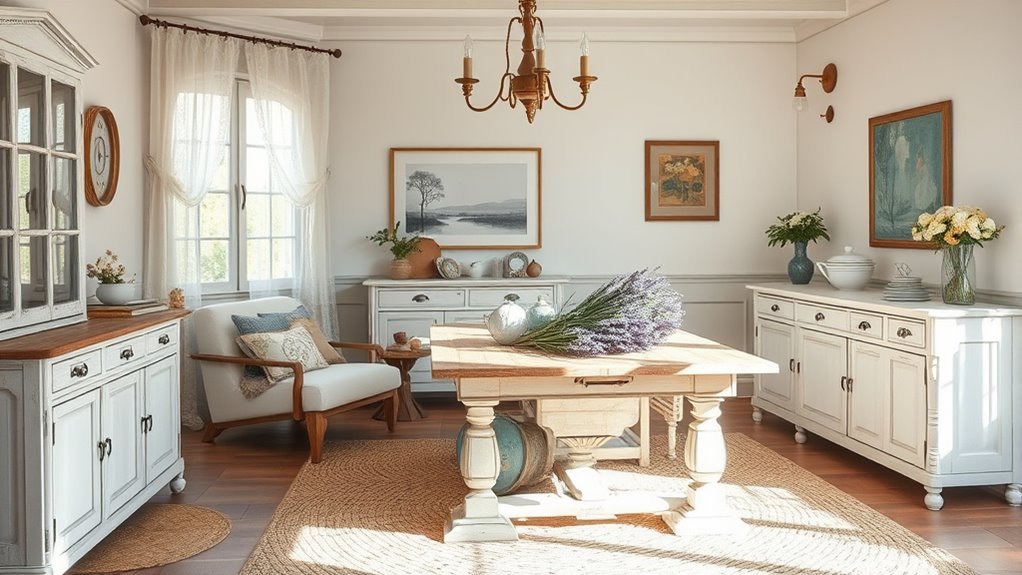
French country interior design blends rustic charm with elegant refinement, originating from 17th-century rural France. It features natural materials like reclaimed wood, limestone, and wrought iron in architectural elements such as steep roofs and exposed beams. Color schemes include neutrals, pastels, and terracotta. Modern updates incorporate vintage furniture paired with contemporary fixtures. Rustic interiors emphasize aged finishes, floral textiles, and natural light, blending authenticity with comfort. Continued exploration reveals how these styles adapt for current tastes and designer influences.
Key Takeaways
- Classic French country design emphasizes antique furniture, soft color palettes, and rustic materials like reclaimed wood and stone.
- Modern French country updates traditional elements with sleek lines, contemporary textiles, and minimalist accessories.
- Rustic French country focuses on aged finishes, exposed beams, and natural textures to create cozy, countryside charm.
- Designer influences incorporate high-end finishes, bespoke furniture, and artful mixing of vintage and modern styles.
- Both classic and contemporary styles prioritize warmth, authenticity, and the balance of rustic and refined elements.
What Defines French Country Interior Design?
French country interior design originated in rural regions of France, emphasizing practicality and regional materials. Architectural elements such as exposed wooden beams, stone walls, and tall, arched windows define its aesthetic.
The style balances rustic charm with refined details like ornate ironwork, antique furniture, and soft color palettes, reflecting its core philosophy of comfort, elegance, and historical authenticity.
What are the origins of French country interior design?
The origins of French country interior design trace back to rural regions of France in the 17th and 18th centuries. It developed from practical needs, using locally sourced materials such as wood, stone, and clay. Farmers and artisans created functional homes with rustic furniture, simple textiles, and handcrafted décor.
Architecture reflected regional styles, with Provence, Normandy, and Alsace influencing distinct looks. The design emphasized comfort, natural light, and a connection to the land. Folk art, vintage textiles, and antique furniture played vital roles.
These elements adapted over centuries, blending practicality with aesthetic appeal. The style remained rooted in rural life but evolved into a symbol of rustic elegance. Its enduring appeal stems from its authentic, timeless character grounded in history.
Which architectural elements create the French country look?

Architectural elements that define the French country look include steeply pitched roofs, typically covered with terracotta tiles or shingles. Wide eaves extend beyond walls, creating shadows and emphasizing rustic charm.
Walls are often constructed from stone or plaster, with visible wood beams in ceilings and ceilings often featuring exposed wooden rafters.
Windows are tall and narrow, with divided panes or shutters, allowing natural light to fill spaces.
Doors are usually made of aged wood, sometimes with decorative iron hinges or handles.
Chimneys are prominent features, often constructed from brick or stone, with ornate detailing.
Balconies and terraces with wrought iron railings enhance outdoor spaces.
These elements combine to create a silhouette that balances rustic warmth with elegant refinement.
How does French country style balance rustic and refined elements?

French country style balances rustic and refined elements through the strategic combination of aged materials and elegant details. Aged wood, stone, and wrought iron are common rustic materials, providing texture and authenticity. These are paired with refined features such as marble countertops, detailed moldings, and antique-inspired fixtures.
Furniture often combines sturdy, weathered finishes with delicate carvings or ornate hardware. Color palettes include neutral tones like beige, cream, and soft gray, which unify rustic and elegant aspects. Textiles such as linen and cotton are used in both casual and sophisticated ways.
Decor combines vintage accessories with modern art or refined ceramics, creating contrast. This balance maintains a warm, inviting atmosphere while emphasizing elegance and craftsmanship.
What are the core philosophies behind French country decorating?

French country decorating emphasizes a warm, inviting atmosphere rooted in practicality and comfort. Its core philosophy centers on blending rustic charm with refined elegance.
Natural materials like wood, stone, and wrought iron are common, supporting durability and authenticity. Color palettes favor soft, earthy tones such as beige, cream, and pastel shades, creating a calming environment.
Furniture emphasizes comfort and functionality, often featuring distressed finishes and vintage styles. Decor incorporates antique accessories, ceramics, and handcrafted textiles to evoke a sense of history.
The style prioritizes simplicity, emphasizing quality over excess. The aim is to create spaces that feel lived-in and welcoming, reflecting a lifestyle focused on family, tradition, and understated sophistication.
This approach balances rustic authenticity with subtle elegance.
What Are the Signature Features of French Countryside Interiors?
French countryside interiors feature a soft, muted color palette dominated by whites, creams, and pastels. These are complemented by earthy tones such as ochre and terracotta.
Essential materials include reclaimed wood, limestone, and wrought iron, which create authentic textures. Vintage furniture—often made of aged oak or distressed painted pieces—adds character to the space.
Fabrics with floral, plaid, or toile patterns are commonly used. Large windows and linen curtains help maximize natural light and enhance the airy, rustic ambiance.
What color palettes are most common in French country interiors?

Warm, muted tones dominate French country interiors. These color palettes primarily include soft beiges, creamy whites, and warm taupes.
Pale blues, gentle greens, and lavender accents are common for added subtle contrast. Rustic yellows and terracotta reds are used in small doses to evoke warmth and sunlight.
Light, airy shades such as ivory and linen are prevalent for walls and textiles. Antique furniture and accessories often feature distressed finishes in similar tones.
Darker shades like deep browns and charcoal gray are incorporated through wood beams, furniture, or decorative elements to add depth.
Which materials and textures are essential for authenticity?

Materials such as distressed wood, natural stone, and aged metals are essential for authentic French countryside interiors. Distressed wood is used in flooring, furniture, and beams, often with a worn finish to highlight age and character.
Natural stone appears in fireplaces, flooring, and accent walls, typically limestone or sandstone, adding rustic durability. Aged metals, including wrought iron and bronze, are prevalent in light fixtures, hardware, and decorative accents, providing a weathered appearance.
Linen, burlap, and cotton textiles add tactile texture, often with a rough or slightly faded surface. These materials create a layered, timeless aesthetic emphasizing craftsmanship and age.
Their combination results in a warm, inviting environment that reflects the rustic elegance characteristic of French rural homes.
How is vintage and antique furniture incorporated into rooms?

Vintage and antique furniture are integral to French countryside interiors, often serving as focal points in rooms. These pieces include aged oak dressers, distressed side tables, and carved armoires. They typically feature weathered finishes, chipped paint, or patina, emphasizing age and craftsmanship.
The furniture is often sourced from 18th or 19th centuries, with styles such as Louis XV or Provincial. They are incorporated through placement as centerpieces or accent pieces, blending seamlessly with modern or rustic elements.
Many rooms combine multiple antique items, creating a layered look. Furniture proportions are usually large and sturdy, with ornate carvings or simple lines. This creates a sense of history and authenticity, reflecting France’s rural heritage and craftsmanship traditions.
What kinds of fabrics and patterns evoke French countryside living?

Fabrics and patterns in French countryside interiors emphasize natural textures and timeless designs. Linen, cotton, and burlap are common, often in neutral tones such as beige, cream, and soft gray.
Floral patterns, especially toile de Jouy, depict pastoral scenes with detailed, repetitive motifs. Stripes and checks, like gingham and buffalo plaid, evoke rustic charm. Damask fabrics with subtle sheen add elegance to upholstery.
Distressed or washed textiles enhance the vintage feel. Patterns combine simplicity with intricate details, emphasizing a cozy, inviting environment.
Fabrics are chosen for durability and comfort, often layered to create depth. Overall, these textiles reflect a connection to nature, history, and craftsmanship, embodying the relaxed yet refined spirit of French countryside living.
How do natural light and window treatments play into the design?

Natural light is essential in French countryside interiors, as it enhances the sense of openness and warmth. Large, tall windows are common, often with multiple panes, allowing maximum sunlight to enter.
Window treatments prioritize light control while maintaining aesthetic appeal; linen or cotton curtains are popular for their airy feel, often paired with simple wooden or wrought iron rods. Shutters are frequently installed on exterior windows, providing privacy and controlling light levels.
Valances and lightweight fabrics are used minimally to avoid obstructing sunlight. Windows are often positioned to maximize daylight during peak hours, and reflective surfaces like white walls or glazed tiles amplify natural illumination.
Proper lighting design emphasizes the importance of natural light, reducing reliance on artificial sources during daytime hours.
How Do You Achieve Modern French Country Interior Design?
Modern French country design combines traditional rustic elements with sleek, minimalist features to create a balanced aesthetic. It differs from classic styles by emphasizing neutral color palettes, such as whites, beiges, and muted grays, replacing bold patterns with subtle textures. Incorporating contemporary furniture with clean lines, along with discreet smart home technology, enhances functionality without compromising the timeless charm.
How does modern French country differ from classic styles?

Modern French country interior design differs markedly from classic styles through its emphasis on simplicity, functionality, and updated aesthetics. It prioritizes clean lines, minimal ornamentation, and neutral color palettes, often using whites, beiges, and soft grays.
Furniture features streamlined shapes with subtle distressing or modern touches, contrasting with ornate carvings and elaborate details common in classic designs. Materials like reclaimed wood, linen, and natural fibers are prevalent, promoting a relaxed atmosphere.
Light fixtures tend toward sleek or rustic metal finishes, favoring practicality. Decorative elements are restrained, focusing on quality over quantity.
The overall effect is a space that feels fresh and uncluttered, blending traditional French elements with contemporary minimalism for a balanced, welcoming environment.
What are the best ways to integrate contemporary design with French country elements?

Blending contemporary design with French country elements involves balancing sleek, minimal features with traditional rustic details. Modern furniture, such as streamlined sofas or metal light fixtures, contrasts with rustic elements like distressed wood furniture or vintage accessories.
Incorporating neutral color palettes with subtle textures, like linen curtains or woven rugs, maintains harmony. Open floor plans with clean lines enhance spaciousness while preserving French country charm through decorative accents like wrought-iron hardware or floral patterns.
Using minimalistic art and contemporary lighting fixtures complements rustic features without overwhelming the space. Integrating sleek countertops with distressed cabinets or modern hardware creates visual contrast.
Combining these elements results in a cohesive space that feels both fresh and rooted in tradition. This approach emphasizes simplicity while celebrating rustic character.
Which color schemes modernize a French country space?

Warm neutrals, cool tones, and muted shades effectively modernize a French country space. Neutral colors such as beige, taupe, and ivory provide a clean, sophisticated backdrop.
Cool tones like soft blues, muted greens, and slate gray introduce calming elements that contrast traditional warmth. Muted shades, including dusty rose, pale lavender, and sage, add subtle color without overwhelming the space.
Incorporating these palettes through wall paint, textiles, and accessories creates a contemporary feel while maintaining classic charm. Using a monochromatic scheme or combining two complementary tones enhances cohesion.
For example, pairing beige walls with light blue accents or sage green furniture with cream-colored walls emphasizes modernity. These color schemes update French country interiors by balancing tradition with current aesthetic preferences.
What role do minimalist furniture and sleek lines play?

Minimalist furniture and sleek lines are essential elements in achieving a modern French country interior. They create a clean, uncluttered look that contrasts with traditional ornate details. These pieces often feature neutral colors, smooth surfaces, and simple shapes, emphasizing functionality over decoration.
For example, low-profile sofas with straight arms, streamlined dining tables, and cabinets with minimal handles exemplify this style. Incorporating furniture with straight lines reduces visual heaviness, making spaces feel more open and airy.
Modern materials like metal, glass, and lacquer are frequently used to enhance sleekness. Minimalist furniture balances rustic elements, such as distressed wood, with contemporary design.
How can technology and smart home features be subtly included?

Smart home features can be integrated into French country interiors through discreet technology that maintains the style’s aesthetic. Wireless systems eliminate visible wiring and bulky devices. Touch panels and voice control are hidden within cabinetry or behind decorative panels.
For example, smart lighting can be controlled via wall switches that resemble traditional switches or via mobile apps. Thermostats are concealed behind cabinetry or integrated into existing wall spaces. Security cameras and sensors are hidden within ceiling moldings or decorative elements.
Wireless speakers are embedded into walls or ceilings, avoiding visual clutter. Automated window treatments can be operated via remote control or mobile app, blending seamlessly with rustic drapery. These integrations preserve the rustic charm while providing modern convenience and energy efficiency.
What Makes Rustic French Country Interiors Stand Out?
Rustic French country interiors are distinguished by materials like weathered wood, aged stone, and wrought iron, which create authentic textures.
Reclaimed architectural elements such as barn doors, antique beams, and vintage tiles enhance the rustic appeal.
Exposed ceiling beams and stone walls define the space, while accessories like ceramic jugs, woven baskets, and distressed furniture contribute character, with patina applied to surfaces for added charm.
What are the defining materials and finishes?

French Country interiors typically feature materials such as aged wood, limestone, and terracotta, which contribute to their warm and weathered appearance. Aged wood, often used in beams, furniture, and flooring, shows natural knots, cracks, and distressed finishes.
Limestone is common in flooring, fireplaces, and walls, offering a matte, textured surface with subtle color variations from light beige to soft gray. Terracotta tiles are used for flooring and backsplashes, characterized by their deep red-orange hue and rustic, uneven surface.
Finishes include matte or lightly waxed surfaces that enhance the aged look. Surfaces may display intentional distressing, such as chipping or weathering, to evoke a sense of history.
These materials and finishes create a warm, inviting, and authentic rustic feel characteristic of French countryside homes.
Which reclaimed architectural elements give rustic appeal?

Reclaimed architectural elements markedly enhance the rustic appeal of French Country interiors by introducing authentic history and character. Reclaimed wood beams and ceiling joists, often sourced from barns or factories, add warmth and texture.
Salvaged stone and brickwork, used in fireplaces and walls, provide a sense of durability and time-worn charm. Recovered antique doorways and window frames, sometimes dating back 100 years, contribute a sense of authenticity.
Salvaged metal fixtures, such as iron candleholders or lighting, add rustic industrial accents. Reclaimed terracotta or clay tiles, often 50-100 years old, deepen the rustic feel.
These elements are often reused without refinishing, preserving their original imperfections, knots, and patinas, which emphasize a lived-in, authentic aesthetic that defines rustic French Country spaces.
How do exposed beams and stonework shape rustic spaces?

Exposed beams and stonework are fundamental elements that define the character of rustic spaces. Beams are typically made of aged wood, averaging 100-300 years old, providing structural support and visual warmth. They are often left untreated to showcase natural grain variations, knots, and imperfections.
Stonework features locally sourced materials, such as limestone or sandstone, with thicknesses ranging from 4 to 12 inches. These create textured walls that increase thermal mass and durability.
These elements contribute to an authentic, aged appearance, with exposed beams spanning lengths of 10 to 20 feet and stone walls covering entire rooms or feature sections.
Together, they establish a sense of history and craftsmanship, emphasizing natural materials and rugged aesthetics that are central to rustic French country interiors.
What are popular rustic accessories in French country homes?

Rustic accessories in French country homes include antique iron chandeliers, handcrafted pottery, woven textiles, and distressed wood furniture. These elements add authenticity and warmth to interiors.
Iron chandeliers often feature intricate scrollwork and measure between 24 to 36 inches in diameter.
Handcrafted pottery includes large urns, pitchers, and plates, typically made from terracotta or glazed ceramics.
Woven textiles such as linen, burlap, and cotton are used in cushions, tablecloths, and curtains, often with floral or checkered patterns.
Distressed wood furniture includes farmhouse tables, benches, and cabinets, with finishes that reveal natural grain and imperfections.
These accessories emphasize a sense of age, craftsmanship, and rustic charm, which are essential for creating the authentic French country aesthetic.
How is patina used for charm and character?

Patina is essential in French country interiors because it imparts charm and enhances character. It is a surface treatment that develops naturally over time or is artificially applied to furniture, walls, and fixtures.
Patina creates a layered, aged look characterized by subtle discoloration, scratches, and wear marks. For example, antique wood furniture develops a greenish or grayish hue from oxidation, while metal fixtures show rust or tarnish. This weathered appearance emphasizes history and authenticity, making each piece unique.
In interior design, patina is used on painted surfaces, stone walls, and ceramics to evoke a sense of timelessness. It visually softens harsh lines and adds warmth.
What Are the Key Design Principles for French Country Style Homes?
French country homes prioritize open floor plans with flowing layouts that combine kitchen, living, and dining areas, often spanning 300 to 500 square feet per room.
Kitchens feature natural wood cabinets, stone countertops, and vintage fixtures.
Living rooms emphasize comfortable seating with neutral fabrics and antique accents.
Bedrooms incorporate soft linens and wrought iron details.
Bathrooms display freestanding tubs, floral tiles, and rustic vanities.
Outdoor-to-indoor passages include French doors, large windows, and covered porches, blending functionality with aesthetic charm.
What room layouts and open floor plans suit French country living?

Open floor plans are central to French country interior design, emphasizing spaciousness and fluidity between rooms. These layouts combine living, dining, and kitchen areas into one continuous space, typically spanning 400 to 1,200 square feet. Walls are often removed or minimized to create open sightlines, enhancing light flow and social interaction.
Rooms retain distinct functions but connect seamlessly through consistent materials, colors, and architectural details like exposed beams and arched doorways. Large windows provide natural light, while French doors open to gardens or patios.
Central features include fireplaces, wide-plank floors, and vintage furniture arranged to maximize openness. The design promotes a relaxed yet elegant atmosphere, balancing practicality with aesthetic charm. These layouts support the casual, inviting nature of French country living.
How are kitchens, living rooms, and bedrooms styled differently?

Different rooms in French country homes showcase distinct design principles. Kitchens feature open shelving, distressed wood cabinets, and tiled backsplashes. They emphasize functionality with large, rustic tables and vintage appliances.
Living rooms prioritize comfort with overstuffed sofas, exposed wooden beams, and antique accessories. The color palette includes soft neutrals, blues, and warm earth tones.
Bedrooms emphasize coziness through wrought iron beds, floral fabrics, and linen bedding. They often include distressed furniture and decorative accents like antique mirrors.
Lighting is warm and natural, with chandeliers or lantern-style fixtures. Each room maintains a balance of rustic charm and elegant simplicity. These design elements create a cohesive yet distinct aesthetic tailored to each space’s function.
What bathroom trends are distinctive to French country homes?

Bathrooms in French country homes reflect a blend of rustic charm and refined elegance. They feature natural materials like limestone, marble, and terracotta. Fixtures include vintage-style sinks with brass or wrought iron details. Freestanding bathtubs, often clawfoot, are common.
Color schemes emphasize soft neutrals, such as cream, beige, and pale blue. Open shelving displays antique accessories, while ornate mirrors enhance the space. Lighting consists of wrought iron chandeliers or wall sconces with soft, warm bulbs.
Patterned tiles, especially floral or geometric, add visual interest. Ventilation is integrated with decorative elements like iron grilles. Overall, these bathrooms combine practicality with aesthetic appeal, emphasizing handcrafted details, natural textures, and timeless finishes typical of French country design.
How do you blend formality and coziness in shared spaces?

French country homes balance formality and coziness through layered textures, antique furnishings, and harmonious color palettes. Formality is achieved with elegant materials such as marble, carved wood, and wrought iron, often seen in chandeliers, mantelpieces, and dining tables.
Coziness comes from the use of soft textiles like linen, cotton, and wool in cushions, curtains, and throws. Color palettes favor warm neutrals, muted blues, and soft yellows, creating inviting atmospheres.
Furniture arrangements emphasize symmetry and balance, with antique sideboards or upholstered armchairs providing structure. Decorative accessories, like vintage ceramics and floral arrangements, enhance warmth.
Which outdoor-to-indoor transitions work best?

Outdoor-to-indoor passages in French country homes prioritize seamless integration through design elements that create visual and physical continuity. Large glass doors, such as French doors, are essential, providing unobstructed views and easy access to patios or gardens. These doors are often paired with wide, rustic wood or stone thresholds that match interior flooring, enhancing cohesion.
Transitions may include retractable screens or folding doors, allowing flexible indoor-outdoor flow. Landscaping features like terraces, steps, or courtyards directly connect interior spaces to outdoor areas, emphasizing flow.
Use of natural materials—limestone, aged wood, wrought iron—reinforces harmony between indoor and outdoor environments. Consistent color palettes and textures across both spaces further unify the design, creating a balanced, inviting transition.
How Is a French Country House Interior Designed?
French country house interiors preserve or highlight architectural features such as exposed wood beams, stone walls, and ornate moldings. Foyers, parlors, and sitting rooms are arranged for comfort, often featuring large fireplaces, antique furniture, and open layouts.
Lighting is provided by wrought iron chandeliers, wall sconces, and natural light through tall windows. Flooring includes wide-plank wood or terracotta tiles, and ceilings often have wooden or plaster beams.
What architectural features are often preserved or highlighted?

Architectural features commonly preserved or highlighted in French country interior design include exposed wooden beams, stone fireplaces, and distressed woodwork.
Exposed wooden beams are typically found across ceilings, often made of reclaimed oak or chestnut, ranging from 4 to 12 inches in width.
Stone fireplaces serve as focal points, constructed from natural limestone or sandstone, measuring up to 8 feet wide.
Distressed woodwork appears in cabinetry, furniture, and ceiling panels, showcasing weathered finishes with visible grain and imperfections.
Arches and tall, narrow windows with wrought iron details are also characteristic, providing natural light and a rustic charm.
These features emphasize authenticity, natural materials, and craftsmanship, creating a warm, inviting atmosphere rooted in historical architectural elements.
How are foyers, parlors, and sitting rooms arranged?

Foyers, parlors, and sitting rooms in French country homes are arranged to promote a welcoming and functional layout. Foyers typically serve as entry points, measuring 6 to 10 square meters, with practical furniture such as small tables and mirrors.
Parlors and sitting rooms are positioned adjacent to the foyer or central hall, often occupying 15 to 25 square meters. These rooms emphasize comfort and socialization, featuring upholstered armchairs, sofas, and fireplaces.
Layout designs favor symmetry and open flow, allowing easy access to dining rooms or kitchens. Windows are large to maximize natural light, and furniture placement encourages conversation.
Storage is integrated into built-in cabinets or sideboards. Overall, the arrangement balances aesthetic appeal with practicality, emphasizing hospitality and comfort.
What lighting options are iconic in French country homes?

Chandeliers and wrought iron fixtures are iconic lighting features in French country homes. Chandeliers often feature distressed finishes, crystals, or antique brass, providing a rustic yet elegant focal point.
Wrought iron fixtures include wall sconces, pendant lights, and chandeliers, emphasizing artisanal craftsmanship. These fixtures typically have intricate scrollwork, leaf motifs, or floral patterns.
Lighting is usually warm-toned, with bulbs emitting 2,700 to 3,000 Kelvin, creating cozy atmospheres.
Pendant lights are frequently used over kitchen islands or dining tables, measuring 12 to 24 inches in diameter.
Wall sconces are placed beside mirrors or fireplaces, with heights between 60 and 72 inches from the floor.
Which decorative objects and art reflect the French countryside?

Decorative objects and art that reflect the French countryside include antique ceramics, landscape paintings, and handcrafted textiles. Antique ceramics such as faience plates and pitchers are common, often featuring blue and white patterns or floral motifs.
Landscape paintings, especially oil works from the 18th and 19th centuries, depict rural scenes, vineyards, and pastoral life, emphasizing nature’s beauty.
Handcrafted textiles include embroidered tablecloths, woven rugs, and linen curtains with floral or toile patterns, often sourced from local artisans.
Wrought iron wall sconces, vintage mirrors with distressed finishes, and rustic wooden sculptures also embody countryside influences. These objects combine to create an authentic, nostalgic ambiance that celebrates rural French heritage and craftsmanship, reinforcing the traditional rustic charm characteristic of French country interiors.
What flooring and ceiling details are used?

French country interiors feature flooring made of natural materials such as wide-plank hardwood, terracotta tiles, and natural stone.
Wide-plank hardwood flooring ranges from 6 to 12 inches in width, often with a distressed finish for rustic appeal.
Terracotta tiles are typically 12 inches square, laid in a diagonal or staggered pattern, with matte or slightly glazed surfaces.
Natural stone floors include limestone, travertine, or slate, with sizes varying from 12×12 inches to 24×24 inches, often with beveled edges for texture.
Ceilings usually feature exposed wooden beams or plaster finishes.
Beams are often 6 to 12 inches wide, left natural or painted white.
Ceilings are kept high, sometimes with vaulted or beamed designs to enhance spaciousness and rustic charm.
How Do You Select French Country Decor Items?
Classic French country home accessories include wrought iron chandeliers, distressed wood picture frames, and linen tablecloths. Mirrors often feature ornate, gilded frames. Ceramics include floral-patterned pitchers and bowls. Baskets are typically woven from rattan or wicker.
Fresh flowers and herbs are displayed in vintage urns. Botanical themes appear in wall art and textiles. Accent furnishings such as carved wood benches and antique armoires complete the decor.
What defines classic French country home accessories?

What defines classic French country home accessories is their emphasis on rustic charm, aged finishes, and natural materials. These accessories include distressed wood picture frames, wrought iron candleholders, ceramic pitchers, linen tablecloths, and woven baskets.
They often feature soft, muted colors such as cream, pastel blues, and warm earth tones. The finishes appear weathered or antique, emphasizing authenticity and history.
Accessories are handcrafted or designed to mimic traditional craftsmanship, with imperfections that add character. Natural materials like linen, burlap, and terracotta dominate.
Patterns are simple, often floral or toile, avoiding modern or sleek designs. Selection prioritizes items that evoke warmth, history, and a lived-in feel, blending functionality with aesthetic appeal.
These accessories complete the authentic French country look with timeless appeal.
Which types of mirrors, ceramics, and baskets are favored?

Mirrors favored in French country decor include vintage or antiqued styles with distressed wood or wrought iron frames. These mirrors typically measure between 24 and 36 inches in height and feature ornate, carved edges or simple, rustic designs.
Ceramics used in French country interiors are often glazed and feature floral patterns, toile designs, or muted pastel colors. Common items include large vases, plates, and bowls, usually 8 to 14 inches in diameter.
Baskets are made from natural materials such as rattan, wicker, or seagrass, often ranging from 12 to 24 inches in length. They serve as storage or decorative pieces and are favored for their textured, aged appearance.
These items create a warm, inviting atmosphere characteristic of French country style.
How are fresh flowers, herbs, and botanical themes showcased?

Fresh flowers, herbs, and botanical themes are prominently displayed in French country decor through arrangements in large, glazed ceramic vases, antique metal buckets, or woven baskets. These containers are placed on dining tables, kitchen counters, window sills, or open shelving.
Common flowers include lavender, roses, and peonies, often arranged in clusters of 3 to 7 stems. Herbs like rosemary, thyme, and basil are displayed in small pots or tied in bundles, adding aroma and greenery.
Botanical prints or dried arrangements are hung on walls or placed on sideboards. Fresh flower displays are refreshed weekly to maintain vibrancy.
The emphasis is on natural, rustic, and unpretentious presentation, emphasizing a connection to the countryside and seasonal changes. This showcases a lively, authentic French country aesthetic.
What accent furnishings (benches, armoires) stand out?

Benches, armoires, and other accent furnishings in French country decor are characterized by their rustic charm, functional design, and aged finishes. Wooden benches often feature distressed paint or natural wood with simple, sturdy construction, typically measuring 3 to 6 feet in length.
Armoires are usually made of solid wood, such as oak or walnut, with carved details or distressed paint. These pieces range from 5 to 8 feet tall. They often include decorative hardware, like wrought iron handles.
Other accent furnishings, such as side tables or chests, display vintage appeal with chipped paint or weathered surfaces. These items are selected for their ability to add warmth and authenticity, with emphasis on handcrafted quality, aged patinas, and proportions that complement open, airy spaces characteristic of French country style.
Who Are Some Notable French Country Interior Designers?
Notable French country interior designers include Jean-Louis Deniot, Christian Liaigre, and Pierre Yovanovitch. Deniot is known for blending rustic charm with modern sophistication.
Liaigre emphasizes simplicity and natural textures, while Yovanovitch combines vintage elements with contemporary elegance.
Their signature styles feature distressed finishes, muted color palettes, and handcrafted details, creating spaces that embody effortless comfort and timeless appeal.
Which designers are renowned for French country interiors?

Several designers are renowned for their expertise in French country interiors, including Jean-Louis Deniot, Katie Ridder, and India Mahdavi.
Jean-Louis Deniot is known for blending classic French elements with modern touches, creating timeless interiors.
Katie Ridder incorporates soft color palettes and antique furniture, emphasizing comfort and elegance.
India Mahdavi combines rustic charm with contemporary design, often using bold color schemes.
These designers have completed projects worldwide, with notable examples in France, the United States, and the United Kingdom.
Their work influences trends across the globe.
Their signature styles include detailed woodwork, distressed finishes, and vintage textiles.
Each has received awards like the Maison & Objet Designer of the Year.
Their designs define the aesthetic of authentic French country interiors.
What are the signature styles of leading French country designers?

Leading French country interior designers are characterized by signature styles that emphasize a blend of rustic charm, elegance, and historical authenticity. Notable designers like Christian Liaigre focus on muted color palettes, natural materials, and simple forms.
Jacques Grange incorporates intricate details, antique finishes, and a mix of modern and vintage elements. Pierre Yovanovitch emphasizes handcrafted furniture, distressed wood, and soft textiles.
These designers often use limestone, oak, and wrought iron, creating spaces that feel timeless yet refined. Their color schemes typically feature whites, creams, soft grays, and pastel accents.
They integrate antique accessories, vintage textiles, and traditional patterns. Overall, their styles reflect an authentic French countryside aesthetic combined with contemporary sophistication.
Their work influences contemporary interpretations of classic French country interiors worldwide.
How do these designers achieve effortless elegance and comfort?

French country interior designers achieve effortless elegance and comfort through the use of natural materials such as reclaimed wood, limestone, and linen. They select neutral color palettes, including shades of beige, ivory, soft grays, and muted blues, which create a calming atmosphere.
These designers prioritize functional layouts that promote easy movement and accessibility, often incorporating open floor plans and furniture with rounded edges. They blend antique pieces with modern accents to balance tradition and contemporary style.
Lighting is carefully chosen, combining natural light with wrought iron or vintage fixtures to enhance warmth. Textures like woven rugs, distressed finishes, and plush cushions add tactile comfort.
What are notable residential projects using French country influence?

Notable residential projects influenced by French country design include Château de Chenonceau in France, which features reclaimed wood beams, limestone walls, and soft neutral palettes.
The Domaine de Manville in Provence employs weathered wood, wrought iron fixtures, and pastel-colored interiors to evoke rustic elegance.
The La Corniche estate in California incorporates distressed finishes, exposed ceiling beams, and vintage accents to create a French country atmosphere.
The Château de Villette in France showcases stone facades, arched windows, and terracotta tiles, emphasizing traditional craftsmanship.
The Manoir de la Grange in Quebec uses reclaimed materials, neutral tones, and classic furniture arrangements.
These projects demonstrate how French country influence emphasizes authenticity, natural materials, and timeless design elements across diverse locations.
How Can You Blend New and Classic French Country Elements?
Blending new and classic French country elements requires balancing modern designs with vintage pieces, such as pairing sleek, contemporary furniture with distressed wood accents.
Urban or small-space homes benefit from multifunctional furniture, light color palettes, and strategic use of mirrors to create open, bright environments.
DIY projects like repainting furniture or installing vintage-style hardware personalize the space, but mixing styles must avoid overwhelming contrasts and excessive ornamentation to maintain cohesion.
What are top tips for mixing modern and vintage pieces?

Combining modern and vintage pieces in French country interiors requires deliberate balance. To achieve harmony, start by selecting vintage furniture with weathered finishes or intricate details, such as distressed wooden chairs or antique sideboards.
Incorporate modern elements by choosing sleek, minimalistic lighting fixtures or contemporary art pieces that complement vintage textures.
Use a neutral color palette to unify diverse styles; whites, creams, and soft greys work well.
Mix scale and proportion by pairing large vintage furniture with smaller modern accessories, like a vintage farmhouse table with modern metal chairs.
Balance placement by avoiding overcrowding and creating focal points with statement pieces. These strategies ensure a cohesive look that highlights both timeless charm and contemporary appeal.
How can you adapt an urban or small-space home to French country style?

Adapting an urban or small-space home to French country style involves strategic selection and placement of design elements. Use neutral color palettes such as whites, creams, and soft pastels to create a light, airy feel.
Incorporate vintage or distressed furniture pieces, like a weathered wooden table or distressed cabinets, to add authenticity. Integrate natural materials such as stone, linen, and wicker to evoke rustic charm.
Use decorative accessories like wrought iron light fixtures, floral patterns, and antique mirrors to enhance the style. Maximize space with multi-functional furniture, such as a fold-out dining table or storage ottomans.
Incorporate open shelving to display ceramics and textiles. Focus on creating a cozy, inviting atmosphere while balancing modern functionality with traditional French country aesthetics.
What DIY approaches create a personalized French country effect?

DIY approaches for creating a personalized French country effect involve mixing authentic vintage elements with modern updates. This method creates a unique, layered look that balances tradition with contemporary style.
One effective approach is repurposing old furniture, such as sanding and painting distressed wooden pieces to enhance their rustic charm. Another is customizing décor with hand-painted signs or floral motifs, adding a personal touch.
Additionally, incorporating vintage textiles like lace or linen curtains, combined with modern hardware or fixtures, creates visual interest. Using inexpensive materials like reclaimed wood for shelving or framing mirrors adds authenticity.
What mistakes should be avoided in mixing styles?

What mistakes should be avoided in mixing styles when blending new and classic French country elements? Overloading a space with incompatible styles disrupts harmony. For example, pairing ultra-modern furniture with antique accessories can create visual discord.
Ignoring scale and proportion causes imbalance; large contemporary pieces can overwhelm delicate vintage decor. Using too many contrasting colors or patterns reduces cohesion; sticking to a consistent color palette of neutrals, blues, or soft yellows maintains unity.
Failing to balance rustic textures with refined finishes results in a disjointed look. Combining modern sleek surfaces with distressed wood or antique hardware without care diminishes authenticity.
Avoiding these mistakes ensures a seamless blend, preserving the charm of French country design while adding modern touches. Proper balance creates a timeless, inviting space.
How Does French Country Style Differ from Other European Interior Styles?
French country style emphasizes soft color palettes, distressed wood, and ornate yet rustic details. This style contrasts with English cottage decor, which favors cozy, quaint features and floral patterns.
Italian farmhouse design incorporates warm terracotta tones, exposed beams, and Mediterranean influences. These elements are distinct from the cooler, pastel tones of French interiors.
These differences highlight French country’s blend of elegance and rustic charm, setting it apart from the more traditional and regional styles of England and Italy.
What sets it apart from English cottage or Italian farmhouse decor?

French country interior design emphasizes a rustic yet refined aesthetic characterized by soft, muted color palettes, natural materials, and handcrafted details. It features a balance of elegance and simplicity, with an emphasis on worn wood, distressed finishes, and antique furnishings.
In contrast, English cottage decor prioritizes cozy, charming atmospheres with a focus on floral patterns, overstuffed furniture, and cottage-style textiles.
Italian farmhouse design emphasizes large-scale, rustic stone walls, terracotta floors, and warm, earthy tones. French style incorporates more refined craftsmanship, such as carved wood and wrought iron accents, compared to the more casual, cozy elements of English cottages.
Italian farmhouses highlight practicality and durability with open layouts and utilitarian features.
What Are Common Mistakes to Avoid with French Country Interiors?
Overdecorating undermines the authentic charm of French country interiors by creating clutter and distracting from key elements. Beginners often overload spaces with excessive accessories, fabrics, and furniture, which diminishes the style’s simplicity.
Balancing elegance and comfort requires limiting decor to 5-7 statement pieces, maintaining neutral palettes, and ensuring furniture appears well-worn yet refined.
Why is “overdecorating” risky for French country charm?
Excessive decoration can undermine the rustic, timeless appeal of French country interiors. Overdecorating creates visual clutter, detracting from the natural charm of exposed wood, neutral colors, and vintage furniture. It diminishes the sense of balance and simplicity that defines this style.
Common mistakes include using too many accessories, which overcrowds space; opting for overly ornate or modern fixtures that clash with rustic elements; and layering patterns excessively, leading to visual chaos. For example, placing multiple large vases, dozens of small ornaments, and over-the-top textiles overwhelms the room. This approach distracts from the authentic ambiance.
Maintaining restraint preserves the understated elegance, highlighting key elements without overwhelming the senses. Minimalism in accessories and furniture is essential for preserving the style’s original warmth and charm.
What pitfalls do beginners face when adopting this style?
Beginners often struggle with maintaining the balance between rustic charm and over-accessorizing. Excessive decor, such as too many vintage items or ornate details, overwhelms the space and diminishes its authenticity.
They frequently choose mismatched furniture, which disrupts the cohesive rustic aesthetic. Poor color choices, like overly bright or cold tones, can undermine the warm, inviting feel typical of French country design.
Insufficient focus on natural materials, such as stone, wood, or linen, results in a less authentic look. Additionally, neglecting scale and proportion causes cluttered or awkward arrangements, reducing visual harmony.
These mistakes lead to spaces that feel cluttered, unbalanced, or less genuine. Recognizing these pitfalls helps guarantee the style remains charming, authentic, and well-composed.
How do you balance elegance and lived-in comfort?

Achieving a balance between elegance and lived-in comfort in French country interiors requires careful attention to proportion, material, and decoration. Overly ornate furniture or excessive embellishments create a formal look that lacks warmth.
Conversely, using too many casual or rustic elements can diminish sophistication. Incorporating high-quality materials like distressed wood, linen fabrics, and antique accessories maintains elegance.
Mixing traditional pieces with modern accents prevents the space from feeling overly formal or cluttered. Limiting decorative items to 10-15 key pieces ensures the space remains inviting without appearing sparse.
Proper lighting enhances both comfort and refinement. Avoiding excessive symmetry or uniformity prevents the interior from feeling rigid.
Consistent color palettes—muted blues, soft whites, warm neutrals—bring cohesion and balance to the design.
What Are the Best Ways to Update a French Country Home for Today?
Updating a French country home for today involves balancing timeless elements with current trends. Classic features like distressed wood furniture, stone fireplaces, and wrought iron accents remain relevant, while avoiding overly modern finishes maintains the authentic look.
Incorporating sustainable materials such as reclaimed wood and natural fibers, along with energy-efficient lighting and eco-friendly paints, guarantees longevity and aligns with modern restoration practices.
Which elements keep the look timeless versus trendy?

Elements that keep a French country interior timeless include natural materials such as reclaimed wood, limestone, and linen, which age well and develop character over time. These materials maintain their appeal across decades, resisting trends that quickly fade.
Classic furniture pieces, like carved oak tables and upholstered armchairs, remain stylish due to their craftsmanship and durability. Neutral color palettes, including soft whites, beiges, and muted pastels, provide a versatile foundation that stays relevant.
Traditional details like wrought iron accents, antique hardware, and hand-painted ceramics add authenticity and longevity. Conversely, overly trendy elements—such as bold geometric patterns or neon accents—lose appeal quickly.
Combining enduring materials with subtle, classic details ensures a timeless look that adapts to changing styles.
How should you approach lighting, color, and materials for longevity?

Lighting in a French country interior should combine both natural and artificial sources to guarantee longevity. Natural light from windows enhances warmth, reduces energy costs, and preserves materials over time. Use large, unadorned windows and light-colored window treatments to maximize daylight.
Artificial lighting should include layered fixtures such as chandeliers, wall sconces, and table lamps to ensure flexibility and durability. Choose bulbs with at least 2,700K color temperature for warm tones that complement traditional finishes.
For color, opt for neutral palettes like beige, ivory, and soft pastels, which do not fade or go out of style quickly.
Materials should include durable wood, stone, and ceramic that age well, resist wear, and maintain their aesthetic appeal. These choices foster a timeless, resilient French country look.
What role do sustainability and restoration play in modern French country design?

Sustainability and restoration considerably influence modern French country design by emphasizing eco-friendly materials, energy efficiency, and preservation of historical integrity. Reclaimed wood, natural stone, and low-VOC paints are standard choices that reduce environmental impact and maintain authentic aesthetics.
Restoration involves conserving original architectural elements like exposed beams, antique tiles, and handcrafted fixtures, which add character and value. Energy-efficient upgrades include solar panels, advanced insulation, and LED lighting, reducing utility costs by up to 50%.
Restoring historic homes often results in higher market value—up to 20% more—while meeting contemporary sustainability standards. These practices guarantee homes are environmentally responsible, visually authentic, and compliant with modern regulations, making restoration and sustainability integral to updating French country homes for today’s needs.
Inspiration and Additional Questions
Real examples of French country interior design can be seen in homes listed in regional magazines, heritage estate tours, and interior design portfolios.
Online resources such as Houzz, Pinterest, and specific interior design websites offer extensive galleries and virtual tours.
Starting a project involves selecting authentic color palettes, sourcing distressed furniture, and layering textiles.
Quick updates include adding floral arrangements or antique accents; maintaining style requires regular cleaning, updating accessories, and reinterpreting traditional elements to keep spaces fresh.
Where can you see real examples of French country interior design?
French country interior design can be seen in historic regions of France, such as Provence, Brittany, and the Loire Valley.
In Provence, traditional stone farmhouses feature exposed beams, pastel-colored walls, and antique furniture.
Brittany showcases coastal cottages with whitewashed walls, rustic wood accents, and maritime details.
The Loire Valley is known for chateaus and manor houses with ornate fireplaces, distressed wood furniture, and floral fabrics.
Examples include the Château de Chenonceau, which displays classic French country décor with antique chandeliers and linen drapes.
Many local farms and bed-and-breakfasts in these regions maintain authentic interiors.
Additionally, regional markets sell vintage furniture, textiles, and accessories that reflect French country style.
These locations provide tangible, real-world displays of this interior design tradition.
What online resources and tours provide French country inspiration?
Online resources and virtual tours offer thorough French country interior design inspiration. Websites like Houzz and Pinterest feature thousands of images showcasing authentic rustic kitchens, vintage furniture, and floral textiles.
Architectural digest and Elle Decor provide virtual tours of homes with French country accents, highlighting color palettes, furniture arrangements, and decorative details.
YouTube channels such as “French Country Living” offer guided walkthroughs of French-style homes, emphasizing authentic materials and craftsmanship.
Additionally, virtual tours of French chateaus and historic estates, available through platforms like Google Arts & Culture, showcase architecture and interior design elements typical of French country style.
These resources enable homeowners to study design details, adapt ideas, and visualize spaces without physical travel. They serve as thorough references for inspiration, planning, and design refinement.
How do you start a French country design project step-by-step?
Starting a French country design project involves several clear steps. First, establish a defined budget and timeline to guide choices.
Second, gather inspiration through interior magazines, online platforms, and tours of authentic French country homes.
Third, select a color palette based on typical French hues such as soft pastels, warm neutrals, and muted blues.
Fourth, analyze existing furniture and decor for vintage pieces, distressed finishes, and natural materials like wood, stone, and wrought iron.
Fifth, create a layout plan focusing on open spaces and functional zones that emphasize comfort and rustic charm.
Sixth, source specific materials and furniture through local artisans or specialized suppliers.
Seventh, implement the plan gradually to ensure cohesive integration of elements.
This structured approach ensures a balanced, authentic French country interior.
What are quick ways to add French country warmth to any space?
Adding warmth to a space with a French country style can be achieved quickly using specific design elements. Incorporating warm color palettes, such as terracotta, soft yellows, or muted blues, instantly creates coziness.
Adding textured fabrics like linen or cotton in curtains, cushions, or tablecloths enhances inviting comfort.
Introducing rustic accessories such as vintage lanterns, distressed wood furniture, or ceramic vases adds authenticity.
Using natural materials like wrought iron or aged wood accents reinforces the traditional charm.
Incorporating floral patterns in wallpaper or upholstery also boosts warmth.
These elements combine to create a welcoming environment within minutes. Each piece or color choice directly influences the overall ambiance, making any space feel instantly more inviting and authentically French country.
How do you maintain and freshen French country style over time?
Maintaining and freshening French country style over time requires consistent attention to color, texture, and accessories. Regularly update distressed finishes or faded paint with subtle touch-ups to preserve authenticity.
Rotate seasonal accessories like floral arrangements, ceramics, and textiles to keep the space lively. Incorporate new vintage finds or antique pieces every 1-2 years to refresh the look without overwhelming the existing aesthetic.
Keep textiles like linen curtains, quilts, and upholstery clean and replace worn fabrics every 3-5 years. Use natural elements such as fresh herbs or dried flowers bi-weekly to enhance the rustic charm.
Regularly assess lighting fixtures; update or add fixtures every 5-7 years for a modern touch. These practices sustain the style’s warmth, charm, and timeless appeal.