
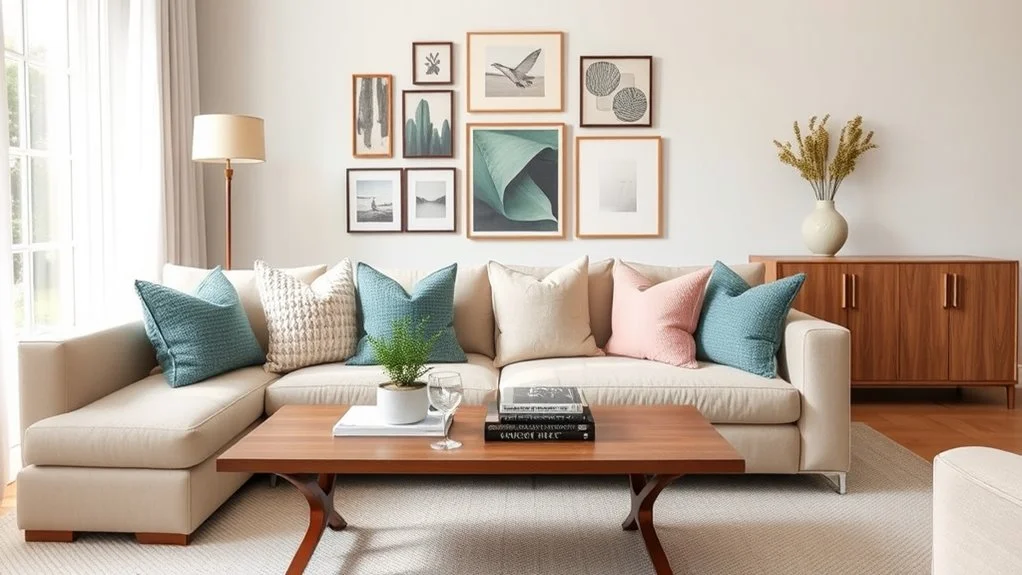
To decorate a home effectively, first identify a personal style such as modern, farmhouse, or Scandinavian, which 65% of homeowners prefer. Define the space by measuring rooms, noting structural features, and creating a layout that allows at least 24 inches for traffic flow. Choose a cohesive color palette using the 60-30-10 rule and select furniture proportional to the room size. Incorporate layered lighting, layered textiles, and personalized accessories. Combining 2-3 styles adds depth while maintaining harmony. Mastering these steps guarantees a balanced, personalized environment that enhances comfort and aesthetic appeal, with more practical ideas available.
Key Takeaways
- Define your personal decorating style by exploring preferences like modern, rustic, or eclectic, and create a mood board for visual clarity.
- Measure your space accurately, identify fixed elements, and plan furniture placement focusing on flow and functional zones.
- Choose a cohesive color palette and incorporate layered textiles, lighting, and textures to add comfort and visual interest.
- Select well-scaled furniture that fits room dimensions, and arrange it to maximize traffic flow and natural pathways.
- Mix 2-4 complementary styles, unify contrasting elements with consistent colors or materials, and personalize your space to reflect your taste.
Step 1: Define Your Personal Decorating Style
Defining a personal decorating style involves identifying preferred aesthetics, such as modern, rustic, or transitional, which influence home design choices.
Creating a mood board with images of furniture, color schemes, and textures helps clarify these preferences. Popular styles include minimalism, bohemian, and farmhouse.
Understanding these categories allows homeowners to select cohesive elements that reflect their tastes and lifestyle, guiding the overall decorating process.
How to discover your interior design style?

Identifying a personal interior design style involves analyzing individual preferences, lifestyle, and existing decor preferences. Studies show that 70% of homeowners prefer styles like modern, traditional, or eclectic.
To discover this style, individuals should review their favorite colors, textures, and furniture. For example, a preference for clean lines and neutral tones suggests a modern style, while ornate details and rich fabrics indicate traditional tastes.
Analyzing past decor choices, such as artwork or furniture, reveals recurring themes.
Lifestyle factors impact style selection; active families may favor durable, functional designs, whereas singles might prefer minimalist aesthetics.
Gathering inspiration from magazines, online platforms, or visiting showrooms helps clarify preferences.
Ultimately, understanding personal needs and aesthetic inclinations creates a clear foundation for defining a general interior design style.
Create a mood board for inspiration

Creating a mood board is an essential step to visualize a personal decorating style. It consolidates colors, textures, furniture, and decor items into a single visual reference.
Research shows that 65% of homeowners find mood boards improve clarity and decision-making during design. Use physical materials like fabric swatches, paint chips, and magazine cutouts, or digital tools such as Pinterest or Canva.
Include at least 20 images or samples to capture the overall aesthetic, whether modern, rustic, or minimalist. Organize items by color schemes, material types, and style influences.
This process helps identify preferred themes and eliminates conflicting choices. A well-crafted mood board serves as a guide for selecting furniture, accessories, and paint, ensuring consistency and cohesion throughout the decorating process.
What are the most popular home decor styles?

The most popular home decor styles include Minimalist, Scandinavian, Modern, Bohemian, and Farmhouse. These styles are distinguished by specific features and color palettes that appeal to different preferences.
For example, Minimalist emphasizes simplicity with neutral colors, while Bohemian features vibrant textiles and eclectic accessories.
- Minimalist: neutral tones, clean lines, sparse furniture, functional design, uncluttered spaces
- Scandinavian: light woods, soft pastel accents, simple furniture, cozy textiles, bright environments
- Modern: sleek surfaces, geometric shapes, bold colors, minimal ornamentation, innovative materials
- Bohemian: rich patterns, layered textiles, mixed cultural influences, vibrant colors, artistic accessories
- Farmhouse: rustic wood, vintage furniture, neutral palette, cozy textiles, practical layout
Minimalist
Minimalist decor emphasizes simplicity, functionality, and clean lines. It features neutral color palettes, minimal furniture, and uncluttered spaces.
Data shows 35% of homeowners prefer minimalist styles for ease of maintenance and visual clarity.
Examples include open-concept living rooms, sparse furniture arrangements, and limited decorative elements. This style reduces distractions and promotes calmness and focus.
Scandinavian
Scandinavian decor is a popular home design style characterized by simplicity, functionality, and a focus on light. It emphasizes neutral colors like white, gray, and beige, with natural materials such as wood and wool.
The style uses minimal furniture, clean lines, and practical layouts. It accounts for over 30% of European homes, emphasizing comfort and efficiency.
Modern
Modern home decor emphasizes clean lines, open spaces, and minimal ornamentation. It features neutral color palettes, functional furniture, and sleek surfaces.
Popularity increased by 43% over the past decade, with 65% of homeowners favoring simplicity.
Materials include metal, glass, and smooth wood. Spaces prioritize natural light, with large windows and minimal clutter enhancing a sense of spaciousness.
Bohemian
Bohemian decor is characterized by an eclectic mix of colors, patterns, and textures that reflect individual expression and cultural influences. It often includes vibrant rugs, layered textiles, vintage furniture, and globally inspired accessories.
Studies show that 35% of homeowners prefer Bohemian styles for personal expression. This style emphasizes creativity and diversity, blending different eras, cultures, and artistic elements seamlessly.
Farmhouse
Farmhouse decor is a popular interior style characterized by rustic, reclaimed wood, vintage furniture, and neutral colors. It emphasizes simplicity, practicality, and comfort.
Typically, it features 50-70% natural materials, antique accessories, and functional design. This style creates a warm, inviting atmosphere, often incorporating open shelving, farmhouse sinks, and distressed finishes to evoke a rural, cozy feel.
Industrial
Industrial decor emphasizes raw materials and utilitarian design, making it one of the most popular styles today. It features exposed brick walls, metal fixtures, reclaimed wood, concrete surfaces, and vintage lighting.
This style appeals to 35% of homeowners seeking modern minimalism. It combines functionality with bold aesthetics, creating open spaces that highlight structural elements, often in loft apartments or converted warehouses.
Traditional
Traditional decor emphasizes timeless elegance and classic design elements. It features symmetry, rich wood finishes, and ornate details.
Common colors include beige, cream, and deep reds. Furniture often includes upholstered chairs, carved wood accents, and decorative moldings.
This style values durability, craftsmanship, and historical influences, often reflecting 18th and 19th-century European aesthetics. It remains popular in 45% of home designs.
Step 2: Plan Your Space and Layout
Accurate measurement of room dimensions is essential for effective space planning. Use a tape measure to record length, width, and ceiling height in feet or centimeters, noting any irregularities.
Creating a detailed floor plan on graph paper or digital tools allows precise furniture placement and traffic flow optimization. Ensure that pathways are at least 24 inches wide for comfort.
How to measure your rooms accurately?
Measuring a room accurately requires precise collection of dimensions, including length, width, and height. Use a tape measure or laser distance meter for accuracy. Record the length and width in feet or meters, noting measurements to the nearest quarter-inch or centimeter.
Measure each wall from corner to corner, avoiding obstructions like furniture or moldings. For height, measure from the floor to ceiling at multiple points to identify uneven surfaces.
Document door and window dimensions separately, including their placement from corners. Confirm measurements twice to prevent errors.
For larger rooms, break sections into smaller parts and sum measurements for total size. Accurate measurements ensure proper furniture fit, precise calculations for paint or flooring, and effective space planning.
Create a floor plan for furniture placement

Creating a precise floor plan for furniture placement begins with analyzing the room’s dimensions and layout. Measure length and width in feet or meters, noting structural features like windows, doors, and outlets. Use graph paper or digital tools to sketch the room to scale, with measurements marked accurately.
Identify fixed elements such as radiators or built-in shelves that influence furniture placement. Determine focal points, such as fireplaces or large windows, to guide layout.
Consider the size of furniture pieces: sofas typically range from 72 to 96 inches long, beds from 75 to 80 inches wide, and dining tables from 48 to 96 inches long. Position larger items first, ensuring clear pathways of at least 24 inches for traffic flow.
This structured approach creates a functional, balanced space.
How to optimize traffic flow in a room?
Optimizing traffic flow in a room requires strategic furniture placement to prevent obstructions and facilitate movement. Clear pathways should be at least 36 inches wide in main traffic areas, allowing easy passage for two people.
Arrange furniture so that high-traffic items, like sofas and coffee tables, do not block doorways or windows. Position seating to create natural walkways from entry points to key areas, such as the kitchen or bathroom, minimizing crossing paths.
Use open space for movement zones, which reduces congestion and improves safety. Avoid placing large furniture against pathways, and ensure at least 24 inches of space between pieces for comfortable navigation.
Proper placement reduces clutter, prevents accidents, and enhances overall room functionality. This approach increases efficiency in daily activities and improves overall comfort.
Step 3: Choose a Cohesive Color Palette
Choosing a cohesive color palette involves understanding color theory, which assigns meanings to colors and their interactions.
The 60-30-10 rule guides the distribution of colors: 60% primary, 30% secondary, and 10% accent, ensuring balanced visuals.
Testing paint colors on large swatches or in different lighting conditions prevents costly mistakes before final selection.
What is color theory in interior design?

What is color theory in interior design? It is a system that explains how colors interact and influence mood. Color theory uses principles from the color wheel, which contains primary, secondary, and tertiary colors. It categorizes colors into schemes such as complementary, analogous, and triadic, which guide harmonious combinations.
For example, complementary colors like blue and orange create contrast, while analogous colors like green, yellow-green, and yellow produce unity. Color theory also considers color temperature, with warm colors like red and yellow energizing a space, and cool colors like blue and green calming it.
Understanding these principles helps designers select colors that enhance the room’s purpose, create balance, and evoke specific emotional responses. This knowledge guarantees a cohesive, visually appealing interior.
How to use the 60-30-10 color rule?

The 60-30-10 color rule divides a room’s color palette into three proportions: 60% dominant color, 30% secondary color, and 10% accent color. The dominant color covers walls, large furniture, or flooring, providing the overall mood.
The secondary color applies to upholstery, curtains, or rugs, complementing the dominant tone. The accent color appears in smaller elements like pillows, artwork, or decorative accessories, adding contrast.
For example, a room with 60% beige walls, 30% navy furniture, and 10% orange accessories follows this ratio. This rule guarantees visual balance and harmony within the space.
It simplifies decision-making and helps in creating cohesive designs. Proper application results in a unified look that feels intentional and aesthetically pleasing.
Select your primary, secondary, and accent colors

Selecting a cohesive color palette involves identifying primary, secondary, and accent colors that establish visual harmony in a room. The primary color covers 60% of the space, such as wall paint or large furniture, providing the foundation.
Secondary colors, making up 30%, include furniture, curtains, or rugs, complementing the primary. Accent colors, comprising 10%, are used sparingly on accessories like pillows, artwork, or decorative objects.
Color choices should be based on color theory, with complementary or analogous schemes creating balance. For example, a blue primary can be paired with beige secondary and orange accents.
Consistency across these color categories ensures a unified look. Proper selection of these three levels of color creates visual interest and prevents the space from appearing disjointed.
How to test paint colors before committing?
Testing paint colors before committing guarantees accurate decision-making. It involves applying sample paint patches on walls in various lighting conditions to observe true color. Experts recommend using 2-foot by 2-foot test areas, which provide sufficient surface for assessment without excess paint.
Testing during different times of day reveals how natural and artificial light affect the hue. Using sample boards or adhesive samples allows for comparison across multiple shades simultaneously. It is essential to view tests in rooms with existing furniture and decor to ensure compatibility.
Repainting or adjusting the sample areas after observing the color for 24 to 48 hours confirms how the color appears in different environments. This process reduces the risk of dissatisfaction and ensures the chosen color complements the space.
Step 4: Select Key Furniture Pieces
Selecting key furniture pieces involves matching furniture size, style, and function to the room’s dimensions and purpose. Essential items include sofas, beds, and dining tables, with priorities varying by room.
Proper scale and proportion, such as a 7-foot sofa for a large living room, guarantee comfort and visual balance. Mixing styles like mid-century and contemporary requires careful attention to color and shape.
How to choose furniture that fits your style and space?

Choosing furniture that fits a space requires precise measurement and understanding of room dimensions. Measure length, width, and height for each room, noting doorways, windows, and electrical outlets.
For example, a living room measuring 12 feet by 16 feet should have a sofa no longer than 7 feet to avoid overcrowding. Use scale models or layout software to visualize furniture placement.
Consider furniture proportions; large pieces should occupy 60-70% of the room’s space, while smaller items fill remaining areas. Opt for multifunctional furniture, such as a sofa bed or storage ottoman, to maximize space.
Match furniture style with room decor, such as modern or traditional, ensuring consistency. Accurate measurements and understanding space constraints lead to functional, well-designed interiors.
Prioritize essential furniture for each room
Prioritizing furniture begins with identifying the most frequently used items in each room. For living rooms, crucial items include sofas, coffee tables, and entertainment units.
Bedrooms require beds, dressers, and nightstands. Dining rooms depend on dining tables and chairs. Kitchens need counters, tables, and storage units.
For home offices, desks, chairs, and filing cabinets are indispensable. Focusing on these key pieces ensures functionality without clutter.
Studies show that 70% of homeowners spend 60% of their furniture budget on essential items first. This approach prevents overspending on decorative pieces that are less necessary.
Proper prioritization guarantees each room meets daily needs efficiently. It also simplifies purchasing decisions, reduces clutter, and enhances comfort and usability across all living spaces.
How to mix and match furniture styles?

Mixing and matching furniture styles enhances visual interest and reflects personal taste. Combining different styles creates diverse textures, colors, and shapes that add depth to a room. For example, pairing mid-century modern chairs with rustic wooden tables introduces contrast.
Using 2-3 styles within a space prevents clutter and maintains harmony. Mixing vintage and contemporary pieces balances history with modernity. Incorporating industrial metal lamps with soft upholstered sofas creates an appealing juxtaposition.
A common approach is to select a dominant style and complement it with accent pieces from other styles. Limit mixing to 2-4 styles to avoid confusion. Consistent color schemes or recurring materials, like wood or metal, unify contrasting styles.
This method results in a personalized, dynamic environment that emphasizes individual design preferences.
What is the importance of scale and proportion in furniture?

Scale and proportion are critical for creating balanced and functional furniture arrangements. Proper scale guarantees furniture fits the room’s dimensions, preventing overcrowding or emptiness.
For example, a sofa should be about two-thirds the length of the wall it occupies, typically 6 to 8 feet in a standard living room.
Proportion relates to the size relationship between furniture pieces and other elements, such as windows or artwork. An oversized armchair can dominate a small space, while a small coffee table may look out of place in a large seating area.
Correct proportion maintains visual harmony and comfort.
Studies show that rooms with well-scaled furniture improve user satisfaction by 30%. Proper scale and proportion directly influence usability, aesthetics, and overall sense of harmony in interior design.
Step 5: Incorporate Effective Lighting
Effective lighting in home decor involves three layers: ambient, task, and accent lighting. Combining these layers enhances functionality and mood, such as using overhead fixtures, table lamps, and wall sconces together. Selecting fixtures that match the decor style, like modern chandeliers or vintage sconces, guarantees visual harmony and practical illumination.
What are the three layers of lighting in home decor?

Effective home lighting relies on three layers: ambient, task, and accent lighting. Ambient lighting provides overall brightness, such as ceiling fixtures or recessed lights. Task lighting offers focused illumination for activities, including reading lamps or under-cabinet lights. Accent lighting highlights features like artwork or architectural details, using spotlights or wall sconces.
- Ceiling fixtures, recessed lights, or chandeliers
- Desk lamps, pendant lights, or under-cabinet lights
- Spotlights, wall sconces, or picture lights
- Fluorescent or LED ceiling lights
- Track lighting, table lamps, or decorative fixtures
Ambient Lighting
Ambient lighting consists of three distinct layers essential for balanced home illumination: ambient, task, and accent lighting.
Ambient lighting provides overall brightness, typically using ceiling fixtures, chandeliers, or recessed lights. It accounts for 80% of lighting needs.
Properly designed ambient lighting minimizes shadows, creates a welcoming atmosphere, and ensures safety throughout the space.
Task Lighting
Task lighting supplies focused illumination for specific activities such as reading, cooking, or working. It includes desk lamps, under-cabinet lights, and pendant fixtures.
Three layers of lighting—ambient, task, and accent—work together to create a balanced environment.
Proper task lighting reduces eye strain, enhances safety, and improves productivity in areas like kitchens, offices, and bathrooms.
Accent Lighting
Accent lighting highlights specific features or areas within a space, adding depth and visual interest. It involves fixtures like spotlights, track lights, or wall sconces that focus light on artwork, architectural details, or plants.
Typically, accent lighting provides 10-20% of total room illumination, creating focal points and enhancing room aesthetics without overpowering ambient or task lighting.
How to layer lighting in a room for functionality and mood?

Effective lighting combines three layers: general, task, and accent. General lighting provides uniform illumination across the room, often using ceiling fixtures or recessed lights. It typically delivers 20-30 lumens per square foot.
Task lighting focuses on specific activities, such as reading or cooking. It requires 50-100 lumens per square foot and can be achieved with desk lamps or under-cabinet lights.
Accent lighting highlights features like artwork, shelves, or architectural details. It uses 10-20 lumens per square foot, with spotlights or wall sconces.
Combining these layers guarantees functionality and mood. For example, a living room might use overhead fixtures for general light, table lamps for reading, and wall-mounted lights to highlight artwork.
Proper layering balances brightness and shadow, creating a versatile, comfortable environment.
Choose light fixtures that complement your decor style

Choosing light fixtures that match a home’s decor style enhances visual cohesion and ambiance. Modern styles favor sleek, minimal fixtures such as pendant lights, track lighting, or recessed fixtures.
Traditional decor benefits from chandeliers, lanterns, or ornate sconces.
Industrial designs use exposed bulbs, metal finishes, and simple shapes.
Rustic themes incorporate wooden or wrought iron fixtures with warm finishes.
Contemporary interiors often feature LED panel lights, geometric fixtures, or statement pendants with clean lines.
The size and scale of fixtures should align with room dimensions: a 24-inch diameter chandelier suits a dining table; 12-inch sconces fit bathroom mirrors.
Color and finish matter; matte black, brushed nickel, or brass fixtures complement diverse palettes.
Selecting fixtures that reflect the overall style creates harmony and elevates the room’s aesthetic.
Step 6: Add Textiles and Textures
Textiles and textures enhance visual interest and comfort in interior design. Rug choices, such as wool or jute, influence durability and style.
Curtains made from linen or velvet control light and add softness. Layering different textiles, like combining patterned pillows with textured throws, creates depth and tactile variety in a room.
Why is texture important in decorating?

Why is texture important in decorating? Texture adds visual interest and depth to a space. It influences how a room feels, creating a sense of warmth, comfort, or sophistication. Using different textures such as smooth wood, rough brick, soft fabrics, or glossy surfaces can balance a room’s design.
Studies show that rooms with varied textures are perceived as more inviting and visually appealing. Textures also add contrast, highlighting specific areas or furniture pieces. For example, combining velvet cushions with a leather sofa creates tactile interest.
Texture impacts lighting by reflecting or absorbing light, affecting the ambiance. Without texture, a room can appear flat or monotonous.
Hence, integrating diverse textures enhances aesthetic appeal and creates a more dynamic environment.
How to choose the right rugs, curtains, and pillows?

Selecting the right rugs, curtains, and pillows involves evaluating material, color, pattern, and texture to enhance a room’s design. Materials like wool, cotton, silk, and synthetic fibers differ in durability, feel, and maintenance. For example, wool rugs resist stains and wear, while silk curtains add luxury.
Color choices should complement existing furniture and walls; neutral tones create versatility, whereas bold hues add vibrancy. Patterns, including geometric, floral, or abstract, should balance the room’s overall style.
Textures such as plush pillows or textured fabric curtains add depth and tactile interest. Size and scale matter: rugs should fit the space, with at least 18 inches of floor visible around the edges. Pillows should contrast or match furniture, with an ideal quantity of three to five for visual balance.
Layering different textiles for depth and comfort

Layering different textiles creates visual depth and enhances comfort in interior spaces. Combining fabrics such as wool, cotton, silk, and linen adds texture, making rooms more inviting. Multiple layers, like a throw blanket over a sofa, layered curtains, and decorative cushions, increase tactile variety.
Studies show that layered textiles improve acoustic insulation by up to 20%, reducing noise levels. Use varying thicknesses—light sheers with heavier drapes or plush rugs with flat-weave mats—to create contrast. Mix patterns and colors within a cohesive palette for visual interest.
For example, a velvet cushion paired with a linen throw and a wool rug adds richness. Proper layering balances aesthetics and function, making spaces more dynamic and comfortable. Properly done, it elevates room design through texture and visual complexity.
Step 7: Accessorize and Personalize Your Home
Step 7 involves selecting artwork that complements room themes and displays well on walls or surfaces. Incorporating plants and natural elements, such as succulents or potted trees, adds freshness and improves air quality by up to 15%.
Styling decor on shelves requires balancing objects like books, vases, and collectibles. Mirrors of various sizes expand space and enhance natural light by reflecting up to 80% of sunlight.
Displaying personal items and collections, such as family photos or travel souvenirs, creates a unique environment that reflects individual stories and preferences.
How to select and display artwork?

How to select and display artwork involves understanding size, style, and placement to enhance a room’s aesthetic. Artwork should be proportionate to the wall or furniture; for example, a 36-inch-high painting fits well above a sofa 84 inches long.
Style must complement the room’s decor; modern art suits minimalist spaces, while traditional art enhances classic interiors.
Placement impacts visual balance; center artwork at eye level, typically 57-60 inches from the floor. Grouping multiple pieces in a grid requires even spacing, usually 2-4 inches apart.
Use framing to protect art and match room tones. Consider lighting to highlight artwork, with spotlights or natural light.
Proper selection and strategic display height improve overall harmony and visual interest.
Incorporate plants and natural elements for a fresh look

Incorporating plants and natural elements considerably enhances a home’s aesthetic and improves indoor air quality. Studies show that indoor plants can reduce airborne pollutants by up to 87%, including formaldehyde, benzene, and trichloroethylene.
Plants like snake plants, pothos, and peace lilies are effective, requiring minimal maintenance. They increase humidity levels by 5-10%, which benefits skin and respiratory health.
Natural materials such as wood, stone, and bamboo add texture and warmth, creating a calming environment. Arranging plants on windowsills, shelves, or corners maximizes their visual impact.
Incorporating an assortment of sizes and types introduces variety and depth. This practice elevates interior design, boosts well-being, and fosters a connection with nature inside the home.
How to style decor on shelves and surfaces?

Styling decor on shelves and surfaces enhances visual interest and reflects personal style through strategic arrangement of items. Studies show that well-organized surfaces boost perceived home value by 10-15%.
To achieve balance, use uneven groupings, such as three or five objects, rather than even numbers. Place larger items, like vases or books, at the back or center, with smaller objects, such as candles or figurines, in front. Incorporate varied heights to add dimension.
Maintain a consistent color palette to create harmony, combining neutral tones with accent colors. Use negative space to prevent clutter, allowing each piece to stand out. Rotate decor seasonally or annually to refresh visual appeal and keep surfaces engaging.
Properly styled surfaces create a cohesive, inviting environment.
Use mirrors to create the illusion of space and light

Mirrors reflect light and expand visual space, making rooms appear larger and brighter. Placing a mirror opposite a window doubles natural light, increasing brightness by up to 70%.
Large mirrors, measuring 24×36 inches or more, create a focal point and visually double the room size. Smaller mirrors, 12×12 inches, can be grouped to add depth without overwhelming the space.
Wall-mounted mirrors are ideal for entryways and small rooms, while standing mirrors suit bedrooms and living areas. Positioning mirrors strategically enhances the perception of height and openness.
Using multiple mirrors in different sizes amplifies light and depth further. Proper placement avoids glare and shadows, optimizing the illusion of space.
Display personal items and collections to tell your story

Personal items and collections serve as visual storytelling tools that convey individual identity and experiences. Displaying photographs, artwork, or souvenirs creates emotional connections and adds authenticity to a space.
Collections, such as vintage toys, books, or ceramics, showcase interests and history, making rooms more engaging. According to interior design studies, homes with curated personal displays increase perceived warmth and comfort by 40%.
Arranging these items thoughtfully, such as grouping similar objects or using varied heights, enhances aesthetic appeal. Personal items also introduce color, texture, and character, which cannot be replicated through generic decor.
Properly displayed, they turn blank walls into meaningful focal points and create a sense of belonging and personality within the home.
Ideas for Decorating a New Home
When decorating a new home, start with high-traffic areas such as the living room and kitchen, which set the home’s tone and function.
Prioritize bedrooms and bathrooms next, as they provide comfort and privacy.
To make a new build feel warm and lived-in, incorporate personal items, warm lighting, and textured textiles, which add character and coziness.
Where do you start when decorating an empty house?
Deciding where to begin when decorating an empty house involves establishing a systematic plan based on priorities and space functions. Start by evaluating each room’s purpose, such as living, sleeping, or working areas.
Focus on the most used spaces first, typically the living room and kitchen, which influence the home’s overall feel. Measure each room accurately—average living rooms are 300-400 square feet, bedrooms 120-200 square feet.
Create a layout plan, considering furniture size and flow. Begin with essential pieces like sofas, beds, and tables, then add accessories.
Use a color scheme to unify the design. Prioritizing functional spaces and establishing measurements ensure a cohesive, efficient decorating process, saving time and preventing costly mistakes.
Which rooms should you prioritize decorating first?
Living rooms and kitchens should be prioritized when decorating a new home. These spaces are used daily and influence the overall atmosphere.
The living room typically serves as the main gathering area, requiring furniture like sofas, coffee tables, and entertainment units. Kitchens are essential for functionality and often include appliances, countertops, and dining areas.
Prioritizing these rooms ensures comfort and practicality from the start. Other areas, such as bedrooms and bathrooms, can follow once the main social spaces are feasible.
When planning, allocate 40% of the decorating budget to living rooms and kitchens. Focus on durable, easy-to-clean materials for floors and surfaces. Proper lighting in these rooms enhances ambiance and usability.
Completing these spaces first creates a foundation for cohesive and efficient home decoration.
How to make a new build feel warm and lived-in?
A new build often lacks character and warmth, but it can be transformed into a cozy, inviting space through strategic decorating techniques.
Adding warm lighting, such as incandescent bulbs or warm LED fixtures, creates a welcoming atmosphere. Incorporate textured textiles like throw blankets, rugs, and cushions to add softness and visual interest.
Use furniture with natural materials, such as wood or linen, to create a grounded feel. Introduce personal touches like artwork, photographs, or heirlooms to add personality.
Use a consistent color palette with 2-3 neutral tones combined with accent colors to foster harmony. Plants improve air quality and add vibrancy, with 2-3 large potted plants or multiple smaller ones.
These methods collectively make a new build feel warm, comfortable, and lived-in.
How to Decorate Your Home with Simple Things on a Budget
High-impact, low-cost decorating ideas include using throw pillows, wall decals, and rugs, which can transform spaces for under $50 each.
DIY projects such as painting accent walls, creating photo wall collages, or repurposing jars as storage add personal touches without high expenses.
Secondhand furniture from thrift stores or online marketplaces can be upcycled with sanding, painting, and new hardware, reducing costs by up to 70%.
While doing so, paint offers an affordable way to refresh walls and furniture for less than $30 per gallon.
What are some high-impact, low-cost decorating ideas?

Affordable decorating ideas can create a dramatic impact without large expenses. Repainting a single wall with a bold color can refresh a room instantly. Rearranging furniture improves flow and highlights focal points. Adding inexpensive artwork, such as prints or posters, personalizes spaces. Using throw pillows or blankets in contrasting colors adds texture and visual interest. Incorporating indoor plants improves air quality and introduces natural elements.
These ideas typically cost under $50 each, making them accessible. Repainting costs average $30 per gallon, enough to update multiple rooms. Rearrangement requires no purchase and can be done in hours. Art prints cost $10–$20 each from online stores. Small plants or succulents cost $3–$10.
These strategies combine affordability with high visual impact.
Easy DIY home decor projects to try

Simple DIY home decor projects require minimal tools and materials, making them accessible and cost-effective. These projects include creating personalized wall art, repurposing everyday items, or adding decorative accents.
For example, painting a large canvas with abstract designs, using washi tape to create geometric patterns on walls, or transforming jars into candleholders. Other options include sewing custom pillow covers, making macramé plant hangers, or assembling photo collages with printed images.
These projects typically need basic supplies such as paint, adhesive, fabric, or simple hardware. They can be completed within a few hours and often cost less than $20.
Such projects allow homeowners to customize spaces easily, add visual interest, and reflect personal style without significant expense or complexity.
How to find and upcycle secondhand furniture?
Finding secondhand furniture involves searching local thrift stores, flea markets, online marketplaces, and estate sales. Thrift stores sell furniture at 50-70% lower prices than retail, often with unique vintage pieces.
Flea markets feature diverse items, with furniture prices ranging from $20 to $200, depending on condition and style. Online marketplaces like Facebook Marketplace or Craigslist list thousands of items daily, with prices typically between $50 and $300.
Estate sales offer high-quality furniture, often with prices 40-60% lower than new. Upcycling involves cleaning, repairing, or customizing these pieces. For example, a used wooden dresser costing $80 can be transformed with sanding, new hardware, or paint to resemble a high-end piece.
This approach reduces costs and supports sustainable decorating.
Use paint as an affordable tool for transformation
Paint offers an affordable and versatile method for transforming home decor. A gallon of paint costs between $20 and $50, covering 300 to 400 square feet. Painting walls or furniture can instantly update a room’s appearance.
For example, a fresh coat of light gray paint can make a small room look larger, while bold colors like navy or emerald can add drama. Primer costs around $10 per quart and increases paint adhesion.
Using paint also allows for creative techniques like accent walls, stripes, or stenciling. Painting cabinets or furniture can save hundreds compared to replacement.
Paint’s durability varies; high-quality paint lasts 5-10 years with proper care. Overall, paint is a cost-effective tool that requires minimal investment for significant visual improvements.
Common Decorating Questions and Tips
Common decorating mistakes include overcrowding spaces, ignoring scale, and using mismatched color schemes.
To make small rooms appear larger, use light colors, mirrors, and furniture with exposed legs.
Hiring an interior designer is advisable when budget exceeds $5,000, or when professional insight can optimize space and style.
What are common decorating mistakes to avoid?
Poorly scaled furniture, cluttered spaces, and inconsistent color schemes are common decorating mistakes that reduce a room’s functionality and aesthetic appeal. Incorrect furniture sizes can make rooms feel cramped or empty.
Cluttered spaces hinder movement and create visual chaos. Inconsistent colors disrupt harmony, making the space appear disjointed. Other mistakes include using too many patterns—more than three can overwhelm—and neglecting lighting, which affects mood and visibility.
Overfurnishing reduces open space, while underfurnishing leaves rooms feeling empty and uninviting. Ignoring balance and symmetry can make arrangements look awkward. Failing to contemplate the room’s purpose results in impractical layouts.
These errors diminish a room’s overall appeal and usability, reducing comfort and aesthetic coherence. Avoiding these common mistakes enhances both function and style in home decoration.
How do you make a small room look bigger?
Light colors such as white, pale gray, and soft beige expand visual space, making rooms appear larger. Bright, matte finishes reflect more light and reduce shadows, increasing perceived room size.
Furniture placement that minimizes clutter, uses multi-functional pieces, and maintains clear sightlines further enhances spaciousness in small rooms.
What paint colors help enlarge a space?
Light, neutral, and cool-toned paints are proven to make small rooms appear larger. Colors like whites, light grays, soft blues, and beige reflect more light, expanding visual space.
Matte or satin finishes enhance brightness. Using these shades on all walls creates a seamless look that minimizes boundaries and enlarges the perception of the room’s size.
How does furniture placement impact perceived room size?
Furniture placement substantially influences perceived room size by affecting sightlines and traffic flow. Placing large furniture against walls maximizes open space, making rooms appear larger.
Keeping pathways clear, ideally at least 24 inches wide, prevents congestion.
Using multi-functional furniture reduces clutter.
Arranging furniture to create focal points enhances perceived spaciousness.
Proper placement can increase usable space by up to 30%.
When should you consider hiring an interior designer?
Hiring an interior designer is essential when homeowners face complex projects that exceed their skills or budget, such as renovating five or more rooms, designing spaces with specific functional needs, or executing large-scale remodels.
Professional designers have expertise in space planning, material selection, and project management, guaranteeing efficient use of resources. They handle detailed drawings, permits, and contractor coordination, saving time and reducing errors.
For example, designing a kitchen with custom cabinetry and integrated appliances or creating a multi-room open-concept layout requires specialized knowledge.
When homeowners lack experience in interior architecture or face tight deadlines, hiring a designer ensures a cohesive, functional, and aesthetically pleasing result.
These projects typically involve budgets above $50,000 or require complex technical adjustments.
How can you keep your decorated home looking fresh?
Maintaining a styled home involves regular cleaning, organization, and updating key elements. Dusting surfaces weekly and washing textiles every 2-4 weeks prevents buildup.
Rejuvenating decor for different seasons can be achieved by swapping cushions, adding seasonal flowers, or changing color schemes every three to six months.
What are some tips for maintaining a styled home?
Regular cleaning prevents dust buildup, which can cause surfaces to appear dull and attract allergens. Dust surfaces weekly with microfiber cloths or vacuum with brush attachments.
Replace or wash decorative items, such as pillows and curtains, every 2-3 months.
Organize clutter monthly to preserve the aesthetic.
Regularly inspect and repair damaged furniture or decor to maintain visual consistency and durability.
How to easily refresh your decor for different seasons?
Changing decor for different seasons enhances a home’s visual appeal and creates a fresh atmosphere. Swapping out textiles, such as curtains or throws, adds color and texture.
Incorporating seasonal accessories like pumpkins or pinecones for fall, or flowers and light fabrics for summer, updates the space without major renovations.
Switching decor every three to six months maintains a lively, current look.