
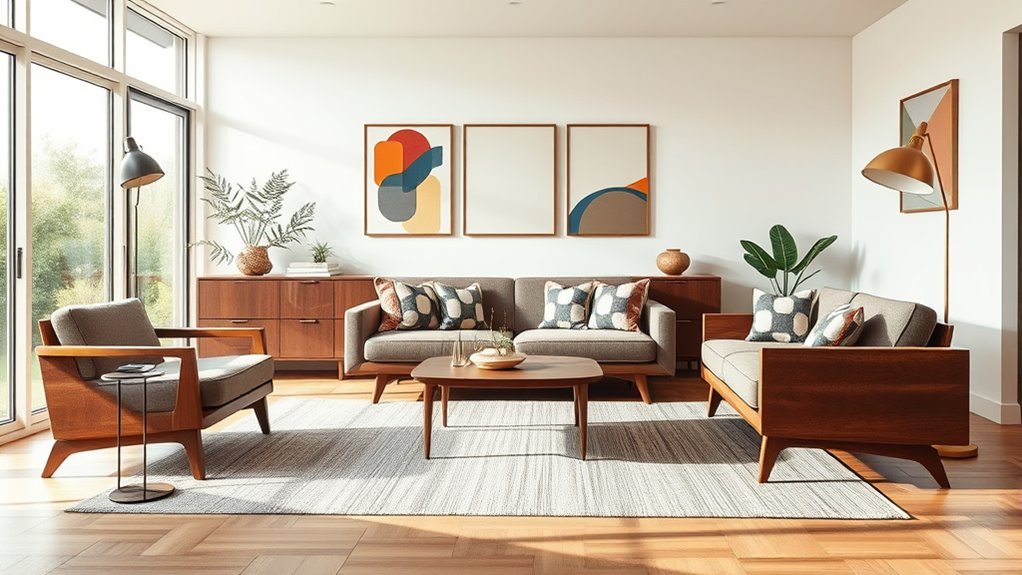
Mid-century modern interior design emphasizes clean lines, minimal ornamentation, and functional forms. It features materials like teak, walnut, metal, plastic, and glass. Key decor ideas include open floor plans, large windows, tapered furniture legs, and neutral color palettes with bold accent colors. Furniture often incorporates geometric shapes, such as Eames chairs, with sleek finishes like chrome or lacquer. The style balances organic textures with polished surfaces, creating timeless living spaces. To explore more design tips, focus on how these elements integrate seamlessly.
Key Takeaways
- Emphasize clean lines, open layouts, and functional furniture with tapered legs and geometric shapes.
- Use a neutral color palette accented with bold, vibrant hues for visual interest.
- Incorporate natural materials like wood, leather, and stone alongside sleek finishes such as chrome and glass.
- Decorate with statement lighting fixtures, minimal accessories, and large windows to enhance natural light.
- Select iconic mid-century accents like Eames chairs, starburst clocks, and abstract art for authentic style.
What Is Mid Century Modern Interior Design?
Mid century modern interior design originated in the United States during the 1940s and became prominent in the 1950s and 1960s. It emphasizes clean lines, functional forms, and minimal ornamentation.
This style often features wood, metal, and plastic materials. Key features include open floor plans, large windows, tapered legs on furniture, and a neutral color palette with bold accent colors.
How did mid century modern style originate?
The mid-century modern style originated in the early 20th century, gaining prominence between 1933 and 1965. It developed from a combination of architectural movements such as Bauhaus, International Style, and Scandinavian design. These movements emphasized simplicity, functionality, and clean lines.
The style emerged in the United States, influenced by European modernist ideas and technological advancements like new materials such as molded plywood, fiberglass, and steel. Architects and designers like Charles and Ray Eames, Eero Saarinen, and Ludwig Mies van der Rohe popularized this aesthetic through innovative furniture and architecture.
The movement reflected post-World War II optimism, economic growth, and a desire for modernity. It aimed to create practical, affordable, and aesthetically pleasing homes suited for the growing middle class.
What are the defining features of mid century modern interiors?
Mid-century modern interiors are characterized by clean lines, minimal ornamentation, and functional design. They emphasize open floor plans, large windows, and integration with nature.
Furniture features simple geometric shapes, often with tapered legs, such as Eames chairs and Noguchi tables. Materials include wood, metal, and plastic, favoring natural finishes over elaborate decoration.
Color palettes are neutral with bold accents like orange, teal, and mustard. Lighting fixtures are sleek and unobtrusive, such as pendant lamps and arc lights.
Storage solutions prioritize efficiency, with built-in cabinets and low-profile sideboards.
Architectural details favor flat or gently sloped roofs and uncluttered facades.
Which Materials and Finishes Define Mid Century Modern Interiors?

Mid-century modern interiors prominently feature natural materials such as teak, walnut, and oak, which are used in furniture and flooring. Plastics, glass, and metals like aluminum and chrome are incorporated in lighting fixtures, hardware, and decorative elements to add sleekness.
Organic textures are balanced with smooth, polished finishes to create a contrast that emphasizes both warmth and modernity.
What natural materials are signature to the style?
Natural materials defining mid-century modern interiors include teak, walnut, and oak woods, each valued for their durability and warm tones. Teak, often used in furniture, features a rich golden hue and resistant finish. Walnut provides deep brown shades and fine grain textures, ideal for accent pieces. Oak, known for its strength, appears in flooring and cabinetry with light to medium hues.
Additional natural materials include leather, used in upholstery for longevity and comfort; linen, applied in curtains and cushions for its breathability; and stone, such as marble and granite, incorporated in tabletops and accents. These materials emphasize organic warmth and authenticity, creating a cohesive, natural aesthetic.
Their resilience and timeless appeal contribute remarkably to the style’s enduring popularity and functional design.
How are plastics, glass, and metals used in mid century modern design?

Plastics, glass, and metals are integral to mid-century modern design, used for their versatility, durability, and aesthetic qualities. Plastics such as Lucite and fiberglass gained popularity in the 1950s and 1960s, enabling lightweight, colorful, and innovative furniture designs.
Glass is employed in large windows, sliding doors, and tabletops, emphasizing openness and natural light.
Metals, including chrome, brass, and stainless steel, are used for structural components, accents, and hardware, offering sleek finishes and durability. Metal legs on tables and chairs, along with chrome fixtures, exemplify mid-century modern aesthetics.
These materials facilitated mass production, reducing costs and increasing accessibility. Their reflective and smooth surfaces contrast with organic textures, creating the clean lines and minimalist look characteristic of the style.
How do you balance organic textures with sleek finishes?

Balancing organic textures with sleek finishes in mid-century modern interiors involves combining natural materials such as wood, leather, and stone with smooth, polished surfaces like chrome, glass, and lacquered finishes.
Natural wood, often walnut or teak, introduces warmth and irregular grain patterns, contrasting with polished chrome or glass tabletops that reflect light and create a sense of openness.
Leather upholstery adds tactile softness against smooth metal legs or glossy lacquered cabinetry.
Stone surfaces, such as marble or travertine, provide a textured yet refined appearance when paired with sleek metal or glass accents.
This balance emphasizes visual interest through contrast, maintaining the clean lines characteristic of mid-century modern style.
Proper integration of these elements results in spaces that are both inviting and sophisticated, with a focus on functional aesthetics.
What Are the Core Elements of a Mid Century Modern Living Room?

Mid-century modern living rooms feature furniture with clean lines, organic shapes, and tapered legs, exemplified by iconic items like Eames chairs and Saarinen tables.
Layouts prioritize open spaces with seating arrangements such as sectional sofas or cluster seating that promote conversation.
Accent pieces include geometric rugs, abstract art, and statement clocks, which enhance the authentic retro aesthetic.
Which furniture shapes, layouts, and profiles best represent the era?
Furniture in mid-century modern interiors features clean, simple shapes with organic and geometric forms. Common shapes include rectangular sofas, round coffee tables, and angular side chairs. Low-profile furniture emphasizes horizontal lines, with most pieces measuring 16-18 inches from the ground.
Layouts favor open plans with symmetrical arrangements and clear focal points. Profiles tend to be sleek, with tapered legs on chairs and tables, often made from wood or metal. Modular furniture allows flexibility and functional spaces.
Examples include sectional sofas, sideboards with sharp angles, and armchairs with curved backs. The focus remains on minimalism, functionality, and harmony with the environment. These elements create balanced, uncluttered living areas characteristic of mid-century modern design.
What accent pieces should you include for an authentic feel?

Accent pieces in a mid-century modern living room include bold geometric rugs, iconic starburst or sunburst mirrors, and sculptural lighting fixtures such as arc lamps and pendant lights.
Geometric rugs typically feature angular patterns in black, white, or earthy tones, measuring 5×8 feet or larger.
Starburst mirrors usually have metallic frames with radiating spokes, ranging from 24 to 36 inches in diameter.
Sculptural lighting fixtures like arc lamps stand 60 to 70 inches tall, with curved arms supporting adjustable shades.
Pendant lights are often 12 to 20 inches in diameter with sleek, minimalist designs.
These accents reinforce the era’s emphasis on clean lines and organic shapes. They create visual interest and authenticity, grounding the space in mid-century modern aesthetic principles.
Which seating arrangements encourage conversation?

U-shaped or circular seating arrangements optimize conversation in a mid-century modern living room. These layouts facilitate face-to-face interaction and equal visibility among occupants.
For example, a U-shaped setup with a sofa and two armchairs creates an inclusive space for up to six people. Circular arrangements with a central coffee table encourage equal participation and eye contact.
The distance between seats typically ranges from 18 to 24 inches, promoting comfort without clutter. Modular furniture allows flexibility, enabling reconfiguration for larger gatherings or intimate conversations.
Arrangements that group seats within 8 feet of each other foster natural dialogue. Furniture placement that avoids barriers enhances openness.
These configurations prioritize accessibility, comfort, and engagement, making them essential for fostering conversation in a mid-century modern living room.
How do you use statement decor—like coffee tables, art, or clocks?

Statement decor such as coffee tables, art, and clocks serve as focal points that define the aesthetic of a mid-century modern living room. Coffee tables, typically rectangular or oval with wood or glass surfaces, anchor seating arrangements and can feature sculptural bases.
Large abstract art pieces, often with bold colors and geometric shapes, draw attention and create visual balance. Clocks, especially wall-mounted models with minimalist designs or unique materials like brass or wood, add functional art that complements the room’s style.
These elements are strategically placed to enhance symmetry, contrast, or complement the room’s color palette. Proper use of statement decor guides visual flow, emphasizes key design features, and balances simplicity with visual interest, reflecting mid-century modern principles of form and function.
How Do Color and Pattern Influence Mid Century Modern Spaces?

Color schemes in mid-century modern design primarily feature bold hues like teal, mustard, and orange, complemented by neutral tones such as white, gray, and beige. Geometric patterns, abstract motifs, and wallpaper styles with clean lines are common, with scale ranging from small to large prints. Pattern layering employs restrained use of contrasting designs, with a maximum of two patterns per room to maintain balance.
Which color schemes and accent tones define the look?

Mid-century modern interiors are characterized by specific color schemes that emphasize simplicity and contrast. Typically, these spaces feature earthy tones such as warm browns, beiges, and olive greens combined with bold accent colors like mustard yellow, teal, and burnt orange. These palettes create visual interest while maintaining a sense of harmony.
White and black are frequently used as neutral backdrops to highlight furniture and decor accents. Accent tones are often applied through textiles, artwork, and accessories, providing pops of color that energize the space.
Patterns are minimal but impactful, including geometric shapes and abstract designs in upholstery and rugs. Overall, the color schemes and accent tones in mid-century modern interiors balance neutrality with vibrant highlights, defining the aesthetic’s clean, lively, and timeless appeal.
What bold and neutral palettes work best?

Bold palettes in mid-century modern interiors typically include colors like mustard yellow, teal, burnt orange, and crimson red, which create vibrant focal points. These colors are used to emphasize furniture, accent walls, and decorative accessories.
Neutral palettes favor shades such as beige, gray, white, and taupe, which provide a subdued background that highlights bold accents.
Combining these palettes produces balance; for example, a gray sofa with mustard yellow throw pillows or a white wall with teal artwork.
Research indicates that neutral colors dominate 60% of mid-century modern designs, offering versatility and timeless appeal. Bold palettes account for 40%, used selectively to energize spaces.
Color placement influences mood, with warm tones stimulating activity and cool tones promoting relaxation.
Proper use of palettes enhances the characteristic simplicity and functionality of mid-century modern interiors.
Which geometric patterns, abstract motifs, and wallpaper styles fit?

Geometric patterns and abstract motifs are essential elements in mid-century modern interior design, often used to create visual interest and define space. Popular geometric patterns include triangles, chevrons, and circles, commonly seen in rugs, tiles, and wallpaper.
Abstract motifs feature asymmetrical shapes, organic forms, and stylized lines, often used in textiles and wall coverings. Wallpaper styles focus on bold, repetitive patterns with high contrast, such as black and white geometric designs or muted earth tones with subtle shapes.
Large-scale prints measuring 24 to 36 inches per repeat dominate walls, while smaller patterns are used for accent pieces. These patterns influence the perception of space, making rooms appear more dynamic and lively.
They reflect the era’s fascination with innovation and minimalism.
How to layer pattern with restraint for a balanced space?

Layering pattern with restraint in mid-century modern spaces requires balancing contrasting elements to prevent visual clutter. Using two to three patterns in a room maintains harmony.
For example, combining a geometric rug with a solid-colored sofa avoids overwhelming the space. Patterns should vary in scale: large motifs should be paired with smaller ones.
For instance, a large-scale abstract wallpaper can be complemented by small-patterned cushions. Limit color palettes to three to four hues; for example, shades of teal, mustard, and gray create cohesion.
Incorporate neutral tones like white or beige to anchor bold patterns. Use pattern repetition strategically; repeating a motif in accessories or textiles enhances unity. Proper proportion and placement ensure patterns enhance the space without dominating it.
How Can You Use Lighting to Capture a Mid Century Modern Mood?

Lighting fixtures such as pendant lamps, arc floor lamps, and wall sconces are essential in creating a mid-century modern atmosphere. Iconic fixtures often feature brass, glass, or opaline shades, emphasizing sleek lines and minimal ornamentation.
Proper placement includes pendant lights over dining tables, floor lamps in seating areas, and sconces along walls to balance ambient and task lighting.
Which lighting fixtures (pendants, floor lamps, sconces) are iconic?
Iconic lighting fixtures in mid-century modern design include the PH pendant lamps, Arco floor lamp, and sconce styles such as the Nelson Bubble.
PH pendants feature geometric aluminum shades with adjustable arms, first designed in 1936, and remain popular for their sculptural appeal.
The Arco floor lamp, introduced in 1962 by Achille and Pier Giacomo Castiglioni, has a sweeping marble base with a curved stainless steel arm, standing 8 feet tall.
Nelson Bubble sconces, designed by George Nelson, are spherical glass fixtures with brass accents, measuring 12 inches in diameter.
Other notable fixtures include the Ice Globe pendant, the Sputnik chandelier, and the Tripod floor lamp.
These fixtures are characterized by clean lines, organic shapes, and innovative materials that define mid-century modern lighting.
How do glass, brass, or opaline elements feature?

Glass, brass, and opaline elements define many mid-century modern lighting fixtures through their durability, translucency, and aesthetic appeal. Glass is used in pendant shades, sconce diffusers, and table lamp covers, often with clear or frosted finishes.
Brass provides structural components, bases, and accents, adding warmth and a polished look; fixtures typically feature brass arms, stems, or fittings.
Opaline glass, characterized by its milky, semi-opaque surface, is common in globe pendant lights and wall sconces, diffusing light evenly and creating a soft glow.
These materials are combined in fixtures to enhance visual interest and functionality. For example, a brass fixture with opaline glass globes or a glass shade with brass accents exemplifies this integration.
These elements contribute to the iconic, timeless aesthetic of mid-century modern lighting.
Where should you position lighting for ambience and function?

Strategic placement of lighting enhances both ambiance and functionality in mid-century modern interiors. Overhead fixtures, such as flush mounts and pendant lights, should be centered in living and dining areas to provide even illumination.
Task lighting, including floor lamps and table lamps, should be positioned near seating and workspaces to ensure sufficient brightness for activities.
Accent lighting highlights architectural features, like textured walls or display shelves, and is placed to create contrast and visual interest.
Sconces can be installed on either side of artwork or mirrors to balance light distribution.
Use dimmable fixtures to adjust brightness according to mood or activity.
What Are the Best Ways to Combine Modern and Vintage in a Mid Century Modern Home?

Combining modern and vintage furniture involves mixing pieces with contrasting styles, such as sleek new sofas with restored 1950s armchairs.
Using affordable alternatives like replica lighting fixtures or mid-century-inspired accessories prevents overspending and maintains authenticity.
To avoid a pastiche look, limit vintage items to 30% of the decor, incorporate neutral colors, and guarantee consistent design elements across all pieces.
How do you mix new and original furniture seamlessly?

Blending modern and vintage furniture in a mid-century modern home requires a deliberate approach based on contrast and harmony.
To achieve seamless integration, select a neutral color palette for walls and large pieces, allowing both styles to coexist without clashing. Use vintage furniture, like a teak sideboard, as focal points, and complement them with modern accents such as minimalist lamps or geometric rugs.
Maintain consistent materials—wood, metal, or glass—to unify different pieces. Scale matters; pair larger vintage items with sleek, proportionate modern furniture to avoid visual imbalance.
Incorporate accessories like artwork or throw pillows that mix patterns and textures from both eras. This method creates a cohesive space where vintage charm and modern simplicity enhance each other naturally.
What are affordable alternatives to classic designer pieces?

Affordable alternatives to classic designer pieces include mass-produced furniture with vintage-inspired designs, such as mid-century style sofas from budget retailers. These pieces replicate iconic 1950s and 1960s aesthetics but cost 50-70% less than original designer items.
Examples include sideboards, coffee tables, and chairs from brands like IKEA, Wayfair, and Target, offering authentic mid-century looks at prices under $500. Reproductions and knock-offs provide durable, stylish options for homeowners avoiding high costs.
Thrift stores and online marketplaces like eBay or Facebook Marketplace also sell vintage furniture at 40-60% below retail prices. These alternatives enable mixing vintage and modern elements without overspending, helping create cohesive mid-century modern spaces that balance authenticity and affordability.
How can you avoid the “pastiche” look when decorating?

To avoid a pastiche look when decorating a mid-century modern home, it is essential to establish a cohesive design strategy that balances modern and vintage elements. Use a neutral color palette, such as whites, grays, and earth tones, to unify different pieces.
Select vintage furniture with clean lines and simple shapes that complement modern designs. Limit the number of vintage items to prevent clutter, focusing on key accent pieces like a 1950s lounge chair or a teak sideboard.
Incorporate modern accessories—such as geometric rugs, sleek lighting fixtures, and contemporary art—to add contrast and freshness. Maintain consistency in materials, favoring wood, metal, and glass.
Avoid mixing multiple eras excessively; instead, aim for harmony by emphasizing quality and proportion in each element.
How Does Open Floor Planning Shape Mid Century Modern Interiors?

Open floor planning is fundamental to mid-century modern interiors, emphasizing spaciousness and seamless movement. It enhances natural light flow and air circulation, reducing the need for partitions.
Structural elements like sliding doors, glass walls, and partial dividers maintain openness while creating functional zones.
Why is open space and flow important to this style?

Open space and flow are fundamental to Mid Century Modern interior design because they create an uncluttered environment that emphasizes simplicity and functionality.
This style favors open floor plans that combine living, dining, and kitchen areas into one continuous space, often spanning 400 to 600 square feet.
Clear pathways improve movement and accessibility, reducing barriers between rooms.
Large windows and sliding doors maximize natural light, enhancing the sense of openness.
Open layouts allow for flexible furniture arrangements and promote social interaction.
The absence of walls minimizes visual barriers, making spaces feel larger.
This design approach aligns with the mid-century focus on practicality, comfort, and clean lines, ultimately creating a cohesive environment where each element contributes to a balanced, airy atmosphere.
What are ways to divide rooms without losing light or airiness?

Strategies for dividing rooms in Mid Century Modern interiors prioritize maintaining natural light and airiness. Partial walls, such as low-height partitions or open shelving units, separate spaces without blocking light. Glass walls or large, transparent sliding doors create distinct areas while allowing light to flow freely.
Movable screens made of lightweight materials like wood or fabric can define zones temporarily or permanently. Furniture arrangements, such as placing sofas or bookcases perpendicular to walls, create visual separation without confinement. Floor-to-ceiling glass panels or windows serve as natural dividers, maintaining open sightlines.
Using rugs or different flooring materials defines spaces while preserving brightness. These methods balance functionality with the style’s emphasis on openness and natural illumination.
Which Decor Accessories Highlight the Mid Century Modern Vibe?

Decor accessories that define the mid-century modern style include abstract paintings, geometric sculptures, and bold prints, which emphasize clean lines and minimalism.
Textiles such as shag rugs, patterned cushions, and textured throws add warmth and visual contrast.
Greenery like potted succulents and cacti, along with vintage items like vinyl records, lamps, and collectibles, serve as focal points and enhance the retro aesthetic.
What art styles—sculpture, prints, abstract—work best?

Geometric and abstract art styles dominate mid-century modern interiors due to their clean lines and bold forms. These styles include geometric prints, minimal abstract paintings, and sculptures featuring simple shapes like spheres, cones, and rectangles.
Abstract art with vivid colors and dynamic compositions enhances the visual interest of living spaces. Sculptures made from wood, metal, or plastic often feature organic or geometric forms, emphasizing functionality and aesthetics.
Prints typically incorporate bold colors, simple shapes, or repetitive patterns, often in large formats to serve as focal points. Overall, these art styles create a sense of balance, harmony, and modernity.
They complement furniture and decor by adding visual contrast and emphasizing the minimalist, functional ethos of mid-century modern design.
Which textiles (rugs, cushions, throws) add comfort and contrast?

Textiles such as rugs, cushions, and throws considerably enhance comfort and create visual contrast in mid-century modern interiors. Wool, jute, and wool blends are common for rugs, providing durability and warmth. Geometric patterns, bold colors like orange, teal, and mustard yellow, or neutral tones with textured weaves add visual interest.
Cushions typically feature fabrics such as velvet, linen, or cotton, with sizes ranging from 16×16 inches to 24×24 inches. Bright or muted colors, combined with graphic prints or solid tones, emphasize contrast.
Throws made of wool, cashmere, or acrylic offer additional texture and warmth, often in sizes from 50×60 inches to 60×80 inches. These textiles balance functionality with aesthetic appeal, accentuating the clean lines and organic shapes characteristic of mid-century modern design.
How do you use plants and greenery as decor statements?

Plants and greenery serve as essential decor statements in mid-century modern interiors because they introduce natural elements that enhance visual interest and soften clean lines.
Indoor plants like snake plants, pothos, and succulents are common choices, often placed in geometric or tapered ceramic pots. Large plants such as fiddle leaf figs and rubber trees provide focal points, while smaller plants fill shelves and tabletops.
Greenery adds color contrast against neutral walls and furniture, boosting the room’s vibrancy. Strategically positioning plants near windows maximizes natural light and promotes healthy growth.
Using a variety of plant heights and types creates layered visual interest. Overall, plants elevate mid-century modern spaces by blending nature with minimalist design, emphasizing simplicity, functionality, and organic appeal.
Ideas for displaying vinyl records, vintage finds, or collectibles

Displaying vinyl records, vintage finds, or collectibles in mid-century modern interiors emphasizes clean lines and functional style. These items are best showcased on open, minimal shelving units made of wood or metal. Wall-mounted record racks or display cases with glass fronts protect and highlight collections.
Use floating shelves or wall brackets to create visual interest and maximize space. Group similar items, such as vintage cameras or ceramic figurines, in clusters of three or five to maintain visual balance. Incorporate display stands or stands with angled supports for records or collectibles to prevent damage and improve accessibility.
Incorporate color coordination; for example, arrange records by color or genre. Use subdued, neutral backgrounds to prevent visual clutter, allowing collectibles to serve as focal points within the room.
How Do You Design a Mid Century Modern Bedroom or Dining Room?

Designing a mid-century modern bedroom or dining room involves selecting furniture with clean lines, tapered legs, and organic shapes, such as platform beds and dining chairs. Storage options include low-profile nightstands and sideboards with minimal ornamentation, often in wood finishes like teak or walnut.
To create inviting spaces, incorporate open shelving and declutter surfaces, while showcasing wood tones through natural lighting and contrasting textures.
Which furniture profiles suit a bedroom or dining area?
Mid-century modern furniture profiles for bedrooms and dining areas focus on clean lines, organic shapes, and functional designs. In bedrooms, low-profile beds with tapered legs and simple headboards are common. Dressers and side tables feature rectangular forms with minimal ornamentation.
Dining rooms favor streamlined tables with thin, tapered legs, often rectangular or oval. Chairs have molded or curved backs, with upholstery limited to maintain simplicity. Additional furniture includes credenzas, sideboards, and armchairs, emphasizing practicality.
Materials used include wood, metal, and plastic, with wood finishes like walnut, teak, or oak dominating. These profiles prioritize visual lightness, ease of movement, and versatile placement, aligning with the era’s emphasis on form following function.
What storage and nightstand styles fit the era?

Storage and nightstand styles in mid-century modern bedrooms feature sleek, minimalist designs emphasizing functionality and aesthetics. Typically, nightstands are low-profile, rectangular, with clean lines, often made from wood such as walnut, teak, or oak. They usually measure between 16-24 inches in height, with some featuring tapered or splayed legs. Drawer handles are often integrated or absent, favoring push-to-open mechanisms.
Storage units like dressers and chests are rectangular, with flat fronts, and utilize natural wood finishes or bold colors like mustard yellow, teal, or olive green. Modular storage solutions with open shelving and cubbies are common. These pieces prioritize simplicity, symmetry, and practicality, reflecting the era’s emphasis on uncluttered, functional living spaces.
How to make dining rooms inviting without clutter?

Arranging a mid-century modern dining room to feel inviting while remaining clutter-free involves strategic planning.
Start with a clear focal point, such as a sleek, rectangular table with tapered legs, typically 30 to 36 inches wide. Use minimal, functional chairs, ideally with organic shapes and simple upholstery.
Limit decor to three or four statement pieces, such as a geometric centerpiece, a sculptural pendant light, or a wall-mounted art piece.
Incorporate concealed storage like sideboards with smooth surfaces, averaging 60 inches long, to hide excess items. Use floating shelves for functional display, avoiding overcrowding.
Maintain a neutral color palette with accents in bold hues. Regularly declutter and keep surfaces clear to foster an open, inviting atmosphere.
What are creative ways to showcase wood tones and organic forms?

Wood tones and organic forms can be creatively showcased in a mid-century modern interior through strategic material choices, furniture design, and decorative accents. Using different wood species, such as teak, walnut, and oak, emphasizes natural variation in grain and color, creating visual interest.
Incorporating furniture with curved, organic shapes—such as rounded chairs, oval tables, or sculptural sideboards—highlights organic forms. Wall paneling or flooring with natural wood finishes enhances warmth and texture.
Displaying wooden art pieces or sculptures emphasizes craftsmanship and natural aesthetics. Introducing organic-shaped textiles, like pebble-inspired cushions or leaf-patterned rugs, complements the overall theme.
Proper lighting, such as warm LED fixtures, enhances wood’s natural beauty and accentuates organic forms, creating a balanced, harmonious space.
How Are Windows and Natural Light Used in Mid Century Modern Interiors?

Windows in mid-century modern interiors feature large panes, including floor-to-ceiling glass doors and expansive picture windows. These design elements maximize natural light and outdoor views.
Window dressings such as roller shades, wood blinds, and minimal drapes complement the clean lines, maintaining simplicity and functionality.
Natural light interacts with materials like wood, metal, and color schemes such as white, teal, or mustard. This interaction enhances brightness and emphasizes the contrast of textures.
What styles of window dressings fit the look?
Mid-century modern interiors favor window dressings that emphasize clean lines and minimalism. They typically feature shades and curtains that do not obstruct natural light or disrupt the sleek aesthetic.
Roller shades made of wood or fabric are common, often in neutral tones like white, gray, or beige.
Venetian blinds with slim aluminum or wood slats provide adjustable light control.
Drapes are minimal, usually in simple, solid fabrics with no tassels or embellishments.
Sheer curtains made of lightweight materials like linen or cotton soften light without hiding window frames.
Roman shades with clean folds or panel curtains in monochrome fabrics complement the style.
These options prioritize function, simplicity, and the integration of natural light into living spaces.
Tips for using large windows or glass doors

Large windows and glass doors are central to mid-century modern interiors because they maximize natural light and connect indoor spaces with outdoor environments. They typically span 4 to 12 feet wide and 6 to 8 feet tall, providing expansive views and daylight.
To optimize their use, placement should prioritize southern and western exposures, which offer consistent sunlight. Window treatments should be minimal; sheer curtains or motorized shades preserve the clean aesthetic and allow light control.
Glass doors should be flush with flooring to create seamless progressions between indoors and outdoors. Using reflective surfaces or light-colored walls enhances brightness further.
Overusing large windows can cause glare and heat gain; consequently, shading devices like overhangs or exterior blinds are recommended. Properly designed, these features improve energy efficiency and interior appeal.
How does natural light interact with color and materials?

Natural light profoundly influences the perception of color and materials in mid-century modern interiors. It enhances the vibrancy of colors, making whites appear brighter by 20%, and deepens the richness of wood finishes by highlighting grain details.
Light interacts with materials such as glass, metal, and textiles, creating reflections, shadows, and highlights that add depth. For example, sunlight streaming through large windows can intensify the warmth of oak furniture or make pastel wall paint appear more saturated by 15%.
Natural light also emphasizes textures, like the smoothness of plastic or the roughness of woven fabrics, by casting shadows and revealing surface details. Properly designed windows maximize daylight exposure, reducing the need for artificial lighting and creating dynamic visual effects throughout the day.
How Do You Incorporate Mid Century Modern Style into Small or Contemporary Spaces?

In small or contemporary spaces, mid-century modern design maximizes functionality through space-saving furniture such as compact sofas, multi-purpose tables, and wall-mounted storage.
It uses techniques like light colors, minimal clutter, and strategic lighting to make rooms appear larger; for example, using white walls and mirrors can increase perceived space by 20%.
Blending mid-century modern with minimalist or other modern styles involves integrating clean lines, geometric shapes, and neutral palettes to maintain a cohesive aesthetic without overcrowding.
What space-saving furniture options are available?
Compact furniture pieces are essential for integrating mid-century modern style into small or contemporary spaces. These furniture options maximize functionality while preserving aesthetic appeal.
Multi-purpose furniture, such as sofa beds and storage ottomans, combine seating and storage. Wall-mounted desks and fold-down tables save floor space in compact rooms. Nesting tables and stackable chairs can be easily stored when not in use.
Slim-profile armchairs and console tables provide necessary surface area without clutter. Sleeper sofas offer guest accommodations without additional furniture. Compact sideboards and media cabinets with clean lines optimize storage in limited areas.
These choices maintain the mid-century modern emphasis on minimalism, clean lines, and functional design, fitting seamlessly into small spaces while enhancing style and utility.
Top tricks for making small rooms feel bigger with mid century modern style

Using strategic furniture placement and color schemes, small rooms can be made to appear larger with mid-century modern style. Placing furniture against walls maximizes floor space and creates a sense of openness. Multi-functional furniture, such as sofas with built-in storage or foldable tables, reduces clutter and enhances spatial perception.
Light colors, like white, beige, and pale gray, reflect more light, making rooms feel airy. Incorporating large mirrors increases visual depth, doubling perceived space. Minimalist decor with clean lines and simple shapes prevents visual overload.
Using vertical space with tall cabinets or open shelving draws the eye upward, expanding the room’s height. Finally, choosing furniture with tapered legs creates a sense of lightness, further enlarging the space visually.
How to blend MCM with other modern or minimalist styles?

Blending mid-century modern (MCM) with other contemporary or minimalist styles creates a cohesive aesthetic emphasizing simplicity, clean lines, and functionality. MCM’s distinctive features include tapered legs, geometric shapes, and natural wood finishes.
To integrate these with minimalist styles, select furniture with minimal ornamentation, neutral color palettes, and sleek surfaces. Incorporate MCM accent pieces like a walnut sideboard or an abstract lighting fixture into a minimalist space. Use contrasting textures such as matte walls with glossy MCM furniture to add visual interest.
Maintain open floor plans and avoid clutter. For contemporary styles, combine MCM’s warm wood tones with modern materials like glass or metal. Balance bold geometric patterns with solid colors.
This integration results in a space that is both stylish and practical.
What Are Common Mistakes to Avoid with Mid Century Modern Decor?

Common mistakes in mid-century modern decor include over-decorating, which creates visual clutter and diminishes the style’s simplicity. Clashing colors, such as combining neon with muted tones, disrupt the aesthetic harmony.
Another mistake is neglecting comfort, leading to furniture that is stylish but impractical for daily use. Additionally, a lack of balance between vintage pieces and modern updates results in an inconsistent look that undermines the design’s cohesiveness.
Avoiding these errors guarantees a clean, functional, and authentic mid-century modern interior.
List: Over-decorating, clashing colors, ignoring comfort
Over-decorating is a common mistake in mid-century modern interior design that results in cluttered spaces and visual chaos. Excessive accessories, patterns, or furniture overload overwhelm the clean lines and simplicity characteristic of the style.
For example, placing multiple art pieces, throw pillows, and decorative objects on a single surface diminishes the aesthetic appeal and hampers functionality. Clashing colors, such as bright reds paired with neon greens or pastels combined with dark browns, disrupt visual harmony. These combinations distract the eye and undermine the style’s emphasis on neutral tones and bold accents.
Ignoring comfort involves choosing furniture or decor that sacrifices ergonomics for aesthetics. An uncomfortable sofa or rigid chairs reduce usability and discourage relaxation, countering the style’s goal of creating inviting, functional living spaces.
List: Lack of balance between vintage and new
A balanced integration of vintage and new elements is essential for authentic mid-century modern decor. An imbalance results in cluttered or disjointed spaces that lack coherence.
Overemphasizing vintage pieces, such as 1950s chairs or lamps, can create a dated look. Conversely, relying solely on modern furniture, like sleek sofas or contemporary tables, risks losing the mid-century aesthetic.
A typical mistake is pairing mismatched styles, like retro armchairs with ultramodern art, which disrupts visual harmony. To avoid this, combine vintage items with new pieces that complement their design and color palette.
For example, pair a vintage teak sideboard with modern metal chairs. Maintaining proportionality—such as using two vintage accents for every three modern ones—ensures a cohesive style.
Proper balance enhances authenticity and visual appeal.
What Are Top Trends and Innovations in Modern Mid Century Interior Design?

Modern mid-century interior design incorporates new materials such as recycled plastics, bamboo, and reclaimed wood, which reduce environmental impact.
Color palettes favor muted earth tones like olive green, warm beige, and terracotta, alongside bold accents in teal and mustard.
Shapes emphasize clean lines and geometric forms, with curved furniture and modular pieces gaining popularity.
Sustainability is integrated through energy-efficient lighting and low-VOC paints.
Which new materials, colors, or shapes emerge in current MCM-inspired spaces?

Emerging materials in contemporary Mid Century Modern spaces include sustainable options like bamboo, cork, and recycled metals, replacing traditional wood and plastic. These materials are favored for their durability and eco-friendliness.
Bamboo is used for furniture and flooring due to its strength and rapid growth, reducing environmental impact. Cork appears in wall coverings and flooring, providing insulation and acoustic benefits. Recycled metals—such as aluminum and brass—are incorporated into lighting fixtures and accents, adding a sleek, modern aesthetic.
Colors in current MCM spaces favor bold, saturated hues such as deep teal, mustard yellow, and burnt orange, often combined with neutral tones like gray and beige. Shapes emphasize clean lines, geometric patterns, and organic forms, including rounded edges and asymmetrical designs.
These elements reflect a balanced focus on sustainability, functionality, and visual interest.
How is sustainability integrated into mid century modern interiors today?

Sustainability in mid century modern interiors is prioritized through the use of eco-friendly materials, energy-efficient systems, and innovative design practices. Reclaimed wood, bamboo, recycled metal, and low-VOC paints reduce environmental impact and improve indoor air quality.
LED lighting, solar panels, and smart thermostats lower energy consumption by up to 30%. Designers incorporate modular furniture made from sustainable sources to extend lifespan.
Green certifications like LEED influence material choices and construction methods. Manufacturers produce eco-conscious textiles, such as organic cotton and hemp, for upholstery and decor.
Innovations include passive solar design to optimize natural light and airflow, reducing heating and cooling needs. Overall, sustainable practices in modern mid century interiors aim to minimize ecological footprint while maintaining aesthetic integrity.
What Are the Most Iconic Mid Century Modern Furniture Pieces?

The most iconic mid-century modern furniture pieces include the Eames Lounge Chair, designed in 1956 with molded plywood and leather upholstery, and the Noguchi Table, a 1947 collaboration featuring a glass top and sculptural wooden base.
The Egg Chair, created by Arne Jacobsen in 1958, is recognized for its curved, enveloping form and swivel function. These pieces have become symbols of the era, influencing furniture design for over 70 years.
List: Eames Lounge Chair, Noguchi Table, Egg Chair, etc
Iconic mid-century modern furniture pieces include the Eames Lounge Chair, designed by Charles and Ray Eames in 1956, which features a molded plywood shell, leather cushions, and aluminum bases. It measures approximately 32 inches wide, 32 inches deep, and 32 inches high, providing ergonomic comfort.
The Noguchi Table, created in 1947 by Isamu Noguchi, combines a sculptural glass top with curved wooden supports. It typically measures 48 inches in diameter.
The Egg Chair, designed by Arne Jacobsen in 1958, stands about 43 inches tall, with a rounded, enclosed shell for privacy and sound insulation. These pieces exemplify functional design, innovative materials, and timeless aesthetics.
They remain highly sought after, often appreciated for their craftsmanship, comfort, and ability to define mid-century modern interiors.
Where Can You Shop for Mid Century Modern Decor and Furniture?

Major retailers such as West Elm, Joybird, and Article offer authentic mid-century modern furniture with extensive collections.
Vintage markets like 1stDibs, Chairish, and eBay feature rare and restored pieces from the 1950s and 1960s.
Online sources provide a wide range, with hundreds of sellers listing furniture and decor items daily, offering options for every budget.
List of major retailers, vintage markets, and online sources
Numerous retailers, vintage markets, and online sources offer authentic and reproduction Mid Century Modern furniture and decor. Major retailers include Design Within Reach, specializing in authentic pieces and licensed reproductions. West Elm and Article provide modern interpretations with affordable options.
Vintage markets like the Rose Bowl Flea Market and Scott Antique Markets showcase original furniture from the 1940s to 1960s, with prices ranging from $200 to $5,000 depending on condition and rarity.
Online platforms such as 1stDibs and Chairish list thousands of vintage items, with prices from $150 to over $20,000. Etsy features handcrafted and vintage items, with prices between $50 and $2,000.
These sources guarantee access to quality pieces, whether authentic or reproduction, suitable for various budgets and styles.
What Inspires the Ongoing Popularity of Mid Century Modern Interiors?

The ongoing popularity of mid-century modern interiors stems from their adaptability and timeless appeal. The style incorporates versatile furniture, lighting, and decor that meet evolving home needs, such as open-concept layouts and multi-purpose furniture.
Its clean lines, minimal ornamentation, and functional design have maintained relevance for over 70 years, influencing contemporary interiors and top design trends.
How does the style adapt to changing home needs?
Mid-century modern interior design adapts to changing home needs through its emphasis on flexibility, functionality, and simplicity. Its furniture features modular pieces that can be rearranged or expanded, accommodating different space sizes and uses.
Open floor plans are common, allowing multiple functions within a single area, such as living, dining, and workspaces. Built-in storage solutions maximize space efficiency, reducing clutter.
Materials like wood, metal, and glass provide durability and ease of maintenance, suitable for evolving lifestyles. The style’s focus on clean lines and minimal ornamentation allows easy updates through accessories, paint, or textiles.
For example, a mid-century sofa can serve as both a statement piece and a versatile seating option. This adaptability maintains relevance across various housing types and changing occupant needs.
Why is mid century modern considered timeless?
Mid-century modern design remains timeless due to its emphasis on simplicity, clean lines, and functional forms that resist trends and shifts in fashion. Its focus on minimalism and practicality assures relevance across decades.
The style’s signature geometric shapes, organic curves, and use of natural materials like wood and metal create versatile aesthetics that adapt to various interiors. Its emphasis on open floor plans improves spatial flow, making spaces feel larger and more inviting.
Proven durability of furniture, such as Eames chairs and teak sideboards, maintains appeal. Statistically, mid-century modern furniture retains high resale value—up to 80% of original price after ten years.
Its universal appeal derives from its blend of form and function, which remains applicable regardless of changing tastes or lifestyles.
How Do You Personalize a Mid Century Modern Space?

Personalizing a mid-century modern space involves incorporating meaningful items such as family heirlooms, custom artwork, and DIY projects to reflect individual identity. Heirlooms like vintage jewelry or furniture pieces fuse history with design, while custom art adds unique visual interest. Tips include balancing personal items with minimalist decor and avoiding clutter to maintain the design’s clarity and clean lines.
List: Using family heirlooms, custom art, DIY projects
Incorporating family heirlooms, custom art, and DIY projects considerably personalizes a mid-century modern space. Family heirlooms such as vintage clocks, wooden furniture, or glassware bring historical significance and authenticity.
Custom art, including hand-painted prints or commissioned pieces, reflects individual taste and enhances the room’s aesthetic.
DIY projects like refurbished furniture, painted accent walls, or handmade textiles introduce unique textures and patterns. These elements create a sense of connection and history, often increasing property value by 5-10%.
They also enable homeowners to express personality while maintaining the minimalist, functional style of mid-century modern design. Using personal items guarantees the space feels authentic and emotionally meaningful, aligning well with the movement’s focus on simplicity and individual expression.
Tips for adding personality without losing the design’s clarity
Adding personality to a mid-century modern space requires balancing decorative elements with the room’s clean lines and minimalism. Incorporate small, meaningful accessories such as vintage ceramics, unique sculptures, or colorful throw pillows to add character without clutter.
Use artwork sparingly; choose pieces that reflect personal interests but maintain a cohesive color scheme. Introduce plants, like succulents or low-maintenance greenery, to add life and texture.
Limit patterns to two or three complementary designs to prevent visual noise. Use lighting fixtures that stand out, such as geometric pendant lamps or sleek table lamps, to create focal points.
Avoid overcrowding surfaces; maintain clear sightlines. These strategies ensure personal touches enhance the space without compromising its clarity and streamlined aesthetic.
Which Easy Weekend Projects Add Mid Century Flair?

Updating handles on cabinets and drawers with brass or matte black finishes instantly enhances mid-century style.
Adding geometric art prints or wall decals introduces bold shapes and visual interest within an hour.
Painting a single accent wall with muted colors like teal or mustard creates a focal point.
Restoring vintage furniture pieces, such as a credenza or armchair, provides authentic retro charm.
List: Updating handles, adding geometric art, painting accent walls, restoring vintage finds
Multiple easy weekend projects can instantly infuse Mid Century Modern style into a space. Updating handles on cabinets and drawers is one of the simplest ways to achieve this. Replacing standard hardware with sleek, geometric, or tapered handles creates a modern look.
Adding geometric art, such as wall decals or framed prints, emphasizes clean lines and bold shapes typical of the style. Painting accent walls with muted tones like olive green, mustard yellow, or deep teal highlights key areas without overwhelming the room.
Restoring vintage finds, such as furniture or lighting fixtures from the 1950s or 1960s, provides authenticity and character. Sanding, refinishing, or reupholstering these pieces preserves their original mid-century appeal while updating them for contemporary use.
These projects require minimal tools and can be completed in a weekend.
How Do You Maintain and Refresh a Mid Century Modern Interior Over Time?

Maintaining and invigorating a mid-century modern interior involves regular cleaning, seasonal updates, and strategic art placement.
Use wood-specific cleaners for furniture and gentle fabric treatments for upholstery to preserve materials.
Rotate artwork, change accent colors every season, and swap textiles to keep the space lively and aligned with evolving aesthetics.
List: Cleaning tips for wood and fabric, seasonal swaps, rotating art or accent colors
Regular cleaning prevents deterioration of wood and fabric surfaces in mid-century modern interiors. Dust wooden furniture weekly with a soft, lint-free cloth to avoid buildup that causes scratches. Use a damp cloth with a mild soap solution for deeper cleaning every 4-6 weeks; avoid excess moisture to prevent warping.
For fabric upholstery, vacuum weekly using a brush attachment to remove dirt and debris. Spot clean stains immediately with a fabric-safe cleaner, following manufacturer instructions.
Seasonal swaps involve replacing textiles, such as throw pillows and curtains, with lighter fabrics in spring and darker, heavier ones in fall. Rotate artwork or accent colors quarterly to refresh visual interest. For example, switch from pastel shades in spring to rich, saturated hues in winter, maintaining a vibrant, updated space.
What Are Reliable Sources for More Mid Century Modern Inspiration?
Reliable sources for Mid Century Modern inspiration include the top 20 interior design blogs such as Design*Sponge and Apartment Therapy, which regularly feature curated articles on the style.
Pinterest boards with over 500,000 pins and 10,000 followers offer visual references, showcasing furniture, color palettes, and decor ideas.
Additionally, Instagram pages with at least 50,000 followers, like @midcenturymodern and @modernhome, display professional designer showcases and real-life interior applications.
List: Top blogs, Pinterest boards, Instagram pages, designer showcases
Top sources for Mid Century Modern inspiration include curated blogs, Pinterest boards, Instagram pages, and designer showcases. Notable blogs such as Design*Sponge, Apartment Therapy, and Dwell feature curated articles and photo collections showcasing authentic mid-century interiors.
Pinterest hosts over 10 million pins dedicated to Mid Century Modern styles, with popular boards like “Mid Century Modern Living” and “Retro Home Decor” attracting millions of followers.
Instagram accounts such as @midcenturymodern and @dwellmagazine share daily images of mid-century furniture, color palettes, and room layouts, with follower counts exceeding 200,000.
Designer showcases like Herman Miller, Knoll, and West Elm display collections of authentic furniture and decor that offer inspiration and direct access to style elements. These sources provide consistent, reliable visual references and trend updates for mid-century modern enthusiasts.