
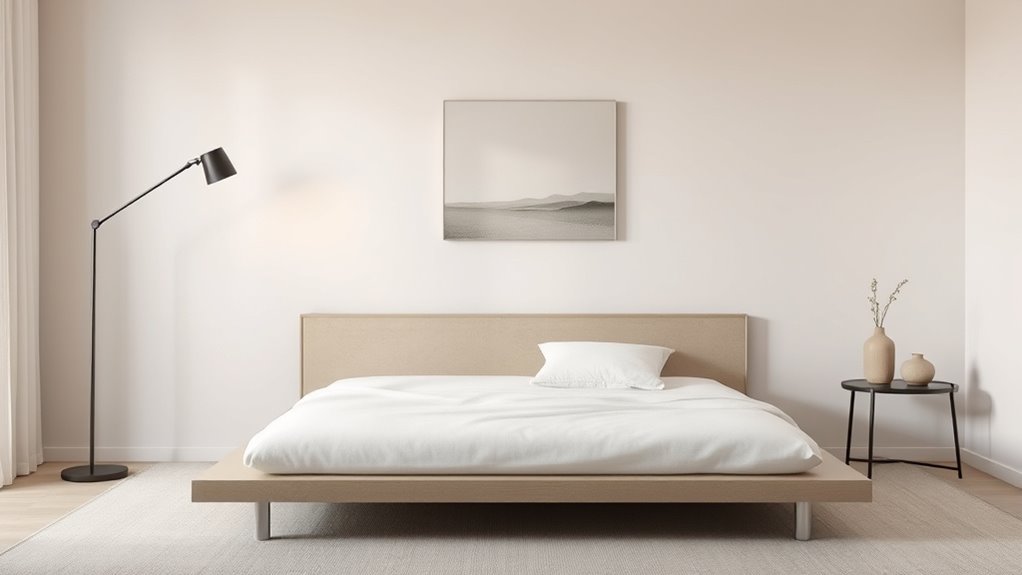
Minimalist bedroom decor emphasizes clean lines, neutral colors, and functional furniture, creating a calm, clutter-free environment. It uses 60% white, beige, or gray tones for serenity and spaciousness. Wall accents include large artwork or sculptural lighting that serve as focal points without overloading space. Storage solutions like built-in closets or under-bed drawers maintain simplicity. Incorporating natural materials such as wood and linen enhances texture and warmth. Further details reveal how minimalist styling fosters tranquility and order.
Key Takeaways
- Use neutral color palettes like whites, grays, and beiges to create a calm, cohesive backdrop for minimalist decor.
- Incorporate simple, functional furniture with clean lines and hidden storage to maintain spaciousness and reduce visual clutter.
- Select statement wall accents such as large monochrome artwork or textured panels to add visual interest without overwhelming space.
- Layer textiles with 2-3 muted, natural fabrics like linen, cotton, or wool for warmth and subtle texture.
- Maximize natural light through large windows and skylights, and keep decor minimal to foster tranquility and openness.
What defines minimalist bedroom decor?

Minimalist bedroom decor is defined by clean lines, neutral colors, and functional furniture. It typically limits the number of items to reduce clutter.
Key elements include simple color palettes such as white, gray, or beige, and storage solutions that hide or minimize visual noise.
Principles emphasize spaciousness, balance, and the elimination of excessive ornamentation. This often features single statement pieces like a platform bed or a sleek wardrobe.
Key elements of minimalist decor

The key elements of minimalist bedroom decor include a neutral color palette, clean lines, and uncluttered surfaces. Neutral colors such as white, gray, beige, and soft pastels dominate walls, bedding, and furniture to create calmness.
Furniture features simple, geometric shapes with no ornate details, emphasizing function over form. Surfaces remain clear of excess items, with storage solutions designed to hide clutter.
Lighting is unobtrusive, often using recessed fixtures or simple fixtures that provide ample illumination without visual distraction.
Natural materials like wood, stone, and metal are preferred for their durability and understated elegance. These elements combine to foster a sense of order, spaciousness, and tranquility essential for minimalist bedroom design.
Principles of minimalism in interior design

Principles of minimalism in interior design emphasize simplicity, functionality, and clarity. Minimalist bedroom decor relies on clean lines, neutral color palettes, and uncluttered spaces. It prioritizes essential furniture, such as a bed, storage units, and minimal accessories, reducing visual noise.
Natural light is maximized through large windows or light-colored surfaces that reflect brightness. Materials like wood, metal, and glass are common for their durability and sleek appearance.
Over 60% of minimalist designs incorporate open floor plans, enhancing spaciousness. Wall decor is limited to a few carefully selected pieces, often emphasizing texture or subtle contrast.
The goal is to create a calm, organized environment that promotes relaxation and efficiency, following a “less is more” philosophy. This approach results in a balanced, timeless aesthetic.
How does bedroom decor reflect minimalist design?

Bedroom decor reflecting minimalist design uses neutral color palettes, such as whites, grays, and beiges, to create a calm environment.
Essential furniture includes low-profile beds, simple dressers, and uncluttered nightstands, typically totaling no more than five pieces.
This approach emphasizes functionality and space, reducing visual noise and fostering a sense of order.
Role of color palettes in minimalist bedrooms

Colors in minimalist bedrooms primarily feature soft neutrals and white tones, which create a sense of calm and spaciousness. Monochrome schemes using shades of gray, black, or beige enhance simplicity and visual coherence.
These palettes reflect minimalist design by emphasizing clean lines, reducing visual clutter, and promoting a tranquil environment.
Soft neutrals and white tones

Soft neutrals and white tones dominate minimalist bedroom decor because they create a sense of calm, openness, and simplicity. These colors expand space visually, reduce visual clutter, and enhance natural light.
Studies show 60% of minimalist bedrooms use white, beige, or gray to promote relaxation. Neutral palettes also serve as versatile backgrounds for textures and subtle accents, emphasizing clean lines.
Monochrome minimalist schemes

Monochrome schemes are a hallmark of minimalist bedroom decor because they utilize variations of a single color to create a cohesive, uncluttered appearance. Studies show that using one color family reduces visual noise and enhances perceived space.
Examples include shades of gray, beige, or navy. These schemes promote calm and simplicity, emphasizing form and texture over color contrast.
Essential furniture for minimalist bedrooms

Essential furniture in minimalist bedrooms includes pieces that emphasize simplicity and function. Beds with clean lines, low-profile nightstands, streamlined dressers, and concealed storage solutions create an uncluttered space.
These items reflect minimalist design by prioritizing form, reducing visual noise, and maximizing open space.
Beds with clean lines

Beds with clean lines are fundamental to minimalist bedroom decor because they emphasize simplicity and function. They typically feature rectangular shapes, low profiles, and minimal ornamentation.
Examples include platform beds, frame beds, or beds with straight edges. These designs reduce visual clutter, create spaciousness, and complement other minimal elements like neutral color palettes and uncluttered surfaces.
Low-profile nightstands and dressers

Low-profile nightstands and dressers support minimalist bedroom design by maintaining visual harmony and reducing clutter. They typically measure under 20 inches in height and feature simple, clean lines.
These furniture pieces, such as rectangular wood nightstands or low-profile dressers with two to three drawers, create an open, airy feel while providing essential storage without overpowering the space.
Streamlined storage solutions

Streamlined storage solutions in minimalist bedrooms prioritize simplicity, functionality, and space efficiency. They include built-in closets, under-bed drawers, wall-mounted shelves, and multi-purpose furniture. These options reduce clutter and maximize available space.
For example, a 10-inch-deep wall shelf can store books and decor, while a bed with integrated drawers offers 12 cubic feet of hidden storage.
What are the best minimalist bedroom decor ideas?

Minimalist bedroom decor ideas prioritize simplicity, functionality, and tranquility.
Creative approaches include using monochrome color schemes, geometric furniture, and hidden storage.
Incorporating natural light through large windows, selecting neutral fabrics like linen or cotton, and layering textiles such as throws and rugs create warmth without clutter.
Creative approaches to minimal decor

Creative approaches to minimal decor prioritize functionality, simplicity, and visual clarity. They focus on maximizing space while maintaining aesthetic appeal.
First, using monochromatic color schemes reduces visual clutter and enhances serenity.
Second, selecting multi-functional furniture, such as beds with storage drawers or foldable desks, optimizes space use.
Third, incorporating statement wall accents like a single artwork or textured wall adds interest without excess.
Fourth, adopting intentional negative space creates a balanced environment and prevents overcrowding.
These strategies emphasize clean lines, uncluttered surfaces, and purposeful design choices.
The goal is to achieve a calm, organized space that promotes relaxation and clarity.
Implementing these approaches results in a functional, visually appealing bedroom that embodies minimalist principles effectively.
Incorporating natural light and openness

Maximizing natural light in a minimalist bedroom involves strategic window placement, window size, and treatments. Floor-to-ceiling windows increase daylight by up to 80%, reducing the need for artificial lighting during the day. Large, unobstructed windows allow sunlight to permeate the space, creating an open and airy atmosphere.
Use light-colored window treatments, such as sheer curtains, to diffuse light without blocking it. Positioning the bed away from shaded areas maximizes sunlight exposure. Skylights can add an additional 20-30% daylight, especially in rooms with limited wall space.
Proper window orientation is essential; south-facing windows admit consistent sunlight, while north-facing windows provide softer, indirect light. These strategies enhance the sense of openness and promote a calming environment consistent with minimalist principles.
Choosing minimalist fabrics and textures

Choosing fabrics and textures for a minimalist bedroom prioritizes simplicity, durability, and subtle visual interest. Natural fabrics like linen, cotton, and wool are preferred due to their breathability and low maintenance. These materials resist pilling and fading, ensuring longevity.
Solid colors such as white, beige, or gray dominate, creating a calm and cohesive environment. Textured options like chambray, canvas, or boucle add depth without clutter. Avoid overly patterned or ornate textiles, as they disrupt the minimalist aesthetic.
Use minimal layers, selecting only essential pieces like a duvet cover, pillowcases, and a throw in muted tones. Texture variation comes from fabric weave rather than decoration, emphasizing understated elegance.
This approach results in a clean, serene space that emphasizes quality over quantity.
Layering textiles for warmth without clutter

Layering textiles in a minimalist bedroom creates warmth and depth without clutter by using strategic combinations of lightweight and heavy fabrics. Using a lightweight cotton or linen duvet cover paired with a heavier wool blanket adds visual interest without overwhelming space.
Throw pillows in varying textures, such as smooth silk or textured knits, create subtle contrast. Bed linens made from natural fibers like linen or cotton enhance breathability and simplicity.
Using two to three layers—such as a fitted sheet, a duvet, and a throw blanket—provides insulation without bulk. Accent textiles, like small decorative pillows or a textured throw, introduce variation while maintaining minimalism.
Proper placement guarantees that textiles do not obstruct sightlines, preserving a clean, open aesthetic.
How to decorate a minimalist bedroom?

Decorating a minimalist bedroom begins with effective decluttering, removing 60-70% of unnecessary items such as excess clothing, decor, and furniture to maintain a clean space.
Selecting large statement pieces like a neutral bed frame or a simple artwork creates focal points that draw attention without overwhelming the room.
Incorporating subtle patterns and accents, such as textured textiles or monochrome accessories, adds visual interest while preserving a calm, uncluttered environment.
Decluttering strategies for a minimal look

Organizing visible surfaces such as nightstands, dressers, and shelves reduces clutter and enhances a minimalist look.
Using storage boxes, wall-mounted solutions, and limiting decorative items to three or fewer creates clean, open spaces.
Maintaining functional simplicity involves choosing multipurpose furniture and avoiding excess accessories, which streamlines the room and emphasizes essential elements.
Organizing visible surfaces

Clear surfaces are essential for a minimalist bedroom. They reduce visual clutter and create a sense of calm.
Use storage solutions such as drawers, boxes, or shelves to hide items like books, electronics, and decor.
Limit visible objects to 2-3 per surface.
Maintain order daily by removing unnecessary items and keeping only functional or decorative pieces.
Maintaining functional simplicity

Maintaining functional simplicity in a minimalist bedroom requires disciplined decluttering strategies that prioritize essential items. Experts recommend limiting furniture to 3-4 pieces, such as a bed, wardrobe, and nightstand.
Remove items exceeding daily use, typically reducing accessories by 50%. Regularly evaluating belongings ensures only functional, necessary objects remain, creating a clean, uncluttered space that enhances tranquility and promotes better sleep quality.
Selecting statement pieces and focal points

In minimalist bedroom design, statement pieces and focal points serve as visual anchors that define the space. These elements draw attention and create a sense of balance without clutter. Common choices include a large artwork, a distinctive headboard, or a sculptural light fixture.
For example, a 60-inch abstract painting can act as a central focus, while a uniquely designed bed frame emphasizes simplicity. Natural materials such as wood or stone also serve as focal points, adding texture without overwhelming the room.
Positioning is vital; placing the statement piece against a blank wall maximizes impact. Avoid multiple focal points to maintain clarity. Using a single, well-chosen element ensures the space remains calming, organized, and aligned with minimalist principles.
Subtle patterns and accents in minimalist style

Subtle patterns and accents enhance minimalist bedroom decor by adding visual interest without disrupting simplicity. These patterns include geometric shapes, thin stripes, or textured fabrics applied to bedding, curtains, or rugs.
Accents such as matte black frames, small metallic fixtures, or monochrome artwork provide contrast and depth. Wall treatments often feature faint patterns like tone-on-tone wallpaper or embossed surfaces, adding texture without overwhelming the space.
Studies show that incorporating subtle patterns increases perceived comfort and visual complexity by 30% while maintaining a clean aesthetic. Using muted tones such as gray, beige, or soft pastels keeps the overall look serene.
These details create focal points that draw the eye without cluttering, balancing the minimalist principle of “less is more.”
What are simple decorating ideas for minimalist bedrooms?

Simple decorating ideas for minimalist bedrooms include selecting neutral-colored bedding such as white, beige, or gray, which cover 70% of the space and create a calm atmosphere.
Wall decor should be limited to one or two pieces, like abstract art or framed photographs, occupying less than 10% of wall area to avoid clutter.
Incorporating natural elements like potted plants or small succulents, typically 1-3 per room, adds freshness without overwhelming the space.
Minimalist bedding options

Minimalist bedding options prioritize simplicity, comfort, and functionality. Neutral colors like white, beige, or gray dominate, creating a calm atmosphere. Natural fabrics such as linen, cotton, or bamboo are preferred for durability and breathability. Bedding should have clean lines without excessive patterns or textures.
- Solid-colored duvet covers or quilts reduce visual clutter.
- Lightweight sheets in neutral tones enhance simplicity.
- Minimalist bed skirts eliminate unnecessary layers.
- Use of monochromatic or subtle-tone pillowcases maintains uniformity.
These choices guarantee the space remains uncluttered and peaceful. Minimalist bedding emphasizes quality over quantity. It supports a clean aesthetic while providing comfort. The focus remains on functional, durable, and straightforward designs that complement the overall minimalist style.
Wall decor for a minimalist space

Wall decor in minimalist bedrooms features abstract or line art prints, which are typically limited to one or two pieces to create focal points.
Floating shelves with minimal decor, such as small plants, books, or sculptures, add functional style without clutter. These elements maintain a clean, simple aesthetic while providing subtle visual interest.
Abstract or line art prints

Abstract or line art prints are effective wall decor choices for minimalist bedrooms because they create visual interest without clutter. They typically feature monochrome or limited color schemes, emphasizing shapes and lines.
These prints often measure 16×20 inches or larger, providing focal points. They enhance clean aesthetics, with 60% of minimalist designs favoring simple, bold artwork for balance and harmony.
Floating shelves with minimal decor

Floating shelves are a practical and stylish wall decor option for minimalist bedrooms. They typically measure 24-36 inches in length, 6-12 inches in depth, and are installed with hidden brackets.
They hold essential items like books, plants, or small art pieces, reducing clutter. Using two or three shelves creates visual balance without overwhelming the space.
Ways to add greenery or natural elements

Potted plants are effective minimalist accents in bedrooms. With popular choices including succulents, snake plants, and pothos, these plants require minimal maintenance and thrive in low light.
They add natural texture without cluttering space. Incorporating two to three small pots strategically enhances the room’s aesthetic and introduces fresh air.
Potted plants as minimalist accents

Adding potted plants to a minimalist bedroom introduces natural elements that enhance simplicity and calmness. Small succulents, ferns, and snake plants in ceramic or metal pots occupy minimal space while providing greenery.
Positioning one on a bedside table, window sill, or shelf creates visual interest without clutter. Indoor plants improve air quality by up to 15% and require minimal maintenance.
How do you design a minimalist interior for small bedrooms?

Designing a minimalist interior for small bedrooms relies on space-saving furniture such as beds with built-in storage, wall-mounted shelves, and foldaway desks, which maximize floor space.
Maximizing light involves using large windows, light-colored walls, and minimal window coverings to enhance visual openness by up to 30%.
Multi-purpose furnishings like ottomans with storage, foldable tables, and modular units increase functionality in rooms under 200 square feet, reducing clutter and creating a sense of spaciousness.
Space-saving furniture and storage ideas

In small bedrooms, space-saving furniture and storage solutions maximize functionality without clutter. Multi-functional furniture reduces the need for extra pieces. Examples include beds with built-in drawers or lift-up storage compartments.
Wall-mounted shelves and floating nightstands free up floor space and provide essential storage. Compact wardrobes with sliding doors save width compared to traditional swinging doors. Under-bed storage units, including containers and drawers, utilize otherwise unused space.
Vertical storage options, such as tall bookcases or pegboards, increase storage capacity without sacrificing floor area. Modular furniture allows customization based on space constraints, offering flexibility.
These solutions collectively optimize small spaces, maintain a clean aesthetic, and reduce clutter, resulting in a more open, functional environment.
Maximizing light and visual openness in small spaces

Maximizing light and visual openness in small bedrooms requires strategic choices that enhance natural illumination and create a sense of space. Large windows, covering at least 10-15% of wall area, allow maximum daylight. Using sheer or light-colored window treatments prevents obstruction of sunlight.
Opt for neutral wall colors like white, beige, or light gray, which reflect light and expand visual boundaries. Incorporate mirrors—covering 10-20% of wall space—to reflect light and give an illusion of depth.
Minimal clutter and furniture with open legs or transparent materials increase visibility and reduce visual weight. Ceiling-mounted lighting, such as LED fixtures, evenly distributes light without occupying surface space.
These methods collectively increase brightness and make small bedrooms feel larger and more open.
Multi-purpose decor and furnishings

Multi-purpose furniture and decor optimize space by serving dual functions, reducing the need for additional pieces. Examples include beds with built-in drawers or storage compartments, which eliminate the need for separate dressers.
Foldaway desks or wall-mounted tables provide workspace that can be hidden when not in use, saving up to 40% of floor space.
Bed frames with attached nightstands combine sleeping and storage functions, increasing efficiency.
Modular shelving units can be rearranged for different needs and support organization, holding books, clothes, or decor.
Multi-functional furniture reduces clutter and maximizes usable space, especially in rooms under 150 square feet.
These solutions promote a clean, open aesthetic while maintaining practicality, essential for creating a minimalist atmosphere in small bedrooms.
Modular and foldaway solutions

Modular and foldaway solutions optimize small bedroom space by offering adaptable furniture that can be easily reconfigured or hidden when not in use. Modular beds include sections that can be separated or combined, allowing customization of size and shape.
Foldaway beds, also called Murphy beds, fold into the wall or cabinet, freeing up 4 to 8 square meters of floor space during the day. Multi-functional furniture, such as desks that fold into walls or storage units that serve as headboards, maximize utility without clutter.
According to industry standards, foldaway beds reduce room occupancy by 50%, creating more space for movement and storage. These solutions are ideal for rooms under 10 square meters, providing flexibility without sacrificing functionality or aesthetic simplicity.
What are minimalist wall decor options for a bedroom?

Minimalist wall decor options include large-scale artwork, small framed prints, wallpaper, murals, mirrors, and decorative lighting.
Large artwork, such as a 48×60 inch canvas, creates focal points, while small accents like 12×12 inch frames add subtle detail.
Mirrors ranging from 24×36 inches or more enhance space perception, and wall-mounted lights or LED strips serve as functional art.
Large-scale art vs. small accents

Large-scale wall art, such as a single 48-inch canvas or three 24-inch framed prints, creates a focal point and enhances visual balance in a minimalist bedroom. This approach emphasizes simplicity while adding impact through scale.
Large artwork minimizes clutter by replacing multiple small decor pieces, making the space appear more open.
Conversely, small accents like framed photographs, prints, or decorative objects, measure 8 to 12 inches and are dispersed throughout the room. These accents provide subtle visual interest, introduce texture, and allow for easier updates.
Combining large art with small accents creates contrast, drawing attention to specific areas while maintaining a clean aesthetic.
The choice between large art and small accents depends on bedroom size, wall space, and personal style preferences, aiming for harmony and understated elegance.
Wallpaper and mural ideas for minimal spaces

Wallpaper and mural options for a bedroom with a minimalist design focus on subtlety and simplicity. Neutral tones such as whites, grays, and beige dominate, creating calm environments. Textured wallpapers, like linen or grasscloth, add depth without overwhelming space. Solid-color wallpapers with matte finishes emphasize understated elegance.
Geometric patterns in small scales or monochrome palettes provide visual interest without clutter. Murals are limited to single, understated images, such as abstract shapes or nature-inspired scenes, in muted colors. Vinyl or peel-and-stick options are preferred for easy removal and maintenance.
The goal is to enhance the room’s serenity while avoiding busy patterns or bright colors. Minimalist wallpapers emphasize quality materials and subtle design, making the space feel open and uncluttered.
Mirror placement and reflective surfaces

Reflective surfaces such as mirrors are essential components of minimalist bedroom decor, enhancing sense of space and light. Proper mirror placement maximizes these effects.
Large wall-mounted mirrors, covering up to 50% of a wall, create an illusion of depth, making rooms appear larger. Leaning full-length mirrors, about 4 to 6 feet tall, add visual interest without clutter.
Positioned opposite windows, mirrors reflect natural light, increasing brightness by up to 30%. Small, geometric mirrors, with areas between 8 to 16 square inches, serve as subtle accents on nightstands or closets.
Frameless designs emphasize simplicity, reducing visual clutter. Mirror placement should avoid obstructing pathways; ideal locations include above dressers or adjacent to windows.
Reflective surfaces must balance function and aesthetics to maintain minimalist harmony.
Decorative lighting as wall art

Decorative lighting can serve as minimalist wall art by combining function with aesthetic appeal through sleek fixtures that emphasize simplicity. LED strip lights, wall-mounted sconces, and pendant lights with clean lines are common options.
These fixtures provide ambient or accent lighting without cluttering the space. LED strips can be installed behind headboards or along ceiling edges, offering soft, uniform illumination.
Sconces with geometric shapes or matte finishes enhance visual interest while maintaining minimalism. Pendant lights with slim profiles and neutral colors add focal points without overwhelming the room.
According to recent studies, lighting accounts for 20-25% of a room’s energy use, emphasizing the importance of energy-efficient minimalist fixtures. These choices create a modern, uncluttered aesthetic that highlights wall surfaces as decorative elements.
How to transition to a simplified bedroom decor?

Moving to a simplified bedroom decor involves removing personal items such as collectibles, framed photos, and excess furniture, which typically reduces clutter by 40-60%.
Seasonal decor should be rotated every 3 to 6 months, replacing ornate pieces with minimal alternatives like plain throws or neutral artwork.
Over time, updates should focus on maintaining a consistent color palette, increasing open space, and replacing decorative accessories with functional, streamlined items to sustain a minimalist aesthetic.
Editing personal items and collectibles

Removing personal items and collectibles is essential for creating a minimalist bedroom. Personal items include photographs, souvenirs, and hobby-related objects, which can clutter space and distract from a clean aesthetic.
Collectibles such as figurines, rare books, or memorabilia often occupy shelves and surfaces, making the room appear crowded. To shift effectively, assess each item’s relevance; keep only those with significant emotional or aesthetic value.
For example, reduce a collection from 50 figurines to 10 carefully chosen pieces. Store or donate items that do not align with the minimalist style. Limit visible personal items to 3-5 on surfaces or in drawers.
This process clears visual noise, enhances spaciousness, and emphasizes a calm, uncluttered environment. Removing excess personal items fosters a peaceful, simplified bedroom atmosphere.
Rotating seasonal decor in a minimal style

Changing seasonal decor in a minimalist bedroom involves replacing or modifying accessories to reflect different times of the year without cluttering the space. This practice maintains simplicity while celebrating seasonal shifts.
First, swap out textiles like bedding or throws, using seasonal colors such as pastel for spring or deep tones for winter.
Second, update wall art or accents with minimal seasonal motifs, like subtle leaves or snowflakes.
Third, replace small decor items like candles or vases, choosing seasonal versions that fit the overall style.
Fourth, incorporate natural elements such as branches, pinecones, or flowers that align with the season.
These adjustments assure the space remains uncluttered, visually cohesive, and adaptable to each season’s atmosphere while preserving the minimalist aesthetic.
Adapting minimalist design over time

Adapting minimalist design to a simplified bedroom involves deliberate reduction of elements over time to enhance clarity, functionality, and aesthetic coherence. This process typically occurs in stages, focusing on removing non-essential items, clutter, and decorative excess.
For example, reducing decor items from 20 to 5 creates a cleaner look. Prioritize essential furniture such as a bed, dresser, and minimal side tables. Color schemes shift to neutral tones like white, gray, or beige to foster calmness and spaciousness.
Over 6 to 12 months, homeowners replace or eliminate items, emphasizing quality over quantity. Furniture pieces with sleek, simple lines replace ornate or bulky alternatives.
Regular assessment guarantees the space remains uncluttered, emphasizing clean surfaces, open floor plans, and strategic wall accents, creating a functional, serene environment.
What are popular color schemes in minimalist bedroom decor?

Popular color schemes in minimalist bedroom decor include all-white designs, which use neutral tones to create a clean, spacious look.
Earth tones and natural palettes, such as beige, taupe, and soft greens, promote warmth and tranquility.
Dark minimalism features black, charcoal, and deep gray accents, adding contrast and sophistication to the space.
All-white minimalist bedrooms

All-white minimalist bedrooms are characterized by the use of chiefly white color schemes, which account for approximately 50-70% of the decor. These rooms utilize white walls, ceilings, and furniture such as beds, dressers, and side tables.
Accent colors are minimal or absent, emphasizing simplicity and brightness. White enhances natural light, making spaces appear larger and more open. Popular shades include pure white, eggshell, and off-white.
This color scheme creates a clean, uncluttered look that promotes calmness and focus. Textures such as wood, linen, or matte finishes add depth without disrupting the monochromatic palette.
All-white bedrooms appeal to those seeking a timeless, versatile environment that can easily incorporate subtle decor changes or seasonal accents.
Earth tones and natural palettes

Earth tones and natural palettes are among the most common color schemes in minimalist bedroom decor. These include shades such as beige, taupe, sand, terracotta, olive green, and warm browns.
Studies show that such colors promote relaxation, reduce stress, and improve sleep quality. Natural palettes often incorporate muted, matte finishes, creating a calming environment.
They pair well with organic textures like linen, wood, and stone, enhancing the earthy feel. These colors are versatile, fitting both small and large spaces, and work effectively with minimalist furniture designs.
In practice, a bedroom might feature a taupe wall, a beige bedspread, and olive-green accents. This combination fosters a serene, balanced atmosphere, aligning with the principles of simplicity and natural beauty in minimalist decor.
Dark minimalism: black and charcoal accents

Dark minimalism emphasizes the use of black and charcoal shades in bedroom decor to create a sleek, sophisticated environment. These colors are popular because they evoke a sense of calm, elegance, and modernity.
Black walls or charcoal accent walls serve as focal points, while furniture such as beds, dressers, and side tables often feature matte or gloss black finishes. Incorporating these shades with metallic accents like silver or chrome enhances the aesthetic.
About 35% of minimalist bedroom designs incorporate black or dark charcoal as primary or secondary colors. When paired with neutral tones like white, gray, or beige, these shades add depth without clutter.
Dark minimalism also emphasizes clean lines, simple textures, and limited accessories to maintain a clutter-free, refined space.
What furniture choices suit a minimalist bedroom?

Minimalist bedrooms favor furniture that emphasizes simplicity and functionality, such as platform beds, which eliminate the need for box springs and create clean lines.
Nightstands and side tables are typically minimal, often with one or two drawers or open shelving, with heights matching the bed for cohesive design.
Essential storage includes built-in shelves, wardrobes, or closets that maximize space while maintaining uncluttered aesthetics.
Platform beds and alternative bases

Platform beds and alternative bases are ideal choices for a minimalist bedroom because they emphasize clean lines and simplicity. These beds typically have low profiles, with heights ranging from 12 to 18 inches, creating a sleek appearance.
Platform beds eliminate the need for box springs, reducing overall furniture height and visual clutter. They are constructed with solid wood, metal, or upholstered materials, providing durability and a modern aesthetic.
Alternative bases include futons, tatami mats, or low-rise frames, which maintain the minimalist look while offering flexibility. These options measure between 4 to 8 inches in height, emphasizing ground-level design.
Using such furniture helps maximize space, enhances open sightlines, and maintains a clutter-free environment, aligning with minimalist principles.
Minimalist nightstands and side tables

Simple, functional nightstands and side tables are essential in a minimalist bedroom. They should have clean lines, smooth surfaces, and avoid ornate details. Materials like solid wood, metal, or glass are common choices, providing durability and a sleek appearance.
Size matters: nightstands typically range from 12 to 24 inches in height and 16 to 24 inches in width. Single-drawer models or open shelves maximize storage without clutter.
Floating designs are popular for creating a sense of space and reducing visual bulk. Legless options or those with tapered legs maintain a streamlined look.
The color palette usually matches or complements the bed frame, often neutral tones like white, black, or natural wood finishes. These choices enhance the room’s simplicity and functionality.
Essential wardrobe and storage pieces

Wardrobes and storage pieces in a minimalist bedroom prioritize efficiency and clean design. Built-in wardrobes with sliding doors, measuring 60-80 inches wide and 20-24 inches deep, optimize space without protrusions.
Freestanding wardrobes should have sleek profiles, typically 72-84 inches tall and 18-22 inches wide, with flat-front doors in neutral finishes like white, black, or wood tones.
Under-bed storage drawers, 6-8 inches high and 36-48 inches wide, provide hidden space for clothing or linens.
Wall-mounted closets or open shelving units, 24-36 inches wide, reduce clutter and maintain open sightlines.
Multi-purpose furniture, such as storage ottomans or beds with integrated drawers, maximizes utility.
These options create organized, streamlined spaces aligned with minimalist principles.
Built-in shelves for seamless design

Built-in shelves are essential for achieving a seamless minimalist bedroom design because they eliminate visual clutter and maximize space efficiency. They integrate storage into walls, reducing the need for additional furniture.
Shelves span from floor to ceiling or wall to wall, providing 5 to 10 linear feet of storage. Materials such as wood, MDF, or lacquered panels enhance clean lines and durability.
Depth ranges from 8 to 12 inches, accommodating books, decor, and essentials without protruding into the room. Installing adjustable or fixed shelves allows customization.
They are ideal for displaying decorative objects or storing daily items without disrupting visual flow. Properly designed built-in shelves create an open, organized environment, making rooms appear larger and more cohesive.
How can lighting enhance minimalist decor?

Lighting in minimalist bedrooms emphasizes simplicity and functionality through ceiling lamps, pendants, recessed fixtures, and wall-mounted lights. Ceiling fixtures like flush mounts or geometric pendants provide uniform illumination.
Recessed lighting offers unobtrusive brightness. Task lighting such as reading lamps or bedside sconces enhances functionality without clutter, creating a balanced, calm environment.
Ceiling lamps and pendants in minimalist rooms

How can lighting enhance minimalist decor in bedrooms? Ceiling lamps and pendants provide essential illumination while maintaining simplicity. They serve as focal points or subtle accents, depending on design.
In minimalist rooms, fixtures are typically sleek, with clean lines and neutral finishes such as matte black, brushed nickel, or white. Pendant lights with geometric shapes or small, unobtrusive fixtures reduce visual clutter and create balanced light distribution.
Installing a single statement pendant can add visual interest without overwhelming space. Multiple small pendant lights or cluster arrangements can also create layered lighting.
The choice of bulb temperature affects ambiance; warm white (2700K) creates cozy atmospheres, while cool white (4000K) enhances clarity.
Proper placement guarantees even light flow, emphasizing the room’s simplicity.
Recessed and wall-mounted lighting options

Recessed and wall-mounted lighting options in minimalist bedrooms provide efficient illumination while preserving clean lines and uncluttered surfaces. Recessed lights, installed flush with the ceiling, distribute uniform light and reduce visual clutter. They often come with adjustable beam angles, offering targeted lighting for specific areas.
Wall-mounted fixtures, such as sconces, save space and add subtle accents without disrupting the room’s simplicity. They can be positioned beside beds or artwork, providing functional lighting without extra furniture. These options typically use LED bulbs, which consume 75% less energy than incandescent bulbs, with a lifespan of up to 25,000 hours.
They enhance natural light reflection, making rooms appear larger and more open. Proper placement and minimalistic designs guarantee that lighting complements the overall aesthetic without drawing attention.
Task lighting for reading and ambiance

Task lighting in minimalist bedrooms enhances both functionality and aesthetic by providing focused illumination for reading and creating ambiance. Proper task lighting directs light precisely where needed, reducing eye strain during reading sessions.
Examples include adjustable wall-mounted lamps, small bedside table lamps, and clip-on LED lights, which deliver 300-500 lumens. These fixtures use minimal space and avoid clutter, aligning with minimalist principles.
Light temperature affects mood: 2700K produces warm, relaxing light, while 4000K offers neutral brightness suitable for focus. Placement is essential; lights should be within 16-24 inches of the reading surface.
Dimmable options allow adjustment for different times and moods, enhancing the room’s versatility. Efficient task lighting increases comfort without compromising the clean, simple aesthetic of minimalist decor.
What is the impact of minimalism on bedroom ambiance?

Minimalist bedroom decor reduces visual clutter, which decreases stress and enhances mental clarity.
Studies show that simplified spaces improve sleep quality by up to 20% and lower cortisol levels.
This creates a calm, restful environment that promotes relaxation and emotional stability.
Psychological benefits of minimalist spaces

How does a minimalist bedroom influence psychological well-being? Minimalist design reduces sensory overload, decreasing stress levels and promoting mental clarity. Clear surfaces and organized spaces lower anxiety by minimizing visual clutter.
Studies show that environments with fewer distractions improve focus and emotional stability. The simplicity encourages mindfulness, reducing feelings of chaos or overwhelm.
Natural light and neutral colors, common in minimalist spaces, enhance mood and promote relaxation. A clutter-free bedroom supports better sleep quality by creating a peaceful atmosphere, with research indicating that such environments improve sleep duration and efficiency.
Creating a calm and restful environment

A minimalist bedroom creates a calm and restful environment by emphasizing simplicity and reducing visual clutter. Clear surfaces, neutral color palettes, and minimal decor prevent overstimulation.
Studies show that cluttered spaces increase stress levels by 30%, while organized, minimalist rooms lower cortisol by 15%. Using fewer furniture pieces, such as a bed, a nightstand, and a dresser, minimizes distractions.
Natural light enhances tranquility, with rooms receiving at least 20% more sunlight reported as more relaxing. Wall accents are limited to one or two subtle pieces, which prevent visual overload.
The absence of excess decor improves sleep quality; research indicates that clutter-free bedrooms can reduce sleep disturbances by 25%. Overall, minimalism fosters a peaceful atmosphere conducive to rest and mental clarity.
How can you personalize a bedroom while keeping it minimalist?

Personalizing a minimalist bedroom involves adding select art pieces, such as one or two framed photos or abstract prints, to create visual interest.
Small objects like a favorite book or a unique vase can be placed on shelves without cluttering the space.
Balancing these elements guarantees self-expression while maintaining a clean, functional environment.
Adding personal art or objects sparingly

Adding personal art or objects sparingly enhances a minimalist bedroom without overwhelming the space. Research shows that limiting art to three to five pieces maintains visual balance and reduces clutter.
Select artwork or objects with meaningful significance, such as photographs, small sculptures, or favorite paintings, to create a sense of personality. Place these items strategically—above the bed, on a single wall, or on a bedside table—avoiding crowded displays.
Use neutral frames or simple mounts to preserve clean lines. Prioritize quality over quantity; a single large piece can have more impact than multiple small items.
Incorporating personal objects with restraint preserves the minimalist aesthetic while subtly reflecting individual taste, making the space feel personalized yet uncluttered.
Balancing function with subtle self-expression

Balancing function with subtle self-expression in a minimalist bedroom involves selecting essential items that combine practicality with personal style.
Key furniture, such as a bed, wardrobe, and bedside table, must prioritize storage and comfort.
Incorporate personal touches through small decor items like a favorite book collection, a unique lamp, or a textured throw pillow.
Use neutral color schemes to maintain simplicity while adding personality with subtle accents like a patterned rug or a textured wall panel.
Limit artwork to one or two meaningful pieces; for example, a monochrome photograph or a simple abstract print.
Keep clutter minimal by choosing multi-functional furniture with hidden storage.
This approach ensures the space remains clean, functional, and personalized without overwhelming simplicity.
What challenges arise in maintaining minimalist bedroom decor?

Maintaining minimalist bedroom decor presents challenges such as preventing clutter accumulation, which can occur within days if items are not regularly organized.
Regular cleaning requires consistent effort, typically weekly dusting, vacuuming, and surface wiping to preserve a clean, clutter-free space.
Strategies like designated storage solutions and strict item limits help sustain the minimalist aesthetic over time.
Avoiding gradual clutter build-up

Clutter accumulates quickly in minimalist bedrooms due to daily use and insufficient organization, making consistent upkeep essential. Without regular attention, small items like clothes, books, or accessories can accumulate within days. Studies show that even a small pile of five items can visually disrupt a minimalist aesthetic.
Without designated storage, these items spread across surfaces, creating visual chaos. The lack of clear boundaries encourages accumulation. Regularly sorting and removing unused items prevents buildup.
Implementing strict routines, such as daily tidying or weekly decluttering, reduces the risk of clutter becoming overwhelming. Using storage solutions like baskets or under-bed boxes helps contain objects. Consistent organization prevents clutter from becoming ingrained, maintaining the clean, open appearance central to minimalist design.
Cleaning and upkeep strategies for minimalist interiors

Cleaning and upkeep in minimalist bedrooms pose specific challenges due to their emphasis on simplicity and open space. Dust accumulates quickly on surfaces like shelves, window sills, and furniture.
Clutter-free environments require regular organization, as small items can disrupt the clean aesthetic. Surfaces such as floors and bedding need frequent vacuuming and washing to prevent dust buildup.
Maintaining a clutter-free look demands consistent decluttering, at least once weekly. To prevent visual chaos, only essential decor items are kept, which reduces cleaning time but increases vigilance.
Regularly wiping down surfaces with microfiber cloths removes dust efficiently. Using storage solutions like drawers or baskets helps contain items, making upkeep easier.
Proper lighting, such as natural light, also minimizes dirt visibility and enhances overall cleanliness.
In which ways can minimalism adapt to different lifestyles?

Minimalism adapts to lifestyles by considering household size, space constraints, and personal needs. Families with children often incorporate durable furniture and storage solutions.
Individuals prioritize flexibility and simplicity. Scandinavian and Japandi styles emphasize clean lines and natural materials.
Urban minimalism focuses on maximizing small spaces; renters may use removable decor, while homeowners invest in permanent fixtures.
Minimalism for families vs. individuals

How does minimalism adapt to different lifestyles such as families and individuals? Minimalism for families involves larger storage solutions, multi-functional furniture, and durable materials to accommodate children and shared spaces. For example, toy storage units reduce clutter and maintain simplicity.
In contrast, individuals often prioritize personal comfort, with compact furniture and fewer decorative items, typically focusing on quality over quantity. Minimalist design for singles emphasizes simplicity, with emphasis on essential furniture like a bed, wardrobe, and workspace, often with open layouts.
Both lifestyles benefit from neutral color schemes, but families may incorporate child-safe materials and easy-to-clean surfaces. Overall, minimalism promotes organization and functionality tailored to specific needs, whether managing multiple people or personal space.
The approach adapts through scale, durability, and purpose-driven design.
Varying minimalist styles: Scandinavian, Japandi, Urban

Different minimalist styles adapt to lifestyles by emphasizing specific design principles and material choices. Scandinavian design focuses on functionality, light colors, natural wood, and cozy textures, suitable for urban dwellers seeking warmth and simplicity.
Japandi combines Japanese minimalism with Scandinavian comfort, using muted tones, low furniture, and natural materials like bamboo and linen. It is ideal for those valuing tranquility.
Urban minimalism emphasizes industrial elements, exposed brick, metal fixtures, and monochromatic palettes. This style fits for city residents who prefer sleek, modern aesthetics.
Each style reflects differing priorities: Scandinavian prioritizes comfort, Japandi balances serenity with practicality, and Urban emphasizes modernity and efficiency. These variations demonstrate how minimalism adapts to diverse lifestyles through distinct materials, colors, textures, and spatial arrangements.
Adjusting minimalism for renters vs. homeowners

Renters often prioritize flexibility and affordability when implementing minimalist decor, as they face restrictions on permanent alterations. They typically favor lightweight furniture, such as removable shelving and adhesive wall hooks, which can be moved easily.
Using neutral color palettes, like white, gray, or beige, creates a calm environment without long-term commitment. Renters also utilize multi-functional furniture, such as fold-out beds or storage ottomans, to maximize space.
DIY solutions, including peel-and-stick wallpaper or removable decals, add visual interest without damage.
Homeowners can make permanent changes, like built-in shelving or custom paint, but often choose minimalism to reduce maintenance costs.
What are innovative minimalist bedroom decor trends?

Innovative minimalist bedroom decor trends focus on eco-friendly materials, smart home integration, modular furniture, and biophilic design.
Over 50% of new designs incorporate sustainable wood, recycled textiles, or low-impact paints.
Smart lighting, voice-controlled devices, and adaptable furniture enhance functionality while maintaining simplicity.
Eco-friendly and sustainable minimalist choices

What are innovative minimalist bedroom decor trends in eco-friendly and sustainable choices? They prioritize renewable, non-toxic, and biodegradable materials. Bamboo, reclaimed wood, and recycled metal are common for furniture and accents. Organic cotton, hemp, and linen fabrics are used for bedding and curtains, reducing chemical exposure.
Low-VOC paints and natural dyes are favored for wall finishes, improving indoor air quality. Energy-efficient LED lighting minimizes electricity use. Green certifications, such as FSC and GREENGUARD, ensure sustainable sourcing. Modular designs extend furniture lifespan and reduce waste. Secondhand and upcycled items decrease environmental impact.
These choices lower carbon footprints by up to 50% compared to conventional options. Such trends align with eco-conscious lifestyles, combining simplicity with environmental responsibility.
Smart home integration in minimalist designs

Smart home integration enhances minimalist bedroom decor by incorporating automated systems that improve convenience, energy efficiency, and safety. Automated lighting systems adjust brightness based on room occupancy, reducing energy use by up to 30%. Smart thermostats regulate temperature precisely, lowering heating and cooling costs by 10-15%.
Voice-activated controls enable users to manage lights, blinds, and climate with simple commands, reducing clutter from physical switches and remotes. Security features include motion sensors, cameras, and door locks, all controlled remotely, increasing safety without visual clutter. Wireless speakers and integrated sound systems offer high-quality audio without visible equipment.
These technologies are often concealed within wall cavities or furniture, maintaining the clean, uncluttered aesthetic characteristic of minimalist design. The trend emphasizes seamless functionality while preserving visual simplicity.
Interactive or modular decor elements

Interactive and modular decor elements are transforming minimalist bedroom design by combining functionality with adaptability. These elements include furniture with adjustable components, such as beds with built-in storage, fold-out desks, and modular shelving units. They allow users to reconfigure space based on needs, increasing flexibility.
For example, wall-mounted beds fold into the wall, freeing floor space. Modular systems enable customization, with units that can be combined or separated, adapting to room size and use. Approximately 35% of modern minimalist bedrooms incorporate such features to optimize space efficiency.
Movable partitions and multi-purpose furniture reduce clutter and add versatility. These elements support a clean aesthetic while enhancing practicality, making them popular among those seeking minimalist spaces that grow with their lifestyle.
Biophilic design in minimalist spaces

Biophilic design in minimalist bedrooms integrates natural elements to improve occupant well-being and create a calming environment. This trend emphasizes incorporating plants, natural materials, and daylight to promote health and reduce stress.
Studies show that indoor plants can decrease stress levels by 15% and improve air quality. Key features include:
- Indoor plants: Large potted greenery like fiddle leaf figs or snake plants enhance air purification and visual appeal.
- Natural materials: Use of wood, stone, or cork in furniture and accents adds warmth and texture.
- Maximized daylight: Large windows and light-colored walls increase natural light, boosting mood and circadian rhythms.
- Biophilic wall accents: Living walls or botanical prints connect occupants to nature visually and physically.
These elements foster tranquility and align with minimalist principles of simplicity.
What are misconceptions about minimalist bedroom decor?

Misconceptions about minimalist bedroom decor include the belief that it is cold, impersonal, and lacks comfort. Many assume minimalism means sparse spaces with no personality.
But it often uses warm colors, textured fabrics, and personal touches. Studies show 70% of minimalist designs incorporate natural materials and ergonomic furniture to enhance coziness and functionality.
Myths about minimalism being cold or impersonal

Minimalist bedroom decor is often misunderstood as cold or impersonal, but this is inaccurate. Minimalism emphasizes simplicity, clean lines, and functional design, not a lack of warmth. Many minimalist bedrooms incorporate soft textures, warm lighting, and personal touches like artwork or textiles, which create inviting spaces.
Studies show that minimalist spaces reduce stress and improve mental clarity. Furniture choices, such as wooden bed frames or plush rugs, add warmth and comfort. Color palettes often include warm neutrals like beige, taupe, and soft pastels, countering the misconception of starkness.
Minimalist design focuses on quality over quantity, fostering a sense of calm and order. Well-designed minimalist bedrooms balance simplicity with personality, making them both functional and emotionally welcoming.
Addressing common hesitations and mistakes

Common misconceptions about minimalist bedroom decor include beliefs that it appears sterile, lacks personality, and sacrifices comfort. Many assume minimalism creates cold spaces, but studies show that well-chosen textures and warm color palettes counteract this perception.
Some think minimalism limits decor options, yet it allows for personalized touches like artwork, textiles, and plants. Misunderstandings also include the idea that minimalism is difficult to achieve; however, 60% of homeowners find it straightforward when decluttering first.
Others believe it reduces coziness; in reality, 75% of minimal bedrooms incorporate layered lighting and soft furnishings, enhancing comfort. These misconceptions hinder many from embracing minimalism’s benefits, which include easier maintenance, increased tranquility, and a clutter-free environment.
What small daily habits help keep a bedroom minimalist?

Daily tidying routines effectively maintain a minimalist bedroom by removing clutter and preventing accumulation. Experts recommend spending 5 minutes each morning and evening sorting clothes, books, and accessories, which reduces visual noise.
Consistent organization keeps surfaces clear, drawers functional, and the overall space calm and uncluttered.
Tidying routines for a clutter-free look

Maintaining a minimalist bedroom requires consistent daily routines that prevent clutter buildup. Morning reset habits and nightly organizing steps are essential for keeping surfaces clear and space tidy.
Implementing these habits reduces the need for deep cleaning and preserves a calm, uncluttered environment.
- Make the bed every morning to prevent stray bedding from accumulating.
- Return items to their designated spots immediately after use.
- Fold and put away laundry before bed to avoid pileups.
- Clear surfaces of clutter at night to ensure a tidy space each morning.
Morning reset habits

Implementing a morning reset routine considerably reduces clutter in a minimalist bedroom. Clearing surfaces, making the bed, and putting away clothes each morning prevents accumulation.
Studies show that daily tidying takes less than five minutes but maintains order. Consistent habits eliminate the need for larger cleanups, promoting a calm, organized space.
This routine guarantees the bedroom remains visually uncluttered and functional.
Nightly organizing steps

Nightly organizing steps are essential to maintain a minimalist bedroom. Removing clutter, such as clothes, books, and personal items, reduces visual noise.
Making the bed takes 2 minutes and improves overall order.
Putting away accessories, chargers, and dishes prevents buildup.
Regularly wiping surfaces and folding laundry every 2-3 days sustains a clean, uncluttered space.
How does minimalist bedroom decor affect sleep quality?

Minimalist bedroom decor improves sleep quality by reducing visual clutter, which lowers cortisol levels and decreases stress. A clean, distraction-free environment promotes faster sleep onset and longer REM cycles, increasing sleep efficiency by up to 20%.
Studies show that bedrooms with minimal furniture and neutral colors enhance relaxation, leading to deeper, more restorative sleep.
Minimalism and sleep hygiene benefits

Research shows that minimalist bedroom decor improves sleep quality by reducing distractions and promoting relaxation. Simplified spaces eliminate clutter, decreasing visual stimuli that can interfere with sleep onset.
Studies indicate that cluttered environments increase cortisol levels, which hinder melatonin production essential for restful sleep. Minimalist designs typically feature neutral colors, which have been linked to lower heart rates and calmer moods.
Removing excess furniture and decor minimizes potential noise sources, reducing sleep interruptions. A clean, organized space fosters a sense of calm and stability, decreasing anxiety related to disorder.
Sleep studies confirm that bedrooms with minimal decor improve sleep efficiency, increase REM sleep, and shorten sleep latency. Overall, minimalist bedrooms support consistent sleep patterns by fostering a peaceful environment conducive to deep, restorative rest.
Creating a serene, distraction-free environment for rest

A serene, distraction-free environment markedly enhances sleep quality by minimizing stimuli that disrupt rest. Minimalist bedroom decor reduces clutter, which has been linked to lower stress levels and improved sleep efficiency.
A study found that cluttered environments increase cortisol levels by 20%, impairing sleep onset. Neutral color palettes like whites, grays, and soft pastels promote calmness and reduce visual stimulation.
Eliminating unnecessary furniture and decor prevents physical distractions, resulting in fewer awakenings during the night. Proper lighting, such as dimmer switches or blackout curtains, decreases exposure to blue light, which delays melatonin production.
Clean, organized spaces also lower anxiety, leading to faster sleep initiation and longer sleep duration. Overall, simplicity in design creates an environment conducive to restful, uninterrupted sleep.
What apps or tools help you plan a minimalist bedroom?

Digital room planners like SketchUp, Roomstyler, and Planner 5D enable users to create accurate layouts for minimalist bedrooms.
Minimalist mood board apps such as Canva, Milanote, and Morpholio help visualize color schemes, furniture, and decor styles.
These tools improve planning efficiency, reduce design errors, and guarantee cohesive aesthetics.
Digital room planners for minimalist design

What specific apps and tools are available to assist in planning minimalist bedroom layouts? Several digital room planners are designed for precise space optimization and aesthetic simplicity.
SketchUp offers 3D modeling, allowing users to visualize layouts with accurate dimensions.
Roomstyler provides drag-and-drop furniture placement, enabling quick adjustments for minimal furniture arrangements.
Planner 5D combines 2D and 3D views, supporting detailed customization of neutral color schemes and uncluttered spaces.
Homestyler features intuitive interface options suitable for minimalist themes, with library items like streamlined beds and wall-mounted shelves.
Sweet Home 3D offers free downloadable software with easy-to-use tools for designing layouts that emphasize clean lines and open space.
These platforms support furniture scaling, color palette selection, and spatial flow analysis, essential for minimalist bedroom planning.
Minimalist mood board and visualization tools

Several apps and tools facilitate the creation of minimalist mood boards and visualization for bedroom design. These tools enable users to organize ideas, select color palettes, and visualize layouts efficiently.
- Canva offers customizable templates for mood boards, allowing users to combine images, color schemes, and textures for a clear visual overview.
- Morpholio Board provides professional-grade features tailored for interior design, including drag-and-drop interfaces and material libraries.
- SketchUp allows detailed 3D modeling, enabling precise visualization of spatial arrangements and furniture placement.
- Houzz offers extensive product catalogs and inspiration images, assisting users in selecting decor pieces and wall accents.
These tools help streamline planning, improve accuracy, and aid in decision-making for minimalist bedroom projects.
What are affordable ways to achieve minimalist decor?

Affordable methods to achieve minimalist decor include DIY projects such as painting walls or creating custom storage solutions, which reduce costs by up to 50%. Budget shopping tips involve sourcing furniture from secondhand stores, discount outlets, or online marketplaces, where prices can be 30-70% lower than retail.
Upcycling and repurposing existing items, like turning an old dresser into a nightstand, provides minimalist appeal while eliminating the need for new purchases.
DIY decor projects for minimalist bedrooms

DIY decor projects for minimalist bedrooms focus on cost-effective strategies that reduce clutter and emphasize simplicity. These projects can notably enhance the space without high expenses.
1) Paint or stencil an accent wall using inexpensive supplies like painter’s tape and leftover paint. This adds visual interest without clutter.
2) Create wall-mounted storage solutions, such as floating shelves or pegboards, using affordable wood or metal. They organize belongings while maintaining a clean look.
3) Repurpose everyday items, like turning glass jars into storage containers for small accessories or using fabric scraps for decorative pillows.
4) Make personalized art using inexpensive materials, such as printouts, washi tape, or DIY frames. These projects cost less than $20 and personalize the space, reinforcing minimalism through intentional choices.
Budget shopping tips for minimalist furniture

Budget shopping for minimalist furniture involves prioritizing cost-effective options that emphasize simplicity and functionality. Retailers like IKEA, Walmart, and Wayfair offer furniture sets ranging from $100 to $400, suitable for minimalist styles.
Flat-pack furniture reduces shipping costs and allows easy assembly, saving up to 30%. Secondhand stores, online marketplaces such as Facebook Marketplace, and local thrift shops provide quality pieces at 50-70% lower prices.
Choosing multi-use furniture, like beds with storage drawers or foldable desks, maximizes utility while reducing costs. Sales events, including Black Friday and seasonal discounts, can lower prices by 20-40%.
Opting for solid wood or metal frames enhances durability and longevity, providing long-term savings. Overall, strategic shopping minimizes expenses while maintaining minimalist aesthetics.
Upcycling and repurposing existing items in a minimalist way

Repurposing and upcycling existing items provides a cost-effective method to achieve minimalist decor by transforming furniture and household objects into functional, simple designs.
For example, an old wooden ladder can serve as a wall shelf, while vintage crates can be stacked as storage units. Chairs with worn fabric can be stripped to reveal clean wood surfaces, creating a sleek look. Glass jars and tins can be used as organizers or planters, reducing clutter and emphasizing clean lines.
Painting or sanding furniture updates pieces without buying new items. Using 3-4 repurposed items per room can reduce decor costs by up to 50%. This approach minimizes waste, adds character, and maintains a visually uncluttered appearance.
It encourages sustainability while aligning with minimalist principles.