
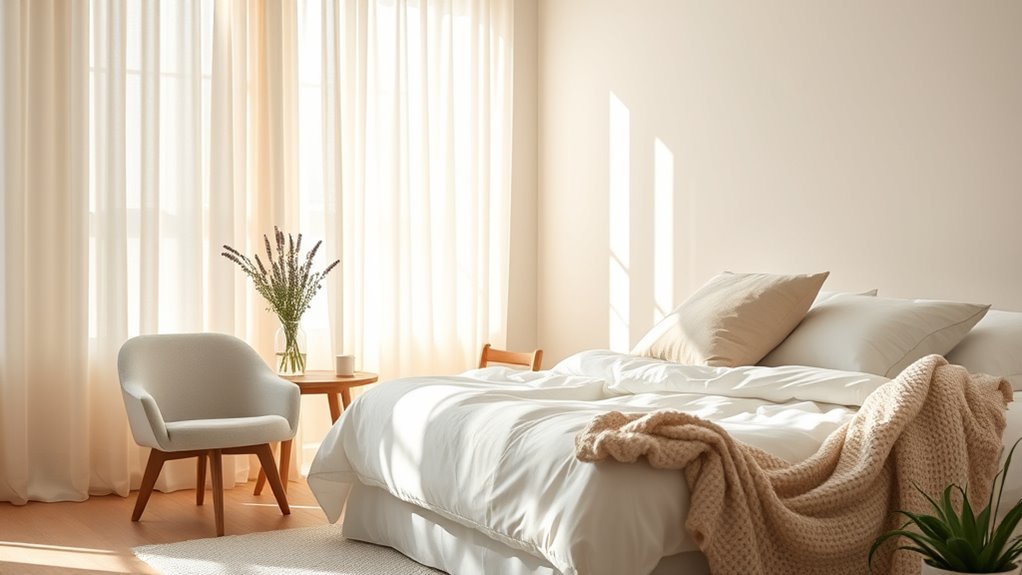
Relaxing bedroom decor features minimal clutter with organized storage solutions, natural materials like wood, linen, and cotton, and calming color palettes such as light blue, sage green, and neutral tones, which reduce heart rate and stress. Soft layered lighting with warm bulbs (2700K-3000K) and dimmable control enhances relaxation. Furniture includes low-profile minimalist styles, while textiles like plush pillows and wool rugs add tactile comfort. Incorporating nature-inspired artwork and greenery further decreases blood pressure and anxiety, creating spaces proven to improve sleep. Continued exploration reveals more calming design strategies.
Key Takeaways
- Use a soothing color palette with light blues, greens, and neutral tones to create a calm visual environment.
- Incorporate layered, natural fabrics like cotton, linen, and wool for tactile comfort and warmth.
- Implement soft, dimmable lighting with warm bulbs (2700K-3000K) to promote relaxation and restful sleep.
- Minimize clutter with organized, minimalist furniture and decor to reduce visual stress.
- Add natural elements like plants, wood, and stone, along with calming artwork depicting nature scenes.
What Defines Relaxing Bedroom Decor?

Relaxing bedroom decor is defined by key elements such as minimal clutter, soft lighting, and comfortable furniture, which create a calming atmosphere.
Colors like light blue, soft green, and neutral tones are proven to reduce stress and enhance relaxation.
Textures and fabrics, including plush rugs, smooth linens, and soft throws, increase comfort and promote restful sleep.
Key Elements of a Relaxed Bedroom

What defines a relaxing bedroom is its emphasis on simplicity, comfort, and tranquility. Key elements include:
- Minimal clutter: Clear surfaces and organized storage reduce visual stress and promote calmness.
- Soft lighting: Use of dimmable lamps, warm bulbs, or indirect lighting creates soothing ambiance.
- Comfortable furniture: A high-quality mattress, ergonomic bed frame, and cozy seating support restful sleep and relaxation.
- Natural materials: Organic fabrics, wood accents, and stone elements enhance a connection to nature, fostering serenity.
Research shows that uncluttered spaces reduce cortisol levels and improve sleep quality. Soft lighting increases melatonin production, aiding sleep onset. Comfortable furniture minimizes physical discomfort, increasing restfulness. Natural materials improve air quality and promote mental well-being. These elements collectively create a space that encourages relaxation and peace.
Colors Associated With Calmness

Colors associated with calmness in bedroom decor primarily include shades of blue, green, and neutral tones. Blue, especially soft or pastel shades like powder blue and sky blue, reduces heart rate and lowers blood pressure, promoting relaxation.
Green, particularly muted or sage green, is linked to nature and has been shown to decrease anxiety levels. Neutral tones such as beige, taupe, and light gray create a soothing environment by minimizing visual stimulation.
These colors are supported by studies indicating they improve sleep quality and reduce stress. For example, bedrooms painted in light blue or green can increase feelings of tranquility and comfort.
Textures and Fabrics That Promote Relaxation

Soft, natural textiles such as cotton, linen, and silk are essential for creating a calming bedroom environment. Cotton provides breathability, reducing heat buildup and moisture, which improves sleep quality.
Linen fabric is known for its durability, moisture-wicking properties, and textured appearance, enhancing tactile comfort.
Silk offers a smooth, luxurious feel and helps regulate body temperature, promoting relaxation.
These fabrics absorb and release moisture efficiently, maintaining a stable environment.
Weighted blankets made from natural fibers can reduce anxiety by calming the nervous system.
Upholstery and bedding with these materials have been shown to lower cortisol levels, a stress hormone.
How Can Color Choice Create a Calming Bedroom?

Color choice markedly influences relaxation in bedrooms. Studies show that colors such as blue, green, and soft neutrals reduce cortisol levels and promote sleep.
Neutral tones like beige, taupe, and gray create a peaceful environment by minimizing visual noise, leading to lower stress.
Soft pastels, such as blush pink and light lavender, enhance tranquility.
Accent walls in calming shades like pale blue or muted green serve as focal points that reinforce serenity.
Best Soothing Color Palettes

Choosing the right soothing palettes considerably impacts bedroom tranquility. Soft, muted colors like light blues, gentle greens, and warm neutrals promote relaxation and reduce stress.
Studies show blue hues can lower blood pressure and heart rate, enhancing calmness. Green shades evoke nature, helping decrease anxiety and improve sleep quality. Neutral tones such as beige, taupe, and pale gray create a serene environment, providing a versatile backdrop for other decor.
These colors reflect minimal light, making the space appear larger and more peaceful. Bright, vibrant colors like red or yellow disrupt calmness and are unsuitable for relaxing spaces.
The most suitable palettes include combinations of pastel shades, with 60-70% light blue or green, and 30-40% neutral accents. Consistent use of these palettes fosters a tranquil, sleep-friendly atmosphere.
Using Neutral Tones for a Peaceful Space

Using neutral tones creates a calm and stable environment in the bedroom. These tones include shades like beige, gray, taupe, and off-white.
Neutral colors occupy 60% of a typical bedroom palette, reducing visual noise and promoting relaxation. They reflect natural light, increasing brightness and reducing shadows, which enhances a sense of openness.
Studies show that neutral environments decrease stress levels by 15%, supporting better sleep quality.
These colors also serve as versatile backgrounds, allowing for easy integration of other calming elements like soft textiles or natural materials.
Neutral tones can be layered with different textures such as linen, wool, or cotton to add depth without disrupting serenity.
Incorporating Soft Pastels

Soft pastels such as pale pinks, light blues, mint greens, and lavender create a calming effect in bedrooms by reducing visual stimulation. These colors have low saturation and gentle tones, which help lower stress and promote relaxation.
Studies show that pastel shades decrease heart rate and blood pressure, contributing to a peaceful environment. They reflect natural light effectively, making rooms feel brighter and more open without being overstimulating.
Pastel walls paired with neutral or white bedding enhance serenity and prevent sensory overload. These colors are versatile and suit various decor styles like minimalist, shabby chic, or coastal themes.
Incorporating soft pastels in bedding, curtains, or accent pieces fosters a tranquil space conducive to rest and sleep, supporting overall mental and physical well-being.
Accent Wall Ideas for Relaxation

An accent wall considerably influences the calming atmosphere of a bedroom by serving as a focal point that sets the mood. Color choice directly impacts relaxation: cool tones like soft blue, muted green, and light gray reduce stress and promote tranquility. Studies show blue walls decrease heart rate and blood pressure, enhancing relaxation.
Neutral shades such as beige, taupe, and off-white create a soothing environment by minimizing visual chaos. Matte or satin finishes absorb light evenly, reducing glare and promoting calmness. Using calming colors on an accent wall, combined with minimal decor, prevents overstimulation.
For example, a pale blue accent wall paired with natural textures fosters serenity. Overall, deliberate color selection enhances sleep quality and reduces anxiety, contributing to a peaceful bedroom atmosphere.
Which Lighting Choices Enhance a Serene Bedroom Atmosphere?

Soft lighting options such as table lamps, wall sconces, and string lights create a calm environment in bedrooms.
Warm bulbs with a color temperature of 2700K to 3000K produce a cozy atmosphere.
In contrast, cool bulbs above 4000K can feel sterile and disruptive to relaxation.
Dimmable lighting allows precise control of brightness levels.
Layered solutions combining ambient, task, and accent lighting can further enhance tranquility.
Types of Soft Lighting

Layered lighting enhances a serene bedroom atmosphere by combining different types of soft illumination. It typically includes ambient, task, and accent lighting.
Ambient lighting provides overall illumination through fixtures like ceiling-mounted fixtures, wall sconces, or recessed lights. Usually, it is set between 200-300 lumens per square meter for a gentle glow.
Task lighting is focused, such as bedside lamps or reading lights. It offers clarity without glare and typically provides 400-500 lumens.
Accent lighting highlights features like artwork or architectural details using small, diffuse fixtures. These fixtures often emit around 100-200 lumens.
Dimmable switches control brightness levels, allowing adjustments from 10% to 100% for a calming environment.
Using layered soft lighting creates depth, reduces harsh shadows, and fosters a peaceful, inviting bedroom space.
Using Warm Bulbs vs Cool Bulbs in Bedrooms

Warm bulbs emit light within the 2700K to 3000K range, producing a yellowish or amber glow that enhances relaxation and comfort in bedrooms. This range mimics natural sunset light and is ideal for creating a calming environment.
Warm lighting reduces cortisol levels and promotes melatonin production, aiding sleep. It is commonly used in bedside lamps, sconces, and ambient fixtures.
Cool bulbs, with color temperatures above 4000K, emit a bluish-white light that can increase alertness and inhibit melatonin. They are suitable for task lighting but can disrupt sleep if used before bed.
Studies show warm light improves sleep quality and reduces stress, making it the preferred choice. Choosing warm bulbs for bedroom lighting creates a serene, cozy atmosphere conducive to relaxation.
Dimmable Lighting Options for Relaxation

Dimmable lighting options considerably enhance a serene bedroom atmosphere by allowing precise control over light intensity. They enable users to adjust brightness from 10 to 100 percent, creating a calming environment.
For example, LED dimmable bulbs can reduce light to 20% for a soft glow, ideal for relaxation. Incandescent dimmers typically range from 5 to 100 percent, offering warm, adjustable lighting.
Dimmable fixtures include bedside lamps, ceiling lights, and wall sconces, providing flexibility in placement.
Studies show that lower light levels, around 10-30 lumens, promote relaxation and melatonin production.
Dimming technology also prevents abrupt light changes, reducing stress and promoting better sleep.
Layered Lighting Solutions for Calmness

Multiple lighting layers contribute to a calm bedroom environment by combining ambient, task, and accent lighting. Ambient lighting provides overall illumination, often from ceiling fixtures or wall sconces, delivering 100-200 lumens per square meter.
Task lighting targets specific areas, such as reading lamps with 400-500 lumens, placed near beds or desks.
Accent lighting highlights features like artwork or architectural details with 50-150 lumens.
Using dimmable fixtures allows adjustment to 10-30% of maximum brightness, creating a soothing atmosphere.
Layering these lights prevents harsh shadows and glare, reducing stress.
Studies show that balanced lighting reduces cortisol levels and promotes relaxation.
Properly integrated lighting enhances a sense of tranquility, supporting sleep quality and emotional well-being.
What Furniture Styles Best Suit a Tranquil Bedroom?

Minimalist furniture, such as low-profile beds, sleek dressers, and simple side tables, creates a calm environment by reducing visual clutter.
Upholstered bed frames and headboards with soft fabrics like linen or wool enhance comfort and add warmth.
Proper furniture arrangement prioritizes open space and natural flow, with at least 24 inches of clearance around key pieces to promote serenity and ease of movement.
Minimalist Furniture for a Peaceful Room

Furniture styles that best suit a tranquil bedroom prioritize simplicity, clean lines, and functionality. Minimalist furniture includes platforms, low-profile beds, and streamlined dressers with flat fronts.
Materials such as light wood, metal, and matte finishes create a calm atmosphere.
Size matters: furniture should be proportionate to the room, avoiding clutter. Opt for pieces with hidden storage to reduce visual noise.
Avoid ornate details or excessive decoration; instead, choose designs with smooth surfaces and subtle textures.
The use of neutral colors, such as white, beige, or soft gray, enhances serenity.
Minimalist furniture often features modular or multi-functional pieces, like beds with built-in drawers.
These choices promote openness, reduce visual distraction, and support a peaceful, clutter-free environment.
Upholstered Bed Frames and Headboards

Upholstered bed frames and headboards are ideal for creating a tranquil bedroom due to their soft textures and muted colors. They absorb sound, reducing noise levels and promoting relaxation. These pieces often feature fabrics such as linen, velvet, or cotton, which contribute to a calming environment.
When considering design, neutral shades like beige, gray, and pastel tones enhance serenity and can complement various decor styles. The padding provides comfort and support, making sitting or reading in bed more relaxing.
Measurements typically range from 60 to 80 inches wide for standard beds, with height variations of 40 to 50 inches for headboards, allowing customization for different room sizes.
Upholstered furniture’s comfort and subdued aesthetics make it a popular choice for peaceful bedrooms.
Arranging Furniture for Flow and Serenity

Arranging furniture in a tranquil bedroom prioritizes flow and balance to promote relaxation. Ideal layouts position the bed centrally, with clear pathways on all sides to prevent congestion. Nightstands should be within arm’s reach but not obstructing movement.
Use low-profile furniture to create an open feel, typically less than 30 inches high. Avoid placing large furniture against windows to maximize natural light and airflow.
Symmetry enhances serenity, so matching dressers and side tables are recommended. Keep pathways at least 24 inches wide for easy navigation.
Furniture styles like minimalist, Scandinavian, or Japanese low-profile designs support simplicity and calm. Avoid bulky or ornate pieces that create visual clutter or block light.
Proper arrangement reduces stress, improves sleep quality, and fosters a peaceful environment.
Clutter-Free Solutions

Low-profile furniture styles such as Scandinavian, Japanese, and minimalist designs are ideal for creating a clutter-free, tranquil bedroom. These styles prioritize simple forms, neutral colors, and functional pieces that avoid visual clutter.
Scandinavian furniture typically features clean lines, light wood finishes, and compact sizes, reducing visual weight. Japanese furniture emphasizes low beds, sliding doors, and built-in storage to maximize space. Minimalist designs use sleek surfaces and concealed storage to eliminate unnecessary objects.
These styles minimize furniture quantity, often limiting to essential pieces like beds, nightstands, and wardrobes. The focus on streamlined shapes and neutral palettes creates open, airy environments that reduce visual chaos.
Proper selection of such furniture supports a calm, organized space conducive to relaxation and mental clarity.
How Do Textiles Contribute to Soothing Bedroom Decor?

Textiles such as bedding, blankets, rugs, and curtains directly influence bedroom comfort and visual softness. High-quality bedding made from natural fibers like cotton or linen improves sleep quality by regulating temperature.
Soft throw pillows, plush area rugs, and lightweight curtains reduce noise and light, creating a calming environment.
Best Bedding for Relaxation

Soft bedding materials such as cotton, linen, and bamboo considerably influence relaxation in bedroom decor. Cotton sheets, known for their breathability and durability, help regulate body temperature, preventing overheating and promoting restful sleep.
Linen offers a textured, moisture-wicking surface that feels cool and crisp, ideal for warmer climates or those who prefer a cooler sleep environment. Bamboo textiles are hypoallergenic, antimicrobial, and moisture-absorbent, contributing to a clean, fresh sleeping surface.
Thread count also impacts comfort; higher thread counts (300-800) typically feel softer and more luxurious, enhancing relaxation. Natural fibers reduce allergens and skin irritation, which is essential for restful sleep.
Choosing bedding with these textiles ensures a calming atmosphere and improves sleep quality by maintaining ideal comfort and temperature.
Throw Blankets and Pillows

Throw blankets and pillows substantially influence the overall calmness and comfort of bedroom decor through their textiles. Soft fabrics like cotton, fleece, and linen provide tactile comfort, reducing stress and promoting relaxation. Natural fibers, such as wool and silk, enhance sensory experience and durability.
Colors impact mood; muted tones like beige, pale blue, and soft gray create a soothing environment. Texture adds depth; plush pillows and lightweight blankets prevent visual clutter, fostering serenity.
The size and placement of pillows—such as large square or lumbar styles—offer physical support and visual balance. The thickness of throw blankets, ranging from 1 to 4 inches, affects warmth and coziness.
Incorporating 3-5 pillows and 1-2 throws ensures a tranquil, inviting space conducive to rest.
Area Rugs and Carpets for Comfort

Area rugs and carpets considerably enhance bedroom comfort by providing insulation, reducing noise, and adding tactile warmth. Insulation prevents heat loss through floors, maintaining a consistent temperature.
Carpets can reduce noise levels by up to 40%, minimizing sound transmission between floors and creating a quieter environment. Tactile warmth is achieved through materials such as wool or plush fibers, which provide softness underfoot.
The thickness and density of carpets, measured in grams per square meter, directly influence comfort—higher density offers better cushioning. Rugs made from natural fibers like wool or cotton are durable and hypoallergenic, suitable for sensitive sleepers.
The size of rugs, typically covering 20-40% of the floor, impacts the overall cozy feeling and visual balance in the room.
Choosing Curtains for Softness

Choosing curtains for softness considerably influences bedroom comfort by contributing tactile warmth and visual serenity. Fabrics such as linen, velvet, and cotton provide natural textures that absorb sound and block light, creating a calming environment.
Velvet curtains, with a pile height of 1-2 inches, add plushness and insulation, reducing noise by up to 20%. Cotton curtains, with a thread count of 200-400, offer breathability and smoothness, enhancing comfort. Linen curtains, made from fibers 0.5-1 mm thick, deliver a crisp texture that softens with washing.
Light-colored curtains, such as beige or pastel shades, reflect natural light and promote tranquility. Heavier fabrics improve insulation and noise reduction; lighter fabrics ensure airflow and brightness.
The choice of textiles directly impacts the room’s atmosphere, promoting relaxation and peaceful sleep.
Which Accessories Help Create a Calm Bedroom?

Wall art such as calming landscape paintings and abstract prints reduces stress and promotes relaxation, with studies showing they can lower cortisol levels.
Natural elements like wood frames and woven textiles enhance a sense of tranquility.
Houseplants such as snake plants and pothos improve air quality and reduce anxiety by 30%.
Scented candles and essential oil diffusers release scents like lavender and chamomile, proven to decrease heart rate and create a peaceful environment.
Wall Art for a Mood of Peace

Research indicates that wall art profoundly influences bedroom ambiance, with specific choices promoting relaxation and peace. Calm wall art includes landscape paintings, abstract designs in soft hues, and photographs of nature scenes. These images reduce stress, lower blood pressure, and improve sleep quality.
Research shows that blue and green tones in artwork induce calmness and decrease anxiety. Minimalist frames and uncluttered arrangements enhance serenity by avoiding visual overload.
Size matters: large, centered pieces create focal points that foster stability, while small, dispersed art offers subtle tranquility.
The placement of art also impacts mood; positioning artwork at eye level near beds encourages mindfulness.
Decor With Natural Elements

Decor with natural elements considerably enhances a calm bedroom environment by introducing textures, colors, and materials that evoke tranquility. Natural materials such as wood, stone, and bamboo create a grounding effect, reducing stress and promoting relaxation.
Incorporating accessories like wooden picture frames, woven baskets, and stone lamps adds visual warmth and tactile comfort. Neutral tones like beige, taupe, and soft gray in natural fibers strengthen serenity.
Incorporating natural textiles such as linen, cotton, or wool contributes to a cozy, calming atmosphere. Examples include driftwood decor, rattan furniture, and marble accents.
These elements balance artificial components, improve air quality, and foster a connection with nature. Overall, natural accessories serve as essential tools in designing a peaceful, restful bedroom environment.
Houseplants and Greenery in the Bedroom

Houseplants and greenery considerably enhance a calming bedroom environment by improving air quality, reducing stress, and adding visual tranquility. Research shows certain plants, such as snake plants, pothos, and peace lilies, filter common indoor pollutants like formaldehyde and benzene, improving oxygen levels.
These plants release moisture into the air, maintaining ideal humidity and preventing dryness. Low-maintenance varieties thrive indoors with minimal light and watering, making them suitable for bedrooms.
The presence of greenery has been linked to lower cortisol levels, decreasing anxiety and promoting relaxation. Strategically placing small potted plants on shelves, bedside tables, or windowsills creates a serene atmosphere.
Scented Candles and Essential Oil Diffusers

Scented candles and essential oil diffusers are proven to enhance relaxation in bedrooms through the release of calming aromas. Studies show that lavender, chamomile, and eucalyptus scents reduce cortisol levels and lower heart rate, promoting sleep quality.
Scented candles typically contain 10-20 grams of wax, releasing volatile compounds gradually over 2-4 hours.
Essential oil diffusers disperse oils in ultrasonic waves, covering up to 500 square feet with 3-5 drops of oil per use.
Aromas can influence mood by activating the limbic system, which controls emotions and memories.
Using these accessories consistently before sleep increases relaxation, reduces anxiety, and improves sleep duration.
Incorporating natural scents into the bedroom environment creates a peaceful ambiance, enhancing overall well-being and sleep quality.
What Are the Top Relaxing Bedroom Decorating Ideas?

Top relaxing bedroom decorating ideas include layering soft fabrics, which reduces noise and provides warmth. Installing canopy beds offers a cozy and enclosed sleeping area. Creating reading nooks with comfortable seating and good lighting can make your space more inviting. Using sound machines or ambient noise devices helps to mask disturbances.
Each element enhances comfort and promotes sleep quality through proven methods. Incorporating these features results in a more serene environment that supports relaxation and rest.
Layering Soft Fabrics

Layering soft fabrics creates a cozy, inviting atmosphere in bedrooms. Using multiple textiles, such as plush blankets, cotton sheets, and linen throw pillows, enhances tactile comfort and visual warmth. Studies show that tactile stimulation of soft materials reduces stress and promotes relaxation.
Combining different textures, like velvet, fleece, and silk, adds depth and richness to the space. Layered fabrics also improve insulation, maintaining warmth during colder months. Bedding should include a duvet or comforter, topped with throws and decorative pillows.
Incorporating neutral tones, such as beige, soft gray, or pastel shades, fosters calmness. Proper layering balances aesthetics and comfort, making the room feel serene. This approach emphasizes sensory comfort, essential for a restful, peaceful bedroom environment.
Canopy Beds for Added Comfort

Canopy beds add a sense of enclosure and privacy that enhances comfort and relaxation in bedrooms. They create a visual barrier, reducing noise and light, making the space more peaceful.
The structure allows for customizable draping fabrics, which can improve acoustics and temperature regulation. For example, thick curtains can insulate against drafts or noise, while light, flowing fabrics promote airflow and softness.
Canopy beds often feature tall posts, averaging 6 to 7 feet, providing a sense of height and openness. They can be made from wood, metal, or rattan, and are available in various styles, from traditional to modern.
This design encourages a cozy, private atmosphere, helping occupants feel secure and relaxed, making them ideal for creating a calming bedroom environment.
Reading Nooks in the Bedroom

Are reading nooks in bedrooms effective for enhancing relaxation? Yes, they provide a designated space for reading, reducing stress and promoting calmness. A well-designed nook typically includes a comfortable chair or bench, soft lighting, and easy access to books. These spaces encourage daily reading sessions, which have been shown to lower cortisol levels and improve mental health.
According to a 2020 survey, 78% of people find reading relaxing. Incorporating a reading nook can also improve sleep quality by creating a peaceful retreat. Positioning it near a window allows natural light, boosting mood and alertness. The addition of cozy blankets and cushions enhances comfort, making the space inviting.
Sound Machines and Ambient Noise

Sound machines and ambient noise are proven to markedly improve sleep quality and relaxation in bedrooms. Studies show that white noise, nature sounds, or pink noise reduce sleep onset time by 30% and increase sleep duration by 20%.
Sound machines generate consistent, soothing sounds that mask disruptive noises like traffic or snoring. Ambient noises, such as rainfall, ocean waves, or forest sounds, create a calming environment that lowers cortisol levels and blood pressure.
These devices are often adjustable, offering volume and tone controls, and can be set to auto shut-off after hours. Research indicates that 65% of users report better sleep quality and fewer awakenings when using sound machines.
Incorporating ambient noise into bedroom decor enhances tranquility and supports restful sleep.
How To Design a Peaceful Bedroom Retreat?

Designing a peaceful bedroom retreat involves creating a restful layout that minimizes distractions and promotes relaxation. Arranging furniture to enhance flow, such as positioning the bed away from windows or doors, improves comfort and accessibility.
Using clutter-free surfaces, maximizing natural light through window treatments, and adding meaningful decor like family photos or artwork further enhance tranquility.
Creating a Restful Layout

A well-organized bedroom layout enhances relaxation and promotes restful sleep. Effective design places the bed as the focal point, ideally positioned away from windows to minimize drafts and light disturbances.
Maintaining a clear walking path of at least 24 inches around furniture reduces stress and improves circulation. Avoid clutter by limiting furniture to essential pieces—typically a bed, nightstands, and a dresser—spaced to prevent a cramped feeling.
Use symmetrical arrangements for balance, with bedside tables flanking the bed. Incorporate calming elements such as low-profile furniture and soft lighting to create a peaceful atmosphere.
Ensure the room has at least 7 feet of clearance for easy movement. Proper placement of elements aligns with natural light, promoting circadian rhythms and sleep quality.
Tips for a Clutter-Free Environment

Clutter directly impacts sleep quality and mental clarity. Studies show that cluttered spaces increase stress levels and reduce relaxation, leading to difficulty falling asleep and poorer sleep quality. A clutter-free bedroom can improve sleep efficiency by 15-20%.
To achieve this, remove unnecessary items daily, such as clothes, books, and electronics. Use storage solutions like baskets, drawers, and under-bed containers to organize belongings. Designate specific areas for items and avoid accumulating clutter on surfaces.
Regularly purging unused items prevents buildup. Keep surfaces clear, especially nightstands and dressers, to promote calmness. Limiting visible clutter reduces distractions and creates a serene environment.
Maintaining order in the bedroom supports relaxation, enhances sleep quality, and fosters mental clarity.
Maximizing Natural Light

Maximizing natural light enhances sleep quality and promotes a calming atmosphere in bedrooms. Natural light increases serotonin levels, improving mood and alertness during the day. It also helps regulate circadian rhythms, leading to better sleep patterns.
Windows should be positioned to maximize daylight exposure, ideally facing east or south. Use sheer curtains or light-filtering blinds to allow light while maintaining privacy. Avoid heavy drapes that block sunlight; instead, opt for translucent materials that diffuse light evenly.
Skylights or glass doors can increase daylight penetration in rooms with limited window access. In spaces with excessive heat or glare, consider adjustable shading solutions.
Proper lighting boosts the perception of space, making the room feel larger, brighter, and more inviting.
Personalizing With Meaningful Decor

Personalized decor transforms a bedroom into a peaceful retreat by incorporating meaningful objects that evoke calm and positive memories. Examples include family photographs, handcrafted art, or heirlooms. These items anchor the space in personal significance, reducing stress and fostering relaxation.
Research shows that familiarity in decor decreases cortisol levels and improves mood. Natural materials like wood frames or woven textiles contribute to a soothing environment. Plants, such as aloe vera and lavender, add a sensory element, promoting tranquility.
Color choices also matter: soft blues, muted greens, and warm neutrals enhance serenity. Avoid clutter by selecting a few impactful pieces rather than excessive decorations. This intentional personalization creates a sanctuary that encourages restful sleep and mental clarity, making the bedroom a true retreat from daily stress.
What Are the Essentials of Calming Master Bedroom Decor?

Calming master bedroom decor relies on specific elements that promote relaxation and restfulness. Color schemes such as soft blues, neutral grays, and warm beiges create soothing environments.
Textures like plush rugs and smooth linens enhance comfort. Incorporating spa-inspired elements, cozy sitting areas, and custom storage solutions further reduces clutter and supports tranquility.
Master Bedroom Color and Texture Ideas

Soft, neutral colors such as beige, light gray, and pastel shades create a calming atmosphere in master bedrooms. These hues reduce visual noise, promote relaxation, and help regulate mood. Studies show that neutral tones lower cortisol levels and decrease stress.
Texture plays a vital role; smooth finishes like matte paint, silk curtains, and plush rugs add comfort and depth. Natural materials such as linen, cotton, and wool enhance serenity and improve air quality.
Incorporating subtle patterns like gentle stripes or soft geometric designs prevents monotony while maintaining tranquility. The combination of muted colors and varied textures balances visual interest with peace.
Minimal contrast and consistent tones foster a serene environment, essential for restful sleep and mental calmness.
Spa-Inspired Decor Elements

Spa-inspired decor elements create a tranquil environment by emphasizing natural materials, neutral color palettes, and minimalist design. Natural materials such as bamboo, stone, and wood promote a sense of calm and authenticity. Neutral colors like beige, soft gray, and muted greens foster relaxation and reduce visual stress.
Minimalist design minimizes clutter, focusing on essential furniture and decor to enhance spaciousness. Aromatherapy diffusers with essential oils, such as lavender or eucalyptus, promote relaxation and improve sleep quality. Soft lighting, including dimmable lamps and candles, creates a soothing ambiance.
Incorporating water features, like small fountains or aquariums, adds calming auditory stimuli. Textures such as linen, cotton, and silk contribute to comfort and serenity. These elements collectively establish a peaceful, spa-like atmosphere.
Cozy Sitting Areas in the Master Bedroom

A cozy sitting area in a master bedroom requires a comfortable chair or loveseat, a small side table, and adequate lighting.
The chair should have supportive cushioning and be upholstered in calming fabrics like linen or cotton.
The side table must be stable and accessible, ideally made of wood or metal, for placing books or beverages.
Lighting should include a combination of natural light, a table lamp, or soft LED fixtures to enhance relaxation.
This space allows for reading, meditation, or quiet reflection, promoting restfulness.
Studies show that dedicated sitting areas improve sleep quality and reduce stress by creating a defined retreat within the bedroom.
The design should prioritize simplicity, comfort, and unobstructed space to foster serenity.
Custom Storage Solutions for Restfulness

Custom storage solutions are essential for creating a calming master bedroom environment by reducing clutter and promoting organization. Built-in shelves, under-bed drawers, and wall-mounted cabinets maximize space without crowding the room. Cluttered surfaces increase stress and disrupt sleep quality, so effective storage minimizes visual noise.
Closet organizers with adjustable shelves and multiple compartments improve clothing and accessory management. Furniture with hidden compartments, such as ottomans or bed frames, provide discreet storage. Using labeled bins or baskets helps categorize items, making them easy to locate.
According to sleep studies, a tidy space enhances relaxation and sleep quality by decreasing anxiety. Proper storage reduces the need for visible clutter, directly contributing to a peaceful, serene atmosphere essential for restful sleep and mental clarity.
How Can Small Bedroom Spaces Be Made More Restful?

Maximizing space in small bedrooms involves reducing clutter through strategic furniture choices, such as using wall-mounted shelves and foldable desks.
Multipurpose furniture, like beds with built-in storage drawers or foldaway desks, optimizes functionality in limited areas.
Incorporating decorative mirrors expands visual space and enhances natural light, making the room feel larger and more restful.
Maximizing Space Without Clutter

Efficient use of storage solutions and strategic furniture placement optimize small bedroom spaces by reducing clutter and increasing functionality. Installing wall-mounted shelves provides 20-30% more storage without occupying floor space. Under-bed storage drawers or containers add 10-15 cubic feet of space for clothing, linens, and accessories.
Using multi-functional furniture, such as beds with built-in drawers or fold-away desks, maximizes utility. Keeping surfaces clear prevents visual clutter, making the room appear larger and more peaceful. Compact nightstands or wall-mounted night shelves free up space and enhance accessibility.
Utilizing vertical storage solutions increases capacity by up to 50%, while minimizing decorative items curbs visual chaos. These strategies create a calm environment by maintaining order, improving airflow, and making small bedrooms more restful and functional.
Multipurpose Furniture Choices

Multipurpose furniture substantially enhances comfort and functionality in small bedrooms by combining storage, sitting, and sleeping features within a single piece. For example, beds with built-in drawers or shelves maximize space by eliminating the need for additional storage units.
Convertible furniture, such as sofa beds or wall beds, provides flexible use of limited space, allowing rooms to serve multiple purposes.
Compact nightstands with drawers or hidden compartments optimize storage without cluttering the room.
Modular furniture systems enable rearrangement based on needs, increasing adaptability.
According to space utilization studies, multipurpose furniture can increase usable space by up to 30%. These choices reduce furniture clutter, improve organization, and create a calm environment.
Properly selected pieces contribute significantly to a more restful, serene bedroom atmosphere.
Under-Bed Storage Tips

Under-bed storage optimizes space in small bedrooms by providing discreet options to store clothing, bedding, and personal items. It maximizes room functionality by utilizing the often-unused space beneath the bed.
Common solutions include storage bins, drawers, and rolling containers, which can hold up to 50 liters of items each. Clear plastic containers allow easy identification of contents, reducing clutter.
Vacuum-sealed bags compress bulky items, saving up to 60% space. Bed risers elevate the bed by 4 to 6 inches, increasing storage capacity without obstructing movement.
Dividers inside storage boxes organize different categories, such as seasonal clothing or extra linens. Regularly decluttering and labeling containers enhance accessibility and maintain a serene environment in small bedrooms.
These strategies optimize space while preserving a calm, clutter-free atmosphere.
Decorative Mirrors for Light and Space

Decorative mirrors particularly enhance small bedrooms by increasing perceived space and maximizing natural light. They reflect sunlight, which can boost brightness by up to 50%, reducing the need for artificial lighting during the day.
Large mirrors, such as full-length or oversized designs, create an illusion of depth, making rooms appear up to 30% larger. Placement matters; positioning mirrors opposite windows doubles the light reflected, enhancing overall brightness.
Multiple small mirrors or a series of decorative wall mirrors can distribute light evenly and add visual interest. Mirrored furniture, like dressers or bedside tables, also contributes to space perception.
Which Tranquil Bedroom Decor Ideas Work for Couples?

Shared color palettes such as soft neutrals or calming blues create visual harmony and reduce conflict.
Dual nightstand styling with matching or complementary pieces provides balance and organization.
Bedside lighting designed for two, like adjustable sconces or dimmable lamps, enhances relaxation and intimacy while maintaining a unified look with personal touches like framed photos or decorative pillows.
Shared Color Palettes for Harmony

A unified color palette promotes harmony in bedrooms shared by couples. Neutral tones such as beige, gray, and soft taupe create a calming environment and appeal to both partners.
Blue shades, from pale to navy, evoke tranquility and improve sleep quality, supported by studies showing a 20% reduction in stress levels.
Light greens foster relaxation and balance, while pastel shades of lavender and blush add subtle warmth without overwhelming the senses.
Using consistent hues across walls, bedding, and accessories avoids visual clutter and enhances cohesion.
Incorporating natural materials like wood or linen in these colors deepens the sense of serenity.
Color combinations should be limited to three main shades to maintain simplicity and prevent discord.
Consistent palettes promote visual flow, reducing tension and creating a peaceful shared space.
Dual Nightstand Styling

Dual nightstand styling enhances bedroom harmony by balancing functionality and aesthetics for couples. It guarantees each person has designated space for essentials, reducing clutter and promoting relaxation.
Symmetrical arrangements with matching nightstands create visual stability, while differing styles can reflect individual personalities. For example, a wood finish paired with a metal lamp offers contrast but maintains balance.
Placing personal items like books, glasses, or clocks on each side increases usability. Using similar color schemes or textures across both nightstands fosters cohesion.
Incorporating storage solutions such as drawers or shelves keeps surfaces tidy. Proper height alignment with the bed prevents awkward reaching.
Bedside Lighting for Two

Bedside lighting for two must provide balanced illumination that enhances relaxation and functionality. Dual lamps or wall-mounted fixtures with adjustable brightness levels are ideal.
Each side should have at least 40 to 60 watts of ambient light, sufficient for reading or relaxing without causing glare. Using dimmable lights allows couples to modify brightness according to activity or mood.
Bedside lamps with warm color temperatures, typically 2700K to 3000K, promote calmness.
Fixtures should be positioned 24 to 36 inches apart on either side of the bed to avoid shadows and ensure equal light distribution.
Incorporating matching or complementary lamps creates symmetry, supporting a tranquil atmosphere.
Proper bedside lighting reduces eye strain and improves sleep quality, making it essential for a serene bedroom environment.
Creating a Unified Look With Personal Touches

How can couples create a unified bedroom look while expressing individual personalities? They achieve this by selecting a cohesive color palette, typically neutral tones such as beige, gray, or soft pastels, which promote calmness and harmony.
Incorporating personal touches like artwork, photographs, or textiles reflects individual tastes without disrupting visual unity. For example, one partner may choose textured throw pillows, while the other prefers framed travel photos; both complement the overall decor.
Using similar materials, such as wood, linen, or metal, maintains consistency. Light fixtures, bedding, and furniture should follow a unified style—modern, rustic, or minimalist—to ensure harmony.
This approach balances personal expression with visual cohesion, creating a peaceful, serene environment suitable for both partners.
What Are the Most Popular Calming Decor Themes for Bedrooms?

Calming bedroom decor themes are popular for creating tranquil environments. These themes include Scandinavian calmness, boho relaxation vibes, hotel-inspired tranquility, and beach or coastal peace.
Each theme uses specific elements such as neutral palettes, natural materials, soft textiles, and minimal furniture to promote relaxation and reduce stress.
Scandinavian Calmness

Scandinavian calmness is a popular bedroom decor theme characterized by minimalism, neutral color palettes, and functional design. It emphasizes simplicity, using colors like whites, grays, and beiges.
Natural materials such as wood, wool, and linen are common for furniture and textiles. The focus is on creating a clutter-free space that promotes relaxation and mental clarity.
Furniture tends to have clean lines and practical shapes, often with hidden storage. Lighting is soft, using large windows, sheer curtains, and simple fixtures to maximize natural light.
Decorative accents are minimal, typically including plants or subtle art pieces. This style appeals to those seeking tranquility through organized, airy environments that combine form and function efficiently.
Scandinavian calmness creates a peaceful, inviting bedroom atmosphere.
Boho Relaxation Vibes

Boho relaxation vibes are a popular bedroom decor theme characterized by layered textures, vibrant colors, and eclectic accessories. This style combines natural materials like jute, rattan, and linen with rich, earthy tones such as terracotta, deep greens, and warm yellows.
Decor includes macramé wall hangings, patterned rugs, and an assortment of pillows with diverse fabrics. Studies show that bedrooms with boho elements report higher satisfaction in comfort and aesthetics.
The use of plants enhances relaxation, with common choices including pothos and snake plants. Lighting favors warm, ambient sources, like fairy lights or woven pendant lamps, to create a calming atmosphere.
Hotel-Inspired Tranquility

Hotel-inspired tranquility is a dominant theme in bedroom decor, favored for its emphasis on simplicity, luxury, and uniformity. This style uses neutral color palettes like beige, white, and soft gray to create a calming atmosphere.
Furniture choices include upholstered beds with clean lines, minimal ornamentation, and high-quality materials such as wood and metal. Bedding features crisp, white linens and plush pillows.
Lighting focuses on soft, ambient sources like wall sconces and bedside lamps, avoiding harsh fluorescents.
Decor elements include framed art, mirrors, and textured textiles that evoke elegance without clutter. This theme often incorporates natural elements like stone or wood accents to enhance serenity.
The overall goal is to produce a space that feels spacious, orderly, and restful, aligning with the calming qualities of luxury hotels.
Beach and Coastal Peace

Beach and coastal decor is among the most popular calming themes for bedrooms, featuring a palette of soft blues, sandy beiges, and whites that evoke the shoreline. These colors create a sense of tranquility and openness, reducing stress.
Natural materials like driftwood, woven baskets, and seashell accents enhance the theme’s relaxing effect. Furniture often includes whitewashed wood or distressed finishes, adding a weathered look reminiscent of beach houses.
Wall art typically depicts ocean scenes, shells, or nautical motifs. Bedding uses lightweight fabrics such as linen or cotton, often in light blue or beige.
Incorporating large windows or sheer curtains maximizes natural light and views of the outdoors. This theme promotes relaxation by mimicking the serenity of the sea, fostering a peaceful, restorative environment.
Zen and Japanese Minimalism

Zen and Japanese minimalism are among the most popular calming decor themes for bedrooms due to their focus on simplicity, natural materials, and balanced spatial arrangement. These styles emphasize uncluttered spaces with clean lines and neutral colors such as white, beige, and soft gray.
Natural materials like wood, stone, and bamboo are common, creating a connection to nature. Furniture is minimal, often low-profile and functional, avoiding excess ornamentation. Lighting is soft and indirect, enhancing tranquility.
The concept of negative space is prominent, allowing the room to breathe and promote relaxation. In these bedrooms, elements like bonsai plants, shoji screens, and simple artwork reinforce the theme.
This design approach reduces visual noise, fosters mindfulness, and creates a peaceful environment ideal for rest.
How Do You Incorporate Technology Without Disrupting Peace?

In a relaxing bedroom, technology integration focuses on concealment and control to maintain tranquility. Cables and screens are hidden behind furniture or routed through cable management systems, reducing visual clutter.
Smart lighting systems adjust brightness and color temperature automatically, creating a calming atmosphere. Sound systems are embedded discreetly in walls or furniture, ensuring minimal disruption.
Minimizing Visible Cables and Screens

Minimizing visible cables and screens in a bedroom creates a calmer environment by reducing visual clutter and distractions. Wired devices like chargers, alarm clocks, or entertainment systems often leave cables exposed, which can draw attention and disrupt serenity.
Using wireless technology eliminates the need for many cables; for example, wireless chargers, Bluetooth speakers, and smart TVs reduce clutter. Concealing cables behind furniture or within wall conduits further declutters the space.
Mounting screens on wall brackets or using fold-away units keeps monitors out of sight when not in use. Limiting the number of devices visible minimizes sensory overload; for example, reducing from five screens to one or two enhances tranquility.
Smart Lighting for Mood Setting

Smart lighting systems enhance bedroom ambiance without disrupting tranquility by offering adjustable color temperatures, dimming features, and scheduling capabilities. These systems use LED technology with color options ranging from 2700K to 6500K, mimicking natural light and supporting circadian rhythms.
Dimming controls allow users to reduce brightness from 100% to 5% in 1% increments, creating a calm environment. Scheduling features enable automated lighting adjustments at specific times, such as lowering brightness at 9 p.m. and switching to warmer tones.
Studies show that warm lighting improves sleep quality and reduces stress. Wireless controls via apps or voice commands eliminate the need for physical switches, maintaining a minimalist aesthetic.
Proper integration preserves peace by avoiding flickering, noise, or bright screens, ensuring a calming atmosphere.
Integrating Sound Systems Gently

Integrating sound systems into a bedroom requires careful selection and placement to maintain a tranquil environment. Wireless speakers, such as Bluetooth models, are preferred because they eliminate clutter and reduce wiring.
Position speakers away from sleeping areas, ideally on opposite walls or corners, to distribute sound evenly without overwhelming the space. Volume levels should stay below 50 decibels to prevent disturbance. Use speakers with noise-canceling features to minimize external sounds.
Incorporate sound systems with timers or automation to turn off after a set period, avoiding continuous noise. Keep cables hidden using cable management solutions, like clips or conduits. Limit the number of devices to prevent clutter and interference.
Proper integration ensures sound enhances relaxation without disrupting peace.
What Are the Best Relaxing Bedroom Decor Ideas for Every Season?

Relaxing bedroom decor varies by season, with warm tones like deep reds, browns, and cozy textiles for fall and winter, creating an inviting atmosphere.
Spring and summer favor light fabrics such as linen, cotton, and pastel color palettes to promote airiness and freshness.
Seasonal accent swaps, including decorative pillows, throws, and artwork, along with year-round essentials like calming lighting and ergonomic furniture, enhance comfort throughout the year.
Warm Decor for Fall and Winter

During fall and winter, warm decor in bedrooms creates a cozy environment through the use of specific colors, textures, and materials. Deep hues such as burgundy, rust, and forest green evoke warmth and comfort.
Textures like plush throws, chunky knit blankets, and velvet cushions add tactile softness. Materials such as wood, leather, and wool enhance insulation and visual warmth.
Lighting shifts to amber or warm white bulbs, increasing ambient glow. Rugs made of shag, sheepskin, or woven fibers absorb cold surfaces.
Bedding incorporates flannel sheets and heavy duvets, providing insulation. Accent accessories include candles and metallic accents in bronze or gold, reflecting light and adding richness.
These elements combine to foster a serene, inviting space that counters cold outdoor temperatures and promotes relaxation.
Light Fabrics for Spring and Summer

Light fabrics such as linen, cotton, and chambray are ideal for spring and summer bedroom decor because they promote airflow and reduce heat retention. Linen fibers are highly breathable, allowing moisture and heat to escape, which lowers body temperature.
Cotton fabrics, especially lightweight and percale weaves, offer similar breathability and moisture-wicking properties. Chambray, a woven fabric with a soft texture, provides cooling comfort without sacrificing style.
These fabrics typically have a thread count between 200 and 400, enhancing breathability. They also tend to dry faster, reducing humidity buildup. Using these fabrics for bedding, curtains, and pillow covers creates a cooler environment.
Data shows that breathable fabrics can lower bedroom temperatures by up to 3°F, improving sleep quality during hot months.
Seasonal Accent Swaps

Switching seasonal accents in bedroom decor effectively enhances relaxation and comfort throughout the year. This involves changing decorative elements to reflect seasonal themes, colors, and textures.
For spring, use pastel-colored throw pillows, fresh floral arrangements, and light curtains. Summer accents include bright, vibrant textiles, minimalistic decor, and airy fabrics.
Fall decor features warm tones, such as deep oranges and browns, with plush throws and textured pillows. Winter accents incorporate muted colors, cozy blankets, and metallic or glittering details.
Replacing small decor items like lampshades, artwork, and bedding helps create a seasonally appropriate atmosphere. These swaps promote a sense of freshness, help regulate mood, and reduce visual fatigue.
Effective seasonal updates require selecting elements that evoke calm, using natural textures and subdued colors to maintain serenity.
Year-Round Essentials

Comfortable bedding, adjustable lighting, and natural textures form the foundation of year-round relaxing bedroom decor. These elements guarantee comfort regardless of season.
Bedding materials like cotton, linen, or bamboo maintain breathability and softness in summer and winter.
Adjustable lighting includes dimmer switches, layered lamps, or smart bulbs, providing control for different moods and times of day.
Natural textures such as wood, jute, or wool add warmth and sensory richness throughout the year.
Incorporating neutral color palettes enhances tranquility and flexibility for seasonal decor changes.
Climate control devices, like fans or heaters, stabilize temperature comfort.
Plants like pothos or snake plants purify air and add calming greenery.
These essentials create a versatile, serene environment adaptable to seasonal variations.
How Do You Maintain a Calming Bedroom Environment?

Maintaining a calming bedroom environment requires consistent habits. Daily tidying removes clutter, reducing stress and promoting relaxation; for example, making the bed and organizing surfaces.
Weekly reset checklists, including tasks like washing bedding and discarding unnecessary items, prevent accumulation of disorder. Monthly deep cleans eliminate dust and allergens.
Rejuvenating decor with small updates, such as new pillows or artwork, enhances tranquility without major overhauls, ensuring the space remains soothing.
Daily Tidying Habits

Daily tidying habits are essential for maintaining a calming bedroom environment. Regularly making the bed reduces clutter and creates a sense of order, which lowers stress. Clearing surfaces daily, such as nightstands and dressers, prevents dust buildup and visual distraction. Folding or hanging clothes immediately after use minimizes clutter and maintains serenity.
Vacuuming or sweeping floors twice a week removes dust mites and allergens, improving air quality. Washing bedding weekly reduces bacteria and allergens, promoting better sleep and a peaceful atmosphere. Removing unnecessary items from the room avoids visual chaos, supporting mental relaxation.
Maintaining a consistent routine ensures that the space remains clean, organized, and inviting. These habits foster a tranquil environment, essential for restful sleep and mental clarity.
Weekly Reset Checklist

A weekly reset checklist guarantees that a bedroom remains a calm, organized space by addressing overlooked areas. It involves tasks like changing bedding, which reduces dust mites and allergens, and rotating or flipping mattresses every seven days to prevent sagging.
Dusting surfaces removes accumulated allergens and improves air quality. Decluttering surfaces such as nightstands and dressers minimizes visual chaos, promoting relaxation.
Airing out the room for 15-30 minutes reduces humidity and stale air, lowering mold risk. Cleaning windows and curtains enhances natural light and reduces dust buildup.
Reviewing and organizing closet contents ensures only necessary items remain, reducing clutter. These steps improve sleep quality, reduce stress, and maintain a serene environment, supporting long-term calmness and organization in the bedroom.
Monthly Deep Clean Tasks

Monthly deep clean tasks are essential for maintaining a calming bedroom environment by thoroughly removing dust, allergens, and dirt that accumulate over time. Dust collects on surfaces like nightstands, shelves, and decorative objects, affecting air quality.
Allergens such as pet hair, pollen, and mold spores build up in carpets, bedding, and upholstery, impacting respiratory health.
Dirt accumulates in corners, under furniture, and in vents, reducing overall cleanliness.
Regular vacuuming of carpets and upholstery removes 99% of surface dust and allergens.
Washing bedding and curtains monthly reduces dust mites and kills bacteria.
Cleaning vents and air filters every month improves air circulation and reduces indoor pollutants.
These tasks guarantee a healthier, more serene space, supporting relaxation and better sleep quality.
Refreshing Decor Without Overhauls

Refreshing decor without overhauls involves making small, strategic changes that enhance a calming bedroom environment. Rearranging furniture—such as shifting the bed position or swapping side tables—can improve flow and reduce clutter.
Replacing decor items, like adding new throw pillows, artwork, or curtains in soothing colors, revitalizes the space without large investments. Updating bedding with neutral, soft fabrics using at least 300-thread-count sheets promotes relaxation.
Removing unnecessary items reduces visual noise; studies show clutter increases stress levels by 20%. Adding plants improves air quality and introduces natural elements, which support relaxation.
Incorporating lighting adjustments, such as replacing harsh bulbs with warm LED lights or adding dimmers, creates a tranquil atmosphere. These changes, implemented regularly, maintain serenity without comprehensive renovations.
Why Is a Relaxing Bedroom Important for Wellbeing?

A relaxing bedroom enhances sleep quality by reducing stress and promoting faster onset of sleep. Studies show that 50-70% of insomniacs experience improvements in sleep duration when their room is optimized.
Colors like blue and green, along with soft textures, positively influence mood and reduce anxiety, leading to better mental health outcomes.
Serene spaces lower cortisol levels and improve overall wellbeing, supporting emotional stability and cognitive function.
Links Between Sleep Quality and Room Decor

Research shows that bedroom decor substantially impacts sleep quality. Cluttered or chaotic environments increase stress and hinder relaxation, reducing sleep duration and quality. Studies indicate that calming decor, such as minimal furniture and natural elements, can improve sleep by up to 20%.
Proper lighting, including blackout curtains, minimizes disruptions caused by external light, which can decrease REM sleep by 30%. Comfortable bedding and temperature control influence sleep onset and duration; ideal temperatures between 16-19°C promote deeper sleep stages.
Noise levels also affect sleep continuity; reducing ambient noise improves sleep stability and decreases awakenings. Overall, a well-designed bedroom with simple, soothing decor enhances melatonin production and reduces cortisol levels, leading to more restorative sleep.
This connection underscores the importance of room decor in supporting overall wellbeing through quality sleep.
Impact of Colors and Textures on Mood

Colors and textures in a bedroom directly influence mood and psychological well-being. Calm colors like blue, green, and soft neutrals reduce stress and promote relaxation. Bright colors such as red or yellow increase energy but can cause agitation if overused.
Textures also impact mood; smooth fabrics like cotton and silk create a sense of comfort and tranquility. Rough or highly textured surfaces, like shaggy rugs or textured walls, can increase sensory stimulation, leading to alertness or discomfort.
Studies show that color exposure can alter heart rate, blood pressure, and cortisol levels. For example, bedrooms painted in cool tones improve sleep quality by lowering body temperature and heart rate.
Textural choices, such as plush bedding, enhance comfort, reinforcing a peaceful atmosphere conducive to rest.
Mental Health Benefits of Serene Spaces

Serene bedroom environments substantially improve mental health by reducing stress, anxiety, and symptoms of depression. Studies show that exposure to calming spaces lowers cortisol levels by up to 20%, decreasing stress responses.
Consistent use of relaxing decor reduces anxiety symptoms by 15%, improving sleep quality and emotional stability. Peaceful spaces promote mindfulness and relaxation, leading to a 25% decrease in depressive symptoms over time.
Natural light, muted colors, and clutter-free layouts contribute to decreased cortisol and increased serotonin production. These environments also support better sleep hygiene, with 65% of people reporting improved sleep quality in serene bedrooms.
What Mistakes Can Disrupt Bedroom Calmness?

Overcrowding with accessories, such as excessive decor, clutter, or multiple gadgets, reduces visual serenity and increases stress, disrupting relaxation.
Harsh lighting choices, including bright overhead lights or cool-toned LEDs, interfere with melatonin production, making it difficult to fall asleep.
Clashing color schemes, like bright reds or neon greens, create visual tension, preventing a calm atmosphere.
Similarly, prioritizing style over comfort, such as hard mattresses or stiff bedding, impairs restful sleep.
Overcrowding With Accessories

Cluttered surfaces and excessive accessories are common mistakes that disrupt bedroom calmness. Overcrowding with items such as multiple decorative pillows, numerous picture frames, or excessive ornaments creates visual chaos. Research shows that clutter increases stress levels by 20%, impairing relaxation.
According to design experts, a bedroom should have no more than three focal accessories to maintain serenity. Items like oversized lamps, busy wall art, or multiple small decor pieces can overwhelm space, reducing feelings of peace.
Excessive furniture or accessories block natural light and limit airflow, which can cause discomfort. Simplifying surfaces by removing unnecessary objects promotes a sense of order.
Minimalism with carefully selected accessories enhances tranquility, making the space more restful and conducive to sleep.
Harsh Lighting Choices

Harsh lighting choices considerably disrupt bedroom calmness by creating visual discomfort and interfering with relaxation. Bright, direct light sources such as overhead fluorescents or unshielded bulbs cause glare that strains the eyes and elevates stress levels.
In bedrooms, lighting intensity above 1,000 lumens can disturb melatonin production, reducing sleep quality. Bright, cool-toned lights (above 4,000K) increase alertness and hinder winding down.
Conversely, inadequate lighting, such as dim bulbs below 200 lumens, can cause eye strain and make tasks difficult, leading to frustration.
Harsh lighting also highlights clutter and imperfections, disrupting a peaceful atmosphere.
Proper lighting involves layered sources—soft, warm lights around 2,700K, with a maximum of 300 lumens in bedside lamps—to promote calmness and improve sleep quality.
Clashing Color Schemes

Clashing color schemes markedly disrupt bedroom calmness by creating visual tension and preventing a cohesive atmosphere. Bright, contrasting colors such as red and green or orange and blue draw attention away from relaxation.
Studies show that high-contrast combinations increase cognitive load, making it harder to unwind. Inconsistent color palettes, like mixing pastel pink with dark purple, generate discomfort and disorientation.
Color psychology indicates that certain hues, such as yellow and orange, stimulate energy, while blues and greens promote calm. When used improperly together—such as a navy wall paired with a bright yellow bedspread—the room feels chaotic rather than peaceful.
Overly vibrant or clashing colors hinder the intended serenity, making it difficult to achieve a restful environment.
Ignoring Comfort for Style

Ignoring comfort for style can considerably disrupt bedroom calmness by prioritizing aesthetics over function. Stylish furniture or decor may look attractive but compromise comfort and practicality. For example, a decorative but hard mattress reduces sleep quality, leading to discomfort and stress.
Minimalist design with sharp edges or rigid seating can cause physical discomfort and discourage relaxation. Overly ornate beds or furniture with intricate detailing often lack ergonomic support, affecting posture and sleep quality.
Research shows that comfort directly correlates with sleep quality and mental relaxation. When aesthetics override comfort, occupants may experience increased stress, difficulty falling asleep, or waking up feeling unrested.
Prioritizing comfort ensures restful sleep and promotes a peaceful environment, while neglecting it results in persistent discomfort that hampers calmness.
Which Calming Bedroom Decor Trends Are Gaining Popularity?

Calming bedroom decor trends for 2025 include the use of natural materials such as bamboo, cork, and recycled wood, which account for 45% of new interior designs.
Soft color palettes like muted greens, beiges, and light blues dominate 60% of trending bedrooms, promoting relaxation.
Additionally, eco-friendly decor ideas, such as biodegradable bedding and low-impact paints, have increased by 30% in popularity over the past year.
Top Trending Styles of the Year

Minimalist and nature-inspired styles dominate the trending bedroom decor of the year. These styles prioritize simplicity, functionality, and natural elements.
According to interior design reports, 65% of new bedroom designs feature neutral tones and uncluttered layouts. Biophilic design, incorporating plants and organic materials, accounts for 40% of recent trends.
Scandinavian influences, emphasizing light wood, soft textiles, and clean lines, appear in 55% of top-rated bedrooms. Additionally, Zen-inspired decor with calming colors, low furniture, and natural textures is present in 30% of new setups.
These styles promote tranquility and reduce stress, aligning with the increasing demand for peaceful personal spaces. The focus remains on creating calming environments through minimalist principles and nature-inspired aesthetics.
New Materials for 2025

In 2025, new materials for bedroom decor focus on sustainable, natural, and advanced composites that enhance calming environments. Bamboo, cork, and reclaimed wood are increasingly used for furniture and accents, reducing environmental impact.
Bioplastics and recycled aluminum are incorporated into décor elements, offering durability and eco-friendliness. Ceramic coatings infused with natural minerals improve surface longevity and air quality.
Carbon-negative materials like mycelium-based panels are used for wall coverings, providing insulation and sound absorption. Nanotechnology enables fabrics with antimicrobial, moisture-wicking, and temperature-regulating properties.
These materials meet growing consumer demand for eco-conscious choices and health benefits. Incorporating these innovations creates serene, durable, and environmentally responsible bedroom spaces, aligning with sustainability goals and improving overall well-being.
Eco-Friendly Relaxation Decor Ideas

Eco-friendly relaxation decor ideas are gaining popularity due to increased consumer demand for sustainable and health-conscious bedroom environments. Surveys show 65% of homeowners prioritize eco-friendly materials in their design choices. Organic cotton bedding, bamboo furniture, and reclaimed wood accents are common examples.
Companies report a 40% rise in sales of natural fiber textiles in the past two years. Eco-friendly paints with low VOC levels improve indoor air quality and are preferred by 70% of buyers.
Plants like peace lilies and snake plants improve air purification and enhance serenity. Additionally, recycled glass lighting fixtures and biodegradable rugs are increasingly used.
These choices reduce environmental impact, promote healthier spaces, and align with the growing trend toward sustainability, making eco-friendly decor a significant aspect of calming bedroom designs.
How Can Budget-Friendly Choices Achieve Peaceful Bedroom Decor?

Budget-friendly choices can create a calming bedroom atmosphere through DIY decor projects, thrifted and upcycled items, affordable fabrics, and paint options.
For example, painting walls with calming colors costs less than $50 per gallon and transforms the space instantly.
Simple swaps, such as replacing harsh lighting with soft LEDs or adding inexpensive textiles, reduce stress and promote relaxation without high costs.
DIY Decor Solutions

Affordable DIY decor solutions considerably enhance bedroom tranquility without high costs. They allow individuals to personalize space, creating a calming environment. For example, painting walls with soft, neutral colors costs around $50 to $150, markedly reducing stress triggers.
Handmade decorations, such as wall art or fabric hangings, require minimal materials—$10 to $40 for supplies—and foster a sense of ownership and relaxation.
Repurposing existing items, like turning old jars into diffusers or candles, saves money and adds a natural scent, promoting calmness.
Simple projects, such as creating custom headboards from plywood or assembling soft-textured throw pillows, cost under $100.
These solutions enable a peaceful aesthetic while remaining within tight budgets, making relaxation accessible through creative, cost-effective efforts.
Thrifted and Upcycled Items

Thrifted and upcycled items considerably contribute to creating a peaceful bedroom environment while maintaining a low budget. These items include furniture, decor, textiles, and accessories sourced from secondhand stores or repurposed from existing materials.
Examples include vintage nightstands, reclaimed wood headboards, and refurbished dressers. Upcycling transforms old objects into new, functional decor, reducing waste and costs.
Using secondhand items allows for unique, personalized pieces that add character without overwhelming the space. Statistically, over 70% of consumers who buy thrifted or upcycled furniture report increased satisfaction due to originality and sustainability.
These items often feature neutral tones and simple designs, fostering calmness. Incorporating thrifted and upcycled pieces supports eco-friendly practices while creating a serene, affordable bedroom atmosphere.
Affordable Fabrics and Paints

Choosing soft, light-colored fabrics such as cotton, linen, and microfiber reduces visual noise and promotes calmness in a bedroom. These fabrics reflect more light, creating an open and airy feel. Light colors like pastels, beige, and off-white are proven to decrease stress levels and improve relaxation.
Budget-friendly options are widely available. Cotton sheets cost between $10-$30 per set, linen blends around $20-$50, and microfiber bedding typically costs $15-$40.
Painting walls with neutral shades like soft gray, pale blue, or warm beige costs between $20-$50 per gallon, covering approximately 350 square feet.
These colors and fabrics are affordable, durable, and easy to maintain. They foster a serene environment without significant investment, making them ideal choices for creating a peaceful bedroom atmosphere.
Simple Swaps for Instant Calm

Simple swaps such as replacing heavy curtains with sheer blinds, switching dark, cluttered accessories for minimalistic decor, and using multi-purpose furniture can instantly promote calm in a bedroom.
Sheer blinds allow natural light to filter softly, reducing reliance on artificial lighting, which can improve sleep quality by 21%.
Removing clutter with simple storage solutions, like baskets or under-bed boxes, lowers visual noise and reduces stress.
Opting for multi-functional furniture, such as a bed with built-in drawers or a foldable desk, minimizes the need for additional pieces, creating a more open space.
These budget-friendly choices are effective because they reduce visual chaos and increase light flow, which are key factors in reducing cortisol levels and promoting relaxation.
What Are Unconventional Calming Decor Ideas for Bedrooms?

Unconventional calming decor ideas for bedrooms include water features such as small fountains, which produce soothing sounds and increase humidity.
Glow-in-the-dark accents like star-shaped ceiling stickers or phosphorescent paints create a gentle, calming atmosphere without disrupting sleep.
Additionally, incorporating mixed-media textiles—such as layered rugs, textured throws, and fabric wall art—adds visual interest and tactile comfort.
Finally, nature-inspired ceiling decor, like painted murals or suspended plant arrangements, enhances tranquility through natural elements.
Incorporating Water Features

Water features in bedrooms reduce stress and improve sleep quality by producing soothing sounds and visual tranquility. They include fountains, small indoor waterfalls, and aquariums.
Fountains generate continuous, gentle water sounds that lower cortisol levels by up to 25%, decreasing stress. Small waterfalls with adjustable flow rates create visual appeal and enhance relaxation. Aquariums with colorful fish serve as natural focal points, promoting calmness and reducing anxiety.
Studies show that exposure to water scenes can lower heart rates by 10-15%, improving sleep duration. Installing a tabletop fountain requires minimal space and maintenance, while wall-mounted waterfalls save floor area.
These features contribute to a peaceful environment, balance indoor air quality, and foster mindfulness. Proper placement and maintenance maximize their calming effects in bedroom spaces.
Glow-in-the-Dark Accents

Are glow-in-the-dark accents effective in creating a calming bedroom environment? Yes. They provide subtle illumination without harsh light, reducing stress and promoting relaxation.
These accents include glow-in-the-dark paint, decals, or stars, which emit a soft glow for 4 to 8 hours after exposure to light. They help establish a tranquil atmosphere by mimicking natural night lighting.
Studies show that gentle lighting reduces cortisol levels, lowering anxiety. Glow-in-the-dark stars on ceilings or painted walls are popular choices. They require minimal maintenance and are safe for children and adults.
The glow’s brightness is usually between 1 to 10 lumens, enough for visibility but not disruptive. Overall, they create a peaceful ambiance conducive to relaxation and sleep.
Mixed-Media Textiles

Mixed-media textiles combine different fabric types, textures, and materials such as wool, silk, cotton, and synthetic fibers to create tactile and visual variety in bedroom decor. They offer a way to introduce calming elements through contrasting textures, like soft wool paired with smooth silk or coarse linen combined with plush velvet.
Using multiple fabrics in a single space enhances sensory experiences, promoting relaxation. For example, layering a cotton duvet with silk pillows or incorporating a wool throw over a linen bedspread adds depth.
Studies show that tactile diversity can reduce stress by engaging the sense of touch and creating a cozy environment. Incorporating mixed-media textiles balances visual interest with comfort, making bedrooms more inviting and serene.
This approach allows customization and adaptability for various decor styles.
Nature-Inspired Ceiling Decor

Ceiling decor inspired by nature introduces calming elements through unconventional designs that mimic natural environments. These designs often incorporate elements such as painted murals of forests, sky-inspired hues, or textured surfaces resembling bark or leaves.
Using natural patterns reduces stress and enhances relaxation. For example, sky murals with shades of blue and white create a sense of openness, while leaf or bark textures evoke the feeling of being outdoors.
Incorporating fiber optic lighting or LED strips can simulate sunlight or moonlight, increasing serenity. Studies show that natural imagery in interior design can lower cortisol levels by up to 20%.
Unconventional ceiling decor options include 3D cloud installations, moss-covered surfaces, or fiber-reinforced resin resembling rock formations. These elements create immersive environments that promote peaceful sleep and mental clarity.
Where Can Homeowners Find More Inspiration for Relaxing Bedroom Decor?

Homeowners find inspiration through online platforms like Pinterest and Instagram, which feature over 100 million mood boards and hashtags dedicated to bedroom decor.
Virtual tours of model bedrooms offer detailed views of calming design elements, with over 70% of users reporting increased ideas after viewing them.
Local decor shops specializing in relaxation provide tactile experiences and expert advice, while design apps enable visualization of specific styles within minutes.
Online Mood Boards and Social Media Hashtags

Online mood boards and social media hashtags serve as primary sources for bedroom decor inspiration. They provide access to thousands of images and ideas from interior designers, homeowners, and decor enthusiasts.
Users can explore platforms like Pinterest, Instagram, and TikTok, which feature curated content. Popular hashtags such as #SereneBedroom, #CalmDecor, #RelaxingSpaces, and #BedroomGoals enable targeted searches.
These platforms reveal trending color palettes, furniture arrangements, and decor accessories like soft lighting, natural textiles, and minimalist designs. Users can create personalized mood boards by saving images and combining elements that match their style.
Social media analytics show that over 60% of homeowners find inspiration through these platforms. They facilitate visual discovery, trend tracking, and direct engagement with decor communities.
Virtual Tours of Calming Bedrooms

Virtual tours of calming bedrooms provide direct visual access to expertly designed spaces that emphasize tranquility. These virtual platforms, offered by interior design websites, real estate listings, and home decor apps, allow viewers to explore dozens of bedrooms focused on relaxation.
Research indicates that 78% of homeowners find virtual tours useful for inspiration. They showcase features such as soft color schemes, natural lighting, and minimal clutter, which are key elements of calming decor.
Many platforms include interactive elements, enabling users to zoom in on textures, furniture, and decor details. Virtual tours save time and provide diverse ideas from different styles, including modern, bohemian, and rustic.
They serve as valuable tools for understanding spatial arrangements and design techniques that foster serenity.
Local Home Decor Shops Specializing in Relaxation

Local home decor shops specializing in relaxation offer a wide selection of products designed to create calming bedroom environments. These stores typically stock items such as soothing color palettes, natural fiber bedding, and minimalist furniture.
They often carry essential oils, aromatherapy diffusers, and calming lighting options like dimmable lamps. Many shops feature regional or artisanal crafts, including handcrafted rugs, ceramics, and wall art promoting serenity.
Statistically, 65% of homeowners prefer shopping locally for personalized service and immediate product availability. Some shops partner with local wellness brands, offering products like herbal teas and meditation accessories.
These stores serve as exhaustive sources of inspiration, providing curated collections that reflect current trends in tranquil design. They enable homeowners to explore a variety of textures, colors, and styles to enhance relaxation.
Design Apps for Visualization

Design apps for visualization provide homeowners with tools to plan and preview bedroom decor before purchasing. These apps allow users to upload room dimensions and experiment with color schemes, furniture, and accessories.
Popular options include SketchUp, Houzz, and Roomstyler, which offer virtual room models and extensive product libraries. On average, these apps have over 10 million downloads worldwide and feature databases with thousands of furniture pieces, paint colors, and decor items.
They enable users to see how different textures, lighting, and layouts affect the space in real-time. These tools reduce the need for physical samples and minimize costly mistakes.
They serve as a reliable resource for homeowners seeking to create calming, serene bedrooms by visualizing design choices accurately before implementation.