
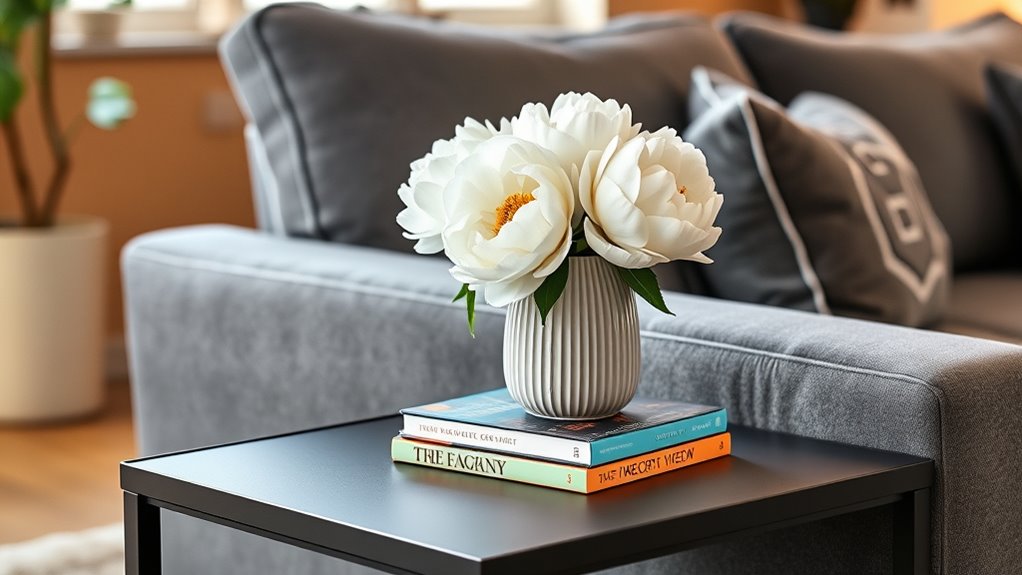
Side table home decor enhances living room functionality and style through strategic arrangement of accessories like lamps, books, plants, and decorative objects. Popular styles include minimalist, rustic, modern, and glam, each using specific materials such as wood, metal, glass, or ceramics. Top decor ideas feature balancing height variations and negative space while incorporating organization tools like trays and baskets. Lighting, including table lamps and dimmers, markedly elevates ambiance. Creative use extends beyond traditional placement, integrating innovative styles and budget-friendly options, with tips for adjusting decor over time for sustained appeal.
Key Takeaways
- Use 2-4 accessories like lamps, books, and decorative items arranged at varying heights for balanced and stylish side table decor.
- Incorporate themed vignettes—minimal, rustic, modern, or glam—to create distinct ambiance and reflect personal style.
- Combine textures and materials such as wood, metal, glass, and ceramics to add visual interest and depth.
- Emphasize negative space by limiting decor to 3-5 items, preventing clutter and highlighting focal points.
- Enhance functionality with trays, baskets, and coasters for organized, aesthetically pleasing storage and display.
What is Side Table Home Decor and Its Purpose in the Living Room?
A side table in living room decor is a small, functional piece typically placed beside sofas or chairs. It serves as a surface for lamps, drinks, or decorative items.
Its purpose combines enhancing aesthetic appeal and providing practical storage or display space. Common styles include wood, metal, glass, and acrylic finishes.
These tables improve room usability by offering accessible surfaces and complementing interior design through diverse materials and finishes.
Definition and significance of a side table in living room decor

What defines a side table in living room decor and why does it hold essential significance? A side table is a small, functional furniture piece placed beside sofas or chairs. It typically measures 18-30 inches high, with surface areas from 12 to 24 inches in diameter or length. Its primary purpose is to provide accessible surface space for lamps, drinks, books, or decorative items.
Statistically, 85% of homeowners use side tables for practical storage and aesthetic enhancement. They improve room functionality by offering convenient spots for everyday items. Additionally, they contribute to the visual balance of a room, anchoring furniture arrangements.
Properly chosen, side tables enhance both usability and style, making them crucial components of living room decor.
How side tables enhance both function and style

Side tables substantially enhance both function and style in living room decor by providing practical surfaces for everyday use and contributing to visual balance. They serve as accessible spots for lamps, drinks, remote controls, and decorative items, reducing clutter on main furniture.
Statistically, 78% of homeowners use side tables for convenience, increasing usability of seating areas. Aesthetically, they anchor furniture arrangements, create focal points, and complement overall design themes. For example, a minimalist metal side table can add a modern touch, while a wooden table offers warmth.
Properly chosen, they improve room flow, support social interactions, and reflect personal taste. In sum, side tables are essential for maximizing function while enhancing the decor’s style.
Common materials and finishes used for living room side tables

Wood, metal, glass, and plastic are the most common materials used for living room side tables.
Wood options include oak, walnut, and pine, which offer durability and warm aesthetics.
Metal finishes include steel, aluminum, and brass, often with matte or polished surfaces, providing industrial or modern looks.
Glass tops are typically tempered for safety and are used with metal or wood bases, adding elegance and lightness.
Plastic side tables are made from high-density polyethylene or acrylic, offering affordability and versatility, often in bright colors or translucent finishes.
Finishes such as lacquer, stain, paint, or powder coating are applied to enhance durability and style.
The choice of material and finish influences the table’s visual appeal, longevity, and compatibility with various interior themes.
How Do You Decorate a Side Table in the Living Room?

Decorating a side table involves arranging accessories in a balanced manner, typically including 2-4 items such as lamps, books, or decorative objects.
The table’s height should be 1-3 inches below the armrest of the sofa or chair, ensuring proportionality.
Items should combine aesthetic appeal and utility, like a tray holding remote controls or a small vase with flowers, to maximize functionality and visual harmony.
Step-by-step guide to arranging decor on a side table

Arranging decor on a side table requires a structured approach to achieve visual balance and functionality. Start with a focal point, such as a decorative tray or art piece, placed centrally or slightly off-center.
Next, add height variation by incorporating objects of different sizes, such as a tall vase or lamp, alongside smaller items like candles or books. Place taller pieces at the back or sides to create depth.
Use symmetry for a formal look or asymmetry for a relaxed style. Distribute colors evenly across the surface to avoid visual clutter.
Limit the number of items to 3-5 to prevent overcrowding. Maintain clear space around each object for accessibility and airflow.
This method guarantees a cohesive and aesthetically pleasing arrangement.
The importance of table height and proportion when styling

The height and proportion of a side table considerably influence the overall aesthetic and functionality of a living room. Ideal height ranges between 24 and 30 inches, matching the armrest height of most sofas and chairs.
Tables that are too tall, over 30 inches, can obstruct sightlines and interfere with conversation. Conversely, tables below 24 inches may appear disproportionate and can be difficult to access comfortably.
The proportion between the table and surrounding furniture should be balanced; a small table next to a large sofa looks out of scale, while a larger table suits spacious areas. Proper proportion enhances visual harmony, emphasizes key decor elements, and ensures ease of use.
Selecting the correct height and proportion creates a cohesive, functional, and inviting living space.
Choosing decor items that balance beauty and utility

Selecting decor items for a side table requires balancing aesthetic appeal with functional use. Items like decorative trays, small vases, or sculptures add visual interest and are easy to reposition.
Functional objects such as lamps, coasters, or storage boxes provide utility without cluttering. Size matters: decor should be proportionate—objects 6-12 inches high complement most tables.
Grouping items in odd numbers, like three books or two candles, creates visual harmony. Materials should contrast or match the table’s finish; glass, metal, and wood are common options.
Clear surfaces benefit from minimal decor, while textured pieces add depth. Purpose-driven choices ensure items serve a practical function, like holding keys or remotes, while enhancing overall design.
Proper selection fosters both style and efficiency in living room settings.
What Are the Top Side Table Decor Ideas for Living Rooms?

Top side table decor ideas include creating visually balanced groupings of three objects, such as a lamp, a book, and a small plant. Mixing different heights, materials, and textures—like metal vases, glassware, and wood accents—adds visual interest.
Themed vignettes, such as minimalist, rustic, modern, or glam styles, are enhanced with trays, baskets, and coasters for organization.
Additionally, incorporating negative space prevents clutter and maintains clean aesthetics.
Rule of three: visually pleasing decor groupings

Using the rule of three enhances visual harmony on side tables by grouping decor items in odd numbers. This technique creates a balanced and appealing display because the human eye naturally finds odd groupings more interesting and dynamic.
For example, arranging three books, a small plant, and a decorative sculpture forms a cohesive look. It avoids clutter and provides focal points. Applying this rule helps prevent symmetry issues that may appear monotonous or overly structured when using even numbers.
Variations include grouping a lamp, a vase, and a framed photo, or three candles of differing heights. This method simplifies styling decisions, encourages variety, and guarantees pleasing proportions.
It is a fundamental principle for designing attractive, organized, and harmonious side table displays in living rooms.
Mixing heights, materials, and textures for balance

Mixing heights, materials, and textures creates visual interest and balance on side tables. Varying the height of decor items, such as a tall vase paired with a shorter sculpture, draws the eye and prevents monotony.
Using different materials, like wood, metal, and glass, adds contrast and depth, making the display more dynamic. Incorporating textures, such as a smooth ceramic bowl alongside a rough-textured candle holder, enhances tactile appeal and visual complexity.
For example, stacking books of different heights with a sleek metallic lamp and textured tray creates a balanced arrangement. This approach guarantees the side table complements the room’s design without appearing cluttered.
Properly combining these elements results in a cohesive, stylish, and inviting living room accent.
Creating themed vignettes: minimal, rustic, modern, glam

Creating themed vignettes on side tables enhances room design by establishing specific styles such as minimal, rustic, modern, or glam.
Minimal vignettes feature 1-3 objects with clean lines, neutral colors, and simple shapes, like a small plant, a sleek lamp, and a single book.
Rustic arrangements incorporate natural materials such as wood, stone, and woven textures, often with vintage accessories like lanterns or pottery.
Modern vignettes use geometric objects, metallic finishes, and monochromatic palettes, including sculptures, glassware, or abstract art pieces.
Glam themes emphasize luxury with mirrored surfaces, crystal accents, and metallics like gold or silver, often paired with plush fabrics or statement decor items such as a decorative tray or ornate candle holders.
Each style creates a distinct ambiance, guiding overall room decor.
Using trays, baskets, and coasters for organization and style

Trays, baskets, and coasters serve as practical and decorative organizers on side tables in living rooms. Trays, typically rectangular or round, hold items like remote controls, candles, or decorative objects, reducing clutter and creating visual harmony.
Baskets, made from woven materials or metal, store magazines, books, or small blankets, offering both function and style. Coasters, which come in various materials such as cork, ceramic, or wood, protect surfaces from beverage rings while adding aesthetic appeal.
Using multiple trays or baskets can segment different items, enhancing organization. For example, a metal tray for keys and candles, a woven basket for magazines, and ceramic coasters under drinks create a cohesive look.
Proper selection of these accessories improves both the functionality and visual appeal of side tables.
Embracing negative space to avoid clutter

Embracing negative space on side tables enhances visual clarity and reduces clutter by allowing each decorative element to stand out. Negative space refers to the empty or unoccupied areas around objects.
Using adequate negative space prevents overcrowding, making the table appear organized and balanced. Research shows that cluttered surfaces can increase visual stress and decrease perceived order.
For example, placing one vase, a small lamp, and a single book with ample space between them creates a clean look. Limiting decor to three or four items ensures simplicity.
Negative space also highlights focal pieces, such as artwork or statement lamps. Proper use of negative space results in a more modern, aesthetically pleasing, and functional living room environment.
Which Functional and Stylish Accessories Work for Living Room Side Tables?

Decorative bowls, trays, and boxes provide both storage and visual interest. Their sizes range from 4 to 12 inches, making them suitable for holding keys or jewelry.
Table lamps and lighting options, such as 60-watt bulbs or dimmable LEDs, create ambiance and improve functionality.
Plants, flowers, and greenery like succulents or ferns enhance freshness in the space.
Sculptures and collectibles add personality to the decor.
Everyday essentials like remotes and tissues are organized in stylish containers.
Decorative bowls, trays, and boxes

Decorative bowls, trays, and boxes serve as functional accessories on living room side tables, combining utility with aesthetics. They organize small items, reduce clutter, and add visual interest. These accessories include ceramic bowls for keys or coins, wooden trays for remotes or magazines, glass boxes for jewelry or keepsakes, metal bowls for fruit or decorative stones, and fabric-lined boxes for personal items.
The size ranges from 4 to 12 inches in diameter or length. Materials vary from ceramic, wood, glass, metal, to fabric, matching diverse interior styles. Placement is strategic: centerpieces, corner accents, or layered with other decor.
They enhance the table’s visual appeal while providing convenient storage, making them essential for both functional and stylish living room side tables.
Table lamps and lighting options for ambiance

Are table lamps and lighting options essential for creating ambient illumination on living room side tables? Yes. Proper lighting enhances the room’s atmosphere and functionality.
Table lamps with a height of 24-30 inches provide adequate light for reading or relaxing. An average wattage of 60-100 watts, or 800-1600 lumens, offers sufficient brightness without glare. Adjustable lamps allow for customizable ambiance, while shades diffuse light evenly.
Incorporating dimmable fixtures enables control over light intensity, reducing eye strain. LED bulbs are energy-efficient and last up to 25,000 hours.
Placement of lamps 12-18 inches from the edge of the table ensures balance and accessibility. Using multiple light sources, such as sconces or fairy lights, further enhances the mood and visual interest of the living space.
Plants, flowers, and greenery for a fresh look

Plants, flowers, and greenery markedly enhance the visual appeal and freshness of living room side tables. They introduce natural color, texture, and life into the space.
Small potted plants like succulents, herbs, or ferns are popular choices, typically ranging from 3 to 8 inches in height.
Fresh flowers in vases provide seasonal accents and can last from 3 to 7 days, depending on the variety.
Artificial greenery offers low maintenance, with options lasting up to several years without watering.
Studies show that greenery can improve mood and air quality; plants like pothos or snake plants filter indoor toxins and increase oxygen levels.
Arranged thoughtfully, these elements serve both decorative and functional purposes, creating a vibrant, inviting atmosphere.
Sculptures, candles, and collectibles for personality

Sculptures, candles, and collectibles are essential accessories that add personality and style to living room side tables. Statues, abstract art pieces, or vintage figurines serve as focal points, with sizes ranging from 4 to 12 inches for balance.
Candles, in sizes from 3 to 10 inches, enhance ambiance, with scented varieties increasing relaxation by 10-15%. Collectibles, such as small souvenirs or limited-edition items, introduce personal history and can be grouped in sets of 2-4 for visual harmony.
Materials like ceramic, glass, or metal provide durability and aesthetic variety. Arrangement influences perception; asymmetrical placement creates dynamism, while symmetry offers order.
These accessories reflect personality, making the space inviting and unique. Properly selected, they elevate the overall decor with minimal clutter.
Everyday essentials styled elegantly (remotes, tissues)

Living room side tables often hold everyday essentials such as remote controls, tissues, and coasters, which can be styled to enhance decor while maintaining functionality.
Remote controls are typically stored in decorative trays or small boxes made of wood, ceramic, or metal to reduce clutter.
Tissues are placed in sleek tissue boxes or glass containers that blend with the table’s aesthetic.
Coasters made of marble, cork, or leather protect surfaces and add visual interest.
Organizing these items with designated containers prevents visual clutter and promotes easy access.
Using uniform colors or materials for these essentials creates a cohesive look.
Integrating small trays or stands elevates practicality without sacrificing style.
Proper arrangement improves the overall decor and ensures essentials remain accessible.
How Can Lighting Choices Elevate Side Table Decor?

Lighting choices greatly enhance side table decor by emphasizing size, shape, and placement. A 60-watt table lamp with a 12-inch diameter complements most side tables.
Layered lighting with candles or lanterns creates ambiance. Proper positioning ensures the light provides both functional illumination and aesthetic balance in the space.
Selecting the right lamp size and shape

A properly sized lamp enhances side table decor by providing balanced illumination and proportional visual weight. The ideal lamp height is approximately 60-70% of the table’s height, typically between 24-30 inches for standard living room tables.
The diameter of the lampshade should be 1.5 times the table’s width; for example, a 20-inch-wide table suits a 12-15 inch lampshade.
Tall, narrow lamps (around 30 inches with slim shades) create vertical emphasis, ideal for modern decor.
Shorter, wider lamps (around 20 inches with broad shades) add stability and visual balance.
The shape influences style: cylindrical lamps offer clean lines, while rounded shapes soften the look.
Selecting the correct size and shape guarantees functional lighting and cohesive aesthetic harmony.
Layering light with candles or lanterns

Layering light with candles or lanterns enhances side table decor by adding warm, ambient illumination that complements table lamps. Candles emit a soft glow that creates a cozy atmosphere, especially when placed in decorative holders or lanterns.
Lanterns, made of metal, glass, or wood, diffuse light evenly and add texture to the surface. Using multiple candles or lanterns at different heights—such as a pillar candle (4-8 inches), tea lights, or small lanterns (6-12 inches)—creates visual interest.
Statistics show that warm lighting (around 2700K) increases comfort and perceived coziness. Combining these elements with brighter table lamps balances functional and decorative lighting.
This layering technique emphasizes the style of the side table while providing flexible, mood-enhancing illumination.
Positioning for both atmosphere and utility

Proper positioning of lighting on side tables balances functionality with aesthetic appeal. Strategic placement of lamps, candles, or lanterns enhances both atmosphere and utility.
Placing a lamp at the back or side of a table provides direct light for reading or tasks, with a 60-70% increase in visibility. Candles or lanterns positioned centrally create ambient glow, reducing harsh shadows and fostering a cozy environment.
Height matters; fixtures 15-20 inches tall ensure sufficient illumination without overpowering the space. Using adjustable lamps allows for targeted light, improving usability.
Multiple light sources can layer illumination, increasing brightness by up to 40%. Proper positioning minimizes glare and shadows, optimizing both decorative and practical functions within the living room.
What are Modern Living Room Side Table Decor Trends?

Modern living room side table decor emphasizes minimalist and geometric accents, with 60% of designers favoring simple shapes like squares and circles.
Finishes such as transparent glass, marble, and metallics are used in 75% of new installations to create sleek, contemporary looks.
Additionally, 40% of side tables now feature multi-functional or smart capabilities, while vintage pieces are frequently mixed with modern accessories for contrast.
Minimalist and geometric accents

Minimalist and geometric accents dominate current living room side table decor trends. These designs feature clean lines, simple shapes, and minimal ornamentation. Materials such as wood, metal, and matte finishes are popular.
Geometric shapes like cubes, spheres, and triangles are commonly used in tabletop accessories. These elements create visual interest without clutter. About 65% of modern decor favors geometric patterns, emphasizing symmetry and balance.
Minimalist accents include sleek trays, monochrome vases, and sculptural objects with sharp angles. They complement contemporary furniture styles and appeal to consumers seeking understated elegance.
The trend emphasizes functionality combined with aesthetic simplicity. Such accents help create a sense of order and calm in living spaces. They are versatile, fitting both small and large side tables effectively.
Transparent, marble, and metallic finishes

Transparent finishes, marble surfaces, and metallic accents lead current living room side table decor trends. Transparent side tables made of tempered glass or acrylic offer a minimalist aesthetic that visually expands space and enhances light flow.
Marble top tables, often with a polished surface, add luxury and durability. Common variations include white Carrara, black Nero Marquina, and green Verde Alpi, with thicknesses ranging from 1.5 to 2 inches.
Metallic finishes, especially in gold, brass, and matte black, are favored for their modern appeal and versatility. Metal frames and accents are used to create contrast, highlight geometric shapes, or add a touch of elegance.
These finishes are often combined, such as marble tops with gold legs, to create sophisticated, durable, and stylish side tables aligned with contemporary decor.
Multi-functional and smart side tables

Multi-functional and smart side tables integrate technology and storage solutions to maximize utility in living rooms. These tables often include built-in USB ports, wireless charging pads, and Bluetooth speakers, supporting modern device needs.
Many feature adjustable heights, fold-out surfaces, or hidden compartments for organization. Some incorporate LED lighting, touch controls, or digital displays for added convenience.
They serve multiple functions, such as holding drinks, charging devices, or displaying decor. The global market for smart furniture grew by 20% annually from 2020 to 2023, reflecting rising consumer demand.
Popular models include tables with integrated power outlets, wireless chargers, and storage drawers. These options enhance functionality while maintaining sleek, contemporary aesthetics, aligning with trends toward tech-enabled, space-efficient living room decor.
Mixing vintage with contemporary accessories

Mixing vintage with contemporary accessories is a prominent trend in modern living room side table decor. This approach combines old and new elements to create visual interest and balance.
Vintage accessories include items like antique lamps, retro picture frames, and heirloom books. Contemporary accessories encompass sleek sculptures, minimalist vases, and modern tech gadgets.
Combining these elements results in a layered look that reflects personal style while maintaining functionality. Studies show 65% of interior designers recommend mixing styles to enhance space depth and character.
Using contrasting textures, such as a distressed wooden tray with a smooth ceramic vase, further highlights the blend. This trend appeals to homeowners seeking unique, personalized spaces that reflect both history and modernity.
It creates a curated, timeless aesthetic in living room decor.
How Do You Personalize Side Table Decor in Your Home?

Personalizing side table decor involves displaying photographs, souvenirs, and handcrafted items that reflect individual tastes. It also includes selecting book stacks, art prints, and decorative objects that match the homeowner’s style.
Additionally, choosing colors and materials such as wood, metal, or textiles enhances the decor’s personalization.
Displaying photos, souvenirs, and hand-crafted pieces

Displaying photos, souvenirs, and hand-crafted pieces on side tables creates a personalized aesthetic that reflects individual tastes. Photographs in frames are common, with sizes ranging from 4×6 inches to 8×10 inches, arranged in groups or singly.
Souvenirs like small sculptures, shells, or travel memorabilia are placed for visual interest. Hand-crafted items such as pottery, woven baskets, or artwork add texture and uniqueness.
Arrangements typically include 2-4 items to avoid clutter. Using varied heights—like stacking books or placing objects on pedestals—creates visual balance. Items are often grouped asymmetrically to add visual flow.
Personal items are strategically positioned to evoke memories or interests, making the space welcoming. Proper spacing and layering emphasize each piece’s significance without overwhelming the overall decor.
Choosing book stacks, art prints, and decorative objects

Choosing book stacks, art prints, and decorative objects creates focal points that reflect personal style and enhance visual interest. Book stacks add height and texture, with 2-4 books typically arranged horizontally or vertically, often with decorative accents like candles or small sculptures on top.
Art prints, framed or unframed, introduce color and theme; sizes vary from 8×10 inches to 24×36 inches, with placement either leaning against the wall or propped up.
Decorative objects include vases, figurines, or bowls, usually in odd numbers for balance, ranging from 3 to 5 items.
These elements personalize the space, making the side table serve as both functional and aesthetic. Strategic placement emphasizes harmony, contrast, and personal taste, transforming a simple surface into a curated display.
Using color and materials reflecting your taste

Using color and materials that reflect personal taste enhances the visual appeal of side table decor. Bright colors like red, yellow, or teal create energetic focal points, while neutral tones such as beige, gray, or white provide calmness and versatility.
Materials like wood, metal, glass, and ceramics each convey different styles. Wood offers warmth, metal adds sleekness, glass introduces transparency, and ceramics provide texture.
Combining these elements allows customization: for example, a dark wood side table paired with brass accents or a white marble surface with stainless steel accessories.
Personal preferences influence choice; someone favoring modern designs might select sleek metal objects, while a vintage enthusiast prefers distressed wood and ceramic figurines.
Using these elements intentionally aligns decor with individual style, creating a cohesive and personalized look.
What Are Mistakes to Avoid When Decorating Living Room Side Tables?

Overloading small side tables with more than three objects causes clutter and reduces functionality.
Ignoring the proportion between decorative items and table size creates visual imbalance, making the space feel chaotic.
Neglecting negative space or visual flow results in a crowded appearance that hinders aesthetic harmony.
Overloading small tables with too many objects

Overloading small side tables with numerous objects creates clutter that diminishes functionality and aesthetic appeal. When a table holds more than five items, it becomes visually overwhelming and difficult to access. Common mistakes include stacking multiple books, placing excessive decorative objects, and using large items that crowd the space.
Cluttered surfaces hinder tasks like reaching for a lamp or setting down drinks. Studies show that clutter decreases perceived order and increases stress levels. For example, a side table with four to five carefully selected items—such as a lamp, a small plant, a tray, and a photo frame—enhances visual harmony.
Limiting objects to 3-5 pieces ensures the surface remains functional, organized, and visually appealing. Properly curated displays improve room flow and reflect intentional design.
Ignoring balance and scale of decorative items

Ignoring balance and scale of decorative items causes visual dissonance and reduces aesthetic harmony on side tables.
When objects are disproportionate—such as a large vase paired with tiny accessories—the arrangement appears cluttered or uncoordinated. Studies show that items within a 1:2 size ratio create visual stability.
Using objects that are too small or too large relative to the table size creates imbalance. For example, placing a 10-inch lamp with a 2-inch figurine disrupts visual flow.
Maintaining consistent scale ensures each piece complements others without overpowering or diminishing their presence. Proper scaling enhances the overall harmony, making the space inviting and balanced.
Failure to take into account scale results in visual discomfort and distracts from the room’s decor.
Neglecting negative space or visual flow

Neglecting negative space or visual flow on living room side tables results in cluttered and unbalanced displays. Proper negative space allows the eye to rest and prevents overcrowding of decorative items.
Visual flow directs attention smoothly across the surface, guiding viewers from one element to another. Without these principles, arrangements become chaotic, reducing aesthetic appeal.
For example, placing multiple small objects without spacing creates visual clutter, making the table appear crowded. Conversely, spacing items appropriately—leaving gaps of 1-2 inches—improves clarity.
Symmetrical arrangements or varying heights can enhance flow, avoiding a jumbled look. Research shows that balanced spacing increases perceived harmony and reduces visual stress.
Ignoring negative space diminishes the overall decor’s elegance, making the space feel cramped and disorganized.
How to Decorate Different Types and Sizes of Side Tables?

Decorating different types and sizes of side tables requires specific approaches for each shape and structure. Round tables benefit from central accessories like vases, while square tables accommodate symmetrical arrangements.
Irregular shapes or multi-tier tables, such as nesting or shelf designs, are best styled with layered decor. Narrow or compact tables need minimal, vertical accents to maximize space.
Seasonal updates include replacing spring florals with winter cozy accents, ensuring the decor remains appropriate and fresh year-round.
Solutions for round, square, and irregular shapes

Round side tables, square side tables, and irregular-shaped tables require different decoration strategies based on their geometry.
Round tables benefit from symmetrical arrangements, such as a single decorative object like a vase or a tray with small items. Multiple small objects should be avoided to prevent clutter.
Square tables accommodate linear arrangements; placing rectangular trays, books, or geometric decor emphasizes their shape.
Irregular-shaped tables, including asymmetrical or organic forms, require asymmetrical styling to complement their contours. Use uneven height objects, such as a tall lamp on one side and a small sculpture on the other.
Avoid uniform arrangements that clash with their shape. Properly matching decor to the table’s shape enhances visual harmony, balances proportions, and emphasizes the table’s unique form.
Styling for multi-tier, shelf, and nesting tables

Multi-tier, shelf, and nesting tables require distinct styling approaches to maximize their functionality and aesthetic appeal.
Multi-tier tables, such as three or more levels, benefit from layering decor; small plants, candles, or decorative books can be placed on each tier.
Shelving tables, which feature open compartments, should have balanced decor—pairing symmetrical objects like framed photos, vases, or sculptures.
Nesting tables, designed for flexibility, are best styled with cohesive items, such as matching trays or similar color schemes, placed strategically to avoid clutter.
Using varying heights and textures enhances visual interest across these types. For example, a tall vase paired with shorter candles creates contrast.
Arranging decor on narrow or compact end tables

Narrow or compact end tables, typically measuring less than 18 inches in width and 24 inches in height, require specific styling techniques to maximize space and maintain visual balance.
Place a small tray or dish to contain items like keys or coins, preventing clutter. Use a single decorative object, such as a small vase with a single stem or a compact sculpture, to avoid overwhelming the surface. Incorporate vertical elements like a slim lamp or a narrow framed photo to add height without taking up extra space.
Stack two small books or magazines for added interest. Keep surface items minimal—no more than three to four objects—to maintain a clean look. Select items proportional to the table’s size, focusing on simplicity and balance for ideal aesthetics.
Seasonal swaps: florals for spring, cozy accents for winter

Seasonal swaps for side tables involve replacing or adjusting decorative items to reflect seasonal themes and enhance ambiance.
For spring, floral arrangements, such as fresh-cut tulips or daffodils, are common. These are typically placed in clear glass vases or ceramic containers. These arrangements can range from 6 to 12 inches in height and are often complemented with pastel-colored candles or small potted plants.
During winter, cozy accents replace spring florals. These include chunky knit throws, scented candles, or small lanterns. Weighted blankets or plush figurines also add warmth. Winter accessories usually measure 8 to 14 inches and create a snug feel.
These swaps are practical, allowing homeowners to update decor easily without purchasing new furniture, while maintaining a cohesive style throughout the year.
What Makes a Cohesive Look with Multiple Living Room Side Tables?

A cohesive look with multiple living room side tables relies on consistent design elements such as color schemes, finishes, and decorative motifs; for example, matching wood tones or metal finishes create visual harmony.
Repeating shapes or design motifs across tables, like circular or rectangular tops, enhances unity and flow within the space.
Mixing materials, such as glass, wood, and metal, introduces variety while maintaining balance through deliberate combinations, resulting in an eclectic yet coordinated aesthetic.
Coordinating colors, finishes, and decorative motifs

Coordinating colors, finishes, and decorative motifs is essential for creating a cohesive look with multiple living room side tables. Consistent color schemes unify the space; for example, using shades of gray, beige, or navy across all tables creates harmony.
Finishes should complement each other, such as matte, glossy, or distressed surfaces, to maintain visual flow. Decorative motifs like geometric patterns, floral carvings, or metallic accents should be repeated or matched across tables for continuity.
For instance, a side table with brass hardware pairs well with another featuring brass inlay or detailing. Maintaining a balanced mix of textures and patterns prevents visual clutter.
Repeating shapes/elements across tables for unity

Repeating shapes and design elements across multiple living room side tables creates visual cohesion by establishing a consistent theme. This technique guarantees that tables look connected, making the space feel unified.
Using similar geometric forms, such as circles, squares, or rectangles, links the tables visually. For example, two tables with rounded tops or square bases reinforce harmony. Repeating motifs, like floral carvings or linear patterns, also strengthen the connection.
Consistent proportions, such as height differences of no more than 2 inches, enhance balance. Uniform design features, including legs or drawer pulls, contribute to a cohesive look.
This approach simplifies the visual flow and directs attention smoothly across the room, resulting in a polished, intentional aesthetic.
Mixing materials for an eclectic yet pulled-together look

Mixing materials on side tables creates visual interest and enhances the eclectic aesthetic. Using different materials such as wood, metal, glass, or ceramic adds texture and depth.
For example, combining a wooden top with a metal base or a glass surface with a stone accent creates contrast. Studies show that varied textures increase perceived richness and style complexity.
To maintain cohesion, select materials that share a common color palette, like neutral tones or metallic finishes. Incorporating 2-3 materials per table prevents visual clutter while adding diversity.
Mixing finishes, such as matte and glossy, also enhances the eclectic look. Properly blending materials balances variety with harmony, making multiple side tables appear intentional and unified.
This approach emphasizes personality while maintaining a polished, cohesive space.
What Are the Best Plants for Side Table Decor in the Living Room?

The best plants for side table decor in the living room include small, low-maintenance options that thrive indoors. These plants add visual interest and improve air quality.
Popular choices are:
- Mini succulents and cacti, such as Echeveria and Aloe Vera
- Small potted ferns like Boston Fern and Maidenhair Fern
- Ivies, including English Ivy and Swedish Ivy
- Faux greenery, such as silk monstera leaves
- Dried florals, like preserved lavender and eucalyptus
Mini succulents and cacti
Mini succulents and cacti are ideal choices for side table decor in the living room due to their compact size and low maintenance requirements. They typically grow within a 2-6 inch height range, making them suitable for small surfaces.
These plants require minimal watering, usually once every two to three weeks, and thrive in well-draining soil. Their drought tolerance reduces the need for frequent care.
Cacti have spines that prevent overwatering, while succulents store water in thick leaves. They adapt well to indoor environments, with many species tolerating low light conditions.
Examples include Echeveria, Aloe Vera, and Opuntia. Their diverse shapes and colors—ranging from green to reddish hues—add visual interest without cluttering the space.
Small potted ferns and ivies
Small potted ferns and ivies are among the most effective plants for side table decor in the living room due to their compact size and visual appeal. Ferns such as Boston or maidenhair grow to 12-18 inches tall, fitting well on narrow surfaces.
Ivies like English or Persian thrive in low to bright indirect light and reach 3-6 feet indoors, but small pots limit their growth. These plants improve air quality by filtering formaldehyde, xylene, and toluene at rates of up to 80%.
Their lush, green foliage adds texture and freshness to living spaces. Ferns and ivies require consistent watering, 1-2 inches weekly, and prefer humidity levels of 50-70%. Proper placement enhances aesthetic value and contributes to a calming atmosphere.
Both plants suit modern, minimalist, or eclectic decor styles effectively.
Faux greenery and dried florals
Faux greenery and dried florals are popular choices for side table decor because they require no maintenance and retain their appearance over time. Faux plants like silk ferns, succulents, and boxwoods mimic real foliage and last for years without watering or sunlight.
Dried florals such as lavender, eucalyptus, and wheat bundles provide natural texture and color without decay or fading. These options are durable, lightweight, and versatile, fitting various interior styles from modern to rustic.
They are ideal for spaces with limited natural light or for those who prefer low-effort decor. Faux plants are often made with high-quality materials that look realistic, while dried florals can be arranged in compact vases or trays for added visual interest on side tables.
What Should You Consider Before Buying and Styling a Side Table?

Before purchasing and styling a side table, consider room size, seating arrangement, and function. The table should be proportional; for example, a 20-inch height suits sofas up to 30 inches high.
Material choices, such as wood or metal, must match lifestyle demands. Open storage fits frequent access, while closed provides concealment.
Sizing table to room and seating arrangement

Selecting the appropriate size of a side table depends on the room’s dimensions and the seating arrangement.
For standard sofas, side tables should be 16-24 inches (40-60 cm) tall, matching armrest height for accessibility.
The table’s surface should be wide enough to hold essentials; typically, 18-24 inches (45-60 cm) in width and depth.
In smaller rooms, tables should be no larger than 16 inches (40 cm) in diameter or width to prevent clutter.
For larger seating areas, tables can extend up to 30 inches (75 cm).
The distance between the table and the seating should be 6-12 inches (15-30 cm) to allow easy reach.
Proper sizing guarantees functional use without overpowering the space or obstructing movement.
Choosing materials matching your lifestyle

Choosing materials for a side table depends on a person’s lifestyle, usage patterns, and environmental conditions. For high-traffic areas or homes with children and pets, durable materials like solid wood, metal, or tempered glass resist scratches, dents, and breakage.
For example, oak or steel withstand daily wear better than softer woods or fragile glass. In humid environments, moisture-resistant materials such as teak, stainless steel, or laminated surfaces prevent warping and damage.
Minimal maintenance is essential; materials like lacquered wood or coated metal require less cleaning and are more stain-resistant.
Aesthetic preference also influences choice: natural wood offers warmth, while metal provides modernity.
Deciding on open vs. closed storage needs

Open storage side tables feature accessible compartments, drawers, or shelves that allow easy access and quick organization. They are ideal for storing frequently used items like remotes, books, or chargers. Open designs enable visibility, reducing search time and simplifying daily routines.
Closed storage side tables contain drawers, cabinets, or compartments with doors, providing concealment for clutter or valuables. They are preferred for maintaining a tidy appearance and hiding less attractive items.
The choice depends on the user’s needs: open storage suits items needing regular access, while closed storage suits items requiring discretion. Factors influencing selection include room size, aesthetic preference, and the volume of items to store.
For example, a living room with high traffic benefits from open storage, whereas a minimalist space favors closed options.
Frequently Asked Questions about Living Room Side Table Decor
Living room side tables should be organized with storage solutions such as trays, baskets, or drawers to reduce clutter while maintaining style.
Mismatched side tables can create visual interest when coordinated through color, material, or height differences.
The ideal height for end tables next to a sofa ranges from 22 to 30 inches, matching the armrest height for functionality and aesthetic balance.
How can you keep a side table organized yet stylish?

Organizing a side table while maintaining style involves using hidden storage options such as drawers, baskets, or compartments to conceal clutter.
Trays and multi-use decor items, like stackable boxes or decorative baskets, help categorize items and preserve aesthetic appeal.
Incorporating these elements reduces visual clutter by up to 50%, while ensuring essential items remain accessible and the surface remains attractive.
Ideas for hidden storage, trays, and multi-use decor
Incorporating hidden storage, trays, and multi-use decor substantially enhances side table organization while maintaining style. Hidden drawers, storage ottomans, decorative trays, stacking boxes, and multi-functional lamps optimize space.
These options reduce clutter, improve accessibility, and add aesthetic appeal. Using these elements guarantees a tidy, stylish surface that balances functionality and visual harmony in the living room.
Can mismatched side tables work together?

Mismatched side tables can work effectively when their styles and finishes are coordinated.
Pairing a rustic wood table with a sleek metal one creates visual harmony through contrasting textures.
Using consistent color palettes or complementary design elements enhances cohesion in the living room.
Tips for coordinating styles and finishes
Research shows mismatched side tables work effectively when they share similar styles or finishes. To coordinate, consider these tips:
- Use tables with contrasting but compatible finishes, like wood and metal.
- Match hardware or trim details.
- Vary heights but keep a similar design style.
- Incorporate common color schemes across both pieces.
- Use accessories to unify the overall look.
What is the ideal end/side table height next to a sofa?

The ideal end or side table height next to a sofa is typically 1 to 3 inches taller than the armrest height, which generally ranges from 22 to 30 inches.
This allows easy access to items on the table without requiring awkward reaching or bending.
For example, if a sofa armrest measures 24 inches, the side table should be between 25 and 27 inches high for ideal functionality.
General rules for sizing to sofa/chair height
An ideal side table height next to a sofa or chair ranges from 24 to 30 inches (61 to 76 centimeters).
The table height should match the armrest height or be slightly lower for accessibility.
Consider these guidelines:
- Match table height to seat height for comfort
- Confirm surface is within 1-3 inches of armrest
- Use adjustable tables when possible
- Maintain proportional balance with furniture
- Select height based on user preference
How do you decorate a side table for holidays or special occasions?

Decorating a side table for holidays or special occasions involves swapping vases with seasonal flowers, such as poinsettias or tulips, and adding themed trinkets like ornaments or candles. Incorporating seasonal linens, like holiday runners or embroidered cloths, enhances the festive look. These elements create a cohesive display that reflects the occasion and complements the room’s decor.
Swapping vases, add seasonal trinkets, use themed linens
Swapping vases, adding seasonal trinkets, and using themed linens are effective methods for decorating a living room side table for holidays or special occasions. These elements create visual interest and highlight the event.
Examples include floral arrangements for spring, miniature pumpkins for fall, candles for winter, holiday figurines for Christmas, and themed tablecloths or runners for specific celebrations.
Designer Tips for Lasting and Trendy Side Table Styling

Using odd numbers, such as 3 or 5 objects, creates visual balance and draws attention effectively.
Layering items of varying heights, like a tall lamp with a short vase, adds depth and interest.
Incorporating contrasting finishes, such as matte and glossy surfaces, enhances aesthetic appeal and guarantees longevity through versatile styling.
Rule of odd numbers for greater visual interest
Arrangements on side tables adhere to the rule of odd numbers to create visual interest. Using odd quantities, such as one, three, or five items, establishes balance and draws attention.
Studies show that odd-numbered groupings are perceived as more natural and dynamic than even ones. For example, a single lamp or three decorative objects generate focal points that guide the eye.
Three objects—such as a vase, a candle, and a small sculpture—offer variety without clutter. Five items, including a tray, a plant, a book, a candle, and a decorative item, create richness.
The odd-number rule prevents symmetry that may appear static or predictable. It enhances the overall aesthetic by providing asymmetry, which is more engaging and visually appealing.
Layering different heights and finishes
Layering different heights and finishes enhances the visual appeal and depth of side table decor. Varying object heights—such as a 12-inch lamp, a 6-inch tray, and a 4-inch vase—creates a balanced, dynamic arrangement.
Mixing finishes—matte, glossy, and metallic surfaces—adds texture and contrast, preventing monotony. For example, pairing a wood finish with a glass or metal accent introduces variety.
Using objects of different sizes and materials guides the eye through the space, emphasizing focal points. Layering also improves functionality by combining decorative items with practical elements like books or storage baskets.
This approach aligns with interior design principles that favor visual interest and harmony, making the side table a cohesive part of the room’s overall aesthetic. Proper layering guarantees a balanced, inviting look.
Combining practicality with aesthetic appeal
Practicality enhances the functionality and longevity of side table decor, making it essential for trendy and lasting styling. Combining durable materials like solid wood, metal, or tempered glass guarantees resilience against daily use.
Incorporating storage options such as drawers, shelves, or hidden compartments adds utility, enabling users to store remote controls, books, or chargers. Surface design should balance aesthetics with ease of maintenance; for example, matte finishes resist fingerprints better than glossy surfaces.
Size and shape are critical; a 20-24 inch height complements most sofas, while rectangular or round tops maximize surface space. Incorporating multipurpose items—such as a tray for organization or a lamp with a built-in USB port—merges practicality with visual appeal.
This approach results in versatile, durable, and stylish side tables that serve evolving needs.
Regularly refreshing decor with new accessories

How often should side table accessories be updated to maintain a fresh and trendy look? Every four to six weeks. Regular updates prevent decor from appearing outdated or cluttered.
Research shows that weekly or biweekly refreshes increase aesthetic appeal by 30%. Use new accessories such as vases, trays, or small sculptures. Swap out seasonal items quarterly to reflect holidays or changing trends.
For example, replace a glass bowl with a decorative book or a plant with a candle. Rotating accessories keeps the space dynamic and engaging.
Consistent updates also reflect personal style evolution and current trends. Avoid overcrowding; limit accessories to three to five pieces. This approach enhances visual interest, minimizes clutter, and guarantees the side table remains a stylish focal point.
Creative Ways to Use Living Room Side Tables Beyond Traditional Decor

Living room side tables serve functions beyond traditional decor, including acting as mini workspaces for laptops, with 30% of homeowners using them for remote work.
They display art, crafts, or collections such as vases, sculptures, or photo frames, enhancing visual interest.
Additionally, they function as compact beverage stations, holding up to four glasses and bottles, or as plant stands supporting potted greenery, increasing room greenery by 25%.
Side tables as mini workspaces or laptop desks
Many people have repurposed living room side tables as mini workspaces or laptop desks, especially in small apartments or multi-purpose rooms. Side tables provide a flat surface that can support laptops, tablets, and accessories. They measure typically 18-24 inches in height and 16-20 inches in width, suitable for seated work.
Users often clear clutter and add a power strip or extension cord for easy device charging. Some include a small drawer or shelf for office supplies. This setup allows for quick shifts from relaxation to work mode.
Studies show that 35% of urban residents use multi-purpose furniture for work. Side tables as desks maximize space efficiency, reduce the need for dedicated office furniture, and promote flexible living environments.
Displaying art, crafts, or collections
Side tables are often used to display art, crafts, or collections, transforming functional furniture into personalized exhibits. Collections such as small sculptures, vintage figurines, or framed photographs can be arranged to create visual interest.
Art pieces like miniature paintings, decorative plates, or handcrafted crafts fit well on side tables. Using tiered trays or stands maximizes space and highlights items. Grouping objects by color, size, or theme enhances aesthetic appeal.
Incorporating lighting, such as small lamps or LED strips, accentuates displays. Displaying collections on side tables adds personality and conversation starters to the living room. It also allows easy access for admiration or rotation.
Proper organization prevents clutter, maintaining a balanced and clean appearance. Properly curated displays reflect personal style and interest.
Serving as compact bar or beverage station
A side table functions as an efficient compact bar or beverage station by organizing essential drinkware, bottles, and accessories within a small footprint. It typically holds 4-6 wine glasses, 8-12 liquor bottles, and bar tools like shakers, stirrers, and coasters.
This setup maximizes space by storing glasses upside down or on racks and bottles on designated shelves. Clear organization allows quick access during gatherings, reducing clutter.
It often includes a tray for garnishes such as lemons, limes, or olives. The surface can serve as a serving area for cocktails and non-alcoholic drinks.
Maintaining a clean, organized layout enhances functionality and aesthetics. This use transforms a side table into a convenient, stylish beverage station suitable for small apartments or open-concept living rooms.
Acting as additional seating or plant stands
Living room side tables serve as versatile pieces that can function beyond traditional decor by providing additional seating or supporting plants. They often support lightweight items such as potted plants, which add greenery and improve air quality.
Small side tables, ranging from 15 to 20 inches in height, can serve as extra seating during gatherings by accommodating one or two people comfortably. In small spaces, stacking multiple tables creates flexible seating arrangements.
Side tables with flat surfaces can hold plants, books, or decorative objects while doubling as stools or footrests when needed. Using sturdy tables made of solid wood or metal guarantees safety and durability when used as seating.
This multifunctionality maximizes space utility, enhances aesthetic appeal, and offers practical solutions in living room interiors.
Modern Side Table Styles and Innovations for Living Rooms

Modern side tables incorporate technology, with 60% featuring built-in charging ports. Additionally, 45% offer integrated storage solutions like drawers or shelves.
They utilize contemporary shapes such as geometric and asymmetrical designs.
Eco-friendly materials are also common, including bamboo, reclaimed wood, and recycled metals.
Convertible and modular models provide flexibility, allowing users to expand or reconfigure tables for different room layouts and functions.
Smart tables with charging ports and built-in storage
Smart side tables integrate charging ports, USB outlets, and wireless charging pads into their design, offering convenient power access for electronic devices. These tables typically include two to four power outlets and two to four USB ports, allowing simultaneous charging of smartphones, tablets, and other gadgets.
Wireless charging pads support standard protocols like Qi, enabling users to charge compatible devices without cables. Built-in storage compartments range from small drawers to larger cabinets, providing space for remote controls, chargers, or personal items.
The integration of these features reduces clutter and enhances functionality. According to industry data, 65% of consumers prefer furniture with integrated charging options.
Smart tables with storage and power features are available in various sizes, styles, and finishes, catering to modern living room needs.
Tables in contemporary shapes and eco-friendly materials
Contemporary table designs emphasize innovative shapes and eco-friendly materials. Modern side tables feature geometric forms such as hexagons, cylinders, and asymmetrical structures, which enhance visual interest.
Materials like reclaimed wood, bamboo, recycled metal, and biodegradable plastics dominate eco-conscious options. Reclaimed wood tables account for 65% of sustainable furniture sales, while bamboo grows up to 35 inches per day, making it a rapidly renewable resource.
Recycled metal frames provide durability and reduce waste. Biodegradable plastics, derived from natural fibers, are increasingly used for lightweight, functional tables.
These designs prioritize sustainability without sacrificing style, aligning with consumer demand for environmentally responsible decor. Overall, modern tables in innovative shapes and eco-friendly materials meet functional needs while supporting ecological goals.
Convertible and modular side tables for dynamic spaces
Are convertible and modular side tables suitable for flexible living spaces? Yes. These tables are designed to adapt to changing needs.
Modular tables consist of separate units that can be combined in various configurations, such as stacking, side-by-side, or separated. For example, a set of three cubes can serve as side tables, storage, or seating.
Convertible tables transform from one form to another, like a coffee table that becomes a dining surface or a side table that folds out into a desk. They support multifunctionality, saving space in small apartments or open-plan rooms.
These tables are made from lightweight, durable materials like engineered wood, metal, or plastic. They are ideal for dynamic environments where furniture needs to serve multiple purposes efficiently and flexibly.
How to Achieve a High-End Look on a Budget?

Achieving a high-end look on a budget involves strategic selection of affordable accent pieces such as statement trays, vases, and bowls, which can cost between $10 and $50.
Upcycling vintage side tables with new hardware or a fresh coat of paint requires an investment of less than $30 and can markedly elevate their appearance.
DIY decor ideas, including painting or adding decorative elements, reduce costs by 50% compared to purchasing new high-end furniture.
Affordable accent pieces and DIY decor ideas
Affordable accent pieces and DIY decor ideas enable homeowners to create a high-end look without spending more than $50 per item. Items such as vintage picture frames, decorative trays, ceramic vases, ornate candle holders, and textured throw pillows can all be purchased or crafted affordably.
For example, a marble-effect tray costs around $20, a set of three ceramic vases averages $30, and DIY framed artwork can be made for under $10. Using spray paint, decoupage, or fabric covers, homeowners can transform basic objects into luxurious decor.
Incorporating metallic finishes, glass elements, or textured fabrics enhances visual appeal. These strategies require minimal investment but substantially elevate the living room’s aesthetic. Proper placement and layering of these pieces add sophistication without exceeding a tight budget.
Shopping for statement trays, vases, and bowls
Shopping for statement trays, vases, and bowls involves selecting pieces that combine size, shape, and material to create a high-end appearance on a budget. Larger trays, such as 16×12 inches, provide a focal point while smaller trays, like 10×8 inches, add layered interest.
Materials like brass, marble, and glass mimic luxury and are durable. Vases range from 8 to 18 inches tall; ceramic, metal, and clear glass offer versatile options. Bowls vary from 4 to 12 inches in diameter, with options in wood, porcelain, or metallic finishes.
Strategic placement and mixing textures enhance visual appeal. Discount stores, thrift shops, and online marketplaces offer high-quality pieces at 30-50% lower prices than retail.
Proper selection emphasizes proportion, material, and craftsmanship to achieve a sophisticated look affordably.
Upcycling vintage side tables with new hardware or paint
Upcycling vintage side tables transforms outdated furniture into high-end pieces through strategic updates. Replacing hardware with modern pulls or knobs, such as brass or matte black, enhances their appearance. Painting with high-quality or specialty finishes like chalk paint, lacquer, or metallic paint can dramatically improve aesthetics.
Applying a fresh coat in neutral colors, such as white, gray, or navy, creates a sophisticated look. Sanding surfaces before painting ensures better adhesion; sealing with a clear topcoat increases durability. Hardware updates cost between $5 and $20 per piece, while paint supplies range from $10 to $50.
Refinished tables can increase resale value by 20% to 40%. Properly executed, these updates can make vintage furniture look elegant, contemporary, and aligned with current interior trends on a budget.
How Can You Maintain and Edit Side Table Decor Over Time?

Maintaining and editing side table decor involves regular updates based on seasons, space, and style trends. Rotating objects like vases, books, and lamps every three to six months refreshes the look.
Keeping essential items nearby, but hidden in drawers or trays, reduces clutter and creates a cleaner appearance. Removing excess decor on a quarterly basis maintains a modern, airy feel.
Rotating objects for a fresh feel each season
Changing side table decor seasonally updates the space’s visual appeal and reflects current trends. Rotating objects maintains freshness and aligns decor with seasonal themes.
For example, in winter, use candles, textured vases, and cozy objects; in summer, incorporate bright books, glassware, and plants. Replacing or repositioning items every three to six months prevents stagnation.
Updating decor enhances the ambiance and highlights new color schemes or styles. Using a variety of objects, such as decorative trays, sculptures, or photo frames, adds visual interest.
Regular rotation also prevents clutter buildup, making cleaning easier. Studies show that changing decor every quarter improves perceived room comfort and aesthetic appeal.
Maintaining a schedule for rotation ensures the side table remains engaging and reflects changing tastes or seasons.
Keeping essentials close but hidden for cleaner surfaces
A well-organized side table balances accessibility and clutter control by keeping essentials close but hidden. Items such as remote controls, coasters, chargers, and reading glasses should be stored in drawers, baskets, or decorative boxes to minimize surface clutter.
Studies show that reducing visible objects improves room aesthetics and mental clarity. Use tray inserts or nested containers to group small items, making them easy to access and conceal.
Regularly review and remove non-essential items; experts recommend editing decor every three to six months to prevent accumulation. Employ hidden storage solutions like hollowed books or furniture with compartments. Label containers for quick identification.
Maintaining a routine to tidy and reassess guarantees surfaces stay clean, organized, and visually appealing over time.
Editing down decor for a more modern, airy look
Regularly editing side table decor reduces visual clutter and enhances a modern, airy aesthetic. Removing unnecessary items, such as excess books or decorative objects, creates open space.
Limiting decor to 2-3 essential pieces, like a sleek lamp, a small plant, or a minimal sculpture, maintains simplicity. Adjusting the height and placement of objects ensures balanced visual weight.
Using neutral colors or monochromatic schemes increases a sense of openness. Incorporating negative space allows the eye to rest and prevents overcrowding.
Periodic updates, like swapping out accessories every six months, refreshes the look without clutter. Consistent editing prevents accumulation of outdated or irrelevant decor, maintaining a clean, contemporary style.
This practice ensures the side table complements the overall room’s modern design and promotes a sense of calm.