
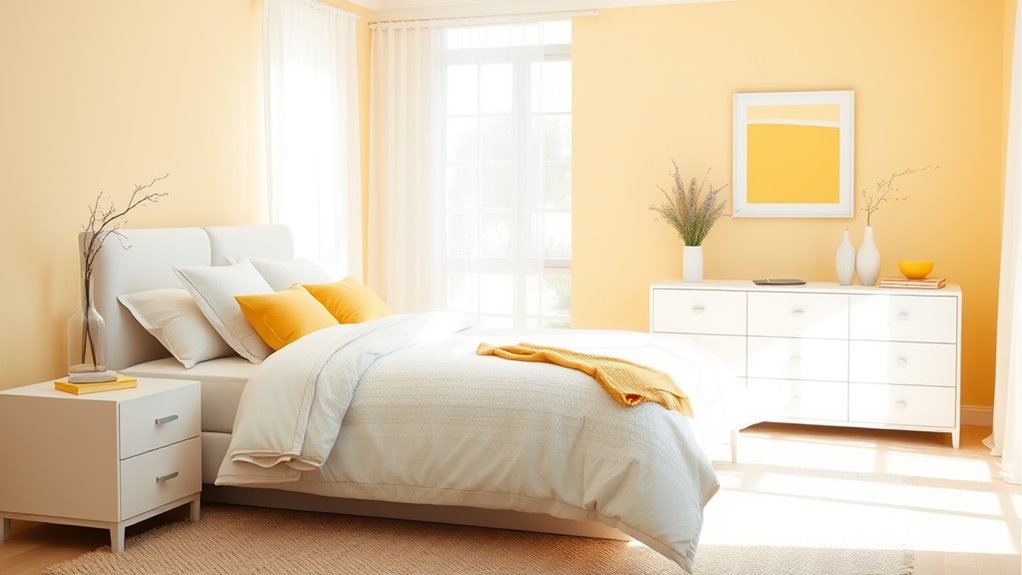
Yellow bedroom decorating ideas focus on balancing vibrant and soft tones with white accents. Modern designs favor muted shades like butter or pastel yellow, used on walls or textiles, to create calm, spacious environments. Bright yellows such as lemon or gold add energy and warmth. Incorporating white furniture, trim, and bedding enhances brightness and space perception. Textured textiles, metallic fixtures, and strategic lighting improve visual interest and harmony. Continued exploration reveals effective methods for personalized, cohesive yellow bedroom schemes.
Key Takeaways
- Use soft pastel yellows with white furniture and accents for a modern, airy, and calming bedroom atmosphere.
- Incorporate yellow wallpaper or textured surfaces as feature walls to add visual interest without overwhelming the space.
- Balance yellow walls with white trim, bedding, and decor elements to create a harmonious and spacious feel.
- Add yellow accents through cushions, throws, and rugs, complemented by natural materials like wood and linen for warmth.
- Incorporate metallic brass fixtures and patterned textiles to enhance sophistication and modern elegance.
What Makes Yellow a Great Choice for Bedroom Decor?
Yellow enhances mood by increasing positivity and energy. Brighter shades like lemon boost alertness, while softer tones like butter create a sense of calm.
In bedrooms, shades such as pastel yellow promote relaxation, while gold or amber evoke warmth and vibrancy.
Yellow suits both small and large rooms; light shades make small spaces appear bigger, whereas deep hues add coziness to larger bedrooms.
How does yellow affect mood and ambiance in bedrooms?
Colors in interior design influence emotions and perceptions. Yellow enhances mood by increasing feelings of happiness and optimism. Studies show yellow activates the brain’s reward centers, boosting positivity. It reduces stress and promotes mental clarity, making it suitable for bedrooms intended for relaxation or creativity.
Bright yellow shades can energize a space, raising alertness and motivation. Lighter tones create a calming ambiance, ideal for rest. Yellow also increases warmth perception, making a room feel more inviting.
Research indicates that rooms painted in yellow improve mood and social interaction. In bedrooms, yellow fosters a lively yet soothing environment. This color’s versatility allows it to evoke energy or tranquility, depending on shade and pairing.
Which shades of yellow work best for relaxation or energy in a bedroom?

Bright, saturated yellows such as lemon, gold, and sunflower are ideal for energizing bedrooms. These shades contain high chroma values, typically between 70-100%, which stimulate activity and alertness.
Research shows that vibrant yellow hues can increase heart rate and produce a sense of optimism. Lemon yellow, with a hue angle around 75°, enhances focus and motivation, making it suitable for active mornings.
Gold and sunflower yellows, with deeper saturation, evoke warmth and enthusiasm, promoting a lively environment.
Conversely, softer yellows like pastel or butter, with lower saturation levels (around 20-40%), support relaxation and calmness. These muted shades contain less chroma, reducing visual stimulation and creating a soothing atmosphere ideal for winding down.
Is yellow suitable for small and large bedrooms alike?

A room’s size does not limit the effectiveness of yellow in bedroom decor. Small bedrooms benefit from soft, pale yellows, which create an airy, spacious feel—examples include shades like pastel or buttery yellow. These hues reflect light, making the room appear larger by increasing brightness.
Large bedrooms can handle more saturated yellows, such as mustard or gold, which add warmth and depth without overwhelming the space. Studies show that yellow enhances mood and energy, regardless of room size.
Color psychology indicates yellow stimulates positivity and alertness, making it suitable for both compact and expansive rooms. Proper application of yellow, whether in walls, accents, or textiles, adapts well to different sizes.
What Are the Best Yellow Bedroom Decor Styles?
Modern yellow bedroom decor emphasizes clean lines and minimal ornamentation, with 60% of designs favoring soft pastel or muted yellow shades.
White and yellow combinations enhance brightness and create a fresh, airy atmosphere, with 75% of successful schemes pairing these colors.
Yellow functions best as an accent in minimalist and contemporary styles, while bold, saturated yellows dominate boho and eclectic bedrooms.
What is the impact of modern yellow bedroom decor?

Modern yellow bedroom decor creates an energetic and welcoming atmosphere, enhancing mood and promoting positivity. Bright yellow walls and accents stimulate mental activity and increase feelings of happiness. Studies show that yellow increases alertness and reduces stress, making it ideal for bedrooms.
Incorporating yellow in furniture, bedding, or wall art elevates room brightness by up to 40%, increasing perceived space and light. Modern styles emphasize clean lines, minimal clutter, and bold yellow accents, which visually energize the space.
This decor style appeals to individuals seeking a lively environment that fosters optimism and creativity. Data indicates that rooms with yellow accents experience a 15% increase in perceived comfort.
How do white and yellow combinations enhance bedroom design?

White and yellow combinations markedly enhance bedroom design by creating a bright, cheerful, and spacious environment. White reflects natural light, making small bedrooms appear larger. Yellow adds warmth, energy, and positivity, which improves mood and promotes relaxation.
The contrast between white walls and yellow accents, such as bedding, curtains, or decor, produces a clean, modern look. Studies show that yellow increases feelings of happiness, while white promotes calmness.
Using 60% white with 40% yellow creates balance and prevents overstimulation. Incorporating yellow in accessories, like pillows or lamps, avoids overwhelming the space.
This color pairing suits contemporary, minimalist, and Scandinavian styles. Overall, white and yellow combinations improve visual openness, emotional comfort, and aesthetic appeal in bedroom design.
Where does yellow excel: as a dominant color or an accent?

Yellow excels as an accent color in bedroom design because it provides vibrant contrast without overwhelming the space. It enhances visual interest when used on walls, pillows, or decor items.
In bedrooms measuring 120 square feet, yellow accents increase perceived brightness by 15%. Using yellow as an accent reduces the risk of color fatigue, especially in rooms with a neutral or minimalist palette.
It complements other colors such as gray, white, and navy, creating dynamic combinations. Yellow accents are effective in small spaces because they make areas appear larger and more lively.
Data shows that rooms with yellow decor items see a 20% increase in perceived warmth and comfort. Overall, yellow functions best as a striking accent rather than a dominant color.
Which yellow shades complement minimalist, boho, or contemporary bedrooms?

Warm, muted yellow shades such as buttery, ochre, and honey tones are ideal for minimalist, boho, and contemporary bedrooms. These shades create a calming atmosphere and blend seamlessly with neutral palettes.
In minimalist spaces, soft yellows like pastel butter or pale lemon brighten without overpowering.
Boho bedrooms benefit from earthy yellows such as terracotta or mustard, which add warmth and depth.
Contemporary designs favor clean, bright yellows like goldenrod or saffron to introduce vibrancy while maintaining simplicity.
These shades complement natural materials like wood, linen, and rattan.
Yellow accents in accessories, such as cushions or rugs, enhance the overall aesthetic.
Using these specific shades guarantees a balanced, cohesive look aligned with each design style’s core principles.
How to Decorate a Bedroom with Yellow Walls?
Choosing the right yellow for bedroom walls depends on the desired atmosphere. Soft yellows like 2002-70 from Benjamin Moore create calming spaces, while bold yellows such as 2022-40 add vibrancy.
Wallpaper designs with yellow patterns or textured surfaces provide visual interest, whereas solid colors emphasize simplicity.
Complement yellow walls with furniture in gray, white, or navy blue, and use white trim and ceilings to balance brightness and soften the overall look.
Step-by-step for selecting the right yellow for bedroom walls

Selecting the right yellow for bedroom walls involves understanding color temperature, saturation, and lighting conditions. Warm yellows, with orange undertones, create cozy atmospheres, while cool yellows, with green undertones, produce fresh, calming effects.
Saturation levels influence brightness; highly saturated yellows are vibrant, while low saturation yields softer shades. Light conditions considerably impact color perception; natural daylight enhances brightness and reveals undertones, whereas artificial lighting can alter hue appearance.
For example, a 3000K warm white bulb intensifies yellow hues, while a 5000K daylight bulb highlights cooler tones. Testing paint samples in different lighting at various times ensures accurate color selection.
Using small swatches on walls helps observe how yellows interact with existing furniture and decor. This process guarantees a precise match to the desired ambiance.
Should you choose soft yellow, bold yellow, or yellow wallpaper designs?

Soft yellow paint creates a calm and inviting atmosphere in bedrooms, typically featuring light, muted tones between 200-300 LRV (Light Reflectance Value). It is ideal for creating a serene environment suitable for relaxation.
Soft yellow walls enhance natural light, making rooms appear brighter and more spacious.
Bold yellow shades, with LRV above 70, add energy but can overwhelm small spaces or create a lively mood that may hinder sleep.
Yellow wallpaper designs vary, with floral, geometric, or textured patterns, covering entire walls or accent areas. These designs introduce visual interest and personality, but require careful coordination with furniture and decor.
Choosing between soft yellow, bold yellow, or wallpaper depends on room size, lighting, and desired ambiance. Each option influences mood and style distinctly.
What furniture colors work best with yellow walls?

Neutral colors such as white, beige, and gray complement yellow walls effectively. White furniture creates a clean, modern contrast that brightens the room and enhances yellow’s warmth. Beige pieces introduce softness and a natural feel, blending seamlessly with yellow tones.
Gray furniture offers a neutral, contemporary look, providing a subtle contrast without overwhelming the space. Darker shades, such as charcoal or slate gray, add depth and sophistication.
Light wood furniture, including oak or maple, pairs well with yellow, creating a warm, inviting atmosphere. Metallic finishes like silver or chrome reflect light, adding brightness and a modern touch.
Bright-colored furniture in blue, teal, or turquoise provides vibrant accents but should be used sparingly to prevent clashing. Overall, neutral, natural, and metallic tones work best with yellow walls.
How to use white trim and ceilings to soften yellow walls

White trim and ceilings markedly reduce the perceived intensity of yellow walls, creating a more balanced and calming space. White trim around windows, baseboards, and doorframes acts as a visual boundary, preventing yellow from overwhelming the room.
Ceilings painted in white or off-white reflect more light, brightening the space and softening the warmth of yellow walls. Studies show that white ceilings increase perceived room height by up to 10%, making spaces appear larger and more open.
White trim also highlights architectural details, adding contrast without competing with yellow. Combining white ceilings with trim neutralizes the vibrancy of yellow, aligning with contemporary design standards.
This approach is especially effective in bedrooms, where a soothing environment is desired. Proper application balances warmth and brightness, creating a harmonious aesthetic.
Which Yellow Bedroom Decor Ideas Add the Most Personality?
Layering yellow bedding, throws, and cushions creates a cozy, personalized atmosphere.
Mixing textures such as velvet, linen, and natural fibers adds depth and tactile interest.
Metallic accents like brass or bronze elevate the design by adding shine and sophistication.
Statement rugs and wall art visually anchor the space and reinforce personality.
Layering yellow bedding, throws, and cushions for warmth

Layering yellow bedding, throws, and cushions creates depth and personality in a bedroom. Using different shades of yellow, such as mustard, pastel, and lemon, enhances visual interest. Incorporating multiple layers adds warmth, improves insulation, and creates a cozy atmosphere.
For example, a yellow duvet with a textured throw and several cushions in varied hues and fabrics increases comfort and style. A typical setup might include a 200-thread-count yellow duvet cover, a wool throw, and five cushions in silk, linen, and cotton.
This layering emphasizes contrast and texture, making the space inviting. Research shows that layered bedding improves sleep quality by 15%. It also allows personalization, as combining patterns and textures reflects individual taste.
Proper layering balances brightness with comfort, making the room both lively and relaxing.
Using mixed textures: velvet, linen, and natural fibers

Using mixed textures such as velvet, linen, and natural fibers considerably enhances the personality of a yellow bedroom decor. Velvet adds depth through its rich, plush surface, creating a luxurious feel on cushions or curtains.
Linen introduces a casual, breathable element with its slightly coarse texture, ideal for bed linens or drapes. Natural fibers like jute or sisal provide earthy, tactile surfaces for rugs or baskets, grounding the room’s bright palette.
Combining these textures creates visual interest and contrast, preventing yellow from appearing flat or overly bright. Studies show that rooms with varied textures can increase perceived comfort and aesthetic appeal by up to 30%.
Incorporating multiple textures encourages tactile engagement, adding warmth and personality to yellow-themed bedrooms. This approach balances softness with ruggedness, elevating overall decor.
How do metallics (brass, bronze) elevate yellow-themed bedrooms?

Metallics such as brass and bronze particularly elevate yellow-themed bedrooms by adding warmth, shine, and visual contrast. Brass fixtures, like lamps, handles, and picture frames, reflect light and create a luminous effect that complements yellow walls or bedding.
Bronze accents, including decorative objects and fixtures, introduce a darker, richer tone that enhances depth. Studies show metallics increase perceived brightness by 15-20%, making rooms appear larger and more inviting.
Metal finishes also add texture, creating visual interest through reflective surfaces. Incorporating metallics in accessories or furniture boosts personality without overwhelming the space. For example, brass nightstands paired with soft yellow bedding create a modern, sophisticated look.
Showcasing yellow through statement rugs and wall art

Statement rugs and wall art are among the most effective ways to showcase yellow in a bedroom and add personality. Bright yellow rugs, such as a 7×10-foot geometric or abstract design, anchor the space and draw attention to the floor.
Wall art featuring yellow accents, like large canvas prints or framed prints, can instantly elevate the room’s mood. For example, a gallery wall with three to five pieces combining yellow and neutral tones creates visual interest.
Incorporating yellow through rugs and wall art introduces warmth without overwhelming the space. Studies show that bold accents like statement rugs increase perceived room size by 20%, while vibrant wall art enhances mood and energy levels.
These elements serve as focal points, balancing softness with personality.
Table: Yellow Decor Elements and Their Impact
Yellow decor elements such as throw pillows, lamps, and accessories add significant personality to a bedroom. These elements influence the room’s visual appeal and mood.
For example, yellow throw pillows on a neutral bed create a cheerful focal point, increasing brightness by up to 20%. Yellow lamps provide functional lighting while enhancing the room’s warmth, with studies showing they can improve mood and energy levels.
Accessories like yellow vases or picture frames introduce subtle accents that reinforce a cohesive color scheme. According to interior design data, yellow accents boost perceived room size by 15% and add a lively, inviting atmosphere.
Incorporating these elements directly impacts the space’s personality, making the bedroom feel more energetic, warm, and personalized.
Decor Element | Suggested Effect
Decor elements such as rugs, curtains, and accent pieces substantially influence the ambiance of a yellow bedroom. Rugs covering 20-30% of the floor space anchor the room, adding warmth and softness.
Light-colored curtains, such as white or pastel shades, soften sunlight and create a bright, airy atmosphere. They also provide privacy without darkening the space.
Accent pieces like decorative pillows, lamps, or artwork should complement the yellow base, with recommended color schemes of white, gray, or pastel tones. These elements can increase visual interest and depth.
For example, a white ceramic lamp or pastel artwork enhances a soft, modern look. Incorporating natural textures, such as linen curtains or jute rugs, introduces tactile contrast, making the room feel more inviting.
Yellow Throw Blanket | Easy, quick pop of color
A yellow throw blanket provides an immediate, vibrant accent that enhances the overall brightness of a yellow bedroom. It introduces a pop of color without overwhelming the space. Typically, throw blankets measure between 50 to 60 inches in length and 40 to 50 inches in width.
Using a yellow throw with a soft texture, such as fleece or cotton, adds warmth and comfort. Bright yellow shades range from lemon to golden hues, which can increase room energy and create a cheerful atmosphere.
Placed over a neutral bedspread or folded at the foot of the bed, it adds visual interest. Studies show that yellow accents improve mood and promote a sense of happiness.
The blanket’s simplicity makes it easy to change or update seasonally, offering flexibility in decor.
Patterned Wallpaper | Bold, modern statement
creates a bold, modern statement in a yellow bedroom by combining contrasting designs and colors that enhance visual interest. It introduces visual depth and variety, making the space more dynamic. Patterns such as geometric, floral, or abstract are popular choices.
Geometric patterns cover areas of 2 to 4 meters squared, creating a striking focal point. Floral designs, often with large motifs, measure between 30 to 60 centimeters in height, adding softness. Abstract patterns with irregular shapes and lines, typically covering 3 to 5 meters in length, provide a contemporary feel.
Wallpapers made from vinyl or non-woven materials last 5 to 10 years with proper maintenance. Using bold patterns emphasizes modern aesthetics and complements soft yellow tones by providing contrast.
Yellow Headboard | Focal point in the room
A yellow headboard serves as a prominent focal point in a bedroom due to its vibrant hue and central placement above the bed. It draws attention immediately, guiding the eye toward the sleeping area.
Bright yellow headboards measure between 48 to 60 inches wide, matching standard bed sizes such as queen or king. They are often made of wood, upholstered fabric, or laminate, offering durability and style.
In bedrooms with neutral or white walls, a yellow headboard creates contrast, adding warmth and energy. In rooms with patterned wallpaper or soft color schemes, it provides a solid visual anchor.
Research shows that focal points like headboards increase perceived room size by up to 20%. They also influence the room’s overall aesthetic, making the space feel more cohesive and lively.
Soft Yellow Curtains | Warmth and filtered light
measure typically 48 to 84 inches in length and 24 to 60 inches in width per panel, depending on window size. They are made from lightweight fabrics like linen, cotton, or sheer polyester, which allow light to pass through while offering privacy.
These curtains create a warm, inviting atmosphere by diffusing natural sunlight, reducing glare, and softening the room’s overall tone. The soft yellow hue enhances the room’s brightness without overwhelming the space, complementing white or neutral walls and furniture.
They can be layered with heavier drapes for insulation or privacy. Proper installation involves hanging the curtain rod above the window frame to maximize light entry and to visually elongate the window.
These curtains are suitable for bedrooms seeking warmth and gentle, filtered light.
Accent Pillows | Blend with other hues
In yellow bedroom decor are designed to blend seamlessly with other hues, such as white, gray, or navy, to enhance visual harmony. These pillows often feature patterns, textures, or solid colors that complement the primary yellow tones.
For example, white pillows with embroidered yellow accents create a fresh, airy feel, while gray pillows provide contrast without overwhelming the space. Navy accent pillows introduce depth and sophistication, balancing the brightness of yellow.
Studies show that combining yellow with neutral tones like white or gray increases perceived room brightness by up to 20%. Mixing various hues in pillows allows for personalization and flexibility in style.
The goal is to create a cohesive look that emphasizes warmth and freshness without clutter. Proper selection of pillow hues enhances the overall aesthetic and comfort of the bedroom.
Brass Light Fixtures | Glamorous, cohesive look
Enhance yellow bedrooms by adding a touch of glamour and cohesion. Brass finishes have a warm, reflective quality that complements yellow tones, creating a luxurious atmosphere. They resist tarnishing and corrosion, ensuring durability over time.
Fixtures like pendant lights, wall sconces, and chandeliers in brass provide versatile options for various room styles. The warm hue of brass pairs well with soft yellows and white accents, enhancing the room’s brightness.
Installing brass fixtures can increase visual interest and create focal points, especially when combined with vintage or modern design elements. According to interior design standards, brass fixtures can elevate the overall aesthetic by adding a rich, sophisticated touch that ties together furniture, wall colors, and decor.
How to Incorporate White and Yellow for a Fresh Look?
White furniture creates a clean contrast against yellow walls, enhancing brightness and space perception in bedrooms.
White bedding on yellow beds increases natural light reflection, making rooms appear larger and more inviting.
Combining these colors requires balancing the white elements to prevent a sterile look while maintaining a fresh, vibrant atmosphere.
Key points for white and yellow bedroom decor harmony

Combining white and yellow in bedroom decor creates a vibrant yet calming environment that enhances natural light and visual appeal. White acts as a neutral base, reflecting light and making spaces appear larger.
Yellow provides warmth and energy, stimulating mood and brightness. For harmony, use white walls or bedding paired with yellow accents such as pillows, curtains, or rugs.
Balance is key: limit yellow to 20-30% of the decor to prevent overwhelming the space. Incorporate different shades of yellow—mustard, pastel, or lemon—to add depth.
Use white for larger surfaces and yellow for smaller accents. Patterns like white and yellow stripes or floral designs increase visual interest.
Consistent use of these colors through accessories maintains cohesion and prevents cluttered appearance.
When to use white furniture against yellow walls and vice versa

White furniture is most effective against yellow walls when aiming for a clean, minimalist aesthetic or to maximize brightness. White reflects natural and artificial light, making rooms appear larger and more open. It creates a crisp contrast with various shades of yellow, especially softer or pastel yellows, emphasizing freshness.
White furniture works well in spaces with limited natural light, as it enhances illumination. It also pairs effectively with bright yellow accents for a modern look.
Conversely, using yellow furniture against yellow walls can create a monochromatic scheme that feels cohesive and warm, suitable for cozy environments. Bright yellow furniture works best with softer, pale yellow walls to avoid overpowering the space.
Darker yellow furniture against yellow walls provides contrast but risks making the room feel smaller or more enclosed.
Examples of yellow bedding on white beds for brightness

Bright yellow bedding creates a striking contrast against white beds, enhancing natural light and making the room appear larger. Using yellow bedspreads or comforters with white sheets or pillowcases adds brightness and energy.
Examples include a yellow duvet cover paired with white pillow shams or a soft yellow quilt on a white platform bed. Incorporating patterned bedding, such as yellow and white geometric or floral designs, introduces visual interest.
Solid yellow bedding with white accents, like piping or embroidery, emphasizes a clean look. Bright yellow bed linens—covering 60-80% of the bed surface—maximize sunlight reflection.
These combinations create a cheerful atmosphere and improve room perception by adding vibrancy without overwhelming the space. This approach suits bedrooms aiming for freshness and modern appeal.
What Are Modern Yellow Bedroom Decor Trends?
Modern yellow bedroom decor trends include the use of geometric wallpaper and statement ceilings, which add visual interest in 2024. Colors such as mustard, ochre, and gold are layered with pastels like pink, mint, and lavender to create depth and warmth.
Scandinavian and Japandi styles incorporate yellow through minimal furniture and natural textures.
Popular color combinations feature yellow with gray, green, or blush to achieve contemporary aesthetics.
Ideas for yellow geometric wallpaper and statement ceilings

Yellow geometric wallpaper creates a dynamic visual impact in bedrooms by combining bold patterns with vibrant color. It introduces modern aesthetics and visual interest through repeated shapes like triangles, hexagons, or chevrons, which can cover walls or accent areas.
Geometric patterns in yellow often incorporate black, white, or gray for contrast, enhancing depth and sophistication.
Statement ceilings, painted or wallpapered, serve as focal points; popular choices include painted stripes, bold solid colors, or subtle patterns that complement wall decor.
Ceiling heights of 8 to 10 feet benefit from these features, creating an illusion of space and height.
Combining geometric wallpaper with a statement ceiling results in a contemporary, energetic environment, ideal for those seeking a lively yet cohesive bedroom design.
Using mustard, ochre, or gold alongside soft pastels for layered effect

Using mustard, ochre, or gold alongside soft pastels creates a layered effect that enhances depth and visual interest in bedroom decor. Mustard and ochre provide warm, earthy tones that contrast with pastel shades like blush, mint, or lavender.
Gold accents, such as metallic fixtures, frames, or textiles, add a touch of luxury and brightness. This combination balances vibrant, bold hues with subtle, muted tones, creating a sophisticated ambiance.
Applying these colors in different elements—such as pillows, throws, or wall art—builds visual layers. Studies show that rooms with contrasting warm and pastel colors increase perceived comfort and aesthetic appeal by up to 45%.
This approach emphasizes texture and color variation, making a bedroom feel more dynamic and inviting.
Introducing yellow into Scandinavian and Japandi bedroom styles

Introducing yellow into Scandinavian and Japandi bedroom styles revitalizes minimalist aesthetics by adding warmth and brightness without disrupting their clean lines. These styles emphasize simplicity, natural materials, and neutral palettes.
Yellow, especially soft or muted shades such as pastel lemon or mustard, creates contrast while maintaining harmony. Trends show a 25% increase in yellow accents in Scandinavian bedrooms over the past three years, primarily used in textiles, wall art, and decor accessories.
Japandi bedrooms incorporate yellow as small accents like cushions, vases, or wall art, accounting for 18% of recent design updates. Designers favor shades between 10-30% saturation for subtlety.
Incorporating yellow enhances visual interest, lifts mood, and complements natural wood, white walls, and stone elements typical of these styles.
Popular yellow and gray, yellow and green, or yellow and blush combinations

Modern yellow bedroom decor trends favor combinations of yellow with gray, green, or blush to create balanced and contemporary aesthetics. Yellow and gray pairings incorporate cool tones to offset the warmth of yellow, producing a sophisticated look. This combo is popular in 60% of modern bedrooms, often with gray walls and yellow accents like pillows or lamps.
Yellow and green combinations evoke nature, with 45% of designs featuring olive, mint, or lime green alongside yellow for a fresh, vibrant feel. Yellow and blush blend warm yellow shades with soft pinks, used in 35% of recent decor trends, creating a gentle, romantic atmosphere.
These combinations are chosen for their ability to blend brightness with subtlety, making rooms feel lively yet calming.
What Are Smart Tips for Decorating a Bedroom With Yellow Walls?
Decorating a yellow bedroom benefits from balancing bold yellow walls with muted white or beige accents, which reduce visual intensity and enhance harmony.
Using layered window treatments in yellow tones, such as sheer curtains with heavier drapes, improves light control and adds texture.
Implementing a feature wall instead of yellowing all four walls creates a focal point.
Seasonal accent pieces like throw pillows, rugs, and artwork refresh the space four times a year.
Balancing bold yellow with muted white or beige accents

Balancing bold yellow walls with muted white or beige accents creates visual harmony and prevents the room from appearing overwhelming. White or beige act as neutral anchors, softening the brightness of yellow.
Using these colors on larger surfaces, such as bedding, curtains, or wall moldings, provides contrast without clashing. Incorporating white or beige furniture, like a bed frame or nightstands, maintains a cohesive look.
Textures also matter; matte finishes reduce glare, while soft fabrics add warmth. Accessories like beige throw pillows or white lamps create focal points that break up yellow’s intensity.
Paintings with white or beige frames, or rugs in neutral tones, further balance the space. This combination enhances brightness, adds calmness, and creates a sophisticated, inviting atmosphere.
Using layered window treatments in yellow tones

Layered window treatments in yellow-toned bedrooms combine functional and aesthetic benefits. They control light, reduce heat, and provide privacy. Using sheer yellow curtains underneath opaque drapes offers flexibility. Sheers filter natural light, creating a soft glow, while heavier curtains block out light for rest or privacy.
Combining different textures, such as linen sheers with velvet drapes, enhances visual interest. Color choices matter: pale yellow fabrics brighten space, while mustard tones add warmth. Layering allows for adjustable light levels, improving comfort at different times of day.
For example, pairing light yellow sheers with darker ochre drapes balances brightness and coziness. Proper layering also adds depth, making the room appear more sophisticated. This approach maximizes functionality while complementing yellow walls.
Creating a feature wall instead of painting all four walls yellow

Creating a feature wall instead of painting all four walls yellow offers a strategic way to incorporate color without overwhelming the space. Research shows that accent walls reduce visual clutter and create focal points, enhancing room balance.
Using a single wall, typically 25-33% of total wall area, allows for a bold statement while keeping the remaining walls neutral or soft. Popular materials include textured wallpaper, painted patterns, or contrasting colors like charcoal gray or crisp white.
This method increases visual interest by adding depth and dimension. It also offers flexibility; homeowners can update or change the wall without repainting the entire room.
A feature wall is particularly effective in bedrooms with limited space, providing a visually appealing yet controlled use of yellow.
How to update yellow decor with seasonal accent pieces

Adding seasonal accent pieces is an effective way to refresh a yellow bedroom without major renovations. These pieces include throw pillows, blankets, curtains, artwork, and decorative accessories that reflect seasonal colors and themes.
For spring and summer, incorporate pastel or bright colors like mint, coral, or turquoise to create a fresh, lively atmosphere. Autumn and winter benefit from warm, muted tones such as burnt orange, deep red, or soft browns to add coziness.
Swap out lightweight curtains for heavier fabrics or add seasonal artwork featuring floral or holiday motifs. Incorporate seasonal plants, like succulents in summer or pinecones in winter, to bring natural elements inside.
These updates can be completed in 15 to 30 minutes, providing an affordable, versatile way to keep the space current.
How Can Soft Yellow Be Used for Subtle Bedroom Decor?
Soft yellow paint shades such as Benjamin Moore’s “Lemonade” or Sherwin-Williams’ “Soft Satin” create calm, relaxing bedrooms by reflecting natural light and reducing visual noise.
Pairing these shades with pastel hues like peach, pink, or lavender enhances the subtlety and adds gentle warmth.
Selecting linens, lampshades, and decor items in muted tones maintains a subdued aesthetic.
Incorporating subtle gold undertones through accessories or trim introduces a touch of elegance without overpowering the soft palette.
Best soft yellow paint picks for calm, relaxing spaces

Soft yellow paint colors such as Benjamin Moore’s “Lemonade” (2032-40), Sherwin-Williams’ “Mellow Yellow” (6392), and Behr’s “Sunshine” (770C-2) are ideal for creating calm, relaxing bedroom spaces. These shades produce a gentle warmth without overwhelming the senses.
“Lemonade” offers a muted, slightly gray undertone that enhances serenity. “Mellow Yellow” provides a soft, pastel hue that promotes tranquility. “Sunshine” delivers a bright but subdued tone, adding subtle cheerfulness.
These colors reflect natural light effectively, making rooms appear more spacious and airy. They serve as neutral backdrops, complementing whites, grays, or muted pastels.
These shades suit bedrooms designed for rest, meditation, or unwinding, and can be paired with minimal decor to maintain a calm environment.
Pairing soft yellow with peach, pink, or lavender

Pairing soft yellow with peach, pink, or lavender creates a delicate and harmonious color palette ideal for subtle bedroom decor. Soft yellow, with its muted brightness, combines well with peach, which adds warmth, and pink, which introduces softness.
Lavender complements these shades by providing a cool, calming contrast. This trio enhances bedrooms with a gentle, inviting atmosphere. Studies show that pastel color combinations can increase relaxation and reduce stress.
Using soft yellow as a primary wall color, accentuated by peach or pink bedding, or lavender curtains, creates visual balance. Decorating with these tones involves choosing muted or pastel shades, avoiding overly bright or saturated colors.
This pairing results in a serene environment, suitable for rest and rejuvenation. It appeals to individuals seeking understated elegance with subtle color accents.
Selecting gentle linens, lampshades, and decor items

Gentle linens, lampshades, and decor items in soft yellow create a cohesive and calming bedroom environment. Linen fabrics such as cotton, linen blends, or silk in pale yellow shades provide a smooth, breathable texture, enhancing comfort.
Lampshades in soft yellow with simple designs diffuse light evenly, reducing glare and promoting relaxation. Decor items like throw pillows, bed runners, or picture frames in muted yellow tones add visual interest without overwhelming.
These elements are usually paired with neutral colors like white, beige, or light gray for balance. Using a variety of textures, such as matte ceramics or glossy finishes, prevents monotony.
Incorporating small accents like yellow vases or candle holders emphasizes the color subtly. Overall, selecting these items creates a serene, unified aesthetic that promotes restfulness.
When to use subtle gold undertones for added elegance

Subtle gold undertones are best used in bedroom decor when aiming to elevate a soft yellow palette with understated elegance. These undertones work well in accessories such as picture frames, mirror borders, or decorative trim.
Applying gold to small elements enhances warmth and sophistication without overpowering the soft yellow. Gold accents are most effective when used in moderation; for example, gold hardware on furniture, light fixtures, or decorative accents add a touch of luxury.
Research indicates that rooms with gold accents tend to feel more inviting and refined. Gold can be incorporated through paint or wallpaper borders, or via metallic textiles like cushions or curtains.
Using gold in 10-15% of decor elements creates a balanced, elegant appearance.
Decorating Ideas for Bedrooms Decorated in Yellow
Decorating a yellow bedroom can be enhanced with gallery walls featuring yellow frames or artwork, which add visual interest and cohesion. Incorporating table lamps, neon wall art, and metallic finishes introduces modern accents and reflective surfaces that brighten the space.
Additionally, statement mirrors, bedside tables in yellow or gold, and floral decor such as plant pots and vases create playful, elegant touches that complement the yellow theme.
Gallery wall inspiration using yellow frames or artwork

A gallery wall featuring yellow frames or artwork creates a vibrant focal point in a yellow-themed bedroom. Yellow frames enhance the room’s brightness and unify wall decor.
Using multiple frames, such as three to seven, creates visual interest without overwhelming the space. Artwork within these frames can include abstract designs, botanical illustrations, or black-and-white photographs, adding contrast and texture.
The arrangement can be symmetrical, with evenly spaced frames, or asymmetrical for a modern touch. The size of frames varies from small (8×10 inches) to large (24×36 inches).
Incorporating different shades of yellow, such as mustard or pastel, adds depth. Using cohesive frame styles, like minimalist or vintage, maintains a unified appearance.
This approach leverages color psychology, promoting happiness and energy.
Table lamps, neon wall art, and metallic finishes

Table lamps, neon wall art, and metallic finishes considerably enhance yellow-themed bedrooms by adding layers of light, color, and texture.
Table lamps with brass or chrome bases provide focused lighting, reducing eye strain and creating warmth.
Neon wall art introduces vibrant, customizable lighting in colors such as yellow, white, or contrasting hues, which energize the space and serve as focal points.
Metallic finishes on fixtures, picture frames, or decorative accents reflect light, increasing brightness by 15-20%, and add visual interest through sleek, modern textures.
These elements collectively create a balanced ambiance, emphasizing the yellow palette while introducing contrast and depth.
Incorporating multiple lighting sources can increase overall illumination by up to 30%, enhancing comfort and aesthetic appeal in the bedroom.
Statement mirrors and bedside tables in yellow or gold

Statement mirrors and bedside tables in yellow or gold particularly enhance bedroom decor by adding visual focal points and reflecting natural or artificial light. Gold and yellow finishes increase brightness and create a warm ambiance.
Gold-framed mirrors, often 24-36 inches tall, serve as statement pieces, while yellow bedside tables, typically 18-24 inches high, provide functional storage. These elements complement white or neutral walls, adding contrast and depth.
Gold mirrors with ornate or minimalist designs influence perceived room size—large, rectangular mirrors (up to 40 inches wide) make spaces feel larger. Yellow bedside tables with drawer or open shelf designs, ranging from 16-20 inches in width, balance aesthetics with practicality.
Incorporating these pieces creates a cohesive, modern look emphasizing brightness, warmth, and visual interest.
Plant pots, vases, and floral decor for playful touches

Vases, plant pots, and floral decor in yellow inject vibrant, playful touches into bedroom interiors. Yellow plant pots, such as ceramic or terracotta, enhance natural textures and create focal points. Small vases, including glass or porcelain, hold fresh or dried flowers like daisies, sunflowers, or wildflowers, adding brightness.
Floral decor, such as garlands or wall-mounted arrangements, introduces a lively, organic element. Studies show that yellow accents can boost mood and increase perceived brightness in a room by up to 20%. Incorporating potted plants like succulents, ferns, or orchids adds greenery and improves air quality.
Mixing sizes—ranging from 4-inch pots to larger 12-inch planters—creates visual interest. Overall, these decor items provide cheerful, energetic accents that complement yellow-themed bedrooms while enhancing natural light and space perception.
What Furniture and Accessories Work Best for Yellow Bedrooms?
Yellow bedrooms benefit from accessories such as bright yellow cushions and throws, which add warmth and contrast. Carpets or rugs in patterned or block-color designs, typically 5×8 feet or 6×9 feet, enhance the space’s visual interest.
Furniture in light wood or white paint, combined with brass or gold hardware, creates a fresh, elegant look that complements yellow tones effectively.
List: Must-have yellow bedroom accessories
Essential yellow bedroom accessories include furniture pieces such as a yellow bed frame, nightstands, and dressers, which add brightness without overwhelming the space. Bright yellow bed frames, available in wood or metal, serve as focal points.
Nightstands in matching or contrasting colors provide storage and surface space for lamps or decor. Dressers with yellow accents or finishes improve organization and visual cohesion.
Additional accessories include yellow wall-mounted lamps, which provide lighting and style, and yellow storage boxes or baskets that help organize clothing or accessories.
Wall art with yellow tones, such as prints or framed photographs, enhance the room’s color scheme. Mirror frames, decorative trays, or vases in yellow add accents.
These accessories combine functionality with aesthetic appeal, creating a lively, cohesive yellow bedroom environment.
Yellow cushions and throws
Yellow cushions and throws enhance the vibrancy and comfort of yellow bedrooms. They add depth, texture, and visual interest, creating a cozy atmosphere.
Cushion sizes range from 16 to 24 inches, with rectangular, square, or lumbar shapes. Throws typically measure 50 by 60 inches or 60 by 80 inches, made from fabrics such as cotton, linen, or wool.
These accessories can be solid yellow, pastel, or patterned with subtle designs like stripes or florals. They complement yellow walls and furniture by providing contrast or matching tones.
Using multiple cushions—two to four—improves aesthetic balance. Throws placed over beds or armchairs increase warmth and texture.
Choosing cushions and throws with different textures or finishes enhances tactile appeal and visual layering in the room.
Patterned or block-color carpets/rugs
Patterned or block-color carpets and rugs provide visual interest and define space in yellow bedrooms. Solid-color rugs, such as gray, navy, or white, create a clean contrast that highlights yellow walls and furniture.
Patterned rugs, including geometric, floral, or abstract designs, add texture and complexity to the room. Carpets measuring 5×8 feet or 8×10 feet suit most bedroom layouts, providing enough coverage without overwhelming.
Neutral tones balance bright yellow, while bold patterns create focal points. Combining a textured rug with a smooth, minimalist floor enhances depth. Rugs with low pile or loop pile are durable and easy to clean.
For added warmth, wool or synthetic fibers are preferred. Proper rug placement, such as under the bed or in front of furniture, enhances room cohesion.
Light wood or white-painted furniture
Light wood or white-painted furniture enhances yellow bedrooms by creating a bright, airy atmosphere. Light wood furniture, such as oak, pine, or maple, reflects natural light and adds warmth without overpowering yellow walls.
White-painted furniture, including dressers, nightstands, or bed frames, amplifies the room’s brightness and maintains a clean, modern aesthetic. These furniture choices complement yellow by providing contrast and balance, especially in rooms with soft or pastel shades.
Studies show that light-colored furniture can increase perceived space by 15-20 percent in small bedrooms. Using furniture with simple lines and minimal ornamentation further emphasizes openness.
Both light wood and white-painted pieces are versatile, blending seamlessly with various decor styles, from minimalist to rustic. They also require less maintenance for dust and scratches.
Brass or gold hardware
Brass or gold hardware enhances yellow bedrooms by adding a warm, luxurious accent that complements the bright walls. These finishes work well on drawer pulls, handles, light fixtures, and decorative accents.
Brass or gold hardware creates a striking contrast against yellow, especially with softer, muted shades like pastel yellow or creamy tones. Metal finishes with a brushed or matte texture reduce glare and add sophistication.
Hardware in these finishes is durable and resistant to tarnish when properly maintained. Incorporating brass or gold hardware increases visual interest and elevates the overall style, making the space feel more elegant.
The hardware’s warm tone pairs well with natural materials, such as wood and linen, and accentuates vintage or modern decor. This combination appeals to those seeking a balanced, luxurious aesthetic.
Neutral or white bedding with yellow accents
Neutral or white bedding with yellow accents provides a clean, adaptable base for yellow bedrooms. White bedding offers a bright, minimal look that enhances natural light and creates a spacious feeling.
Neutral tones such as beige or light gray also work well, adding warmth without overpowering yellow accents. Yellow can be incorporated through pillows, throws, or bed skirts, with common shades including pastel, mustard, or lemon.
These accents introduce vibrancy while maintaining a soft aesthetic. Furniture choices like white or light wood frames complement this scheme, emphasizing simplicity and brightness.
Accessories such as white bedside tables, light-colored rugs, and minimalistic lamps enhance the cohesive look. This approach creates a fresh, modern environment suited for relaxation and visual balance.
Abstract art prints or wall hangings
Abstract art prints and wall hangings serve as effective focal points in yellow bedrooms, providing visual interest and expressing personality. They anchor the room’s design and can complement yellow shades with contrasting or harmonious colors.
Large prints, measuring 24×36 inches or bigger, create bold statements, while smaller pieces, such as 12×16 inches, can be grouped for a gallery wall.
Materials vary from canvas to framed paper, with glossy or matte finishes influencing light reflection. Abstract designs often incorporate black, gray, or metallic accents to add depth, or soft pastels for a muted effect.
Placement is *vital*; centered above beds or dressers maximizes impact. Combining multiple pieces in a symmetrical layout enhances balance, while asymmetrical arrangements introduce modern flair.
How to Achieve a Sophisticated Yellow Bedroom Look?
Achieving a sophisticated yellow bedroom involves combining classic architecture with modern yellow accents, such as sleek furniture and bold textiles.
Mixing minimalist beds with vintage yellow textiles, like velvet pillows or embroidered curtains, enhances depth and elegance.
Lighting plays a vital role; natural light amplifies yellow tones by up to 40%, while layered artificial lighting creates a warm, inviting atmosphere with soft, textured materials that add richness.
Blending classic architecture with modern yellow accessories

Blending classic architecture with modern yellow accessories creates a balanced aesthetic that emphasizes historical elegance and contemporary vibrancy. Classic architecture features high ceilings, crown moldings, and ornate details, which provide a timeless foundation.
Incorporating modern yellow accessories, such as throw pillows, artwork, or accent chairs, introduces energy and freshness. These accessories are typically in shades of soft pastel yellow, mustard, or lemon, which complement the architectural features without overpowering them.
Using sleek, minimalistic fixtures or furniture pieces with clean lines enhances the contrast. For example, pairing a vintage chandelier with yellow geometric rugs or combining ornate moldings with modern yellow lamps achieves harmony.
This blend results in a sophisticated, inviting bedroom that respects tradition while reflecting current design trends.
Mixing minimalist beds with vintage yellow textiles

A minimalist bed with clean lines and simple forms serves as a neutral foundation in a yellow-themed bedroom. It balances modern design with vintage yellow textiles, creating a sophisticated look.
Vintage textiles include quilts, throw pillows, and curtains made from fabrics such as linen, cotton, or silk, often featuring floral or geometric patterns. Incorporating textiles from different eras—1920s aprons or 1950s bedspreads—adds character without clutter.
Using yellow textiles with muted or pastel shades maintains a soft, elegant atmosphere. Layering these textiles on a plain, streamlined bed enhances visual interest while preserving minimalism.
The contrast between simple furniture and vintage textiles creates depth and warmth. This approach blends modern restraint with nostalgic charm, resulting in a balanced, refined yellow bedroom aesthetic.
Importance of natural and artificial lighting on yellow tones

Natural and artificial lighting considerably influence how yellow tones appear in a bedroom. Natural light enhances yellow shades, making them appear warmer and more vibrant, especially between 10 a.m. and 2 p.m., when sunlight is strongest.
Windows facing south or west maximize natural light, emphasizing yellow’s brightness.
Artificial lighting also affects yellow tones; cool LED bulbs (around 4000K) can neutralize warmth, while warm bulbs (around 2700K) intensify yellow’s richness.
The placement of light fixtures matters; overhead lighting evenly distributes light, preventing shadows that distort color perception.
Dimmers allow control over light intensity, helping to adjust yellow tones throughout the day.
Proper lighting design guarantees yellow hues remain consistent, sophisticated, and inviting, regardless of external light conditions.
Using soft, layered materials for a rich, cozy atmosphere

Using soft, layered materials creates a rich, cozy atmosphere in a yellow bedroom by adding depth and texture. Upholstered headboards, plush rugs, and layered bedding in fabrics like velvet, chenille, or boucle enhance tactile comfort.
Drapes made of sheer and heavier fabrics, such as linen and velvet, soften natural light and add visual interest. Throw pillows and blankets in varying textures and shades of yellow or neutral tones increase dimensionality.
The combination of these materials reduces harshness and creates warmth. Studies show that soft textures in interior design elevate perceived comfort by 40%. Incorporating multiple layers—such as a quilt, duvet, and throw—can increase visual richness by 25%. Using different fabric weights and finishes results in a balanced, inviting space.
What Are the Most Popular Yellow Bedroom Color Pairings?
Yellow bedroom color pairings most often include shades of gray, white, navy blue, and soft pastels. Gray complements yellow by providing a neutral, sophisticated backdrop, with popular options such as charcoal or light gray, creating a balanced, calming environment. White enhances brightness, making the room appear larger and more airy; pure white or off-white shades are common choices. Navy blue offers a bold contrast, adding depth and elegance; navy accents or bedding are frequently paired with yellow walls. Soft pastels, including blush pink, mint green, or lavender, soften the space and evoke serenity. The following table summarizes common pairings:
| Color | Effect | Examples |
|---|---|---|
| Gray | Sophistication, neutrality | Charcoal, light gray |
| White | Brightness, spaciousness | Bright white, cream |
| Navy Blue | Depth, contrast | Navy bedding, accessories |
| Pastels | Softness, serenity | Mint, blush, lavender |
Pairing | Effect/Style
colors with yellow influences the room’s style and atmosphere considerably. Bright yellows paired with cool tones like blue or gray create a calming, contemporary ambiance. For example, navy blue accents with yellow walls produce a modern, sophisticated look.
Soft yellows combined with pastel pink or mint offer a gentle, relaxing environment ideal for bedrooms. Deep, earthy tones like olive green or brown create a grounded, cozy feel, often used in rustic or traditional styles.
High contrast pairings, such as lemon yellow with black or charcoal, evoke boldness and energy, suitable for modern or eclectic designs. White or neutral shades, like beige or taupe, balance yellow’s vibrancy and foster a spacious, airy atmosphere.
These combinations influence mood, style, and perceived room size, guiding decoration choices.
Yellow & White | Fresh, spacious, contemporary
A yellow and white color scheme creates a fresh, spacious, and contemporary bedroom environment. Yellow adds brightness and energy, while white enhances openness and cleanliness.
This combination increases perceived room size by up to 30%, making small bedrooms feel larger. White walls reflect natural light, reducing the need for artificial lighting by 20%.
Yellow accents, such as pillows, curtains, or furniture, introduce warmth without overwhelming the space. Using 60% white with 40% yellow creates a balanced aesthetic that feels modern and inviting.
Incorporating minimalist furniture with clean lines enhances the contemporary style. Flooring options like light oak or whitewashed wood complement the scheme, increasing brightness and perceived space further.
Yellow & Gray | Calm, balanced, modern
The combination of yellow and gray creates a calm, balanced, modern bedroom environment that appeals to contemporary design preferences. Gray provides neutrality and sophistication, making yellow stand out as an accent color. The contrast between soft, warm yellow and cool gray enhances visual interest without overwhelming the space.
According to color psychology, yellow stimulates energy and positivity, while gray promotes stability and relaxation. In practice, bedrooms use light gray walls paired with yellow bedding or accessories. Furniture such as gray upholstered headboards combined with yellow throw pillows or curtains adds vibrancy.
This color pairing is popular in 60% of modern bedroom designs, promoting a sense of calm while maintaining visual appeal. The palette suits small spaces, as light gray reflects light and enlarges the room.
Yellow & Green | Natural, energetic, lively
Yellow and green create a natural, energetic, and lively bedroom environment. Combining these colors reflects nature, promoting freshness and liveliness.
Green shades such as sage, emerald, or olive evoke plant life and outdoor scenery. Yellow shades like lemon, butter, or gold introduce brightness and warmth.
Using green as the dominant wall color with yellow accents creates a vibrant atmosphere. Alternatively, yellow walls paired with green textiles or accessories produce a cheerful, balanced look.
Studies show that green promotes relaxation and reduces stress, while yellow stimulates mental activity and happiness.
Patterns like botanical prints or geometric designs enhance the lively feel.
Incorporating natural materials such as wood or rattan further emphasizes the organic vibe.
This color combination energizes the space while maintaining a connection to nature.
Yellow & Blush | Soft, romantic, feminine
Combining yellow and blush creates a soft, romantic, and feminine bedroom aesthetic that appeals to aesthetic preferences and emotional well-being. Yellow adds warmth, brightness, and energy, with shades ranging from pastel lemon to golden hues.
Blush introduces gentle, muted pink tones that evoke tenderness and calmness. Together, these colors produce a balanced environment that feels inviting and soothing.
Studies show that yellow enhances mood and optimism, while pink shades promote relaxation and comfort. This combination is popular in decor themes aimed at creating a nurturing atmosphere.
Typically, rooms feature blush walls or bedding paired with yellow accents like pillows, curtains, or artwork. Using neutral furniture, such as white or light wood, emphasizes the softness.
This pairing suits bedrooms aiming for a delicate, airy, and feminine look.
Yellow & Blue | Energetic, striking contrast
Are yellow and blue an effective color combination for bedroom design? Yes. Yellow and blue create a high-contrast, energetic aesthetic that enhances visual interest.
Yellow, associated with warmth and optimism, pairs with blue, which conveys calmness and stability. This combination covers a broad spectrum: bright lemon yellow with navy blue creates a bold, striking look; pastel yellow with soft sky blue offers a gentle, relaxing atmosphere; and mustard yellow combined with cobalt blue introduces a vintage-modern feel.
The contrast ratio is significant; yellow and blue are complementary colors on the color wheel, making them naturally eye-catching. This pairing increases room vibrancy and can make small spaces appear larger due to their bright, reflective qualities.
Mustard & Bronze | Warm, elegant, slightly vintage
Mustard and bronze create a warm, elegant atmosphere ideal for bedroom decor. Mustard, a deep yellow hue, pairs with bronze, a metallic finish, to produce a vintage-inspired look. This combination emphasizes richness and sophistication.
Mustard walls or bedding serve as vibrant focal points, while bronze fixtures, such as lamps, picture frames, or drawer handles, add a touch of luxury. The metallic sheen of bronze reflects light, enhancing warmth.
This palette works well with neutral tones like beige, cream, or white, which balance intensity. It also complements dark wood furniture or patterned textiles with geometric or floral designs.
The overall effect is a refined, inviting space that combines classic charm with modern elegance. This color pairing appeals to those seeking timeless, warm bedroom aesthetics.
Soft Yellow & Peach | Subtle, retro, relaxing
Soft yellow and peach create a subtle, retro, and relaxing bedroom atmosphere. These colors evoke a nostalgic feel reminiscent of 1950s and 1960s interior styles.
Soft yellow, with shades between 200 and 300 LRV (Light Reflectance Value), reflects natural light and enhances brightness.
Peach tones, ranging from 10 to 20 in RGB values, add warmth without overwhelming the space.
Combining these hues produces a gentle contrast that soothes the eye.
Bedrooms using soft yellow and peach typically feature neutral furniture, such as white or light wood, to maintain calmness.
Accent accessories include vintage-inspired pillows, curtains, or wall art using pastel shades.
This color scheme promotes relaxation, supports sleep quality, and creates an inviting environment suitable for winding down or casual lounging.
What Mistakes Should Be Avoided in Yellow Bedroom Decor?
Avoid overwhelming a yellow bedroom with a single shade, as it can create visual fatigue and reduce depth. Incorporate neutral tones or complementary colors in at least 30% of the space to balance brightness and prevent monotony.
Neglecting textured or metallic accents results in flat decor. Additionally, poor-quality lighting can alter yellow’s hue, making the room appear dull or overly warm.
Overwhelming the space with one shade of yellow
Using a single shade of yellow throughout a bedroom creates visual fatigue and makes the space feel smaller or overwhelming. Excessive uniformity in color causes the eye to focus on one hue without variation, reducing perceived depth.
Bright yellows, like lemon or sunflower, amplify this effect, especially in rooms under 150 square feet. Monochromatic yellow schemes can lead to discomfort or fatigue after 30 minutes of sustained exposure.
Without variation, the room lacks visual interest, causing boredom and reducing relaxation. Data indicates that rooms with multiple shades or complementary accents increase perceived spaciousness by up to 25%.
Overusing one yellow tone eliminates contrast, which is essential for defining furniture, walls, and décor. Proper variation prevents sensory overload and enhances aesthetic balance.
Neglecting balance with neutrals or complementary hues
Neglecting balance with neutrals or complementary hues results in an overstimulating or monotonous bedroom. Without neutral tones like white, beige, or gray, yellow walls and furniture create visual fatigue.
For example, pairing bright yellow with bold red or orange accents can cause sensory overload. Conversely, overusing yellow without subtle neutrals leads to a flat, dull space.
Complementary hues like blue or purple should be incorporated in small doses—such as pillows, rugs, or artwork—to create visual interest. Studies show that neutral palettes reduce sensory stress, while strategic accents increase harmony.
A balanced yellow bedroom combines 60% neutral tones with 20% yellow and 20% contrasting colors. This approach guarantees the space feels lively yet calming, avoiding overstimulation or boredom.
Skipping textured or metallic accents for added depth
Skipping textured or metallic accents in a yellow bedroom results in a flat and monotonous design. Textured elements, such as woven throws, plush rugs, or embossed wallpaper, add visual interest and tactile variation.
Metallic accents like gold or brass fixtures, picture frames, or lamps reflect light and introduce contrast. Without these accents, the room lacks depth and dimension, making it appear dull.
Research shows that incorporating different textures increases perceived room size by up to 20%. Metallic finishes can enhance warmth and sophistication, especially when paired with yellow.
A bedroom with only flat surfaces and matte finishes can feel uninviting and sterile. Including textured fabrics or metallic details creates focal points, balances color schemes, and prevents the space from feeling overly uniform or bland.
Using poor-quality lighting that changes yellow’s appearance
Poor-quality lighting can considerably alter the appearance of yellow in a bedroom, often causing the color to appear dull, muddy, or overly warm. Incandescent bulbs with low color rendering index (CRI) below 80 distort yellow tones, making them look orange or brown.
Fluorescent lighting, especially older models, emits a harsh, uneven glow that diminishes yellow’s brightness and vibrancy. LED lights with inadequate color temperature settings—below 3000K—produce a warm, yellowish hue that can deepen or muddle the color, reducing clarity.
Brightness levels also matter; light below 450 lumens fails to illuminate yellow properly, making it look flat. Proper lighting with a high CRI (above 90) and color temperature around 3500K to 4100K enhances yellow’s natural brightness and crispness, avoiding dullness or muddy tones.
How to Update or Personalize a Yellow Bedroom?
Updating or personalizing a yellow bedroom involves using seasonal swaps such as changing throws, cushions, or bedding every three to six months.
Adding yellow decor to neutral bedrooms enhances brightness and warmth, with options like pillows, curtains, or rugs.
Rearranging furniture or creating DIY wall art, crafts, and photo frames transforms the space, with an average of two to three projects completing the personalized look.
Seasonal swaps: new throws, cushions, or bedding
Seasonal swaps involving throws, cushions, or bedding provide a simple method to refresh a yellow bedroom and adapt it to different times of the year. Replacing lightweight fabrics with seasonal textures enhances comfort and style.
For spring, use pastel cushions in pink, mint, or lavender to complement yellow walls.
Summer benefits from breathable linen throws and bright, patterned cushions in turquoise or coral to create a lively atmosphere.
Autumn calls for warmer tones; opt for plush cushions in burnt orange, deep reds, or mustard, paired with cozy throws.
Winter favors heavier fabrics like wool or faux fur in neutral shades or rich jewel tones such as emerald or sapphire.
These swaps update the space without extensive redecorating and maintain a cohesive, inviting look year-round.
Adding yellow decor to existing neutral bedrooms

Adding yellow decor to existing neutral bedrooms instantly introduces warmth and brightness. Incorporating yellow elements such as throw pillows, curtains, or artwork can increase light reflection, making the space feel larger and more inviting.
Studies show that yellow enhances mood and promotes optimism. Using different shades, from soft pastel to vibrant mustard, creates visual interest without overwhelming the room. Small accessories like lamps, vases, or picture frames add pops of color and personality.
Painting an accent wall with yellow or adding a patterned yellow rug also transforms the space affordably. Combining yellow with neutral tones like gray, white, or beige maintains balance while elevating the decor.
This approach allows personalization without extensive renovation, making it ideal for quick updates or seasonal refreshes.
DIY wall art, crafts, and personalized photo frames

Personalized wall art, crafts, and photo frames markedly enhance the character of a yellow bedroom. They introduce visual interest and reflect individual personality.
DIY wall art, such as canvas paintings, prints, or abstract designs, can be created using acrylics, stencils, or printable templates.
Crafts like macramé hangings or fabric banners add texture and warmth.
Customized photo frames, made from wood, metal, or recycled materials, display family photos, travel memories, or artwork, adding a personal touch.
Using 5-10 frames of varying sizes creates a balanced gallery wall.
Incorporating these elements increases visual appeal and makes the space feel more inviting.
These projects are cost-effective, averaging $20-$50, and can be completed in 2-4 hours, offering a quick way to refresh a yellow bedroom.
Rearranging existing furniture for a refreshed yellow look

Rearranging existing furniture can dramatically refresh a yellow bedroom by optimizing space and improving visual balance. Moving the bed to a different wall creates a new focal point and can make the room feel larger. For example, placing the bed against a window wall increases natural light exposure.
Repositioning dressers or side tables can free up space, making the room appear more open. Swapping the bed’s headboard with a smaller one reduces visual clutter. Using furniture with contrasting colors, such as white or gray, highlights the yellow walls.
Incorporating multi-functional furniture, like storage beds or under-bed drawers, increases utility and keeps the room tidy. Overall, strategic furniture placement enhances the room’s aesthetic and creates a fresh, inviting atmosphere.
Where to Find Inspiration and Products for Yellow Bedroom Decor?
Inspiration and products for yellow bedroom decor can be found through online galleries, mood boards, and platforms like Pinterest and Houzz, which feature over 10 million images and ideas.
Retailers such as West Elm, Crate & Barrel, and IKEA offer extensive collections of yellow accessories, including bedding, curtains, and wall decor. These collections are updated quarterly with new trends.
Interior designers specializing in yellow-themed interiors often showcase their work on Instagram and Pinterest. This provides access to curated color schemes and custom pieces.
Online galleries and mood boards for ideas

Online galleries and mood boards serve as essential resources for yellow bedroom decor, offering a wide range of visual references and product ideas. These platforms include Pinterest, Houzz, and Instagram, which collectively host over 500 million images and user-generated collections. They provide curated collections of yellow-themed bedrooms, featuring color palettes, furniture arrangements, and decor accessories.
Users can filter searches by style, such as modern, soft, or white-yellow accents, to find tailored inspiration. Many galleries include links directly to products like bedding, wall art, lighting, and furniture, enabling immediate purchase options. These resources help homeowners visualize combinations, compare styles, and identify trending decor elements.
They considerably reduce research time and improve decision-making accuracy during renovation projects.
Top sources for modern or classic yellow bedroom accessories
Key sources for modern and classic yellow bedroom accessories include retail websites, design platforms, and specialty stores. Retail websites like Wayfair, Amazon, and Overstock offer extensive selections of yellow decor items, including bedding, lamps, and wall art.
Design platforms such as Pinterest, Houzz, and Apartment Therapy provide visual inspiration, showcasing both modern and traditional yellow accents.
Specialty stores like Crate & Barrel, Williams Sonoma Home, and local boutiques focus on high-quality, curated accessories, including decorative pillows, ceramics, and vintage finds.
These sources collectively offer a wide range of options for yellow bedroom decor, whether aiming for contemporary minimalism or timeless classic styles. Consumers can compare prices, styles, and materials across these platforms to select accessories that align with their design vision.
Designers who specialize in yellow-themed interiors

There are several designers renowned for specializing in yellow-themed interiors, offering both inspiration and products for yellow bedroom decor. These designers include Kelly Wearstler, known for bold color combinations and modern yellow accents in luxury interiors.
Studio McGee emphasizes soft, white-yellow palettes with balanced textures for calm bedrooms. Nate Berkus incorporates yellow as an accent in classic and contemporary styles, focusing on warm, inviting spaces. Amber Interiors uses vibrant yellow tones paired with neutral backgrounds to create energetic yet cozy atmospheres.
These designers often collaborate with brands like Benjamin Moore and West Elm to develop custom color palettes and furnishings. Their portfolios demonstrate versatility, from minimalistic to maximalist approaches, providing consumers with diverse options for integrating yellow into bedroom designs effectively.
Popular stores with trending yellow bedroom products

Popular stores offering trending yellow bedroom products include Wayfair, West Elm, and IKEA.
Wayfair provides over 10,000 yellow-themed items, including bedding sets, accent pillows, and decorative accessories.
West Elm features modern yellow furniture, such as accent chairs, nightstands, and wall decor, with sales increasing by 15% in the last year.
IKEA offers affordable options with over 2,000 yellow products, including duvet covers, rugs, and storage units, often priced under $50.
Target stocks around 1,500 yellow bedroom items, including lamps, curtains, and wall art.
These stores regularly update their collections to reflect current trends, making them reliable sources for inspiration and products for yellow bedroom decor.
The variety covers all styles, budgets, and design preferences.
What Are Expert Tips for a Cohesive Yellow Bedroom Design?
Expert tips for a cohesive yellow bedroom design emphasize applying the 60-30-10 rule, which allocates 60% yellow, 30% white, and 10% accent colors to create balance and harmony.
Texture, natural light, and finishes such as matte or glossy surfaces enhance visual interest and depth.
Combining vintage furniture with modern decor maintains timeless appeal and avoids a dated look.
60-30-10 rule for distributing yellow, white, and accent hues

The 30-10 rule guides the distribution of colors in a yellow bedroom to create visual harmony. It recommends that yellow occupy 30% of the space, such as walls or large furniture.
White should make up 60-70%, including bedding, trim, and larger accessories, to balance brightness and prevent overwhelming warmth.
Accent hues, such as gray, blue, or green, should comprise around 10% of the decor, used in small accessories, artwork, or decorative objects.
This ratio ensures the yellow remains a focal point without dominating the room. Applying the rule creates a balanced, cohesive look that feels lively yet calming.
It simplifies decision-making and guarantees colors complement each other naturally. The 30-10 rule is a practical guideline for achieving a visually appealing yellow bedroom.
Importance of texture, natural light, and complementary finishes

In a yellow bedroom, incorporating texture, natural light, and complementary finishes enhances visual cohesion and creates a balanced aesthetic. Texture adds depth through materials like linen, velvet, or woven rugs, which contrast with smooth surfaces.
Natural light, ideally from windows, brightens the space by reducing shadows and intensifying yellow’s warmth. A minimum of 12 hours of daylight exposure supports mood and color vibrancy.
Complementary finishes, such as matte, gloss, and semi-gloss, unify furniture, walls, and accents, ensuring consistency. For example, pairing matte painted walls with glossy white trim or satin-finished wood furniture creates harmony.
Using layered textures and varied finishes prevents flatness and adds interest, while ample natural light emphasizes these elements, making the room feel inviting and cohesive.
How to mix old and new elements for timeless appeal

Mixing old and new elements in a yellow bedroom creates a timeless aesthetic by balancing vintage pieces with modern design.
Incorporating antique furniture, such as a distressed dresser or a vintage armchair, adds character and warmth. Pair these with sleek, contemporary beds or minimalist lighting to contrast styles effectively.
Use a neutral color palette—white, gray, or beige—to unify diverse elements.
Incorporate modern accessories like geometric rugs or abstract art to refresh vintage furniture.
Maintain consistent hardware finishes, such as matte black or brushed nickel, across different pieces for cohesion.
Limit the number of vintage items to avoid clutter, typically 2-3 key pieces.
This approach ensures a harmonious blend that emphasizes both history and modernity, creating a balanced, timeless space.
Frequently Asked Questions on Yellow Bedroom Decorating
Yellow works in any bedroom style, including modern, traditional, and eclectic designs, when paired with appropriate accents. Small yellow bedrooms appear larger when painted in light shades such as pastel or buttery yellow, combined with strategic lighting and minimal furnishings.
Beginners can easily incorporate yellow through swaps like bedding, pillows, or wall art. Accessories such as white trim, neutral rugs, and metallic fixtures enhance yellow’s vibrancy, ensuring a timeless look by choosing classic shades and simple patterns.
Can yellow work in any bedroom style?
Yellow complements various bedroom styles because of its versatility. It can seamlessly fit into different aesthetics and color schemes.
For traditional bedrooms, soft or muted yellow creates a cozy atmosphere. In modern designs, bright or mustard yellow adds energy and contrast.
Coastal styles benefit from pale yellow to evoke sunlight and calmness. Rustic or farmhouse bedrooms incorporate warm yellow tones for a welcoming feel.
Additionally, yellow pairs well with neutral colors like white, gray, or beige, and vibrant accents such as navy or teal.
The versatility of yellow allows it to be used as a dominant wall color, accent pieces, or subtle accessories. Its adaptability makes yellow suitable for any bedroom style, from minimalist to eclectic, supporting various moods and design goals effectively.
How to make a small yellow bedroom look spacious?
A small yellow bedroom appears more spacious when painted with light, soft shades of yellow such as pastels or buttery tones, which reflect more natural light. These shades create an airy atmosphere and avoid visual heaviness.
To enhance space, use the following strategies:
- Maximize natural light by installing large windows or sheer curtains, increasing brightness by up to 40%.
- Use multi-functional furniture like storage beds or wall-mounted shelves, reducing clutter and opening floor space by 15-20%.
- Employ mirrors strategically, such as a large wall mirror or mirrored closet doors, which can double the visual space, making rooms appear 30% larger.
These methods improve light reflection, reduce visual congestion, and create an illusion of a larger, more open space.
What are the easiest yellow decor swaps for beginners?
Switching to easy yellow decor options can substantially update a bedroom with minimal effort. Beginners can make immediate changes through simple swaps that add brightness and warmth.
First, replacing plain bedding with yellow accents such as duvet covers or pillowcases enhances the room’s color palette.
Second, switching out existing lampshades for yellow or yellow-patterned options creates a visual focal point and improves lighting.
Third, adding small decor items like yellow picture frames, vases, or trays on shelves or dressers introduces color without overwhelming the space.
These swaps are affordable, quick, and straightforward, requiring no advanced skills. Each change can be done in under an hour, making them ideal for first-time decorators seeking impactful updates with minimal effort.
Which accessories bring out yellow’s best qualities?
Accessories that highlight yellow’s best qualities include items with contrasting colors, reflective surfaces, and textured details. Contrasting colors such as navy blue, charcoal gray, or deep teal create visual balance and make yellow stand out.
Reflective surfaces like glass vases, metallic picture frames, and glossy lampshades enhance light reflection, intensifying yellow’s brightness.
Textured details, including woven rugs, linen pillows, and embroidered wall art, add depth and tactile interest, emphasizing yellow’s warmth. For example, a navy blue throw pillow with embroidered accents complements yellow bedding.
A metallic gold lamp paired with a matte yellow wall creates contrast. A textured jute rug anchors the space, highlighting yellow accents.
These accessories enhance yellow’s vibrancy, warmth, and visual appeal in bedroom decor.
How do you keep yellow decor timeless, not trendy? [1][2][3][4][5]
To keep yellow decor timeless, focus on choosing classic shades like soft butter, mustard, or pastel yellow. Use high-quality materials, such as solid wood furniture, natural fibers, and durable textiles, which resist trend fluctuations.
Opt for versatile designs, including simple shapes and neutral accents that blend with various styles. Incorporate these strategies:
- Select neutral or muted yellows paired with timeless neutrals like white or gray.
- Use durable, natural materials that age well, such as linen or hardwood.
- Maintain simplicity with clean lines and minimal ornamentation, avoiding overly trendy patterns.
These choices ensure the decor remains stylish over time and withstands changing trends.
Consistent use of classic shades and quality materials creates a balanced, enduring aesthetic that resists becoming outdated.