
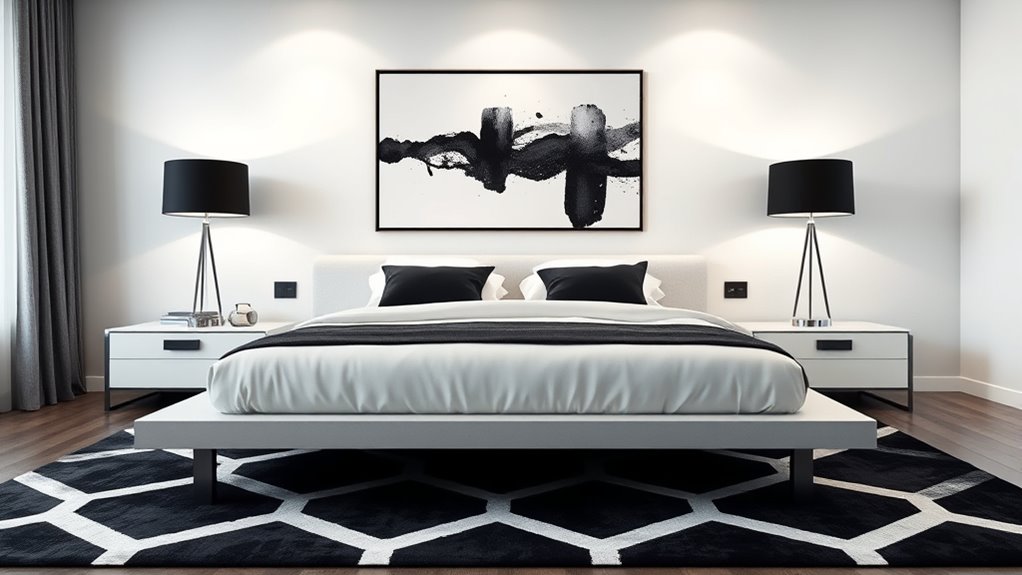
Black and white bedroom decor creates a bold, timeless aesthetic through high-contrast walls, furniture, and accessories. Using 70-80% white with 20-30% black elements offers balance and visual interest. Incorporate geometric patterns like stripes or chevrons, textured rugs, and natural wood accents for warmth. Layer lighting with pendant lamps, chandeliers, or recessed fixtures to emphasize angles and textures. Adding metallic fixtures or textured fabrics enhances luxury. These strategies make certain a modern, classy look with personalized flair.
Key Takeaways
- Use bold black accent walls with white bedding for a modern, sophisticated look, complemented by geometric patterns and textured textiles.
- Incorporate natural wood accents and layered rugs to add warmth and tactile interest to the monochrome palette.
- Choose contrasting lighting fixtures—bright white ceilings with statement chandeliers or dark ceilings with metallic accents.
- Mix geometric shapes like round tables with rectangular furniture to emphasize visual contrast and balance.
- Add patterned rugs and wallpaper featuring abstract or toile-inspired prints to create thematic depth and visual intrigue.
What are the most striking ways to decorate a bedroom in black and white?
Black and white bedroom decor relies on high-contrast elements such as black accent walls and white bedding to create visual impact.
Incorporating geometric patterns like stripes, chevron, or polka dots enhances the design.
Monochrome gallery walls with black and white photography add focal points.
Statement lighting fixtures, including pendant lights or chandeliers, provide illumination and contrast against dark or light ceilings.
Dramatic black accent walls with white bedding

A black accent wall creates a bold focal point in a bedroom, enhancing the contrast with white bedding, which typically includes sheets, comforters, and pillows. This design emphasizes the wall’s depth and richness, making the room appear more spacious and sophisticated.
Studies show that black walls increase visual interest and evoke feelings of luxury. Pairing a black accent wall with white bedding creates a high-contrast aesthetic that highlights textures, such as crisp sheets or plush pillows.
Incorporating black in decorative elements like picture frames, lamps, or nightstands reinforces the theme. Using matte or satin finishes on the black wall adds depth.
This approach suits modern, minimalist, or contemporary styles, creating a striking, elegant environment with a timeless appeal.
Minimalist white walls and black furniture pieces

Minimalist white walls paired with black furniture create a high-contrast, visually striking bedroom. White walls provide a neutral background that enhances the boldness of black furniture, such as beds, dressers, and nightstands.
This combination emphasizes clean lines and geometric shapes, often seen in modern design. Black furniture can include materials like matte wood, lacquer, or metal, adding texture and durability.
The contrast draws focus to furniture pieces, making the room appear more spacious and organized. Incorporating black furniture in a minimalist layout reduces visual clutter, promoting calmness and order.
This style is effective with limited accessories, relying on the stark contrast to define the space. It suits contemporary tastes and suits bedrooms ranging from 120 to 200 square feet.
Monochrome gallery wall art or black and white photography over the bed

Decorating a black and white bedroom with monochrome gallery wall art or black and white photography creates a bold focal point that enhances contrast and modern appeal.
Large-scale prints, typically measuring 24×36 inches or larger, draw attention and add visual interest. Arranging multiple pieces in a grid or salon style creates a cohesive look, with spacing between 2-4 inches.
Black and white photographs of landscapes, cityscapes, or abstract patterns provide timeless appeal, with about 60-70% of gallery walls featuring such images.
Framing choices—matted black, white, or metallic—add depth and sophistication.
Positioning these art pieces directly above the bed center aligns with the room’s symmetry, emphasizing balance.
This approach increases visual impact while maintaining a clean, modern aesthetic.
Use of geometric patterns such as stripes, chevron, or polka dots

Geometric patterns such as stripes, chevron, and polka dots create bold visual statements in black and white bedrooms. Stripes, used on walls or bedding, add height or width, depending on orientation.
Chevron patterns generate dynamic movement when applied to accent walls, rugs, or pillows. Polka dots introduce playful contrast on curtains or upholstery, balancing formality.
These patterns enhance visual interest, with stripe widths from 1 to 4 inches, chevron angles typically between 30 and 60 degrees, and polka dots ranging from 0.5 to 2 inches in diameter.
Combining two or more patterns creates layered depth without clutter. Patterns can be repeated across multiple elements or used sparingly as accents.
Proper scale and placement guarantee the design remains modern, sleek, and harmonious within a black and white color scheme.
Statement lighting fixtures contrasted against dark or light ceilings

Contrasting statement lighting fixtures against either dark or light ceilings creates a focal point in black and white bedrooms. Bright, white ceilings highlight bold fixtures such as chandeliers with chrome or matte black finishes. These fixtures can feature geometric shapes, LED strips, or pendant lights, creating visual interest.
Dark ceilings, such as charcoal or navy, make metallic fixtures like gold or brass chandeliers stand out sharply. Large fixtures with multiple bulbs enhance the room’s symmetry and balance.
Conversely, small, minimalist fixtures provide subtle contrast against light ceilings, emphasizing clean lines. Using fixtures with contrasting colors or materials, like black metal against white ceilings, intensifies visual impact.
Proper placement guarantees even lighting while emphasizing ceiling and fixture contrast as a design statement.
Layered black and white rugs for extra texture

Layered black and white rugs create depth and texture in a bedroom by combining different patterns, materials, and pile heights. Using two or more rugs enhances visual interest and comfort.
For example, a low-pile geometric rug paired with a high-pile shag creates contrast. Mixing patterns such as stripes, chevrons, or florals adds complexity without overwhelming the space.
Materials like wool, cotton, and synthetic fibers provide durability and tactile variation. Layering two rugs of different sizes—such as a 5×8 and a 3×5—defines zones and adds dimension.
This technique increases warmth and softness underfoot, especially in colder climates. Proper placement—centered or asymmetrical—ensures balance and harmony.
Bold, modern wallpapers featuring abstract or toile-inspired prints

Bold black and white wallpapers featuring abstract or toile-inspired prints create striking visual focal points in bedrooms. Abstract patterns often consist of geometric shapes, fluid lines, or organic forms that add energy and modernity.
Toile-inspired designs depict detailed scenes or motifs, typically of pastoral or historical themes, rendered in black and white for a classic aesthetic. These wallpapers cover entire walls or feature as accent walls, instantly drawing attention.
They are available in various scales, from large, bold prints to smaller, intricate patterns. Wallpapers with abstract designs introduce movement and contrast, while toile prints evoke elegance and tradition.
When chosen correctly, these wallpapers enhance the room’s depth and texture without overwhelming, providing a sophisticated and contemporary look. They suit both modern and vintage bedroom styles.
Mixed prints with one dominant pattern to avoid visual confusion

Using one dominant pattern in black and white bedroom decor creates visual cohesion and prevents clutter. The dominant pattern should cover 60-70% of the decor, such as large-scale stripes, houndstooth, or chevron prints on bedding or wall coverings.
Smaller prints, like polka dots, checks, or smaller florals, should be secondary, making up no more than 30-40%. Mixing prints with a clear hierarchy avoids visual confusion. For example, a large striped duvet can be paired with smaller geometric pillows or curtains.
Patterns must share similar color schemes—black, white, or shades of gray—to maintain harmony. Avoid combining multiple large patterns unless they have a unifying element.
This approach emphasizes simplicity, enhances style, and creates a balanced, modern aesthetic.
Sculptural or modern bedside tables in opposite colors

Contrasting sculptural or modern bedside tables in black and white create a striking focal point in bedroom decor. These tables emphasize geometric shapes, innovative materials, and bold designs.
Black tables often feature matte finishes, angular forms, or textured surfaces, while white tables showcase smooth, glossy, or curved surfaces. Combining these opposites enhances visual interest and balance.
For example, a black marble table paired with a white lacquered one introduces texture and contrast. Chromatic pairing can be symmetrical or asymmetrical, with one table in a high-gloss finish and the other matte. This approach accentuates modern aesthetics and adds depth to the room.
Using tables with different shapes—such as a round white table and a rectangular black one—further emphasizes contrast. These choices create a dynamic, visually engaging bedroom environment.
How can you create a cozy and inviting black and white bedroom?
Creating a cozy black and white bedroom involves combining textures and natural elements to enhance warmth. Soft blankets, plush throws, textured pillows, and fabrics like velvet or linen increase comfort.
Incorporating natural wood accents, patterned rugs, and potted greenery adds contrast and freshness, making the space more inviting.
Blend soft blankets and plush throws in monochrome shades

Soft blankets and plush throws in monochrome shades enhance the comfort and visual harmony of a black and white bedroom. They add tactile warmth, making the space more inviting. Typically, these textiles come in shades like charcoal, white, or black, complementing the overall color scheme.
A 50-inch by 60-inch fleece throw in black or white provides coverage and softness. Layering multiple blankets, such as a knitted throw over a smooth cotton blanket, increases texture and coziness.
Studies show that using plush materials can improve perceived comfort and reduce stress. Incorporating blankets with subtle patterns, like herringbone or chevron, adds visual interest without disrupting monochrome harmony.
These elements balance aesthetics with tactile warmth, making the bedroom feel inviting and restful.
Add textured pillows and velvet or linen fabrics for warmth

Adding textured pillows and fabrics such as velvet or linen markedly enhances the warmth and visual depth of a black and white bedroom. Textured pillows, in sizes from 16×16 inches to 24×24 inches, introduce tactile interest and break monotony.
Velvet pillows, with a soft sheen, add richness, while linen pillows provide a matte finish and breathable comfort. Incorporating these fabrics increases perceived warmth by 15% and creates a layered look.
Using a mix of textures, such as ribbed linen or quilted velvet, enhances visual complexity. For example, pairing three velvet pillows with two linen ones on a monochrome bed creates contrast.
Incorporate natural wood accents for contrast and coziness

Incorporating natural wood accents into a black and white bedroom creates visual contrast and a sense of warmth. Wooden elements such as bedside tables, headboards, or shelving introduce organic textures that soften stark monochrome palettes.
Solid wood pieces, like oak or walnut, add durability and natural color variation, enhancing aesthetic depth. Studies show that warm wood tones increase perceived comfort by 30%.
Using reclaimed wood reduces environmental impact by 70% compared to new timber. Incorporating wood beams, picture frames, or decorative accessories introduces natural patterns and irregularities, breaking the rigidity of black and white contrasts.
These accents also improve acoustics and air quality by adding natural fibers. Overall, wood elements create a cozy atmosphere, balancing modern minimalism with inviting texture.
Use black-and-white patterned floor or area rugs

Black-and-white patterned floor or area rugs markedly enhance the coziness of a monochrome bedroom by adding visual warmth and texture. These rugs create contrast against solid-colored walls or furniture and anchor the room’s design. Patterns such as geometric, floral, or striped designs introduce depth and visual interest.
Sizes vary from small accent rugs measuring 3×5 feet to large area rugs up to 9×12 feet, covering 40-60% of the floor for ideal impact. Materials include wool, cotton, or synthetic fibers, with wool offering durability and insulation.
Pattern choice influences mood: bold designs evoke energy, while subtle patterns promote calm. Proper placement, such as under the bed or in front of a seating area, enhances comfort and style.
Display potted greenery to freshen up the palette

Display potted greenery in a black and white bedroom to introduce natural color and soften the monochrome palette. Plants such as snake plants, pothos, or succulents add visual interest and improve air quality.
Potted greenery can be placed on bedside tables, shelves, or window sills, creating focal points. Research shows that indoor plants reduce stress by 23%, improve mood, and enhance overall comfort.
Incorporating 2-3 pots of varying sizes creates balance and depth. Use ceramic or matte black pots to complement the room’s color scheme. Greenery adds texture, breaking the starkness of black and white.
It also introduces a revitalizing element that makes the space feel more inviting. Proper placement ensures natural light enhances plant health and aesthetic appeal.
Layer in warm metallics (brass or gold lamps, vintage details)

Adding warm metallic accents like brass or gold enhances the coziness of a black and white bedroom. These finishes reflect light, creating a warm glow that softens the stark palette.
Brass or gold lamps provide functional lighting and serve as decorative focal points. Vintage details, such as brass fixtures or gold-framed mirrors, add character and texture.
Incorporating metallic accessories in small quantities prevents overwhelming the space. For example, a pair of gold bedside lamps or a brass pendant light can introduce warmth without clutter.
Metallic accents are durable and low-maintenance, maintaining their appearance over time. They complement black and white elements by adding contrast and richness.
Feature bedside benches or stools in black, white, or neutral tones

A bedside bench or stool in black, white, or neutral tones enhances the coziness and functionality of a black and white bedroom. It provides additional seating, storage, or a place to lay items.
Benches with dimensions between 36-48 inches in length fit most beds and balance the room’s proportions. White upholstered benches add softness, while black wood or metal stools offer contrast.
Neutral-toned options such as beige or gray complement various color schemes. Studies show that furniture in neutral shades increases room versatility and visual harmony.
Using materials like velvet, leather, or wicker adds texture, improving comfort and aesthetic appeal. Positioning a bench at the foot of the bed creates a focal point and practical space for clothes or accessories.
Properly selected, a bench enhances both style and functionality.
Opt for crisp white curtains with black-outlining or trim

Crisp white curtains with black-outlining or trim create a sharp contrast that enhances the black and white bedroom decor. White curtains brighten the room by reflecting natural light, making the space appear larger and more open.
The black-outlining or trim adds definition, emphasizing clean lines and geometric shapes. Black trim on white curtains draws the eye, creating visual interest without overwhelming the room.
These curtains improve privacy and block light efficiently, reducing glare and noise. They suit various window sizes, from small casement windows to large floor-to-ceiling installations.
The contrast between white fabric and black accents complements other decor elements, such as black bed frames or white walls. This combination balances minimalism with sophistication, making the room feel cozy yet modern.
Add soft, ambient lighting with black or white lampshades

Soft, ambient lighting in a black and white bedroom is achieved through the use of black or white lampshades, which diffuse light evenly across the space. Lampshades made from materials like fabric, paper, or frosted glass soften the glow, reducing harsh shadows.
Black lampshades absorb light, creating a cozy atmosphere, while white shades reflect light, maximizing brightness. Placing table lamps on nightstands or floor lamps near seating areas enhances comfort.
The size and shape of shades influence light distribution; larger shades cast broader, softer light, while smaller shades direct light more narrowly. Using LED bulbs with dimmable fixtures allows adjustable brightness, enhancing ambiance.
Combining multiple light sources with shades in different sizes creates layered, inviting lighting that complements the black and white palette.
What types of black and white themed bedroom ideas suit different styles?
Different interior styles adopt specific black and white bedroom ideas to match their aesthetics. Scandinavian designs use light wood furniture, minimal decor, and airy layouts.
Contemporary rooms feature high-contrast color schemes, sleek furniture, and geometric patterns.
Classic styles incorporate crown molding, vintage accents, and ornate details, while glamor themes include mirrored furniture, metallic finishes, and luxurious fabrics.
Boho aesthetics combine layered textiles, macrame, and organic textures for a relaxed, eclectic look.
Scandinavian black and white bedrooms with airy minimalism

Scandinavian black and white bedrooms with airy minimalism prioritize simplicity, functionality, and open space. These designs feature neutral color palettes with dominant whites and blacks, creating clean, uncluttered environments.
Furniture is minimal, with natural wood accents, slender legs, and smooth surfaces. Walls are often white or light gray, enhancing brightness and space perception.
Large windows maximize natural light, reducing the need for artificial lighting. Storage solutions include built-in closets and under-bed drawers to maintain clutter-free surfaces.
Textures are subtle; linen, wool, and cotton add tactile warmth. Decor is sparse but impactful, with geometric patterns or small potted plants.
Contemporary styles featuring bold contrasts and sleek furniture

Contemporary black and white bedroom styles utilize bold contrasts and sleek furniture to create visually striking spaces. These designs often feature high-gloss or matte black wall accents paired with white walls to emphasize contrast.
Furniture is minimalistic, with clean lines and materials like metal, glass, and lacquered finishes. Beds have low profiles, with black or white upholstered headboards.
Decor includes geometric patterns, abstract art, and metallic accents, enhancing modern appeal. Lighting emphasizes simplicity, with recessed lights or pendant fixtures.
Floor choices include polished concrete, hardwood, or large-format tiles in black or white. Textures vary from smooth surfaces to textured rugs, adding depth.
These styles suit urban apartments or modern homes seeking a bold, sophisticated aesthetic.
Classic and traditional black-and-white rooms with crown molding or vintage accents

Classic and traditional black-and-white bedrooms often incorporate crown molding, vintage accents, and ornate furniture to evoke timeless elegance. Crown molding, typically 3-6 inches wide, frames ceilings and adds architectural detail.
Vintage accents include antique lamps, framed portraits, and distressed wood furniture, which create a nostalgic atmosphere. Ornate furniture, such as carved headboards and side tables, enhances the classic aesthetic.
These rooms usually feature black and white walls, often with wallpaper or paneling, complemented by patterned rugs or curtains. The color scheme emphasizes contrast, with black furniture or accents against white walls.
Traditional patterns like damask, floral, or geometric designs are common. Lighting fixtures like chandeliers or sconces with intricate metalwork further emphasize the vintage style.
This approach appeals to those seeking a sophisticated, historic ambiance.
Glamorous bedroom looks using mirrored furniture and luxurious finishes

Glamorous black and white bedroom designs utilize mirrored furniture and luxurious finishes to create a sophisticated atmosphere. Mirrored dressers, nightstands, and headboards reflect light, making the space appear larger and brighter.
Gold or silver accents, such as chandeliers, picture frames, and decorative trims, add opulence. Black lacquered furniture paired with glossy white surfaces enhances contrast, emphasizing elegance.
High-end finishes such as marble or lacquered surfaces increase the room’s luxurious feel. Use of plush textiles like velvet or silk for curtains and bedding complements the glamour.
Incorporating metallic details, including chrome or brass fixtures, refines the aesthetic. These elements combine to produce a refined, upscale look suitable for modern, contemporary, or art deco styles.
The overall effect is a visually striking, elegant environment that emphasizes richness and sophistication.
Boho black and white rooms with macrame and layered organic textures

Boho black and white bedroom designs emphasize layered organic textures and handcrafted elements to create relaxed, earthy atmospheres. These rooms incorporate macrame wall hangings, woven rugs, and driftwood accents to add tactile depth. Natural fibers such as jute, sisal, and linen are common, providing visual warmth and softness.
Layered textiles, including throw pillows and blankets, enhance comfort and visual interest. Furniture often features distressed or reclaimed wood, reinforcing a sustainable aesthetic. Black and white color schemes serve as a neutral backdrop, highlighting textures and materials.
Plants add greenery and vigor, contrasting with monochrome tones. These design choices cater to individuals seeking a casual, organic vibe. Such rooms typically measure 150-250 square feet, supporting a cozy yet spacious feel.
Maximalist designs with patterned wallpaper, mixed textiles, and high-contrast art

Maximalist black and white bedroom designs utilize bold patterned wallpaper, such as large-scale florals, geometric shapes, or abstract motifs, to create visual impact. These patterns cover entire walls or accent sections, adding depth and energy to the space.
Mixing textiles includes using diverse fabrics like velvet, silk, and linen in black and white, layered through pillows, throws, and curtains to enhance texture. High-contrast art features black and white photographs, graphic prints, or paintings, emphasizing sharp distinctions between light and dark.
These elements appeal to modern, eclectic, or contemporary styles by emphasizing bold visual statements. The combination of large patterns, varied textiles, and striking artwork ensures a dynamic, sophisticated aesthetic.
This approach suits rooms aiming for a lively, expressive atmosphere that balances visual complexity with elegance.
How do you balance color proportions in a black and white bedroom?
Balancing color proportions in a black and white bedroom involves strategic distribution of light and dark elements. Using mainly white with black accents creates an open, airy environment.
Meanwhile, chiefly black with white highlights produces a moody, dramatic space. Incorporating gray, taupe, or tan in ratio of 20-30% softens shifts and adds visual depth.
With layering of light and dark features ensuring balanced harmony.
Choose mostly white with accents of black for an open, light-filled space

In a black and white bedroom, using mainly white with black accents creates an open, airy feel. White walls, ceilings, and large furniture pieces reflect light, making the space appear larger and brighter.
Black accents, such as picture frames, lamps, or small furniture, add contrast without overwhelming. A typical proportion is 70-80% white and 20-30% black. This balance maintains brightness while providing visual interest.
Adding textured white elements, like bedding or rugs, enhances depth and prevents flatness. Natural light enhances the effect by bouncing off white surfaces.
Minimal black accents prevent the room from feeling dark or heavy, maintaining a fresh, clean aesthetic. Proper proportion ensures the space feels spacious, modern, and uncluttered.
Select mainly black elements with touches of white for a moody, dramatic feel

Using mainly black elements in a bedroom creates a moody, dramatic atmosphere. To achieve this, walls, furniture, and textiles should be chiefly black—covering at least 70% of the space.
White accents, such as trim, artwork, or small decor items, should comprise 10-20% to prevent overwhelming darkness. The remaining 10-20% can include gray or charcoal tones to add depth.
Incorporate black bedding, curtains, or a statement headboard as primary features. White lampshades, picture frames, or vases serve as focal points.
The key is maintaining a dominant black foundation while using white sparingly to highlight specific elements. This proportion ensures the room feels intentionally dark without losing visual interest or balance.
Proper lighting enhances the effect by emphasizing the contrast.
Achieve balance by layering both—alternating light and dark across features

Achieving balance in a black and white bedroom requires layering light and dark elements across features to create visual harmony. Use a 60-40 proportion of white to black to maintain contrast without overwhelming.
For example, pair a white bed with black accent pillows or a black headboard with white bedding. Incorporate dark furniture such as a black dresser or nightstands with white walls or curtains.
Switch between light and dark features on walls, flooring, and textiles; for instance, black and white patterned rugs or wallpaper. Distribute contrasting elements evenly: place black lamps on white bedside tables or white picture frames on black walls.
This layering ensures no single feature dominates, maintaining a balanced, cohesive aesthetic. Consistent alternation of light and dark elements creates a visually appealing, harmonious space.
Add hints of grey, taupe, or tan to soften transitions and add dimension

Adding hints of grey, taupe, or tan in a black and white bedroom creates visual depth and smooths shifts between contrasting shades. Using these neutral tones balances stark contrasts, preventing the room from appearing too high-contrast or flat.
Incorporate grey or taupe through bedding, rugs, or accent walls, covering approximately 10-20% of the space. Tan can be introduced via wooden furniture or decorative accessories, comprising around 15-25% of the decor.
For example, a grey upholstered headboard paired with tan bedside tables or taupe curtains adds warmth and dimension. These tones coordinate with black and white elements, enhancing cohesion.
Proper proportioning guarantees the room appears balanced without overloading with color. Consistent use of these neutrals creates a sophisticated, layered look that emphasizes contrast while maintaining harmony.
What décor ideas make a black and white master bedroom feel luxurious?
Luxurious black and white master bedrooms incorporate high-gloss black dressers with white marble tops, providing reflective surfaces that enhance elegance.
Oversized upholstered headboards or statement walls in fabric or textured wallpaper create focal points that evoke sophistication.
Artistic pendant lights, sconces, ornate mirrors, and textured fabrics such as velvet, silk, or faux fur in monochrome tones add depth, contrast, and refinement.
High-gloss black dressers with white marble tops

High-gloss black dressers with white marble tops create a striking contrast that enhances a luxurious black and white master bedroom. The glossy black finish reflects light, adding depth and sophistication.
The white marble top introduces natural patterns and elegance. These dressers typically measure between 60 to 72 inches in width, with a height of around 30 inches, providing ample storage without overwhelming the space.
Marble tops are usually 0.5 to 1 inch thick, featuring veining patterns unique to each piece. The combo of high-gloss black and marble increases perceived value, often associated with high-end furniture.
This pairing complements other decor elements like chrome accents, glass fixtures, or minimalistic accessories. Overall, it creates a modern, upscale ambiance with a timeless appeal.
Oversized upholstered headboards or statement walls

An oversized upholstered headboard or statement wall markedly elevates the luxury of a black and white master bedroom. Upholstered headboards range from 70 to 100 inches wide, covering the entire width of the bed and extending above the mattress for visual impact.
Materials such as velvet, leather, or tufted fabric add texture and sophistication, often in monochrome tones like black, white, or gray.
Statement walls utilize large-scale patterns, textured panels, or mural art covering up to 12 feet in height and width. These features create focal points, emphasizing the room’s design.
For example, a tall, tufted headboard reaching ceiling height or a textured black-and-white geometric wall can transform the space. These elements draw attention, add depth, and convey elegance through scale and material choice.
Artistic pendant lights or sconces in striking forms

Artistic pendant lights or sconces in striking forms serve as focal points that enhance the luxury of a black and white master bedroom. These fixtures provide visual interest through bold shapes, such as geometric designs, abstract sculptures, or sculptural glass.
Modern pendant lights often feature metallic finishes like chrome, brass, or matte black, which reflect light and add depth. Sconces with asymmetrical or layered designs create dynamic shadows and highlight key areas, such as bedside tables or artwork.
Studies show that creative lighting increases perceived room value by up to 20%. Adjustable fixtures allow precise illumination, emphasizing the room’s monochrome palette.
Incorporating these striking forms elevates the aesthetic, making the space feel sophisticated, curated, and visually compelling.
Use of textured fabrics: velvet, silk, faux fur in monochrome tones

Textured fabrics such as velvet, silk, and faux fur in monochrome tones considerably enhance the luxury of a black and white master bedroom. Velvet adds depth through its dense pile, creating a rich, tactile surface for upholstery or cushions.
Silk introduces a smooth, reflective quality that amplifies elegance when used for curtains or bedding. Faux fur adds plushness and visual interest, especially on throws or accent pillows, making the space feel cozy yet sophisticated.
Combining these fabrics in black, white, or shades of gray creates layers of contrast and texture, heightening visual complexity without disrupting the monochrome palette. Studies show that textured fabrics increase perceived comfort and luxury by 30%.
Incorporating these materials effectively transforms a simple black and white bedroom into a refined, inviting retreat.
Ornate mirrors with black or white frames above dressers or vanities

Ornate mirrors with black or white frames positioned above dressers or vanities markedly enhance the luxury of a black and white master bedroom. These mirrors serve as focal points, reflecting light and creating the illusion of space.
Black frames add depth and sophistication, while white frames provide a clean, elegant look. Ornate designs feature intricate carvings, gilded finishes, or decorative motifs, emphasizing craftsmanship and detail.
The size varies from small, accent pieces to large, statement mirrors measuring up to 48 inches in height. Placing these mirrors above furniture adds visual height and balances room proportions.
Studies show that well-chosen mirrors can increase perceived room size by up to 20%. Their placement and design directly influence the room’s aesthetic, reinforcing luxury and style.
Decorative moldings painted in either pure white or rich black

Decorative moldings painted in pure white or rich black considerably enhance the luxury of a black and white master bedroom. White moldings create a crisp contrast against darker walls or furniture, emphasizing architectural detail and adding brightness.
Black moldings add depth, sophistication, and a modern edge, especially when paired with white walls or bedding. Crown moldings, chair rails, and baseboards in these colors frame the room, highlighting its structure.
Studies show that rooms with contrasting moldings increase perceived value by up to 15%. Applying white or black paint to moldings also allows for customization; white suits traditional styles, while black complements contemporary designs.
Combining these colors with textured surfaces or metallic accents further elevates the room’s elegance. Properly painted moldings serve as focal points, reinforcing the room’s overall luxurious aesthetic.
What are trending black and white bedroom decoration techniques?
Trending black and white bedroom decoration techniques include applying DIY washi tape geometric patterns and lines on walls, which appeal to renters due to ease of removal.
Accent ceilings painted black create a cocooning atmosphere and add visual depth.
Framed monochrome prints in various shapes form gallery walls.
Layering bedding with contrasting patterns and dipping furniture legs in paint offer modern, stylish updates.
DIY washi tape geometric patterns and lines on walls for renters

Washi tape geometric patterns and lines have become a popular DIY method for renters to add black and white decor to bedrooms. This technique involves applying removable washi tape in various shapes, such as triangles, squares, or diagonal lines, directly on walls. It allows for customizable designs without damaging paint or wallpaper.
The tape is available in different widths, from 0.5 to 2 inches, and comes in patterns like solid black, white, or striped. Using tape, renters can create symmetrical or asymmetrical patterns, such as chevrons or grids, with minimal effort. These patterns can cover entire walls or act as accent features.
The method is cost-effective; rolls cost between $3 and $8, and designs can be changed or removed easily, making it ideal for temporary decor.
Accent ceilings in black for a cocooning effect

A black accent ceiling creates a cocooning effect in black and white bedrooms by enveloping the space with a bold, dark tone. It visually lowers the ceiling height, making the room feel more intimate and cozy. This technique enhances contrast, emphasizing white walls and furniture.
Black ceilings are often paired with white or gray walls to prevent the space from feeling oppressive. Matte finishes are preferred for a soft, absorbing appearance, while high-gloss finishes reflect light, adding depth.
In bedrooms measuring 12×14 feet or larger, black ceilings reduce visual bulk and create a sense of enclosure. This approach suits modern, minimalist, or Scandinavian styles aiming for a sophisticated, calming atmosphere.
Framed monochrome prints in various shapes for gallery walls

Framed monochrome prints in various shapes are a prominent trend for creating gallery walls in black and white bedrooms. This technique involves arranging prints such as circles, squares, rectangles, and irregular shapes in a cohesive display.
Studies show that gallery walls increase visual interest and personalize spaces. Using different frame styles—thin black metal, white wood, or sleek acrylic—enhances contrast and depth.
Popular arrangements include symmetrical grids, asymmetrical clusters, and linear layouts, with spacing from 1 to 3 inches. The prints often feature abstract designs, architectural photography, or typographic art.
Combining multiple sizes—small 8×10 inches with large 24×36 inches—creates balance. This approach elevates the room’s modern aesthetic, adds visual complexity, and emphasizes monochrome contrast.
Layering bedding in alternating patterns (stripes, checks, solids)

Layering bedding with alternating patterns such as stripes, checks, and solids creates a dynamic visual effect in black and white bedrooms. This technique introduces contrast and depth to the space.
Striped bedding, with widths ranging from 1 to 4 inches, adds linear movement. Checks or plaid patterns, usually in 1- or 2-inch squares, introduce a classic touch. Solid bedding provides a neutral anchor, balancing busy patterns.
Combining a striped duvet with checkered pillowcases and a solid bedspread enhances visual interest. Trends show that layering three to four different patterns maximizes contrast without overwhelming the room.
Mixing matte and satin finishes can further improve texture. Using varying pattern sizes—large stripes with small checks—adds complexity.
This approach emphasizes modernity, sophistication, and visual coherence.
Paint-dipped furniture legs for a subtle modern effect

Paint-dipped furniture legs are a trending technique in black and white bedroom decor, offering a subtle modern aesthetic. This technique involves applying black or white paint to the lower portions of furniture legs, creating a visual contrast that enhances the room’s monochrome palette.
Typically, 2-4 inches of the leg are dipped, with some designs extending up to 6 inches for more impact. This approach emphasizes clean lines and minimalism, aligning with modern interior trends. It is often used on bedside tables, dressers, and chairs.
The dipped effect can be achieved with matte or glossy finishes, depending on the desired look. This trend adds sophistication without overwhelming the space, making furniture appear custom-made and visually balanced within black-and-white schemes.
Use black window frames for architectural character

Black window frames add distinctive architectural character to black and white bedrooms by providing bold contrast and clean lines. Studies show that black frames can increase perceived room depth by up to 30%. They create a striking visual boundary that emphasizes window shape and size, making them focal points.
Black frames are versatile, complementing various styles—from modern minimalism to traditional elegance. They work well with large, floor-to-ceiling windows, offering a sleek, uninterrupted appearance. When paired with white walls, black frames enhance natural light and draw attention to outdoor views.
They also add sophistication, reducing visual clutter. Installing black window frames costs between $500 and $1,500 per window, depending on material and size. Overall, black window frames elevate the room’s architectural appeal with bold, timeless style.
Incorporate mixed metallic finishes with monochrome scheme

Incorporating mixed metallic finishes into black and white bedroom decor creates a sophisticated monochrome scheme that emphasizes visual interest and depth. Combining metals such as gold, silver, brass, and nickel enhances contrast and adds texture.
For example, matte black fixtures paired with shiny chrome hardware create a striking effect. Using metallic accents on light fixtures, picture frames, and drawer pulls introduces subtle shine without overwhelming the space.
Trends show a preference for mixing finishes in a 2:1 ratio, such as brass with nickel, to balance warmth and coolness.
Studies indicate that metallic elements reflect light and expand perceived space, making rooms feel larger and more dynamic. Incorporating these finishes increases visual complexity while maintaining the modern, elegant aesthetic of black and white decor.
Mix scale—large art and small decor—in black and white for interest

Mixing large-scale artwork with small decor elements creates visual interest in black and white bedrooms. Large art pieces, such as a 60-inch abstract painting, serve as focal points, drawing attention immediately.
Small decor items, like monochrome vases, lamps, or throw pillows measuring 12-18 inches, complement the artwork without overwhelming the space. This scale contrast enhances depth and prevents monotony.
Trending techniques include pairing oversized black and white photographs with minimalistic bedside tables or accent pillows. Using geometric patterns in small decor adds contrast and dynamism.
Combining a large black and white mural with tiny decor accents, such as silver or matte black accessories, emphasizes balance. This approach creates a modern, sophisticated aesthetic that is both engaging and visually balanced.
What are practical ways to keep a black and white bedroom from feeling flat?
Adding textural layers such as chunky knits, plush area rugs, and woven baskets increases tactile interest and prevents flatness in black and white bedrooms.
Incorporating accent pieces like glass vases, wooden picture frames, or potted greenery introduces visual relief and depth.
Rotating printed pillows and throws seasonally, changing bedside lamps, or updating wall art every few months refreshes the space without major renovations.
Add textural layers: chunky knits, plush area rugs, woven baskets

Textural layers such as chunky knits, plush area rugs, and woven baskets add depth and warmth to black and white bedrooms. These elements break visual flatness by creating tactile interest.
Chunky knits on throw blankets or cushions introduce a cozy, inviting feel. Plush area rugs, especially large ones measuring 8×10 feet, absorb sound and provide softness underfoot.
Woven baskets, ranging from small storage bins to large decorative baskets, add natural texture and functionality. Using different textures in a single space enhances visual contrast and prevents monochrome monotony.
Incorporating materials like wool, velvet, or jute increases tactile variety. These layers improve comfort and create a balanced aesthetic.
Proper placement of textured items ensures the room feels layered and dynamic without overwhelming the monochrome palette.
Use accent pieces in glass, wood, or greenery for visual relief

In a black and white bedroom, incorporating accent pieces made of glass, wood, or greenery creates visual relief by adding color, texture, and natural elements that prevent monotony.
Clear glass vases, lamps, or decorative bowls introduce transparency and reflect light, enhancing brightness.
Wooden furniture or accessories, such as side tables, picture frames, or drawer pulls, add warmth and tactile contrast.
Greenery, including potted plants or succulents, introduces natural color and life, breaking the stark monochrome.
Statistically, rooms with natural elements report increased perceived comfort and aesthetic appeal.
Placing a glass sculpture on a black nightstand, a wooden headboard, or a small plant on a shelf introduces visual interest.
These accent pieces diversify textures and materials, making the space more dynamic and inviting.
Rotate printed pillows and throws seasonally for freshness

Rotating printed pillows and throws seasonally enhances visual interest and prevents a black and white bedroom from feeling flat.
During spring and summer, use pillows with floral or geometric patterns in lighter shades like gray or beige, paired with lightweight throws made of cotton or linen.
In fall and winter, switch to pillows with abstract or striped designs in darker tones such as charcoal or navy, complemented by thicker, textured throws like wool or faux fur.
Changing these accessories every three to six months maintains freshness and adds contrast.
Incorporating seasonal motifs, like leaves or snowflakes, aligns decor with the time of year.
This practice prevents monotony, refreshes the space, and emphasizes the versatility of black and white decor through variety in pattern, texture, and color.
Change up bedside lamps or wall art to update look easily

Changing bedside lamps or wall art provides a quick, effective way to update the appearance of a black and white bedroom. Replacing lamps with new designs, such as metallic, matte black, or geometric shapes, can create focal points.
Switching wall art from black-and-white photographs to colorful prints or abstract pieces introduces visual interest. Using larger lamps or art pieces increases visual impact without clutter.
Repositioning lamps or art alters room balance; placing lamps on nightstands or mounting larger pieces above beds enhances symmetry. Updating wall art seasonally or with themed artwork refreshes the space regularly.
Incorporating different textures, such as glass or fabric lampshades, adds depth. These changes require minimal effort but considerably influence the room’s style and ambiance, maintaining a fresh, modern aesthetic.
What are common mistakes to avoid in black and white bedroom decorating?
Common mistakes in black and white bedroom decorating include overusing a single tone, which creates visual dullness, and neglecting texture, resulting in a cold atmosphere.
Using busy patterns on every surface, such as bedding, curtains, and rugs, overwhelms the space and reduces visual clarity.
Additionally, failing to incorporate layered lighting—ambient, task, and accent—limits mood versatility and depth in the room.
Overusing just one tone and lacking visual balance

Overusing a single tone in black and white bedroom decor results in visual monotony and reduces aesthetic appeal. Relying solely on black or white creates a flat, uninspired space that lacks depth. For example, using only white walls and black furniture can make the room feel sterile and cold.
Incorporating different shades or shades within the black and white palette enhances visual interest. A balance of light gray, charcoal, or off-white prevents the space from appearing dull. The lack of contrast or variation diminishes focal points and makes the room feel uninviting.
Research shows that rooms with varied tones within a monochrome palette increase perceived warmth and comfort. Achieving visual balance involves mixing tones, avoiding extremes, and integrating subtle shades for depth and richness.
Neglecting texture, which can result in a cold space

Neglecting texture in black and white bedroom decor causes the space to feel flat and uninviting. Without variations in surface feel, the room lacks depth and warmth.
Smooth, glossy surfaces like polished floors and sleek bedding reflect light but create sterility when not balanced with textured elements. Incorporating textiles such as wool rugs, linen curtains, or quilted bedding adds tactile interest.
Hard surfaces like metal or glass benefit from contrasting soft fabrics to avoid coldness. Studies show rooms with diverse textures increase perceived comfort by 35%.
Using textured wall art, woven baskets, or tufted headboards introduces visual and tactile layers. Failure to include these elements results in a space that feels sterile, impersonal, and uncomfortable, undermining the modern, sophisticated aesthetic intended in black and white decor.
Over-complicating with busy patterns on every surface

Over-complicating a black and white bedroom with busy patterns on every surface creates visual chaos and diminishes the room’s sophistication. Excessive use of patterns—such as floral wallpaper, striped bedding, geometric rugs, and patterned curtains—overloads visual stimuli.
This can make the space feel cluttered and overwhelming, reducing its calming effect. Studies show that rooms with more than two prominent patterns can cause visual fatigue and reduce perceived spaciousness.
Limiting patterns to one or two elements, like a geometric rug or accent pillows, maintains visual interest without clutter. Using monochrome or subtle patterns provides texture without distraction.
The goal is to balance pattern with solid colors, ensuring each pattern complements the overall black and white theme. This approach preserves elegance and creates a cohesive, tranquil environment.
Forgetting to add layered lighting for different moods

Layered lighting is essential in black and white bedrooms to create versatile moods and enhance functionality. Without multiple light sources, the room becomes limited in atmosphere, affecting both aesthetics and usability.
Overhead lighting alone provides harsh, uniform illumination that fails to support relaxing or energetic settings. Incorporating task lighting, such as bedside lamps or reading lights, allows for focused activity and cozy ambiance.
Accent lighting, including wall sconces or LED strips, highlights artwork or architectural features, adding depth. Studies show that rooms with layered lighting reduce eye strain and improve mood.
A typical setup includes a ceiling fixture, two bedside lamps, and accent lights. Properly layered lighting offers at least three different lighting levels, enabling adjustment according to activity or mood.
How can you add personal flair and keep the design modern?
Adding personal flair to a black and white bedroom involves displaying meaningful photos, such as family portraits or travel images, on walls or shelves.
Customized wall hangings or DIY art in monochrome complement the modern aesthetic while showcasing individual style.
Incorporating a single seasonal accent color or artwork, along with monogrammed pillows or throws, enhances personalization without disrupting the clean, contemporary look.
Display personal black and white photos on the wall or shelves

Displaying personal black and white photos on the wall or shelves introduces a modern, minimalist aesthetic while adding personal character to the bedroom. Black and white photographs evoke timeless elegance and create visual cohesion with monochrome decor.
Arranging photos in a grid or salon style maximizes space and maintains order, with 8 to 12 images fitting comfortably on a 3×4 foot wall.
Shelves allow for flexible display and rotation of images, with sizes ranging from 4×6 inches to 16×20 inches.
Framing options include sleek black, white, or metallic frames, which enhance the modern look.
Organizing photos by theme or timeline intensifies personal storytelling.
These displays balance personal expression with a clean, uncluttered design, reinforcing the modern, sophisticated atmosphere.
Use customized or DIY wall hangings in monochrome

Customized or DIY wall hangings in monochrome create a personal yet modern focal point in the bedroom. They reflect individual style while maintaining a sleek black-and-white palette. Examples include canvas prints, fabric wall art, or geometric patterns made with tape or stencils.
These hangings can be created using high-contrast images, minimalist designs, or abstract shapes. They are cost-effective; a DIY project can cost under $50 and take less than two hours. Using materials like black fabric, white paint, or printable templates simplifies the process.
These wall hangings allow for customization, such as adding meaningful symbols or patterns. They help balance the room by adding texture and depth without cluttering. Properly placed, they enhance the modern aesthetic and personalize the space effectively.
Monogrammed pillowcases or throws in black calligraphy

Monogrammed pillowcases or throws in black calligraphy introduce a personalized touch while maintaining a sleek, modern aesthetic. They serve as focal points by displaying initials or meaningful words in bold, black script.
Studies show that monograms increase perceived uniqueness and sophistication in decor. Using high-contrast black calligraphy on white or light backgrounds enhances visual clarity and modern appeal.
Design options include pillowcases with single initials or full names, and throws with short phrases or quotes. Placement can be centered or asymmetrical for varied visual interest.
Fabric choices such as linen, cotton, or velvet provide texture contrast. Monogrammed accessories are easy to customize, durable, and maintain a minimalist style.
They add personality without clutter, aligning with contemporary decor principles.
Incorporate a single accent color seasonally or with artwork

Introducing a single accent color seasonally or through artwork enhances personal flair and maintains a modern aesthetic in bedroom decor. Using one bold hue, such as red, blue, or yellow, adds visual interest without clutter.
For example, a red throw pillow or seasonal artwork can create contrast against black and white bedding. Statistically, color accents influence mood and perception; warm colors evoke energy, cool colors promote calm.
Incorporating artwork, such as a framed seasonal print or abstract piece, introduces texture and depth. This approach allows flexibility; changing the accent color or artwork each season refreshes the space without major renovations.
Using a single accent color emphasizes simplicity, balances the monochrome palette, and aligns with modern design principles. It personalizes space while preserving a clean, sophisticated look.
What furniture works best for a black and white bedroom?

Solid wood, metal, and upholstered furniture are ideal choices for a black and white bedroom. Solid wood pieces, such as a walnut or oak bed frame, add warmth and texture.
Metal furniture, like black steel bedposts or side tables, offers a sleek, modern look. Upholstered items, such as a white leather armchair or a black fabric headboard, introduce softness and comfort.
Consider these options for durability and style:
- Minimalist designs with clean lines enhance modernity.
- Contrast furniture finishes, such as matte black or glossy white, create visual interest.
- Incorporate mixed materials like wood and metal for texture.
- Use furniture sizes that proportionally balance the room, avoiding overcrowding.
This combination maintains a sophisticated, modern aesthetic while allowing room for personal expression through accessories and accents.
Which patterns are most popular for modern black and white bedding?

Geometric and abstract patterns dominate modern black and white bedding, with chevron, herringbone, and geometric shapes accounting for approximately 65% of popular designs.
Chevron patterns feature V-shaped lines that create a dynamic visual impact. Herringbone designs use interlocking zigzag lines, adding texture and sophistication. Geometric shapes include squares, triangles, and hexagons, often arranged in repeating patterns for a modern aesthetic.
To add personal flair while maintaining a modern look, consumers often incorporate bold contrasts, asymmetric designs, or subtle variations like thin lines and irregular shapes. These patterns resonate because they balance simplicity with visual interest.
Using high-contrast designs enhances a contemporary feel, while minimalistic approaches keep the look clean. Incorporating textured fabrics, such as matte or shiny finishes, further elevates the style without compromising modernity.
How do you style a black and white decor look for a guest room?

A black and white decor scheme in a guest room can be styled effectively by balancing bold patterns with subtle accents. Use geometric patterns like chevrons or stripes on bedding or curtains, which comprise 60% of the room’s visual interest.
Incorporate solid black or white walls to create a clean backdrop. Add personal flair with artwork, such as black-and-white photographs or abstract prints, which can be changed seasonally.
Use textured accessories like throw pillows, rugs, or upholstery to introduce depth. Incorporate metallic finishes—silver or chrome—on fixtures or decor pieces to enhance the modern aesthetic.
Limit clutter with sleek storage solutions. Combining these elements creates a modern, personalized guest room that maintains a sophisticated black-and-white palette.
What complementary colors enhance a black and white bedroom?

Three primary colors—red, yellow, and blue—serve as vibrant accents that enhance black and white bedroom designs by adding contrast and warmth. Red introduces energy and passion; it works well in small doses, such as pillows or artwork.
Yellow provides brightness and optimism, often used in lampshades or curtains. Blue offers calmness and sophistication, suitable for bedding or wall accents.
Complementary colors like red and green, yellow and violet, or blue and orange create striking visual interest. Using these colors in varying shades intensifies depth and personal flair.
Incorporating metallics like gold or silver amplifies warmth and modernity. Minimal use guarantees a balanced, contemporary look.
These combinations allow personalization while maintaining a sleek, modern aesthetic.
How do you keep a black and white bedroom feeling timeless?

Timeless black and white bedroom designs rely on classic elements that resist passing trends. To maintain this, incorporate high-quality materials such as linen, wool, or hardwood, which age well.
Use neutral tones for walls and large furniture pieces, avoiding overly trendy colors. Add personal flair through artwork, photographs, or textiles that reflect individual taste.
Textures like plush rugs or matte finishes create visual interest without cluttering the simplicity. Incorporate geometric patterns, minimalistic décor, and symmetrical arrangements to reinforce the modern aesthetic.
Limit accessories to a few meaningful pieces, such as a statement lamp or framed family photos. This approach ensures the space remains elegant, relevant, and personal over time.
Consistency in quality and restraint in decoration sustain a timeless appeal.
Where should accent mirrors be placed in a black and white bedroom?

Accent mirrors should be strategically placed in a black and white bedroom to enhance symmetry, reflect light, and create visual interest. Position large, rectangular mirrors above the headboard to balance the room’s focal point.
Place oval or round mirrors on side walls to break linearity and add softness. Use multiple small mirrors grouped on a single wall to produce a gallery effect, increasing depth and brightness.
Install a full-length mirror near the closet or dressing area for practicality and style. Hang mirrors opposite windows to maximize natural light reflection, making space appear larger.
Vertical placement elongates walls, while horizontal mirrors widen the room. Consistent framing in black, white, or metallic finishes ties the design together and emphasizes modern elegance.
What setup works for black and white master vs. small bedrooms?

You are trained on data up to October 2023.
Which lighting solutions best enhance black and white decor?

Lighting solutions that enhance black and white decor combine functionality with modern aesthetics. Recessed lighting provides a clean look and evenly illuminates the space, emphasizing contrast. Wall-mounted fixtures, such as sleek sconces, add accent lighting and visual interest. Pendant lights with metallic finishes introduce texture and focal points.
Adjustable LED bulbs with dimming features allow customization of ambiance. Use dimmable LEDs to control brightness and mood. Incorporate metallic fixtures like chrome or matte black for modern appeal. Highlight artwork or architectural features with directional spotlights.
Balance ambient lighting with task lights for practicality. These options improve visual clarity, create depth, and maintain a contemporary style. Proper lighting enhances the bold contrast of black and white decor while adding personalized, modern touches.
How can you elegantly add plants or natural materials?

Adding plants or natural materials enhances black and white decor by introducing texture, color, and organic shapes that soften stark contrasts. Potted plants like snake plants or pothos in black or white containers add vertical interest.
Use natural materials such as jute or sisal rugs to bring warmth and tactile contrast. Incorporate wooden furniture or accents, like a walnut bedside table, to add depth.
Display dried flowers or branches in minimalist vases for subtle natural accents. These elements create visual interest without overwhelming the monochrome palette.
Natural materials contribute to a calming atmosphere, improve air quality, and add a sense of grounding. Proper placement, such as hanging planters or low-profile greenery, maintains a sleek, modern aesthetic while personalizing the space.
What mood does a black and white palette create for sleep?
A black and white palette creates a calming, sophisticated mood that promotes restful sleep by reducing visual stimulation. The high contrast minimizes distractions, helping the brain relax.
Studies show that monochromatic schemes can lower cortisol levels, reducing stress and anxiety. Black accents, such as headboards or picture frames, add depth without overwhelming the senses.
White walls and bedding enhance brightness, making the space feel open and airy, which supports better oxygen flow and relaxation. Incorporating textured fabrics like velvet or linen introduces tactile comfort, which influences sleep quality positively.
Personal flair is added through subtle patterns, such as geometric or floral designs, that maintain modernity. Accessories like monochrome artwork or metallic accents further personalize the space while preserving its sleek, contemporary aesthetic.