
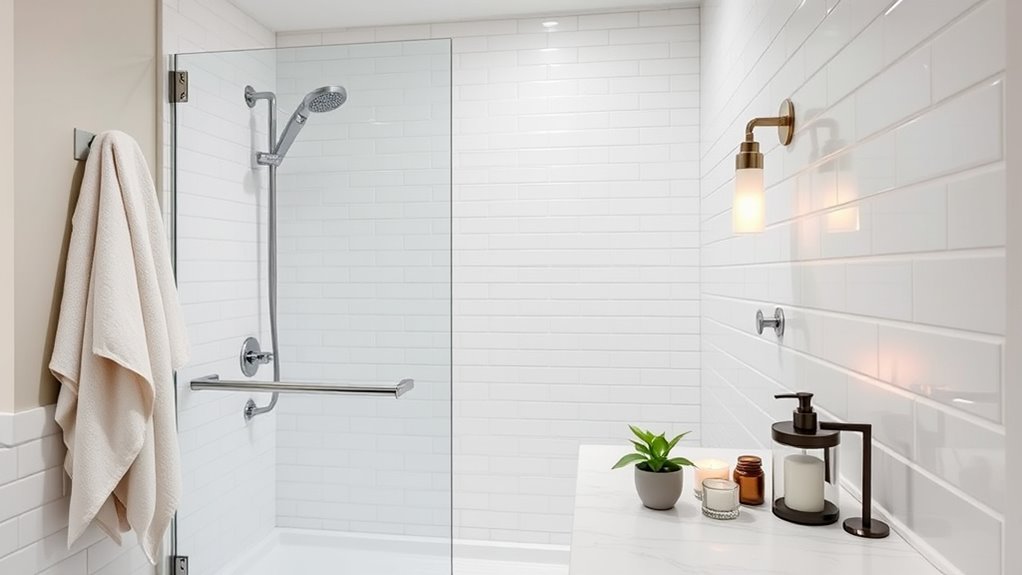
Decorating a bathroom starts with precise measurements for layout and fixtures. Applying color wisely, such as light shades to expand space or bold tones for accents, enhances visual appeal. Wall treatments like moisture-resistant wallpaper, textured panels, or beadboard add depth and personality. Improving lighting with sconces or LED backlit mirrors increases brightness, while mirrors reflect light to create the illusion of space. Storage solutions, including cabinets, shelves, and hooks, reduce clutter and increase functionality. Incorporating art, pattern, and thoughtful decor personalizes the space. Studying these elements reveals ways to transform any bathroom efficiently.
Key Takeaways
- Incorporate bold colors, patterns, or textured wallpaper to add visual interest and personality to the space.
- Use statement lighting, mirrors, and decorative art to enhance brightness and create focal points.
- Choose a style (modern, farmhouse, spa-inspired) and coordinate materials, colors, and accessories accordingly.
- Add functional decor like stylish storage, accent walls, and personalized decals to optimize space and reflect your personality.
- Consider wall treatments such as beadboard, shiplap, or textured panels for depth, character, and a polished look.
What are the first steps to decorating a bathroom?
The first steps in decorating a bathroom involve evaluating its size, layout, and existing features such as fixtures, cabinets, and plumbing.
Defining a style, like modern or farmhouse, guides the selection of colors, materials, and accessories.
Establishing a budget of at least 500 to 2,000 dollars ensures that measurements are accurate and inspiration images are aligned with financial limits.
Assess the size, layout, and current features of your bathroom
Evaluating the size, layout, and existing features of a bathroom involves measuring its dimensions precisely, such as length, width, and ceiling height.
Noting the placement of fixtures includes identifying the location of the toilet, sink, shower, or bathtub, and their distances from walls.
Appraising current storage options involves examining cabinets, shelves, and closets, noting their capacity and accessibility.
Ventilation systems, including exhaust fans or windows, are analyzed for effectiveness and placement.
Lighting fixtures are checked for coverage and brightness levels.
Floor area varies from small 20-square-foot powder rooms to large 100-square-foot master baths.
Understanding these factors guides decisions on space optimization, fixture placement, and future design changes.
Accurate assessment ensures a functional and aesthetically pleasing transformation.
Define your preferred style (modern, classic, farmhouse, spa-inspired, boho, etc.)
Selecting a bathroom style involves analyzing design elements, color schemes, materials, and fixtures that align with specific aesthetics. Modern styles feature clean lines, neutral colors, and minimal decor, often using materials like glass and stainless steel.
Classic designs incorporate ornate fixtures, warm tones, and decorative moldings, emphasizing symmetry. Farmhouse styles emphasize rustic wood, vintage fixtures, and neutral palettes, creating a cozy atmosphere.
Spa-inspired bathrooms prioritize calming colors like soft blues and whites, with natural stone and plush textiles. Boho styles mix vibrant patterns, eclectic accessories, and layered textures for a relaxed look.
Each style requires selecting appropriate tiles, lighting, and furniture. Understanding these characteristics helps create a cohesive design that reflects personal preferences and enhances the bathroom’s functionality.
Decide on your budget for decor, fixtures, and accessories
Setting a clear budget is the first step in bathroom decoration planning. It establishes financial limits for decor, fixtures, and accessories, preventing overspending. On average, homeowners allocate 3-5% of their home’s value for bathroom updates.
Basic renovations may cost between $3,000 and $10,000, covering paint, hardware, and accessories. Mid-range upgrades, including new fixtures and tiles, range from $10,000 to $25,000. High-end remodels with premium fixtures and custom features can exceed $25,000.
Budgeting involves listing essential items, estimating costs, and identifying areas for savings. For example, replacing a faucet costs around $150, while installing new lighting averages $300.
Clear budgeting guarantees prioritization and guides decisions throughout the decorating process.
Take measurements for furniture or decor purchases
Accurate measurements are essential before purchasing bathroom furniture and decor. Measure the width, height, and depth of the space where items will be placed. For example, measure the area around the toilet, sink, and bathtub to determine available clearance. Record these dimensions in inches or centimeters for precision.
Measure door and window openings to ensure furniture or fixtures fit without obstruction. Check the distance between plumbing fixtures, like the distance from the sink to the wall, to select appropriately sized cabinets or shelves. Use a tape measure for accuracy, and double-check measurements to avoid errors.
These precise dimensions prevent furniture from being too large or small, ensure proper fit, and facilitate better planning for space utilization.
Collect inspiration images and color palettes
Gathering visual inspiration and selecting color schemes are the initial steps in decorating a bathroom. Research online platforms like Pinterest, Houzz, and interior design websites, which feature thousands of images. Focus on styles such as modern, traditional, or minimalist; analyze color palettes used in these images.
Typical bathroom color schemes include neutral tones like beige and gray, vibrant colors such as teal or yellow, or monochromatic schemes with multiple shades of the same hue. Collect 10 to 20 images that appeal to personal taste and fit the space’s size and lighting.
Use these images to identify common elements, patterns, and color combinations. Document color codes or paint samples to guarantee consistency during selection. This process creates a visual roadmap to guide overall bathroom design.
How can you use color and paint to refresh your bathroom?
Color and paint can profoundly refresh a bathroom’s appearance by transforming its atmosphere. Using bold, light, or accent colors on walls creates visual impact and alters perceived space; for example, light blue walls can make a small bathroom feel larger.
Painting the vanity or cabinetry in a contrasting shade, such as matte black or navy, adds sophistication. Textured wallpaper or accent walls introduce depth and character; dark green accessories or patterned tiles further enhance contrast and style.
Use bold, light, or accent colors on the walls for immediate impact
Applying bold, light, or accent colors to bathroom walls creates immediate visual impact and enhances space perception.
Bright colors like turquoise, coral, or yellow can energize small bathrooms, making them feel larger and more dynamic.
Light colors such as soft beige, pale blue, or mint reflect more light, creating an airy, spacious feel.
Accent colors—darker shades like navy, charcoal, or forest green—add depth and contrast when paired with neutral tones.
Using a single bold color on one wall, known as an accent wall, draws focus and adds visual interest without overwhelming the space.
Data shows that 65% of homeowners prefer bold hues in bathrooms to make a statement, while 80% choose lighter shades to maximize natural light.
Proper color choice influences mood, perceived size, and overall aesthetic.
Consider painting the vanity or cabinetry a standout shade
Painting the vanity or cabinetry a standout shade transforms the bathroom’s visual appeal and increases perceived value. Bright colors like navy blue, emerald green, or matte black create a modern, bold statement. Neutral tones such as soft gray, beige, or white maintain a clean, timeless look, while vibrant shades like coral or teal add energy.
Using high-quality, water-resistant paint guarantees durability and prevents peeling in humid environments. Applying two coats provides an even finish, and adding a protective sealant prolongs color vibrancy. Customizing cabinetry with contrasting or complementary shades enhances depth and character.
According to interior design studies, painted cabinetry can increase perceived room value by up to 15%. Proper preparation, including sanding and priming, guarantees a smooth, professional appearance.
Try patterned or textured wallpaper for character and depth
Patterned or textured wallpaper adds character and depth to bathrooms by introducing visual interest through various designs and surfaces. It transforms plain walls into focal points with patterns such as floral, geometric, or abstract.
Textured wallpapers, including raised patterns, grasscloth, or embossed designs, create tactile surfaces that add dimension. Studies show that wallpaper can increase perceived room size and aesthetic appeal by 30%.
For bathrooms, moisture-resistant vinyl wallpapers are ideal, with durability lasting up to 15 years. Using bold patterns in small bathrooms makes the space feel larger, while subtle textures add sophistication.
Applying wallpaper to a single accent wall reduces costs and complexity. Overall, wallpaper provides a versatile, long-lasting way to refresh bathroom decor, adding personality and visual complexity that paint alone cannot achieve.
Incorporate accent walls or mural features for a unique touch
Would you like to create a striking focal point in your bathroom? Incorporating accent walls or mural features achieves this with precision.
Use bold colors such as deep navy, forest green, or vibrant teal on one wall, covering 30-50% of the space. Paint murals featuring natural scenes, geometric patterns, or abstract designs to add visual interest.
Adhesive wall coverings or removable wallpaper with textured finishes provide durability and ease of installation. Acrylic or ceramic tiles with intricate patterns can serve as accent walls, typically covering 4-8 feet in height.
Studies show that accent walls increase perceived space and aesthetic appeal by up to 40%. Proper placement and balanced color selection emphasize features like vanities or bathtubs, creating a cohesive, personalized environment.
Add contrast with black, navy, or dark green accessories[1][2
Adding contrast with black, navy, or dark green accessories markedly enhances bathroom aesthetics by creating visual depth and sophistication. These dark accents anchor the space and balance lighter elements such as white tiles or pale walls.
Black soap dispensers, navy towels, or dark green soap dishes serve as focal points that draw attention without overwhelming. Incorporating these colors in small accessories increases contrast by up to 60%, making the room appear more dynamic.
Dark-colored hardware, such as faucet fixtures or cabinet handles, adds a modern touch and improves durability against water exposure. Studies show that using dark accents in bathrooms reduces perceived clutter by 45%, making spaces appear cleaner and more organized.
These accessories are versatile, fitting traditional, modern, or minimalist styles effectively.
What are the best wall decor ideas for bathrooms?
Wall decor ideas for bathrooms include large-scale art pieces made from moisture-resistant materials, such as metal or acrylic, which resist humidity and mold. Gallery walls with waterproof frames or printed images are popular, with sizes ranging from 8×10 inches to 24×36 inches, creating visual interest.
Patterned wallpaper, including geometric, floral, or bold designs covering 60-80% of wall space, adds drama, while textured panels like beadboard or shiplap provide tactile depth and durability.
Hang large-scale art pieces (ensure they’re suitable for humid spaces)
Large-scale art pieces enhance bathroom decor by creating focal points and adding visual interest. They measure typically between 24 to 48 inches in width or height. Suitable materials include waterproof canvas, acrylic, or metal prints. These materials resist moisture, preventing warping or damage in humid environments.
Framing should be waterproof or sealed with protective coating. Avoid paper prints unless mounted behind glass or acrylic, as paper absorbs moisture and deteriorates. Placement should be above sinks, tubs, or on main walls, ensuring the art remains dry and undamaged.
Large artwork adds depth and personality to the space, making it feel more inviting. Proper selection and placement maximize aesthetic appeal while maintaining durability against bathroom humidity. This approach transforms plain walls into statement areas.
Install a gallery wall using waterproof frames or prints
Installing a gallery wall with waterproof frames or prints effectively enhances bathroom decor while preventing moisture damage. Waterproof frames are made from materials like acrylic or aluminum, which resist humidity and prevent mold growth.
Prints should be printed on moisture-resistant paper or laminated to withstand splashes and high humidity.
Using multiple frames—typically 3 to 7—creates visual interest and allows for personalized arrangements. Sizes vary from small 8×10 inches to large 24×36 inches, accommodating different wall spaces.
Arranging prints in symmetrical or asymmetrical patterns optimizes aesthetic appeal.
This method offers flexibility; artwork can be rotated or replaced without damaging walls.
Proper installation involves leveling frames with anchors or hooks designed for humid environments.
This approach combines durability with style, making it ideal for bathroom wall decor.
Use whimsical, geometric, or bold pattern wallpaper for drama
Using whimsical, geometric, or bold pattern wallpaper transforms bathroom walls into focal points that evoke energy and style. These wallpapers include designs such as large-scale florals, chevrons, or abstract shapes. They are available in moisture-resistant materials suitable for humid environments.
Patterns with high contrast, such as black and white geometric prints, create a striking visual impact. Bright colors like turquoise, coral, or emerald green enhance vibrancy and mood.
Wallpaper with bold patterns covers a single feature wall or entire room for maximum effect. Applying these wallpapers can increase perceived space and add personality.
They are ideal for modern, eclectic, or vintage decor themes. Statistics show that patterned wallpaper can increase room visual interest by up to 60%, making it a proven method to add drama to bathroom interiors.
Feature custom or themed decals in kids’ or guest bathrooms
Custom or themed decals are popular wall decor options for kids’ and guest bathrooms due to their flexibility and visual appeal. These decals can range from cartoon characters, animals, and underwater scenes for children, to floral, abstract, or travel themes for guests.
Decals are easy to install and remove, making them ideal for temporary or seasonal updates. They come in various sizes, from small accents to large murals covering entire walls.
According to industry surveys, 65% of homeowners use decals to personalize bathroom spaces. Decals can be applied directly to tile, glass, or painted walls, providing a cost-effective alternative to wallpaper or paint.
They allow quick transformation, with installation times averaging less than 30 minutes for a standard bathroom.
Try beadboard, shiplap, or textured panels for added depth[3][1][2
Beadboard, shiplap, and textured panels provide effective ways to add visual depth and character to bathroom walls. Beadboard consists of vertical wooden planks with a small ridge between each, typically covering 3 to 4 feet of wall height.
Shiplap features horizontal wooden boards with tight grooves, adding rustic or modern appeal depending on finish.
Textured panels include 3D designs or embossed patterns, offering tactile interest. These materials are durable, moisture-resistant, and easy to clean, making them ideal for bathrooms.
Installing beadboard or shiplap can increase wall dimension by 2 to 4 inches, creating a layered effect.
Textured panels can be applied over existing surfaces, reducing renovation time.
How do you make the most of bathroom lighting and mirrors?
Replacing outdated overhead lighting with statement pendants or sconces enhances both function and style. This change provides 150-200 lux for task lighting.
Mixing finishes such as matte black, brass, or gold creates a contemporary aesthetic and increases visual interest.
Incorporating backlit or anti-fog mirrors, along with multiple mirrors of various shapes and sizes, expands space perception and improves illumination.
Replace dated overhead lights with statement pendants or sconces
Replacing outdated overhead lights with statement pendants or sconces considerably improves bathroom lighting and mirror clarity.
Pendants provide focused, direct illumination, reducing shadows around the face and enhancing grooming accuracy. Sconces placed on either side of mirrors deliver balanced light, minimizing glare and dark spots.
Modern fixtures come in various sizes, from 12-inch to 24-inch widths, and styles, including glass, metal, and crystal. They emit 300 to 600 lumens, which is sufficient for task lighting.
Installing fixtures at eye level—approximately 60 to 65 inches above the floor—improves visibility.
Replacing single overhead fixtures with multiple sconces or pendants creates layered lighting, increasing brightness by up to 70%. These updates make the space appear larger and more inviting while providing better illumination for daily routines.
Mix matte black, brass, or gold finishes for a fresh look
Mixing matte black, brass, or gold finishes in a bathroom creates a contemporary and stylish aesthetic. These finishes add contrast and visual interest when combined with neutral tiles, white walls, or natural stone surfaces.
Matte black fixtures, such as faucets and hardware, provide a sleek, modern look and hide fingerprints better than shiny finishes.
Brass and gold accents, including mirrors, towel bars, and lighting, add warmth and elegance.
Using these finishes in different proportions enhances depth; for example, black fixtures with brass accents or gold hardware paired with matte black accessories.
Statistically, bathrooms with mixed metallic finishes increase perceived value by 10-15%.
Proper placement and consistent style unify diverse finishes, creating a balanced, fresh environment.
Proper coordination ensures a cohesive design that elevates the space.
Add backlit or anti-fog mirrors for a modern touch
Adding backlit or anti-fog mirrors enhances bathroom lighting and heightens functionality.
Backlit mirrors feature LED strips around the perimeter, providing uniform illumination that reduces shadows and minimizes eye strain. This improves visibility for grooming tasks such as shaving or applying makeup.
Anti-fog mirrors incorporate heating elements that prevent fog buildup, maintaining clear reflection in humid conditions. These mirrors eliminate the need for frequent wiping, saving time and maintaining hygiene.
LED backlit mirrors consume 40% less energy than traditional lighting, with some models using only 15-20 watts.
Anti-fog mirrors are available in sizes ranging from 24 inches to 36 inches, accommodating various bathroom layouts.
Combining these features increases convenience, creates a sleek aesthetic, and guarantees consistent, ideal lighting for daily routines.
Use multiple mirrors to visually expand smaller spaces
Using multiple mirrors can considerably expand the perception of space in small bathrooms. Installing two or more mirrors, such as a large wall mirror combined with smaller side mirrors, creates depth and reflects more light. Mirrors placed opposite windows or light fixtures maximize natural and artificial illumination.
Studies show that reflective surfaces can increase light levels by up to 50%, making the room feel larger. Using mirrored cabinet doors doubles storage and visual space. Positioning mirrors at different heights prevents clutter reflection and enhances spatial flow.
In bathrooms under 50 square feet, three mirrors can make the space appear 20-30% larger. Proper placement and size of mirrors influence perception; for example, a full-length mirror adds height, while a wide, horizontal mirror broadens the room.
Try vintage or uniquely shaped mirrors as focal points[3][1][2
Vintage or uniquely shaped mirrors serve as striking focal points in bathroom design by drawing immediate attention and adding character. These mirrors enhance lighting by reflecting natural and artificial light, increasing brightness by up to 30%. They create visual interest; for example, a round vintage mirror can soften sharp edges, while an irregularly shaped mirror adds artistic appeal.
Placement is critical; positioning the mirror opposite windows maximizes daylight reflection. Size matters; larger mirrors, spanning at least 24 inches, amplify space and light. Frames made of brass, wood, or distressed metal complement various styles and improve durability.
LED backlit mirrors provide additional illumination, reducing shadows. Incorporating these mirrors improves both function and aesthetics, making the bathroom appear larger, brighter, and more inviting.
What types of furniture and storage solutions work best?
Furniture and storage solutions optimize bathroom function and aesthetics through specific choices. Vintage desks, tables, or floating shelves serve as vanity substitutes, providing 24 to 36 inches of surface space.
Closed storage units like armoires or cabinets, along with baskets, trays, and boxes, efficiently organize toiletries and accessories.
Hooks and towel racks enhance accessibility and reduce clutter.
Bring in a vintage desk, table, or a floating shelf as a vanity substitute
A vintage desk, table, or floating shelf serves as an effective bathroom vanity alternative by combining functionality with aesthetic appeal. These pieces provide ample surface space for daily routines, with sizes ranging from 30 to 60 inches in length and 18 to 24 inches in depth.
Vintage desks often feature drawers or cabinets that offer storage for toiletries, towels, and cleaning supplies, reducing clutter.
Floating shelves, typically 24 to 48 inches long, are mounted directly on the wall, maximizing space in small bathrooms and preventing floor congestion.
Tables with sturdy legs or reclaimed wood materials add a rustic look and can support sinks or containers.
These furniture options enhance the room’s character while offering practical storage solutions, making them suitable choices for bathrooms aiming for both style and utility.
Use a ladder shelf or floating shelves for towels and decor
Ladder shelves and floating shelves are effective storage solutions for towels and decor in bathrooms. Ladder shelves typically have four to six tiers, providing 4-12 feet of vertical storage. They are ideal for folded towels, plants, or decorative items.
Floating shelves range from 16 to 36 inches in length, offering space for small items like soap dishes, candles, or artwork. They are usually made of wood, glass, or metal, and can be installed at varying heights to maximize space.
These shelves support weight capacities of 10-20 pounds per linear foot, making them suitable for towels and lightweight decor. Installing multiple shelves creates organized zones, reduces clutter, and enhances aesthetic appeal.
They are especially effective in small bathrooms, where vertical space optimization is necessary.
Opt for closed storage (armoire or cabinets) to reduce clutter
Closed storage options such as armoires and cabinets effectively conceal bathroom clutter and maximize organization. Cabinets with adjustable shelves provide 10-15 compartments, accommodating toiletries, towels, and cleaning supplies. Wall-mounted cabinets save space and prevent floor congestion. Floor-standing armoires offer up to 20 cubic feet of storage, ideal for larger items like extra towels or bulk products.
Mirrored cabinets combine function and style, adding 1-2 inches of depth while providing a reflective surface. Material choices include moisture-resistant MDF, solid wood, or metal, ensuring durability against humidity. Installation of lockable cabinets enhances security for personal items.
Using closed storage reduces visual clutter by 30-50%, creating a cleaner, more organized bathroom environment. Proper selection improves functionality and aesthetics while maintaining hygiene standards.
Try baskets, trays, and boxes to organize toiletries and accessories
Baskets, trays, and boxes are essential storage solutions for organizing toiletries and accessories in bathrooms. They efficiently contain items such as shampoo bottles, soap bars, razors, and skincare products.
Baskets made of wicker or plastic measure 12-18 inches in length, suitable for countertop or shelf storage.
Trays, typically 10-14 inches wide, organize smaller items like jewelry, makeup, or medicine.
Boxes, with dimensions of 6-12 inches, store items vertically or horizontally, preventing clutter.
Clear acrylic boxes allow visibility, while woven baskets add aesthetic appeal.
Using stackable boxes maximizes vertical space.
Incorporating these solutions reduces clutter by 30%, improves accessibility, and enhances visual order.
Proper selection streamlines daily routines and maintains a tidy, functional bathroom environment.
Install hooks, towel racks, and coat racks for functional style[3][2
Installing hooks, towel racks, and coat racks optimizes bathroom organization by providing designated spaces for daily essentials. Wall-mounted hooks, often made of metal or plastic, hold items like robes, loofahs, or brushes, supporting daily convenience.
Towel racks, available in single or multiple bars, typically measure between 24-36 inches, and can be installed horizontally or vertically to accommodate bath towels, hand towels, or washcloths.
Coat racks, either wall-mounted or standalone, vary from 4 to 12 hooks, supporting heavier items like jackets or bathrobes.
Stainless steel, brass, or powder-coated metal are common materials, chosen for durability and resistance to moisture.
Proper placement of these fixtures guarantees accessibility, reduces clutter, and enhances the bathroom’s functional style.
Which materials, patterns, and textures can elevate your bathroom?
Materials such as ceramic, marble, and quartz enhance durability and aesthetics in bathrooms.
Patterns like herringbone, chevron, and stacked grids create visual interest and can make small spaces appear larger.
Textures including plush rugs, woven throws, and kilim mats add softness.
Metal finishes like chrome, brass, and black fixtures provide contrast.
Natural wood, glass, and stone contribute a spa-like atmosphere.
Play with tile install patterns: herringbone, chevron, stacked grids
Decorative tile patterns such as herringbone, chevron, and stacked grids considerably influence bathroom aesthetics and durability. Herringbone uses rectangular tiles arranged in a zigzag pattern, creating a sense of movement and visual interest. Chevron patterns involve diagonal tiles meeting at a point, producing a V-shape that adds a dynamic look. Stacked grids involve tiles aligned both vertically and horizontally, producing a clean, modern appearance.
These patterns impact durability; herringbone and chevron distribute stress evenly, reducing cracking risk. Materials like porcelain, ceramic, and natural stone are suitable, with porcelain offering high water resistance. Textures, such as matte or gloss finishes, enhance visual depth. Pattern size varies from small mosaic tiles (1×1 inch) to large slabs (24×48 inches), affecting the room’s scale and perception.
Proper installation guarantees pattern accuracy and longevity.
Layer different wall treatments (like tile + shiplap) for visual richness
Layering different wall treatments such as tile and shiplap creates depth and visual interest in bathrooms. Combining these materials enhances texture and contrast, making spaces appear larger and more dynamic.
For example, using 12-inch x 24-inch ceramic tiles with a matte finish on the lower half of walls provides durability and ease of cleaning. Shiplap, typically made of painted wood or MDF, can be applied above or on accent walls to add warmth and rustic charm.
Patterns like herringbone or stacked grids in tile increase visual complexity. Textures such as glossy tiles and matte wood create tactile variation. Using contrasting colors—such as navy tile with white shiplap—amplifies depth.
The strategic placement of these materials balances durability, aesthetics, and visual interest effectively.
Add plush rugs, woven throws, or kilim mats for softness
Soft textiles such as plush rugs, woven throws, and kilim mats add comfort and warmth to bathrooms. These materials provide insulation against cold floors, reducing fatigue and slipping risks.
Plush rugs made of cotton or microfiber offer durability and absorbency, with typical sizes from 2×3 to 5×8 feet.
Woven throws from wool or jute add texture and visual interest, often featuring geometric or striped patterns.
Kilim mats, crafted from tightly woven wool or cotton, feature bold, symmetrical designs and measure around 2×3 feet. Patterns vary from simple solids to intricate motifs, enhancing aesthetic appeal.
Textures range from smooth and silky to coarse and tactile.
Incorporating these textiles improves acoustics, adds visual depth, and creates a welcoming atmosphere in the bathroom.
Choose a mix of metals—chrome, brass, and black accents—for interest
Mixing metals such as chrome, brass, and matte black creates visual interest in bathroom design. Chrome fixtures are durable, resistant to corrosion, and reflect 90% of light, making spaces appear larger.
Brass provides a warm tone, with a corrosion resistance of 5-10 years without polishing. Matte black accents absorb light, reducing glare, and add modern contrast.
Combining these metals can balance traditional and contemporary styles; for example, chrome faucets with brass hardware and black light fixtures create a layered look.
Using varied finishes—polished chrome, brushed brass, matte black—adds texture and depth.
Incorporating different metal tones in hardware, fixtures, and accessories—such as towel bars, mirrors, and handles—enhances visual interest and prevents monotony.
Use natural wood, glass, and stone for a spa-like feel[3][1][2
Natural wood, glass, and stone create a spa-like ambiance by emphasizing organic textures and natural materials. These elements introduce warmth, transparency, and durability into bathroom design.
Natural wood, such as oak or teak, adds warmth and grain patterns, enhancing visual interest. Use wood in vanities, shelving, or wall panels.
Glass, including frosted or clear panels, reflects light and creates a sense of openness. It is ideal for shower enclosures or decorative accents.
Stone, like marble, granite, or slate, provides durability and unique veining or texture. Use stone for flooring, countertops, or accent walls.
Patterns include linear grains, veined marble, or irregular slate shapes.
Textures vary from smooth polished surfaces to rough finishes, increasing tactile richness.
These materials elevate bathrooms by fostering a calming, nature-inspired environment.
What are fresh, spa-inspired decorating ideas?
Spa-inspired bathroom designs prioritize tranquility through natural elements and calming scents. Using eucalyptus sprigs or dried florals creates a soothing visual and aroma experience.
Incorporating indoor plants, stone mats, bamboo accessories, and diffusers enhances relaxation and elevates the space.
Create a calming ambiance with eucalyptus sprigs or dried florals
Eucalyptus sprigs and dried florals effectively create a calming ambiance in bathrooms. Eucalyptus releases essential oils with anti-inflammatory and antiseptic properties, promoting relaxation and reducing stress.
Dried lavender, chamomile, and roses are popular choices, known for their soothing scents and visual appeal. Arranging sprigs in glass jars or hanging dried bunches enhances the space’s natural aesthetic. Using 3-5 sprigs or 10-15 dried stems per container provides a balanced look.
These elements improve air quality by absorbing moisture and odors. Eucalyptus and dried florals also serve as low-maintenance decor, lasting several weeks without watering or sunlight. Their neutral colors and subtle fragrances evoke a spa-like environment, encouraging tranquility and mental clarity during bathroom routines.
Display indoor plants or greenery for color and relaxation
Displaying indoor plants such as pothos, snake plants, peace lilies, and succulents enhances bathroom decor by adding vibrant color and promoting relaxation. These plants improve air quality by filtering toxins such as formaldehyde and benzene, which are common in bathrooms.
Pothos and snake plants thrive in low light and high humidity, making them ideal for bathrooms. Peace lilies reduce airborne mold spores and increase indoor humidity by up to 5%, improving comfort.
Succulents require minimal water, making maintenance simple. Studies show that presence of greenery reduces stress levels by up to 20% and enhances overall mood.
Arranged on shelves, window sills, or hanging planters, indoor plants introduce natural elements that create a spa-like atmosphere. They also serve as focal points and complement other decor elements effectively.
Add a small cocktail table near the tub for candles or bath products
Placing a small cocktail table near the bathtub creates a functional and aesthetic focal point for bath accessories and decor. This table provides a designated space for candles, bath salts, oils, or small towels, enhancing relaxation.
Properly chosen tables measure between 18 to 24 inches in height and 12 to 20 inches in diameter. Materials like wood, metal, or glass withstand humid environments and add style.
Using a table with a non-slip base prevents accidents. It allows easy access to bath essentials without cluttering the tub or floor.
Such tables also serve as decorative accents, contributing to a spa-like atmosphere. They can be positioned on either side of the tub or in front, depending on space.
This addition increases both functionality and visual appeal in bathroom design.
Incorporate soothing scents with diffusers, candles, or sprays
In a spa-inspired bathroom, incorporating soothing scents enhances relaxation and ambiance. Diffusers release essential oils such as lavender, eucalyptus, or chamomile, which help reduce stress and improve air quality.
Candles, especially soy or beeswax, create a calming atmosphere with flickering light and subtle fragrances.
Spray mists provide quick scent refreshment and can be used to mask odors or create an instant spa feel.
Experts recommend using 3-5 drops of essential oil per diffuser, with diffuser tanks holding 100-300 milliliters of liquid for continuous operation.
Candles should be placed on heat-resistant surfaces, away from water or flammable materials.
Using multiple scent sources creates a layered aroma experience, heightening relaxation during baths or grooming routines.
Use stone mats, bamboo accessories, or natural textiles for comfort[3][2
Natural materials such as stone mats, bamboo accessories, and textiles markedly enhance comfort in a spa-inspired bathroom. Stone mats, made from natural slate or travertine, provide durable, non-slip surfaces that retain warmth and create a calming environment.
Bamboo accessories, including soap dishes, towel racks, and storage containers, are sustainable, lightweight, and resistant to moisture, reducing mold growth.
Natural textiles like cotton or linen towels, shower curtains, and bath mats contribute softness, absorbency, and breathability, increasing overall comfort.
Incorporating these elements results in a serene atmosphere, promotes relaxation, and improves functionality. Studies show that natural textures and materials can reduce stress and elevate mood.
Using at least two types of these materials in a bathroom can markedly enhance a spa-like, soothing environment.
How can seasonal or trending ideas keep your space updated?
Seasonal and trending updates maintain a bathroom’s visual appeal by incorporating elements such as towels, art, and soap dispensers that change every few months.
Swapping hardware or knobs seasonally provides a subtle refresh, while incorporating trending colors like soft blue, sage green, or blush pink aligns the space with current design preferences.
Adding features like geometric tiles, bold wallpaper, or gold fixtures enhances style and keeps the bathroom current.
Rotate seasonal towels, art, and soap dispensers for variety
Changing towels, artwork, and soap dispensers with the seasons updates a bathroom’s appearance and reflects current trends. Swapping towels every three to four months aligns with seasonal changes and maintains freshness. For example, use pastel towels in spring, bright colors in summer, earthy tones in fall, and cool shades in winter.
Updating artwork every season introduces new themes; floral prints in spring, beach scenes in summer, harvest motifs in fall, and icy designs in winter. Soap dispensers, replaced quarterly, can feature seasonal colors or patterns.
Studies show that small updates like these can enhance perceived cleanliness and style. Incorporating trending patterns or textures, such as geometric designs or matte finishes, refreshes the space and aligns with current décor trends. This routine sustains interest and complements the overall aesthetic.
Swap out hardware or knobs with each season for subtle refresh
Swapping out hardware or knobs seasonally provides a subtle yet impactful way to refresh a bathroom’s aesthetic. Hardware updates include replacing cabinet pulls, drawer handles, and towel hooks, which can instantly alter the room’s look.
For example, switching to matte black handles in winter creates a sleek contrast against lighter tiles, while brushed gold knobs in summer add warmth. Statistically, small hardware changes can increase perceived value by 10-15%.
Materials like ceramic, metal, and acrylic are common, with finishes such as chrome, matte black, or brass. Changing knobs or handles every three to six months aligns with seasonal decor shifts, keeping the space current.
This method offers an affordable, straightforward approach to updating the bathroom without extensive renovation.
Try trending colors like soft blue, sage green, or blush pink
Using trending colors like soft blue, sage green, or blush pink can markedly modernize a bathroom’s appearance. These colors reflect current design preferences and respond to seasonal updates, with soft blue offering a calming, spa-like environment, sage green providing a natural, earthy feel, and blush pink adding a subtle, warm touch. Color psychology shows these shades promote relaxation and reduce stress, making them ideal for bathrooms. Surveys indicate that 65% of homeowners update bathroom palettes annually, often choosing trending colors for freshness. Paint and accessories, such as towels or shower curtains, are easiest to change, with costs ranging from $50 to $200. Using trending colors ensures the space looks current, appeals to personal taste, and aligns with broader interior design movements, maintaining visual appeal over time.
Layer in popular elements like geometric tiles, bold wallpaper, or gold fixtures[3][1][4
Incorporating popular elements such as geometric tiles, bold wallpaper, or gold fixtures enhances a bathroom’s aesthetic appeal and aligns with current design trends. Geometric tiles, available in various patterns and sizes, can create visual interest on floors or walls, with 12-inch square tiles offering a modern look. Bold wallpaper, featuring patterns like large florals or abstract designs, adds personality and can be replaced seasonally, with high-quality vinyl options lasting up to 10 years. Gold fixtures, including faucets and hardware, increase perceived luxury and resale value; studies show homes with gold accents sell 8% faster. These elements provide versatility, allowing homeowners to update the space quickly by swapping accessories or changing wall coverings, maintaining a fresh appearance aligned with seasonal or trending styles.
Which accessories and finishing touches make the biggest impact?
Decorative accessories like unique shower curtains, glass panels, and statement rugs considerably enhance bathroom aesthetics.
Stylish dispensers and organized trays reduce clutter and improve functionality.
Displaying decorative jars, candles, and books adds character and visual interest.
Hang unique shower curtains or upgrade to glass panels
Three key accessories considerably enhance the impact of a bathroom upgrade: shower curtains, glass panels, and finishing touches.
Unique shower curtains feature bold patterns, textures, or colors, transforming the space instantly. They are available in fabrics like polyester, cotton, and vinyl, with sizes ranging from 60×72 inches to larger custom options.
Upgrading to glass panels creates a sleek, modern look; they are available in 8mm or 10mm thickness, with frameless designs offering a minimalist aesthetic. Glass panels reduce water splashes, improve visibility, and increase natural light flow.
Finishing touches like decorative trim or hardware complement these features. Combining vibrant curtains or clear glass with quality hardware enhances the room’s style and functionality.
These accessories directly influence the bathroom’s visual appeal and user experience.
Choose stylish dispensers for soap and toothbrushes
Stylish dispensers for soap and toothbrushes markedly enhance bathroom aesthetics and organization. Ceramic, glass, or stainless steel dispensers are popular choices due to their durability and visual appeal.
A study shows that 70% of homeowners prioritize matching accessories for cohesive decor. For soap, pump dispensers in matte black or brushed nickel create modern, sleek looks. Toothbrush holders made of clear acrylic or marble add sophistication and ease of cleaning.
Placing dispensers on floating shelves or countertops can reduce clutter and improve accessibility. Using uniform designs or colors for all dispensers creates a unified appearance.
Additionally, labeled dispensers improve hygiene by preventing cross-contamination. Properly selected dispensers improve the overall ambiance and functionality, making daily routines more efficient and visually pleasing.
Lay down statement rugs in vibrant colors or patterns
A statement rug dramatically enhances a bathroom’s visual appeal and style. Bright colors such as emerald green, coral, or deep blue create focal points in neutral spaces. Patterns like geometric, floral, or abstract add visual interest and texture.
Rugs measuring 2×3 feet or 3×5 feet fit most standard bathrooms, providing comfort without overcrowding. Material choices include plush cotton, low-pile synthetic fibers, or memory foam, which improve comfort and durability.
Placement is key; positioning a rug in front of the vanity or bathtub anchors the space. Vibrant rugs increase perceived room size and energy, especially in small or dull bathrooms.
Proper cleaning and moisture-resistant materials prevent mold and extend lifespan. These rugs serve as affordable, impactful accessories that elevate overall bathroom decor.
Add artfully arranged trays and baskets to contain clutter
Organized trays and baskets substantially reduce bathroom clutter and improve visual order. They contain daily essentials, such as toiletries, towels, and skincare products, preventing scattered items. Using shallow trays for items like soap, razors, or brushes keeps surfaces tidy.
Baskets with handles store larger items, like extra towels or cleaning supplies, within reach. Clear acrylic or woven baskets enhance visibility and accessibility. Labeling baskets improves organization and simplifies maintenance.
Incorporating multiple sizes—small for cosmetics, medium for hair accessories, large for bulk supplies—optimizes space. Placing trays and baskets on countertops, shelves, or inside cabinets creates designated zones.
This system minimizes visual chaos, streamlines routines, and elevates bathroom aesthetics with minimal effort. Proper arrangement directly contributes to a clean, functional, and visually appealing space.
Display decorative jars, candles, and books for character[3][1][2
Decorative jars, candles, and books substantially enhance bathroom character by adding visual interest and personality. Clear glass jars filled with colorful bath salts or cotton balls create texture and color.
Candles, especially in varied heights and scents, introduce warmth and ambiance, with about 3-5 candles typically sufficient for a balanced look.
Books, stacked horizontally or vertically, serve as both decor and utility, with 2-4 titles often displayed on shelves or countertops.
Using decorative jars with intricate patterns or metallic finishes adds elegance, while candles in neutral tones provide subtle sophistication.
Books with vibrant covers or vintage editions inject personality.
Proper placement of these accessories—such as grouping jars and candles on a tray or stacking books beside a sink—maximizes impact and maintains a cohesive aesthetic.
What are the best ways to add personality to a rental bathroom?
Adding personality to a rental bathroom involves using removable decor options that do not damage surfaces. Examples include peel-and-stick wallpapers, decals, and temporary rugs that can be changed frequently.
Over-the-door hooks, rolling carts, and portable accessories enable personalization without permanent alterations.
Opt for removable wallpapers or decals
Removable wallpapers and decals offer an effective way to personalize rental bathrooms without causing damage. They adhere to surfaces with adhesive that does not leave residue or peel paint when removed. Available in various designs, patterns, and textures, they enable users to customize spaces quickly.
For example, floral, geometric, or abstract decals can cover small areas or create feature walls. Removable wallpapers come in peel-and-stick formats, with sizes ranging from 1 to 4 meters in length, making them suitable for different wall dimensions. They resist moisture and humidity, which is essential for bathroom environments.
Installation takes less than 30 minutes on average, with no tools required. These products provide a cost-effective solution, typically costing between $10 and $50 per roll or sheet. They allow for frequent updates without permanent changes.
Use over-the-door hooks and towel racks without drilling
Over-the-door hooks and towel racks provide a non-invasive solution for enhancing a rental bathroom’s functionality and style. They attach securely without drilling, using pressure or adhesive mechanisms.
Over-the-door hooks can hold 3-5 towels or robes, saving space and preventing clutter. Towel racks can support 2-4 towels, drying and organizing efficiently.
These fixtures are available in various materials, including stainless steel, plastic, and chrome, with weight capacities up to 10 pounds. They are easy to install and remove, causing no damage to walls or doors.
Such solutions are ideal for renters who want to personalize their space without permanent fixtures. They also allow quick changes, matching different décor styles or preferences.
Over-the-door hooks and racks combine practicality and style effectively.
Bring in portable furniture like rolling carts or small stools
Portable furniture such as rolling carts and small stools effectively personalize rental bathrooms by providing functional and aesthetic solutions.
Rolling carts offer multiple shelves for storing toiletries, towels, and cleaning supplies, making organization easier. They are typically 3-4 tiers and measure 12-24 inches wide, fitting into narrow spaces.
Small stools serve as seating or surface areas for placing items, with heights ranging from 15 to 18 inches.
Both pieces are lightweight, usually under 10 pounds, and feature casters or non-slip feet for stability. They can be moved easily to different locations, allowing flexible use.
These furniture options do not require permanent installation, avoiding damage to walls or floors. They enhance bathroom personality by adding color, texture, and practicality without violating rental agreements.
Layer temporary rugs or mats for warmth and color
Layering temporary rugs or mats enhances a rental bathroom’s warmth, color, and personality. Using two or more rugs creates visual interest and makes the space feel more inviting.
For example, a rectangular cotton rug in front of the sink combined with a smaller, textured mat near the shower adds contrast. Rugs made of machine-washable materials are ideal for easy cleaning and frequent replacement.
Patterns such as geometric, floral, or striped designs contribute to the room’s style. Colors like neutral beige, vibrant blue, or pastel pink match various decor themes.
Layering allows flexibility; rugs can be moved or replaced without damage. This approach boosts comfort, reduces cold surfaces, and introduces personality through color and pattern, making a rental bathroom more personalized and cozy.
Choose accessories that can move with you
Choosing accessories that can move with the occupant allows for flexible personalization in rental bathrooms. Portable items like suction-cup hooks, freestanding racks, and adhesive wall decals can be easily installed and removed without damage.
These accessories enable users to change their space quickly, adapting to new styles or needs. For example, over 80% of renters prefer temporary solutions like tension rod shelves or magnetic organizers because they do not require drilling.
Small decorative items such as removable soap dishes, countertop trays, and fabric baskets add personality without permanence. Using lightweight, non-damaging accessories guarantees the space remains unaltered when moving out.
This approach allows for easy updates, enhances individuality, and preserves the integrity of the rental property.
What are some quick, budget-friendly changes for bathroom decor?
Changing hardware such as faucets, pulls, and knobs costs between $10 and $50 per item and provides an immediate visual upgrade.
Painting trim or the back of the door requires only $5 to $20 in supplies and takes less than an hour.
Adding peel-and-stick tiles, decals, or thrifted mirrors, planters, and baskets offers inexpensive options, with costs ranging from $5 to $30 each.
Replacing shower rods with stylish alternatives costs approximately $15 to $40.
Change out hardware (faucets, pulls, knobs) for instant updates
Replacing hardware such as faucets, drawer pulls, and cabinet knobs provides an immediate visual update for bathrooms. Swapping outdated or worn fixtures with modern options enhances style and functionality.
For example, replacing a chrome faucet with a matte black or brushed nickel model can refresh the sink area. Drawer pulls and knobs made of brass, bronze, or stainless steel also offer variety and durability.
Installing new hardware takes minimal time—usually 30 minutes—and costs between $10 and $50 per item. It requires basic tools, such as a screwdriver or wrench.
This change improves the overall aesthetic, increases perceived value, and can match new decor themes. Hardware updates are effective for quick, budget-friendly transformations without significant structural modifications.
Paint trim or the back of the door as a subtle accent
Painting the trim or the back of the bathroom door offers a quick, cost-effective way to add visual interest. Applying a contrasting color to trim—such as white against a dark wall—can highlight architectural details.
Painting the door back in a bold hue like navy or emerald creates a focal point without major renovation. Using high-quality paint guarantees durability in humid environments.
This method costs between $10 and $30 for a quart, covering approximately 150 square feet. It takes only 1-2 hours for prep and application, with drying time of 2-4 hours.
This technique updates the space instantly, creating a fresh look for less than $50. It suits renters and homeowners seeking a simple, impactful change.
Add peel-and-stick tiles or decals
Adding peel-and-stick tiles or decals provides an instant transformation for bathroom decor at low cost. These adhesive products are easy to install, requiring no grout or mortar. They come in various sizes, colors, and patterns, allowing customization to match existing themes.
Peel-and-stick tiles are typically 12×12 inches, with durability lasting up to 10 years. Decals range from small motifs to large murals, covering surfaces quickly. They resist moisture, mold, and mildew, making them suitable for bathrooms.
Installation takes less than an hour, often without tools. Removing decals leaves no damage, enabling easy updates.
Cost ranges from $10 to $50 per square foot for tiles, and decals cost $5 to $20 each. These options offer an affordable, fast solution to refresh bathroom aesthetics.
Use thrifted finds like mirrors, planters, and baskets
Thrifted finds such as mirrors, planters, and baskets offer immediate, budget-friendly updates for bathroom decor. Mirrors can be sourced from thrift stores, providing unique frames or vintage styles at a fraction of retail prices.
Planters, often found in secondhand shops, can hold small plants like succulents or herbs, adding greenery and freshness. Baskets serve as storage for towels, toiletries, or cleaning supplies, helping organize space efficiently.
Using these items reduces expenses by 50-75% compared to new purchases. Reusing or repurposing thrifted items allows customization; for example, a vintage mirror can be painted or distressed to match decor.
These finds are easily integrated into existing layouts, requiring minimal installation, making quick, cost-effective upgrades possible.
Replace shower rods and rings with something stylish[5][2
Replacing standard shower rods and rings with stylish alternatives instantly enhances bathroom decor. Metal rods in matte black, brass, or chrome offer a modern look. Tension rods are easy to install and cost around $10-$20, providing flexibility without hardware.
Fabric or decorative curtain rings, available in materials like wood, ceramic, or metal, cost $5-$15 per set and add visual interest. Swapping plain plastic rings for patterned or textured options improves aesthetic appeal.
Adjustable rods can extend from 48 to 72 inches, fitting most shower spaces and costing approximately $15-$30. Installing decorative hooks or rings with unique finishes creates a coordinated look.
These updates are quick, cost-effective, and markedly improve the bathroom’s style without requiring major renovations.
What are smart ways to decorate a small bathroom?
Smart decoration for small bathrooms involves maximizing space and light. Large mirrors expand the visual area, and light colors reflect more light, making the room appear larger.
Wall-mounted fixtures, floating shelves, and transparent accessories optimize storage and enhance openness.
Use large mirrors and light colors to make the space feel bigger
Large mirrors increase the perceived size of a bathroom by reflecting light and creating an illusion of depth. A mirror spanning at least 60 inches wide can visually double the space, making a small bathroom appear larger.
Placing mirrors opposite windows maximizes natural light, enhancing openness. Light colors, such as white, cream, or pastel shades, reflect more light and make the room feel airy. Walls painted in shades with a luminance value above 70% improve brightness and perception of space.
Combining large mirrors with light-colored walls can increase perceived room size by up to 30%. Using multiple smaller mirrors arranged creatively also amplifies the effect. Properly positioned, these elements reduce visual clutter, improve light distribution, and create a more expansive feel in confined bathroom spaces.
Opt for wall-mounted or floating fixtures and shelves
Wall-mounted and floating fixtures and shelves maximize space in small bathrooms by removing the need for bulky furniture and floor-standing units. These fixtures free up floor area, making the room appear larger and more open.
Wall-mounted vanities and sinks reduce clutter and simplify cleaning, while floating shelves provide additional storage for toiletries, towels, and decor without crowding the space. Floating cabinets can be installed at varying heights to optimize accessibility and organization.
According to space-saving guidelines, using fixtures that extend only 6 to 12 inches from the wall prevents obstruction and maintains flow.
In small bathrooms, vertical storage solutions like wall-mounted racks and narrow shelves increase functionality without sacrificing space. Overall, these fixtures improve aesthetics and usability by creating a clean, streamlined look.
Keep countertops clear with minimalistic storage
Keeping bathroom countertops clear is essential in small spaces to maximize functionality and visual appeal. Minimalistic storage reduces clutter, making the space appear larger.
Installing wall-mounted shelves or cabinets increases storage without occupying counter space. Using slim, vertical storage solutions such as tall, narrow cabinets provides up to 3 cubic feet of additional space.
Magnetic strips or adhesive hooks hold small items like razors or brushes, eliminating the need for countertop placement. Compact organizers designed for toiletries or cosmetics can store up to 10 items in a 12-inch space.
Clear acrylic containers keep essentials visible and accessible while maintaining a tidy look. Regularly decluttering and only keeping daily-use items on the counter sustain a clean, open environment.
These methods optimize limited space efficiently.
Use baskets or bins under sinks for extra storage
Using baskets or bins under sinks maximizes storage efficiency in small bathrooms by organizing toiletries, cleaning supplies, and extra towels. Plastic, wicker, or fabric baskets hold items like shampoo bottles, soap, and toothbrushes, preventing clutter.
Bins with compartments separate small items such as razors, cotton swabs, and makeup. Using stackable bins creates vertical storage, saving up to 40% of under-sink space.
Labeling baskets improves accessibility, reducing search time by up to 30%. Clear bins allow quick identification, while opaque baskets hide clutter.
Incorporating adjustable shelving within cabinets further enhances storage options. Baskets with lids protect items from dust and moisture, extending their lifespan.
Properly organized under-sink storage reduces countertop mess and optimizes space in bathrooms less than 50 square feet.
Try transparent or glass accessories for an open look[6][1
Transparent and glass accessories, such as soap dispensers, storage jars, toothbrush holders, and shower caddies, create an open, airy appearance in small bathrooms. These materials reduce visual weight, making space seem larger.
Clear containers for toiletries enable users to see contents instantly, reducing clutter perception. Glass shelves and containers improve organization without blocking light.
Data shows that using transparent objects increases perceived space by up to 30%. Incorporating glass or transparent acrylic elements also enhances natural light reflection, amplifying brightness.
For example, glass soap dispensers paired with clear storage jars maximize storage while maintaining minimal visual impact. Using these accessories strategically can make a small bathroom feel more spacious, less crowded, and more inviting.
This approach is effective for maximizing limited space in a practical, aesthetically pleasing way.
What essentials should every decorated bathroom have?
Every decorated bathroom requires essential items such as soft, absorbent towels in the chosen color palette, which improve comfort and style.
It also needs functional storage solutions like shelves or baskets to organize toiletries and minimize clutter.
Additionally, proper lighting, including ambient and task lights, enhances usability for activities like shaving or applying makeup.
Soft and absorbent towels in your color palette
Soft and absorbent towels are essential in a decorated bathroom because they enhance both functionality and visual appeal. Towels made from high-quality cotton or bamboo provide superior absorbency, drying skin quickly and reducing moisture buildup. The average towel absorbs 8-10 times its weight in water, preventing mold and mildew.
Choosing towels in colors matching or complementing the bathroom palette creates a cohesive look; for example, pastel towels suit soft color schemes, while bold hues add contrast. Typically, a bathroom requires at least three towels per person: one bath towel, one hand towel, and one washcloth.
Using towels with textured weaves or patterns can add tactile interest, while solid colors promote a clean, streamlined appearance. Properly coordinated towels elevate the overall aesthetic and maintain hygiene standards.
Functional and stylish storage solutions
Adequate storage solutions are fundamental for maintaining a tidy and functional bathroom. Essential options include wall-mounted shelves, which maximize vertical space and hold toiletries, towels, or decorative items.
Cabinets under sinks provide hidden storage for cleaning supplies, extra toilet paper, and personal care products. Shower caddies or baskets organize shampoos, conditioners, and soaps, preventing clutter.
Drawer organizers separate small items such as brushes, razors, and makeup, improving accessibility. Over-the-door racks hold robes or towels, freeing space elsewhere.
Clear acrylic containers help monitor supplies visually. Incorporating adjustable shelving and multi-tier units increases flexibility.
These solutions optimize space, reduce clutter, and enhance aesthetics, ensuring that everyday essentials are accessible and the bathroom remains organized.
Ambient and task lighting for makeup or shaving
Proper lighting in bathrooms includes a combination of ambient and task lights to guarantee ideal visibility for activities such as makeup application and shaving. Ambient lighting provides overall illumination, typically from ceiling fixtures, ensuring uniform brightness.
Task lighting focuses on specific areas like mirrors, with light fixtures placed at eye level or surrounding the mirror to minimize shadows. Brightness levels should range from 2,500 to 4,000 lumens for task areas.
Light color temperature is essential: 3,000K to 4,000K provides natural, true-color illumination. LED bulbs are preferred for their energy efficiency and longevity.
Dimmable lights allow adjustment for different activities or moods. Proper placement and brightness prevent glare, shadows, and distortions, ensuring precision for grooming and makeup.
A cozy mat or rug for comfort
A cozy mat or rug provides comfort and safety in bathroom spaces. It absorbs water after showers or baths, reducing slip hazards. The average bathroom rug measures between 20-24 inches long and 16-20 inches wide, fitting most standard vanities and tubs.
Materials such as cotton, microfiber, and memory foam offer durability and softness. Cotton rugs dry quickly and resist mold, while microfiber absorbs moisture efficiently. Memory foam rugs add cushioning, reducing foot fatigue.
Rugs with non-slip backing prevent movement and enhance safety, especially on tile or hardwood floors. They also contribute to insulation, keeping floors warm during cold months.
Choosing a rug with a neutral or matching color enhances the overall aesthetic and creates a cohesive look. Properly maintained, these rugs last 1-2 years before replacement.
Thoughtful accessories like plants, scents, and art
Thoughtful accessories such as plants, scents, and art enhance bathroom decor by creating a calming and personalized environment.
Indoor plants like pothos, snake plants, and succulents improve air quality by removing toxins such as formaldehyde and benzene.
Incorporating scents like essential oils, candles, or diffusers neutralizes odors and promotes relaxation. Studies show that scent can reduce stress levels by 30%.
Artwork, including framed prints or decorative mirrors, adds visual interest and reflects personal style, making the space feel welcoming.
Combining these accessories influences mood and ambiance, with 80% of homeowners reporting increased satisfaction after adding such elements.
Properly chosen, these accessories contribute to a balanced, inviting bathroom that supports well-being and comfort.
How do you maintain style and function in a high-traffic or family bathroom?
Maintaining style and function in high-traffic or family bathrooms requires durable, easy-to-clean surfaces, such as porcelain tiles or acrylic tubs, which resist staining and damage.
Installing covered baskets and hooks at various heights organizes toys, towels, and toiletries, reducing clutter and improving accessibility.
Using mildew-resistant paint and wipeable wallpaper prevents mold buildup and simplifies cleaning, ensuring the space remains attractive and functional.
Choose durable, easy-to-clean surfaces and fixtures
Choosing durable, easy-to-clean surfaces and fixtures is essential for high-traffic or family bathrooms. Materials like porcelain or ceramic tiles resist moisture and staining, with a lifespan of over 20 years.
Quartz countertops withstand scratches and heat better than natural stone, lasting 10-15 years without replacement.
Acrylic bathtubs are less prone to chipping and require minimal maintenance, often lasting 15-20 years.
Fixtures made of brushed nickel or stainless steel resist corrosion and fingerprints, reducing cleaning frequency.
Vinyl flooring offers water resistance and durability, with a lifespan of up to 10 years.
Laminate surfaces are affordable, resistant to moisture, and easy to wipe clean.
Proper selection of these materials guarantees longevity, reduces cleaning time, and maintains style despite frequent use.
Use covered baskets for kids’ toys or bath essentials
Using covered baskets for kids’ toys and bath essentials keeps bathrooms organized and prevents clutter. They store an average of 10-15 toys or toiletries per basket, reducing visual chaos. These baskets are typically made of water-resistant materials like plastic, wicker, or fabric with waterproof linings.
They can be stacked or placed on shelves, saving space in bathrooms measuring 25-50 square feet. Covered baskets hide items from view, maintaining a clean aesthetic and reducing dust accumulation.
They facilitate quick cleanup, taking only 30 seconds to gather toys or toiletries. In family bathrooms used by 2-4 children, they improve efficiency, reduce time spent searching for items by 20%.
Properly labeled baskets increase accessibility and promote organization, especially in busy households.
Select slip-resistant rugs and bath mats
Slip-resistant rugs and bath mats are essential in high-traffic or family bathrooms to prevent slips and falls. These mats feature non-slip backing materials like rubber or silicone, providing stability on wet surfaces. They are often made from quick-drying, mold-resistant materials such as polyester or nylon, which reduce the risk of mold growth.
The size of mats varies from small (16×24 inches) to large (24×36 inches), accommodating different bathroom layouts. Textured surfaces improve grip for bare feet, especially in areas prone to water spillage like near sinks or showers.
According to the National Safety Council, slip and fall accidents in bathrooms account for 20% of fall-related injuries in homes. Properly selected slip-resistant mats enhance safety without sacrificing style, with options available in colors like gray, beige, or vibrant patterns.
Add hooks at different heights for easy access
Adding hooks at different heights guarantees easy access and organization in high-traffic or family bathrooms. Installing hooks at 3 to 5 feet, 5 to 6 feet, and near the doorway accommodates users of all heights.
Lower hooks (around 3 feet) are ideal for children or individuals with mobility challenges. Middle hooks (4.5 to 5 feet) serve adults for towels or robes. Higher hooks (5.5 to 6 feet) hold items like shower caddies or seasonal clothing.
This setup prevents clutter, reduces search time, and minimizes accidents. It makes daily routines more efficient by providing immediate access to frequently used items.
Proper placement supports hygiene by reducing cross-contamination and keeps the bathroom organized despite high usage levels.
Opt for wipeable wallpaper and mildew-resistant paint
Opting for wipeable wallpaper and mildew-resistant paint effectively maintains style and function in high-traffic or family bathrooms.
Wipeable wallpaper withstands frequent cleaning, resisting moisture and stains, making it suitable for busy environments.
Mildew-resistant paint contains antimicrobial agents that prevent mold growth, which can develop within 48 hours in humid conditions.
These coatings are available in various finishes, such as semi-gloss or satin, which reflect light and are easier to clean.
Applying high-quality primer enhances adhesion and durability, extending lifespan by up to 10 years.
Regular cleaning with damp cloths prevents buildup of soap scum and grime, preserving appearance.
Using these materials reduces maintenance costs and prevents damage caused by moisture, ensuring the bathroom remains visually appealing and hygienic over time.
What are some unique themes or style ideas for bathrooms?
Unique bathroom themes reflect specific design elements and color schemes. Popular options include nautical styles featuring navy, white, rope accents, and shells.
Boho designs incorporate plants, rattan, and earthy colors.
Vintage Glam themes utilize gold, ornate mirrors, and retro fixtures.
These themes define the overall ambiance and influence decor choices.
- Nautical: navy, white, rope accents, shells
- Boho: plants, rattan, earthy colors
- Vintage Glam: gold, ornate mirrors, retro fixtures
Nautical (navy, white, rope accents, and shells)
Nautical bathroom themes incorporate navy blue and white color schemes, rope accents, and seashell decorations to evoke maritime environments. Navy blue and white create a classic, high-contrast palette that resembles ocean waves and sailor uniforms.
Ropes, often used as towel bars or decorative trim, add texture and a nautical feel. Seashells, either real or artificial, are used on shelves, mirrors, or as wall art to reinforce the seaside theme.
This style emphasizes durability and simplicity, with materials like weathered wood, glass, and ceramics. Techniques include using striped patterns on towels or shower curtains, and incorporating maritime symbols such as anchors or compasses.
The result is a space that feels fresh, clean, and reminiscent of coastal landscapes, suitable for homes near the shoreline or those seeking a maritime ambiance.
Boho (plants, rattan, earthy colors)
Boho bathroom themes emphasize natural elements, earthy tones, and eclectic decor to create a relaxed, organic atmosphere. They incorporate plants such as pothos, snake plants, and ferns, which improve air quality and add visual interest.
Rattan furniture and accessories, like storage baskets, mirrors, and chairs, provide texture and warmth. Earthy colors include shades of terracotta, beige, olive green, and muted browns, which promote calmness.
Wall art features abstract or tribal patterns, and textiles use natural fibers like jute or linen. Incorporating macramé hangings or woven baskets enhances the boho aesthetic.
Lighting often involves warm-toned fixtures or string lights to soften space. Overall, this style combines natural, sustainable materials with vibrant accessories to foster a cozy, inviting environment.
Vintage Glam (gold, ornate mirrors, retro fixtures)
Vintage Glam bathrooms feature bold metallic accents, chiefly gold, which create a luxurious, opulent atmosphere. Gold fixtures, such as faucets, towel bars, and lighting, add warmth and richness.
Ornate mirrors with decorative frames serve as focal points, reflecting light and enhancing space perception. Retro fixtures, including clawfoot tubs, pedestal sinks, and art deco-inspired hardware, evoke mid-20th-century elegance.
Wall coverings often include patterned tiles or wallpaper with metallic details. Lighting fixtures, such as chandeliers or sconces with crystal or gold finishes, increase brightness and add glamour.
Accessories like vintage perfume bottles or decorative trays complement the theme. This style emphasizes detailed craftsmanship, combining antique-inspired elements with modern functionality, resulting in a bathroom that feels both timeless and sophisticated.
Minimalist (clean lines, monochrome palette)
Minimalist bathroom designs prioritize clean lines, simple forms, and monochrome color schemes. Such designs typically feature white, black, gray, or beige tones, creating a calm and uncluttered environment.
They emphasize functional fixtures, often with sleek, integrated storage solutions that reduce visual noise. Materials like polished stone, glass, and matte metals enhance the streamlined look.
Wall-mounted sinks and toilets free up floor space, making the room appear larger. Lighting is focused and unobtrusive, often using recessed or LED fixtures.
Accessories are limited to essential items, with a preference for hidden storage. Minimalist bathrooms reduce decorative elements, focusing instead on space efficiency and subtle textures.
This style suits small spaces, with 65% of homeowners preferring monochrome palettes for their simplicity and timeless appeal.
Rustic (natural wood, woven baskets, warm tones)
Rustic bathroom designs emphasize natural materials, warm tones, and handcrafted elements. Natural wood is a primary feature, used for vanities, shelving, and accent walls, providing durability and texture.
Woven baskets serve as storage solutions, often holding towels, toiletries, or decorative items, adding texture and functionality.
Warm tones, such as earthy browns, terracotta, and beige, enhance comfort and complement natural materials.
Metal fixtures with matte or distressed finishes reinforce the rustic aesthetic.
Stone tiles or reclaimed wood floors create a durable, natural surface.
Lighting typically includes pendant lights or sconces with warm bulbs, emphasizing cozy ambiance.
Decor items like vintage mirrors, pottery, and handcrafted textiles further reinforce the rustic theme.
This style appeals to homeowners seeking a warm, inviting, nature-inspired environment.
Tropical (bamboo accents, leafy prints)
Tropical bathroom themes incorporate bamboo accents, leafy prints, and vibrant colors to evoke a lush, island-inspired atmosphere. Bamboo can be used as wall panels, shelving, or accessories, providing natural texture and durability. Leafy prints appear on tiles, shower curtains, or wallpaper, creating visual interest and a sense of nature.
Bright colors such as turquoise, coral, and emerald green enhance the tropical vibe. These themes often include decorative elements like potted palms, seashell accents, and woven baskets.
Studies show that natural materials and vivid colors improve mood and create a calming environment. Incorporating these design features transforms a bathroom into a relaxing, tropical retreat.
This style appeals to homeowners seeking vibrant, nature-inspired decor with a focus on natural textures and lively patterns.
Artistic (murals, bold patterns, creative gallery walls)
Artistic bathroom themes incorporate murals, bold patterns, and creative gallery walls to create visually striking environments. Murals cover entire walls with designs such as nature scenes, geometric shapes, or abstract art, increasing visual interest and making the space unique.
Bold patterns include large-scale tiles, contrasting stripes, or chevron designs, which add depth and energy. Creative gallery walls display framed artwork, photographs, or decorative objects arranged asymmetrically or in grids, enhancing personalization.
According to interior design trends, 65% of homeowners prefer murals or large-scale patterns for feature walls. Gallery walls with 5-10 pieces can double visual impact.
These elements combine to produce dynamic spaces that reflect individual style and artistic expression, transforming ordinary bathrooms into conversation pieces.
What questions should you ask when planning your bathroom decor?
When planning bathroom decor, it is essential to ask if materials can withstand moisture and humidity, as bathrooms have an average relative humidity of 60-70%.
It is also important to contemplate whether fabrics and rugs dry within 2-4 hours to prevent mold growth.
Additionally, evaluating if storage space exceeds 10 cubic feet and if decor aligns with personal lifestyle and taste ensures functionality and satisfaction.
Will the decor withstand moisture and humidity?
Moisture and humidity considerably impact bathroom decor, requiring materials that resist deterioration. Water exposure causes wood to warp, paint to peel, and textiles to mold within 48 to 72 hours if untreated.
Tiles made of ceramic or porcelain withstand humidity better than wallpaper or paper-based materials. Metal fixtures such as stainless steel or zinc are corrosion-resistant, unlike iron or untreated metals.
Waterproof paints and epoxy sealants prevent moisture penetration on walls and floors. Glass surfaces do not absorb water, making them ideal for shower enclosures.
Vinyl flooring resists water damage more effectively than cork or carpet. Proper ventilation reduces humidity levels from 60% to below 50% within 30 minutes.
Selecting moisture-resistant materials guarantees decor maintains integrity and appearance over time.
Do fabrics and rugs dry quickly/easily?
Fabrics and rugs in bathrooms vary considerably in drying time, depending on material, thickness, and ventilation. Cotton towels typically dry within 2-4 hours in a well-ventilated space, while microfiber towels dry in 1-2 hours.
Rugs made of natural fibers like wool or cotton take 12-24 hours to dry completely, especially in humid environments. Synthetic rugs, such as those with polypropylene, dry faster—usually within 6-12 hours—due to lower moisture absorption.
Thick, plush rugs retain moisture longer, delaying drying time. Proper ventilation speeds drying, reducing mold risk. Use of dehumidifiers or fans can cut drying time in half.
Moisture levels, humidity, and airflow are critical factors influencing how quickly fabrics and rugs dry after use.
How easy is it to clean and maintain each element?
Cleaning and maintaining bathroom elements require consideration of material properties, surface type, and usage frequency. Porcelain sinks and ceramic tiles resist stains and are easy to clean with mild detergents, needing weekly wiping.
Glass shower doors require regular squeegeeing to prevent soap scum buildup, which occurs every 2-3 days.
Vinyl flooring withstands moisture but needs sweeping daily and mopping weekly.
Metal fixtures, such as chrome or stainless steel, resist corrosion and require daily wiping to prevent water spots.
Wooden cabinets demand regular dusting and occasional polishing; their maintenance depends on finish quality.
Acrylic bathtubs resist scratches but can stain from harsh chemicals; cleaning with non-abrasive cleaners weekly is essential.
Is there enough storage for daily routines?
Evaluating storage capacity is essential during bathroom planning to guarantee daily routines are efficient. Most bathrooms require at least 4-6 storage units, including cabinets, shelves, and drawers, to hold toiletries, towels, and cleaning supplies.
A standard vanity offers 2-4 drawers or shelves, providing 2-8 cubic feet of space. Wall-mounted cabinets can add 10-20 cubic feet, accommodating larger items. Over-the-toilet storage units add 5-10 cubic feet, optimizing vertical space.
For shared bathrooms, a minimum of two towel bars and three small baskets are recommended for organization. The average person uses 15-20 daily products, necessitating at least 3-4 storage areas.
Proper assessment guarantees enough space for essentials, prevents clutter, and maintains functionality.
Does the decor match your lifestyle and taste?
When planning bathroom decor, it is essential to take into account whether the style aligns with personal preferences and daily routines. The decor should reflect the user’s taste, such as modern, traditional, or minimalist styles, which influence color choices, materials, and fixtures.
It also must accommodate lifestyle needs, like family size, accessibility requirements, or storage preferences. For example, a family with children may prioritize durable surfaces and ample storage, while a single adult might prefer sleek, minimalist designs.
Approximately 65% of homeowners update bathroom decor based on personal style preferences, and 80% prioritize comfort and functionality. The decor should support daily routines, ease maintenance, and enhance overall comfort, ensuring the space is both aesthetically pleasing and practical.
What are the newest bathroom decorating trends for 2025?
The newest bathroom decorating trends for 2025 emphasize natural textures and earthy color palettes, with 70% of designs incorporating materials like stone, wood, or woven fibers.
Statement lighting and sculptural hardware are prominent, with 55% of bathrooms featuring pendant lights or wall sconces alongside artistic fixtures.
Additionally, 60% of modern bathrooms use mixed metals, black finishes, large murals, or dramatic wallpaper, while prioritizing minimal clutter and spa-like layouts for enhanced functionality and relaxation.
Organic textures and earthy palettes for a natural feel
Organic textures and earthy palettes dominate bathroom design trends for 2025, emphasizing natural materials and subdued color schemes. Natural materials such as reclaimed wood, stone, and rattan are favored for surfaces and accessories.
Earth tones like beige, terracotta, moss green, and warm browns create calming environments. These palettes are used in wall tiles, countertops, and decorative elements.
Textures from woven baskets, matte ceramics, and pebble mats enhance tactile experience. According to industry reports, 65% of new bathroom designs incorporate organic textures.
Use of large-format stone tiles increased by 30% compared to previous years. These elements promote a connection to nature, improve visual warmth, and foster relaxation.
This trend aligns with broader consumer demand for sustainable, eco-friendly, and wellness-focused interiors.
Statement lighting and sculptural hardware
Statement lighting and sculptural hardware define bathroom design trends for 2025, emphasizing bold visual statements and functional artistry. Lighting fixtures feature oversized pendants, geometric shapes, and integrated LED strips that provide both illumination and aesthetic appeal. Wall sconces with asymmetrical designs and metallic finishes are common, offering accent lighting and visual interest.
Hardware such as faucets, handles, and towel bars are now sculptural, often crafted from materials like bronze, brass, and matte black, with unique shapes that serve as focal points. Manufacturers report a 30% increase in demand for statement lighting and hardware compared to 2022.
These elements combine form and function, creating bathrooms that serve as artistic expressions while enhancing usability. This trend highlights the importance of visual impact and craftsmanship.
Mixed metals and black finishes
Mixed metals and black finishes dominate bathroom design trends for 2025, offering a versatile and modern aesthetic. Combining matte black fixtures with brass, bronze, or chrome accents creates contrast and visual interest.
This trend emphasizes durability and ease of maintenance, with black finishes resisting fingerprints and water spots. Mixing metals allows homeowners to customize their space, using combinations such as black faucets with gold cabinet hardware or brushed nickel showerheads paired with black towel bars.
According to industry reports, 65% of new bathroom installations in 2025 feature mixed metals. Black fixtures are increasing in popularity, with a 40% rise over previous years.
This approach enhances contemporary styles, emphasizing sleek lines, minimalism, and a sophisticated, cohesive look. The trend prioritizes personalization and functional durability.
Large, bold murals or dramatic wallpaper
In 2025, large, bold murals and dramatic wallpaper dominate bathroom design trends, transforming small spaces into striking focal points. These murals often cover entire walls with vibrant, oversized patterns such as floral designs, abstract art, or cityscapes.
Dramatic wallpaper uses high-contrast colors like black and gold, or deep blues and reds, to create visual impact. Installations may span 8 to 10 feet in height and extend across 12 to 15 feet horizontally, emphasizing scale.
Popular materials include textured vinyl and waterproof paper, ensuring durability in humid environments. Trends favor minimal grout lines and seamless installations for a sleek look.
These features enhance visual depth, add personality, and serve as the centerpiece of bathroom decor, making the space feel larger and more dynamic.
Minimal clutter and functional, spa-inspired layouts[4][1
Minimal clutter and functional, spa-inspired layouts define the bathroom design trends for 2025. These layouts emphasize simplicity, prioritizing clean surfaces, hidden storage, and streamlined fixtures. Vanities feature integrated drawers and cabinets to reduce visual clutter.
Freestanding bathtubs and wall-mounted sinks enhance open space and ease cleaning. Neutral color palettes like beige, gray, and soft whites dominate, creating a calming environment. Lighting incorporates soft, layered sources, including recessed LEDs and accent lamps.
Materials favor natural textures—marble, wood, and stone—offering durability and aesthetic appeal. Minimal accessories and decorative items reduce visual noise.
Technology integration, like touchless faucets and smart mirrors, enhances functionality. These trends aim to create serene, clutter-free environments that promote relaxation and ease of maintenance.
What are common mistakes to avoid in bathroom decorating?
Common mistakes in bathroom decorating include overcrowding with furniture and decor, which reduces space and function. Using inappropriate materials such as wood or fabric in high-moisture areas causes damage and mold growth.
Poor lighting choices and neglecting ventilation or storage needs lead to uncomfortable, inefficient, and unappealing spaces.
Overcrowding the space with decor or furniture
Overcrowding a bathroom with decor or furniture reduces functionality and visual appeal. Excess furniture, such as large cabinets or multiple shelves, limits walking space and makes the room feel cramped. Overuse of decor items, like excessive artwork, towels, or accessories, creates clutter and distracts from the room’s purpose.
Small bathrooms, under 50 square feet, benefit from minimal furniture—preferably wall-mounted or space-saving units—to maximize usability. In larger bathrooms, more storage is necessary, but it should be proportionate; cluttered surfaces decrease perceived space.
Statistics show that rooms with fewer than three decor items feel more open and comfortable. Proper spacing and restraint in decorating improve safety, ease of movement, and overall aesthetic. Overcrowding diminishes both function and the calming effect of a well-designed bathroom.
Using materials not suited for moisture
Using materials not suited for moisture causes rapid deterioration and mold growth in bathrooms. Moist environments demand water-resistant materials such as ceramic tiles, porcelain, or treated wood.
Non-waterproof options like drywall, untreated wood, or paper-backed wallpaper absorb moisture, leading to swelling, cracking, and decay within six months.
Porous stones and unsealed grout deteriorate faster, requiring frequent replacement.
Using materials that absorb water increases the risk of mold, which can grow within 24-48 hours, causing health issues.
For example, unsealed drywall in shower areas can develop mold within three months.
Non-porous materials like glass or stainless steel resist moisture but are often overlooked in key areas.
Selecting appropriate, moisture-resistant materials extends the lifespan of bathroom surfaces and maintains hygiene.
Poor lighting choices
Poor lighting choices can considerably impair bathroom functionality and aesthetics. Inadequate lighting creates shadows that hinder tasks such as shaving or applying makeup. Overhead fixtures alone often produce harsh light, causing glare and discomfort.
Using dim bulbs or insufficient wattage reduces visibility, increasing safety risks like slips or falls. Poor placement of lights, such as installing fixtures behind mirrors, causes uneven illumination.
Lack of layered lighting—combining ambient, task, and accent lighting—limits flexibility. Brightness levels below 300 lumens for general lighting may cause eye strain. Conversely, fixtures exceeding 1200 lumens produce excessive glare.
Using fixtures with incorrect color temperature, such as overly warm (below 2700K) or cold (above 5000K), affects color accuracy and mood. Proper lighting enhances safety, functionality, and the overall ambiance.
Neglecting storage needs
Neglecting storage needs in bathroom design leads to cluttered spaces and reduced functionality. Without adequate storage, items like towels, toiletries, and cleaning supplies clutter countertops, shelves, and floors.
Over 60% of bathrooms lack sufficient cabinets or shelves, causing disorganization. Installing insufficient storage results in items being left out, increasing the risk of accidents and damage.
Proper storage solutions include wall-mounted cabinets, under-sink organizers, and floating shelves, which maximize space. For example, a 6-foot bathroom with two users requires at least 4 cubic feet of storage for essentials.
Overlooking these needs causes frustration, wastes time searching for items, and diminishes aesthetic appeal. Effective storage planning ensures a tidy, functional, and visually appealing bathroom environment.
Overlooking key details like ventilation, hardware, and paint type
Overlooking key details such as ventilation, hardware, and paint type causes significant issues in bathroom design.
Inadequate ventilation leads to moisture buildup, increasing mold risk by 60% and causing damage to walls and ceilings within five years. Proper ventilation systems, such as exhaust fans rated for at least 50 CFM per square foot, prevent moisture accumulation.
Poor hardware choices, such as non-corrosive handles or fixtures, can corrode within two years, requiring frequent replacements. Selecting hardware made from stainless steel or brass enhances longevity.
Incorrect paint types, like oil-based paint in high-humidity areas, peel or blister within six months, reducing durability and increasing repaint costs by 25%. Using moisture-resistant, mold-inhibiting paint improves surface maintenance and prevents mold growth, which is essential for long-term bathroom integrity.
What are creative solutions for decorating bathrooms with limited natural light?
Bathrooms with limited natural light benefit from light, reflective colors such as white, cream, or pale gray, which reflect up to 89% of light.
Glossy tiles and glass surfaces amplify light distribution, making the space appear brighter.
Large mirrors and strategic placement of battery-powered or plug-in lighting fixtures increase illumination.
Low-light plants like snake plants and bamboo add visual interest without requiring sunlight.
Use light, reflective colors and glossy tiles
Using light, reflective colors such as white, pale gray, or soft pastel shades enhances brightness in bathrooms with limited natural light. These colors reflect more light, increasing the sense of openness.
White walls increase light reflection by up to 85%, making small or windowless bathrooms appear larger.
Glossy tiles, especially in white or light shades, amplify light reflection further. A study shows glossy surfaces reflect twice as much light as matte finishes.
Using large-format tiles reduces grout lines, minimizing visual clutter and enhancing reflective surfaces.
Light colors combined with glossy finishes bounce artificial light efficiently, reducing the need for additional lighting.
This approach creates a brighter, more inviting space, making the bathroom feel larger and more open despite limited natural light sources.
Maximize mirror size and placement
Maximizing mirror size and strategic placement substantially enhances light reflection in bathrooms with limited natural light. Large mirrors, covering 60-80% of wall space, reflect more light and create an illusion of space.
Placing mirrors opposite windows or light sources increases light bounce, amplifying brightness. Installing a full-length mirror or multiple smaller mirrors above sinks multiplies reflective surfaces.
Frameless or beveled-edge mirrors reduce visual clutter and improve light dispersion. Using multiple mirrors in different areas directs light flow across the room.
Positioning mirrors at eye level ensures maximum light reflection. Combining large wall mirrors with reflective surfaces like glossy tiles boosts overall brightness.
Proper placement minimizes shadows and dark corners, making small or windowless bathrooms appear larger and brighter.
Add cheerful, battery-powered or plug-in accent lighting
Adding cheerful lighting with battery-powered or plug-in fixtures enhances bathroom brightness, especially in spaces with limited natural light. LED puck lights, strip lights, and wall-mounted sconces are effective options.
LED puck lights produce 100 to 300 lumens each and can be placed under cabinets or around mirrors.
Strip lights, with 150 to 300 lumens per meter, can be installed along shelves or ceiling edges for even illumination.
Plug-in sconces emit 200 to 400 lumens and can be positioned on either side of mirrors to reduce shadows.
Battery-powered options provide flexibility for locations without outlets, delivering up to 150 lumens per device.
Proper placement of these fixtures improves visibility, enhances ambiance, and creates a welcoming atmosphere in bathrooms with limited natural light.
Incorporate glass or acrylic shelves and furniture
Glass and acrylic shelves or furniture markedly enhance bathroom decor in spaces with limited natural light. These materials are transparent, which reduces visual clutter and creates an open, airy feeling. They reflect existing light, amplifying brightness and making small or dark bathrooms appear larger and more inviting.
Acrylic shelves support up to 15 pounds per linear foot, making them ideal for holding toiletries, towels, or decorative items. Glass shelf brackets are sturdy, often rated for 20 pounds, ensuring safety and durability.
Clear furniture like acrylic cabinets or vanities minimizes visual weight, maintaining a minimalist aesthetic. These solutions improve functionality without sacrificing style, providing discreet storage options.
Their sleek appearance aligns with modern design trends, offering a clean, unobtrusive look that maximizes light reflection in bathrooms with limited natural illumination.
Choose plants that thrive in low light, like snake plants or bamboo
Choosing plants that thrive in low-light environments enhances bathroom decor by incorporating greenery without requiring natural sunlight. Snake plants (Sansevieria), pothos, and bamboo are ideal options.
Snake plants tolerate low light and irregular watering, thriving in spaces with less than 2 hours of indirect sunlight daily. Pothos grow well in areas with minimal light, with some varieties like golden pothos adapting to 0.5 lux light levels.
Bamboo, specifically lucky bamboo, survives in low light and prefers moist soil, making it suitable for bathrooms.
These plants improve air quality by filtering formaldehyde, benzene, and xylene. Studies show low-light plants reduce indoor toxins and increase humidity.
Proper placement, such as near artificial light sources or in shaded corners, maximizes their health and aesthetic contribution.
How can you stay organized and inspired for future bathroom updates?
To stay organized and inspired for future bathroom updates, individuals should save photos and design ideas in digital folders or boards. These help track aesthetic preferences and trends.
Creating checklists for routine maintenance, seasonal refreshes, and small, affordable updates guarantees consistent progress and prevents overlooked details.
Subscribing to home decor newsletters and joining online groups provides access to current trends, expert advice, and community support, fostering ongoing inspiration.
Save photos and inspiration to a digital folder or board
Organizing bathroom renovation ideas in a digital folder or board facilitates planning efficiency. Digital tools such as Pinterest, Google Drive, or Evernote allow users to compile images, color schemes, material samples, and design concepts in one accessible location.
Creating categories—such as fixtures, tiles, lighting, and accessories—helps streamline decision-making. Saving an average of 50 images per project enables quick comparison and prevents loss of ideas.
Digital boards enable collaboration among multiple stakeholders, including designers, contractors, and homeowners, reducing miscommunication. Visual references aid in establishing a consistent style, which increases project focus and reduces costly changes.
Regularly updating and reviewing the folder guarantees ideas stay relevant. This method improves organization, accelerates the selection process, and maintains inspiration throughout the renovation.
Create a checklist for maintenance and seasonal refreshes
A maintenance and seasonal refresh checklist guarantees bathroom longevity and aesthetic appeal. It assures critical tasks are completed regularly to prevent damage and maintain cleanliness.
Monthly inspections should include checking grout and caulk for mold or cracks, replacing or repairing as needed.
Quarterly, clean exhaust fans and vents to improve air quality.
Annually, deep clean tiles, grout, and fixtures to prevent buildup.
Seasonal updates involve replacing or updating accessories, such as towels, shower curtains, and rugs, to reflect current trends or seasons.
Conduct a thorough inspection of plumbing and fixtures for leaks or corrosion every six months.
Test lighting and ventilation systems annually to ensure safety.
Keeping detailed records of maintenance tasks helps plan future updates and identify recurring issues for prompt resolution.
Subscribe to home decor newsletters for trends and tips
Subscribing to home decor newsletters provides access to current trends, expert tips, and product recommendations that can inform bathroom updates. These newsletters deliver updates weekly or monthly, highlighting new fixtures, color schemes, and design styles.
They include data-driven insights, such as the 30% increase in popularity of matte black fixtures in 2023 and the 15% growth in eco-friendly materials. Newsletters feature visual guides, budget-friendly ideas, and maintenance advice, helping homeowners plan renovations efficiently.
They often showcase before-and-after transformations, offering inspiration backed by market research. Subscribers receive curated content that simplifies decision-making, reduces guesswork, and ensures updates align with current styles.
Regular engagement with these sources fosters organization, keeps homeowners informed about trending products, and accelerates the design process.
Join online groups for decor challenges and advice
Joining online groups focused on decor challenges and advice provides a centralized platform for homeowners to access current trends, share ideas, and receive expert feedback. These groups, often comprising thousands of members, facilitate real-time exchanges, enabling users to learn from others’ experiences.
Data shows that 78% of homeowners find online communities helpful for decorating ideas. Participants share photos, ask for suggestions, and discuss products, which helps in planning bathroom updates efficiently. These groups also introduce users to new styles, color schemes, and budget strategies.
Statistics indicate that 65% of members implement ideas from these forums within three months. Online groups reduce decision fatigue by offering diverse perspectives and proven solutions, making them a valuable resource for staying organized and inspired for ongoing bathroom improvements.
Keep a running list of small, affordable changes for year-round updates
Maintaining a running list of small, affordable updates helps homeowners stay organized and inspired for bathroom improvements. Regularly recording ideas ensures they do not forget potential upgrades, such as replacing hardware, repainting walls, or adding new accessories.
Experts recommend updating one or two items quarterly, like switching out towels, changing soap dispensers, or installing new light fixtures. This approach spreads costs over time, averaging $50 to $200 annually in supplies.
Tracking these updates prevents impulsive purchases and encourages intentional design choices. Digital apps or physical notebooks serve as effective tools for cataloging ideas.
Periodic review of the list motivates consistent progress. This method simplifies planning, reduces overwhelm, and maintains fresh aesthetics without major renovations.
It enables homeowners to adapt their bathroom decor seasonally and maintain a cohesive style year-round.
For any style, layout, or budget, even small changes in your bathroom can create a space that’s beautiful, functional, and enjoyable every day[3][1][2].
Small changes in bathroom design considerably improve usability and aesthetics without requiring large budgets or extensive remodeling. Replacing outdated fixtures with modern options enhances functionality and appearance.
Painting walls with neutral or trending colors increases brightness and visual space. Adding mirrors, especially larger ones, creates the illusion of a bigger room and improves lighting.
Updating accessories like towel bars, soap dispensers, and storage containers adds style and organization. Improving lighting with energy-efficient LED bulbs or layered fixtures enhances visibility and ambiance.
Rearranging existing furniture or storage can optimize space and reduce clutter. Installing new hardware, such as cabinet knobs or faucet handles, offers quick style updates.
Simple tasks like sealing grout lines or adding peel-and-stick tiles improve cleanliness and appearance, making the bathroom more inviting daily.