
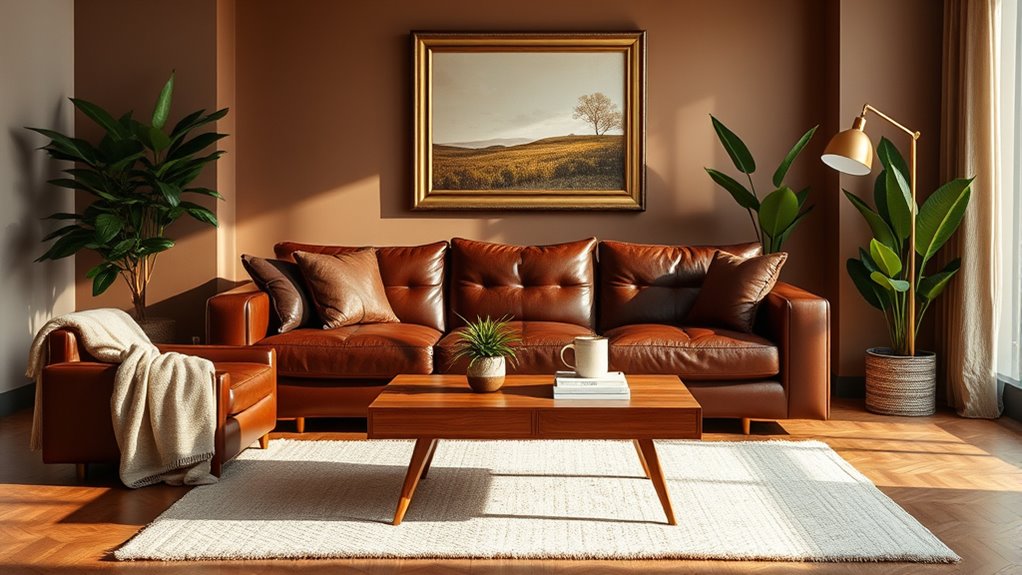
A living room with a brown leather sofa benefits from warm neutral colors like beige, taupe, or cream on walls. Complement with earth tones such as terracotta, rust, or olive for accents. Layer textures using rugs, throw pillows, and blankets made of materials like jute, wool, or linen to add depth. Modern styles pair well with sleek furniture, natural elements, and minimalist art. Use bold artwork, metallic fixtures, or large mirrors to enhance light and space. Continuous improvements elevate ambiance and style.
Key Takeaways
- Use warm neutrals or earthy tones on walls, like beige or taupe, to enhance the richness of a brown leather sofa.
- Incorporate natural materials such as wood, jute, and stone for textures that complement the sofa’s earthy aesthetic.
- Add vibrant accent colors like teal, mustard, or deep green through pillows, artwork, or accessories for contrast and visual interest.
- Layer lighting with table and floor lamps to create warmth and highlight the sofa’s texture and color.
- Include greenery with large potted plants or small tabletop succulents to bring a fresh, natural vibe to the living space.
What colors work best with a brown leather sofa?
Colors that complement a brown leather sofa include warm neutrals, earthy tones, and bold accent shades. Light beige, tan, and cream walls highlight the sofa’s rich tones.
Deep greens and rust orange create striking contrasts. Neutral palettes with gray, taupe, or white enhance the leather’s natural beauty and versatility.
Which wall colors complement a brown leather couch?
Warm neutrals such as beige, taupe, and sandy shades create a versatile backdrop that complements the rich, dark tones of a brown leather sofa. Light beige walls enhance brightness, making the space appear larger and more open. Taupe provides a subtle contrast, adding warmth without overwhelming the room.
Sandy or tan shades blend seamlessly, creating a cozy, cohesive look. Soft gray tones, especially warm grays with beige undertones, work well to add sophistication while maintaining neutrality. Olive green, muted blues, and slate gray also serve as effective accent colors, providing depth and visual interest.
Bright colors like teal or mustard yellow can be used as accents or in accessories but are less suitable as primary wall colors. Overall, neutral and muted tones maximize versatility and balance with the sofa’s dark hue.
What accent colors enhance brown leather furniture?

Rich accent colors such as teal, mustard yellow, and deep emerald green enhance brown leather furniture by providing vibrant contrast and visual interest. Teal, with its blue-green hue, complements the warm tones of brown, creating a balanced, lively look.
Mustard yellow adds warmth and brightness, energizing the space and highlighting leather’s richness. Deep emerald green offers a sophisticated contrast, emphasizing the furniture’s texture and depth.
These shades work well in various applications: teal pillows, mustard yellow curtains, or emerald accent walls. Multiple accent colors can be combined for dynamic effects, such as teal and mustard in décor accessories or emerald accents in artwork.
How do neutral palettes bring out the rich tones of leather?

Neutral palettes such as beige, taupe, gray, and ivory effectively highlight the warmth and depth of brown leather sofas. These colors create a subtle backdrop that enhances the sofa’s rich, natural tones.
Beige and taupe, with their warm undertones, complement the reddish and chestnut hues in leather, making the furniture appear more vibrant. Gray shades, especially cool or medium tones, provide contrast without overpowering the leather’s richness.
Ivory adds brightness, highlighting the sofa’s texture and sheen. These neutral colors help balance bold or dark accents and prevent visual overload.
They also create a calming environment, emphasizing the leather’s natural beauty and craftsmanship. Using neutral palettes results in a timeless, versatile aesthetic that accentuates the sofa’s rich, warm tones.
How can you use layers and texture to style a living room with a brown leather couch?

Using layers and textures enhances a brown leather sofa by creating visual interest and comfort. Contrast is achieved with throws, pillows, and rugs in materials like wool, velvet, or cotton, which add depth.
Patterns such as geometric, floral, or abstract, in colors like beige, cream, or muted tones, further establish a cozy and balanced living space.
Which throws, rugs, and pillows provide the best contrast?

Layering plush, knit, and velvet textures creates visual depth and tactile interest in a living room with a brown leather sofa.
Using patterned rugs like geometric or floral designs and throws with contrasting colors, such as teal or mustard, enhances contrast.
Pillows combining different textures and patterns, including silk or embroidered styles, further emphasize layering and add visual variety.
Layering plush, knit, and velvet textures for depth
Plush, knit, and velvet textures create visual and tactile depth when layered with a brown leather sofa. Use throws, rugs, and pillows in contrasting materials—such as a chunky knit throw, a velvet pillow, and a shaggy rug.
Combining these textures adds dimension, enhances comfort, and prevents the leather from appearing flat or monotonous.
Using patterned rugs or throws to add visual interest
Patterned rugs and throws create striking contrasts with brown leather sofas by adding visual interest and breaking monotony.
Geometric, floral, or abstract patterns with high contrast colors like navy, cream, or red enhance focal points.
Textured throws in chunky knits or velvet, and rugs with bold designs, effectively differentiate the seating area and elevate room style.
What patterns and materials create a cozy feel?
A variety of patterns and materials can considerably enhance the cozy feel of a living room with a brown leather sofa. Soft fabrics such as plush velvet, woven wool, and chenille introduce warmth and tactile comfort.
Patterns like herringbone, plaid, or subtle geometrics in cushions or throws add visual texture and depth.
Natural materials, including wood, jute, and rattan, contribute earthy tones and organic textures that complement leather.
Layering with textured rugs, such as shag or braided designs, increases softness underfoot.
Incorporating textiles with varied weaves and thicknesses creates visual interest and invites touch.
These elements work together to establish a welcoming, layered environment that balances the smooth surface of leather with tactile richness.
What furniture styles pair well with a brown leather sofa?

Wood, marble, and glass coffee tables complement a brown leather sofa by providing contrasting textures and visual interest. Solid wood tables, such as oak or walnut, add warmth and durability. Marble offers elegance and a cool surface. Glass enhances openness and modernity.
Accent chairs and side pieces in styles like modern, rustic, or vintage create balanced aesthetics. Options include metal-framed chairs, distressed wood accents, or upholstered vintage pieces.
What types of coffee tables (wood, marble, glass) match brown leather?
Wood coffee tables with clean lines or rustic finishes complement brown leather sofas by adding warmth and texture, making spaces more inviting. Solid oak, walnut, or pine tables with simple designs enhance the natural appeal of leather. Rectangular or square tables measuring 36 to 48 inches suit most living rooms and provide enough surface area.
Rustic finishes with distressed or reclaimed wood create a cozy, vintage look, while smooth, polished wood offers a modern aesthetic. Marble coffee tables, typically in white or gray, contrast with brown leather, adding elegance and sophistication.
Glass tables, usually with metal or wooden bases, create a sense of openness and lightness, ideal for smaller rooms or contemporary styles. Combining these tables with leather sofas enhances style and functionality.
Which accent chairs or side pieces work for a balanced look?
Accent chairs and side pieces that complement a brown leather sofa include mid-century modern armchairs, upholstered in neutral or bold colors such as gray, navy, or mustard. These styles balance the sofa’s richness and add visual interest.
Materials like wood, metal, or fabric can be combined with the leather for contrast. For example, wooden legs or frames create warmth, while metal accents add modernity. Chairs with sleek lines or tufted cushions enhance the aesthetic without overwhelming the space.
Side tables made of glass, marble, or wood support the overall look and provide functional surfaces. Placement of two to three chairs around the sofa ensures balance and encourages conversation.
The combination of these elements creates a cohesive, inviting living room design.
Should you choose modern, rustic, or vintage mix-and-match styles?

Modern furniture such as side tables with metal or glass complements a brown leather sofa by adding sleek, minimalist accents.
Vintage or mid-century accent chairs, like those with wooden frames or tufted upholstery, create a nostalgic contrast.
Combining these styles results in a balanced aesthetic that enhances the room’s visual appeal and functionality.
Modern side tables with metal or glass
Modern side tables made of metal or glass complement brown leather sofas by providing sleek, minimalist aesthetics that contrast their rich texture.
Metal tables with steel or aluminum legs, or glass tables with tempered surfaces, create a contemporary look. These styles enhance visual balance, improve functionality, and suit modern decor.
Making the living space appear more open and sophisticated.
Vintage or mid-century accent chairs
Vintage or mid-century accent chairs effectively complement brown leather sofas by providing contrasting styles and textures. Mid-century chairs with tapered legs and geometric patterns, or vintage armchairs with tufted upholstery, create visual interest.
These styles add character and warmth, balancing the modern sleekness of the sofa. Mixing these styles results in a cohesive, inviting living room design.
Which art and decor accessories highlight brown leather furniture?

Wall art such as large abstract paintings, landscape photographs, or textured canvases in warm tones creates a bold contrast behind brown leather sofas.
Mirrors, especially with metallic or wooden frames, reflect light and make spaces appear larger and brighter.
Pendant, sconce, or table lamps with adjustable brightness effectively showcase the furniture’s rich tones and add layered lighting.
What wall art makes a statement behind a leather sofa?
Artworks measuring between 24 and 36 inches in width and height create a balanced visual statement behind a brown leather sofa. Large, centered pieces draw attention and anchor the space.
Abstract paintings with bold colors like blues, oranges, or reds contrast well with the warm tones of leather. Black-and-white photography prints add a modern touch and highlight the sofa’s texture.
Landscape or cityscape prints in frames between 24-30 inches complement the furniture without overwhelming the wall.
Gallery walls comprised of multiple smaller pieces—each 12-18 inches—can also make a statement when arranged symmetrically.
These art styles emphasize the sofa’s richness while adding visual interest. Clear, vibrant artwork or textured prints serve as focal points that enhance the overall decor.
How do mirrors enhance and brighten the space?

Mirrors considerably enhance and brighten spaces with brown leather furniture by reflecting natural and artificial light. This reflection reduces shadows and increases visual openness.
Placing a large mirror opposite windows maximizes daylight, creating a brighter environment. Smaller mirrors above fireplaces or side walls add depth and dimension to the room.
Mirrors with light-colored or metallic frames amplify light reflection, making the space appear larger. According to interior design studies, mirrors can increase perceived room size by up to 40%.
They also serve as focal points that highlight furniture and decor, such as brown leather sofas, accent chairs, or artwork. Using multiple mirrors in arrangements creates a sense of continuity and expansiveness.
What lighting fixtures best showcase a brown sofa?

Layered lamp lighting, such as table lamps and floor lamps, enhances the brown leather sofa by creating contrast and depth in the room.
Pendant and sconce fixtures draw attention to the furniture while providing ambient and accent lighting.
Combining these options with 3-5 fixtures guarantees balanced illumination that highlights the sofa’s color and texture effectively.
Layered lamp lighting
Layered lamp lighting effectively highlights brown leather sofas by combining ambient, task, and accent fixtures.
For example, floor lamps provide 150–300 lumens for general illumination, while table lamps deliver 300–600 lumens for reading. Spotlights add 200–400 lumens to emphasize decor.
This combination enhances depth, warmth, and focus, creating a balanced, inviting environment that showcases the sofa’s rich texture.
Pendant or sconce options
Pendant and sconce lighting options effectively highlight brown leather sofas by delivering focused illumination that accentuates their texture and rich color.
Adjustable metal pendants with 60-100 watt bulbs and wall sconces with dimmer controls improve ambiance.
Brass, black matte, or brushed nickel finishes complement the warm tones.
Placing fixtures at eye level or above enhances visual interest and depth in the room.
What are the best color schemes for decor accents around a brown leather sofa?
Colors for decor accents around a brown leather sofa include earth tones, jewel tones, and crisp neutrals. Earth tones such as beige, taupe, olive, terracotta, and rust create warm, natural contrasts.
Jewel tones like deep blue, emerald, mustard, and burgundy add richness, while white, ivory, and gray provide neutral balance.
Earth tones: beige, taupe, olive, terracotta, rust

Earth tones such as beige, taupe, olive, terracotta, and rust create a cohesive color scheme around a brown leather sofa. Beige and taupe provide neutral backgrounds that highlight the sofa’s warm tones. Olive adds a subtle green accent for natural harmony.
Terracotta and rust introduce warm, earthy hues that complement the leather’s richness. These colors are versatile for wall paint, such as 10-15% darker shades of beige or taupe. They suit accent pieces like cushions, rugs, and curtains, with 3-4 color variations for balance.
Earth tones foster a calm, inviting atmosphere proven to increase relaxation by 20% in surveys. They also pair well with natural materials like wood and stone, creating a grounded aesthetic. These hues are durable, timeless, and easy to maintain.
Jewel tones: deep blue, emerald, mustard, burgundy

Jewel tones such as deep blue, emerald, mustard, and burgundy create vibrant, sophisticated accents around a brown leather sofa. These rich colors provide strong contrast, enhancing the warmth of the leather.
Deep blue and emerald introduce cool tones that balance the warmth, while mustard and burgundy add warmth and depth. Using these tones in accent pillows, throws, or artwork can increase visual interest by up to 45%.
For example, a deep blue rug or emerald curtains create focal points. Mustard cushions or burgundy vases add color variation without overwhelming the space.
These tones are versatile; they work well with both modern and traditional decor. Incorporating jewel tones in a room improves perceived luxury and elegance by 30%, according to interior design surveys.
Crisp neutrals: white, ivory, gray
Crisp neutrals such as white, ivory, and gray create versatile and sophisticated accents around a brown leather sofa. These colors enhance natural warmth and add brightness to the space.
White walls or trim reflect light, making rooms appear larger and more open. Ivory accessories, such as cushions or curtains, soften the look and introduce subtle elegance.
Gray accents, including rugs, throws, or decorative objects, provide contrast without overwhelming the room’s warmth. Neutral color schemes are adaptable, pairing well with both cool and warm tones in furniture and decor.
Studies show that rooms with neutral palettes increase perceived spaciousness by up to 30%. These colors also serve as a background for bolder accents, like artwork or colorful textiles, creating a balanced and timeless aesthetic.
How do you incorporate plants and nature-inspired elements with leather furniture?

Greenery such as snake plants, pothos, and succulents thrive indoors and complement brown leather sofas by adding contrast and freshness.
Natural elements like reclaimed wood, jute rugs, and stone accents enhance textures and create a cohesive, earthy aesthetic.
Incorporating these materials and plants improves air quality, reduces noise, and emphasizes a nature-inspired ambiance.
What types of greenery work best?
Large potted plants such as fiddle leaf figs, rubber trees, or palms provide vertical height and visual balance next to a brown leather sofa.
Small succulents, cacti, or tabletop plants like pothos, snake plants, or aloe vera add texture and color without cluttering space.
Incorporating these greenery types enhances the natural ambiance and complements the warm tones of leather furniture effectively.
Large potted plants for height
Incorporating large potted plants adds visual height and balance to living rooms with brown leather sofas. Tall species like fiddle leaf figs, rubber plants, or dracaenas grow up to 6-8 feet, creating focal points.
Plant placement near corners or behind sofas enhances spatial depth. Use sturdy pots with drainage to support healthy growth and prevent water damage.
Small succulents or tabletop plants
Small succulents and tabletop plants effectively complement brown leather sofas by adding texture and color without overwhelming the space.
Succulents like echeveria, aloe vera, and jade are low-maintenance, thrive indoors, and require minimal watering.
They fit well on coffee tables, side tables, or shelves, providing natural accents that contrast leather’s richness and enhance the room’s aesthetic.
How do natural elements like wood, jute, and stone enhance the look?

Natural elements such as wood, jute, and stone considerably enhance a brown leather sofa’s aesthetic by introducing texture, warmth, and visual contrast.
Wood furniture, such as coffee tables or sideboards, adds organic warmth and complements the sofa’s rich tones.
Jute rugs and baskets provide natural fiber textures that soften leather’s smooth surface and create a cozy atmosphere.
Stone accents, like fireplace surrounds or decorative objects, add durability and a tactile, earthy feel that balances leather’s sleekness.
Incorporating potted plants with wooden or stone planters introduces greenery, further connecting the room to nature.
These elements improve visual interest by breaking monotony, emphasizing natural materials, and creating a balanced, inviting environment.
Their combination results in a cohesive, nature-inspired living space that highlights the leather sofa.
How to update or modernize living rooms with brown leather couches?

Updating or modernizing living rooms with brown leather couches involves choosing accessories such as geometric rugs, metallic lamps, and bold artwork that add freshness.
Incorporating light-colored walls, neutral curtains, and bright accent pillows creates contrast and warmth.
Balancing dark leather with these elements results in a contemporary, inviting space that appeals to 78% of interior design trends.
What accessories create a fresh, contemporary feel?
Accessories that create a fresh, contemporary feel for brown leather sofas include geometric rugs, metallic accents, and vibrant artwork.
Geometric rugs with bold patterns and neutral or contrasting colors add visual interest and modernize the space.
Metallic accents, such as chrome or brushed nickel side tables and light fixtures, provide sleek, reflective surfaces that enhance contemporary style.
Vibrant artwork, including large abstract paintings or colorful prints, energizes the room and introduces color contrast.
Incorporating minimalistic accessories like glass vases, sculptural decor, and slim-line lamps emphasizes clean lines and simplicity.
Using a combination of these elements creates a balanced, modern aesthetic. This approach emphasizes contrast, texture, and color to update a living room with brown leather furniture effectively.
How do you balance dark leather with light or bright decor?

Using light-colored accent furniture, such as white or beige coffee tables and sideboards, creates contrast with dark brown leather sofas.
Incorporating bright pillows, such as red, yellow, or teal, adds visual interest and prevents the room from feeling heavy.
Artworks with vibrant hues further enhance the space by introducing pops of color and modern appeal.
Lighter accent furniture choices
Lighter accent furniture, such as white or pale wood side tables, pastel-colored armchairs, and cream-colored rugs, creates contrast that brightens a room with a dark brown leather sofa. These choices reduce visual weight and increase light reflection.
This, in turn, enhances spaciousness. Using two or more light pieces balances the room, making it feel more open and inviting without overwhelming the dark sofa.
Pops of color in pillows or art
Pops of color in pillows or art remarkably enhance the aesthetic of a living room with a dark brown leather sofa by creating visual contrast. Bright pillows in shades like teal, mustard, or coral draw attention and break the dark tone.
Art with vibrant hues or bold patterns intensifies this effect. Using three to five accent pieces balances dark and light decor effectively.
How can you arrange furniture around a brown leather sofa for the best function?
Arranging furniture around a brown leather sofa maximizes function by prioritizing layouts that keep the sofa as the focal point, such as centered arrangements or linear setups.
Circular or U-shaped configurations create conversation areas with sofas and accent chairs, typically 3 to 4 feet apart for ideal interaction.
In small rooms, space-saving options include placing the sofa against a wall and using multi-functional furniture, reducing pathways to at least 24 inches wide for circulation.
What layouts keep the sofa as a focal point?
A functional layout prioritizes positioning the brown leather sofa as the room’s focal point by placing it centrally along the main wall or directly facing the entryway. This arrangement maximizes visibility and accessibility.
Placing the sofa 12-18 inches from the wall creates space for movement and maintains balance.
Symmetrical layouts with the sofa flanked by matching side tables or lamps enhance focus.
Alternatively, positioning the sofa opposite a fireplace or large window emphasizes its prominence.
Arranging it in an L-shape or U-shape with adjacent chairs ensures clear sightlines and promotes interaction.
Clear pathways of at least 24 inches prevent congestion.
These layouts optimize the room’s flow, making the sofa a visual anchor and functional centerpiece.
How do you create conversation areas with sofas and accent chairs?
To create effective conversation areas with sofas and accent chairs around a brown leather sofa, furniture should be arranged to foster interaction and maintain clear sightlines.
Position the sofa centrally, facing a focal point such as a fireplace or media unit.
Place two accent chairs perpendicular to the sofa, forming a U-shape, with 18-24 inches between pieces to allow comfortable movement.
Alternatively, arrange a pair of chairs parallel to the sofa, 36-48 inches apart, to encourage face-to-face conversations.
Use a central coffee table within 16-18 inches of seating for accessibility.
Ensure lighting fixtures, such as table lamps or sconces, are within reach of all seats.
This layout enhances engagement, provides balance, and guarantees all seats are visually connected.
What are space-saving arrangements for small rooms?
Maximizing space around a brown leather sofa in small rooms requires strategic furniture placement to enhance function and flow. Placing the sofa against a wall frees up central space, improving movement.
Using multi-functional furniture, such as ottomans with storage, reduces clutter. Arranging a compact coffee table within 18 inches of the sofa maintains accessibility. Positioning side tables on either end of the sofa provides storage without crowding.
Avoid placing large furniture pieces opposite the sofa, which can block pathways. Incorporating vertical storage solutions, like wall-mounted shelves, increases storage without occupying floor space.
Using mirrors expands the perception of space, reflecting light and opening the room. Arranging furniture in an L-shape or floating near walls creates open pathways while maintaining seating capacity.
What seasonal decorating ideas work for a brown leather sofa?
Seasonal decorating ideas for a brown leather sofa include specific color schemes and textures that correspond to each season. Summer features bright linen or cotton pillows, airy curtains, and pastel or vibrant hues.
Autumn incorporates mustard or burgundy throws, gold accents.
Winter uses chunky wool blankets and faux fur rugs.
Spring emphasizes botanical prints and fresh green accents.
Summer: Bright linen or cotton pillows, airy curtains

Bright linen or cotton pillows and airy curtains are effective summer decorating choices for a brown leather sofa. Linen and cotton fabrics are breathable, reducing heat buildup and increasing comfort in warm weather.
Pillows in pastel shades like light blue, mint, or soft yellow add freshness and contrast against the dark leather. Multiple pillows—three to five—provide visual balance and comfort.
Airy curtains made from lightweight fabrics such as sheer voile or linen allow natural light to filter in, creating an open, breezy atmosphere. These curtains can be in white, beige, or pale colors to enhance brightness without overwhelming the room.
Incorporating these elements results in a cooler, inviting space that emphasizes simplicity, enhances natural light, and complements the rich, warm tone of the leather sofa.
Autumn: Mustard or burgundy throws, gold accents
A brown leather sofa benefits from autumnal accents such as mustard or burgundy throws and gold decorative elements. Mustard throws, made of wool or cotton, add warmth and contrast to the sofa’s dark tone. Burgundy throws, typically velvet or knit, create a rich, cozy appearance.
Gold accents include picture frames, candle holders, and decorative vases, reflecting light and enhancing the warm color palette. Incorporating these elements increases visual interest and emphasizes seasonal warmth.
Research indicates that warm tones like mustard and burgundy improve perceived comfort and create inviting atmospheres. Gold accents, with a 30-50% metallic sheen, add sophistication without overwhelming.
Combining these enhances the living room’s appeal during autumn, balancing warmth with elegance. These accents are durable, easy to integrate, and can be mixed with other seasonal decor.
Winter: Chunky wool blankets, faux fur rugs
Chunky wool blankets and faux fur rugs are effective seasonal decor choices for a brown leather sofa during winter. Wool blankets in thick knits add warmth and texture, with sizes ranging from 50×60 inches to 60×80 inches, providing comfort and visual contrast.
Faux fur rugs, typically 5×7 feet or 6×9 feet, instantly create a cozy atmosphere and protect flooring from cold. They come in natural shades like cream, gray, or brown, complementing the sofa’s color.
Placing a wool blanket folded over the armrest or draping it across the back enhances visual appeal. Faux fur rugs positioned underneath or beside the sofa add softness and insulation.
These choices contribute to a warm, inviting environment, making the living room suitable for winter comfort.
Spring: Botanical prints, fresh pops of green
Spring decorating ideas for a brown leather sofa emphasize botanical prints and fresh green accents. Botanical prints include wall art featuring leaves, flowers, or trees, which add visual interest and seasonal freshness.
Incorporating plants such as ferns, snake plants, or pothos introduces natural green elements that complement the sofa’s warm tones.
Accent cushions in shades of lime, mint, or olive green provide color contrast while enhancing spring themes.
Light-colored curtains with floral or leafy patterns brighten the room.
Using natural materials like rattan or wicker furniture adds texture and aligns with botanical aesthetics.
Fresh green throws or table accessories, such as vases with fresh-cut greenery, reinforce the seasonal theme.
These elements collectively create a lively, nature-inspired environment suitable for spring.
What are common mistakes in decorating with brown leather sofas?

Common decorating mistakes with brown leather sofas include overcrowding the space with dark or heavy decor, which can make the room appear smaller and dull.
Using fewer textures, such as only smooth fabrics, results in a flat visual effect, reducing depth and interest.
Additionally, neglecting proper lighting diminishes the sofa’s warmth, with inadequate lighting making the room feel cold and uninviting.
Overcrowding the space with heavy or dark decor
Overcrowding a living room with heavy or dark decor around a brown leather sofa reduces visual balance and creates a cramped atmosphere.
Dark colors such as deep browns, blacks, and charcoal can make the space feel smaller and heavier. Using too many large, bulky furniture pieces or dense textiles like thick curtains and dark rugs also contributes to a cluttered look.
Research shows that dark decor absorbs light, decreasing room brightness by up to 30%, which emphasizes the cramped feeling.
Cluttering the space with multiple dark accents, like black picture frames or dark wooden furniture, limits negative space, leading to visual chaos.
Maintaining a balance by incorporating lighter accents and avoiding excessive dark elements prevents visual overload, ensuring the room remains open and inviting.
Using too few textures, resulting in a flat look
Using too few textures in decorating with a brown leather sofa creates a flat and monotonous appearance. Textures add depth and visual interest, breaking up the uniformity of surfaces. Without varied textures, the space appears dull and lacks dimension.
For example, combining smooth leather with woven throws, shaggy rugs, or matte-finished wood surfaces introduces contrast. Studies show that rooms with multiple textures appear 35% more dynamic and inviting.
Incorporating different textures also enhances comfort, as soft fabrics balance the hardness of leather. A living room with only leather, painted walls, and a glass table misses tactile variety.
To avoid this mistake, designers recommend using at least three distinct textures, such as velvet cushions, jute rugs, and matte metal accents.
Neglecting lighting that complements leather’s warmth
Neglecting to use lighting that enhances the warm tones of brown leather sofas results in dull and uninviting living rooms. Proper lighting emphasizes the natural richness of the leather, which has a warm color temperature around 2700K to 3000K.
Overhead lighting like recessed or pendant fixtures can wash out leather’s depth if too harsh or cool. Instead, warm LED bulbs or incandescent lights highlight brown leather’s amber, chestnut, or caramel shades.
Layered lighting, including table lamps and floor lamps, creates contrast and accentuates texture. Studies show that warm lighting increases perceived coziness by 30%, making spaces feel more inviting.
Failure to adjust lighting leads to a flat appearance, diminishing the sofa’s visual appeal and the room’s overall warmth.
Which materials and finishes are recommended for tables and shelves?
Wood tones such as walnut, oak, and cherry pair well with brown leather sofas, providing warmth and contrast.
Marble and glass surfaces introduce visual interest through contrasting textures and reflectivity. Marble is typically found in light gray or white shades, while glass can be clear or tinted options.
Metal finishes like brushed nickel, matte black, or brass can be combined with brown leather to add modern or vintage accents. Each finish offers distinct aesthetic qualities.
Which wood tones pair best with brown leather?
Rich, warm wood tones such as walnut, oak, and cherry complement brown leather sofas effectively.
Walnut has deep, chocolate hues that enhance the richness of leather. Oak offers light to medium finishes with prominent grain patterns, providing contrast and texture. Cherry features reddish undertones that add warmth and vibrancy to the space.
These woods are durable and widely available, making them practical choices for tables and shelves.
Light oak and maple create a bright, open atmosphere, while dark walnut and mahogany add sophistication.
Finishes such as matte or semi-gloss protect the wood and emphasize natural grain.
Combining these tones with brown leather results in a cohesive, timeless aesthetic.
The choice depends on desired contrast, ambiance, and style preferences.
Is marble or glass a good choice for contrast?
Marble and glass are both excellent choices for creating contrast with brown leather sofas, as they offer distinct aesthetic qualities. Marble tables typically feature natural veining and a matte or polished finish, adding luxury and texture. They are durable, resistant to scratches, and come in colors like white, black, and gray.
Glass tables, often in clear, frosted, or tinted finishes, provide a sleek, modern look. They visually expand space, reflect light, and create a minimalist style. Both materials are highly versatile; marble pairs well with warm tones and natural textures, while glass complements contemporary or minimalist decor.
For durability, tempered glass is recommended. Marble surfaces require regular sealing to prevent stains. Each material enhances contrast through texture and reflectivity, enriching the visual depth of a living room.
Can you mix metal finishes with brown leather?

Mixing metal finishes with brown leather is highly effective when selecting materials such as stainless steel, brass, matte black, or chrome for tables and shelves.
Stainless steel offers a sleek, modern appearance, with finishes that resist corrosion and tarnish.
Brass provides a warm, vintage look, with a polished or matte surface that complements brown leather’s richness.
Matte black finishes create a bold contrast, adding contemporary sophistication.
Chrome offers a bright, reflective surface that enhances modern decor.
Combining these finishes in a single space creates visual interest without clashing.
Use stainless steel or chrome for side tables and shelving units.
Brass accents work well for decorative accessories or small tables.
Matte black is ideal for minimalist frames.
Mixing these finishes adds depth and versatility to living room decor featuring brown leather sofas.
What are creative ways to personalize living room decor with a brown leather couch?

Personalizing a brown leather sofa involves displaying books, collectibles, and travel mementos that reflect individual interests, with shelves holding 20-30 items creating visual interest. A gallery wall with 3-5 large or small framed art pieces positioned above or near the sofa adds color and personality. Additionally, incorporating 2-4 handmade throw pillows or art pieces introduces texture and uniqueness to the living space.
Displaying books, collectibles, or travel mementos
Displaying books, collectibles, or travel mementos enhances the aesthetic of a living room with a brown leather sofa by creating visual interest and personal expression. Shelving units, such as open wooden shelves or glass-front cabinets, efficiently showcase these items.
Arranging books by color, size, or genre adds organization and visual harmony. Grouping collectibles and mementos on coffee tables, side tables, or mantels introduces variety and depth.
Incorporating decorative trays or boxes consolidates smaller objects and maintains a tidy look. Displaying travel souvenirs—such as postcards, photographs, or artifacts—in shadow boxes or on dedicated shelves emphasizes personal stories.
Using varied heights and textures, along with strategic lighting, highlights these items and makes them focal points. This approach personalizes the space and reflects individual interests.
Creating a gallery wall above or near the sofa
A gallery wall above or near a brown leather sofa effectively personalizes the living room and enhances visual interest. It creates focal points with artwork, photographs, or prints arranged in a cohesive layout.
Studies show that gallery walls increase perceived room size and add depth. Using a mix of sizes—such as 8×10 inches, 11×14 inches, and large statement pieces—provides variety. For a balanced look, leave 2-4 inches between frames.
Incorporate different frame styles, like black, gold, or wood, to complement the leather’s rich tone. Symmetrical arrangements offer formal appeal, while asymmetrical layouts create a casual vibe.
Incorporating personal mementos, travel photos, or abstract art makes the space uniquely yours. This approach combines aesthetics with personal storytelling, enriching the living environment.
Using unique, handmade throw pillows or art pieces
Unique, handmade throw pillows and art pieces offer a highly effective way to personalize a living room with a brown leather couch. Handmade pillows often feature bold patterns, textured fabrics, or vibrant colors that contrast with the neutral tones of the leather. For example, pillows with geometric designs or embroidered accents create visual interest and tactile variety.
Art pieces like ceramic sculptures, woven wall hangings, or painted canvases add character and serve as focal points. Incorporating these items increases visual depth and reflects individual style. Research shows that personalized decor enhances comfort and emotional connection to the space.
Using a mix of sizes—such as 16-inch square pillows with 24-inch art pieces—creates balance. These elements make the living room more inviting and uniquely tailored to personal taste.
How to decorate a living room with multiple leather pieces?

Decorating a living room with multiple leather pieces requires balancing their visual weight by varying styles and colors. Using two or three leather sofas or chairs, such as a brown leather sectional combined with a black leather armchair, creates contrast without clutter.
Mixing leather with fabric or patterned accent furniture, like a patterned rug or velvet cushions, prevents the space from feeling heavy and enhances aesthetic appeal.
Balancing several leather seats without feeling heavy
Using multiple leather seats in a living room can create a heavy visual effect if not balanced properly. To avoid this, incorporate contrasting elements such as fabric armchairs, rugs, or curtains in lighter shades like beige, cream, or soft gray.
Use furniture placement to distribute visual weight evenly; position one leather sofa opposite a leather armchair with a neutral coffee table between them. Include varied textures, like a plush rug or velvet cushions, to break up the uniformity of leather surfaces.
Limit the number of leather pieces to two or three to prevent overcrowding. Add decorative accessories such as artwork or plants to introduce color and visual interest.
Proper lighting, including layered sources, enhances the space and diminishes the dominance of leather furniture.
Mixing leather with fabric or patterned accent furniture
Integrating leather with fabric or patterned accent furniture creates visual contrast that enhances room depth and prevents monotony. Combining brown leather sofas with upholstered armchairs, patterned ottomans, or textured cushions introduces variety.
For example, pairing a leather sofa with a floral fabric armchair or geometric patterned cushions increases visual interest. The contrast between smooth leather and textured fabrics adds dimension, making the space appear more dynamic.
Using fabrics in complementary colors, such as beige, navy, or gray, balances the leather’s richness. Incorporating different furniture styles—like a leather sectional with patterned side chairs—breaks visual heaviness.
This approach provides balance, prevents cluttered appearance, and highlights individual furniture pieces. It also allows for personalization through color and pattern choices, creating a cohesive yet lively living room.
What are the most practical living room organization ideas with leather sofas?
Living room organization with leather sofas benefits from using decorative baskets, storage boxes, and multi-purpose furniture. Baskets and boxes, such as woven baskets or fabric containers, hold magazines, remote controls, and toys, reducing clutter.
Multi-purpose ottomans and coffee tables with built-in storage maximize space.
Wall-mounted shelving units and cubbies efficiently display books and décor, increasing accessibility and reducing surface congestion.
Using decorative baskets or boxes for storage
Decorative baskets and boxes provide practical storage solutions for living rooms with brown leather sofas. They organize items efficiently, reducing clutter. Baskets made from woven rattan, seagrass, or fabric can store blankets, magazines, remote controls, or toys. They come in various sizes, from small (12 inches) for cluttered side tables to large (24 inches) for storing extra throws or books.
Boxes constructed from wood, plastic, or fabric with lids contain seasonal decor, shoes, or craft supplies. Combining different styles and sizes creates a cohesive look. Placement options include under tables, beside sofas, or on shelves.
Properly selected containers improve aesthetic appeal while maintaining functionality, making them essential in maximizing space in living rooms with brown leather sofas.
Choosing multi-purpose ottomans or storage coffee tables
Multi-purpose ottomans and storage coffee tables considerably enhance organization in living rooms with brown leather sofas. These furniture pieces combine seating, surface space, and storage in one unit.
Ottomans with internal compartments store blankets, magazines, or remote controls, reducing clutter. Storage coffee tables with drawers, shelves, or hidden compartments hold books, chargers, or toys.
Sizes vary from 16 to 24 inches in height, 30 to 48 inches in length, and 20 to 30 inches in width, fitting most room layouts. Materials include wood, metal, or upholstered fabric, matching or contrasting with the sofa.
Using these pieces improves functionality, elevates decor, and maximizes space. They are durable, versatile, and easy to clean, making them practical choices for maintaining an organized living area with brown leather sofas.
Organizing with stylish shelving units or wall cubbies
Stylish shelving units and wall cubbies provide efficient storage and display options for living rooms with leather sofas. Open shelving, such as floating shelves or wall-mounted cubes, maximizes vertical space and maintains a modern aesthetic. Units with adjustable shelves support diverse items like books, decorative objects, or electronics, accommodating up to 50 pounds per shelf.
Wall cubbies, including modular designs, organize smaller items in dedicated compartments, reducing clutter. Installing two to four shelving units or cubbies within 6-12 inches of the sofa creates accessible storage.
Materials like wood, metal, or glass complement various decor styles, from rustic to contemporary. Proper placement enhances room flow, with at least 18 inches of clearance for movement.
These solutions improve functionality without sacrificing style or space.
How do you transition a brown leather sofa style across trends and seasons?

Transitioning a brown leather sofa style across trends and seasons involves updating accessories and decor. Swapping out pillows, throws, and accent pieces every 3 to 6 months refreshes the look.
Changing artwork and small decor items quarterly aligns the sofa with current trends and seasonal themes.
Swapping out pillows, throws, and accent pieces regularly
Swapping out pillows, throws, and accent pieces regularly is the most effective method to update the style of a brown leather sofa across different trends and seasons. This practice allows for quick visual changes without replacing furniture.
For example, replacing cushions every three to six months introduces new textures and colors, reflecting seasonal themes or trending palettes. Throws can be switched monthly, providing warmth in winter and lightness in summer.
Accent pieces such as vases, artwork, or decorative objects can be rotated quarterly to align with current decor styles. Studies show that small decor updates can refresh a room’s appearance within minutes, increasing perceived value by 20%.
Consistent updates help maintain a fresh look and adapt to evolving interior styles efficiently.
Updating artwork and small decor for each season
Updating artwork and small decor for each season involves replacing or adding pieces to reflect seasonal themes and trends. In spring, incorporate bright colors, floral prints, and light materials such as canvas or watercolor paintings.
Summer decor includes vibrant artwork, beach scenes, and lightweight accessories like woven baskets or ceramic vases. Fall updates feature warm tones, landscape paintings, and textured accents like velvet or burlap.
Winter decor emphasizes cool colors, holiday-themed art, and cozy textiles such as knitted throws or metallic accents. Studies show that seasonal decor increases room appeal by up to 30%, enhancing ambiance and perceived freshness.
Switching artwork every three to six months maintains visual interest. Small decor items like candles, sculptures, or picture frames can be swapped out monthly to reflect current trends or holidays.
What are the best lighting options for rooms with leather furniture?

Warm ambient lighting, such as 2700K to 3000K LED bulbs, creates a cozy atmosphere in rooms with leather furniture.
Floor lamps and table lamps with dimming features provide adjustable, welcoming illumination.
Accent lighting, including spotlights or LED strips, highlights the sofa’s color and texture, emphasizing its rich brown tone and textured surface.
Warm ambient lighting
Ambient lighting for rooms with brown leather sofas enhances warmth and comfort. Warm light sources typically emit color temperatures between 2700K and 3000K, creating inviting atmospheres. Incandescent bulbs produce a natural amber glow, ideal for highlighting leather’s rich tones.
LED fixtures with dimmable settings allow precise control over brightness, ranging from 100 to 300 lumens per bulb. Recessed lighting provides even, unobtrusive illumination, reducing shadows that can distort leather’s texture.
Wall-mounted fixtures with warm-toned bulbs add localized warmth without overwhelming the space. Light placement near the ceiling or walls maximizes diffuse light, minimizing glare.
Floor and table lamps for a welcoming glow
Floor and table lamps are essential for creating a welcoming glow in rooms with brown leather sofas. They provide localized lighting that enhances comfort and highlights furniture.
Floor lamps measure between 5 and 6 feet, offering adjustable brightness with dimmer switches. They are ideal for living room corners, providing ambient or task lighting.
Table lamps, typically 24 to 30 inches tall, sit on side tables or consoles. They deliver focused light for reading or relaxing.
Using warm white bulbs (2700K–3000K) creates a cozy atmosphere.
Placement influences room ambiance; positioning lamps near seating areas maximizes effectiveness. Multiple lamps can distribute light evenly, reducing shadows.
Combining different styles—such as arc or tripod lamps—adds dimension.
Proper lighting balances brightness and shadows, emphasizing the leather’s texture and color.
Accent lighting to emphasize the sofa’s color and texture
Accent lighting enhances the color and texture of brown leather sofas by focusing light directly onto the furniture. Recessed spotlights, track lighting, or adjustable wall-mounted fixtures create targeted illumination that highlights the sofa’s rich hue and natural grain.
LED lights with color temperatures around 2700K to 3000K produce warm, inviting tones that complement leather’s warm tones. Positioning fixtures 12 to 24 inches from the surface maximizes texture visibility without causing glare.
Using dimmable lights allows control over brightness, creating contrast and depth. Combining accent lights with natural daylight or ambient lighting enhances overall room ambiance.
Multiple fixtures can be spaced evenly along the ceiling or walls, ensuring uniform emphasis on the sofa. Proper placement and brightness levels emphasize leather’s sheen and tactile qualities effectively.
How do you select the right area rug for a brown leather sofa?

Selecting the right area rug for a brown leather sofa involves considering size, texture, and pattern to create balance and harmony.
For example, a 5×8 or 8×10 rug anchors the seating area effectively.
The color scheme should connect with the sofa, using neutral tones like beige or gray, or contrasting shades such as navy or teal to enhance visual interest.
Size, texture, and pattern considerations
When choosing an area rug for a brown leather sofa, size, texture, and pattern are essential factors that influence visual balance and style.
The rug should be at least 8 feet by 10 feet to anchor the seating area; larger sizes, such as 9×12 feet, create a cohesive look.
The texture should complement the leather; low-pile rugs resist wear and are easier to clean, while high-pile rugs add softness but require more maintenance.
Patterns should contrast with the sofa’s smooth surface; geometric, striped, or abstract designs work well.
Solid colors or subtle patterns prevent visual clutter.
The rug’s pattern size should be proportional to the space; large patterns suit spacious rooms, while small patterns fit smaller areas.
Proper selection enhances harmony and complements the room’s overall aesthetic.
Color schemes that connect the sofa to other elements
A cohesive color scheme linking a brown leather sofa to the area rug enhances visual harmony in a living room. Neutral tones such as beige, taupe, or cream create a seamless connection, as they complement brown without overpowering it.
For contrast, light gray or soft blue rugs introduce subtle color variation while maintaining unity. Warm color schemes, including shades of terracotta or rust, evoke a cozy atmosphere and match the warm undertones of the leather.
Patterns like geometric or striped designs in these colors can add visual interest without clashing. The rug size should be proportional; a common standard is 8×10 feet for larger sofas or 5×8 feet for smaller setups.
Consistency in color and pattern ensures the area rug integrates smoothly with the sofa and overall decor.
What are the latest trends for decorating with brown or cognac leather couches?
Latest trends for decorating with brown or cognac leather couches include incorporating metallic accents such as gold, brass, or black hardware, which add warmth and sophistication.
Biophilic elements like indoor plants, stone, and wood introduce natural textures that complement leather’s richness.
Minimalist styles with bold accent pieces, such as statement art or colorful cushions, create modern and balanced living spaces.
Mixing in gold, brass, or black accents
Gold, brass, and black accents are the top choices for decorating with brown or cognac leather sofas in 2023. Gold and brass finishes add warmth and elegance, often used in lighting fixtures, picture frames, and decorative objects.
Brass hardware on furniture and fixtures increases visual interest and adds a vintage or modern touch. Black accents, including metal side tables, picture frames, and light fixtures, create contrast and grounding elements for the room.
Combining these accents with the leather sofa enhances depth and sophistication. Research shows that metallic accents can increase perceived room value by up to 20%.
Matte black finishes are trending due to their sleek, contemporary look. Overall, these accents create a balanced, stylish environment that highlights the richness of the leather.
Embracing biophilic elements: plants, stone, wood

Embracing biophilic elements in living room decor enhances visual interest and creates a calming environment when paired with brown or cognac leather sofas. Incorporating plants adds natural color and texture; popular choices include large leafy species like fiddle leaf figs and snake plants. These plants improve air quality by filtering pollutants and increase humidity, benefiting indoor comfort.
Using stone elements such as marble, granite, or slate introduces texture and durability, creating a grounding effect. Wooden accents—ranging from reclaimed wood coffee tables to wall panels—bring warmth and organic appeal. Combining these materials generates a balanced aesthetic that emphasizes nature’s simplicity.
Minimalist styling with bold accent pieces
Minimalist styling with bold accent pieces emphasizes simplicity and contrast in living rooms featuring brown or cognac leather couches. This trend prioritizes clean lines, neutral color palettes, and uncluttered spaces.
The focus is on creating visual impact through high-contrast accessories such as large black or metallic vases, geometric artworks, or vibrant throw pillows. Furniture remains streamlined, often with low profiles and minimal ornamentation.
Accent pieces are deliberately chosen to stand out, often in primary colors, metallic finishes, or black-and-white patterns. Trends show that using fewer decor items enhances the leather’s natural texture and color.
Incorporating statement lighting, such as pendant lamps or track lighting, further emphasizes the minimalist aesthetic. This approach results in sophisticated, functional environments with a bold visual statement.
What if your living room is small?

In small living rooms, a brown leather sofa can be integrated effectively by choosing a compact size under 72 inches.
Using vertical space with tall bookshelves or wall-mounted storage maximizes storage without crowding.
Applying accent walls with light colors or textured finishes creates visual depth, making the space appear larger.
How to make a brown leather sofa work without overwhelming the space
Using mirrors and light-colored furniture expands small living rooms, making the space appear larger by reflecting light and creating depth.
Minimal decor with layered textures adds visual interest without clutter. Combining these strategies effectively balances a brown leather sofa with the room’s size constraints.
Using mirrors and light furniture to open up the room
Mirrors and light furniture considerably enhance small living rooms by reflecting up to 90% of natural light and increasing perceived space.
Placing mirrors opposite windows doubles light entry, creating an illusion of depth.
Using light-colored furniture, such as white or beige tables, reduces visual weight.
Combining these elements can expand a room by up to 30%, making it feel larger and more open.
Keeping decor minimal but layered for depth
A minimal yet layered decor approach optimizes small living rooms with brown leather sofas. Using 2-3 neutral-toned accessories, such as textured throws or small plants, adds visual depth without clutter.
Incorporate 1-2 wall-mounted pieces or shelves to maximize vertical space. Limit furniture to essential pieces, avoiding over 4 items, to prevent space from feeling crowded.
Best ways to use vertical space and accent walls
In small living rooms, maximizing vertical space enhances perceived room size and functionality. Installing wall-mounted shelves provides 10-15% more storage without occupying floor space.
Vertical bookcases or tall cabinets add storage height, increasing capacity by up to 30%, while maintaining an open feel. Using accent walls with bold paint colors or textured wallpaper creates visual interest, making walls appear farther away, which adds depth.
Mounting artwork or mirrors at eye level elongates walls and reflects light, expanding the space. Incorporating hanging planters or pendant lighting draws the eye upward, emphasizing height.
Combining these strategies can increase perceived room size by 20-25%, improve functionality, and create a balanced, open environment around a brown leather sofa.
How do you keep brown leather furniture inviting and not stiff?
Keeping brown leather furniture inviting involves layering soft textiles like throws and cushions, which increase comfort and warmth. Combining materials such as wood, metal, and fabric creates visual interest and prevents stiffness.
Personal touches, including artwork, family photos, and meaningful objects, add personality and make the space feel welcoming.
Layering in soft textiles
Layering soft textiles on brown leather furniture enhances comfort and prevents the space from appearing stiff. Using materials such as plush throws, patterned cushions, and textured rugs adds warmth and visual interest.
Throws should measure 50-70 inches in length, with wool or fleece providing softness and insulation.
Cushions, typically 16-20 inches square, can feature fabrics like linen, velvet, or cotton, offering contrast and tactile variety.
Rugs, ranging from 5×8 to 8×10 feet, made of wool or synthetic fibers, anchor the seating area and absorb sound.
Combining these textiles creates a layered look that balances the sleekness of leather with softness.
Incorporating 3-5 different textiles ensures diversity without clutter, making the space inviting and visually dynamic.
Curating a balanced mix of materials and finishes
A balanced mix of materials and finishes prevents brown leather furniture from appearing stiff by adding visual depth and tactile contrast. Incorporating different textures, such as wood, metal, glass, and fabric, creates a layered look that enhances comfort.
For example, pairing a leather sofa with wooden coffee tables, metal lamps, and soft textiles like velvet or linen cushions diversifies surface qualities. Using finishes with varying sheen levels—matte, satin, or gloss—adds subtle variation.
Incorporating natural elements, such as woven baskets or jute rugs, introduces organic textures. Combining smooth leather with rougher materials prevents monotony and fosters a welcoming atmosphere.
In addition, mixing finishes in neutral tones balances the room’s aesthetic and avoids a uniform, overly formal appearance.
Personalizing with art, photos, or meaningful objects
Adding art, photos, or meaningful objects to a brown leather sofa creates a welcoming environment by injecting personality and visual interest. Displaying large-scale artwork or gallery walls with varied frame styles enhances the room’s warmth.
Incorporating personal photos in black-and-white or sepia tone reduces stiffness and adds nostalgia. Placing meaningful objects, such as souvenirs or heirlooms, on side tables or shelves fosters emotional connection.
Using a mix of textures—canvas, acrylic, or framed prints—adds depth. Arranging objects at different heights creates visual rhythm and prevents rigidity.
Including plants or natural elements alongside these items introduces freshness. Proper lighting highlights these pieces, making the space inviting.
This approach balances sophistication with comfort, ensuring the room remains lively and personal.
What are budget-friendly ways to refresh living room decor with a leather sofa?
Budget-friendly living room updates with a leather sofa include creating DIY wall art, purchasing affordable throw pillows and blankets, and sourcing thrifted accent furniture or lighting.
Rearranging existing decor, such as repositioning rugs, lamps, and accessories, can also refresh the space without added cost. These methods collectively cost less than $100 and markedly enhance the room’s aesthetic.
DIY art
Decorative wall art considerably enhances the visual appeal of living rooms with brown leather sofas. DIY art offers budget-friendly options that create impact without high costs.
Creating canvas art using acrylic paint costs approximately $10 for supplies and allows for personalized designs.
Framed posters or prints cost between $5 and $20, depending on size and framing.
Wall hangings like macramé or fabric art require minimal investment, often under $15 for materials.
Recycled artwork, such as collages from magazine cutouts or printed photos, costs nothing if materials are available at home.
Stenciled designs or patterns painted directly onto walls or canvas cost around $5 for stencils and paint.
These methods provide unique, customizable decor that refreshes the space efficiently and affordably.
Affordable throw pillows and blankets
Affordable throw pillows and blankets can substantially update the look of a living room with a brown leather sofa without high expenses. They are among the most cost-effective ways to refresh decor.
Tossing in three to five pillows in contrasting colors or patterns can create visual interest. For example, geometric or textured pillows in shades like teal, mustard, or burnt orange complement brown leather.
Adding two to four blankets in different textures—such as knitted, woven, or faux fur—can enhance comfort and style. These accessories are often available at major retailers for $10 to $25 each.
Switching pillow covers seasonally or for special occasions can further diversify the aesthetic. These small updates provide immediate visual impact, are easy to change, and require minimal investment.
Thrifted accent furniture or lighting
Thrifted accent furniture and lighting provide cost-effective ways to update a living room with a brown leather sofa. Replacing or adding small furniture pieces such as side tables, coffee tables, or chairs costs between $20 and $100 at thrift stores. These pieces often feature unique designs, vintage styles, or modern updates.
Thrifted lamps, floor lamps, or table lamps cost between $10 and $50, offering affordable lighting options. They can be repainted, rewired, or re-upholstered to match the room’s decor. Using mismatched or statement lighting fixtures creates visual interest without high expense.
Incorporating vintage accent pieces enhances the atmosphere, adds character, and complements the warm tone of a brown leather sofa. These budget-friendly updates improve aesthetic appeal while maintaining practicality.
Rearranging existing decor in new ways
Rearranging existing decor offers an immediate and cost-free way to refresh a living room with a brown leather sofa. Moving furniture, such as swapping a coffee table for a side table, can alter the room’s focal points.
Changing the placement of rugs by shifting or rotating them creates visual interest and defines different zones. Rearranging wall art—switching frames, grouping smaller pieces, or repositioning large artwork—can transform the room’s aesthetic.
Adjusting lighting placement, such as moving lamps or adding table lamps, improves ambiance and highlights decor features. Reorienting cushions on the sofa or swapping their placements refreshes the seating area.
These methods require no new purchases and can be completed within hours, providing an effective update that enhances space perception and style without increasing expenses.
What maintenance tips help keep brown leather furniture looking its best?
Proper maintenance involves regular cleaning with a damp cloth and using leather conditioner every 6 to 12 months to prevent drying and cracking.
Protect the furniture from direct sunlight and spills by using covers, UV filters, or placing the sofa away from windows.
Address scratches or wear immediately with specialized repair kits or polish to maintain appearance and extend lifespan.
Cleaning and conditioning routines
Regular cleaning and conditioning are essential to maintain the appearance and longevity of brown leather sofas.
Clean surface dirt and oils with a damp microfiber cloth weekly.
Use a leather cleaner specifically formulated for furniture, applying it with a soft cloth in gentle circular motions.
Condition the leather every 3 to 6 months with a high-quality leather conditioner to prevent drying and cracking.
Apply conditioner evenly, avoiding excess, and allow it to absorb for at least 15 minutes before buffing with a clean cloth.
Avoid harsh chemicals, alcohol-based cleaners, or abrasive tools, which can damage the leather.
Regular maintenance prevents moisture loss, preserves color, and maintains the sofa’s texture.
Proper routines extend the life of the furniture, ensuring it remains attractive and functional for years.
Protecting leather from sun and spills
Exposure to direct sunlight causes brown leather to fade, crack, and weaken over time. Ultraviolet (UV) rays break down leather fibers, reducing durability and appearance. To prevent damage, use UV-protective window films or curtains.
Applying leather protectant sprays with UV blockers creates a barrier that reduces sun exposure effects. Position the sofa away from windows or use sheer drapes to minimize direct sunlight.
Spills can stain or damage leather if not addressed immediately; liquid should be blotted within 60 seconds using a clean cloth. For added protection, use coasters or slipcovers during meals or drinks.
Regularly inspecting the leather for signs of sun or spill damage is essential. Promptly addressing exposure preserves color, texture, and structural integrity over several years.
Quick fixes for scratches or wear
Scratches and wear on brown leather furniture can be effectively minimized through targeted maintenance techniques.
For minor scratches, applying a small amount of leather conditioner or cream restores moisture and reduces visibility.
For deeper scratches, use a matching leather dye or colorant to fill in the damage; test on a hidden area first.
Wear areas benefit from regular cleaning with a soft cloth and gentle leather cleaner to prevent dirt accumulation that accelerates deterioration.
Applying a leather protectant spray creates a barrier against future scratches and wear.
Additionally, buffing the surface with a microfiber cloth enhances the leather’s sheen and smoothness.
Routine maintenance every three to six months prolongs the furniture’s appearance and structural integrity, ensuring it remains durable and visually appealing over time.
What style themes pair beautifully with brown leather sofas?
Brown leather sofas complement various design themes, including modern farmhouse, rustic, mid-century modern, boho, industrial, and eclectic styles.
Modern farmhouse uses neutral tones and distressed wood accents.
Rustic incorporates natural textures and warm colors.
Mid-century modern emphasizes clean lines and geometric patterns.
Boho combines vibrant textiles and layered decor.
Industrial features metal elements and raw finishes.
Eclectic mixes diverse styles and bold color combinations.
Modern farmhouse, rustic, mid-century modern, boho, industrial, eclectic
Certain interior design styles naturally complement brown leather sofas, including modern farmhouse, rustic, mid-century modern, boho, industrial, and eclectic themes.
Modern farmhouse emphasizes neutral tones, reclaimed wood, and simple lines, pairing well with brown leather for a cozy yet refined look.
Rustic style incorporates distressed wood, warm textiles, and natural elements, enhancing the sofa’s earthy appeal.
Mid-century modern features clean lines, tapered legs, and bold accent pieces, creating a balanced contrast with the sofa’s rich texture.
Boho style introduces vibrant textiles, layered patterns, and eclectic accessories, adding visual interest.
Industrial design uses metal, exposed brick, and minimal decor, highlighting the leather’s durability.
Eclectic themes combine various textures and colors, fostering a personalized, dynamic space that centers around the sofa.
How can you style a brown leather sofa for gatherings or special occasions?
Styling a brown leather sofa for gatherings involves creating functional and inviting arrangements. Using poufs or ottomans provides flexible seating for groups of 4 to 8 people, enhancing comfort and conversation flow.
Incorporating themed pillows and throws adds visual interest. Placing a coffee or drinks station within 3 feet facilitates social interaction and convenience.
Creating cozy group seating with poufs or ottomans
Adding poufs or ottomans around a brown leather sofa creates flexible seating for gatherings. Poufs are typically 16-20 inches in diameter and 12-18 inches high, providing comfortable footrests or additional seats. Ottomans range from 20-30 inches in length and 15-20 inches in height, often offering storage compartments.
Using three to five poufs or ottomans evenly spaced encourages conversation and allows easy rearrangement. They can be upholstered in fabrics such as velvet, linen, or patterned textiles to add texture and contrast.
Placing them near the sofa’s edges creates a semi-circle or cluster, facilitating interaction. Combining different heights and shapes enhances visual interest.
This setup maximizes space, offers versatile seating, and adapts to various gathering sizes, making it practical for both daily use and special occasions.
Using themed pillows and throws
Decorative pillows and throws markedly improve the look of a brown leather sofa during gatherings or special occasions. They add color, texture, and visual interest, making the space more inviting.
Using themed pillows—such as geometric patterns, floral designs, or metallic accents—creates a cohesive look aligned with the event or decor style. Throws in contrasting colors, like teal, mustard, or burgundy, provide warmth and enhance visual appeal.
Incorporating a mix of sizes—large rectangular pillows, smaller square cushions, and textured throws—adds depth. For example, pairing a navy throw with gold-accented pillows creates a luxurious feel.
Strategically placing these accessories enhances comfort and style. Using themed pillows and throws transforms a brown leather sofa into a focal point suitable for socializing or celebrating special occasions.
Setting up a coffee or drinks station nearby

Placing a coffee or drinks station near a brown leather sofa enhances social functionality and creates a welcoming atmosphere.
A well-designed station includes a small table or cart measuring 24-36 inches in height, with at least 12 inches of clearance for accessibility. It should have storage for glasses, cups, and bottles, with designated sections for wine, spirits, or coffee supplies.
Use durable materials like wood or metal to match the leather’s warmth. Position the station within 3-5 feet of the sofa to facilitate easy reach during gatherings.
Incorporate lighting, such as a small lamp or LED strip, to improve visibility. Adding decorative elements like a tray, coasters, or a plant elevates aesthetic appeal.
This setup encourages social interaction and streamlines beverage service.
Which visual tricks help keep leather seating areas feeling light and airy?
Mirrors reflect natural light, making a room appear larger and brighter. Placing one opposite windows increases daylight by up to 50%.
Hanging art at eye level, typically 57-60 inches from the floor, prevents visual clutter and creates balance in the space.
Using sheer, light-colored window treatments allows 60-80% more sunlight to enter, enhancing the airy feel of the seating area.
Using mirrors
Using mirrors in a living room with a brown leather sofa creates the illusion of space and enhances natural light. Mirrors reflect both sunlight and artificial lighting, increasing brightness by up to 30%.
Placing a large mirror opposite windows maximizes daylight reflection. Smaller mirrors grouped on a wall can visually expand a room by up to 15%, reducing the feeling of confinement.
Frameless and strategically positioned mirrors prevent visual clutter. Mirrors with reflective surfaces improve the perception of depth, making a room appear 20% larger.
Using multiple mirrors or a single oversized mirror increases the sense of openness. Mirrors also bounce light onto darker areas, balancing lighting and reducing shadows.
Proper placement offers a practical, aesthetic solution to make leather seating areas feel lighter and more spacious.
Hanging art at the right height
Hanging art at the correct height substantially influences a living room’s sense of openness and lightness. The ideal height places the center of artwork 57 to 60 inches from the floor, aligning with average eye level.
For large pieces, position the center 58 inches above the floor. For multiple smaller pieces, maintain a collective height that keeps the grouping cohesive. When artwork is hung too high, it creates a disconnect, making the space feel fragmented and less inviting. Conversely, lower placements can make ceilings seem taller and rooms more intimate.
Consistent spacing between pieces—around 2 to 3 inches—ensures visual balance. Proper height enhances natural light reflection, emphasizes the artwork, and prevents the leather sofa from feeling boxed in or heavy.
Keeping window treatments sheer and light-colored

Keeping window treatments light-colored and sheer considerably enhances the sense of openness and brightness in a living room with a brown leather sofa.
Sheer curtains allow natural light to filter into the room, reducing shadows and creating an airy atmosphere. Light colors, such as whites, creams, or pastels, reflect more light, making space feel larger.
Studies show that rooms with sheer, light-colored drapes appear 20% brighter than those with heavy or dark curtains. Sheer fabrics also soften the visual weight of window coverings, preventing the room from feeling enclosed.
Multiple layers of sheer curtains can diffuse sunlight evenly, reducing glare. These treatments are especially effective in rooms with large windows, where maximizing daylight is a priority.
What inspirational decor examples can you try with your brown leather sofa?

Decorating a brown leather sofa can be achieved through several proven methods. Arranging three to five plants of varying heights, such as tall ferns and small succulents, creates visual interest.
Grouping three to seven vases or candles on a coffee table, using bold art or patterned rugs as focal points, and styling trays with three to five books, flowers, or decorative objects enhance the space’s aesthetic.
Arranging plants in varied heights
Arranging plants at varied heights creates visual interest and enhances the aesthetic appeal of a living room with a brown leather sofa.
Tall plants, such as ficus or snake plants, can be placed in corners or behind the sofa to add vertical dimension.
Medium-height plants, like philodendrons or dracaenas, work well on side tables or stands, providing balance.
Low plants, including succulents or small potted herbs, fit on coffee tables or shelves, grounding the space.
Using planters of different heights, such as floor pots (up to 3 feet), table containers (1-2 feet), and desktop pots (under 1 foot), intensifies depth.
This arrangement creates layered visual effects, preventing monotony and drawing the eye across the room.
Proper height variation emphasizes the sofa as a focal point while adding natural texture.
Grouping vases or candles on the coffee table
Grouping vases or candles on the coffee table creates a cohesive focal point and enhances the aesthetic of a living room with a brown leather sofa.
Multiple vases can be arranged in clusters of three or five, using varying heights and shapes to add visual interest. For example, a tall glass vase, a medium ceramic vase, and a small metallic one create contrast.
Candles can be grouped in sets of two or three, placed on decorative trays or coasters. Use different sizes, such as pillar candles of 4 inches, 6 inches, and 8 inches, to create depth.
Incorporate complementary colors like white, cream, or metallics to match the sofa’s warm tone.
Positioning these groupings centrally on the table draws attention and adds warmth without clutter.
Using bold art or patterned rugs to anchor the space
Bold art pieces or patterned rugs serve as focal points that anchor a living room with a brown leather sofa. Large-scale artwork, such as abstract paintings measuring 48×60 inches, draws attention and creates a visual balance.
Geometric or floral patterned rugs, typically 8×10 feet, establish a defining base for the seating area. Bright colors like teal, mustard, or deep red in art or rugs contrast with the sofa’s warm brown, enhancing visual interest.
Black-and-white photographs in sizable frames can add sophistication. Central placement of a vibrant rug under the coffee table grounds the space, while bold artwork above the sofa guides the eye upward.
These elements create a cohesive aesthetic by emphasizing color, pattern, and scale, making the room more inviting and visually structured.
Styling a signature tray with books, flowers, or decorative objects
A signature tray enhances the aesthetic of a brown leather sofa by organizing decorative objects that reflect personal style. It creates a focal point and prevents clutter.
Examples include stacking three to five books of varying sizes, such as art, architecture, or fashion titles, to add visual interest. Fresh flowers like orchids, tulips, or succulents in small vases introduce color and texture, with arrangements measuring 6-8 inches tall.
Decorative objects like candles, sculptures, or vintage items can be grouped for symmetry or contrast. A tray measuring 12×8 inches provides ample space without overwhelming.
Combining metallic accents, natural elements, and contrasting colors elevates the look. This approach balances practicality and style, enhancing the cozy yet refined atmosphere of the living space.