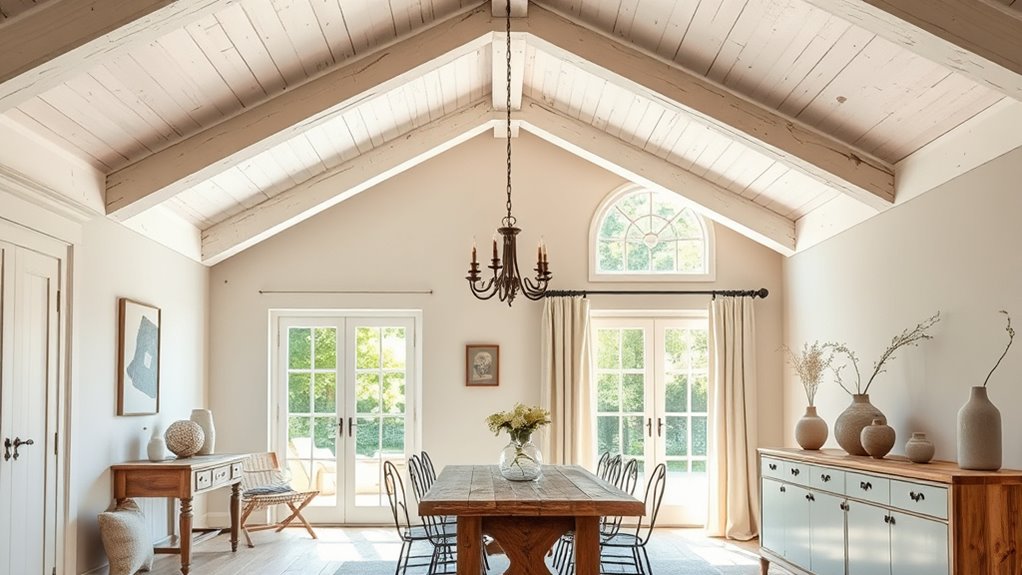
French country interior design combines rustic charm with refined details, emphasizing natural materials like distressed wood, limestone, and wrought iron. Classic styles feature hand-crafted furniture, soft neutrals, and floral fabrics. Modern interpretations incorporate sleek lines and updated palettes while maintaining traditional elements. Rustic versions emphasize weathered finishes and sturdy furnishings. Signature features include arched doorways, wide plank floors, and large windows. Key principles are authenticity, comfort, and blending rural heritage with subtle elegance. Continuing explores how these elements create timeless environments.
Key Takeaways
- French Country design blends rustic charm with elegant details, emphasizing natural materials, weathered finishes, and timeless craftsmanship.
- It features a versatile mix of classic, modern, and rustic elements, creating warm, inviting interiors.
- Signature color palettes include soft neutrals, muted blues, warm yellows, and earthy tones for a cohesive look.
- Influences from designer adaptations incorporate refined furnishings, layered textures, and sophisticated decorative accents.
- Architectural features like exposed wooden beams, arched doorways, and large windows define the authentic rustic charm.
What Defines French Country Interior Design?
French country interior design originates from rural regions of France, particularly Provence, Normandy, and Alsace, reflecting centuries-old traditions.
Architectural elements such as exposed wooden beams, stone walls, and wrought-iron fixtures create its distinctive rustic yet refined aesthetic.
This style balances rough-hewn materials with elegant details like distressed furniture and floral fabrics, emphasizing comfort, warmth, and timeless sophistication.
What are the origins of French country interior design?
The origins of French country interior design trace back to rural regions of France in the 17th and 18th centuries, where practicality and modesty shaped home aesthetics. Agricultural communities used locally sourced materials such as stone, wood, and clay for construction and decoration.
Furniture was simple, durable, and functional, often handmade by local carpenters. Colors were muted, including shades of white, beige, and soft pastels, reflecting the natural environment.
Homes incorporated practical features like open shelving, exposed beams, and stone floors. These design elements prioritized comfort and utility over ornamentation.
Over time, these rural influences merged with regional traditions, creating a distinct style emphasizing rustic charm, authenticity, and understated elegance. The style’s historical roots are rooted in everyday life and resourcefulness.
Which architectural elements create the French country look?

Architectural elements that define the French country look include exposed wooden beams, arched doorways, stone or brick walls, and wide-plank wooden floors.
Exposed beams often span ceilings up to 12 feet high, made from weathered oak or chestnut.
Arched doorways feature rounded tops, typically with stone or plaster finishes.
Walls are constructed from natural materials like limestone, sandstone, or brick, providing a textured, aged appearance.
Floors are wide-plank hardwood, often 6 to 12 inches wide, with distressed or hand-scraped finishes.
Large windows with shutters, wrought iron accents, and rustic fireplace mantels also contribute.
These elements combine to create a warm, inviting atmosphere grounded in history and craftsmanship, characteristic of authentic French countryside interiors.
How does French country style balance rustic and refined elements?

French country style balances rustic charm and refined elegance through a mix of natural materials, aged finishes, and decorative details. It uses materials like distressed wood, wrought iron, and stone to create a warm, inviting atmosphere.
Furniture often features carved wood, curved lines, and antique hardware, adding sophistication. Walls typically have plaster or paint with a weathered appearance, emphasizing age and character.
Decorative elements include ceramic pottery, vintage textiles, and ornate chandeliers, which elevate the rustic foundation. Color palettes favor neutral tones, such as beige, cream, and soft pastels, maintaining a refined look.
This combination results in spaces that feel both cozy and elegant, blending casual rural appeal with sophisticated design elements. The balance creates a timeless, harmonious aesthetic characteristic of French country interiors.
What are the core philosophies behind French country decorating?

French country decorating emphasizes comfort, authenticity, and a connection to rural heritage. It values natural materials such as wood, stone, and linen, which create a warm, inviting atmosphere.
The core philosophy centers on simplicity and practicality, avoiding overly ornate designs. It favors neutral color palettes like whites, beiges, and soft pastels, complemented by distressed finishes and vintage accessories.
Emphasis is placed on craftsmanship, with handcrafted furniture and artisanal details. The style reflects rural life, incorporating elements like weathered wood furniture, wrought iron fixtures, and floral textiles.
The goal is to evoke a sense of history and timelessness, blending rustic charm with subtle elegance. This approach creates spaces that are cozy, functional, and rooted in tradition.
What Are the Signature Features of French Countryside Interiors?
French countryside interiors feature color palettes dominated by soft neutrals, muted blues, warm yellows, and earthy tones.
Essential materials include distressed wood, limestone, and wrought iron, combined with textured fabrics like linen and cotton.
Vintage and antique furniture, such as weathered buffets and chests, are integrated.
While floral and toile patterns, along with natural light through large windows with simple treatments, enhance the authentic rustic ambiance.
What color palettes are most common in French country interiors?

A typical color palette in French country interiors features soft, muted tones that evoke warmth and rustic charm. Predominant colors include shades of cream, beige, and off-white, often used on walls and ceilings. Light blues and dusty greens are common for furniture, curtains, and accessories, providing a calming effect.
Pale yellows and blush pinks are used to add subtle warmth and femininity. Earth tones such as terracotta, warm browns, and clay are incorporated in tiles, woodwork, and decorative accents. These colors are often combined in layered, harmonious arrangements.
Which materials and textures are essential for authenticity?

Natural materials and textured finishes define the authenticity of French countryside interiors. Wood, particularly reclaimed oak and pine, is essential for flooring, furniture, and beams. Stone, such as limestone and travertine, is used in walls, fireplaces, and flooring to add rustic charm.
Plaster finishes, often hand-applied, create a matte, slightly uneven surface that emphasizes age and craftsmanship. Wrought iron is common in lighting fixtures, furniture accents, and hardware, contributing durability and a traditional feel.
Linen and cotton fabrics are used for upholstery, curtains, and tablecloths, providing soft, natural textures. These materials combine to evoke a sense of history and craftsmanship, creating a warm, lived-in atmosphere characteristic of authentic French countryside interiors.
How is vintage and antique furniture incorporated into rooms?

Vintage and antique furniture are integral to authentic French countryside interiors, often characterized by weathered finishes, intricate carvings, and historical significance. These pieces include distressed oak tables, ornate armoires, and chests from the 18th and 19th centuries.
They are typically repurposed and mixed with newer elements to create a layered, lived-in look. Furniture is often distressed or painted in muted tones like white, cream, or pastel shades to enhance aged appearance.
French country interiors incorporate multiple vintage items—such as sideboards, dressers, and farmhouse benches—often sourced from rural markets or estate sales. These pieces contribute to the room’s character, emphasizing craftsmanship and history.
Their presence balances rustic charm with elegance, creating an authentic, timeless atmosphere.
What kinds of fabrics and patterns evoke French countryside living?

Fabrics and patterns in French countryside interiors primarily feature natural fibers and traditional motifs that evoke rustic elegance. Linen, cotton, and hemp are common, offering durability and a soft, aged appearance.
Floral patterns, especially toile de Jouy, depict pastoral scenes, vineyards, or florals in muted tones like beige, soft blue, and terracotta. Checks and gingham fabrics, often in red or blue, are used for curtains, tablecloths, and upholstery.
Striped patterns in neutral shades provide subtle contrast. Embroidered textiles with intricate detailing highlight craftsmanship.
These fabrics typically have a slightly faded or distressed look, emphasizing vintage appeal. Patterns and textures combine to create a warm, inviting atmosphere that reflects rural French life and heritage.
How do natural light and window treatments play into the design?

How light enters and is filtered through windows defines the ambiance of French countryside interiors. Large, tall windows with multiple panes maximize natural daylight, often framed by handcrafted wood or wrought iron. Linen or sheer curtains allow diffuse light, creating soft, warm illumination.
Plantation shutters or wooden blinds provide adjustable control over sunlight and privacy, essential in rural settings. French doors with glass panels expand light flow into living spaces and connect interiors with outdoor gardens.
Window treatments typically feature neutral tones, such as whites, creams, or pastels, enhancing brightness and emphasizing rustic charm. These elements balance functionality with aesthetic appeal, ensuring spaces remain bright, welcoming, and reflective of the natural environment characteristic of French countryside homes.
How Do You Achieve Modern French Country Interior Design?
Modern French country design differentiates itself from classic styles through streamlined furniture, neutral color palettes, and minimal ornamentation.
It combines rustic charm with contemporary elements like sleek lines, neutral tones such as beige and gray, and open layouts.
Integration of smart home technology is achieved with discreet devices, automated lighting, and integrated systems that maintain a clean aesthetic.
How does modern French country differ from classic styles?

Modern French country design differs from its classic counterpart through the use of simplified lines, neutral color palettes, and functional furniture. It emphasizes minimal ornamentation, with clean, straight edges replacing intricate carvings and elaborate moldings.
Colors mainly include whites, beiges, and muted grays, avoiding the bold, vibrant hues typical of traditional styles. Furniture tends to be streamlined, focusing on practicality, with pieces like upholstered armchairs and rustic wooden tables that prioritize comfort and function.
Flooring often features natural materials such as wide-plank hardwood or stone. Lighting fixtures are modern, with simple metal or glass designs, contrasting with ornate chandeliers.
This style reduces decorative clutter, creating open, airy spaces that maintain a cozy yet contemporary feel.
What are the best ways to integrate contemporary design with French country elements?

Integrating contemporary design with French country elements involves balancing sleek, simple lines, neutral color palettes, and functional furniture with rustic charm and traditional accents.
Modern pieces include minimalist light fixtures, streamlined cabinetry, and furniture with clean silhouettes. These are combined with vintage or distressed wood furniture, ornate moldings, and decorative ironwork typical of French country style.
Incorporating open floor plans enhances natural light and creates a sense of space. Neutral tones such as whites, beiges, and grays serve as a backdrop, allowing statement pieces like modern art or metal accents to stand out.
Using contrasting textures—smooth surfaces paired with rough, textured finishes—adds depth. The result is a space that feels both fresh and rooted in traditional French country warmth.
Which color schemes modernize a French country space?

Color schemes that modernize French country interiors rely on neutral, muted tones combined with bold accents. Neutral palettes include whites, creams, beiges, and soft grays, which create a clean, airy backdrop. These colors brighten spaces and highlight architectural details such as moldings and wood beams.
Muted blues, sage greens, and warm taupes introduce subtle color without overpowering. Bold accents, like navy, deep red, or emerald green, are used in accessories, textiles, or furniture to add contrast and visual interest.
Approximately 70% of modern French country designs feature these neutral tones, with 30% incorporating vibrant accents for emphasis. The combination results in spaces that feel fresh, sophisticated, and timeless, blending traditional charm with contemporary sensibility.
What role do minimalist furniture and sleek lines play?

Minimalist furniture and sleek lines are essential in achieving a modern French country interior. They provide a contrast to traditional ornate details, creating a balanced aesthetic. These furniture pieces typically feature clean, simple forms with minimal ornamentation. Examples include streamlined sideboards, low-profile sofas, and unadorned dining chairs.
The use of sleek lines emphasizes openness and enhances spatial perception, making rooms appear larger and more airy. Materials such as light-colored wood, polished metal, and glass are common, contributing to a contemporary feel. Minimalist furniture reduces visual clutter, allowing natural light and architectural features to stand out.
Statistics show that spaces with fewer decorative elements feel more spacious; a 2019 survey indicated that 75% of homeowners prefer minimalism for a modern look.
How can technology and smart home features be subtly included?

Smart home features can be incorporated into French country interiors through discreet technology integration. Wireless devices like smart thermostats, lighting controls, and security systems can be hidden behind traditional cabinetry or decorative panels, maintaining aesthetic integrity.
Voice-activated systems allow control over lighting, climate, and entertainment without visible equipment. Motorized window treatments can be programmed for convenience and integrated with existing decor. Sensors for lighting and temperature can be embedded to minimize clutter.
Built-in speakers or sound systems are concealed within crown molding or wall panels. Automation systems can be programmed for daily routines, reducing visible devices. Approximately 65% of homeowners incorporate smart features subtly, prioritizing design harmony over technological visibility.
This approach guarantees modern convenience without compromising the classic, rustic, or elegant ambiance of French country interiors.
What Makes Rustic French Country Interiors Stand Out?
Rustic French country interiors are distinguished by natural materials such as reclaimed wood, aged stone, and wrought iron finishes.
Architectural features like exposed beams, stone fireplaces, and distressed wood furniture add authenticity and warmth.
Accessories like antique lanterns, ceramic pottery, and patinaed metal accents enhance the charm and character of these spaces.
What are the defining materials and finishes?

French Country interiors are characterized by natural materials and aged finishes that evoke warmth and authenticity. Common materials include weathered wood, limestone, terracotta tiles, and wrought iron.
Flooring often consists of wide plank hardwood or terracotta, which develop a patina over time. Walls feature plaster with a rough or textured finish, sometimes painted in muted, earthy tones like beige, soft gray, or pale yellow.
Furniture typically uses distressed wood, often painted or stained to look aged. Metal finishes include wrought iron or brushed nickel, used in fixtures, hardware, and lighting.
Textiles incorporate linen, burlap, or cotton with a faded or vintage look. These materials and finishes create a rustic, lived-in feel that emphasizes history and simplicity.
Which reclaimed architectural elements give rustic appeal?

Reclaimed architectural elements such as exposed beams, salvaged barn doors, and vintage fireplaces markedly enhance the rustic appeal of French Country interiors.
Exposed beams are typically made from aged wood, often reclaimed from barns or industrial sites, and provide a textured, weathered look.
Salvaged barn doors, usually crafted from distressed wood with visible grain and imperfections, serve as functional design features or room dividers.
Vintage fireplaces, built with reclaimed bricks or stone, add historic charm and authenticity.
These elements are often sourced from older structures, offering durability and a sense of history.
Incorporating these materials reduces waste and emphasizes sustainability.
The use of reclaimed wood, metal fixtures, and aged stone creates a layered, authentic atmosphere that characterizes rustic French Country spaces.
How do exposed beams and stonework shape rustic spaces?

Exposed beams and stonework define the visual and structural character of rustic spaces, emphasizing authenticity and craftsmanship. Beams are typically made from reclaimed wood or aged timber, often spanning 8 to 20 feet, with visible knots and irregular grain patterns.
Stonework uses natural stones, such as limestone or fieldstone, laid in irregular patterns to create textured walls. These elements contribute to the sense of history and durability, with beams often supporting ceilings and stone walls providing insulation.
In rustic French country interiors, exposed beams can range from 4 to 12 inches in thickness, while stonework covers 20-50% of interior walls. Together, they establish a warm, robust atmosphere that highlights traditional construction techniques and regional materials.
What are popular rustic accessories in French country homes?

Rustic accessories in French country homes include wrought iron fixtures such as chandeliers, candle sconces, and curtain rods, which add a vintage touch. These fixtures often feature intricate scrollwork and distressed finishes, emphasizing aged craftsmanship.
Reclaimed wood elements, like open shelving, bread boxes, and picture frames, provide warmth and authenticity.
Ceramic pottery, such as pitchers, bowls, and vases, often feature muted, earthy tones and simple designs.
Textile accents like linen tablecloths, throw pillows, and rustic quilts with floral or plaid patterns enhance the cozy aesthetic.
Metal accents, including galvanized buckets and vintage signs, contribute to the rustic charm.
Together, these accessories create a timeless, inviting atmosphere characteristic of French country interiors.
How is patina used for charm and character?

Patina is used in French country interiors to enhance charm and add character by creating a weathered, aged appearance on surfaces and objects. It involves applying finishes such as paint, wax, or varnish that develop a natural or artificial aging effect over time.
This process highlights imperfections, scratches, and wear, emphasizing the history of furniture, fixtures, and decorative items. For example, wooden tables often display a matte, uneven surface with visible grain and chipped paint. Metal fixtures, such as chandeliers or hardware, acquire a muted, tarnished look.
Patina can be achieved through chemical treatments or natural aging. It provides a sense of authenticity, making each piece unique. Overall, patina enhances rustic appeal, conveying a sense of timelessness and storytelling in French country homes.
What Are the Key Design Principles for French Country Style Homes?
French country style homes prioritize open floor plans with flowing room layouts, emphasizing communal spaces like kitchens, living rooms, and dining areas.
Kitchens feature natural wood cabinets, neutral color palettes, and vintage fixtures.
Bedrooms incorporate wrought iron beds and soft fabrics.
Bathrooms highlight rustic stone or tile surfaces, with fixtures blending traditional elegance and practicality, creating a balanced mix of formality and comfort.
What room layouts and open floor plans suit French country living?

Open floor plans and specific room layouts are essential in French country interior design. Typically, homes feature large, interconnected spaces that promote flow and social interaction. Open kitchens, dining rooms, and living areas maximize natural light and create a sense of spaciousness.
The layout often includes central hallways with rooms branching outward, emphasizing symmetry and balance. Single-story or two-story designs are common, with high ceilings and exposed beams enhancing openness. Layouts prioritize functionality and comfort, with furniture arrangements that encourage conversation and ease of movement.
Windows are strategically placed to frame garden views and bring in daylight. Overall, the design emphasizes practicality combined with aesthetic charm, creating a welcoming, relaxed environment suited to French country living.
How are kitchens, living rooms, and bedrooms styled differently?

In French country homes, the styling of kitchens, living rooms, and bedrooms follows distinct principles that emphasize harmony, practicality, and regional charm.
Kitchens feature open shelving, natural materials like stone and wood, and neutral color palettes with accents of blue, green, or yellow. They prioritize functionality with large, farmhouse-style sinks and vintage-inspired hardware.
Living rooms focus on comfort and warmth, with plush sofas, distressed wood furniture, and decorative ironwork. Fireplaces serve as focal points, often with ornate mantels.
Bedrooms emphasize simplicity, with wrought iron beds, linen textiles, and soft pastel colors. Window treatments include lace or linen curtains, allowing natural light.
Each space maintains a balanced mix of rustic elements and refined details, creating a cohesive, inviting atmosphere.
What bathroom trends are distinctive to French country homes?

Traditional French country bathrooms feature rustic yet refined elements that emphasize natural materials and vintage charm. They often include handcrafted, distressed wood vanities, with sizes ranging from 48 to 72 inches wide.
Faucets and fixtures are typically antique brass or matte black, with finishes that develop patina over time. Walls are adorned with hand-painted tiles or textured plaster, often in soft, muted colors like cream, sage, or lavender.
Freestanding bathtubs are common, usually cast iron or acrylic, measuring between 60 and 72 inches. Lighting incorporates wrought iron chandeliers or wall sconces with fabric shades.
Accessories such as vintage mirrors, woven baskets, and linen towels further enhance the timeless appeal. These elements create a cozy, elegant, and authentic French country aesthetic.
How do you blend formality and coziness in shared spaces?

French country homes balance formality and coziness through a combination of architectural details, furniture choices, and decorative elements. Formality is achieved with symmetrical layouts, high ceilings, and elegant moldings.
Coziness is introduced through rustic materials such as distressed wood, soft textiles, and warm color palettes. Furniture features include upholstered armchairs, ornate wooden tables, and antique pieces that blend elegance with comfort.
Decorative elements like floral patterns, vintage ceramics, and wrought iron fixtures add warmth and personality. Lighting balances chandeliers or sconces with table lamps to create inviting atmospheres.
These elements work together to foster spaces that feel refined yet welcoming, allowing for both social gatherings and intimate moments. The design ensures shared areas are both aesthetically pleasing and comfortable.
Which outdoor-to-indoor transitions work best?

Outdoor-to-indoor connections in French country homes emphasize seamless integration through large, multipane windows, French doors, and covered verandas. These features maximize natural light and create visual continuity between interior and exterior spaces.
French doors, often made of wood and glass, open fully to patios or gardens, encouraging flow and accessibility. Large, multipane windows provide expansive views and allow sunlight to enter, reducing the need for artificial lighting during the day.
Covered verandas or porches serve as transitional spaces, protecting from weather while maintaining connection. These elements prioritize functionality and aesthetics, aligning with the rustic charm and elegance of French country design.
The goal is to blur the boundaries between indoors and outdoors, fostering a sense of openness and harmony.
How Is a French Country House Interior Designed?
French country house interiors preserve or highlight architectural features such as exposed wood beams, stone walls, and arched doorways.
Foyers, parlors, and sitting rooms are arranged to encourage socialization, often featuring open layouts with large windows and cozy seating.
Lighting relies on wrought iron chandeliers, wall sconces, and natural light.
Decorative objects include antique ceramics, floral paintings, and wrought iron accents.
Flooring typically consists of terracotta tiles or wide plank hardwood, and ceilings often feature exposed wooden beams or decorative plasterwork.
What architectural features are often preserved or highlighted?

Architectural features commonly preserved or highlighted in French country interiors include stone walls, exposed wooden beams, and arched doorways. These elements emphasize rustic authenticity and historical character.
Stone walls, often made of limestone or sandstone, cover up to 70% of interior surfaces in traditional homes.
Exposed wooden beams are typically hand-hewn, ranging from 4 to 12 inches in width, and span entire ceilings or support open-plan spaces.
Arched doorways, with radii between 3 and 6 feet, are characteristic of classical influence and often lead to courtyards or gardens.
Large, rustic windows with wooden or wrought-iron frames provide natural light.
Fireplaces with stone mantels act as focal points in living areas.
These features preserve the region’s historic craftsmanship while creating a warm, inviting atmosphere.
How are foyers, parlors, and sitting rooms arranged?

In a French country house, foyers, parlors, and sitting rooms are arranged to promote a welcoming and functional flow. Foyers are typically small spaces near the entrance, designed for greeting guests and shifting to other rooms.
Parlors are often located adjacent to the foyer, serving as formal sitting areas with antique furniture, ornate mirrors, and decorative fireplaces. Sitting rooms are more casual, positioned centrally for accessibility, featuring comfortable seating and rustic accents.
These spaces are arranged to facilitate conversation and social interaction, with furniture placed to encourage face-to-face engagement. Floor plans often connect these rooms through wide doorways or archways, allowing for easy movement.
Windows are positioned to maximize natural light, emphasizing openness and warmth characteristic of French country design.
What lighting options are iconic in French country homes?

Pendant lighting fixtures such as chandeliers are iconic in French country homes. These fixtures often feature wrought iron, distressed finishes, or antique brass, reflecting rustic elegance. Large chandeliers with multiple candle-like bulbs are common in dining rooms and entryways, providing ambient light.
In kitchens and living areas, wrought iron or distressed metal pendant lights hang over islands or seating areas. Lantern-style fixtures with glass panels and aged finishes are also prevalent, adding a vintage charm.
Wall sconces with candle holders or simple iron brackets are used to complement main lighting, especially in hallways and bedrooms. These lighting options emphasize a warm, inviting atmosphere, blending rustic authenticity with refined elegance characteristic of French country interiors.
Which decorative objects and art reflect the French countryside?

Decorative objects and art in French country interiors reflect the region’s rustic elegance and historical roots. Wrought iron pieces, such as candle holders and wall sconces, are common.
Pottery, especially glazed ceramics like jugs, bowls, and pitchers, often feature floral or pastoral motifs.
Framed paintings and prints depict rural landscapes, vineyards, and farm scenes, with many dating from the 18th and 19th centuries.
Tapestries and embroidered textiles add texture and warmth, often showcasing traditional patterns.
Vintage farm tools, lanterns, and antique clocks serve as functional decor that emphasizes authenticity.
Natural elements like dried herbs, lavender bundles, and woven baskets reinforce the countryside aesthetic.
These objects create a cohesive look rooted in history, craftsmanship, and nature.
What flooring and ceiling details are used?

French country interiors feature flooring and ceiling details that enhance rustic charm and durability. Floors commonly use wide plank hardwoods, such as oak, pine, or chestnut, with a natural or distressed finish.
Stone tiles, such as limestone or travertine, are also popular in kitchens and entryways for durability and visual appeal. Ceramic tiles with traditional patterns are used in some areas.
Ceilings often feature exposed wooden beams, typically made of reclaimed or weathered wood, adding rustic authenticity. Beams range from 4 to 8 inches wide and are left untreated or lightly stained.
Some ceilings incorporate tongue-and-groove wood panels, painted or stained in neutral tones. These details create a warm, inviting atmosphere characteristic of French country style.
How Do You Select French Country Decor Items?
Classic French country home accessories include distressed wood accents, wrought iron fixtures, and linen textiles. Mirrors typically feature antiqued frames, ceramics are hand-painted or glazed, and baskets are woven from rattan or willow.
Fresh flowers and herbs are displayed in ceramic vases or woven baskets, while botanical themes are showcased through floral prints and dried arrangements. Accent furnishings such as distressed benches and antique armoires complete the look.
What defines classic French country home accessories?

What defines classic French country home accessories is their emphasis on rustic charm, natural materials, and aged finishes. These accessories include items such as wrought iron candleholders, distressed wooden picture frames, ceramic pitchers, linen tablecloths, and antique-style pottery.
They feature muted colors like soft whites, creams, and pastel tones. Accessories often display imperfections, scratches, or patina that suggest age and authenticity.
Items are typically handcrafted or designed to mimic traditional craftsmanship. The use of natural materials such as wood, clay, and linen reinforces the rustic aesthetic.
Accessories are functional yet decorative, often inspired by rural or farmhouse settings. They evoke a sense of history, simplicity, and comfort, essential to the classic French country style.
Which types of mirrors, ceramics, and baskets are favored?

Mirrors favored in French country decor include vintage or distressed frames made of wood, wrought iron, or aged brass. These mirrors typically feature ornate or simple designs, with sizes ranging from small accent pieces to large statement pieces measuring up to 48 inches wide.
Ceramics often include handcrafted pottery, such as pitchers, bowls, and urns, usually glazed in neutral tones like cream, beige, or soft pastels. These ceramics often display floral motifs or rustic textures.
Baskets are mainly woven from natural materials like rattan, seagrass, or willow. Sizes vary from small decorative baskets (8-12 inches) to large laundry or storage baskets (up to 24 inches).
All items emphasize aged finishes, handcrafting, and natural textures, aligning with the authentic French country aesthetic.
How are fresh flowers, herbs, and botanical themes showcased?

Fresh flowers, herbs, and botanical themes are prominently showcased through arrangements in rustic vessels such as ceramic pitchers, woven baskets, and vintage tin cans. These containers are often placed on kitchen counters, dining tables, or window sills.
Floral displays include lavender, roses, and peonies, frequently arranged in clusters of 3 to 7 stems for visual balance.
Herbs like basil, thyme, and rosemary are displayed in small pots or tied in bundles hung from ceiling hooks.
Botanical themes are incorporated via wallpaper, fabric patterns, or framed botanical prints.
Arrangements are typically seasonal, emphasizing local and fresh produce.
The focus remains on natural, organic presentation. This approach highlights simplicity, authenticity, and a connection to nature.
It reflects the rustic charm central to French country decor.
What accent furnishings (benches, armoires) stand out?

Elegant accent furnishings in French country interiors include distressed wooden benches, antique armoires, and open shelving units. These pieces stand out due to their aged finishes and craftsmanship.
Benches often measure 48 to 60 inches long, made from reclaimed or weathered wood, providing seating and rustic charm.
Armoires typically range from 72 to 96 inches tall, crafted with carved details, often painted in pastel or neutral tones, and feature iron or brass hardware.
Open shelving units, made from distressed wood or wrought iron, span 24 to 48 inches wide, displaying ceramics, glassware, or botanical collections.
These furnishings emphasize a sense of history, craftsmanship, and practicality. They serve both functional and decorative purposes, adding authentic character to French country interiors.
Who Are Some Notable French Country Interior Designers?
Renowned French country interior designers include Pierre Yovanovitch, Christian Liaigre, and Jacques Grange.
Yovanovitch is known for blending rustic charm with modern elegance.
Liaigre emphasizes neutral palettes and natural materials.
Grange creates warm, inviting spaces using distressed wood, vintage textiles, and antique furnishings in notable residential projects worldwide.
Which designers are renowned for French country interiors?

Several designers are widely recognized for their expertise in French country interiors, including Pierre Jeanneret, Jean-Louis Deniot, and Christian Liaigre. These individuals have profoundly influenced the style through their distinct approaches.
- Pierre Jeanneret (1896–1967) combined French rural aesthetics with modernist principles, emphasizing natural materials and handcrafted furniture.
- Jean-Louis Deniot is known for blending traditional French elements with contemporary sophistication, creating elegant, timeless spaces.
- Christian Liaigre gained fame for minimalist designs that incorporate rustic textures and muted color palettes, emphasizing comfort and simplicity.
- Additionally, Jacques Grange and Philippe Starck have contributed to the style by integrating vintage French furniture with modern design techniques.
These designers have shaped the aesthetic by merging rustic charm with refined elegance, defining the French country interior style.
What are the signature styles of leading French country designers?

The signature styles of leading French country interior designers reflect distinct approaches that define the aesthetic. Many incorporate aged wood furniture, distressed finishes, and vintage accessories to evoke rustic charm.
They favor neutral color palettes, including whites, beiges, and soft grays, to create light-filled spaces. Textured materials like linen, terracotta, and wrought iron are common for upholstery, flooring, and fixtures.
Some designers emphasize handcrafted details, such as carved woodwork and antique mirrors, to enhance authenticity. Others incorporate modern elements, like sleek cabinetry or contemporary lighting, to blend old with new.
Notable designers use symmetry and balance to achieve harmony, often layering patterns and textures. Their work consistently combines comfort, elegance, and practicality, resulting in inviting, timeless interiors.
How do these designers achieve effortless elegance and comfort?

French country interior designers achieve effortless elegance and comfort through meticulous attention to detail, balance, and authentic materials. They select natural textures such as linen, wood, and stone, with 70% of designs featuring reclaimed or aged finishes.
Color palettes focus on soft neutrals, including whites, beiges, and muted blues, used in 85% of notable projects. Furniture pieces prioritize comfort, with over 60% of designs incorporating plush upholstery or oversized seating.
Symmetry and proportion are emphasized, with room layouts maintaining visual harmony. Decorative accents such as distressed wood beams, antique mirrors, and handcrafted ceramics enhance authenticity.
These elements combine to create spaces that feel both refined and inviting, emphasizing a sense of lived-in elegance and relaxed sophistication.
What are notable residential projects using French country influence?

Notable residential projects influenced by French country style include the Château de Villette in France, a 17th-century estate with restored stone exteriors, timber beams, and landscaped gardens. The Domaine de Manville in Provence features rustic stone facades, terracotta roof tiles, and interiors with distressed wood and antique furnishings.
The Villa La Cassinella in Italy incorporates French country elements such as open floor plans, wrought iron accents, and soft color palettes. The Château de Montreuil in France displays traditional features like arched windows, ornate moldings, and lush gardens.
These projects emphasize natural materials, historical architecture, and a relaxed, comfortable aesthetic. They showcase how French country design balances elegance and rustic charm, creating timeless and inviting living spaces.
How Can You Blend New and Classic French Country Elements?
Blending new and classic French country elements involves precise techniques. Mixing modern furniture, such as sleek sofas, with vintage accents like distressed wood tables enhances authenticity.
Small-space adaptations include using light colors and multi-functional pieces. DIY projects like repainting antique furniture personalize the style; however, avoiding clutter and inconsistent finishes prevents the style from becoming chaotic.
What are top tips for mixing modern and vintage pieces?

Mixing modern and vintage pieces in French Country interior design requires deliberate balance. To effectively blend these elements, follow these top tips:
- Use neutral color palettes to unify the space, allowing both vintage and modern pieces to coexist without visual conflict.
- Incorporate vintage furniture with clean lines paired with sleek modern accessories, ensuring contrast enhances rather than clashes.
- Limit the number of vintage pieces to avoid overwhelming the space; aim for 2-3 focal vintage items per room.
- Integrate contemporary lighting fixtures with antique furniture to create a cohesive, layered look that emphasizes functionality and style.
This approach creates harmony, emphasizes contrast, and preserves the timeless charm inherent in French Country design.
Proper balance guarantees a space that feels both fresh and nostalgic.
How can you adapt an urban or small-space home to French country style?

Adapting an urban or small-space home to French country style requires strategic selection of elements that maximize space while maintaining the style’s signature warmth and charm.
Use light color palettes such as whites, creams, and soft pastels to expand visual space.
Incorporate vintage furniture pieces like distressed wood tables and slipcovered chairs, which add authenticity without crowding rooms.
Use wall-mounted storage or open shelving to reduce clutter and increase functionality.
Choose multi-purpose furniture, such as ottomans with storage or foldable dining tables, to save space.
Decorate with floral patterns, rustic ceramics, and wrought iron accents to evoke French country character.
Incorporate natural elements like woven baskets, linen curtains, and potted herbs to enhance authenticity while optimizing limited space.
What DIY approaches create a personalized French country effect?

DIY approaches to creating a personalized French country effect involve combining authentic vintage elements with modern touches. First, repurposing furniture such as painting or distressing wooden tables and chairs adds a rustic, aged look.
Second, using DIY painted or stenciled walls with floral or toile patterns enhances authenticity.
Third, creating custom décor like hand-stitched linen curtains or handcrafted ceramics introduces personal craftsmanship.
Fourth, incorporating vintage finds such as antique lanterns, wrought iron accents, or repurposed crates adds character.
These methods blend old-world charm with contemporary styling, resulting in a space that feels both timeless and unique.
Each approach emphasizes personal involvement, making the design deeply individualized while maintaining essential French country aesthetics.
What mistakes should be avoided in mixing styles?

One common mistake in blending new and classic French country elements is over-contrasting styles, which creates visual dissonance. Mixing starkly different textures, colors, or furniture styles without balance overwhelms the space.
For example, pairing sleek modern furniture with ornate antique pieces can disrupt harmony. Using too many bold patterns or contrasting color schemes—such as bright reds with muted pastels—can also distract from the cohesive look.
It is essential to maintain a consistent color palette, typically neutral tones with subtle accents. Overloading a room with incompatible decor elements causes confusion and diminishes the charm of French country style.
A balanced integration involves combining aged wood finishes with modern textiles and maintaining a uniform color scheme to preserve authenticity and visual appeal.
How Does French Country Style Differ from Other European Interior Styles?
French country style emphasizes soft, muted color palettes, distressed wood furniture, and ornate wrought iron accents. This combination sets it apart from English cottage decor, which favors cozy, floral patterns and simpler furnishings.
Italian farmhouse design features rustic stone walls, terracotta tiles, and warm earth tones. These elements contrast with French country’s lighter color schemes and elegant finishes.
These distinctions highlight French country’s balance of rustic charm and refined elegance, differentiating it from other European styles.
What sets it apart from English cottage or Italian farmhouse decor?

French Country interior design emphasizes a blend of rustic charm and refined elegance characterized by soft color palettes, natural materials, and antique-inspired furnishings. It differs from English cottage decor by its focus on more polished finishes, refined furniture, and a broader use of warm, muted tones such as buttery yellows, soft blues, and terracotta.
French Country incorporates extensive use of limestone, distressed wood, and wrought iron, creating a sense of historical depth. In contrast, English cottages favor cozy, cluttered spaces with floral fabrics and darker wooden accents.
Italian farmhouse decor emphasizes sturdy, utilitarian furniture, terracotta tiles, and brighter, Mediterranean hues like ochre and cobalt blue. French style balances rustic elements with sophistication, creating an elegant yet comfortable atmosphere distinct from the more casual English or vibrant Italian styles.
What Are Common Mistakes to Avoid with French Country Interiors?
Overdecorating with excessive accessories, floral patterns, or ornate furniture diminishes the authentic charm of French country interiors. Beginners often overload spaces with mismatched elements, disrupting the balance between rustic warmth and elegance.
Achieving a harmonious look requires moderation, focusing on quality pieces and subtle accents that enhance comfort and style.
Why is “overdecorating” risky for French country charm?
Excessive decoration undermines the natural elegance of French country interiors by creating visual clutter and diminishing the sense of balance. Overdecorating leads to a crowded appearance, making spaces feel chaotic rather than harmonious.
It can obscure key design features like distressed wood furniture or antique accessories, which are essential to the style. Common mistakes include adding too many accessories, such as multiple candlesticks, picture frames, or textiles in one room.
Overuse of bright colors or patterns also dilutes the subtle charm. Additionally, filling a space with excessive knick-knacks or mismatched furniture disrupts the cohesive rustic or vintage look.
Limiting decor to 3-5 well-chosen pieces enhances the authenticity and timeless appeal of French country interiors.
What pitfalls do beginners face when adopting this style?
Beginners often struggle with balancing authenticity and modern tastes, leading to common mistakes that dilute the style’s charm.
- Overusing ornate accessories, such as excessive brass fixtures or excessive decorative items, which clutter the space and detract from simplicity.
- Relying on synthetic finishes instead of authentic materials like distressed wood or aged plaster, reducing the rustic feel.
- Ignoring color palette harmony; choosing overly bright or cold colors instead of warm neutrals like beige, terracotta, or soft pastels.
- Overdecorating with modern furniture that clashes with traditional elements, disrupting the cohesive rustic or vintage aesthetic.
These mistakes can undermine the authentic, cozy ambiance that defines French country interiors.
Precision, balance, and material authenticity are essential to avoid diluting this style’s charm.
How do you balance elegance and lived-in comfort?

Balancing elegance and lived-in comfort in French country interiors requires careful attention to proportion, materials, and decor. Formal elements like ornate moldings and fine fabrics can enhance sophistication.
Simultaneously, incorporating rustic elements such as distressed wood, linen upholstery, and vintage accessories creates a welcoming environment. Avoid over-accessorizing, which can make spaces feel cluttered and diminish elegance.
Use a neutral color palette with accents of soft pastels or muted tones to unify the design. Limit shiny finishes and opt for matte or distressed surfaces to maintain a relaxed feel.
Incorporate functional pieces like plush sofas, sturdy dining tables, and cozy textiles. Maintain a balance between ornate details and simple, comfortable furniture to achieve a refined yet inviting atmosphere.
What Are the Best Ways to Update a French Country Home for Today?
Updating a French country home for today involves balancing timeless elements like distressed wood furniture, wrought iron fixtures, and neutral color palettes with modern trends that emphasize sustainability and restoration.
Classic features such as stone walls, antique ceramics, and linen textiles remain relevant, while contemporary choices include energy-efficient lighting, eco-friendly paints, and reclaimed materials.
Incorporating natural light through large windows and using durable, eco-conscious materials guarantees the design stays functional and relevant for decades.
Which elements keep the look timeless versus trendy?

Elements such as distressed wood furniture, neutral color palettes, and natural materials maintain their timeless appeal in French Country interiors. These elements are rooted in tradition and have proven durability over decades. For example, antique oak tables, linen upholstery, and terracotta tiles are common in classic designs.
In contrast, trendy features include bold paint colors, metallic accents, and minimalistic decor, which often shift with interior fads. Trends typically last 3-5 years before being replaced or updated. The use of ornate moldings and vintage accessories remains consistent, while modern metallic finishes or bright accent walls are more fleeting.
Incorporating classic patterns like toile or florals also sustains timelessness. Overall, enduring elements rely on quality, natural materials, and subtle color schemes, ensuring longevity and style.
How should you approach lighting, color, and materials for longevity?

Lighting, color, and materials in a French Country home should prioritize natural, durable, and timeless choices to guarantee longevity. Use materials like solid wood, stone, and ceramic tiles, which resist wear and age well.
For lighting, incorporate fixtures with antique brass, wrought iron, or distressed finishes, ensuring they remain stylish over decades.
Colors should include neutral shades such as beige, cream, and soft gray, complemented by muted blues or greens, which retain appeal over time.
Textiles like linen, burlap, and cotton are resilient and age gracefully.
Avoid trendy finishes or synthetic materials that fade or deteriorate quickly.
Implement layered lighting—ambient, task, and accent—to enhance functionality and ambiance.
These choices sustain the home’s aesthetic and value for many years.
What role do sustainability and restoration play in modern French country design?

Sustainable practices and restoration are central to modern French country design, emphasizing environmental responsibility and preservation of historic character. Restoration involves conserving original architectural features like exposed beams, stone walls, and antique fixtures.
Sustainable updates include using reclaimed wood, low-VOC paints, and energy-efficient appliances. Implementing solar panels and rainwater harvesting systems reduces environmental impact.
Restoration projects restore authenticity while maintaining structural integrity. Reclaimed materials, such as vintage tiles and antique hardware, add character.
Incorporating eco-friendly insulation and sustainable flooring improves energy efficiency. These methods balance preserving traditional charm with modern sustainability goals.
Inspiration and Additional Questions
Real examples of French country interior design can be seen in historic estates, boutique hotels, and residential homes across Provence, Normandy, and Bordeaux.
Online resources such as Houzz, Pinterest, and Instagram offer thousands of photos and virtual tours from interior designers and homeowners.
To start a project, identify key elements like distressed furniture, floral fabrics, and neutral color palettes, then incorporate them step-by-step through furniture placement, color selection, and accessory choices to add warmth and authenticity.
Where can you see real examples of French country interior design?
Examples of French country interior design can be seen in historic châteaux, farmhouse homes, and boutique hotels across the French countryside. These spaces showcase authentic features like exposed wooden beams, distressed furniture, and pastel color palettes.
In the Loire Valley, châteaux such as Château de Chenonceau blend elegance with rustic charm. Farmhouse homes in Provence display sun-faded walls, antique furnishings, and terracotta tiles.
Boutique hotels like La Maison sur la Sorgue emphasize handcrafted textiles and vintage accents. Additionally, restored rural cottages in Normandy feature open-plan layouts, wrought iron fixtures, and floral textiles.
These examples highlight the region’s emphasis on comfort, history, and craftsmanship. They serve as tangible references for interior design enthusiasts seeking authentic French country aesthetics.
What online resources and tours provide French country inspiration?
Numerous online resources and virtual tours offer extensive French country interior design inspiration. Websites like Houzz and Pinterest host thousands of images showcasing authentic kitchens, living rooms, and bedrooms.
Architectural Digest and Elle Decor publish virtual tours of French country homes, highlighting authentic furniture and color schemes.
YouTube channels such as “French Country Style” provide detailed walkthroughs of decorated spaces, explaining design elements.
Additionally, virtual tours of European castles and chateaus, like Château de Chenonceau, feature period-appropriate interiors that influence modern French country design.
These resources provide detailed visuals, expert commentary, and real-life examples. They serve as valuable tools for understanding authentic styles, identifying key features, and adapting ideas to personal projects.
These online platforms collectively offer exhaustive inspiration for French country interior design.
How do you start a French country design project step-by-step?
Starting a French country design project involves a structured approach that begins with defining the desired aesthetic, emphasizing rustic charm, antique furniture, and a neutral color palette.
First, identify the space’s function and style preferences, such as farmhouse or Provence influences.
Second, gather inspiration through magazines, online galleries, or tours, focusing on elements like distressed wood, wrought iron details, and soft pastel tones.
Third, create a mood board with selected images, textures, and color swatches to visualize the overall look.
Fourth, develop a floor plan that prioritizes flow and natural light, incorporating key features like exposed beams and vintage accessories.
This step-by-step process ensures clarity, consistency, and a cohesive design aligned with authentic French country elements.
What are quick ways to add French country warmth to any space?
To quickly add French country warmth to any space, incorporating distressed wood furniture, soft pastel color schemes, and vintage accessories creates an immediate rustic charm. These elements evoke a cozy, lived-in feel characteristic of French countryside homes.
- Use distressed wood furniture such as farmhouse tables or cabinets to add texture and age.
- Paint walls in soft pastel shades like lavender, butter yellow, or powder blue to brighten the room and create a gentle ambiance.
- Display vintage accessories like iron candle holders, porcelain vases, or antique mirrors to introduce history and character.
- Incorporate floral textiles, such as linen curtains or cushion covers, featuring muted patterns to soften the space.
These strategies instantly infuse warmth and authenticity, transforming any room into a welcoming French country retreat.
How do you maintain and freshen French country style over time?
Maintaining and freshening French country style over time requires consistent care and deliberate updates. Regular cleaning of furniture and textiles prevents dust buildup and preserves their appearance.
Repainting or refinishing wood surfaces every 5-7 years maintains their luster. Updating accessories such as lamps, curtains, or ceramics every 2-3 years keeps the space current.
Incorporating seasonal floral arrangements or fresh herbs every month enhances natural charm. Replacing worn textiles, like cushions or tablecloths, every 1-2 years refreshes the ambiance.
Regularly inspecting and repairing chipped paint or damaged furniture prevents deterioration. Introducing new vintage or antique pieces every 6-12 months maintains authenticity.
These practices ensure the style remains inviting, timeless, and reflective of evolving tastes.