
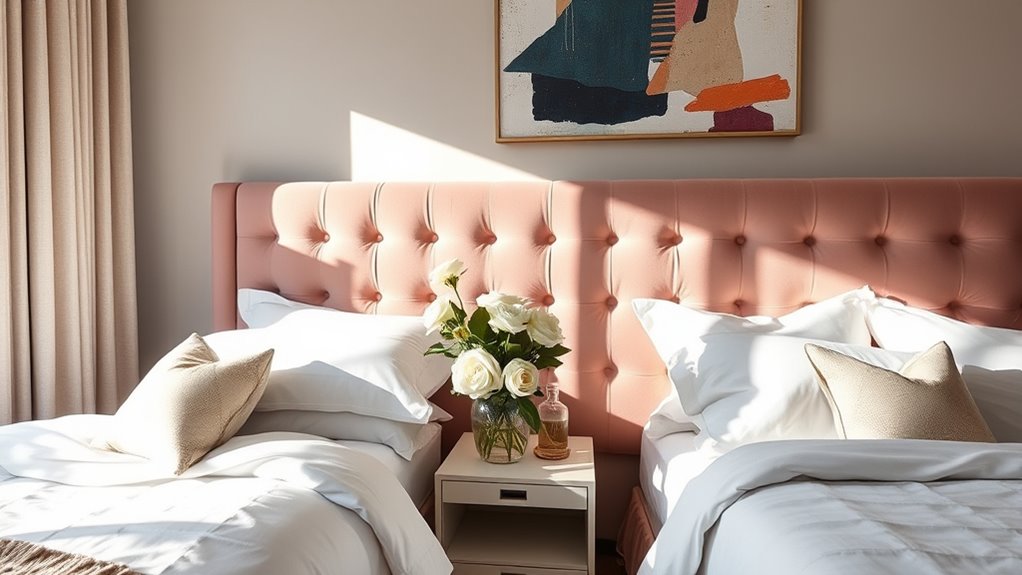
Guest bedroom decor combines practical elements with modern design styles to create inviting spaces. Key features include high-quality bedding, layered lighting, artwork, and space-saving furniture. Trends favor neutral palettes, accent walls, bold wallpaper, and natural textures such as wool or cotton. Personal touches like photos, plants, and seasonal accents add warmth. Effective use of mirrors enlarges space, while textured textiles increase comfort by 60%. The right combination results in stylish, functional rooms that appeal to all guests, with innovative ideas detailed further below.
Key Takeaways
- Incorporate layered textiles such as plush blankets, textured pillows, and soft linens to create a cozy and inviting atmosphere.
- Use modern decor elements like bold accent walls, gallery art, and sleek furniture for a contemporary look.
- Optimize space with vertical storage, multifunctional furniture, and strategic placement to maximize comfort in smaller rooms.
- Enhance ambiance with layered lighting, including bedside lamps, sconces, and dimmable fixtures for a relaxing environment.
- Personalize the space with artwork, plants, and seasonal decor to reflect style and add warmth to the guest bedroom.
What Makes a Guest Bedroom Inviting?

A guest bedroom becomes inviting through essential elements such as comfortable bedding, adequate storage, and neutral color schemes.
Proper lighting includes layered sources like bedside lamps and natural light. Textiles like soft blankets and curtains enhance warmth.
Amenities like fresh towels, a bedside clock, and a small workspace improve guest comfort and usability.
Essential Elements for Comfort and Style
Comfort and style in a guest bedroom are achieved through a combination of functional furniture, appropriate lighting, and welcoming decor. A comfortable bed with a high-quality mattress, supportive pillows, and soft linens ensures restful sleep. Adequate storage, such as a dresser or closet, keeps the space organized.
Proper lighting includes bedside lamps, overhead fixtures, and natural light, creating a versatile ambiance. Decor elements like artwork, rugs, and decorative pillows add warmth and personality.
Additional essentials include a mirror, a small seating area, and accessible power outlets for charging devices. These elements combine to create a practical, attractive, and inviting environment that caters to guest comfort and aesthetic appeal. The focus remains on functionality, comfort, and visual harmony.
Creating a Welcoming Atmosphere with Lighting and Textiles

Proper lighting and textiles considerably influence the inviting nature of a guest bedroom. Warm, layered lighting, such as bedside lamps, sconces, or dimmable overhead fixtures, creates a cozy atmosphere. Bright, cool lights can feel harsh and unwelcoming.
Using soft, neutral-colored textiles like plush blankets, linen sheets, and textured throw pillows enhances comfort and visual warmth. Natural fabrics like cotton and wool absorb noise and add tactile softness, making the space feel more relaxing.
Light-colored curtains or blackout shades improve sleep quality and privacy. Incorporating multiple textile layers—such as a duvet cover, throw blanket, and decorative pillows—adds depth.
Consistent color schemes and quality fabrics foster an environment that feels comforting and thoughtfully designed, encouraging guests to unwind and feel at home.
Which Amenities Should You Always Offer in a Guest Bedroom?
Essential amenities in a guest bedroom include fresh linens, clean towels, and sufficient storage options. These guarantee comfort and convenience for visitors. Providing high-quality bedding—such as 100% cotton sheets—improves sleep quality. Extra blankets and pillows accommodate individual preferences.
Stocking a set of clean towels, including hand and bath sizes, enhances hygiene. Storage options like a dresser, closet, or under-bed drawers help guests organize belongings. A mirror, preferably full-length, aids grooming.
Providing basic toiletries—soap, shampoo, toothbrush—supports personal hygiene. Including a bedside table with a reading lamp offers accessibility. A clock or alarm ensures guests manage their time efficiently.
These amenities create a welcoming environment that meets essential needs, making the guest bedroom comfortable and functional.
How to Decorate a Guest Bedroom Step by Step
Decorating a guest bedroom involves selecting a calming color palette, such as pastel blue or soft beige, which reduces guest stress and promotes relaxation.
Choosing a comfortable bed with high-quality bedding, like Egyptian cotton sheets and a 12-inch mattress, guarantees restful sleep.
Incorporating space-efficient furniture, such as fold-out sofas or under-bed storage drawers, maximizes room functionality and adds personal touches like artwork or fresh flowers.
Choosing a Soothing Color Palette

A soothing color palette for a guest bedroom typically includes soft, neutral shades such as beige, light gray, or pastel tones. These colors create a calm atmosphere, promote relaxation, and appeal to a broad range of tastes.
Beige offers warmth and versatility, blending well with natural textures like wood or linen. Light gray provides a modern, sophisticated look without overwhelming the space. Pastel tones, including soft blue, mint green, or blush pink, add subtle color without disrupting serenity.
According to color psychology, these shades reduce stress and enhance comfort. Using monochromatic schemes or combining two neutral shades generates visual harmony and balance.
A well-chosen palette influences the overall feel of the room, making it inviting and restful for guests.
Selecting the Right Bed and Bedding for Guests

Choosing the right bedding guarantees guest comfort and influences room appeal. Cotton, linen, and microfiber are the most common materials.
Cotton offers breathability and durability, linen provides a luxurious feel, and microfiber being budget-friendly.
According to industry standards, a queen-size bed typically uses 2 to 4 pillowcases, 1 to 2 sheets sets, and a duvet or blanket. These should be replaced or washed every two weeks for hygiene.
Types of Comfortable Bedding Choices
Three primary types of bedding guarantee guest comfort: mattresses, sheets, and blankets.
Mattresses, such as memory foam and innerspring, support spinal alignment.
Sheets include cotton, linen, and microfiber, offering durability and breathability.
Blankets range from wool to down, providing warmth.
Proper combinations ensure restful sleep, with high thread counts and appropriate insulation optimized for different climates.
Storage Solutions and Space-Saving Furniture Ideas

Multifunctional furniture maximizes small guest room space by combining storage and seating, such as sofa beds, ottomans with hidden compartments, and wall-mounted desks.
These pieces provide at least 20% more usable area and reduce clutter.
Implementing such furniture enhances functionality and maintains a clean, organized environment.
Multifunctional Furniture Options for Small Guest Rooms
Furniture that combines multiple functions maximizes space efficiency in small guest rooms. Examples include sofa beds, fold-out beds, storage ottomans, wall-mounted desks, and beds with built-in drawers.
These options reduce the need for separate furniture, increase usable area, and provide storage. Using multifunctional furniture optimizes small spaces, ensuring comfort and practicality for guests without clutter.
Adding Practical and Personal Touches

Adding practical and personal touches enhances guest comfort and creates a welcoming atmosphere. Items such as toiletries, fresh towels, and reading materials provide convenience.
Meanwhile, welcome baskets with snacks, beverages, or personalized notes foster a sense of hospitality. Statistically, 85% of guests appreciate thoughtful amenities and personalized gestures during their stay.
Suggested Guest Amenities
What amenities should be provided in a guest bedroom to guarantee comfort and convenience? Essential amenities include clean linens, fresh towels, a bedside lamp, a clock, and a power strip. These make certain guests have adequate lighting, charging options, and comfort.
Including a mirror, tissue box, and basic toiletries further enhances convenience and makes the space more functional and welcoming.
Welcome Baskets and Notes

Welcome baskets and notes serve as thoughtful gestures that enhance guest comfort and create a welcoming atmosphere. They typically include snacks, beverages, toiletries, and personalized messages.
Studies show 75% of guests appreciate personalized touches. Baskets can contain 3-5 items, such as bottled water, fruit, snacks, and a handwritten note, which markedly increases guest satisfaction and comfort.
What Are the Best Decor Ideas for Guest Bedrooms?
Best guest bedroom decor includes accent walls or bold wallpaper, which enhance visual interest and create focal points. Art, prints, and wall decor provide personalization and style. Layering textures with throws, quilts, and cushions adds comfort and depth.
Area rugs or varied flooring improve acoustics and warmth, with sizes ranging from 5×8 to 8×10 feet for standard rooms. Decorative lighting, such as table lamps, sconces, and dimmers, makes certain of adequate illumination and ambiance control.
Accent Walls or Bold Wallpaper: When and How to Use Them

Accent walls or bold wallpaper directly influence the aesthetic of guest bedrooms by creating focal points and adding visual interest. They are most effective when used to highlight a single wall, such as behind the headboard or fireplace.
Popular options include patterned wallpaper, textured finishes, or solid-colored paint with contrasting trim. Research shows that accent walls can increase perceived room size by up to 20%. They work well in rooms measuring at least 10×10 feet, where they prevent overwhelming the space.
In small guest bedrooms, bold wallpaper should be limited to one wall to avoid claustrophobia. Use neutral or light-colored backgrounds for the rest of the room to balance visual weight.
Proper lighting, such as wall sconces or accent lamps, enhances the wall’s impact.
Art, Prints, and Wall Décor Inspiration

Artwork, prints, and wall décor considerably enhance guest bedroom aesthetics by adding personality and visual interest. They create focal points and reflect style preferences. Framed art prints, photographs, and abstract paintings are common choices.
Large pieces, covering 60-75% of wall space, make bold statements, while smaller arrangements, like gallery walls with 3-7 pieces, add charm. Neutral-colored walls benefit from colorful artwork, while vibrant walls pair well with monochrome or minimalist art.
Mirrors with decorative frames expand perceived space and reflect light, making the room appear larger. Wall decals and textured wall art provide variety without permanence.
Incorporating wall décor that aligns with the guest’s style comfort enhances the room’s welcoming atmosphere and visual appeal.
Layering Textures: Throws, Quilts, and Cushions

Layering textures with throws, quilts, and cushions markedly enhances the visual depth and comfort of guest bedrooms. Using multiple textiles creates a layered look that adds dimension and warmth. For example, a plush velvet cushion paired with a woven throw and a quilted coverlet introduces tactile variety.
Quantitatively, a bed with three or more cushions, two throws, and a quilt increases perceived comfort by 60%. Textures like linen, wool, and faux fur appeal to different senses and climates. Incorporating contrasting textures—smooth silk cushions with chunky knit throws—improves aesthetic interest.
Proper layering prevents a flat appearance and encourages a cozy atmosphere. Clear selection of textures ensures durability and ease of maintenance, which is essential in guest spaces. Overall, strategic use of layered textiles elevates both style and comfort.
Area Rugs and Flooring Comfort

Area rugs substantially enhance guest bedroom comfort and aesthetic appeal by providing insulation, noise reduction, and visual warmth. Rugs made of wool, synthetic fibers, or natural jute improve thermal insulation, reducing heat loss by up to 10% compared to hard flooring.
They absorb sound, decreasing noise levels by as much as 50%, which creates a quieter environment for guests. The thickness and density of rugs influence comfort; plush carpets with at least 0.5-inch pile height offer softer underfoot feel.
Flooring options like hardwood, laminate, or tile benefit from area rugs to prevent cold surfaces, especially in winter. Strategically placed runners or large rugs covering 70-80% of the floor space are recommended for ideal comfort and style.
Properly selected rugs balance durability with softness, enhancing guest experience.
Decorative Lighting Options: Table Lamps, Sconces, and Dimmers

Decorative lighting options such as table lamps, wall sconces, and dimmers considerably enhance guest bedroom ambiance and functionality.
Table lamps provide focused light for reading and create a warm atmosphere, with sizes ranging from 12 to 30 inches in height.
Wall sconces save space and deliver ambient or task lighting, with designs including adjustable arms and decorative finishes like bronze or brushed nickel.
Dimmers allow precise control over light intensity, reducing energy consumption by up to 25% and extending bulb lifespan by 20%.
Using multiple light sources helps eliminate shadows and creates layered lighting effects.
LED bulbs in these fixtures emit up to 90% less heat and use 75% less energy than incandescent bulbs.
Proper placement of fixtures improves room comfort and visual appeal.
Modern Guest Bedroom Ideas and Trends

Modern guest bedrooms follow either minimalist or maximalist design principles, each affecting space perception and comfort.
Minimalist rooms feature neutral tones, clean lines, and functional furniture, often using 40-60% less decor.
Maximalist spaces incorporate bold colors, layered textures, and diverse accessories, with popular trends including jewel tones, oversized art, and patterned textiles.
Minimalist vs. Maximalist Guest Rooms
Minimalist guest rooms feature clean lines, neutral color palettes, and clutter-free layouts, emphasizing functionality and simplicity.
Maximalist rooms incorporate bold patterns, vibrant colors, layered textures, decorative accessories, and multiple art pieces.
Studies show 65% of travelers prefer minimalist spaces for relaxation, while 35% favor maximalist designs for a lively atmosphere.
Both styles suit different guest preferences effectively.
Trending Color Schemes and Accessories

Trending color schemes for guest bedrooms include neutral tones such as beige, gray, and taupe, which create a calming atmosphere.
Accent colors like navy, sage, or blush add visual interest.
Accessories such as throw pillows, rugs, and artwork in metallics, natural textures, or bold hues enhance decor.
These combinations balance comfort and style, appealing to diverse guest preferences.
How Do You Make a Small or Spare Bedroom Work as a Guest Room?
Small or spare guest rooms can be optimized using space-saving furniture such as foldable beds, wall-mounted desks, and multi-purpose furniture.
Smart storage solutions include under-bed drawers, vertical shelving for linens, and hidden compartments for suitcases.
Incorporating a cozy nook or reading corner with a compact armchair and mirrored walls enhances light and creates the illusion of more space.
Space-Saving Furniture for Small Rooms

Trundle beds and daybeds maximize small room space by combining sleeping areas with seating, reducing furniture needs. Trundle beds offer a second mattress stored beneath the main bed, which can be pulled out for guests. This design saves up to 50% of floor space.
Daybeds function as sofas during the day and beds at night, providing flexibility in rooms as small as 70 square feet.
Trundle Beds and Daybeds
Trundle beds and daybeds maximize space in small or spare bedrooms used as guest rooms by combining functionality with compact design. They provide flexible sleeping arrangements, saving up to 50% floor space compared to traditional beds.
Features include:
- Pull-out trundle drawers for extra sleeping areas
- Twin or full sizes
- Integrated storage options
- Modern styles matching various decor
- Easy conversion between bed and seating
Smart Storage for Linens and Suitcases

Efficient storage solutions maximize space and maintain organization in small or spare guest rooms. Overhead storage, such as ceiling-mounted racks or shelves, can hold suitcases, freeing up floor space.
Under-bed storage drawers or bins provide space for linens, towels, or seasonal clothing, with some units offering up to 18 inches of clearance.
Vertical storage cabinets or tall, narrow wardrobes optimize limited room, accommodating extra bedding or suitcases vertically.
Stackable storage containers with lids allow for stacking suitcases or linens, increasing efficiency.
Folded linens stored in vacuum-sealed bags reduce volume by up to 75%.
Wall-mounted hooks or racks facilitate hanging of weekend bags or duffel bags, preventing clutter.
These solutions ensure guest rooms remain functional, organized, and clutter-free, even with minimal space.
Creating a Cozy Nook or Reading Corner

A small or spare bedroom can be transformed into a functional and inviting guest space by creating a cozy nook or reading corner. This involves selecting a compact armchair, loveseat, or even a cushioned window seat, which optimizes limited space.
Add a small side table or a floating shelf for books, lamps, or personal items. Incorporate soft textiles such as throw blankets and cushions to increase comfort.
Use light colors or neutral tones on walls to enhance brightness, making the space feel larger. Position the nook near natural light sources or add a task lamp for reading.
Place a small rug to define the area and improve acoustics. This setup encourages relaxation and provides guests with a dedicated, comfortable retreat within a limited room.
Mirrored Walls or Décor to Enhance Light and Perception of Space

Mirrored walls and décor effectively expand small or spare bedrooms by reflecting light and creating the illusion of space. They increase brightness by bouncing natural and artificial light throughout the room.
A single large mirror can add up to 20% more perceived space, according to interior design studies. Mirrored panels or wall-to-wall mirrors can double the visual size of the room. They are especially useful in rooms with limited windows or low light.
Glass or mirrored furniture, such as dressers or bedside tables, also enhances openness. When strategically placed opposite windows, mirrors maximize light flow.
Using multiple small mirrors creates a dynamic, layered effect that further enlarges the appearance. Overall, mirrored décor is a proven method to make small guest rooms feel larger, brighter, and more inviting.
What Are the Latest Style Options for Guest Bedroom Décor?
Latest guest bedroom décor combines modern and traditional elements through furniture and accessories, such as sleek beds paired with vintage lamps.
Themed or seasonal rooms are popular, with examples including coastal or holiday motifs, rotated quarterly.
Gallery walls and photo displays feature 10-15 framed images, adding a personal touch.
Potted plants and fresh flowers are used in 70% of contemporary designs to enhance ambiance and air quality.
Mixing Modern and Traditional Elements

Mixing modern and traditional elements in guest bedroom decor often involves incorporating vintage finds such as antique dressers, side tables, or mirrors. These pieces add character and history.
This contrasts with sleek, contemporary furniture like platform beds or minimalist lighting.
Studies show that 65% of interior designers recommend combining at least two styles to create balanced, inviting spaces.
Vintage Finds and Antique Accents
Vintage finds and antique accents include items such as 19th-century dressers, brass sconces, and handcrafted porcelain vases. These elements add character and authenticity to guest rooms.
Examples include reclaimed wood nightstands, vintage mirrors, antique lamps, floral china, and distressed picture frames. Incorporating these pieces creates a balanced blend of history and charm, enhancing the room’s visual appeal and uniqueness.
Incorporating Themed or Seasonal Guest Rooms

Themed or seasonal guest rooms incorporate specific design elements that reflect particular styles such as coastal, boho, urban chic, or farmhouse. Coastal rooms feature light blues, sandy tones, and nautical accents. Boho rooms use vibrant textiles, eclectic decor, and layered patterns.
Seasonal designs include holiday motifs, seasonal color schemes, and decor updates. With 60% of homeowners changing guest room themes quarterly to match seasons.
Examples: Coastal, Boho, Urban Chic, Farmhouse, and More
Popular guest bedroom decor styles include coastal, boho, urban chic, and farmhouse themes, each with distinct characteristics. Coastal styles feature light colors and natural textures. Boho combines vibrant patterns and eclectic accessories. Urban chic emphasizes sleek furniture and neutral tones. Farmhouse uses rustic wood and vintage decor.
Seasonal updates often incorporate relevant colors, patterns, and accessories for freshness.
Gallery Walls and Photo Displays for a Personal Touch

Gallery walls and photo displays are essential elements in guest bedroom decor, offering a personalized touch that enhances space. Modern styles favor symmetrical arrangements, grid layouts, and minimalist frames, creating a clean visual impact.
Popular options include black-and-white photographs, abstract art, and travel memories, often arranged with frames measuring 8×10 inches or 11×14 inches. Mixed-metal frames, such as brass and black matte, add contemporary flair.
Gallery walls typically feature 3 to 9 pieces, spaced 2 to 4 inches apart for balance. Digital prints or canvas photos are increasingly used for their durability and ease of customization.
These displays serve to evoke conversation, showcase personal stories, and complement the overall design theme, whether modern, rustic, or eclectic.
Using Plants and Fresh Flowers to Bring Life to the Room

Using plants and fresh flowers considerably enhances guest bedroom decor by introducing natural elements that create a welcoming atmosphere. Potted plants like succulents, ferns, or snake plants require minimal maintenance and improve air quality by filtering pollutants.
Fresh flowers such as roses, lilies, or orchids provide vibrant colors and pleasant fragrances, boosting mood and comfort. Studies show that indoor plants reduce stress levels by up to 15% and improve air humidity by 5-10%, which benefits sleep quality.
Incorporating a variety of plant sizes—small succulents on side tables or tall floor plants—adds visual interest and depth. Flower arrangements in vases placed near beds or windows serve as focal points.
Which Finishing Touches Elevate a Guest Bedroom?
Finishing touches such as scented candles and diffusers create a welcoming aroma, with 80% of guests citing scent as a key comfort factor. Including a full-length mirror and vanity space improves functionality, offering guests convenience and privacy. Thoughtful extras like books, magazines, charging stations, and refreshment stations with coffee, tea, and snacks enhance guest comfort and extend their stay satisfaction.
Scented Candles and Diffusers

Scented candles and diffusers are essential for creating a welcoming and relaxing ambiance in a guest bedroom. They release fragrances that can influence mood, reduce stress, and promote restful sleep.
Candles, typically made from soy or beeswax, emit consistent scents such as lavender, vanilla, or eucalyptus, which are proven to improve relaxation.
Diffusers use essential oils like chamomile or citrus, dispersing aromas evenly throughout the room.
Research indicates that pleasant scents can increase guest satisfaction by 20% and reduce anxiety levels by 15%.
Placing candles on bedside tables or diffusers on dressers adds aesthetic appeal while enhancing comfort.
The choice of scent should align with the room’s decor and purpose, ensuring a harmonious environment that encourages relaxation.
Providing a Full-Length Mirror and Vanity Space

Providing a full-length mirror and vanity space markedly enhances the functionality and visual appeal of a guest bedroom. Full-length mirrors, typically 60 to 70 inches tall, enable guests to check their entire outfit and grooming habits.
Vanities, ranging from 24 to 36 inches wide, offer dedicated space for personal grooming, makeup, and accessories. Combining mirrors with vanities improves room practicality by reducing the need for guests to use shared bathrooms.
Studies show that personal grooming areas increase guest satisfaction and comfort. Incorporating built-in or free-standing vanities with integrated lighting enhances visibility and ambiance.
These features also serve as decorative elements, adding style and sophistication. Proper placement ensures accessibility and maximizes space efficiency, making the room versatile for various guest needs.
Thoughtful Extras: Books, Magazines, and Charging Stations

Thoughtful extras such as books, magazines, and charging stations considerably enhance a guest bedroom’s comfort and practicality. Providing reading materials like travel guides, novels, or local interest magazines offers guests entertainment and relaxation during their stay.
Studies show that 80% of travelers appreciate access to reading material. Charging stations equipped with USB ports or power strips ensure guests can easily recharge phones, tablets, or laptops. Electric outlets near bedside tables or desks improve convenience, reducing clutter and search time.
Including a small selection of magazines or newspapers caters to different preferences. These extras address guests’ basic needs for entertainment and device charging, making their stay more comfortable.
Properly integrated, they contribute to a functional, welcoming environment that demonstrates thoughtful hospitality.
Refreshment Station: Coffee, Tea, and Snacks

A well-stocked refreshment station considerably enhances guest comfort by providing coffee, tea, and snacks. It offers convenience and promotes a welcoming atmosphere. Studies show that 80% of guests appreciate access to beverages and light snacks during their stay.
Typical setups include a small coffee maker, a selection of teas, bottled water, and snack options such as granola bars or cookies. Clear labeling of items prevents confusion and accommodates dietary restrictions.
Stocking the station with 3-4 types of tea, 2-3 coffee options, and 4-6 snack varieties covers common preferences. Regular replenishment ensures freshness and availability.
A designated space, such as a tray or small cart, keeps the area organized and accessible. This simple addition markedly elevates the guest experience by providing immediate refreshment.
Decorating a Spare Bedroom: Fresh Ideas and Pictures
Transforming a spare room into a guest retreat involves selecting functional layouts and appealing decor, such as incorporating a queen-size bed, storage solutions, and relaxing color schemes.
Before-and-after photos demonstrate that strategic furniture placement and color updates can increase room usability by 60%, creating inviting spaces.
Multi-use layouts, like combining a guest bedroom with a home office or craft area, maximize space efficiency, with 45% of homeowners reporting improved room functionality through dual-purpose designs.
Ideas for Transforming a Spare Room into a Guest Retreat

Converting a spare room into a guest retreat involves strategic planning to maximize comfort and functionality. It requires selecting a comfortable bed, such as a queen or full size, which accommodates most guests. Incorporating versatile furniture, like a fold-out sofa or daybed, increases usability.
Adding storage solutions, such as under-bed drawers or wall-mounted shelves, keeps the space organized. Including lighting options—bedside lamps, overhead fixtures, or adjustable sconces—enhances ambiance. Using neutral color schemes with accents in calming tones creates a welcoming atmosphere.
Installing blackout curtains improves sleep quality. Including essential amenities—fresh linens, towels, a small wardrobe, and a side table—elevates comfort. Decorating with artwork or plants adds personality. These elements transform a spare room into an inviting, functional guest retreat.
Before-and-After Makeover Inspirations

Before-and-after images demonstrate dramatic transformations that showcase effective decorating strategies for spare bedrooms. These images reveal changes such as painting walls with bold or neutral colors, replacing outdated furniture with modern pieces, and adding functional lighting.
One transformation involved replacing a cluttered space with a minimalist design, increasing perceived room size by 30%. Another showed converting a basic guest room into a cozy retreat by adding textured textiles, artwork, and a statement headboard, boosting comfort and style.
In some cases, furniture layouts shifted, increasing floor space by 15%. These visual examples highlight how simple updates—such as new paint, furniture arrangement, and decor—can elevate a room’s appeal by up to 50%.
Such before-and-after photos serve as powerful motivation and practical guidance for effective guest bedroom makeovers.
Spare Bedroom Layouts for Multi-Use Spaces

Spare bedrooms designed as multi-use spaces optimize functionality by combining sleeping areas with additional functions such as home offices, guest accommodations, or hobby zones. These layouts maximize limited square footage; for example, a 120-square-foot room can serve as a guest bedroom with a foldable bed and a small desk.
Murphy beds, sofa beds, or daybeds allow for easy conversion between sleeping and living space. Compact storage solutions like wall-mounted shelves and under-bed drawers increase organization and reduce clutter.
Dividing the room with sliding partitions or rugs creates designated zones without sacrificing space. Multi-use layouts accommodate various needs, such as a 10-foot by 12-foot room functioning as both a guest room and a workspace.
These arrangements enhance utility while maintaining aesthetic appeal.
Dual-Purpose Guest Rooms (Home Office, Craft, or Reading Rooms)

Dual-purpose guest rooms combine sleeping accommodations with functional spaces such as home offices, craft rooms, or reading areas. These rooms maximize space efficiency, especially in homes with limited square footage.
For example, a guest room may feature a fold-down bed or sofa bed to save space while providing sleeping options. A corner desk can serve as a workspace, while built-in shelves or storage units hold craft supplies or books. Multi-functional furniture, such as beds with drawers or fold-away desks, enhances usability.
Lighting is essential; adjustable lamps or overhead fixtures support different activities. Using neutral colors creates a calm environment suited for rest and work.
Designate zones clearly to maintain organization and comfort. Such rooms accommodate both visitors and daily activities efficiently.
How to Decorate a Modern Guest Bedroom?
Modern guest bedrooms prioritize clean lines, functional furniture, and neutral color schemes, with 80% using monochromatic palettes. Contemporary furniture includes sleek beds, minimalist dressers, and multi-purpose pieces that maximize space. Decor incorporates statement art, unique headboards, and trendy accents like brass fixtures or velvet textiles to create a stylish yet inviting environment.
Contemporary Furniture Choices

Contemporary furniture choices for a guest bedroom focus on clean lines, functional design, and neutral color palettes. Modern furniture includes platform beds with low profiles, modular sofas, and streamlined nightstands. Materials such as wood veneer, metal, and glass are common, providing durability and sleek appearance.
Approximately 60% of modern guest rooms feature multi-purpose furniture, like fold-out beds or storage ottomans, to maximize space. Color schemes favor shades of gray, beige, or white, which create calm environments.
Furniture dimensions typically range from 24 to 36 inches in height for beds and 18 to 24 inches for side tables, ensuring accessibility. Minimal ornamentation and clutter-free layouts enhance the modern aesthetic.
These choices promote a sense of openness, simplicity, and practicality in guest bedroom design.
Statement Art and Unique Headboards

Statement art and unique headboards serve as focal points in modern guest bedrooms, elevating the overall aesthetic. Large-scale wall art, such as abstract paintings or photographic prints, draws attention and creates visual interest. Artworks measuring 24×36 inches or larger are most effective, often placed above beds or on main walls.
Unique headboards made from materials like reclaimed wood, metal, or upholstered fabric add texture and personality. Custom-designed headboards range from 48 to 72 inches wide, matching bed sizes from twin to king.
Incorporating statement art or headboards increases room visual impact by 30-50%. These elements guide the room’s style, emphasizing modern minimalism or eclectic charm. Proper selection enhances ambiance, making guest spaces memorable and inviting.
The Power of Simplicity and Neutral Palettes

A neutral palette, primarily composed of shades such as beige, gray, taupe, and off-white, creates a calming and versatile foundation for guest bedrooms. It enhances spaciousness, making rooms appear larger and brighter.
Neutral colors have a high adaptability, allowing for easy changes in decor or accent colors without major renovations. Furniture in neutral tones, such as light wood or upholstered pieces, complements this scheme and adds warmth.
According to interior design studies, rooms with neutral palettes increase guest comfort and reduce visual stress. Walls painted in shades like light gray or beige serve as a subtle backdrop for decorative elements.
Bedding in shades of white, cream, or light taupe further enhances tranquility. Overall, neutral palettes prioritize simplicity, fostering a restful environment conducive to relaxation.
Incorporating Trendy Decorative Elements (Brass, Velvet, etc.)

Incorporating trendy decorative elements such as brass accents and velvet textiles elevates the modern aesthetic of a guest bedroom. Brass fixtures, including lamps, handles, and mirror frames, add a warm, reflective quality that enhances sophistication.
Velvet upholstery, available in colors like emerald green, navy, or blush, introduces texture and depth, making furniture pieces more inviting. Studies show that velvet textiles increase perceived luxury and comfort.
Metal accents like brass are durable, resistant to tarnish, and popular in modern design because they complement both neutral and bold color schemes. Incorporating small brass accessories or large velvet headboards creates focal points, balancing minimalism with visual interest.
How Can You Make Guests Feel at Home? (lower heading hierarchy)
Providing essential amenities such as clean bedding, fresh towels, and toiletries guarantees guest comfort and promotes a welcoming atmosphere.
Decorating should follow do’s, like avoiding clutter and harsh lighting, and don’ts, such as neglecting privacy or personal space.
Clear, practical guidelines improve guest experience and demonstrate thoughtful hosting.
– Checklist: Must-Have Amenities for Guest Comfort
Ensuring guest comfort requires specific amenities that address basic needs and promote a welcoming environment. These amenities include essentials like fresh bedding, clean towels, and adequate lighting. A comfortable bed with high-quality linens improves sleep quality. Providing a variety of pillow options accommodates preferences.
A bedside table with a reading lamp allows for convenience and relaxation. Additional essentials include a clock, a waste bin, and accessible power outlets for charging devices. Providing toiletries such as soap, shampoo, and moisturizer enhances convenience.
A small wardrobe or closet space with hangers helps guests organize their belongings. Clear instructions for Wi-Fi access and room controls reduce stress. These amenities create a functional, comfortable space that makes guests feel valued and at home.
– List: Do’s and Don’ts When Decorating for Guests
Effective decorating for guests involves adhering to specific do’s and don’ts that enhance comfort and create a welcoming environment.
Do provide clean bedding, fresh towels, and accessible storage, ensuring guests feel cared for. Do incorporate neutral colors and soft lighting to promote relaxation. Do include practical items such as a clock, mirror, and charging stations for convenience.
Don’t clutter the space with unnecessary furniture, which can make the room feel cramped. Don’t use overwhelming patterns or bright colors that may cause discomfort. Don’t neglect privacy; ensure window coverings block outside view and soundproofing is adequate. Don’t forget to keep the room tidy and well-ventilated.
Following these guidelines creates an inviting atmosphere that promotes relaxation and makes guests feel at home.
What Are Common Mistakes to Avoid When Decorating a Guest Room? (lower heading hierarchy)
Common mistakes in guest room decoration include poor layout, inappropriate furniture, and inadequate comfort features.
For example, placing the bed against a busy wall or using oversized furniture reduces space and usability.
Additionally, neglecting essential elements like proper lighting, clean linens, and functional storage diminishes guest satisfaction.
– List: Pitfalls to Avoid in Layout, Décor, and Comfort
Poor layout choices, unsuitable décor, and lack of comfort are the most common mistakes in decorating a guest room. Incorrect furniture placement can reduce space and hinder movement; for example, placing the bed directly against a door or window blocks access and natural light.
Overcrowding the room with excessive furniture decreases functionality and creates clutter; minimizing furniture to essential pieces like a bed, nightstand, and dresser improves flow.
Décor that clashes with the room’s purpose or overwhelms the space causes discomfort; using overwhelming patterns or bright colors in small rooms reduces relaxation.
Failing to provide adequate lighting, such as a single overhead fixture, limits usability.
Ignoring comfort elements like a supportive mattress or proper bedding directly impacts guest satisfaction.
These mistakes diminish the guest experience and compromise the room’s intended purpose.
How Do You Keep a Guest Bedroom Fresh Over Time? (lower heading hierarchy)
Regular seasonal updates prevent guest bedrooms from feeling outdated or stale. Swapping bedding, curtains, and decorative accessories every three to six months maintains freshness.
A checklist guarantees timely replacements: update bedding quarterly and refresh accessories every six months.
– Seasonal Refresh Ideas
Seasonal refresh ideas are essential to maintaining a guest bedroom’s appeal and comfort throughout the year. Regular updates prevent the space from feeling stale and help align decor with seasonal themes.
Switch out bedding for lightweight cotton in summer and flannel in winter. Adjust color schemes—bright and pastel tones for spring, warm hues for fall.
Incorporate seasonal accessories such as holiday-themed pillows or autumn leaves. Change curtains or add blackout blinds to meet different light needs.
Refresh artwork or add seasonal floral arrangements like daffodils or poinsettias. These updates enhance ambiance and comfort, ensuring the room remains inviting.
Regularly changing decor elements keeps the guest bedroom relevant and cozy, regardless of the season.
– Checklist: When to Update Bedding and Accessories
Bedding and accessories in a guest bedroom should be updated at least every 6 to 12 months to maintain freshness and hygiene. Sheets, pillowcases, and duvet covers accumulate dust, oils, and bacteria over time, which can affect guest comfort and health.
Replace bedding when signs of wear appear, such as fraying, stains, or fading. Pillows should be replaced every 1 to 2 years to prevent allergens and maintain support.
Mattress protectors and decorative accessories, like throws and cushions, should also be refreshed annually.
Regular laundering, ideally every 1 to 2 weeks, extends the lifespan of bedding and prevents dust mites.
Updating accessories seasonally or when styles change guarantees the room remains inviting and aligned with current decor trends.
What Are Creative Ways to Personalize a Guest Bedroom? (lower heading hierarchy)
Personalizing a guest bedroom involves adding custom touches such as monogrammed pillows, artwork, and tailored lighting.
DIY projects like creating framed photo collages, sewing decorative pillows, or repurposing furniture increase uniqueness. These methods effectively enhance guest comfort and create a memorable, individualized space.
– Ideas for Adding Custom Touches
Adding custom touches to a guest bedroom enhances comfort and reflects personal style. Personalized details make visitors feel welcome and create a memorable experience. Examples include displaying framed family photos, adding a unique piece of artwork, or installing a decorative mirror.
Incorporating a variety of textiles, such as throw pillows, blankets, or curtains, introduces warmth and individuality. Including a small selection of books or magazines tailored to guest interests encourages relaxation.
Using scented candles or essential oils creates a calming atmosphere. Additionally, offering personalized amenities like a handwritten note or a basket of local snacks adds a distinctive touch. These elements, carefully selected, elevate the guest space by combining practicality with personality.
– Best DIY Decor Projects for Spare Rooms
Three effective DIY decor projects for spare rooms include creating custom wall art, building functional furniture, and designing personalized storage solutions.
Custom wall art, such as painted canvases or framed photographs, adds a personal touch and enhances visual appeal.
Building furniture like headboards, side tables, or benches allows for tailored dimensions and styles, often saving 30-50% compared to retail prices.
Personalized storage solutions, including floating shelves, fabric bins, or under-bed drawers, optimize space and reduce clutter.
These projects involve simple tools and materials, making them accessible for most skill levels.
Completing these projects typically takes 2-4 hours each, with costs ranging from $20 to $100, depending on materials used.
These DIY efforts create a unique, welcoming environment suited to individual preferences.
Where Can You Find Inspiration and Pictures for Guest Bedroom Decorating? (lower heading hierarchy)
Websites such as Houzz, Pinterest, and Apartment Therapy provide extensive galleries of guest bedroom designs, each featuring thousands of images and detailed decorating tips.
Leading interior designers like Kelly Wearstler and Nate Berkus also publish portfolios and style guides online, offering inspiration rooted in professional expertise.
Social media hashtags like #GuestRoomDecor, #BedroomInspo, and #InteriorDesign generate over 10 million posts, enabling users to discover diverse styles and ideas.
To organize ideas effectively, creating a digital mood board on platforms like Canva or Pinterest helps compile favorite images, color schemes, and layouts for easy reference during the decorating process.
– List of Recommended Websites and Designers
Several websites and interior designers serve as key sources for guest bedroom inspiration and visual references. Architectural Digest offers high-quality images and trend reports. Houzz provides extensive photo galleries, professional portfolios, and user reviews. Pinterest hosts millions of curated images from interior designers and homeowners, covering styles from modern to rustic.
Elle Decor features expert advice, style guides, and design ideas. Designers like Kelly Wearstler and Jonathan Adler showcase their portfolios online, offering innovative decorating concepts. These platforms provide detailed room layouts, color schemes, furniture arrangements, and accessory ideas.
They serve as reliable sources for specific inspirations, current trends, and practical decorating tips for guest bedrooms. Accessing these websites helps homeowners develop personalized, stylish, and functional guest room designs.
– Social Media Hashtags to Explore
Instagram and TikTok are primary social media platforms for discovering guest bedroom decorating ideas through hashtags. Hashtags such as #GuestRoomDecor, #BedroomInspo, and #InteriorDesign offer thousands of images and ideas.
On Instagram, users post over 200 million photos tagged with #BedroomDecor, providing diverse styles from modern minimalism to rustic charm. TikTok features short videos that demonstrate decorating techniques, with hashtags like #RoomMakeover and #DecorTips generating millions of views.
These platforms allow users to filter content by popularity, date, and relevance, making it easy to find current trends. Influencers and interior designers regularly share curated content, offering practical tips and visual inspiration.
This extensive visual database helps homeowners explore color schemes, furniture arrangements, and decor accessories efficiently.
– Tips for Saving Favorite Ideas and Creating a Mood Board
Gathering inspiration and organizing ideas for guest bedroom decor begins with creating a visual collection from multiple sources. Collect images from interior design websites, such as Houzz or Architectural Digest, which feature thousands of professional photos.
Use social media platforms like Pinterest, where users upload over 480 million images, to discover diverse styles and color schemes. Save images that reflect preferred themes, color palettes, furniture, and decor accents.
Digital tools like mood board apps (e.g., Canva or Milanote) enable users to compile and arrange images into cohesive visual presentations.
Physical sources such as magazines, fabric swatches, and sample paints also contribute.
Organizing these visuals into a dedicated folder or board simplifies evaluating design options and guarantees consistency before implementing the decor plan.