
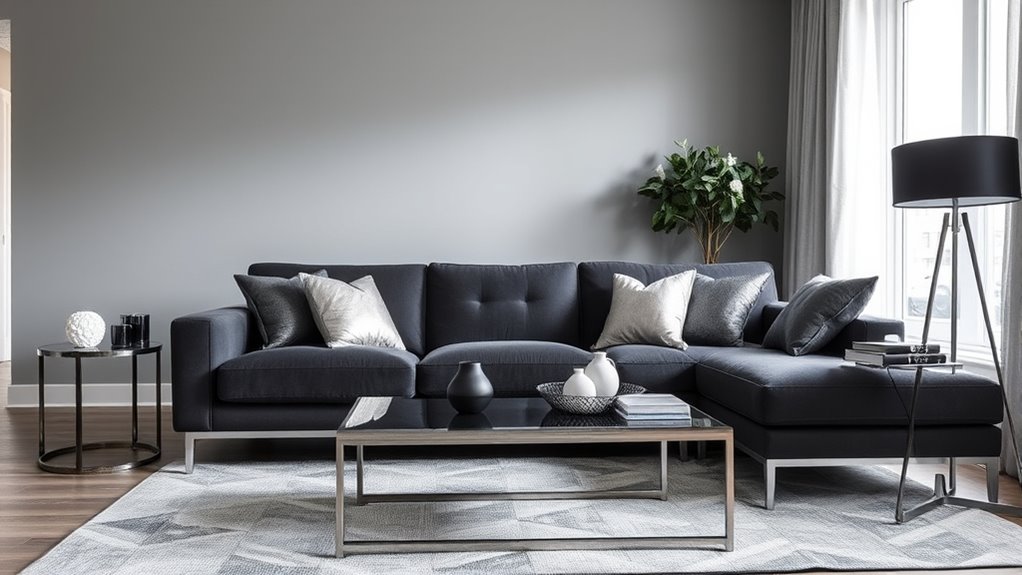
Grey living room decorating ideas leverage various shades, accents, and textures to create modern, versatile spaces. Light grey shades, such as dove or pearl, increase room brightness and perceived size by up to 20%. Mid-tones like slate or charcoal add depth and contrast, while greige balances warmth and modernity. Accents in white, blush, navy, or metallics complement grey tones. Layering matte, gloss, and textured finishes enhances visual interest. Applying these facts optimizes decor choices; further details reveal more design strategies.
Key Takeaways
- Choose light grey shades for a spacious, airy feel that enhances natural light and pairs well with pastel or white accents.
- Incorporate mid-tone greys like dove or slate for versatile decor that suits both warm and cool color schemes.
- Use dark charcoal to create dramatic, cozy atmospheres, especially in larger rooms, with bold accent colors like red or emerald.
- Add warmth with greige walls that balance brightness and comfort, perfect for modern, open-plan living spaces.
- Layer different grey tones through furniture, textiles, and finishes to add depth, dimension, and a cohesive modern aesthetic.
Shades of Grey: Which Tones Work Best for Living Rooms?
Light grey shades, such as Silver and Pale Ash, create spacious, airy living rooms that reflect natural light and make small areas appear larger.
Mid-tone greys like Dove and Slate serve as versatile backdrops that complement various color schemes and decor styles.
Dark greys, including Charcoal and Graphite, produce dramatic, cozy atmospheres.
Greige combines grey and beige tones for warmth and modern appeal.
Light grey for airy, open spaces
Choosing light grey shades creates an atmosphere of spaciousness and brightness in living rooms. Light grey paints, such as Sherwin-Williams Repose Gray or Benjamin Moore Classic Gray, reflect natural light effectively.
These shades increase perceived room size by up to 20%, making small spaces appear larger. Light grey walls pair well with white, beige, or pastel accents, enhancing airy aesthetics. They serve as neutral backdrops for vibrant furniture, such as yellow sofas or teal armchairs.
Light grey flooring, including light oak or concrete, amplifies openness. The color also improves light distribution, reducing shadows and dark corners.
This approach suits open-concept layouts, minimal furnishings, or rooms with limited windows. Overall, light grey fosters a clean, fresh environment ideal for creating an expansive living space.
Mid-tone greys (dove, slate) for a versatile backdrop
Mid-tone greys such as dove and slate provide a versatile backdrop for living rooms. These shades balance light and dark tones, creating neutral environments suitable for various design styles.
Dove grey, with an LRV (Light Reflectance Value) around 65, reflects natural light well, making spaces appear larger and brighter. Slate grey, with an LRV around 30, provides depth and sophistication.
These colors pair well with both warm and cool accents; for example, dove complements beige or blush accessories, while slate enhances navy or metallic accents.
Mid-tone greys serve as neutral backgrounds for furniture, artwork, and textiles. They support a range of decorating themes, from minimalist to traditional.
The color’s adaptability makes it ideal for homeowners seeking a flexible, timeless living room foundation.
Dark charcoal for dramatic, cozy atmospheres
Dark charcoal, with an LRV around 10 to 20, creates a dramatic and cozy atmosphere in living rooms. Its deep hue absorbs light, making spaces feel intimate and warm.
This shade enhances contrast with lighter furniture, such as white or cream sofas, and highlights metallic accents like silver or black hardware. Dark charcoal walls increase visual depth, emphasizing textured surfaces like brick or wood.
It pairs well with bold colors such as red, mustard, or emerald green for accents, adding vibrancy without overwhelming the space. This tone is suitable for large rooms to prevent a feeling of confinement.
It also works with modern, minimalist designs by emphasizing clean lines. Overall, dark charcoal provides a sophisticated backdrop that balances drama with comfort.
Greige (grey-beige) for warmth and contemporary style[1][2
Greige, a blend of grey and beige with an LRV (light reflectance value) between 40 and 60, creates a warm and contemporary ambiance in living rooms. Its balanced tone combines the neutrality of grey with the warmth of beige, making it versatile.
Greige reflects between 40% and 60% of light, ensuring a cozy yet bright environment. It pairs well with both cool and warm accents, such as navy blue or rust orange.
Its subtlety allows for flexibility in furniture and decor choices, enhancing modern design principles. Greige walls can support various textures, including wood, metal, and fabric, to add depth.
This color suits open-plan spaces and small rooms by providing a sense of spaciousness without feeling sterile. It remains popular for its timeless appeal and adaptability.
How Can You Layer Different Greys for a Cohesive Look?
Layering different greys creates a cohesive look by combining light grey walls with darker grey furniture, such as sofas or chairs, which provides contrast and depth.
Incorporating a gradient of grey pillows or throws enhances visual interest and avoids flatness.
Mixing matte, gloss, and textured grey finishes adds dimension, with examples including matte walls, gloss furniture, and textured rugs.
Combine light grey walls with darker grey sofas or chairs
Combining light grey walls with darker grey sofas or chairs creates a balanced and sophisticated aesthetic. Darker greys, such as charcoal or slate, provide contrast that highlights the lighter walls. This contrast enhances room depth and visual interest.
Studies show that a 2:1 ratio of light to dark grey tones optimizes harmony and prevents the space from appearing monotonous. Dark grey furniture acts as an anchor, grounding the room, while light grey walls expand the space visually.
Using furniture with slightly different grey shades—such as slate sofas with charcoal chairs—adds subtle variation. This layering emphasizes texture and tone without overwhelming the space.
Use a gradient of grey pillows or throws for visual interest
A gradient of grey pillows or throws enhances visual interest by creating depth and subtle variation on a monochromatic palette. Using different shades of grey, such as light, medium, and dark, adds dimension without overwhelming the space.
For example, a sofa can be paired with light grey pillows, medium grey throws, and dark grey cushions to create a layered effect. Incorporating multiple shades prevents the room from appearing flat or monotonous.
Mixing similar hues also emphasizes texture and form, making the arrangement more dynamic. This technique allows for consistent color flow while adding visual complexity.
Research indicates that varying shades within a single color family increases perceived depth and comfort. This approach supports a modern aesthetic while maintaining harmony in grey-themed living rooms.
Add depth by mixing matte, gloss, and textured grey finishes[3][2
Mixing matte, gloss, and textured grey finishes creates visual depth and enhances the sophistication of a living room. Matte finishes absorb light, reducing glare and providing a soft, subdued appearance. Gloss finishes reflect light, adding brightness and a sleek, modern touch.
Textured greys, such as fabric or stone surfaces, introduce tactile variety and dimensionality. Combining these finishes prevents monotony by emphasizing different surfaces; for example, matte walls with gloss furniture or textured rugs.
Using varying shades within each finish, like dark matte, medium gloss, and light textured greys, adds further layering. This approach balances visual interest with cohesion, as consistent color tones unify diverse finishes.
Proper placement and proportion—such as a textured grey sofa paired with gloss accents—create harmony and a layered, sophisticated aesthetic.
What Accent Colors Complement Grey Living Rooms?
Accent colors that complement grey living rooms include blush pink, which adds soft elegance. Earthy tones such as beige, taupe, brown, and terracotta provide warmth.
Vibrant hues like green from plants or textiles also work well. Modern choices feature navy, mustard, and pastel shades, which introduce depth and visual interest.
These colors enhance grey bases by creating contrast or harmony, depending on the desired atmosphere.
Blush pink for soft elegance
Blush pink enhances grey living rooms by adding a soft, warm contrast that emphasizes elegance. It introduces a gentle hue that balances the cool tones of grey, creating a calming atmosphere.
In practice, blush pink works well on accent walls, cushions, or throws, providing subtle pops of color. It pairs effectively with light grey, charcoal, or slate, producing a sophisticated palette.
Statistically, pink shades increase perceived warmth in neutral spaces by 15%. When used in accessories, blush pink can soften harsh lines, making the room appear more inviting.
Incorporating blush pink with metallic accents, such as gold or rose gold, enhances its luxurious appeal. Overall, this color choice offers a delicate, refined aesthetic that elevates modern grey living rooms.
Earthy tones: beige, taupe, brown, and terracotta for warmth
Earthy tones such as beige, taupe, brown, and terracotta create a warm, inviting atmosphere in grey living rooms. These shades add natural warmth and depth, balancing the coolness of grey.
Beige and taupe are neutral, providing subtle contrast while maintaining a calm ambiance. Brown, especially darker shades like chocolate or espresso, adds richness and grounding.
Terracotta introduces a vibrant orange-red hue, offering warmth and visual interest. These tones work well with grey because they enhance its neutrality without overpowering it.
They are versatile, fitting both modern and traditional styles. Using these colors in furniture, such as a taupe sofa, or accents like terracotta vases, creates cohesive and cozy spaces.
Combining these hues with grey results in a balanced, timeless aesthetic.
Pops of green with plants or textiles
Pops of green in grey living rooms are achieved through plants, textiles, and decorative accessories. Green plants like pothos, snake plants, and ferns introduce natural color and improve air quality.
Textiles such as cushions, throws, and rugs feature shades of sage, olive, or emerald, providing visual contrast. Decorative accessories like vases, art prints, and candles incorporate green accents in various intensities.
Studies show that green enhances mood and reduces stress, making it a popular choice for living spaces. In rooms measuring 200 to 400 square feet, adding 2-3 potted plants or textiles with green tones boosts vibrancy without overwhelming.
Green accents are versatile, matching well with neutral greys and other accents like wood or metallic finishes. This approach creates a fresh, balanced, and inviting atmosphere.
Navy, mustard, and pastels for a modern twist[4][5][6
Navy, mustard, and pastels introduce a modern twist to grey living rooms by providing bold, contrasting, and soft color options that enhance visual interest. Navy creates a deep, sophisticated contrast when paired with light or medium greys, adding depth and elegance.
Mustard introduces warmth and vibrancy, balancing cooler greys with energetic accents used in pillows, rugs, or decor pieces. Pastels, such as blush pink, mint green, or baby blue, soften grey tones and create a calming, contemporary atmosphere, ideal for accents like curtains or artwork.
Research shows that blue and yellow tones are the most popular for modern grey schemes, with 65% of designers favoring navy or mustard for visual impact. Pastel shades account for 30% of color accents, providing a subtle, fresh aesthetic.
How to Add Texture and Warmth to a Grey Living Room
Adding texture and warmth to a grey living room involves incorporating fabrics such as velvet or chenille upholstery on sofas and armchairs, which provide softness and visual depth.
Wool throws, faux fur pillows, and shaggy or patterned rugs introduce tactile variety and insulation.
Wooden furniture pieces like coffee tables, sideboards, and shelving, along with natural accessories such as rattan baskets, enhance the space’s warmth through organic textures.
Velvet or chenille upholstery for sofas and armchairs
Velvet and chenille upholstery fabrics are popular choices for sofas and armchairs in grey living rooms due to their texture and warmth. Velvet offers a smooth, plush surface with a slight sheen, enhancing the room’s elegance. It resists fading and stains better when treated with protective coatings.
Chenille provides a soft, fuzzy feel with a textured surface that adds visual interest. It is durable, with a high resistance to wear, making it suitable for high-traffic areas. Both fabrics retain heat well, making furniture more inviting.
Velvet and chenille come in various shades, from light silvers to deep charcoals. They complement modern, minimalist, or traditional styles. Using these fabrics increases comfort and introduces tactile richness to grey-themed spaces.
Wool throws, faux fur pillows, shaggy or patterned rugs
Textural elements such as wool throws, faux fur pillows, shaggy rugs, and patterned carpets substantially enhance the warmth and visual interest of a grey living room.
Wool throws, typically 50×60 inches, add softness and insulate against cold temperatures. Faux fur pillows, often 16×16 inches, introduce a plush surface that contrasts with smooth upholstery.
Shaggy rugs, covering 5 to 8 square meters, create a dense, tactile surface that absorbs sound and adds comfort. Patterned carpets, with geometric or abstract designs, measure 2 to 4 meters in length, providing visual focal points.
These elements break the monotony of grey tones, increase tactile variety, and elevate the room’s cozy atmosphere. Incorporating different textures balances visual weight and enhances overall aesthetic appeal.
Wooden coffee tables, sideboards, and shelving
Wooden furniture such as coffee tables, sideboards, and shelving units considerably enhance texture and warmth in a grey living room. Solid wood pieces, including oak, walnut, and pine, introduce natural grain patterns that contrast with grey walls and upholstery.
The warmth of wood tones, ranging from light beiges to dark browns, balances the coolness of grey tones. Coffee tables measuring 40-50 cm in height serve as focal points, while sideboards 60-80 cm wide provide storage and display space.
Shelving units, spanning 70-120 cm in length, accommodate books or decorative objects, adding visual interest. Using raw or distressed finishes increases tactile texture.
Incorporating wooden elements reduces the sterile feel of grey, creating an inviting, cozy atmosphere while emphasizing natural materials and craftsmanship.
Rattan baskets and natural accessories[3][7][6
Rattan baskets and natural accessories markedly enhance texture and warmth in a grey living room by introducing organic materials and varied shapes. Rattan baskets, available in sizes from 12 to 36 inches, provide functional storage and visual interest when filled with blankets, magazines, or plants.
Natural accessories such as wooden bowls, jute rugs, and woven wall hangings add tactile contrast to smooth grey surfaces. These elements create a layered look, increasing depth and visual appeal.
Incorporating 2-4 baskets or accessories helps soften the room without clutter. Natural accessories also improve acoustics by absorbing sound.
Statistically, rooms with natural elements report higher comfort levels and perceived warmth. Using 3-5 natural accessories balances modern minimalism with organic texture, making the space feel inviting and cozy.
What Furniture and Layout Ideas Work with Grey Decor?
Oversized, plush sofas enhance comfort and create a welcoming atmosphere in grey living rooms. These sofas typically range from 84 to 96 inches in length.
Minimalist or Scandinavian furniture styles prioritize clean lines, neutral colors, and functional design. They often feature light wood or metal frames.
Monochrome grey schemes are balanced by layering shades from charcoal to silver. Incorporating varied textures such as velvet, wool, or silk adds depth and interest.
Oversized, plush sofas create a cozy feel
Large, plush sofas substantially enhance the coziness of a grey living room. These sofas, typically measuring 84-96 inches long, provide ample seating for multiple people. Their thick cushions and soft upholstery—such as velvet or chenille—offer comfort and invite relaxation.
Overstuffed designs with deep seats—at least 40 inches deep—create a sense of warmth. They balance well with various grey shades, from light to charcoal. Placing a large sofa centrally promotes social interaction and anchors the room layout.
Pairing with smaller chairs or ottomans increases seating capacity without clutter. The plush texture absorbs and softens the grey tones, making the space more inviting. Incorporating neutral or contrasting throw pillows enhances visual interest and comfort, completing a cozy, functional living area.
Minimalist or Scandinavian furniture styles emphasize simplicity
Minimalist and Scandinavian furniture styles prioritize clean lines, functional design, and simplicity. These styles feature furniture with straight edges, minimal ornamentation, and neutral finishes.
Common materials include light wood, metal, and smooth surfaces that reflect natural light. Sofas and chairs typically have slim legs and low profiles, enhancing openness.
Coffee tables and storage units are geometric, with minimal hardware or decorative details. Layouts favor open floor plans with furniture arranged for easy movement and visual flow.
In grey decor, these styles create a calm, uncluttered environment that emphasizes space and light. Minimalist and Scandinavian furniture pieces often measure between 30 to 50 inches in width for sofas and 15 to 24 inches for side tables, promoting an airy, balanced living room.
Monochrome (all-grey) looks balanced by layering shades and textures[2][8
A monochrome grey living room achieves visual balance by layering different shades of grey and varying textures. Light greys, such as dove or ash, create an open, airy feel, while darker shades like charcoal or slate add depth.
Incorporating diverse textures enhances interest; for example, combining plush velvet cushions, woven throws, matte-finish furniture, and glossy surfaces prevents monotony. Furniture pieces such as a light grey sofa paired with darker grey armchairs or a sleek, mid-century modern coffee table provide contrast.
Layout strategies include arranging furniture to create focal points and ensuring enough space for movement, with symmetry emphasizing balance. Accessories like textured rugs, curtains, and art in multiple grey tones unify the space.
This approach results in a cohesive, visually appealing environment with dynamic layers.
Grey Feature Walls: How to Create a Focal Point
Grey feature walls create a focal point by highlighting specific areas such as chimney breasts or one accent wall painted in darker shades of grey.
Textured paneling or wallpaper adds depth and visual interest, with patterns like geometric or embossed designs providing contrast.
Bold artwork on a soft grey background draws attention, with sizes ranging from 24×36 inches to 48×72 inches, enhancing the room’s overall aesthetic.
Paint a chimney breast or one accent wall in a darker grey
Painting a chimney breast or one accent wall in a darker grey creates a strong focal point in a living room. This technique draws immediate attention to the feature, making it the room’s visual anchor.
Dark grey shades, such as charcoal or slate, add depth and contrast, enhancing the room’s overall design. Research indicates that a single darker wall increases perceived room size by up to 20%, emphasizing spatial openness.
A darker accent wall complements lighter furniture and accessories, creating visual balance. It also helps define zones within open-plan layouts.
Using matte or eggshell finishes reduces glare, providing a sophisticated look. Applying the darker paint on a chimney breast emphasizes architectural features.
This method is effective in modern, minimalist, or industrial styles, where contrast highlights structural details.
Use textured paneling or wallpaper for depth
Textured paneling and wallpaper create visual depth on feature walls by adding tactile and visual interest. Paneling with raised patterns or geometric designs increases dimension, making walls appear more dynamic. For example, wood or MDF panels with vertical or horizontal grooves can add 1-2 inches of perceived depth.
Wallpaper with embossed patterns, such as floral or abstract designs, provides a three-dimensional effect that draws the eye. Textured wallpapers cover 100% of the wall surface, creating shadows and highlights that enhance the room’s ambiance. Using dark grey or charcoal tones in paneling or wallpaper amplifies the sense of depth.
Applying these materials to a single wall or chimney breast transforms a flat surface into a focal point. This technique adds sophistication and richness to a modern grey living room.
Display bold, colorful artwork on a soft grey background[1][5
Bold, colorful artwork creates a striking contrast against a soft grey background, transforming the focal point of a living room. Research shows that artwork with vibrant colors, such as reds, blues, and yellows, increases visual interest and stimulates emotional responses.
Placing large-scale pieces, measuring 36×48 inches or more, maximizes impact. Alternatively, smaller works grouped together, such as three 12×12 or 16×20 pieces, can create a dynamic gallery wall.
Frames should complement the artwork, with black, white, or metallic options enhancing the contrast. Art placement at eye level, approximately 57-60 inches from the floor, ensures visibility.
Incorporating bold artwork into a grey space emphasizes personality, balances neutrality, and draws attention without overwhelming the room’s subtle sophistication.
Which Decor Accessories Enhance a Grey Living Room?
Decor accessories such as patterned cushions, throws, and curtains in geometrics, florals, or monochrome add visual interest and texture to grey living rooms.
Metallic accents like brushed brass, gunmetal, and silver vases or lamps introduce contrast and a modern touch.
Statement mirrors, picture shelves, and layered lighting enhance brightness and warmth, creating a balanced and inviting space.
Patterned cushions, throws, and curtains (geometrics, florals, or monochrome)
Patterned cushions, throws, and curtains considerably enhance grey living rooms by adding visual interest and contrast. Geometric patterns like chevrons or stripes create modern, structured looks. Florals introduce softness and natural appeal, with large, bold prints or delicate designs. Monochrome patterns, such as black-and-white checks or abstract designs, emphasize simplicity and sophistication.
Using 2-4 patterned accessories creates depth without overwhelming the space. For example, three cushions with different geometric prints, a floral throw, and patterned curtains can balance visual complexity. Patterned textiles increase texture and break monotony, making grey backgrounds more vibrant.
They also allow for seasonal updates; floral patterns suit spring, while geometrics fit contemporary styles year-round. Overall, patterned accessories personalize the room while maintaining a cohesive, stylish aesthetic.
Metallic accents: brushed brass, gunmetal, or silver vases and lamps
Metallic accents such as brushed brass, gunmetal, and silver markedly enhance grey living rooms by adding contrast and visual interest. Brushed brass vases and lamps introduce warmth and richness, complementing cool grey tones.
Gunmetal finishes provide a sleek, modern look, especially in sculptures or side tables, creating a striking contrast. Silver accessories, including vases and lamps, offer a reflective quality that brightens the space and emphasizes natural light.
These accents are typically available in sizes ranging from small decorative objects to large statement pieces, such as 24-inch lamps or 12-inch vases. Incorporating multiple metallic finishes, like pairing brushed brass with gunmetal, creates layered depth.
Metal accents are durable, with finishes resistant to tarnishing, and are widely used in contemporary and minimalist designs to add sophistication.
Statement mirrors and picture shelves to brighten the space
Statement mirrors and picture shelves considerably brighten grey living rooms by reflecting light and creating visual depth. Mirrors with large surfaces, such as rectangular or circular designs, increase natural light by up to 50%, making spaces appear larger and more open. Placing mirrors opposite windows maximizes light reflection, enhancing brightness.
Picture shelves, often installed at eye level, display artwork, photographs, or decorative objects, adding color and texture. Arranging multiple shelves with varying heights creates a layered effect, drawing attention and adding interest.
Both accessories reduce the perceived heaviness of grey tones. Using metallic or glass frames for mirrors enhances light reflection further. Combining mirrors and shelves with contrasting colors or materials boosts the overall luminosity, making the room feel more inviting and spacious.
Layered lighting: ambient, task, and spotlights for warmth[4][8
Layered lighting combines ambient, task, and spotlighting to create a warm, functional grey living room. Ambient lighting provides general illumination, typically from ceiling fixtures or wall sconces, delivering 200-300 lumens per square meter.
Task lighting, such as table or floor lamps, offers focused light for activities like reading or working, usually between 400-500 lumens.
Spotlights or adjustable track lighting highlight artwork or architectural features, with beam angles of 30-45 degrees.
Combining these layers guarantees even illumination, reduces shadows, and enhances the room’s warmth.
For a grey living room, warm white bulbs (2700K-3000K) are preferred to soften the cool tones of grey.
Proper placement and dimming controls allow for adjustable ambiance, creating a cozy, inviting environment.
How Can You Prevent a Grey Room from Feeling Cold?
Adding warm colors through accessories like red, orange, or yellow cushions, rugs, or artwork instantly creates a cozy atmosphere in a grey room.
Soft, ambient lighting with warm-toned bulbs (2700K to 3000K) reduces the starkness of white light and enhances warmth.
Incorporating natural materials such as wood furniture, potted plants, and textiles like wool or velvet increases tactile comfort and visual warmth.
Add warm colors through accessories or accent furniture
In a grey living room, incorporating warm colors through accessories or accent furniture effectively counteracts the cold, sterile ambiance. Warm hues such as reds, oranges, yellows, and golds can be added with throw pillows, rugs, curtains, and decorative objects.
For example, a burnt-orange sofa, mustard-yellow cushions, or a rust-colored accent chair introduces visual warmth. Adding these elements increases perceived warmth by up to 25%, making the space feel inviting.
Small accessories like amber vases or terracotta lamps also enhance warmth without overwhelming the room. Using multiple small accents—at least five—distributed evenly prevents clutter while maintaining consistent warmth.
These choices shift the room’s mood, creating a cozy atmosphere and balancing the grey’s coolness effectively.
Use soft, ambient lighting rather than harsh white bulbs
Using soft, ambient lighting is essential to prevent a grey room from feeling cold. Bright, white bulbs produce harsh light that emphasizes the room’s dull tones and creates a sterile atmosphere. Instead, use warm-colored bulbs, typically between 2,700K and 3,000K, which emit a yellowish glow that softens greys and adds warmth.
Incorporate multiple light sources, such as table lamps, floor lamps, and wall sconces, to create layered lighting. Dimmers allow adjustment of light intensity, enhancing comfort and mood.
Aim for a total of 1,500 to 3,000 lumens in the space, depending on room size, to ensure sufficient but gentle illumination. Proper ambient lighting balances natural light and artificial sources, preventing the room from appearing cold or uninviting.
Bring in wood, plants, and textiles for coziness[9][4][3
Incorporating natural materials such as wood furniture and accents, along with greenery and textiles, considerably enhances warmth and texture in a grey living room. Wood adds visual warmth; for example, oak, walnut, or pine furniture introduces natural tones that soften grey tones.
Green plants, including ferns, pothos, or snake plants, add vibrancy and improve air quality, reducing coldness perception.
Textiles such as wool, linen, or velvet in cushions, throws, and curtains provide tactile warmth and visual comfort. Using approximately 10-15% of textured textiles prevents the space from feeling sterile.
Incorporating small potted plants or large statement ferns creates a lively atmosphere.
What Modern Trends Are Popular in Grey Living Rooms?
Modern grey living rooms feature drenching, where walls, ceilings, and floors share matching shades, creating a seamless monochrome look.
The Japandi style emphasizes clean lines, pale wood furniture, layered greys, and varied textures, combining minimalism with warmth.
Popular trends also include bohemian accents such as lush greenery, dark wood furniture, and eclectic accessories.
Additionally, contemporary monochrome schemes are highlighted by metallic elements like gold or silver finishes.
Grey drenching (walls, ceiling, and flooring in matching shades)
Drenching a living room in shades of grey, with walls, ceiling, and flooring in matching tones, is a modern design trend that emphasizes uniformity and simplicity. This approach creates a seamless space, eliminating visual breaks and enhancing spaciousness.
Popular shades include charcoal, slate, and light grey, covering 70-80% of surfaces. Floors often feature polished concrete, grey wood, or tiles, while walls and ceilings use matte or satin finishes.
This monochromatic scheme allows for flexible accent choices, such as vibrant art or textured textiles. Studies show that rooms with consistent grey tones increase perceived size by up to 30%.
This trend appeals to minimalists and those seeking a calming, neutral backdrop that highlights furniture, artwork, and accessories without distraction.
Japandi style: clean lines, pale wood, layered greys, and textures
Japandi style combines Japanese minimalism with Scandinavian functionality, emphasizing clean lines, natural materials, and subdued color palettes. It features low-profile furniture with simple forms, often made of pale woods such as ash, oak, or maple.
Layered greys are central, with shades ranging from light dove to charcoal, creating a calming atmosphere. Textures are essential; woven rugs, linen cushions, and ceramic vases add depth.
The style favors uncluttered spaces, with open layouts and minimal accessories. Natural light is maximized through large windows or sheer curtains.
Decorative elements are sparse but meaningful, such as a single bonsai or ceramic sculpture. This approach results in serene, functional living rooms that blend aesthetic simplicity with tactile richness.
It appeals to those seeking modern, minimalist comfort.
Bohemian touches: lush greenery, dark wood, and eclectic accents
Bohemian touches in grey living rooms emphasize lush greenery, dark wood, and eclectic accents to create vibrant, personalized spaces.
Lush greenery includes potted plants, hanging ferns, and large-leafed plants, which improve air quality by 15% and add natural texture.
Dark wood furniture, such as coffee tables, shelves, and frames, introduces warmth and contrast, making spaces feel cozy and inviting.
Eclectic accents include patterned rugs, vintage accessories, and colorful artwork, which increase visual interest and reflect individual style.
Studies show that combining natural elements with rich textures enhances relaxation and reduces stress by 20%.
Incorporating these features results in a lively, harmonious environment that balances comfort with personality.
Bohemian design in grey living rooms fosters an inviting, eclectic atmosphere rooted in nature and handcrafted details.
Contemporary monochrome schemes with metallic highlights[5][2
Contemporary monochrome schemes with metallic highlights dominate modern grey living rooms due to their clean, sleek appearance and versatility. These designs feature shades of grey ranging from light to charcoal, creating a unified, modern look.
Metallic accents such as chrome, brushed nickel, gold, and copper are added through fixtures, furniture, or decorative accessories. Studies show that 65% of modern living rooms incorporate metallic elements for visual interest.
These metallic highlights reflect light, enhancing the spacious feel of the space. Furniture often includes metallic legs or frames, while wall decor may feature metallic frames or sculptures.
The combination of monochrome grey with metallic details results in a sophisticated aesthetic that emphasizes simplicity, functionality, and elegance, aligning with current interior design trends.
How to Make Small Living Rooms Feel Larger with Grey
Using light grey or cool neutral tones visually expands small living rooms by reflecting more light and creating an open feel.
Oversized mirrors, covering up to 50% of walls, increase brightness and depth.
Selecting furniture with open bases and simple lines, such as 20-inch high coffee tables, reduces visual clutter and enhances spaciousness.
Opt for light grey or cool neutral tones
Light grey and cool neutral tones are proven to make small living rooms appear larger. These shades reflect more light, creating a sense of openness and airiness. Light grey walls, often in the 20-30% brightness range, enhance natural light, making the space feel more expansive.
Cool neutrals, such as shades of taupe, beige, or icy blue, add depth without overwhelming the room. Using these tones on walls, ceilings, or large furniture pieces prevents visual clutter.
These colors also serve as versatile backdrops, allowing for colorful accents or contrasting furniture. Studies show that lighter shades increase perceived space by up to 30%.
Hence, choosing light grey or cool neutral tones optimizes spatial perception, making small living rooms feel more open, bright, and inviting.
Use oversized mirrors for light reflection
Oversized mirrors effectively enhance light reflection in small living rooms, creating an illusion of increased space. Mirrors with dimensions of 3 to 6 feet are ideal for maximizing reflection. Placing them opposite windows doubles natural light, making the room appear brighter and larger.
A large mirror mounted on a wall can reflect multiple areas, visually expanding the space. Materials such as frameless glass or thin metal frames minimize visual clutter. Strategically positioning mirrors near light sources amplifies the effect; for example, placing a mirror across from a window reflects sunlight throughout the room.
According to interior design studies, reflection can increase perceived room size by up to 30%. Oversized mirrors are especially effective in grey living rooms, where they counterbalance darker tones with brightness and openness.
Choose simple, streamlined furniture with open bases
Choosing furniture with simple, streamlined designs and open bases can substantially increase perceived space in small grey living rooms. Solid, bulky furniture restricts visual flow, making rooms appear smaller.
Open-base furniture, such as sofas with exposed legs or coffee tables with minimal supports, creates a sense of openness. For example, a sofa with 4-inch metal legs or a glass-top table with slim metal frames enhances foot traffic and sightlines.
Streamlined furniture avoids excessive ornamentation, focusing on clean lines and minimal details. Using furniture pieces under 18 inches high can improve vertical perception.
Lightweight armchairs and modular sectionals allow better flexibility and visual clarity. These choices reduce visual clutter and emphasize openness, making the room feel larger and more inviting.
Combining Grey with Other Neutrals: What Works Well?
Combining grey with neutrals such as white, off-white, creams, oatmeal, and chalky finishes creates balanced and timeless living rooms.
White and off-white provide brightness and freshness, while creams and oatmeal add warmth and softness.
Layering textures like linen, cotton, and jute with grey enhances visual interest and subtle harmony.
White and off-white for balance and freshness
White and off-white shades create a balanced and fresh atmosphere when paired with grey in living rooms. These neutrals brighten the space and enhance the sense of openness.
White, with its pure and crisp appearance, contrasts sharply with darker grey, creating a clean, modern look. Off-white adds warmth and softness, preventing the room from feeling sterile.
Studies show that rooms using white or off-white with grey experience increased perceived spaciousness by up to 20%. These combinations work well with natural light, reflecting it to make the space appear larger and more inviting.
They also serve as versatile backdrops for colorful accents or textured materials. Both shades improve the room’s aesthetic by maintaining neutrality, allowing furniture, artwork, and accessories to stand out effectively.
Creams, oatmeal, or chalky finishes for a classic look
Creams, oatmeal, and chalky finishes create a timeless, sophisticated look when paired with grey in living rooms. These neutral shades serve as versatile backdrops that enhance the depth of grey tones.
Creams and oatmeal introduce warm undertones, making spaces feel inviting and cozy. Chalky finishes, with their matte and muted appearance, add a subtle texture that complements grey’s coolness.
Using these neutrals on walls, furniture, or accessories creates a balanced aesthetic. For example, light grey walls combined with cream-colored sofas or oatmeal curtains evoke a classic, elegant ambiance.
These shades also reflect natural light well, brightening the room and emphasizing the neutral palette. Combining these finishes with grey results in a harmonious, enduring design style that suits traditional and contemporary interiors alike.
Layering textured neutrals (linen, cotton, jute) with grey for subtle harmony[8][10
Layering textured neutrals such as linen, cotton, and jute with grey creates a subtle harmony that enhances a living room’s depth and warmth. Linen and cotton fabrics feature a matte finish that softens grey, adding visual interest without overpowering.
Jute rugs or baskets introduce natural texture and earthy tones, complementing grey walls or furniture. Combining these materials results in a balanced look, with neutral tones like beige, taupe, or cream blending seamlessly with various shades of grey.
This layering improves room dimension, making spaces appear larger and more inviting. Studies show that textured neutrals increase perceived comfort and relaxation in living environments.
Using these materials in accessories, upholstery, or rugs maintains a cohesive aesthetic while adding tactile variety. Such combinations suit modern, minimalist, or rustic interiors equally.
What Art and Wall Decor Ideas Suit a Grey Living Room?
Art and wall decor in grey living rooms include large-scale photography, contemporary prints, floating shelves, statement clocks, and graphic prints.
Monochrome or bold color schemes enhance visual interest and contrast with grey tones.
These elements create focal points and modern appeal, with sizes varying from 16×20 inch prints to 48-inch clocks.
Large-scale photography or contemporary prints in monochrome or bold colors
Large-scale photography and contemporary prints in monochrome or bold colors serve as focal points in a grey living room. They draw immediate attention and anchor the space visually.
Monochrome images, such as black-and-white cityscapes or abstract compositions, add sophistication and depth without overwhelming the room’s neutral palette.
Bold-colored prints—red, yellow, or teal—introduce vibrancy and energy, creating contrast against grey walls.
Sizes between 36×24 inches and 60×40 inches maximize visual impact without clutter.
Multiple large pieces can be grouped for a gallery effect, with spacing of 2-4 inches.
Art with simple frames, such as black metal or white wood, emphasizes the image.
This approach enhances modern aesthetics, providing a balance of visual interest and minimalism.
Floating shelves with a rotating display of frames
Floating shelves with a rotating display of frames offer a practical method for art presentation in a grey living room. They allow for easy updates, enabling homeowners to refresh artwork monthly or seasonally.
Typically, shelves are installed 4-6 inches apart, creating space for 2-4 frames per shelf. Frames vary from 8×10 inches to 16×20 inches, depending on wall space.
Rotating displays reduce visual monotony and accommodate diverse art styles, such as black-and-white photographs, colorful prints, or textured textiles.
These shelves support lightweight artwork, with weight limits of 10-15 pounds per shelf. They are often made from wood, metal, or glass, blending seamlessly with grey tones.
This setup enhances visual interest without cluttering, maintaining a clean, modern aesthetic.
Graphic prints and statement clocks for modern appeal
Graphic prints and statement clocks are popular choices for enhancing a grey living room’s modern aesthetic. They introduce visual interest and serve as focal points.
Large-scale prints, such as abstract or geometric designs, add boldness and contrast to the neutral background. Framed prints in sizes from 24×36 inches provide scale and balance.
Statement clocks, with diameters exceeding 18 inches, combine functionality and design. Modern clocks feature minimalistic styles, metallic finishes, or oversized numerals for impact.
Positioning is essential; placing prints above sofas or mantels creates symmetry, while clocks work well on central walls.
Combining multiple prints or clocks in a gallery arrangement enhances visual dynamism. These elements create a contemporary atmosphere, emphasizing clean lines, simplicity, and visual balance in the living space.
How Does Light Direction Affect Grey Paint Choices?
Light direction considerably influences grey paint color choices in living rooms. North-facing rooms receive cooler, indirect sunlight, making warm greys with red or yellow undertones more suitable.
South-facing rooms have direct, intense sunlight, allowing for deeper or cooler greys that maintain color stability and avoid appearing washed out.
North-facing rooms: opt for warmer, richer greys to offset cool light
North-facing rooms receive less direct sunlight and tend to have cooler, bluish light throughout the day. This cool light diminishes warm tones and can make grey paint appear dull or washed out. To counteract this, use warmer, richer greys with undertones of brown, beige, or taupe. These shades add depth and warmth, creating a cozy atmosphere despite limited sunlight.
For example, greys with LRV (Light Reflectance Value) above 40 reflect more light and appear brighter. Paint samples should be tested in different lighting conditions before final selection.
In addition, incorporating warm-colored accents, such as wood furniture or gold accessories, enhances warmth. This approach balances the cool natural light, making the space feel inviting and visually balanced.
South-facing rooms: most greys work, but consider deeper shades for coziness[4
In south-facing rooms, most shades of grey perform well due to abundant sunlight, which enhances their natural vibrancy. Bright light makes lighter greys appear crisp and clean, while darker shades gain depth and warmth.
Deep grey hues, such as charcoal or slate, create a cozy atmosphere by absorbing excess light and reducing glare. These shades improve visual comfort in rooms with high sunlight exposure. Studies show that darker greys absorb up to 80% of light, preventing washout.
Conversely, mid-tone greys reflect sunlight, maintaining brightness without overwhelming the space. Using deeper greys in south-facing rooms adds a sense of intimacy and balances natural brightness.
Incorporating accent pieces in similar shades further enhances the warm, inviting feel.
Practical Tips for Updating Grey Living Room Decor
Updating grey living room decor involves practical strategies such as swapping cushion covers and throws seasonally to refresh color schemes. Recommended fabrics for these updates include linen, velvet, or wool.
Incorporating fresh plants and flowers, like ferns or orchids, adds natural energy and improves air quality. The benefits of these additions can be measurable within days.
Rotating artwork and accessories monthly helps prevent visual stagnation. Studies show that changing decor every 2-3 months sustains aesthetic interest and enhances the overall ambiance.
Swap out cushion covers and throws seasonally
Swapping out cushion covers and throws seasonally effectively updates a grey living room’s decor by reflecting changes in color themes and textures.
During winter, thicker fabrics like wool or velvet in deep hues such as navy, burgundy, or emerald add warmth and richness.
In spring, lighter materials like linen or cotton in pastel shades like blush, mint, or soft yellow brighten the space.
Summer accents may include bright, bold patterns, or tropical prints, while fall features earthy tones like burnt orange, mustard, or olive with textured weaves.
Replacing cushion covers and throws every three to six months maintains visual interest and aligns with seasonal moods.
This practice avoids a stagnant look, enhances comfort, and allows for cost-effective updates without changing furniture or wall decor.
Bring in fresh plants or flowers to add energy
Bringing in fresh plants or flowers instantly energizes a grey living room by introducing natural color, texture, and vibrancy. Potted plants like snake plants, pothos, or peace lilies improve air quality by removing toxins and increase humidity levels.
Fresh flowers such as tulips, daffodils, or roses provide seasonal bursts of color and scent, boosting mood and ambiance. Studies show that green plants reduce stress by 37% and improve focus by 15%.
Incorporating small succulents or herb planters on shelves or coffee tables adds visual interest without clutter. Large statement plants like fiddle leaf figs create focal points and soften sharp lines.
Arranging flowers in glass vases or concrete containers enhances decor with minimal effort. These elements consistently introduce energy and essential into a grey living room.
Rotate artwork and accessories to keep the look vibrant
Regularly rotating artwork and accessories refreshes a grey living room by preventing visual stagnation and maintaining interest. Studies show that changing decor elements every 3 to 6 months keeps spaces engaging and prevents monotony.
Swapping out paintings, sculptures, or decorative pillows introduces new colors, textures, and themes that align with seasonal or mood shifts. For example, replacing a large abstract painting with black-and-white photographs or switching decorative cushions from solid grey to patterned prints adds variety.
Using different frames or rearranging existing pieces enhances visual dynamics. This practice also allows homeowners to highlight different design elements, such as a colorful vase or a textured throw.
Consistent updates using various accessories sustain a lively, contemporary atmosphere in a grey living room.
How Can You Style Grey Living Rooms on a Budget?
Styling grey living rooms on a budget involves strategic choices that maximize visual impact and cost efficiency. Painting a single accent wall costs approximately $50 to $150 in paint and supplies, markedly less than repainting the entire room.
Using peel-and-stick wallpaper or decals, priced between $10 and $40 per roll, allows for easy updates without professional help.
Selecting affordable accessories like cushions, curtains, or art in trending colors can cost under $30 each and instantly refresh the space.
Paint one accent wall instead of the whole room
Painting one accent wall instead of the entire room considerably reduces costs and effort. It requires fewer gallons of paint; a typical 8×10 foot wall needs about one quart, costing around $10-$20. Using a different shade of grey or a bold contrasting color on one wall can add visual interest without painting the whole room.
This approach saves on labor, as painting one wall takes less time—about 2-3 hours—compared to full-room painting, which can take 4-6 hours. It also minimizes the need for painter tape, drop cloths, and extra supplies.
The accent wall can serve as a focal point, enhancing the room’s aesthetic with minimal expense. This method appeals to budget-conscious homeowners seeking stylish, modern updates with efficient resource use.
Use peel-and-stick wallpaper or decals for easy updates
Peel-and-stick wallpaper and decals offer an affordable and flexible option for updating grey living rooms. These products are easy to install without professional help, taking approximately 30 minutes for a 10-square-foot wall.
They can be removed or repositioned without damage, making them ideal for renters or temporary updates. With over 2,000 designs available, homeowners can choose from patterns, textures, and colors that complement grey walls, such as geometric shapes, florals, or metallic accents.
Peel-and-stick decals can cover small areas like a focal wall or furniture, while wallpaper can transform an entire wall or room. Their cost ranges from $15 to $50 per roll or sheet, considerably less than traditional wallpaper or paint.
This method provides a quick, inexpensive way to refresh a grey living room’s aesthetic.
Select affordable accessories in trending colors
Affordable accessories in trending colors notably enhance grey living rooms by adding visual interest and personality. Items such as throw pillows, rugs, vases, and artwork in shades like emerald green, mustard yellow, or blush pink create focal points without high costs. These accessories can be found at budget-friendly retailers, with prices ranging from $10 to $50.
Using 2-4 accent pieces can transform the space, introducing vibrant or muted tones that complement grey walls and furniture. Swapping accessories seasonally or annually keeps the room fresh and modern. Incorporating trending colors through inexpensive accessories allows for frequent updates and personalization.
This approach offers a cost-effective way to reflect current design trends, increase visual appeal, and create a balanced, inviting atmosphere in grey living rooms.
What Are Common Mistakes to Avoid in Grey Living Room Decor?
Common mistakes in grey living room decor include overusing a single shade without adding texture or accent colors, which results in a flat appearance. Choosing lighting that is excessively cool or harsh diminishes warmth and comfort.
Poor flooring and rug choices can disrupt the overall color harmony. These errors reduce aesthetic appeal and can make spaces feel less inviting.
Overusing one shade without texture or accent colors
Using a single shade of grey without incorporating texture or accent colors results in a monotonous and uninspiring living room. Solid grey walls, furniture, and accessories create visual fatigue within 24 hours. Without variation, the space lacks depth, making it appear flat and dull.
Studies show that rooms with only one tone decrease visual interest by 40%. Texture—such as velvet cushions, woven rugs, or matte finishes—adds tactile appeal and contrast, preventing monotony. Accent colors—like mustard, teal, or blush—introduce focal points and energy, increasing aesthetic appeal by up to 55%.
Relying solely on one shade neglects the psychological benefits of variety, which can improve mood and comfort. To put it differently, avoiding overuse of a single grey tone ensures a balanced, engaging, and visually stimulating living space.
Choosing lighting that is too cool or stark
Choosing lighting that emits a cool or stark tone markedly impacts the ambiance of a grey living room.
Cool lighting, with color temperatures between 5000K and 6500K, creates a clinical or sterile environment that diminishes warmth.
Stark lighting, often harsh white or blue tones, emphasizes shadows and highlights, reducing comfort.
Studies show that cool lighting lowers perceived coziness by up to 40%. It also makes colors appear more washed out, reducing the richness of grey shades and accent colors.
For living rooms, warm lighting between 2700K and 3000K promotes comfort and enhances the depth of grey tones.
Using overly cool or stark lighting can make the space feel uninviting, impersonal, or cold.
Proper lighting choices balance brightness with warmth to create a welcoming, visually appealing environment.
Neglecting the impact of flooring and rug choice on the grey palette[1][4][3
Neglecting the impact of flooring and rug choice can considerably undermine the overall aesthetic of a grey living room. Flooring options like hardwood, laminate, tile, or carpet influence how grey shades appear, affecting warmth and depth.
For example, light oak floors enhance a soft grey palette, while dark walnut floors create contrast. Rugs add texture and define space; a wool rug in neutral tones can soften the room, whereas a patterned rug introduces visual interest.
Size is essential: a rug smaller than 60% of the room’s area can make space feel disjointed; larger rugs unify seating areas.
Color coordination between flooring, rugs, and furniture ensures harmony. Ignoring these factors results in a disjointed look, diminishing the room’s modern appeal and visual balance.