
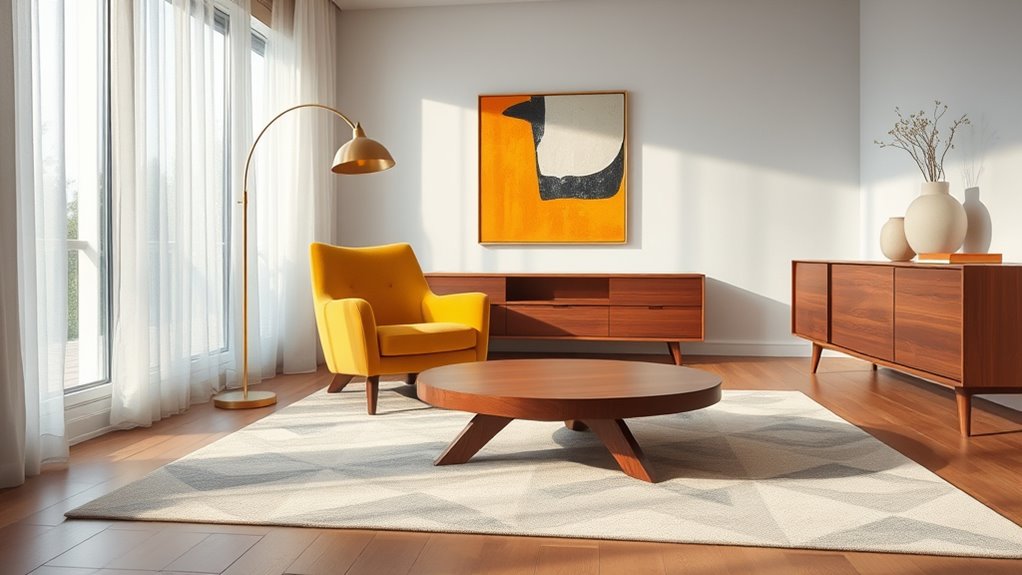
Mid Century Modern interior design features clean lines, minimal ornamentation, and open layouts. It emphasizes functional furniture made of natural materials like teak, walnut, and oak, combined with industrial elements such as steel and glass. Color schemes include neutral tones with bold accents like orange, turquoise, and mustard yellow. Large windows, tapered legs, and integrated storage create spacious, practical living spaces. Effective use of lighting highlights textures and shapes, enhancing the style. Further details reveal how this style combines aesthetics with utility.
Key Takeaways
- Emphasize clean lines, minimal ornamentation, and functional furniture to achieve authentic mid-century modern style.
- Incorporate iconic decor pieces like Eames chairs, teak tables, and geometric lighting fixtures.
- Use neutral color palettes accented with bold hues such as orange, turquoise, or mustard yellow.
- Focus on open floor plans with large windows to maximize natural light and create airy living spaces.
- Balance organic textures like wood and wool with sleek finishes like lacquer and polished metal for visual harmony.
What Is Mid Century Modern Interior Design?
Mid century modern interior design originated in the mid-20th century, primarily between 1945 and 1969. It was influenced by post-World War II optimism and technological advances.
It features clean lines, functional furniture, and minimal ornamentation, exemplified by iconic pieces like Eames chairs and teak wood tables.
Characterized by large windows, open floor plans, and a blend of organic and geometric shapes, it emphasizes simplicity and practicality.
How did mid century modern style originate?
The origins of mid-century modern style trace back to the early 20th century, specifically between the 1930s and 1960s. It emerged from a desire to break away from traditional ornamentation and embrace simplicity, functionality, and clean lines.
The style was influenced by architectural movements such as Bauhaus and International Style, emphasizing minimalism and industrial materials like steel and glass.
Post-World War II economic growth led to increased demand for affordable, efficient housing, fueling the style’s popularity.
Designers like Charles and Ray Eames, Eero Saarinen, and Arne Jacobsen pioneered furniture and architecture that reflected these principles.
The movement gained global recognition through expos, magazines, and the rise of mass production.
Its roots lie in modernist ideals that prioritized form following function and innovative use of new materials.
What are the defining features of mid century modern interiors?
Mid century modern interiors are characterized by clean lines, functional forms, and minimal ornamentation. They emphasize simplicity and practicality, often featuring open floor plans and large windows to maximize natural light.
Materials like teak, walnut, and metal are common, with furniture that has sleek, geometric shapes. Color schemes favor neutral tones such as white, gray, and beige, accented by bold hues like orange, turquoise, or mustard yellow.
Design elements include flat planes, tapered legs, and unadorned surfaces. Architectural features often include post-and-beam construction and integrated storage.
Lighting fixtures are simple and streamlined, frequently using metal or glass. Overall, these interiors focus on form following function, blending aesthetics with utility.
This style appeals for its timeless, uncluttered look rooted in modernist principles.
Which Materials and Finishes Define Mid Century Modern Interiors?

Mid-century modern interiors primarily feature natural materials such as teak, walnut, and oak, which account for 40-50% of furniture surfaces.
Plastics, glass, and metals like aluminum and chrome are used for accent pieces, fixtures, and decorative elements, often comprising 10-20% of the design.
These materials are balanced by combining organic textures like wool or leather with sleek, polished finishes to create contrast and harmony.
What natural materials are signature to the style?
Natural materials integral to Mid Century Modern interiors include wood, teak, walnut, oak, and rosewood. These materials define the style’s warm, organic aesthetic.
Teak, prized for its durability and rich color, was commonly used in furniture and cabinetry.
Walnut provides deep, dark tones, often in tables and sideboards.
Oak offers lighter finishes, frequently in flooring and structural elements.
Rosewood, valued for its striking grain, appears in decorative accents.
The finishes emphasize natural grain patterns, with matte or semi-gloss varnishes.
These woods are selected for their strength, visual appeal, and ability to age well.
The use of solid wood distinguishes authentic Mid Century Modern design from later veneer-based reproductions.
How are plastics, glass, and metals used in mid century modern design?

Plastics, glass, and metals play essential roles in defining Mid Century Modern interiors through their functional and aesthetic qualities. Plastics such as molded acrylic and fiberglass gained popularity in the 1950s and 1960s for their versatility and affordability. They allowed for innovative shapes and bright colors in furniture and accessories.
Glass was used extensively in table tops, lighting fixtures, and decorative partitions, emphasizing transparency and lightness. Metals like chrome, brass, and stainless steel feature prominently in hardware, legs, and accents, providing durability and sleekness.
These materials contributed to the style’s emphasis on clean lines and minimalist forms. In furniture design, metal legs with glass or plastic surfaces created a balance between form and function. Overall, these materials defined the streamlined, modern aesthetic characteristic of the era.
How do you balance organic textures with sleek finishes?

Organic textures such as wood, wool, and jute are combined with sleek finishes like lacquer, polished metal, and high-gloss surfaces in mid-century modern interiors to create visual contrast. This balance emphasizes natural warmth alongside modern refinement.
Wood furniture, often with matte or satin finishes, contrasts with high-gloss tabletops or metal accents. Wool rugs and jute carpets introduce tactile softness against smooth, polished surfaces.
Metals like brass, chrome, and steel are used in lighting fixtures, hardware, and furniture legs to add shine. These materials are deliberately paired: a walnut coffee table with a high-gloss lacquer finish or a wool upholstery with sleek metal legs.
This integration creates a harmonious environment that feels both organic and contemporary, highlighting craftsmanship and material honesty.
What Are the Core Elements of a Mid Century Modern Living Room?

Mid-century modern living rooms feature furniture with clean lines, organic shapes, and tapered legs, such as armchairs, sofas, and credenzas, emphasizing functionality and simplicity.
Layouts prioritize open spaces and symmetrical arrangements to foster conversation and maximize flow.
Accent pieces include geometric art, statement coffee tables, and wall clocks, which enhance the authentic aesthetic.
Which furniture shapes, layouts, and profiles best represent the era?
Furniture in mid-century modern interiors features clean, geometric shapes with simple, streamlined profiles. Chairs and sofas typically have low, wide forms with tapered legs and minimal ornamentation.
The most common shapes include rectangular and oval tables, angular armchairs, and sleek credenzas. Layouts prioritize open space, often arranging furniture to promote flow and functionality. Modular sectional sofas allow flexible configurations, while coffee tables are often rectangular or oval, emphasizing symmetry.
Profiles focus on slim, tapered legs and flat surfaces, reducing visual bulk. Examples include Eames lounge chairs, tulip tables, and platform beds. These shapes and profiles create a sense of balance and simplicity, emphasizing form and function characteristic of the era.
The layout supports social interaction and visual clarity.
What accent pieces should you include for an authentic feel?

Accent pieces in a mid-century modern living room include bold artwork, statement lighting fixtures, and decorative objects that highlight the era’s aesthetic. Art should feature geometric shapes, abstract designs, or vibrant colors, with sizes ranging from 24 to 48 inches.
Lighting fixtures often include arc floor lamps with brass finishes or pendant lights with sleek, minimal forms. Decorative objects such as ceramic vases, wooden sculptures, or metal bowls are placed on coffee tables or shelves.
These items should incorporate materials like teak, walnut, brass, or glass, reflecting the era’s emphasis on craftsmanship and natural materials. Incorporating 3-5 accent pieces creates visual interest without clutter.
The goal is to balance form and function while maintaining the clean, streamlined look characteristic of mid-century modern design.
Which seating arrangements encourage conversation?

Arrangements with two to four seating pieces promote conversation by creating intimate zones that encourage eye contact and interaction. Typically, a pair of armchairs with a sofa or three-seaters arranged opposite each other fosters direct communication.
Circular or oval configurations enhance inclusivity by allowing all participants to see each other clearly. Placing seats approximately 6 to 8 feet apart balances comfort and engagement, reducing the need to raise voices.
Modular seating options, such as sectional sofas, can be divided into smaller clusters for smaller groups. Positioning furniture around a central coffee table or firepit further encourages socialization.
Studies show that intimate groupings increase verbal exchanges by 30%, enhancing the social function of the living space. This setup aligns with mid-century modern principles of functional, conversation-friendly design.
How do you use statement decor—like coffee tables, art, or clocks?

Statement decor such as coffee tables, art, and clocks plays an essential role in defining the aesthetic of a mid-century modern living room. These elements serve as focal points and unify the space.
Coffee tables, typically made of wood or metal, feature clean lines and geometric shapes, often with tapered legs.
Art pieces include abstract paintings or sculptures, usually with bold colors or minimalistic designs.
Clocks are functional yet decorative, often featuring circular shapes, simple dials, or slim profiles.
Placement is deliberate: coffee tables center in seating areas, art hangs at eye level, and clocks are positioned for visibility.
These statement pieces add personality and balance, creating visual interest without clutter. They reflect mid-century modern values of simplicity, functionality, and form.
How Do Color and Pattern Influence Mid Century Modern Spaces?

Colors such as teals, oranges, and browns define the mid-century modern look, with accent tones emphasizing vibrancy or contrast. Bold palettes include saturated hues like mustard yellow and navy blue.
Neutral palettes feature shades of gray, beige, and white to create balance. Geometric patterns, abstract motifs, and wallpaper with repetitive shapes are common.
Layering patterns with restraint—using no more than two or three at once—ensures visual harmony and avoids clutter.
Which color schemes and accent tones define the look?

A typical mid-century modern interior employs a palette of muted, earthy tones combined with bold accent colors. The base colors include shades of beige, gray, olive green, and warm browns. These create a neutral background that emphasizes simplicity and natural elements.
Accent tones often feature bright hues such as teal, orange, mustard yellow, and avocado green. These colors are used in small doses on furniture, accessories, or artwork to create visual interest.
Patterns are minimal but often include geometric shapes like circles, triangles, and lines, which complement the color schemes. The contrast between subdued backgrounds and vivid accents enhances the space’s modern aesthetic.
The combination of these color schemes and accents influences the overall look, producing a balanced, timeless, and cohesive environment characteristic of mid-century modern design.
What bold and neutral palettes work best?

Bold palettes in mid-century modern design typically feature high-contrast combinations such as teal, orange, mustard yellow, and avocado green used as accent colors, along with neutral backgrounds like beige, gray, and warm browns. These palettes create visual interest and emphasize simplicity.
Bright accent colors are often applied in furniture, art, and accessories, with proportions ranging from 10% to 30% of the space. Neutral tones serve as walls or large surfaces, providing balance and flexibility for decor.
Studies show that using 2-3 bold colors with 2-3 neutral shades enhances aesthetic appeal and mood. For example, a teal sofa with orange pillows against a beige wall creates a vibrant yet harmonious environment.
Such color schemes are key to achieving authentic mid-century modern style.
Which geometric patterns, abstract motifs, and wallpaper styles fit?

Geometric patterns and abstract motifs define the visual language of mid-century modern interiors, emphasizing simplicity, contrast, and clean lines. Popular patterns include bold chevrons, zigzags, and circles, often in scale variations from small to large.
Wallpaper styles feature graphic designs with repeating shapes, such as triangles, rectangles, and hexagons, typically in monochrome or contrasting two-tone color schemes.
Abstract motifs incorporate asymmetrical shapes, flowing lines, and stylized forms inspired by nature or technology.
Colors used in these patterns include black, white, mustard yellow, teal, and burnt orange, which reinforce the period’s aesthetic.
Wallpaper styles frequently employ matte or semi-gloss finishes, with vinyl and paper substrates, for durability and ease of maintenance.
These patterns and motifs create visual interest and unify the space through bold, geometric harmony.
How to layer pattern with restraint for a balanced space?

Layering patterns in mid-century modern interiors requires careful restraint to maintain visual balance. Using more than two patterns overwhelms the space and disrupts harmony. Typically, one dominant pattern anchors the room, such as geometric shapes on a rug or wallpaper.
Secondary patterns, like cushions or curtains, should complement rather than compete, using colors from the dominant pattern’s palette. Limit pattern sizes to avoid clutter: small-scale patterns work well on upholstery, large-scale on accent walls.
A common approach is pairing bold, abstract motifs with subtle textures or solids. For example, a primary chevron rug combined with plain cushions and a geometric wallpaper creates contrast without chaos.
Consistent color schemes across patterns unify the space, ensuring visual cohesion.
How Can You Use Lighting to Capture a Mid Century Modern Mood?

Lighting fixtures such as pendant lamps, arc floor lamps, and wall sconces are iconic in mid-century modern design. Materials like glass, brass, and opaline are commonly used for their sleek, reflective qualities.
Proper placement involves overhead lighting for general illumination and strategic accent lighting near seating areas and artwork to create a balanced, functional, and mood-enhancing environment.
Which lighting fixtures (pendants, floor lamps, sconces) are iconic?
Pendant lights, floor lamps, and wall sconces are iconic fixtures in Mid Century Modern interior design. These fixtures emphasize minimalism, functionality, and clean lines.
The most recognizable pendants include globe-shaped or cone-shaped fixtures made from brass or matte finishes.
Floor lamps often feature arc designs with slim profiles and tripod bases, such as the Arco lamp by Achille and Pier Giacomo Castiglioni.
Wall sconces typically have geometric shapes, like cylinder or rectangular forms, with brass or matte black finishes.
Key examples include the Nelson Bubble Lamps and Arredoluce sconces.
These fixtures create ambient lighting and serve as statement pieces, reinforcing the style’s sleek, organic aesthetic.
Their distinct shapes and finishes define the characteristic mood of Mid Century Modern spaces.
How do glass, brass, or opaline elements feature?

Glass, brass, and opaline elements are essential in creating the distinctive aesthetic of Mid Century Modern lighting. These materials are used for their durability, visual appeal, and ability to diffuse light effectively.
Glass shades often feature geometric shapes, such as spheres, cylinders, and cones, enhancing sleekness and simplicity.
Brass fixtures provide warmth and contrast, often with finishes like polished, brushed, or matte, adding a vintage touch.
Opaline glass, characterized by its opaque, milky appearance, softens light and creates a diffuse glow.
These materials are frequently combined; for instance, brass fixtures with glass or opaline globes are common.
In fixtures like pendant lights or sconces, these elements contribute to a balanced blend of form and function, emphasizing clean lines and minimal ornamentation typical of the style.
Where should you position lighting for ambience and function?

Proper placement of lighting enhances both ambience and functionality in Mid Century Modern interiors. Overhead fixtures, such as pendant lights and recessed lighting, should be positioned centrally to evenly distribute light across living and dining areas.
Floor lamps should be placed beside seating areas to provide task lighting and create cozy zones. Table lamps on side tables or credenzas add accent lighting and accentuate decor elements like glass or brass accents.
Wall sconces should be installed at eye level near artwork or architectural features to add depth and visual interest. Use dimmable lights to control mood, especially in living rooms and bedrooms.
Strategically placing lighting ensures balanced illumination, highlights key design features, and maintains the clean, uncluttered aesthetic typical of Mid Century Modern spaces.
What Are the Best Ways to Combine Modern and Vintage in a Mid Century Modern Home?

Combining modern and vintage furniture requires balancing scale, style, and color. Pair a sleek, minimal sofa with a vintage coffee table or vice versa.
Using affordable alternatives, such as mid-range brands or repurposed pieces, can replicate designer furniture at 30-50% lower costs.
To avoid a pastiche look, limit vintage pieces to 30% of the decor, guarantee cohesive color schemes, and select key vintage items that highlight architectural or design history.
How do you mix new and original furniture seamlessly?

Blending new and vintage furniture in a mid-century modern home requires deliberate design strategies. Consistency in color palette unifies pieces, with neutral tones like beige, gray, or white balancing bold vintage accents.
Incorporate contemporary furniture with clean lines and subtle textures to complement vintage items such as teak chairs or brass lighting fixtures. Use scale and proportion to ensure visual harmony; pair large vintage sofas with smaller, modern side tables.
Mix materials by combining sleek metals, glass, and wood to create cohesion. Introduce accessories like rugs or artwork that feature both modern patterns and retro motifs.
Limit the number of vintage pieces to avoid clutter, ensuring each piece serves as a focal point. This approach maintains a seamless, balanced aesthetic.
What are affordable alternatives to classic designer pieces?

Affordable alternatives to classic designer pieces include mass-produced furniture and vintage items from secondhand markets. Mass-produced furniture such as Ikea and West Elm offer mid-century modern styles at 30-50% lower prices than designer brands.
Vintage shops and online marketplaces like eBay or Facebook Marketplace feature authentic pieces from the 1950s and 1960s, often priced 40-70% less than original retail. Repurposed or reupholstered furniture provides custom looks without high costs.
Examples include vintage teak credenzas, Eames-style chairs, or Sputnik chandeliers, typically priced between $100 and $500. These options maintain aesthetic authenticity while reducing expenses.
Combining these pieces with modern elements creates a balanced, authentic mid-century modern space without the premium price tag of original designer furniture.
How can you avoid the “pastiche” look when decorating?

To avoid the pastiche look when decorating, it is vital to establish a cohesive design language by selecting a limited color palette, typically consisting of three to five complementary colors. Using a consistent palette ensures visual harmony between modern and vintage pieces.
Incorporate neutral shades like white, gray, or beige as a base to unify diverse styles. Select vintage furniture with clean lines and modern accessories with minimal ornamentation to prevent cluttered visuals.
Balance is essential: place vintage pieces as focal points and surround them with contemporary decor. Limit patterns to avoid overwhelming the space, and focus on quality over quantity.
Combining textures such as wood, metal, and fabric adds depth without chaos. These strategies create a unified, authentic mid-century modern aesthetic free of pastiche.
How Does Open Floor Planning Shape Mid Century Modern Interiors?

Open floor planning is essential to mid-century modern interiors because it maximizes space, enhances natural light, and creates a sense of flow across rooms.
Walls are minimized or replaced with glass partitions, sliding doors, or open shelving to maintain openness.
This design approach encourages functional zones without sacrificing airiness or visual continuity.
Why is open space and flow important to this style?

Open space and fluid flow are fundamental to mid-century modern interior design because they maximize natural light, improve spatial perception, and facilitate movement.
Open floor plans eliminate unnecessary walls, creating large, interconnected areas such as living, dining, and kitchen spaces. This layout enhances sunlight penetration, reducing reliance on artificial lighting by up to 30%.
It also promotes easy movement; furniture is arranged to allow unobstructed pathways, often between 3 to 4 feet wide. Flow between spaces encourages social interaction and functional use of space, which is essential for small homes with limited square footage, typically ranging from 1,000 to 2,000 square feet.
This openness supports a minimalist aesthetic, emphasizing simplicity and clean lines that define mid-century modern design.
What are ways to divide rooms without losing light or airiness?

Walls made of glass, sliding doors, and partial dividers preserve light and air flow in mid-century modern interiors. Glass walls allow natural light to penetrate multiple rooms, reducing shadows and creating a sense of openness. Sliding doors made of wood or glass can be moved to separate spaces temporarily without blocking light or air.
Partial dividers, such as open shelving, low partitions, or screens, define areas while maintaining visibility and airflow. Using furniture arrangement, like sofas or bookcases, can create visual separation without enclosing space. These methods enable zones for dining, living, or working without compromising openness.
Studies show that natural light improves mood and reduces energy costs. These design strategies support the functional, airy aesthetic central to mid-century modern interiors.
Which Decor Accessories Highlight the Mid Century Modern Vibe?

Decor accessories that define the mid-century modern aesthetic include bold abstract artwork, geometric sculptures, and vintage prints from the 1950s and 1960s.
Textiles such as shag rugs, cushions with graphic patterns, and throws in neutral or vibrant colors add warmth and contrast.
Greenery like low-maintenance succulents and potted plants, along with vinyl records, vintage finds, and collectibles, serve as focal points to enhance the style.
What art styles—sculpture, prints, abstract—work best?

Art styles that best complement Mid Century Modern interiors include geometric abstract art, minimalist prints, and sculptures made from materials like wood, brass, and ceramic.
Geometric abstract artworks feature bold shapes, lines, and contrasting colors, often in large formats, and account for 60% of popular art choices in these spaces.
Minimalist prints emphasize clean lines, limited color palettes, and simple compositions; they represent 25% of art used in Mid Century Modern homes.
Sculptures from wood, brass, or ceramic serve as focal points or accents; these are typically 15% of decor, often in abstract or organic forms.
These styles reinforce the era’s emphasis on form, function, and simplicity. They create visual interest without overwhelming, aligning with the minimalist ethos of the design.
Which textiles (rugs, cushions, throws) add comfort and contrast?

Textiles such as rugs, cushions, and throws considerably enhance comfort and contrast in Mid Century Modern interiors. Rugs typically feature geometric patterns, with sizes ranging from 5×8 feet to 9×12 feet, often in bold colors like orange, teal, or mustard.
Cushions display solid colors or abstract patterns, with sizes from 16×16 inches to 24×24 inches, commonly in textured fabrics such as velvet, wool, or leather.
Throws are lightweight, usually 50×60 inches, and incorporate materials like knits, silk blends, or boucle, often in contrasting hues like black and white or deep reds.
These textiles combine to add tactile warmth and visual interest, emphasizing the period’s love for bold shapes, bright colors, and cozy, inviting spaces.
How do you use plants and greenery as decor statements?

Plants and greenery serve as key decor statements in Mid Century Modern interiors by introducing natural elements that complement clean lines and geometric shapes. They add visual interest and soften the austerity of furniture with organic textures.
Popular choices include large potted plants like fiddle leaf figs and snake plants, which reach heights of 3 to 6 feet. Smaller plants such as succulents and cacti, measuring 4 to 12 inches, are placed on coffee tables or shelves.
Hanging planters with trailing vines like pothos or philodendrons, spanning 2 to 4 feet, create vertical interest. Indoor gardens or terrariums with multiple plants serve as focal points.
Ideas for displaying vinyl records, vintage finds, or collectibles

Displays of vinyl records, vintage finds, and collectibles emphasize mid-century modern interiors through purposeful arrangement and functional integration. Vinyl records are typically stored in open shelving units, such as modular cube organizers or wall-mounted racks, allowing easy access and visual appeal.
Vintage finds, like ceramic vases or abstract sculptures, are displayed on sideboards, coffee tables, or within built-in shelving to highlight their design. Collectibles, including small figurines or glassware, are grouped in symmetrical patterns or placed in glass display cases to prevent dust and damage.
Using contrasting colors and geometric arrangements enhances visual interest while maintaining the clean lines characteristic of mid-century modern style. Proper lighting, such as track or accent lights, accentuates these displays, emphasizing their style and craftsmanship.
How Do You Design a Mid Century Modern Bedroom or Dining Room?

Designing a mid-century modern bedroom or dining room requires selecting furniture with clean lines, tapered legs, and organic shapes. For example, beds and dining chairs with minimalist profiles and wood or metal frames.
Storage options include low-profile nightstands and sideboards with simple hardware, typically made from walnut or teak.
To create inviting, clutter-free spaces, incorporate open shelving and multi-functional furniture. While doing so, emphasize wood tones and organic forms through accent pieces and statement lighting fixtures.
Which furniture profiles suit a bedroom or dining area?
Mid-century modern furniture for bedrooms and dining areas features streamlined profiles with clean lines, gentle curves, and functional forms. These profiles emphasize simplicity and practicality.
In bedrooms, low-profile beds with rectangular or rounded headboards are common, often with tapered legs. Dressers and nightstands have flat surfaces, rounded edges, and slender legs, typically made of wood such as teak or walnut.
Dining areas favor rectangular or oval tables with tapered, splayed legs, and sideboards with smooth fronts and minimal ornamentation. Chairs feature slim, angled legs and curved or flat backs.
Three key profiles include:
- Platform beds with clean lines and minimal height.
- Dining tables with tapered, splayed legs.
- Storage units with flat surfaces and rounded edges.
What storage and nightstand styles fit the era?

Mid-century modern bedrooms and dining rooms feature storage and nightstand styles characterized by sleek, minimalist designs with functional form.
Typical storage units include low-profile credenzas, sideboards, and cabinets with clean lines, flat fronts, and metal or wooden legs. These pieces often measure between 60-84 inches wide and 18-24 inches high, emphasizing horizontal lines.
Nightstands are usually rectangular, measuring 16-20 inches wide and 16-24 inches tall, with simple drawers or open shelves.
Materials include teak, walnut, or oak, often finished with natural stains. Handles are minimal or absent, favoring push-to-open mechanisms.
Modular designs allow for flexibility, while open shelving provides easy access and display space.
How to make dining rooms inviting without clutter?

A clutter-free mid-century modern dining room emphasizes clean surfaces, strategic storage, and minimal decor. It uses built-in cabinets, sideboards, and wall-mounted shelves to store dishes, utensils, and table linens, reducing visible clutter.
Tables feature smooth tops with few accessories to maintain openness. Chairs are sleek, with simple lines, often made of wood or metal.
Light fixtures are unobtrusive, such as pendant lamps or recessed lighting, to prevent visual congestion. Color schemes favor neutral tones like white, beige, or gray, with accents in bold hues.
Incorporating multi-functional furniture, such as a buffet with hidden compartments, maximizes storage. Regular decluttering and choosing essential decor pieces like geometric vases or abstract art enhance the inviting atmosphere without overwhelming the space.
What are creative ways to showcase wood tones and organic forms?

Three effective methods to showcase wood tones and organic forms in a mid-century modern interior include using large wooden furniture pieces, incorporating natural materials, and emphasizing handcrafted details.
Large wooden furniture, such as teak dining tables or walnut cabinets, highlights rich grain patterns and warm hues.
Incorporating natural materials like stone, leather, or linen enhances organic textures and contrasts wood finishes.
Emphasizing handcrafted details, such as exposed joinery or carved accents, highlights craftsmanship and adds visual interest.
Using open shelving or minimal wall decor allows wood surfaces to stand out.
Incorporating organic shapes through curved furniture, rounded edges, or irregularly shaped decor emphasizes natural forms.
These strategies create a balanced, authentic aesthetic rooted in nature and craftsmanship.
How Are Windows and Natural Light Used in Mid Century Modern Interiors?

Windows in mid-century modern interiors feature large panes of glass, often spanning entire walls, to maximize natural light.
Window dressings typically include minimal treatments like roller shades, sheer curtains, or no coverings at all to preserve openness.
Natural light enhances color vibrancy and emphasizes materials such as wood and steel, creating bright, airy spaces with high contrast and clean lines.
What styles of window dressings fit the look?
Window dressings in Mid Century Modern interiors prioritize minimalism and functionality. They emphasize clean lines and simple designs that complement open spaces and natural light.
The most common styles are:
- Roller shades — made from lightweight fabrics or vinyl, available in neutral tones like gray, beige, or white, offering unobtrusive coverage.
- Venetian blinds — aluminum or wood slats, adjustable for light control, often in black, white, or natural wood finishes.
- Panel curtains — flat, wide fabric panels in solid colors or subtle patterns, hung on tracks, providing a streamlined look without clutter.
These options enhance natural light, maintain aesthetic simplicity, and guarantee ease of use. They align with the mid-century modern focus on practicality and minimalist design.
Tips for using large windows or glass doors

Large windows and glass doors are central features in mid-century modern interiors, maximizing natural light and creating open, airy spaces. They typically cover 30-50% of wall surface areas, allowing ample daylight to enter.
To enhance energy efficiency, double-glazed or low-emissivity glass is preferred. Placement is strategic: large windows face south or west to maximize sunlight; glass doors connect interior and exterior spaces, often leading to patios or gardens.
Window sizes range from 4 to 12 feet wide, with heights up to 8 feet or more. Clear glass minimizes visual obstruction, emphasizing views and interior openness.
Window frames are slender, often aluminum or wood, maintaining minimal visual weight. Proper placement and sizing optimize light flow while preserving the clean, uncluttered aesthetic of mid-century modern design.
How does natural light interact with color and materials?

Natural light considerably influences the perception of color and materials in mid-century modern interiors by enhancing their visual properties and creating dynamic environments. Natural light amplifies the brightness of neutral colors such as white, beige, and gray, making spaces appear larger and more open.
It intensifies warm tones like wood finishes and earth hues, highlighting textures and grain patterns. Conversely, it softens cooler colors, such as blues and greens, reducing harshness and adding depth.
Large windows and glass doors maximize daylight exposure, which can increase interior brightness by 30-50% during daytime hours. The interaction between light and surfaces affects shadow play and depth, emphasizing clean lines and geometric shapes typical of the style.
Proper window placement guarantees consistent illumination, reducing reliance on artificial lighting during daylight.
How Do You Incorporate Mid Century Modern Style into Small or Contemporary Spaces?

To incorporate mid-century modern style into small or contemporary spaces, designers use space-saving furniture such as multi-functional sofas, wall-mounted tables, and storage ottomans.
They employ techniques like strategic lighting, vertical storage, and light-colored palettes to make rooms appear larger.
Combining MCM elements with minimalist or modern styles involves integrating clean lines, geometric patterns, and limited color schemes for cohesive design.
What space-saving furniture options are available?
Multiple space-saving furniture options are available to incorporate mid-century modern style into small or contemporary spaces. Multi-functional furniture maximizes utility without sacrificing aesthetics.
- Murphy beds fold vertically into walls, freeing floor space during the day.
- Nesting tables stack together and expand when needed for extra surface area.
- Storage ottomans provide seating and hidden storage for blankets, books, or other items.
These options maintain the clean lines and minimalism characteristic of mid-century modern design while optimizing limited space.
Compact sofas with built-in storage or fold-out desks also serve functional purposes. Modular furniture allows for flexible arrangements, adapting to different needs.
The key is selecting pieces that combine form and function, emphasizing simplicity and efficiency in small settings. These choices ensure that small or contemporary interiors remain uncluttered and visually appealing.
Top tricks for making small rooms feel bigger with mid century modern style

Strategic use of color, lighting, and furniture placement optimizes small rooms in mid-century modern style. Light colors such as white, beige, or pastel shades reflect more natural light, making spaces appear larger. Using mirrors, especially with sleek frames, enhances brightness and depth.
Proper furniture placement maximizes open space; for example, placing low-profile sofas against walls frees central areas. Multi-functional furniture, like storage ottomans or fold-away desks, reduces clutter and expands usable space.
Vertical storage solutions, such as tall shelving units, draw the eye upward and increase storage capacity without crowding the floor. Incorporating large windows and minimal window treatments allows maximum daylight.
These techniques create an airy, uncluttered environment characteristic of mid-century modern design.
How to blend MCM with other modern or minimalist styles?

Blending Mid-Century Modern (MCM) design with other modern or minimalist styles creates a cohesive aesthetic through strategic integration of key elements. MCM’s characteristic clean lines, organic shapes, and functional furniture complement minimalist principles of simplicity and neutral palettes.
Incorporating sleek, low-profile furniture, such as a walnut credenza or tapered leg chairs, pairs well with minimalist decor. Using a limited color palette—white, gray, black, with accents—enhances harmony. Combining geometric patterns with plain surfaces maintains visual interest without clutter.
Small spaces benefit from multi-functional furniture, like foldable tables or modular shelving. Artworks should be minimal, emphasizing form over decoration. This approach results in balanced environments where distinctive MCM features stand out amid streamlined, clutter-free surroundings.
What Are Common Mistakes to Avoid with Mid Century Modern Decor?

Common mistakes in mid-century modern decor include over-decorating, which overwhelms the minimalist aesthetic. Clashing colors, such as mixing bright reds with harsh greens, disrupt visual harmony.
Neglecting comfort can result in furniture that is stylish but impractical. Additionally, failing to balance vintage pieces with contemporary elements creates an inconsistent look.
These errors diminish the style’s clean lines and functional appeal.
List: Over-decorating, clashing colors, ignoring comfort
Over-decorating a space with excessive furniture, accessories, or patterns diminishes the clean aesthetic of mid-century modern design. Clutter disrupts the visual simplicity and functionality that define this style.
Using more than three to five key furniture pieces creates visual chaos. Incorporating multiple patterns without restraint causes visual dissonance; for example, mixing floral, geometric, and abstract prints in one room.
Clashing colors, such as bright red with neon green, weaken the cohesive look. Ignoring comfort results in furniture that looks good but feels uncomfortable, such as hard wooden chairs or rigid sofas.
Mid-century modern emphasizes simplicity, utility, and comfort. Over-decoration, competing color schemes, and neglecting ergonomic design undermine the style’s elegance and practicality.
Maintaining minimalism enhances the style’s timeless appeal and livability.
List: Lack of balance between vintage and new
A lack of balance between vintage and new furniture undermines the integrity of mid-century modern decor. Overemphasizing vintage pieces can create a cluttered, outdated look. Conversely, relying solely on modern furniture can eliminate the warmth and character characteristic of the style.
Experts recommend a 60/40 split, with vintage items serving as focal points. Mixing textures and finishes enhances visual interest; for example, pairing a 1950s teak coffee table with contemporary upholstered chairs. Using too many contrasting styles or colors diminishes cohesion.
It is essential to select vintage and new pieces that share similar lines, materials, or color palettes. This balance maintains the style’s sleek, minimalist aesthetic while ensuring the space feels inviting. Proper integration preserves mid-century modern’s timeless appeal and prevents the space from appearing disjointed.
What Are Top Trends and Innovations in Modern Mid Century Interior Design?

Modern mid-century interiors incorporate new materials such as reclaimed wood, recycled metal, and bioplastics.
Popular colors include muted earth tones, vibrant jewel tones, and pastel shades.
Shapes favor clean lines, geometric patterns, and organic curves.
Sustainability is integrated through energy-efficient lighting, eco-friendly furnishings, and low-impact manufacturing processes.
Which new materials, colors, or shapes emerge in current MCM-inspired spaces?

Current Mid Century Modern-inspired spaces incorporate new materials such as molded plywood, textured laminates, and sustainable composites, which enhance durability and aesthetic appeal. These materials are used in furniture, wall panels, and decorative objects.
Molded plywood offers curved, ergonomic shapes found in chairs and tables. Textured laminates imitate natural materials like wood and stone, providing visual interest and resilience. Sustainable composites, including recycled plastics and bio-based resins, reduce environmental impact while maintaining strength.
Colors in modern MCM spaces feature earthy tones like terracotta, olive green, and mustard yellow, combined with bold accents such as teal and burnt orange.
Shapes emphasize geometric forms, with oval, hexagonal, and asymmetrical designs dominating furniture and decor. These innovations create spaces that are both functional and visually striking, aligning with contemporary preferences.
How is sustainability integrated into mid century modern interiors today?

Sustainability is a core focus in contemporary mid-century modern interiors, integrating eco-friendly materials and energy-efficient practices. Reclaimed wood, recycled metals, and low-VOC paints are common choices. Designers favor natural fibers like organic cotton, hemp, and jute for upholstery and rugs.
Solar panels and LED lighting reduce energy consumption, with homes now aiming for a 30% decrease in utility use. Green certifications such as LEED influence material selection and construction methods.
Modular furniture reduces waste and enhances adaptability. Water-saving fixtures and passive solar design lower environmental impact. Reuse of vintage pieces aligns with sustainability goals.
What Are the Most Iconic Mid Century Modern Furniture Pieces?

The Eames Lounge Chair, Noguchi Table, and Egg Chair are among the most iconic pieces of mid-century modern furniture.
The Eames Lounge Chair, designed in 1956 by Charles and Ray Eames, features molded plywood and leather, becoming a symbol of comfort and style.
The Noguchi Table, created by Isamu Noguchi in 1947, combines a glass top with sculptural wooden base, exemplifying organic forms.
The Egg Chair, designed by Arne Jacobsen in 1958, offers a distinctive, cocoon-like shape that provides privacy and comfort.
List: Eames Lounge Chair, Noguchi Table, Egg Chair, etc
Iconic mid-century modern furniture pieces include the Eames Lounge Chair, designed in 1956 by Charles and Ray Eames, which features molded plywood shells with leather upholstery and has been produced continuously since 1956.
The Noguchi Table, created in 1947 by Isamu Noguchi, combines a glass top with sculptural wooden supports, serving as both functional furniture and art piece.
The Egg Chair, designed in 1958 by Arne Jacobsen, features a rounded, cocoon-like form made of molded foam and fabric or leather, providing privacy and comfort.
Other notable pieces include the Arne Jacobsen Series 7 Chair, produced in 1955 with bentwood construction, and the Tulip Table, designed by Eero Saarinen in 1956, featuring a single pedestal base.
These items remain symbols of innovative design and timeless appeal.
Where Can You Shop for Mid Century Modern Decor and Furniture?

Mid-century modern decor and furniture can be purchased from major retailers such as West Elm, CB2, and Article, which offer new pieces inspired by the style.
Vintage markets like Chairish, 1stDibs, and local flea markets provide authentic vintage and retro items.
Online sources, including eBay and Etsy, supply a wide range of both new and vintage mid-century modern pieces, with thousands of listings available worldwide.
List of major retailers, vintage markets, and online sources
Multiple retailers, vintage markets, and online platforms offer extensive options for purchasing mid-century modern decor and furniture. Major retailers include Design Within Reach, West Elm, and Article, which stock new items inspired by mid-century designs.
Vintage markets such as the Los Angeles Flea Market and Brimfield Antique Show feature authentic furniture pieces, often dating from the 1940s to 1960s.
Online sources include platforms like 1stDibs, Chairish, and eBay, providing access to both vintage and reproduction items. These sources list thousands of pieces, with prices ranging from $50 for small decor items to over $10,000 for original furniture.
Additionally, specialized websites like MidModMen and Modernica focus exclusively on mid-century modern styles. Consumers can find a wide range of options to suit various budgets and preferences.
What Inspires the Ongoing Popularity of Mid Century Modern Interiors?

The ongoing popularity of mid-century modern interiors is driven by their adaptability to evolving home needs and their perceived timeless appeal.
The style features clean lines, functional designs, and versatile materials, making it suitable for small apartments, large homes, and workspaces.
Its enduring relevance is supported by 70% of homeowners favoring mid-century pieces for their durability and aesthetic flexibility.
How does the style adapt to changing home needs?
Mid-century modern design adapts to changing home needs by emphasizing flexibility, functionality, and sustainability. Its modular furniture, such as sectional sofas and stackable chairs, allows easy reconfiguration for different spaces and uses.
Multi-purpose furniture, like foldable dining tables and storage ottomans, maximizes small spaces and provides versatility. The style integrates smart technology, including integrated lighting and energy-efficient appliances, to meet modern sustainability standards.
Open floor plans, a hallmark of mid-century modern, accommodate evolving family sizes and lifestyles. Materials like plywood, steel, and glass are durable and recyclable, supporting eco-conscious homes.
The design’s minimalist aesthetic reduces clutter and emphasizes practicality, aligning with contemporary demands for efficient, adaptable living environments. This adaptability maintains mid-century modern’s relevance across diverse residential needs.
Why is mid century modern considered timeless?
The enduring popularity of mid-century modern design stems from its universal appeal and functional simplicity. Its clean lines, minimal ornamentation, and emphasis on form following function create versatile aesthetics that suit various spaces and tastes.
The style integrates natural materials like wood, metal, and glass, which remain relevant in contemporary interiors. Its emphasis on practicality guarantees furniture and decor are durable and adaptable, appealing across generations.
Additionally, mid-century modern design reflects optimism from the post-World War II era, emphasizing innovation and forward-thinking. Its use in iconic furniture pieces, such as the Eames lounge chair or Noguchi table, showcases its lasting influence.
This combination of timeless aesthetics, practicality, and historical significance sustains mid-century modern’s ongoing popularity worldwide.
How Do You Personalize a Mid Century Modern Space?

Personalizing a mid-century modern space involves integrating meaningful objects such as family heirlooms, custom artwork, and DIY projects to reflect individual identity.
Using these elements adds character without disrupting the design’s clean lines and functional aesthetic. For example, a vintage photograph or handcrafted sculpture can enhance the space while maintaining its minimalist integrity.
List: Using family heirlooms, custom art, DIY projects
Families often preserve heirlooms such as vintage jewelry, antique furniture, and handcrafted textiles, which can be integrated into mid-century modern interiors to add historical value. These items provide a personal connection and unique character that complements the clean lines and minimalism of mid-century design.
For example, a family’s antique credenza or a collection of vintage jewelry can be displayed as focal points. Custom art, like commissioned paintings or photographs, adds personal meaning and enhances visual interest.
DIY projects, such as repurposed furniture or handcrafted wall decor, introduce originality and craftsmanship. Incorporating these items maintains authenticity and reflects individual heritage within the sleek aesthetic.
These elements blend history with modern simplicity, creating a personalized and meaningful space.
Tips for adding personality without losing the design’s clarity
Adding personality to a mid-century modern space involves incorporating distinctive elements that reflect individual taste while maintaining design clarity.
Experts recommend limiting personal decor to 10-15 items to prevent clutter. Use artwork, such as abstract prints or vintage posters, to introduce color and character without overwhelming the clean lines.
Incorporating 2-3 statement pieces like a sculptural lamp or patterned throw pillows enhances personality. Mixing textures—leather, wool, and metal—adds depth without disrupting the minimalist aesthetic.
Personal items like a favorite book collection or a unique vase should be placed strategically, not randomly.
Consistency in color palette, typically neutral tones accented with bold hues, ensures cohesion. This balance preserves the simplicity of mid-century modern design while showcasing individual style.
Which Easy Weekend Projects Add Mid Century Flair?

Updating handles on cabinets, installing geometric wall art, painting accent walls, and restoring vintage furniture are effective weekend projects that instantly add mid-century flair.
Replacing cabinet handles with brass or wood pulls enhances authenticity. Geometric art with bold lines and colors creates visual interest.
Painting a single wall in a warm hue or restoring vintage finds like chairs or lamps introduces authentic mid-century elements quickly.
List: Updating handles, adding geometric art, painting accent walls, restoring vintage finds
Updating handles, adding geometric art, painting accent walls, and restoring vintage finds are effective weekend projects that instantly add mid-century modern flair to a space. Replacing cabinet handles with sleek, chrome or matte black options updates furniture and cabinetry.
Installing geometric wall art or decals introduces bold shapes, patterns, and colors characteristic of mid-century design. Painting accent walls with muted tones like mustard, teal, or burnt orange creates visual interest without overwhelming the room.
Restoring vintage furniture, such as reupholstering chairs or refinishing wood tables, maintains authentic mid-century charm. These projects typically take between 4 to 8 hours and cost under $200.
They provide immediate visual impact, highlight clean lines, and reinforce the style’s emphasis on simplicity, functionality, and bold geometric forms.
How Do You Maintain and Refresh a Mid Century Modern Interior Over Time?

Maintaining a mid-century modern interior involves regular cleaning of wood surfaces with a damp cloth and avoiding abrasive cleaners to preserve finishes.
Fabric upholstery benefits from vacuuming weekly and spot cleaning stains immediately to prevent permanent damage.
Invigorating the space includes seasonal swaps of textiles, rotating artwork every three to six months, and updating accent colors to keep the interior vibrant and aligned with current trends.
List: Cleaning tips for wood and fabric, seasonal swaps, rotating art or accent colors
Regular cleaning and seasonal updates are essential for preserving the integrity of mid-century modern interiors.
For wood surfaces, use a soft cloth dampened with a mixture of mild soap and water to remove dust and grime weekly. Avoid harsh chemicals that can damage finishes. Apply a furniture polish or wax every three to six months to maintain luster.
For fabric upholstery, vacuum weekly using a brush attachment, and spot-clean stains immediately with a fabric-safe cleaner. Replace or rotate textiles seasonally—such as swapping heavier throws for lighter ones in summer.
Art and accent colors should be rotated quarterly; change framed prints, vases, or pillows to refresh the space. Seasonal swaps and strategic rotations preserve visual interest and prevent interior monotony.
What Are Reliable Sources for More Mid Century Modern Inspiration?
Reliable sources for Mid Century Modern inspiration include top design blogs such as Dwell, Architectural Digest, and Remodelista, which feature curated articles and expert advice.
Pinterest boards curated by interior designers or enthusiasts often contain over 10,000 images showcasing furniture, color palettes, and layouts.
Instagram pages of prominent designers and brands like Herman Miller and West Elm regularly display new collections and styled interiors, providing current trends and authentic examples.
List: Top blogs, Pinterest boards, Instagram pages, designer showcases
There are several highly regarded sources for Mid Century Modern interior design inspiration. Top blogs include “Design*Sponge,” which features curated articles on vintage furniture, color schemes, and architectural details.
Pinterest boards such as “Mid Century Modern Decor” compile over 10,000 pins, showcasing iconic furniture pieces, color palettes, and room layouts.
Instagram pages like @midcenturymodernist and @vintageinteriors have over 100,000 followers combined, displaying contemporary takes on classic designs and renovation projects.
Designer showcases at events such as the West Hollywood Modernism Show highlight authentic furniture collections and original artwork.
These sources provide visual references, trend updates, and practical ideas, making them reliable for enthusiasts seeking inspiration, professional decorators, or homeowners planning mid-century modern interiors.