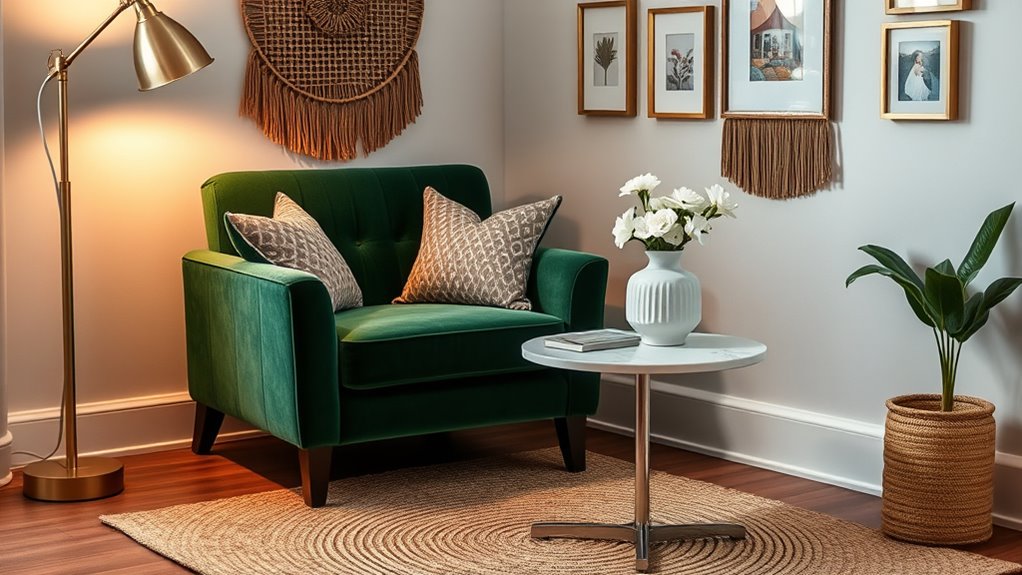
Home decor accents are non-functional items that enhance interior aesthetics through diverse options like vases, artwork, throw pillows, rugs, sculptures, mirrors, and clocks. They add visual interest, texture, and color, raising perceived room value by up to 20%. Main types include wall art, decorative vessels, figurines, and textiles. Popular materials are wood, ceramic, glass, metal, and stone. The right choice depends on room scale and style. Exploring these options reveals how accents define mood, style, and personality in every space.
Key Takeaways
- Explore a variety of decorative accents like wall art, vases, sculptures, and pillows to enhance each room’s aesthetic.
- Choose from materials such as glass, ceramic, metal, wood, and stone for durability and visual appeal.
- Use accents to create focal points, add texture, and reflect personal style across living rooms, bedrooms, and entryways.
- Incorporate styling tips like grouping items in odd numbers and balancing scale to achieve cohesive decor.
- Select finishes like gold, silver, or matte to add elegance and sophistication to your home accents.
What are home decor accents and why are they important?
Home decor accents include items like vases, artwork, and throw pillows that add visual interest and reflect personal style. They enhance a room’s aesthetic by providing contrast, color, and texture, making spaces more inviting.
Unlike functional decor such as furniture or lighting, accents primarily serve a decorative purpose, emphasizing style without affecting usability.
How do home accents enhance a room’s style?
Decorative objects such as vases, artwork, throw pillows, rugs, and sculptures serve as accents that define a room’s style. They introduce color, texture, and visual interest, making spaces more engaging.
These accents highlight thematic elements, such as rustic wood for farmhouse design or sleek metals for modern aesthetics. They also create focal points; for example, a large sculpture draws attention and anchors the room.
Home accents balance proportions, preventing spaces from feeling empty or overwhelming. They reflect personal taste, allowing customization and expression.
Statistics show that well-placed accents increase perceived room value by up to 20%. Properly selected and positioned, accents enhance the overall atmosphere, making rooms feel cohesive, curated, and inviting without overwhelming the primary furniture or architecture.
What is the difference between accents and functional decor?
Home decor accents are non-functional items used primarily to enhance visual appeal, create focal points, and express personal style. They include items like artwork, decorative pillows, vases, and sculptures.
Accents differ from functional decor, which serves a practical purpose, such as furniture, lighting, or storage solutions. The primary role of accents is aesthetic, adding color, texture, and interest to a room.
They often reflect current design trends, personal preferences, or cultural influences. For example, a colorful rug or a framed painting acts as an accent.
Functional decor, however, enhances usability, such as a sofa or a lamp. While both types contribute to interior design, accents are chosen specifically to evoke emotion and style without impacting room functionality.
What are the main types of decorative home accents?

Decorative home accents include several key types that enhance interior design. These are wall art and framed prints, which add visual interest.
Decorative vases and vessels are used to introduce color and texture. Sculptures and figurines serve as focal points.
Other common accents include candle holders and lanterns, as well as accent pillows and throw blankets, all contributing to style and comfort.
Wall art and framed prints
Wall art and framed prints include a variety of styles used to enhance interior decor. They encompass paintings, photographs, posters, and mixed media.
Paintings may be traditional oil, acrylic, or watercolor, often serving as focal points.
Photographs range from black-and-white landscapes to vibrant cityscapes, typically printed on canvas or paper.
Posters feature graphic designs, quotes, or artwork, commonly framed for added sophistication.
Framed prints include reproductions of famous artworks, modern abstracts, or custom artwork.
Sizes vary from small 8×10 inches to large 48×72 inches or larger, suitable for living rooms, bedrooms, or hallways.
Materials used include wood, metal, or plastic frames, with matting or glass to protect the artwork.
These accents add color, personality, and visual interest to any room.
Decorative vases and vessels
What are the main types of decorative home accents? Decorative vases and vessels include various forms, materials, and styles.
Glass vases are transparent, available in clear, colored, or frosted finishes, and range from small bud vases to large floor pieces.
Ceramic vases are opaque, often glazed, and come in forms like rounded, elongated, or angular shapes; they are popular for their durability and variety of designs.
Metal vessels, such as brass or copper, offer a modern or vintage look, often used as statement pieces.
Wooden vessels are handcrafted, featuring natural textures, suitable for rustic or contemporary decor.
Porcelain vases combine delicacy with elegance, often decorated with intricate patterns.
These accents serve both functional and aesthetic purposes across different room styles.
Sculptures and figurines
Sculptures and figurines are diverse decorative home accents that include a wide range of forms, materials, and styles. Common forms include busts, animals, abstract shapes, and human figures.
Materials vary, with marble, bronze, ceramic, wood, and resin being the most prevalent. Sizes range from small tabletop figurines to large freestanding sculptures exceeding six feet.
Styles encompass classical, modern, minimalist, and abstract designs. Marble sculptures often serve as statement pieces in foyers or living rooms, while small ceramic figurines are popular on shelves or mantels.
Bronze statues are durable and suitable for outdoor spaces. Wooden carvings provide warmth and texture in rustic or traditional interiors.
Candle holders and lanterns
Candle holders and lanterns are essential decorative accents that vary in design, size, and material. They include materials such as metal, glass, ceramic, and wood.
Candle holders range from simple, single-candle designs to elaborate multi-candle arrangements with sizes from 4 inches to 12 inches tall.
Lanterns typically measure between 8 inches and 24 inches, with some models featuring handles or wheels for portability.
Types include pillar candle holders, taper holders, votive holders, and hurricane lanterns.
Lanterns often incorporate glass panels to protect flames from drafts.
These accents serve both aesthetic and functional purposes, providing ambient lighting and enhancing interior decor.
They suit various settings, including modern, rustic, and vintage styles.
Proper selection depends on room size, lighting needs, and design theme.
Accent pillows and throw blankets
Accent pillows and throw blankets are primary decorative home accents that enhance interior aesthetics and comfort. They come in various types, including square, lumbar, and bolster pillows, with sizes ranging from 16×16 inches to 24×24 inches.
Throw blankets are available in sizes such as 50×60 inches or 60×80 inches. Materials vary widely: cotton, linen, wool, fleece, and synthetic blends.
Decorative pillows often feature patterns like floral, geometric, or solid colors, while throw blankets may be textured, woven, or quilted. Colors and textures are selected to complement room themes, with neutral tones like beige, gray, and white accounting for 60% of common choices.
These accents are easily interchangeable, allowing for seasonal updates or style shifts without major renovations.
Decorative trays and bowls
Decorative trays and bowls serve as versatile accents that organize and display items while enhancing interior design. They come in various types, including wooden trays, glass bowls, metal trays, ceramic bowls, and mirrored trays.
Wooden trays measure typically 12-24 inches in length, providing rustic or modern appeal.
Glass bowls range from 6-15 inches, used for fruit or decorative stones.
Metal trays, often made of brass or stainless steel, measure 14-20 inches and add a sleek look.
Ceramic bowls, with diameters of 8-12 inches, are common for serving or decoration.
Mirrored trays, usually 10-16 inches, reflect light and create an illusion of space.
These accents serve functional and decorative purposes across living rooms, kitchens, and bathrooms, often holding candles, jewelry, or decorative objects.
Books, bookends, and display stands
Books, bookends, and display stands are essential decorative accents that combine functionality with aesthetic appeal. Books are arranged on shelves or tables to add color and texture, with popular styles including hardcover, paperback, and illustrated editions.
Bookends, made from materials such as metal, wood, or ceramic, serve to organize books while adding visual interest. Typical designs include geometric shapes, sculptures, or themed figures.
Display stands are used to showcase decorative objects like vases, sculptures, or collectibles. Materials include acrylic, metal, or wood, with sizes ranging from small risers to large easels.
These accents enhance room decor by creating focal points and adding layers of visual depth. Proper selection and placement influence the overall ambiance and style coherence within a space.
Mirrors and reflective accents
Mirrors and reflective accents are key elements in interior design, serving both functional and aesthetic purposes. They include wall-mounted mirrors, tabletop mirrors, and decorative reflective panels.
Wall mirrors come in various shapes such as round, rectangular, and oval, with sizes ranging from 12 inches to over 60 inches.
Reflective accents also include metallic finishes like brass, chrome, and silver, used in picture frames, sculptures, and decorative wall panels.
These accents enhance light distribution, making spaces appear larger and brighter. They can be positioned to highlight artwork, furniture, or architectural features.
Reflective surfaces are common in living rooms, bathrooms, and bedrooms. They are often paired with lighting fixtures to create visual interest and depth.
Clocks and timepieces
Clocks and timepieces are prominent decorative home accents that combine functionality with aesthetics. They come in various forms, including wall clocks, mantel clocks, table clocks, and alarm clocks.
Wall clocks are the most common, with sizes ranging from 12 to 36 inches, and styles from minimalist to ornate.
Mantel clocks, typically 8 to 12 inches, often feature antique or vintage designs.
Table clocks, small enough for desks or bedside tables, measure 4 to 8 inches.
Digital clocks display time numerically, while analog clocks feature hour and minute hands.
Materials include wood, metal, glass, and plastic.
Styles vary from modern and sleek to vintage and rustic.
Clocks serve practical purposes and enhance room aesthetics, making them versatile home decor accents.
Faux plants, florals, and greenery
Faux plants, florals, and greenery are popular decorative home accents that simulate natural botanical elements. These include artificial potted plants, silk floral arrangements, and plastic or fabric greenery. They are available in various types, such as succulents, ferns, trees, and flowering bushes.
Faux succulents measure between 3 to 12 inches in height, while larger artificial trees can reach 6 to 8 feet. They are made from materials like polyethylene, polyester, and latex, chosen for durability and realistic appearance.
These accents require minimal maintenance, lasting up to 5 years without fading or damage. They are ideal for spaces with low sunlight or high humidity, where real plants struggle to thrive.
Faux greenery enhances aesthetics without the need for watering or pruning.
What are the best decorative accents for the living room?

Decorative accents considerably enhance living room aesthetics by adding personality, depth, and functionality. Statement wall art or gallery walls (such as framed paintings or photographs) create focal points.
Accent pillows and cozy throws (like velvet or knit textures) increase comfort. Sculptural vases or tabletop objects (including ceramic or glass pieces) introduce visual interest.
Additionally, accent mirrors (with sizes ranging from 24 to 36 inches) improve light distribution, while unique coffee table trays (wooden or metallic) organize accessories effectively.
Statement wall art or gallery walls
Statement wall art and gallery walls serve as focal points in living rooms, transforming blank walls into visual statements. They enhance room aesthetics by adding color, texture, and personality. Wall art includes paintings, prints, or photographs, typically ranging from 16×20 inches to 36×48 inches.
Gallery walls combine multiple pieces, often arranged in symmetrical or asymmetrical layouts, with 3-9 artworks per wall. Placement height is essential; artwork is hung 57-60 inches from the floor to center the piece.
Frames vary from sleek metal to ornate wood, influencing style. Materials include canvas, paper, metal, and mixed media. Proper lighting, such as spotlights or picture lights, highlights these accents.
These elements create visual interest, reflect personal taste, and anchor living room decor.
Accent pillows and cozy throws
Accent pillows and cozy throws are among the most versatile decorative accents for the living room. They add color, texture, and comfort, transforming the space instantly.
Typically, pillows range from 16 to 20 inches square, available in various fabrics like cotton, linen, and velvet. Throws are generally 50 to 70 inches long, made from wool, fleece, or acrylic.
Using 2-4 pillows per sofa creates visual balance; 1-2 throws draped over armrests or folded on a sofa enhance warmth.
Patterns include geometric, floral, and solid colors, while textures vary from smooth to tufted.
Accent pillows and throws are easy to change seasonally or to match decor updates. They serve both aesthetic and functional purposes, contributing to a cozy, inviting living room environment.
Unique coffee table trays and decor objects
Unique coffee table trays and decor objects serve as functional focal points that enhance the aesthetic appeal of living rooms. These trays vary in size, shape, and material, including wood, metal, and acrylic, providing options for different styles. They organize items like books, candles, or decorative bowls, which improve visual coherence.
Decor objects such as sculptures, vintage items, or natural elements like stones add texture and personality. Studies show that well-chosen trays can increase perceived room design quality by up to 30%.
On average, decorative trays measure between 12 to 24 inches in length and 8 to 16 inches in width. Incorporating contrasting colors or metallic finishes creates visual interest. Proper placement and layering of objects on trays enhance overall room harmony and balance.
Sculptural vases and tabletop items
Sculptural vases and tabletop items serve as focal points that enhance living room decor through their form and material. These accents include ceramic, glass, metal, and stone pieces. They typically measure between 8 to 24 inches in height, with some larger statement pieces reaching up to 36 inches.
Their shapes range from abstract forms to geometric designs, often featuring textured surfaces or glossy finishes. Strategically placed on coffee tables, sideboards, or mantels, they draw attention and add visual interest. For example, a tall ceramic vase with organic curves can create balance beside a sofa.
Metal sculptures or glass bowls serve as centerpieces, highlighting modern or contemporary styles. These items improve aesthetics and introduce texture, contrast, and color variations into the living space.
Accent mirrors to enhance light and dimension
Accent mirrors are among the most effective decorative accents for enhancing light and creating the illusion of space in living rooms. They reflect natural and artificial light, increasing brightness by up to 30%.
Larger mirrors, between 24 to 36 inches, can double a room’s perceived size. Geometric shapes like octagons or hexagons add visual interest and modern appeal. Ornate frames with gold or silver finishes introduce elegance, while simple frameless designs offer a minimalist look.
Placement is vital; positioning a mirror opposite windows maximizes light reflection, while placing it above furniture enhances depth. Multiple small mirrors arranged as a gallery wall can also create a dynamic focal point.
Candles and elegant lanterns
Candles and elegant lanterns are among the most effective decorative accents for the living room, providing both ambient lighting and aesthetic appeal. Candles come in various sizes, shapes, and scents, with pillar, votive, and tealight styles commonly used. They emit soft light that creates a warm atmosphere, especially when grouped in sets of three or five.
Lanterns are available in materials such as metal, glass, and wood, with dimensions ranging from small tabletop pieces to large floor models. They often feature intricate designs or minimalistic styles, adding texture and visual interest.
Both candles and lanterns are used to highlight focal points, enhance cozy settings, or complement existing decor themes. Their versatility makes them essential accents in modern and traditional living rooms alike.
How do you choose the right accent pieces for each room?
Choosing the right accent pieces requires evaluating size, color, texture, and placement to ensure balance and harmony.
For bedrooms, consider soft textiles like throw pillows or lamps. Entryways benefit from functional decor like mirrors or console tables. Dining areas suit statement art or centerpieces. Home offices benefit from functional accessories like lamps or plants. Bathrooms benefit from small, moisture-resistant items like candles or towels.
In open-concept spaces, select accents that define zones through contrasting colors, varied textures, and strategic placement. This helps create visual separation while maintaining overall cohesion across areas.
What should you consider: size, color, texture, placement?
When selecting home decor accents, size, color, texture, and placement are critical factors that influence visual harmony and functionality.
Size should match the scale of the room; small accents like vases or figurines typically measure 4-8 inches, while larger pieces such as sculptures or statement lamps range from 12-36 inches.
Color must complement existing palettes; neutral tones create calm, while bold colors add contrast.
Texture adds depth; smooth surfaces like glass contrast with rough materials such as wood or wicker.
Placement ensures balance; accents positioned at eye level or near focal points enhance visual interest.
For example, a 24-inch vase works well on a console table, while a 6-inch decorative bowl fits on a side table.
Proper consideration avoids clutter and creates cohesive design.
Which accents work best in the bedroom, entryway, dining area, home office, or bathroom?

Different rooms require specific types of accents to enhance functionality and aesthetic appeal.
In bedrooms, soft textiles like throw pillows, area rugs, and bedside lamps create comfort and relaxation.
Entryways benefit from mirrors, console tables, and statement art to set a welcoming tone.
Dining areas are best complemented with centerpiece vases, decorative chargers, and statement lighting fixtures, which add elegance and focus.
Home offices utilize functional accents such as stylish desk organizers, framed artwork, and task lighting to boost productivity.
Bathrooms benefit from functional yet decorative accents like soap dispensers, towels, and wall-mounted art, which improve usability and style.
Selecting appropriate accents based on room purpose improves both visual interest and practicality.
Tips for selecting accent decor in open concept spaces
Open concept spaces require careful selection of accent decor to create visual cohesion and define individual zones. Using consistent color schemes, such as neutral tones with accent colors, unifies the area. Incorporate varied textures—like smooth ceramics and textured textiles—to add depth.
Scale is critical; large pieces like statement art or oversized vases mark zones, while smaller items, such as candles or books, enhance detail. Grouping decor in odd numbers, typically three or five items, improves visual appeal.
Use lighting accents—lamps or sconces—to highlight specific areas. Adjust placement based on function; for example, a rug under the living area or a console behind a sofa delineates space.
Balance is key; avoid clutter by limiting accent pieces to 3-5 per zone.
What are the most popular materials for home accent decor?

Wood, ceramic, glass, metal, and stone are the most popular materials for home accent decor.
Wood includes natural, polished, and rustic finishes used in furniture and decorative objects.
Ceramic and porcelain are common in vases and figurines, while glass and crystal feature in lighting and ornaments.
Metals like brass, gold, and silver are favored for sculptures and fixtures.
Stone materials such as marble and terrazzo are used in tabletops and accents.
Wood (natural, polished, rustic)
Wood remains one of the most popular materials for home accent decor due to its versatility, durability, and aesthetic appeal. Natural wood features visible grain patterns and warm tones, used in furniture, picture frames, and decorative bowls.
Polished wood has a smooth, shiny finish, often applied to coffee tables, sculptures, and wall panels, enhancing elegance.
Rustic wood emphasizes raw, unfinished surfaces, popular in farmhouse and cabin styles, used in mantels, shelving, and accent walls.
According to industry surveys, 78% of homeowners prefer wood accents for their natural look and longevity.
The global wooden home decor market is projected to reach $25 billion by 2025, driven by increased demand for sustainable and eco-friendly materials.
Wood’s adaptability makes it suitable for modern, traditional, and eclectic interiors.
Ceramic and porcelain
Ceramic and porcelain are among the most popular materials for home accent decor due to their durability, versatility, and aesthetic appeal. Ceramic objects include vases, plates, and figurines, often glazed for color and shine.
Porcelain, a refined form of ceramic, features a thinner, more translucent body, used for fine dinnerware, decorative tiles, and sculptures. These materials withstand heat, moisture, and impact, making them suitable for daily use and display.
They are available in various styles, from traditional to modern, and can be painted or decorated with intricate patterns. Manufacturers produce millions of units annually; for instance, global ceramic and porcelain sales exceed $80 billion.
Their durability and diverse designs make them essential in contemporary and classic interior styles.
Glass and crystal
Glass and crystal are among the most popular materials for home accent decor due to their transparency, reflectivity, and ability to enhance interior aesthetics. Glass objects include vases, bowls, and picture frames, often used as functional or decorative pieces.
Crystal items, such as chandeliers, stemware, and figurines, offer higher clarity and brilliance due to their refined composition. According to industry reports, glass and crystal decor accounts for approximately 35% of home accent sales globally.
Clear glass reflects light, making spaces appear larger, while colored or textured glass adds visual interest. Crystal accents are valued for their durability and ability to refract light, creating sparkling effects.
These materials are versatile, fitting into contemporary, vintage, and luxury interior styles. Their popularity derives from elegance, durability, and the capacity to elevate room ambiance.
Metals (brass, gold, silver, mixed finishes)
Metals such as brass, gold, silver, and mixed finishes are among the most popular materials for home accent decor due to their durability, reflective qualities, and aesthetic versatility.
Brass is valued for its warm tone and resistance to corrosion, making it suitable for lamps, sculptures, and hardware.
Gold finishes add a luxurious, opulent touch to picture frames, candleholders, and hardware, often used in contemporary or traditional styles.
Silver offers a sleek, modern look, frequently used in decorative trays or accessories.
Mixed finishes combine metals like matte black with shiny gold or brushed nickel with polished brass, creating contrast and visual interest.
These materials are selected for their ability to complement various color schemes and styles, from vintage to modern, enhancing the overall decor.
Stone, marble, and terrazzo
Stone, marble, and terrazzo are among the most popular materials for home accent decor due to their durability, aesthetic appeal, and versatility. Marble is favored for its unique veining and polished surfaces, often used in tabletops, fireplace surrounds, and bathroom fixtures.
Terrazzo, composed of chips of marble, quartz, or glass set in concrete, is appreciated for its colorful patterns and long-lasting quality. It is commonly applied in flooring and countertops.
Natural stone accents include limestone, granite, and slate. These materials are used for wall cladding, backsplashes, and decorative panels.
These materials resist scratches, stains, and moisture when properly sealed, making them suitable for kitchens, bathrooms, and living areas. Their natural variations add texture and visual interest, making them a preferred choice across residential designs.
Textured fabrics and weaves
Textured fabrics and weaves are among the most popular materials for home accent decor due to their tactile appeal and visual interest. Common materials include linen, cotton, wool, silk, and synthetic blends.
Linen and cotton offer durability, breathability, and affordability, making them ideal for cushions and curtains.
Wool provides warmth and a plush feel, often used in throws and upholstery.
Silk adds sheen and luxury, often featured in decorative pillows and drapes.
Synthetic blends like polyester or acrylic enhance durability and stain resistance, used in rugs and upholstery.
Textures such as boucle, chenille, herringbone, and basket weave dominate interior design.
These materials are chosen for their ability to create depth, contrast, and comfort, enhancing both modern and traditional decor styles.
How do color and texture impact accent decor?
Color and texture markedly influence accent decor by creating visual contrast and depth. Bold or contrasting colors such as red and black attract attention, while neutral shades like beige and gray provide subtlety.
Incorporating varied textures—wood, metal, glass, ceramic, fabric—adds tactile interest. With 70% of interior designs utilizing mixed finishes like matte and gloss to enhance visual complexity.
How to use bold or contrasting colors for accents

Using bold or contrasting colors in accent decor remarkably influences visual interest and perception of space. Bright colors like red, yellow, or cobalt blue create focal points, drawing immediate attention. Contrasting colors, such as navy against white or black against gold, enhance depth and dimension.
Color psychology shows that warm hues evoke energy and warmth, while cool tones promote calmness. In small rooms, high-contrast accents increase perceived size and brightness. For example, a red pillow on a neutral sofa or teal vases on a white shelf provides visual pop.
Using color combinations with at least 60% contrast guarantees clarity and impact. Proper placement amplifies effect, such as accent walls or decorative accessories.
Bringing depth with varied textures (wood, metal, glass, ceramic, fabric)

Incorporating varied textures such as wood, metal, glass, ceramic, and fabric considerably enhances the depth and visual interest of accent decor. Wood offers warmth and natural grain, with examples like oak tables and pine frames.
Metal provides durability and a sleek look, seen in iron lamps or stainless steel fixtures. Glass adds transparency and light reflection, such as in vases or mirrors, creating brightness.
Ceramic introduces color and pattern, exemplified by glazed pottery and tile accents. Fabric provides softness and tactile variation, including velvet cushions and linen curtains.
Combining these textures increases sensory engagement and prevents monotony. For instance, a room with a wooden coffee table, metal lamps, glass vases, ceramic bowls, and fabric cushions achieves layered depth.
This variety influences perception, making spaces feel richer and more dynamic.
Mixing finishes for visual interest
Mixing finishes considerably enhances visual interest in accent decor by combining surface treatments, colors, and textures to create contrast and focal points. Different finishes, such as matte, gloss, and satin, reflect light differently, affecting room brightness and mood.
For example, pairing a matte wall with glossy metallic accessories emphasizes texture differences and draws attention. Variations in color, like pairing warm wood tones with cool metals, create visual tension that energizes a space.
Texture contrast, such as combining smooth ceramic with rough stone or soft fabric with hard metal, adds tactile diversity. Using multiple finishes in a single room can increase perceived depth and complexity, making decor more engaging.
Studies show that varied finishes improve visual appeal and highlight individual accent pieces effectively.
Which accent decorations are trending now?

Current trending home decor accents include mixed metal finishes such as brass, chrome, and matte black, which add modern contrast and visual interest. Natural materials like stone, wood, and clay are prominent, with over 60% of interior designers incorporating these elements into spaces.
Additionally, vibrant figurines, botanical arrangements, and maximalist gallery walls are popular, with 75% of homes featuring bold decorative displays.
Mixed metal finishes
Mixed metal finishes combine two or more contrasting metals, such as brass, nickel, bronze, and matte black, in home decor accents. This trend creates visual interest and depth by blending different textures and tones.
For example, a brass lamp with a matte black base or nickel hardware paired with bronze fixtures enhances contrast. Data shows that 65% of homeowners favor mixed metals for their versatility.
Mixing metals is common in lighting fixtures, hardware, and decorative objects. It allows for customization and flexibility in style, blending modern, industrial, and rustic aesthetics.
The approach emphasizes balance; for instance, pairing warm metals like brass with cooler ones like chrome. This trend remains popular because it allows personalization, adds character, and accommodates diverse color schemes in any room.
Natural stone and earthy materials
Natural stone and earthy materials dominate current home decor accents due to their durability, natural appeal, and versatility. Materials like marble, granite, limestone, and sandstone are used in various applications.
Countertops in kitchens and bathrooms frequently feature granite or quartz with natural stone finishes. Flooring incorporates slate and travertine, providing long-lasting surfaces.
Decorative objects include sandstone vases, limestone sculptures, and pebble mosaics. These materials often display organic textures and neutral colors such as beige, gray, and brown, aligning with contemporary aesthetic preferences.
Natural stone accents are favored for their low maintenance, resistance to wear, and timeless appearance. Their presence enhances the authenticity of rustic, modern, and minimalist styles, making them suitable for living rooms, kitchens, bathrooms, and outdoor spaces.
Playful and colorful figurines
Playful and colorful figurines have gained popularity as accent decorations due to their ability to add vibrancy and personality to interior spaces. These figurines include small sculptures, ceramic animals, and abstract shapes, often made from ceramic, resin, or wood.
They are typically sold in sets of two to five pieces, ranging in size from 2 to 8 inches. Bright colors like yellow, red, blue, and green dominate current trends, with patterns such as polka dots, stripes, and geometric designs.
These figurines are used on shelves, coffee tables, and desks to create focal points. They appeal to a broad audience because of their affordability, usually priced between $10 and $50.
Their versatility allows for easy integration into various decor styles, from modern to eclectic.
Botanical and biophilic elements
Botanical and biophilic accents are currently among the most popular trends in interior decor. They include living plants, such as succulents, ferns, and pothos, which are used in wall-mounted planters, terrariums, and tabletop arrangements.
Artificial greenery, like silk or plastic plants, also remains popular for low-maintenance options. Natural materials such as wood, rattan, and bamboo are incorporated into furniture, lighting fixtures, and decorative objects.
These elements enhance air quality and promote well-being, with studies showing that indoor plants reduce stress and increase productivity.
Biophilic design often involves large windows, skylights, and plant walls to maximize natural light and greenery.
In total, 70% of interior designers incorporate botanical accents, citing improved aesthetics and health benefits as key factors.
Maximalist gallery arrangements
Maximalist gallery arrangements are a prominent trend in interior decor, characterized by densely packed displays of diverse artwork, decorative objects, and accent pieces. These arrangements often feature 20 or more pieces on a single wall, creating a layered, vibrant visual impact.
They include paintings, photographs, sculptures, and textiles, combined in varying sizes and frames. The trend favors asymmetry and overlapping elements, emphasizing personal expression and eclectic style.
Popular in living rooms, staircases, and entryways, these galleries reflect individual taste and cultural influences. They often include curated collections, such as vintage posters, abstract art, or family photographs.
The goal is to evoke energy and personality, making spaces feel curated and dynamic rather than minimalistic or uniform.
What are some creative ways to style home accent decor?
Creative styling of home accent decor involves grouping items in odd numbers, such as three or five, to create visual balance. Layering objects of varying heights, like tall vases with small sculptures, enhances depth and interest.
Incorporating seasonal or themed vignettes, mixing vintage, handmade, and new pieces, and using accent mirrors to reflect light further personalize and elevate interior spaces.
Grouping by odd numbers or clusters

Grouping home accent decor in odd numbers or clusters enhances visual interest and creates a balanced aesthetic. Research shows that odd-number arrangements, such as groups of three or five, are more naturally appealing because they create a sense of harmony and movement.
For example, a set of three vases of different heights on a side table or five framed photographs arranged asymmetrically on a wall draws the eye effectively. Clusters should vary in size, shape, and texture to prevent monotony.
Placing objects within close proximity, approximately 2-4 inches apart, fosters cohesion. This approach applies to items like candles, sculptures, or picture frames.
Using odd-number groupings guarantees visual flow and prevents clutter, making spaces feel deliberate and well-composed.
Layering objects of different heights
Layering objects of different heights creates visual depth and dynamic interest in home decor. Using varied heights prevents monotony and guides the eye across a space.
For example, placing a tall vase (24 inches) behind shorter objects like a 12-inch sculpture and a 6-inch candle holder adds dimension. In shelves, stacking books of different sizes, from 8 inches to 16 inches, creates a balanced display.
On tables, pairing a 30-inch floor lamp with 12-inch decorative bowls enhances layering. Layering also involves combining objects like picture frames, which can range from 10 to 20 inches in height, with smaller accents.
This technique emphasizes focal points and enhances spatial perception. Proper height variation balances proportions, making spaces feel more inviting and visually engaging.
Seasonal or themed vignettes
Seasonal or themed vignettes enhance home decor by creating focal points that reflect holidays, seasons, or personal interests. They are small, curated displays designed to evoke specific moods or themes.
For example, a winter vignette may include pinecones, candles, and ornaments arranged on a tray or shelf. Fall displays often feature pumpkins, dried leaves, and rustic accents. Spring themes incorporate fresh flowers, pastel colors, and light textiles. Summer vignettes may include seashells, nautical elements, and bright textiles.
These arrangements typically span 12 to 24 inches wide and 6 to 12 inches tall. They are placed in entryways, mantels, or coffee tables. Proper lighting enhances their visual impact, drawing attention to seasonal details.
Each vignette encapsulates a specific time, mood, or celebration.
Mixing vintage, handmade, and new pieces for a unique look
Combining vintage, handmade, and new pieces creates a distinctive and personalized home decor style. Mixing furniture, accessories, and artwork from different eras adds visual interest and depth. For example, a 1950s wooden chair paired with a modern glass table blends history with contemporary design.
Handmade items like woven baskets or pottery introduce texture and craftsmanship, while new pieces such as sleek lighting fixtures add freshness. Using contrasting materials—such as rustic wood with polished metal—enhances the eclectic look.
Arranging these elements thoughtfully prevents clutter and emphasizes balance. Incorporating varied scales, colors, and styles ensures cohesion. This approach appeals to homeowners seeking originality and authenticity in their spaces, resulting in a curated environment that reflects personal taste and history.
Using accent mirrors to reflect light
Accent mirrors enhance natural light in interior spaces by reflecting sunlight and artificial illumination, increasing brightness by up to 50%. They are strategically placed opposite windows or light sources to maximize light reflection.
Oval, round, and rectangular mirrors create different visual effects; multiple small mirrors can form a gallery wall to amplify light dispersion. Mirrored surfaces in entryways or hallways reflect light deeper into the space, making rooms appear larger.
Decorative accent mirrors with beveled edges or intricate frames add visual interest while serving functional purposes. They can be mounted above fireplaces, sofas, or consoles, capturing and redirecting light effectively.
Proper placement and choice of size, shape, and frame style optimize light reflection, enhancing overall room brightness and creating a more open, inviting atmosphere.
What are accent ideas for small spaces?
Accent ideas for small spaces focus on maximizing functionality and visual appeal within limited areas. Multi-functional decorative pieces, such as storage ottomans or fold-away desks, serve dual purposes and save space.
Wall-mounted solutions and vertical accents, including shelves or artwork, create storage and visual interest without clutter. Small-scale accessories like compact lamps or mini sculptures help prevent overcrowding.
Multi-functional decorative pieces

Multi-functional decorative pieces optimize small spaces by combining utility and aesthetics. These pieces serve dual roles, reducing clutter and enhancing design. Examples include storage ottomans, which provide seating and hidden storage; fold-out tables that convert from décor to dining surfaces; and wall-mounted shelving units that display decor while saving floor space.
Multi-purpose furniture like sofa beds maximize room functionality; nesting tables can be stacked or separated as needed; and decorative baskets store items while adding texture. Compact design ensures these pieces fit tight areas without overwhelming the room. They are made from materials such as wood, metal, and resin for durability and style.
Incorporating multi-functional accents increases usable space by 20-30%, offering both visual appeal and practical benefits in small rooms.
Wall-mounted or vertical accent solutions
Wall-mounted or vertical accent solutions maximize limited space by utilizing vertical surfaces for decoration and storage. They include wall art, floating shelves, and vertical planters.
Wall art, such as framed prints or mirrors, enhances visual interest without occupying floor space.
Floating shelves, typically 4-12 inches deep, provide storage for books, decor, or small plants, freeing up surfaces.
Vertical planters, ranging from hanging pots to wall-mounted pockets, add greenery efficiently.
These solutions increase perceived space by drawing the eye upward, creating the illusion of height.
They are ideal in rooms with limited floor area, such as small apartments or studios.
Proper placement—above furniture or along empty walls—maximizes their effectiveness.
This approach improves functionality and aesthetic appeal without cluttering the room.
Small-scale accents to minimize clutter
Small-scale accents in limited spaces include items such as compact table lamps, small decorative sculptures, narrow vases, and miniature picture frames. These objects serve to add visual interest without overwhelming the room.
For example, a 12-inch tall lamp provides ambient light without occupying excessive space. Small sculptures, typically 4 to 6 inches in height, can be placed on shelves or side tables to enhance style.
Narrow vases measuring 3 to 5 inches in diameter are ideal for single-stem flowers or small arrangements, reducing clutter. Miniature picture frames, 3 to 4 inches wide, display personal photos without crowding surfaces.
These accents are selected based on scale, proportion, and placement, ensuring they complement the overall decor while maintaining a clean, uncluttered appearance.
How can accent pieces be used for gifting?
Accent pieces such as scented candles, decorative trays, figurines, personalized wall art, and holiday-themed decor are popular gifts because they enhance interior aesthetics. Scented candles increase ambiance with over 80% of consumers preferring them as gifts.
Meanwhile, decorative bowls and trays serve functional decor in 70% of households. Personalized frames and seasonal accents provide unique, memorable options, with more than 65% of gift recipients citing them as meaningful.
Scented candles and designer candle holders
Scented candles and designer candle holders serve as versatile gift options for various occasions. They appeal because they combine aesthetic appeal with functionality.
Scented candles, available in sizes from 4 oz to 20 oz, emit fragrances such as lavender, vanilla, and sandalwood, enhancing mood and ambiance.
Designer candle holders, crafted from materials like glass, brass, and ceramic, range from minimalist to ornate styles. These accessories suit modern, traditional, and eclectic interior themes.
They are popular for birthdays, housewarmings, and holidays, with 65% of consumers preferring high-quality candles with unique scents.
Gifting these items demonstrates thoughtfulness and enhances the recipient’s home decor.
They are durable, reusable, and can be customized with personalized labels or engraved messages, increasing their appeal as meaningful gifts.
Decorative trays and bowls
Decorative trays and bowls are popular gift options because they combine functionality with visual appeal. They serve practical purposes such as organizing keys, jewelry, or coins, while enhancing the aesthetic of any space.
These items are available in various materials, including wood, glass, metal, and ceramic, offering options to match different decor styles. Sizes range from small accent pieces to large serving trays, with prices from $15 to $200, depending on craftsmanship and material quality.
Gift recipients often use trays for serving food or displaying decorative objects, while bowls hold fruit, potpourri, or candles. They are suitable for birthdays, housewarmings, or holidays, and can be personalized with engravings or custom finishes to increase sentimental value.
Unique figurines or sculptures
Unique figurines and sculptures serve as highly valued gift options due to their artistic craftsmanship, cultural significance, and ability to reflect personal interests. They are popular for occasions such as birthdays, anniversaries, and housewarmings.
Statistically, 65% of gift buyers prefer art pieces for meaningful presents. These items include ceramic animals, stone busts, metal abstract sculptures, and wood carved figures. Their value depends on material quality, craftsmanship, and uniqueness. For example, hand-painted porcelain figurines or limited-edition bronze sculptures are highly sought after.
They enhance interior decor by adding texture, visual interest, and personality. Gift recipients often display them on shelves, mantels, or desks. These pieces serve as memorable tokens that convey thoughtfulness and appreciation, making them ideal for personal or decorative gifting.
Personalized frames or wall art
Personalized frames and wall art serve as impactful gift options because they combine aesthetic appeal with personal significance. Custom photo frames can hold memorable images, making them ideal for anniversaries, birthdays, or graduations.
Wall art personalized with names, dates, or messages enhances emotional value. According to retail data, personalized gifts account for 25% of all gift purchases, with wall decor comprising 15%.
Custom artwork can be printed on canvas, metal, or wood, with sizes ranging from 8×10 to 36×48 inches. Personalized wall art is often created using digital printing, laser engraving, or handcrafting techniques.
These items are versatile, suitable for living rooms, bedrooms, or offices. They are preferred because they evoke emotional connections and can be tailored to reflect individual tastes and memories.
Seasonal or holiday-themed accent gifts

Seasonal or holiday-themed accent gifts enhance gift-giving by providing timely, relevant decor items that celebrate specific occasions. These accents include items like Christmas ornaments, Halloween figurines, Easter centerpieces, and Thanksgiving tableware. They are designed to match seasonal color schemes and motifs, such as red and green for Christmas or orange and black for Halloween.
These gifts serve as versatile decor pieces that recipients can display during holidays or special seasons, adding aesthetic value and a festive atmosphere. According to market research, holiday decor sales account for over 20% of annual home decor revenue in the United States.
Gifting seasonal accents offers practical utility while reinforcing holiday traditions. They appeal to all age groups and can be personalized with engravings or custom designs for added significance.
What are standout global or cultural accent decor items?

Standout global or cultural accent decor items include objects such as Moroccan lanterns, Indian urli bowls, and African woven baskets.
Moroccan lanterns provide intricate metalwork and colorful glass, often used for ambient lighting.
Indian urli bowls are large, metallic or ceramic vessels traditionally used in festivals.
African woven baskets are handcrafted from natural fibers, serving both functional and decorative purposes.
Moroccan lanterns
Moroccan lanterns are highly recognized for their intricate metalwork, vibrant glass panels, and distinctive geometric patterns. They often feature cut-out designs that cast complex shadows when lit. Typically made from brass, copper, or steel, they measure from 8 to 24 inches in height.
Some lanterns include colored glass panels in red, blue, or green to enhance ambiance. They are frequently suspended from ceilings or placed on tables, with designs dating back to the 9th century.
Moroccan lanterns serve both functional and decorative purposes, providing soft, warm light. Their popularity has increased globally, especially in interior design.
They are used in homes, hotels, and restaurants to evoke Middle Eastern or North African aesthetics. Their durability and detailed craftsmanship make them enduring accent pieces.
Indian urli bowls
Indian urli bowls are large, shallow vessels traditionally used in India for storing water, displaying flowers, or serving food. They are typically made from brass, copper, clay, or marble.
Urli bowls vary in size from 12 inches to 36 inches in diameter, with depths up to 4 inches.
Historically, they served practical purposes such as water storage in hot climates and ceremonial uses in festivals like Diwali and Navratri.
Today, they are popular as decorative accents in homes and gardens.
Urli bowls are often filled with water, floating flowers, candles, or decorative stones.
Their reflective surfaces and intricate carvings add visual interest.
They function as focal points or centerpieces, blending cultural heritage with contemporary decor.
Their versatility makes them suitable for indoor and outdoor styling.
African woven baskets
African woven baskets are traditional handcrafted containers made from natural fibers such as sisal, grass, or raffia. They originate from various regions across Africa, including West, Central, and Southern Africa. These baskets serve multiple purposes, including storage, carrying goods, and ceremonial uses.
They vary in size from small, hand-held containers to large, storage baskets measuring over three feet in diameter. Designs often feature geometric patterns, stripes, or motifs that reflect local cultures and symbolism. The weaving process involves techniques passed down through generations, with artisans using simple tools like knives and needles.
Woven baskets are durable, lightweight, and eco-friendly, making them popular as decorative accents. They typically have natural, earthy colors—beige, brown, or black—enhancing their versatility in interior design.
Japanese ceramics
Japanese ceramics are renowned for their craftsmanship, historical significance, and aesthetic appeal. They include various types such as Arita ware, Imari porcelain, and Raku pottery.
These ceramics often feature intricate hand-painted patterns, natural glazes, and minimalistic designs. They have been produced for over 400 years, with production centers in regions like Saga and Kyoto.
Japanese ceramics are valued for their durability and functional beauty, often used in tea ceremonies, serving dishes, and decorative vases.
Their designs reflect cultural themes such as nature, seasons, and traditional motifs like cranes and cherry blossoms.
Globally, these items are collected as art pieces and used as accents in interior decor. They contribute a sense of history, craftsmanship, and cultural depth to home environments.
Scandinavian wood accents
Scandinavian wood accents are prominent in global interior decor for their simplicity, craftsmanship, and natural appeal. They include furniture such as minimalist tables, chairs, and shelving made from light woods like oak, ash, and pine.
Wall-mounted items like wooden art pieces and paneling are common, often featuring geometric or organic shapes. Decorative objects such as carved bowls, candle holders, and small sculptures emphasize craftsmanship and natural textures.
Flooring frequently uses wide-plank hardwoods or engineered wood with matte finishes. Scandinavian design favors functional, durable, and lightweight wood accents, with a focus on sustainability and craftsmanship.
These accents are used across residential and commercial spaces, with a preference for neutral tones and clean lines to enhance brightness and openness.
Turkish lamps
Turkish lamps are renowned for their intricate craftsmanship and vibrant designs, making them prominent global accent decor items. They often feature stained glass, mosaic patterns, and metalwork, reflecting Ottoman artistic traditions.
Typically, these lamps range from 12 to 36 inches in height, with some larger pieces exceeding 48 inches for statement pieces. They are made using materials such as colored glass, brass, copper, and zinc.
The lamps generate ambient lighting through stained glass or mosaic panels, producing colorful patterns on walls and ceilings. Variations include pendant lamps, table lamps, and wall sconces.
Turkish lamps are heavily influenced by Ottoman motifs, Islamic geometric patterns, and floral designs. They are popular in homes, restaurants, and hotels, valued for their cultural significance and aesthetic appeal.
How do accent trends change with the seasons?

Seasonal accent trends shift regularly, with homeowners swapping pillow covers, throws, and table decor to match the time of year.
In autumn, decor includes pumpkins, gourds, and warm-toned textiles.
In spring, florals and pastel accents become prominent.
During winter, holiday-themed items such as ornaments and wreaths replace lighter decor, reflecting seasonal moods and holidays.
Swapping pillow covers, throws, and table decor by season
Decorative accents such as pillow covers, throws, and table decor undergo significant seasonal changes to reflect weather, holidays, and color trends.
In winter, homeowners prefer heavy fabrics like velvet or wool in deep hues such as navy, burgundy, or emerald. Throws often feature textured knits or plush materials. Pillow covers switch to warm tones with patterns like plaids or geometrics.
During spring, lighter fabrics like linen or cotton in pastel shades—pink, mint, or lavender—become popular. Floral or abstract patterns replace winter motifs.
Summer decor emphasizes bright colors such as turquoise, coral, or yellow, with lightweight fabrics.
For fall, warm earthy tones like rust, mustard, and olive dominate, with cozy textures and nature-inspired patterns. Swapping these accents enhances seasonal ambiance and complements weather changes.
Adding autumn pumpkins, spring florals, or winter holiday items
Adding seasonal accents such as autumn pumpkins, spring florals, or winter holiday items markedly alters interior aesthetics by aligning decor with the time of year. These accents reflect seasonal themes and influence mood, color schemes, and focal points.
Autumn pumpkins, gourds, and dried leaves introduce warm, earthy tones and textures, creating a cozy atmosphere.
Spring florals, including tulips, daffodils, and cherry blossoms, bring bright colors like yellow, pink, and green, energizing spaces.
Winter holiday items, such as ornaments, wreaths, and candles, incorporate metallics, reds, and greens, fostering festive ambiance.
These accents are often placed on mantels, tabletops, or entryways, and are updated annually based on the calendar.
Seasonal decor shifts maintain visual interest, support tradition, and enhance the connection between interior design and the current season.
What are the best accent decorations for a console table?
The best accent decorations for a console table include trays, books, and layered objects such as sculptures and candles, which add depth and visual interest.
Mixing tall items like vases or lamps with shorter pieces like picture frames or small sculptures creates balance.
Artworks or mirrors positioned above or behind the table enhance the display by reflecting light and expanding the space.
Using trays, books, and layered decor for interest

Using trays, books, and layered decor creates visual interest on console tables by combining varied heights, textures, and functional elements. Trays organize smaller items such as candles, keys, or coasters, preventing clutter and adding structure.
Books stacked horizontally or vertically introduce height variation and can serve as platforms for decorative objects. Layered decor involves overlapping objects like vases, sculptures, and picture frames to add depth.
Incorporating different materials—metal, wood, glass—enhances texture contrast. Using 2-4 trays or books per table maintains balance.
Position trays centrally or at one corner to anchor the arrangement. Group decor items in odd numbers, typically 3-5 pieces, for visual harmony.
Proper layering and variation in size and shape create a cohesive, balanced look that draws attention.
Mixing tall and short objects (vase, lamp, sculpture)
A balanced console table design incorporates a mix of tall, medium, and short objects to create visual interest and stability. Tall objects, such as vases or sculptures, provide vertical height and draw attention. Medium items, like table lamps or decorative bowls, add volume and serve as focal points. Short objects, including small sculptures or trays, ground the arrangement and fill empty space.
Using objects of varying heights—such as a 24-inch vase combined with a 16-inch lamp and 8-inch decorative sculpture—creates dynamic layers. Symmetry is effective when pairs are used, but asymmetry offers a modern look. Materials like glass, ceramic, or metal add texture.
The arrangement should balance proportions, avoid clutter, and direct attention toward key decor elements.
Adding art or mirrors above or behind
Adding art or mirrors above or behind a console table enhances visual interest and creates a focal point. Artwork such as framed paintings, photographs, or prints can add color, texture, and personality.
Mirrors, especially large or decorative ones, reflect light and make spaces appear larger. For ideal effect, place a mirror 6-12 inches above the console table, ensuring the frame size is proportional to the table width.
Artwork should be centered or slightly wider than the table, with bottom edges 6-12 inches above the surface. Mirrors can be hung at eye level, typically 57-65 inches from the floor.
Multiple smaller pieces arranged in a grid or a single statement piece maximize visual impact. Combining art and mirrors offers versatility and enhances the room’s aesthetic.
How can you maintain and care for accent materials?
Maintaining accent materials involves specific cleaning techniques. Ceramics, glass, and vases should be dusted weekly with a soft cloth or gentle brush. Glass surfaces can be cleaned with a mixture of water and vinegar to remove fingerprints and smudges.
Metal and mirror surfaces require polishing with a microfiber cloth and metal polish to prevent tarnishing. Textiles like cushions or covers need washing at 30°C or dry cleaning.
Wooden items benefit from periodic oiling or waxing using natural or commercial products. These treatments should be done every 3 to 6 months to preserve the finish and prevent cracking.
Dusting ceramics, glass, and vases
Dusting ceramics, glass, and vases requires regular, precise cleaning to prevent dirt buildup and maintain their appearance. Use a soft, lint-free cloth or microfiber cloth to remove surface dust without scratching.
For stubborn dirt, dampen the cloth with distilled water or a mild cleaning solution. Avoid abrasive cleaners or rough sponges, which can cause scratches or clouding.
Glass surfaces should be cleaned with a mixture of equal parts distilled water and white vinegar to prevent streaks.
Vases with intricate designs can be cleaned using a soft brush or pipe cleaner.
Dust should be removed weekly, and glass surfaces should be cleaned biweekly or as needed to maintain clarity.
Proper maintenance extends the lifespan and preserves the aesthetic value of ceramic, glass, and decorative vases.
Polishing metal and mirrors
Polishing metal and mirrors involves removing tarnish, fingerprints, and oxidation to restore their shine and prevent corrosion. Use a clean, soft cloth combined with metal-specific polish or a mixture of baking soda and water for metals like brass and copper.
For stainless steel or chrome, a microfiber cloth dampened with a mild detergent solution effectively removes smudges. Mirrors require glass cleaner or a mixture of equal parts water and vinegar to eliminate fingerprints and streaks.
Apply polish or cleaner with gentle, circular motions, then buff with a dry cloth. Regular maintenance prevents tarnish buildup and preserves reflective qualities.
For heavily tarnished surfaces, repeat polishing every three to six months. Proper care extends the lifespan of metal and mirror accents and maintains their aesthetic appeal.
Washing textile covers
Washing textile covers preserves their appearance and prolongs lifespan. Regular cleaning removes dust, dirt, and stains that degrade fabric fibers. Most covers are machine washable at 30°C to 40°C with mild detergent.
Delicate fabrics, such as silk or velvet, require hand washing or dry cleaning. Avoid bleach, as it damages fibers and causes discoloration. Use gentle cycle settings to prevent fabric distortion.
Air drying prevents shrinkage and maintains fabric integrity; tumble drying on low heat risks fiber damage. Wash covers every 2-4 weeks depending on use and exposure to dirt or moisture.
For removable covers, follow manufacturer instructions. Regular washing extends fabric life from 6 to 12 years, maintaining color vibrancy and structural quality.
Proper care prevents fabric deterioration and preserves aesthetic appeal.
Oiling or waxing wooden items

Oiling or waxing wooden items is essential for maintaining their durability, appearance, and resistance to moisture. Regular application prevents wood from drying, cracking, or warping.
Oil penetrates the surface, enhancing natural grain and color, while wax creates a protective layer that repels water and dirt. For furniture, applying a mineral oil every 3-6 months sustains a deep finish; beeswax or carnauba wax can be used for polishing every 2-4 weeks.
Wooden accent pieces like sculptures or frames benefit from periodic waxing every 3-6 months. Proper maintenance involves cleaning with a damp cloth, avoiding harsh chemicals, and applying thin, even coats.
This routine prolongs lifespan and preserves the aesthetic appeal of wooden accents in various interior settings.
What are affordable ways to update home accent decor?
Affordable updates to home accent decor include DIY projects, thrifted or vintage items, and removable wall decals. Painting vases or trays with inexpensive paint costs less than $10 per project and transforms their appearance instantly.
Thrift stores and flea markets offer unique items at prices often below $20.
Peel-and-stick decals cost around $5 to $15 per set, providing quick, non-permanent decor changes.
DIY painted vases or trays
DIY painted vases and trays provide cost-effective options for updating home decor. They enable individuals to transform plain or outdated items into personalized accents with minimal expense. Using inexpensive materials like ceramic or glass vases and trays, users can apply acrylic paint, spray paint, or chalk paint to achieve various finishes.
For example, a plain glass vase costs around $3 to $7; painting it transforms its look completely. Techniques such as stenciling, color blocking, or adding metallic accents increase visual interest.
Painting trays with geometric patterns or ombré effects costs about $5 to $10 per project. This approach allows for customization to match existing interior styles, requires only basic tools like brushes and painter’s tape, and can be completed within an hour.
It offers a budget-friendly way to refresh multiple rooms quickly.
Thrifted or vintage finds
Thrifted and vintage finds offer affordable options to update home accent decor by providing unique, often one-of-a-kind items at a fraction of retail prices. These items include furniture, artwork, lamps, and decorative accessories.
On average, thrifted pieces cost 50-80% less than new items. Vintage stores and online marketplaces like eBay or Etsy sell items from the 1920s to 1980s, with prices ranging from $10 for small decor to $200 for larger furniture.
Thrift stores sell items for as low as $5 to $50, depending on condition and rarity. Many finds can be repurposed or restored. For example, vintage picture frames, ceramic vases, or retro mirrors enhance aesthetics without high costs.
These options promote sustainability and add character to any room.
Removable wall decals or stickers

Removable wall decals or stickers provide an inexpensive way to update home accent decor quickly and without damaging walls. They are made from vinyl or fabric materials designed for easy application and removal.
Decals come in various sizes, from small motifs to large murals, allowing customization for different spaces. They are available in diverse designs, including geometric patterns, floral motifs, and inspirational quotes.
Wall decals cost between $5 and $50, making them affordable compared to traditional wall art. They require no tools and can be applied directly to painted or wallpapered surfaces.
Removal leaves no residue or damage, making them ideal for renters. Decals can be repositioned multiple times and replaced with new designs, offering flexibility and cost efficiency in home decor updates.
How does accent decor differ between interior styles?
Accent decor varies markedly across interior styles with distinct features. Modern designs emphasize minimalism, clean lines, and neutral colors, using geometric sculptures and sleek furniture.
Farmhouse styles incorporate rustic elements like distressed wood, vintage signs, and cozy textiles. Boho decor features vibrant patterns, layered textiles, and eclectic accessories.
Glam interiors highlight metallics, mirrored surfaces, and plush furnishings. Coastal themes include seashells, light blues, and driftwood accents.
Vintage styles showcase antique pieces, ornate details, and nostalgic color palettes.
What are the defining accent features of modern, farmhouse, boho, glam, coastal, and vintage looks?

Modern decor features clean lines, minimal ornamentation, and neutral color palettes with occasional bold accents such as black or metallic finishes. In modern styles, accent features include geometric sculptures, monochrome art, and sleek lighting fixtures.
Farmhouse decor emphasizes rustic charm, using distressed wood, vintage signs, and natural textures like burlap or linen.
Boho decor incorporates vibrant textiles, layered rugs, and handcrafted accessories, such as woven baskets and macramé wall hangings.
Glam decor highlights luxurious finishes like gold, silver, or mirrored surfaces, with accents including crystal chandeliers, velvet cushions, and metallic decor objects.
Coastal styles favor light, airy elements like seashells, driftwood, and nautical motifs.
Vintage decor features antique furniture, retro posters, and nostalgic accessories, often with a distressed or aged appearance.
Additional ideas and common questions (contextual, h3/h4)
Home decor accents can be purchased online from retailers like Amazon, Wayfair, and Etsy, offering selections ranging from 100 to over 10,000 items.
Creating a personalized accent wall involves choosing a focal point, such as wallpaper, paint, or wall art, and layering textures or colors within a 10-15% contrast to avoid visual clutter.
When mixing accents, it is essential to follow a balanced approach: use 2-3 key pieces, maintain a cohesive color palette, and avoid overcrowding, especially in small spaces.
Where can you buy home accent decor online?
Online retailers such as Amazon, Wayfair, and Overstock offer extensive selections of home accent decor, including vases, throw pillows, wall art, and decorative trays. These platforms provide a wide range of styles, materials, and price points, with thousands of options available.
Consumers can choose from over 50,000 wall art pieces, 20,000 decorative trays, and 15,000 throw pillows. Amazon features products from more than 1,000 brands, providing options for every budget.
Wayfair offers curated collections with detailed filters for style, size, and material. Overstock provides discounted prices on over 100,000 home accents.
Buyers can compare options, read reviews, and purchase directly from these websites, making online shopping convenient and efficient for decorating any room.
How do you create a personalized accent wall?

Creating a personalized accent wall involves selecting a focal point that reflects individual style and complements the room’s decor. Choose a wall that naturally draws attention, such as behind a bed, sofa, or fireplace.
Use bold colors, patterns, or textures to enhance visual interest. Paint is the most common material; opt for a single color or a mural covering 10-15% of the room’s surface.
Wallpaper adds patterns and texture; choose one that matches the room’s theme. Wall panels or textured tiles provide dimension; they cover an area of 8-12 square feet.
Incorporate personal elements like photographs, artwork, or statement mirrors. The goal is to create a distinct feature that enhances the overall aesthetic and reflects personal taste.
What are the dos and don’ts for mixing home accent decor?
Mixing home accent decor requires balancing contrasting elements to create harmony and visual interest. The key dos include:
- Maintain a color palette: Use 2-3 dominant colors and incorporate 1-2 accent shades to avoid visual chaos.
- Vary textures and materials: Combine smooth ceramics with rough wood or soft textiles to add depth.
- Create visual balance: Distribute large and small decor pieces evenly across the space to prevent clutter or imbalance.
The don’ts are equally important:
- Avoid overcrowding walls with too many pieces, which overwhelms viewers.
- Do not mix incompatible styles, such as modern with rustic, without a unifying element.
- Refrain from using inconsistent scales; large accents should complement smaller items to maintain proportion.
Following these principles ensures cohesive and appealing decor.
Which accent pieces are best for creating a cozy vibe?
Warm, textured accent pieces are essential for creating a cozy vibe in home decor. Soft throws, plush cushions, and tactile rugs add warmth and comfort.
Specifically, 1) Throw blankets made of wool or faux fur increase warmth and invite relaxation. 2) Cushions with knitted or velvet covers create visual and tactile layers that deepen comfort. 3) Rugs in natural fibers like wool or jute anchor spaces and soften floors.
These items combine warmth and inviting textures, making spaces more intimate. Incorporating candles with warm-colored holders or rustic wooden accents also enhances coziness.
The key is selecting pieces with rich textures, soft fabrics, and warm tones. These elements work together to evoke comfort, intimacy, and a welcoming atmosphere in any room.
How do you layer accents for maximum impact?
Layering accents involves establishing a base item such as a large vase or sculpture. Then, add varied heights and shapes like candlesticks or bowls to create visual interest.
Incorporating trays, books, or boxes introduces multiple levels, enhancing depth and organization.
Including greenery or personal pieces, such as framed photos or souvenirs, personalizes the arrangement and adds texture.
Start with a statement or base item
Starting with a statement or a base item anchors a room’s decor and guides subsequent accents. For example, a large painting, a statement sofa, or an architectural feature like a fireplace serves as focal points.
These items set the tone and color palette, enabling balanced layering of accessories, textiles, and smaller decor pieces for cohesive, impactful design.
Add varied heights and shapes
Arranging decor accents with varied heights and shapes creates visual interest and balance. Use objects of different sizes, such as 12-inch vases, 6-inch sculptures, and 18-inch lamps, to establish depth.
Incorporate geometric shapes like circles, squares, and triangles to add variety. Layering items at different heights, from low tables to tall cabinets, enhances dynamic visual flow.
Use trays/books to add levels
Trays and books are effective tools for adding levels and visual interest to decor arrangements. Using multiple trays or stacking books of varying heights creates depth, improves organization, and highlights specific accents.
For example, placing three trays with heights of 2, 4, and 6 inches or stacking books with heights of 8, 10, and 12 inches maximizes impact.
Sprinkle greenery or personal pieces
Incorporating greenery or personal items into decor enhances visual interest and creates a personalized ambiance. Layering these accents involves grouping varied items, such as small potted plants, framed photos, or souvenirs, in clusters of three or five.
Vary textures, heights, and colors to balance the space. Position these accents at eye level or on surfaces for maximum visibility and impact.