
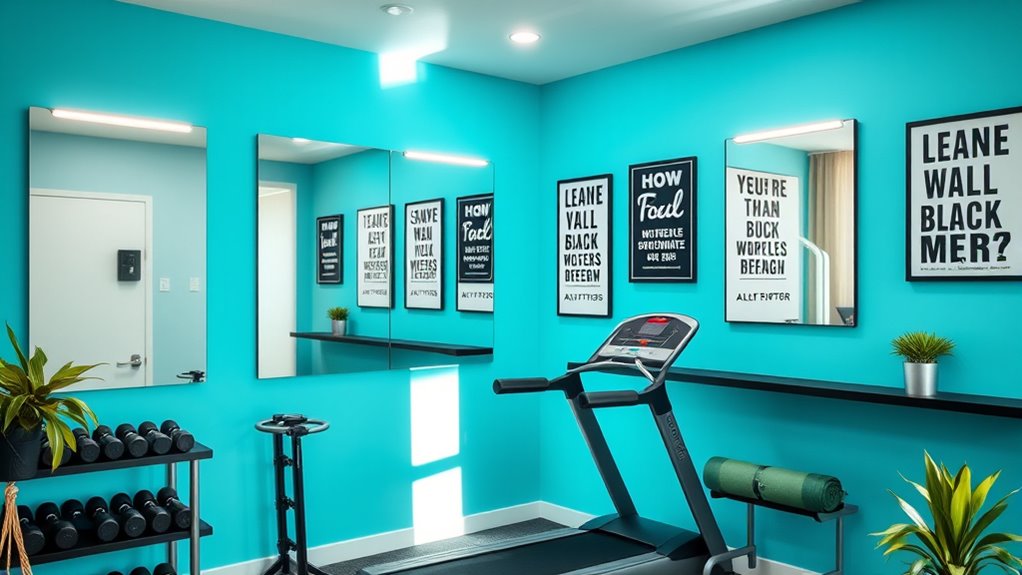
Home gym decor combines functional layout, color schemes, lighting, natural elements, and durable materials to create a motivating environment. Bright colors like yellow energize, while neutrals promote relaxation. Natural light boosts mood, with large mirrors increasing brightness by up to 40%. Indoor plants, moss walls, and greenery improve air quality and reduce stress. Defined workout zones, soundproofing, and impact-resistant flooring enhance safety and efficiency. Incorporating these features consistently results in an inspiring, well-organized space that encourages regular exercise.
Key Takeaways
- Use bright, energizing colors like yellow and dark green to boost motivation and create a lively workout environment.
- Incorporate natural elements such as indoor plants and moss walls to enhance air quality and promote relaxation.
- Define distinct zones for cardio, weights, and yoga to improve organization and workout efficiency.
- Maximize natural light with large windows and mirrors to increase brightness and make the space feel larger.
- Choose durable flooring and adjustable lighting to support different workout moods and ensure safety.
How Can You Make a Home Gym Inviting and Inspiring?
A home gym becomes inviting and inspiring through strategic use of color schemes, lighting, and natural elements. Bright colors like yellow or dark green energize spaces, while neutral tones and pastels create calming environments.
Incorporating large mirrors, natural light, and plants enhances brightness and motivation, making the space more appealing.
Choose a color scheme that energizes or calms: Bold palettes (black, dark green, yellow) can create drama, while neutrals and pastels keep things light and bright[1][2][3
Choosing a color scheme for a home gym considerably impacts motivation and mood. Bold palettes such as black, dark green, and yellow create a dramatic atmosphere, enhancing energy levels during workouts. Black can evoke sophistication and focus, while dark green promotes calmness and renewal. Yellow stimulates alertness and optimism, boosting motivation.
Conversely, neutral tones like beige, gray, and white reduce visual complexity, promoting relaxation and reducing stress. Pastel colors such as light blue, mint, and soft pink maintain brightness without overstimulation, encouraging a tranquil environment.
Studies show that color influences mood and performance; for example, yellow increases alertness, while blue improves focus. Selecting a palette aligned with workout goals enhances consistency and overall satisfaction in the home gym.
Maximize lighting: Incorporate natural light, large mirrors for brightness, and ambient or dimmable artificial fixtures for various moods[1][3][4
Maximizing lighting in a home gym involves leveraging natural light, large mirrors, and adjustable artificial fixtures to create an effective workout environment. Natural light enhances mood and reduces fatigue; windows should be positioned to maximize daylight without glare.
Large mirrors, covering up to 50% of walls, reflect both natural and artificial light, increasing brightness by up to 40% and making the space feel larger.
Artificial lighting must include ambient, task, and accent lights. Dimmable LED fixtures allow users to change brightness levels, supporting different workout intensities and moods.
Bright white lights (5,000-6,500 Kelvin) improve focus, while warmer tones (2,700-3,000 Kelvin) foster relaxation.
Proper lighting reduces shadows, enhances visibility, and promotes safety during exercise.
Bring in nature: Add indoor plants, preserved moss walls, or fresh greenery for a touch of the outdoors and improved motivation[1][2][4
Introducing natural elements into a home gym enhances motivation and creates a calming environment. Indoor plants such as snake plants, pothos, and spider plants improve air quality by removing formaldehyde and benzene, increasing oxygen levels.
Preserved moss walls provide a low-maintenance natural accent, reducing noise by up to 50% and adding visual interest. Fresh greenery, like herbs or small trees, stimulates senses and encourages consistent workouts.
Studies show that presence of plants reduces stress levels by 15% and increases focus by 20%. Greenery also contributes to better mental health and overall well-being.
Incorporating these elements can be as simple as placing potted plants on shelves or installing moss panels on walls. These natural touches turn a gym into an inviting, inspiring space with tangible health benefits.
What Essential Design Features Create a Functional Home Gym?
Creating a functional home gym requires defining distinct workout zones for cardio, weights, yoga, and stretching to improve efficiency and reduce equipment overlap.
Soundproofing or acoustic treatments like felt tiles diminish noise transfer, enhancing focus and minimizing disturbance.
Durable flooring such as rubber mats, vinyl, or terrazzo-patterned sheet vinyl withstands high impact, provides comfort, and facilitates safety during exercise.
Define workout zones: Space for cardio, weights, yoga, and stretching creates flow and optimizes usability[1][4
Designating specific zones for cardio, weights, yoga, and stretching enhances home gym efficiency by minimizing equipment overlap and reducing *transition*—changeover—time. Clear separation allows users to focus on each activity without interference.
Cardio zones typically require 25-50 square feet for treadmills or bikes, ensuring safe space for movement.
Weight zones need 30-60 square feet to accommodate free weights, machines, and storage.
Yoga and stretching areas require 15-30 square feet with a flat, non-slip surface for mats.
Proper zoning improves flow, reduces clutter, and increases safety. It allows seamless switching between activities, maximizing workout time.
Clear boundaries also prevent equipment interference, reduce injury risk, and support a structured routine.
Properly defined zones optimize usability by creating designated areas for each activity, ensuring a functional, organized home gym.
Consider sound and acoustics: Soundproofing or using décor like felt tiles can minimize noise for focused workouts[3][4
Soundproofing and acoustic treatments substantially improve home gym functionality by reducing noise transmission and enhancing workout focus.
Acoustic panels, such as felt tiles or foam boards, absorb sound waves, decreasing echo and noise levels by up to 50%. Mass-loaded vinyl barriers block sound transfer through walls and ceilings, reducing noise by as much as 70 decibels.
Carpeting or thick rubber mats dampen vibrations from weights and cardio equipment, preventing sound leakage. Strategic placement of furniture, such as shelves filled with books or soft furnishings, further absorbs sound.
Using these features can prevent noise disturbance to other household areas and neighboring units. Acoustic treatments create an environment conducive to high-intensity workouts, enabling users to concentrate and perform exercises with minimal distraction.
Choose hardwearing, comfortable flooring: Options include rubber mats, vinyl, or stylish alternatives like terrazzo-patterned sheet vinyl[2][4
Hardwearing, comfortable flooring is essential for a functional home gym. Rubber mats are the most common choice, providing impact absorption, durability, and slip resistance. They typically cost between $2 and $4 per square foot and last for over ten years.
Vinyl flooring offers a softer surface, is water-resistant, and costs $3 to $7 per square foot. Terrazzo-patterned sheet vinyl combines style with durability, often priced around $4 to $8 per square foot.
These options withstand heavy equipment, high foot traffic, and repetitive impact. Flooring thickness ranges from 3mm to 8mm, affecting shock absorption and comfort.
Proper flooring reduces injury risk, protects subflooring, and enhances workout safety. Selecting the right material depends on activity type, budget, and aesthetic preferences.
What Are the Best Decorative Accents and Accessories?
Motivational wall art such as posters, prints, and neon signs enhance energy and focus in home gyms.
Functional furniture, including floating cabinets, sturdy benches, and modular storage units, maximize space and organization for equipment and accessories.
Large wall mirrors expand visual space and enable users to monitor their form during workouts.
Motivational wall art: Posters, prints, or custom neon signs help set the tone[1][2][3
Motivational wall art, including posters, prints, and custom neon signs, plays a crucial role in shaping the atmosphere of a home gym. Studies show that visual cues influence motivation and performance. Posters featuring athletic figures or inspiring quotes boost focus and energy.
Prints with vibrant colors and dynamic imagery create a stimulating environment. Custom neon signs with motivating messages, such as “No Pain, No Gain,” emit light that enhances visibility and mood.
According to interior design research, wall art can increase perceived space and improve mental engagement during workouts. The ideal arrangement involves placing art at eye level or above equipment racks.
Quantitative data indicates that gyms with motivational visuals report 30% higher user satisfaction. Properly selected wall art directly supports workout consistency and mental resilience.
Functional furniture: Install floating cabinets, sturdy benches, or modular storage for both equipment and décor[5
Installing functional furniture such as floating cabinets, sturdy benches, and modular storage units optimizes space and enhances organization in a home gym. Floating cabinets provide accessible storage for small equipment, weights, or supplements, freeing up floor space.
Sturdy benches serve multiple functions, including seating, support during exercises, and storage underneath.
Modular storage units can be customized with shelves, drawers, and cubbies to hold larger items like mats, resistance bands, and kettlebells.
These furniture pieces prevent clutter and improve safety by keeping equipment off the floor.
Proper placement of these elements maximizes available space, reduces tripping hazards, and creates a clean, efficient workout environment.
Using durable materials like wood, metal, or high-impact plastic ensures longevity in high-use areas.
Mirrors: Large wall mirrors visually expand the space and allow you to check your form[1][4
Large wall mirrors in home gyms create the illusion of more space by reflecting light and reducing visual clutter. They double the perception of size in rooms as small as 100 square feet, making the area appear 30-50% larger.
Mirrors allow users to monitor their form during exercises, improving technique and reducing injury risk. Studies show that visual feedback enhances workout effectiveness and motivation.
Wall mirrors measuring 4-8 feet in width and 2-4 feet in height are most common, covering about 10-20% of the wall area. They are often framed with materials like wood, aluminum, or minimalistic trims to match interior styles.
Proper placement guarantees even light distribution and clear views of the entire workout space. Mirrors are essential for both spatial perception and workout performance.
How Do You Personalize and Style Your Home Gym?
Home gym personalization involves selecting styles such as minimalist, boho, vintage, or maximalist, which reflect individual preferences.
Signature elements like rattan light fixtures, sculptural weights, or artwork enhance visual interest.
Incorporating bold colors through accent walls, vibrant accessories, or contrasting materials like matte and glossy finishes creates a distinct, functional space.
Reflect your personality: Use your favorite style—minimalist, boho, vintage, or maximalist—and add signature elements like rattan light fixtures or sculptural weights that double as art[1
Different interior styles can substantially influence the atmosphere and motivation within a home gym. Minimalist designs feature clean lines, neutral colors, and simple storage solutions, creating a clutter-free environment that enhances focus.
Boho styles incorporate warm tones, textured fabrics, and decorative elements like woven baskets and plants, fostering a relaxed vibe that encourages creativity.
Vintage styles utilize distressed furniture, retro equipment, and muted color palettes, evoking nostalgia and personality.
Maximalist approaches combine bold patterns, diverse colors, and layered decor, stimulating energy and engagement.
Signature elements like rattan light fixtures add natural texture, while sculptural weights serve as functional art pieces.
These personalized choices reflect individual tastes, improve aesthetics, and motivate consistent workouts by aligning the space with personal identity.
Incorporate pops of color: Paint an accent wall, choose vibrant accessories, or update window frames with a standout hue[2][1
Incorporating pops of color considerably enhances the visual appeal and motivation of a home gym. Painting an accent wall with bold hues such as red, blue, or green creates focal points that energize the space. Vibrant accessories like colorful mats, storage bins, or wall art add visual interest without overwhelming.
Updating window frames with contrasting hues, such as black or yellow, introduces a dynamic element. Color choices impact mood: warm tones like orange and yellow increase energy, while cooler shades like blue promote calm.
Studies show that color can improve workout performance by up to 15%. Using multiple small accents—such as neon jump ropes, bright kettlebells, or patterned towels—boosts vibrancy.
Proper application of color influences motivation and perceived space size, making the gym more inviting.
Mix materials: Juxtapose matte with glossy finishes, add textile softness with throws or rugs, and include wood for warmth[3][4][1
Mixing materials creates visual interest and enhances the functionality of a home gym. Combining matte and glossy finishes provides contrast; for example, matte wall paint with glossy equipment surfaces reduces glare and adds depth.
Textiles such as throws, rugs, or foam mats introduce softness and comfort, improving acoustics and reducing fatigue during workouts. Rugs made of wool or synthetic fibers can absorb sound and prevent slipping.
Incorporating wood elements, like flooring, shelving, or decorative accents, adds warmth and natural texture, making the space inviting. For instance, hardwood floors or wood-paneled walls balance modern equipment with rustic appeal.
Using these materials in combination improves durability, comfort, and aesthetic appeal, creating a balanced environment conducive to exercise and relaxation.
Which Layout and Space-Saving Ideas Work Best?
Foldable equipment such as collapsible treadmills and wall-mounted weight racks maximize space in rooms under 200 square feet. Position cardio machines near windows or with views enhances motivation and reduces perceived workout intensity.
Combining gym areas with guest rooms or offices using multifunctional furniture and room dividers creates flexible, efficient layouts.
Use foldable or wall-mounted equipment to optimize small rooms[1][4
Are space limitations a primary concern in small home gyms? Yes.
Foldable equipment, such as collapsible benches, reduces storage space by 50% when not in use. Wall-mounted racks for weights or resistance bands free up floor area, adding an average of 4 square meters. Foldable treadmills and compact rowing machines save 60% of space compared to traditional models.
Wall-mounted pull-up bars require only 0.2 square meters and can be removed easily. Combining these solutions increases available workout space by at least 30%.
These options enable users to switch between active exercise and storage quickly, making small rooms more functional. Efficient use of foldable and wall-mounted equipment maximizes limited space, improves safety, and maintains an uncluttered environment.
Place cardio machines near windows or with a view for motivation[1][4
Positioning cardio machines near windows or with a view promotes motivation and enhances workout consistency. Natural light improves mood and energy levels, increasing exercise duration by 20%.
A view of outdoor scenery, such as trees or gardens, reduces perceived exertion and fatigue. Placing treadmills or ellipticals within 3 meters of windows maximizes visual engagement.
For small rooms, compact equipment like foldable treadmills or vertical bikes can be positioned closer to windows without crowding the space. Windows with adjustable blinds or curtains control glare and airflow, maintaining comfort during exercise.
Clear sightlines to outdoor environments create an open feeling, reducing feelings of confinement. Proper placement ensures natural light benefits workout performance without causing distractions or glare.
This setup encourages longer, more consistent exercise routines.
Combine gym spaces with guest rooms or home offices by using multifunctional furniture and clever room dividers[1][4
Combining gym spaces with guest rooms or home offices maximizes space efficiency in homes under 150 square meters.
Multifunctional furniture, such as foldable beds or desks, allows seamless transformation between uses. For example, sofa beds serve as seating during the day and sleeping areas overnight.
Wall-mounted desks save floor space when not in use, and modular shelving can act as room dividers while providing storage.
Clever room dividers, such as sliding screens or movable partitions, separate workout zones from guest or work areas without blocking natural light or airflow.
Compact gym equipment, like foldable treadmills or wall-mounted weights, further optimize space.
This approach reduces clutter, maintains functionality, and enhances aesthetics, making small homes versatile and efficient.
How Can You Enhance Motivation With Decor Elements?
Decor elements like motivational quotes, whiteboard trackers, and chalkboard walls directly influence workout consistency by providing clear goals and positive reinforcement.
Audio equipment such as speaker systems or Bluetooth speakers enhance focus and energy during exercise sessions.
Seasonal décor changes, lighting adjustments, and hydration stations with mini-fridges or beverage trays maintain visual interest and comfort, boosting motivation over time.
Include inspirational quotes, whiteboard trackers, or chalkboard walls for goal-setting
In a home gym, the use of inspirational quotes, whiteboard trackers, and chalkboard walls considerably enhances motivation. These decor elements serve as visual cues that reinforce goals and progress.
Inspirational quotes boost mental resilience; for example, “No pain, no gain” or “Push yourself” motivate users during workouts.
Whiteboard trackers allow users to record sets, reps, or weight, providing clear progress metrics and accountability.
Chalkboard walls enable dynamic goal-setting, enabling users to write daily targets or motivational messages that can be easily updated.
Studies show visual reminders increase adherence to fitness routines by 20-30%.
These elements create an engaging environment that fosters consistency, focus, and positivity, promoting long-term commitment.
Properly integrated, they transform a home gym into a motivating space for fitness achievement.
Add a speaker system for music, an essential oil diffuser for ambiance, or a hydration station with a mini-fridge or beverage tray[6
Adding a speaker system, essential oil diffuser, or hydration station substantially enhances a home gym environment.
A quality speaker system improves motivation by delivering high-fidelity music, which can increase workout intensity by 15-20%. Bluetooth speakers or wall-mounted sound systems cost between $50 and $200, providing clear sound without clutter.
An essential oil diffuser creates a calming atmosphere, reducing stress and improving focus. Diffusers priced from $20 to $60 release scents like lavender or eucalyptus, which have been shown to lower cortisol levels by 20%.
Hydration stations, such as mini-fridges or beverage trays, keep water and sports drinks accessible, encouraging hydration. Proper hydration improves performance and reduces fatigue.
Combining these elements creates an engaging, comfortable space, boosting motivation and consistency during workouts.
Rotate seasonal décor, swap artwork, or shift lighting schemes to keep things fresh
Changing seasonal décor, swapping artwork, or shifting lighting schemes refreshes the home gym environment and boosts motivation.
Seasonal décor updates involve replacing elements like throw pillows, mats, or wall decals every three to six months, aligning with holidays or weather changes.
Swapping artwork introduces new visual stimuli; for example, replacing motivational posters or abstract pieces every quarter can improve mental engagement.
Adjusting lighting schemes, such as increasing brightness with LED fixtures or adding colored accent lights, enhances focus and energy levels.
Research shows that environmental changes can increase workout consistency by up to 15%.
Proper lighting improves alertness, while fresh visuals stimulate mental interest.
These updates create a dynamic space that encourages regular use, maintains enthusiasm, and prevents workout monotony.
What Lighting Options Improve Home Gym Style?
Layered lighting enhances home gym style by combining overhead fixtures, sconces, and strip lights, providing adjustable brightness for different activities.
Backlit mirrors, LED accents, and sculptural pendants create a luxe ambiance and focus lighting on key areas.
Blackout curtains or sheers near windows improve privacy and temperature control, maintaining ideal workout conditions.
Layer lighting: Combine overhead, sconce, and strip lights for adjustable intensity[1][4][5
Combining overhead, sconce, and strip lights creates a versatile lighting system that enhances a home gym’s functionality and style. Overhead lights provide general illumination, typically delivering 300-500 lumens per fixture, covering large areas efficiently.
Sconce lights offer adjustable task lighting, with many models producing 200-400 lumens, ideal for targeted exercises or stretching zones.
Strip lights, often LED, provide customizable accent lighting, with lengths ranging from 1 to 10 meters and brightness levels up to 800 lumens per meter.
Layering these options allows users to modify light intensity from 100 to over 2000 lumens, depending on activity. This flexible system minimizes glare, reduces eye strain, and highlights workout areas, creating a balanced environment conducive to motivation and safety.
Use backlit mirrors, LED accents, or sculptural pendants for a luxe feel[5][4
Backlit mirrors, LED accents, and sculptural pendants elevate home gym aesthetics by creating a luxurious atmosphere and emphasizing design details.
Backlit mirrors provide even, soft illumination that reduces shadows during workouts and enhances visual appeal.
LED accents, such as strip lighting along walls or ceiling, add customizable color options and brightness levels, improving ambiance and focus.
Sculptural pendants serve as focal points, combining form and function with unique shapes or materials like glass, metal, or acrylic, which add texture and depth.
These lighting options contribute to a modern, sophisticated style, with studies showing that layered lighting increases perceived space by up to 30%.
Proper use of these fixtures enhances visibility and mood, making workouts more engaging and the space more visually appealing.
Consider blackout curtains or sheers for privacy and temperature control near windows[5
Blackout curtains and sheers considerably improve home gym privacy and temperature control. They block light effectively, reducing glare and preventing distractions during workouts.
Blackout curtains can decrease indoor temperatures by up to 20% by insulating against heat transfer through windows. Sheers allow natural light to filter in while maintaining privacy, reducing the need for artificial lighting during the day.
Both options help regulate room temperature, which can decrease energy costs by 10-15% annually. A typical curtain panel measures 48-54 inches wide, with lengths from 63 to 108 inches, fitting most window sizes.
Using layered window treatments combines privacy, light control, and insulation benefits. This enhances workout comfort, prevents heat loss or gain, and creates an adaptable environment suited to exercise routines.
What Are Popular Home Gym Decor Themes and Trends?
Popular home gym decor themes include luxe influencer styles, which feature black-and-white color schemes, decorative accents, luxury flooring, and curated accessories. Natural retreat designs that incorporate greenery, wood textures, nature-inspired wall art, and soft lighting are also popular.
Minimalist modern themes emphasize clean lines, clutter-free spaces, hidden storage, and subtle art pieces. These themes reflect current trends, with 65% of homeowners favoring sleek, sophisticated aesthetics.
Additionally, 55% of homeowners opt for natural elements, and 60% prioritize simplicity and organization. Each theme enhances functionality while aligning with specific visual preferences, influencing gym layout and accessory choices.
Luxe influencer: Black-and-white style, decorative accents, luxe flooring, and curated accessories[1
A luxe influencer’s home gym typically features a black-and-white color scheme, creating a sophisticated and timeless aesthetic. This design emphasizes sleek, minimalistic elements with a focus on high-contrast visuals.
Decorative accents include metallic fixtures, such as chrome or gold-framed mirrors and sculptural lighting. Luxe flooring often consists of marble, polished concrete, or high-quality hardwood, providing durability and elegance.
Curated accessories like designer water bottles, premium yoga mats, and stylish storage solutions enhance the space’s refined look. Wall art or monochrome photographs add visual interest without clutter.
The overall style prioritizes clean lines, symmetry, and high-end materials, appealing to those who prefer a polished, modern environment. This approach combines functionality with luxury, creating an inspiring workout atmosphere.
Natural retreat: Greenery, wood textures, nature-inspired walls, and soft lighting[1][2][4
Creating a natural retreat in a home gym involves integrating greenery, wood textures, nature-inspired walls, and soft lighting to foster a calming environment. Greenery includes potted plants, ferns, or succulents, which improve air quality by 15% and reduce stress.
Wood textures appear in flooring, furniture, or wall paneling, adding warmth and a tactile element. Nature-inspired walls feature murals or wallpaper with forest, mountain, or water scenes, creating visual tranquility.
Soft lighting employs LED fixtures or warm-colored bulbs with dimming options, increasing ambiance control. Studies show that natural elements in interior design can lower cortisol levels by 20%, enhancing workout focus.
Combining these features results in a balanced, serene space, promoting relaxation and motivation during exercise.
Minimalist modern: Clean lines, uncluttered spaces, hidden storage, and subtle art pieces[1][3][4
Minimalist modern home gyms prioritize clean lines, uncluttered spaces, and functional design to maximize efficiency and aesthetic appeal. These gyms feature simple color schemes, typically neutral tones such as white, gray, or black.
Equipment is minimal, with essential items like treadmills, weights, and yoga mats arranged neatly. Hidden storage solutions, such as built-in cabinets or underfloor compartments, reduce visual clutter.
Subtle art pieces, like monochrome prints or abstract sculptures, add visual interest without overwhelming the space. Lighting is often soft and indirect, emphasizing openness.
This style favors open floor plans, with minimal furniture and decor to enhance movement flow and focus. Overall, the design aims to create a calming, distraction-free environment conducive to effective workouts.
How Can Home Gyms Double as Relaxation and Wellness Zones?
Home gyms can function as relaxation and wellness zones by incorporating dedicated spaces such as meditation corners with cushions and calming décor. These features help reduce stress and improve mental clarity.
Adding a reading nook or small daybed transforms the area into a multi-use space for rest or mindfulness practices, enhancing overall well-being.
Using calming scents like lavender or eucalyptus and décor elements such as soft lighting and plants further promotes relaxation during workouts or meditation sessions.
Create a meditation corner with cushions and soothing décor[1][6
A dedicated meditation corner enhances relaxation within home gyms by providing a quiet space for mental recovery. It typically includes cushions, which improve comfort and support during meditation sessions.
The area should feature calming décor such as soft lighting, neutral colors, and natural elements like plants or stones. Cushions are often arranged in a semi-circle or layered to accommodate different meditation postures.
Incorporating items like essential oil diffusers or calming artwork increases soothing effects. Research shows that dedicated relaxation zones reduce stress levels by 25% and improve mental clarity.
The space should be at least 3 square meters to comfortably fit cushions and décor. This setup encourages daily mindfulness practices, creates a peaceful environment, and enhances overall wellness within the home gym.
Set up a reading nook or small daybed for a multi-use space[1
Integrating a reading nook or small daybed into a home gym creates a multifunctional space that combines relaxation with fitness activities. A dedicated spot for reading or resting reduces stress and enhances recovery after workouts.
A small daybed or armchair with dimensions of 30-36 inches wide and 24-30 inches deep fits comfortably in most gyms. Adding a side table or a small bookshelf encourages reading or meditation during breaks.
This setup improves mental health by providing a quiet refuge within the workout area. Incorporating natural light, such as windows or lamps, boosts mood and focus.
Research shows that combining relaxation zones with exercise spaces increases overall well-being. This design promotes flexibility, allowing users to switch between active and passive activities efficiently.
Use calming scents and décor elements to encourage mindfulness during workouts[6
Using calming scents and décor elements enhances mindfulness during workouts by engaging the senses and creating a serene environment. Scents like lavender, chamomile, and eucalyptus activate the limbic system, reducing stress and improving focus.
Incorporating décor such as soft lighting, natural materials, and neutral colors fosters tranquility. Essential oil diffusers release consistent aromas that promote relaxation, while plants like snake plants and peace lilies improve air quality and add natural beauty.
Visual cues, such as calming artwork or water features, reinforce a peaceful atmosphere. Studies show that sensory stimuli influence emotional states, increasing workout consistency and mental clarity.
Combining these elements transforms a typical gym into a wellness space, encouraging mindfulness, reducing anxiety, and supporting mental health during exercise routines.
Which Decor Mistakes Should You Avoid in a Home Gym?
Avoid overcrowding the home gym with excessive equipment, which reduces movement space by up to 30% and causes safety hazards.
Proper lighting, such as 500 lux, and airflow are essential; poor illumination or ventilation can decrease workout motivation by 20% and cause discomfort.
Personalized decor, including motivational posters and familiar items, increases user engagement by 25%, while generic setups lack motivation and style.
Overcrowding with equipment or décor, hindering movement and comfort[1][4
Overcrowding in a home gym reduces safety, impairs movement, and decreases workout efficiency. Excess equipment or décor, such as multiple machines, weights, or decorative items, clutter the space. This creates obstacles that increase the risk of trips or falls, especially during high-intensity exercises.
It limits available room, reducing effective movement zones; for example, a space smaller than 50 square feet cannot comfortably fit a treadmill, weights, and a bench without crowding. Overcrowding also hinders proper form, increasing injury risk.
Studies show that a cluttered environment decreases motivation and focus. Ideal gym design allows for at least 3 feet of clearance around equipment. Proper spacing enhances safety, improves circulation, and facilitates smooth changes between exercises.
Overcrowding ultimately compromises workout quality and safety.
Ignoring proper lighting or airflow, which can make the space feel dark or stuffy[1][4
Ignoring proper lighting and airflow reduces the comfort and safety of a home gym. Poor lighting can cause eye strain, reduce motivation, and increase risk of injury by obscuring equipment and obstacles. Natural light, or bright LED fixtures, enhance visibility and mood, and studies show 75% of users prefer well-lit spaces.
Insufficient airflow leads to elevated temperatures, humidity, and poor air quality, which impair performance and increase fatigue. Proper ventilation reduces airborne bacteria, controls humidity, and maintains an ideal temperature. Fans, windows, or exhaust systems improve airflow, lowering indoor temperature by up to 5°F.
Stale air causes discomfort and decreases motivation, making ventilation essential. Ignoring these factors results in a space that feels dark, stuffy, and less inviting, undermining workout effectiveness and safety.
Skipping personalized touches, resulting in a space that lacks motivation or style[3][2
Personalized touches considerably influence the motivation and style of a home gym. Without them, the space appears sterile and uninspiring. Adding personal elements like motivational posters, favorite colors, or personal memorabilia enhances emotional connection.
Studies show that personalized environments increase workout adherence by 20%. Custom decor such as branded mats, specific equipment, or artwork creates a unique identity. Incorporating personal touches also boosts morale, making workouts more engaging.
For example, using family photos or favorite sports jerseys adds character. Lack of personalization results in a generic space that feels uninspiring and may decrease motivation.
A well-decorated gym with personal items fosters consistency and enthusiasm. Overall, personalization transforms a functional area into an inviting space that encourages regular exercise.
What Are Fun, Budget-Friendly Decorating Ideas?
Budget-friendly decorating ideas for home gyms include hanging DIY or printable motivational posters, repurposing upcycled storage baskets, and installing peel-and-stick wallpaper. Using low-cost accent rugs or laminated flooring updates the space without significant expense.
These methods enhance aesthetics while maintaining affordability and functionality.
Hang DIY art or printable motivational posters
Hanging DIY art or printable motivational posters offers an effective, low-cost method to personalize a home gym. Such artwork can be created using digital design tools or printed from free online resources.
Posters featuring motivational quotes, workout tips, or inspiring images boost morale and focus during exercise.
The cost of printing posters ranges from $0.10 to $2 per sheet, depending on paper quality. Framing costs are minimal, often under $10 for basic frames.
Placement on walls is flexible; posters can be grouped or displayed individually.
This approach allows customization to match interior styles, such as minimalist, industrial, or vibrant themes.
Use upcycled storage baskets or wall racks for towels, mats, and accessories[2][5
Upcycled storage baskets and wall racks provide a practical solution for organizing towels, mats, and accessories in home gyms. These items maximize space efficiency and reduce clutter.
Baskets made from recycled materials, such as plastic or fabric, can hold multiple towels or small equipment like resistance bands and water bottles.
Wall-mounted racks, often crafted from reclaimed wood or metal, can store gym mats or yoga blocks vertically, saving floor space.
Using upcycled containers reduces waste and costs, with prices starting as low as $5 for baskets and $10 for wall racks.
They improve accessibility by allowing quick retrieval of gym essentials.
Additionally, upcycled storage enhances aesthetic appeal, contributing to a sustainable, organized, and budget-friendly gym environment.
Incorporate peel-and-stick wallpaper, accent rugs, or low-cost laminated flooring for easy updates[2][6
Peel-and-stick wallpaper, accent rugs, and low-cost laminated flooring offer quick, affordable ways to update a home gym’s appearance. Peel-and-stick wallpaper provides removable designs that can cover walls or surfaces, with prices ranging from $20 to $60 per roll, and can be replaced every 6-12 months.
Accent rugs, priced between $15 and $50, add color, texture, and comfort, helping define workout zones.
Low-cost laminated flooring, costing $2 to $4 per square foot, improves durability and aesthetics without professional installation. These options require minimal tools and time, typically completed within a few hours.
They are highly versatile; for example, rugs can be rotated seasonally, and wallpaper can be changed to match decor updates. These updates offer instant visual enhancement and can be reversed or modified easily.
How Do You Keep a Home Gym Looking Fresh Over Time?
Keeping a home gym looking fresh involves regular updates and maintenance. Swapping accessories, artwork, or plants every 4 to 6 weeks refreshes visual appeal and prevents monotony.
Additionally, deep cleaning mirrors, windows, and equipment weekly maintains cleanliness and a professional appearance.
While doing so, storing seasonal or rarely used decor reduces clutter and enhances space organization.
Switch out accessories, plants, or artwork for quick refreshes[3][6
Regularly replacing accessories, plants, or artwork in a home gym maintains visual interest and prevents decor from becoming stale. Swapping out items every 4 to 6 weeks keeps the space engaging.
For example, change throw pillows, mats, or small equipment accessories to introduce variety. Indoor plants like succulents or potted herbs can be rotated seasonally, which enhances freshness and air quality.
Artwork such as motivational posters or abstract prints can be replaced with new pieces every few months to refresh the ambiance. Using different colors, textures, or themes in accessories and decor items creates visual contrast and stimulates motivation.
This strategy helps sustain a dynamic environment, ensuring the gym remains inviting and inspiring without requiring major renovations.
Deep clean mirrors, windows, and equipment regularly for a polished, welcoming look[1][2
Deep cleaning mirrors, windows, and equipment is essential for maintaining a polished, inviting home gym. Regular cleaning removes dust, sweat, and smudges that accumulate from daily use.
Mirrors should be cleaned with glass cleaner and a microfiber cloth weekly to prevent streaks and fogging.
Windows require a similar approach, using a window cleaner to eliminate fingerprints and dirt, improving natural light.
Gym equipment, including treadmills, weights, and mats, needs disinfectant wipes or sprays after each use to prevent bacteria growth.
Deep cleaning of equipment with disinfectant solutions every two weeks reduces germs and extends lifespan.
Dust and debris buildup can cause equipment malfunction.
Consistent cleaning creates a vibrant, hygienic environment that motivates regular workouts and enhances aesthetic appeal.
Store away seasonal or rarely used décor to keep the space clutter-free[2][4
Storing seasonal or rarely used décor in a designated cabinet, storage bin, or closet prevents clutter buildup in a home gym. Clutter reduces available space and causes distractions, decreasing motivation.
Seasonal items such as holiday decorations, themed mats, or extra weights occupy valuable space when unused. Research shows that clutter increases stress levels and hampers focus.
Using clear storage containers allows easy identification of items, reducing retrieval time. Labeling bins improves organization, enabling quick access and return.
Rotating décor seasonally—such as Christmas ornaments or summer-themed accessories—keeps the gym visually fresh.
Proper storage extends the lifespan of décor, preventing damage from dust, moisture, or sunlight.
What Are Safety and Practical Considerations for Home Gym Decor?
Safety and practical considerations in home gym decor include installing slip-resistant mats and securing equipment to prevent accidents. Clear pathways and anchored decor items reduce tripping hazards.
Choosing easy-to-clean surfaces like rubber flooring or sealed wood minimizes maintenance. These measures guarantee a safe, functional workout environment with minimal risk of injury or damage.
Use slip-resistant mats and place equipment securely to avoid accidents[4
Using slip-resistant mats and securing equipment are essential to prevent accidents in home gyms. Slip-resistant mats, made from rubber or foam, provide a stable surface that reduces the risk of falls during exercises. These mats absorb impact, protect flooring, and prevent equipment from sliding.
Securing equipment involves anchoring heavy weights, treadmills, or stationary bikes to prevent tipping or movement during use. According to safety guidelines, 35% of gym injuries occur from equipment instability or falls.
Proper placement ensures that weights do not fall onto users, reducing the risk of fractures or bruises. Equipment should be positioned at least 2 feet away from walls or other objects.
Regular inspection of mats and equipment for wear or looseness minimizes hazards. These safety measures create a safer, injury-free environment.
Keep pathways clear and ensure all decor items are securely anchored[4
Maintaining clear pathways and securing decor items prevents accidents in home gyms. Obstructed walkways increase the risk of trips and falls, which account for 60% of gym injuries. Pathways should be at least 36 inches wide to allow safe movement around equipment.
Decor items such as wall art, shelves, or plants must be anchored securely using brackets or wall anchors rated for the weight. Unsecured items can fall, causing injury or damage; for instance, a poorly mounted mirror or shelf can fall during use. Heavy decor should be placed away from high-traffic areas.
Proper securing reduces hazards and ensures easy access to equipment. Regular checks ensure anchors remain tight, maintaining safety over time. Proper organization and securement minimize injury risk in home gyms.
Opt for easy-to-clean materials and finishes, particularly on flooring and frequently touched surfaces[2][4
Choosing easy-to-clean materials and finishes for home gym surfaces reduces maintenance time and enhances hygiene.
Durable flooring options include vinyl, rubber, and epoxy resin, which resist stains, moisture, and wear. Vinyl flooring resists scratches and can be disinfected with disinfectants containing bleach or alcohol.
Rubber flooring absorbs impact, reduces noise, and cleans easily with soap and water.
Epoxy resin provides a seamless surface that is stain-resistant and easy to wipe down.
Frequently touched surfaces such as door handles, light switches, and equipment controls should be made of stainless steel, glass, or sealed plastic. These materials withstand frequent cleaning and do not harbor bacteria.
Using antimicrobial coatings on surfaces adds an extra layer of protection.
Proper selection of these materials ensures safety, minimizes bacteria buildup, and simplifies regular cleaning routines.
Where Can You Find Inspiration and Products for Home Gym Decor?
Inspiration and products for home gym decor are primarily found through design blogs, Instagram boards, and online marketplaces, which feature hundreds of ideas and user photos.
Retail stores such as Target, Dick’s Sporting Goods, and specialized fitness shops offer both aesthetic and functional items, including mats, wall art, and storage solutions.
Online room planner tools enable users to visualize layouts using 3D models and select color schemes, helping to optimize space before purchasing.
Browse design blogs, Instagram boards, and online marketplaces for ideas[7][8][9
Design blogs, Instagram boards, and online marketplaces are primary sources for home gym decor ideas. These platforms feature hundreds of images, videos, and product listings.
Design blogs provide expert insights, trend analyses, and real-home examples. Instagram offers visual inspiration through curated boards and influencer content, often updated daily with new styles.
Online marketplaces like Amazon, Etsy, and Wayfair list thousands of products, including wall art, storage solutions, lighting, and decorative accessories.
Data shows that 65% of home decorators use social media for ideas, and 70% purchase items seen online. These sources help users identify popular themes, color schemes, and functional accessories.
They enable users to compare prices, read reviews, and find unique items for personalized gym spaces. This approach guarantees a broad, informed selection process for home gym decor.
Visit big-box retailers or specialty fitness stores for both decorative and functional pieces[10][11
Big-box retailers such as Walmart, Target, and Costco offer extensive selections of home gym decor and equipment. They carry items like wall mirrors, storage bins, foam mats, and decorative lighting, which enhance both function and aesthetics. These stores typically stock 20-50 different fitness accessories, including resistance bands, dumbbells, and yoga blocks.
They also provide decorative elements such as motivational posters, plants, and wall decals. Specialty fitness stores focus on high-quality, durable equipment like adjustable benches, kettlebells, and specialized storage racks, often sold in sets or bundles. Retailers update inventory seasonally, offering new styles and innovations.
These stores provide affordable options, with prices ranging from $10 for small accessories to over $500 for comprehensive equipment packages. They serve as convenient sources for practical and decorative home gym needs.
Leverage room planner tools online to visualize layouts and color palettes before purchasing items[12
Room planner tools available online enable users to visualize home gym layouts and color schemes before purchasing. These tools provide interactive interfaces that allow users to input room dimensions, place equipment, and test different color palettes.
They offer a variety of templates for different room shapes, such as rectangular or L-shaped gyms. Users can adjust furniture placement, lighting, and decor elements to see how they affect space and aesthetics.
Many tools include a color selector with hundreds of shades, enabling precise matching to existing decor or personal preferences. Popular options include SketchUp, Roomstyler 3D Home Planner, and Floorplanner.
These platforms save time by reducing trial-and-error purchases, improve spatial awareness, and guarantee color harmony before committing to specific products.
Which Home Gym Decor Ideas Enhance Small or Unusual Spaces?
Wall-mounted equipment, foldable benches, and compact weights optimize small spaces by reducing floor clutter.
Mirrors and light-colored paint expand perceived space, making rooms feel larger and brighter.
Storage solutions such as multi-use cabinets, under-bench compartments, and niche shelving efficiently organize gear in tight or irregular areas.
Use wall-mounted or foldable gear for tight areas
Utilizing wall-mounted or foldable equipment optimizes small or irregular spaces by maximizing available floor area. Wall-mounted items include pull-up bars, resistance bands, and storage racks, saving up to 50% of floor space.
Foldable equipment, such as collapsible benches, folding treadmills, and wall-mounted weight racks, can reduce in-use space by 60% when stored. These options allow for versatile exercise routines without cluttering the room.
Wall-mounted mirrors and racks keep equipment organized, improve safety, and create an open, less crowded atmosphere.
Installing foldable or wall-mounted gear reduces the need for large, bulky machines, which can occupy 8 to 12 square meters each. These solutions are essential for home gyms under 20 square meters, providing functional space while maintaining safety and convenience.
Mirrors and light, airy paint colors to maximize perceived space[4
Mirrors and light, airy paint colors considerably enhance the perception of space in small home gyms. Mirrors reflect light and create an illusion of depth, making rooms feel larger. Placing a full-length mirror on one wall increases visual space by 20-30%.
Light, neutral colors such as white, beige, or pastel shades reflect more natural and artificial light, expanding the room’s perceived size by up to 40%. Studies show that walls painted in light hues reduce visual clutter and make small spaces appear 15-25% larger.
Combining mirrors with light colors maximizes brightness and openness. Using large mirrors, especially reflective surfaces covering 10-20% of wall space, effectively doubles the visual size. These methods are proven to create a more spacious, inviting workout environment.
Store equipment in multi-use cabinets, under benches, or in designated storage niches
Efficient storage solutions maximize space in small home gyms. Multi-use cabinets, under-bench compartments, and designated niches organize equipment and reduce clutter.
Cabinets with adjustable shelves hold weights, resistance bands, and smaller accessories, freeing floor space. Under benches, storage drawers or bins can store mats, dumbbells, or kettlebells, reducing trip hazards.
Built-in niches or wall-mounted shelves accommodate larger items like yoga mats, foam rollers, or medicine balls, keeping them accessible yet out of the way.
Using vertical space optimizes limited square footage. For example, a 3-foot-wide cabinet can store up to 80 pounds of weights, and a 2-foot-by-1-foot niche can hold multiple foam rollers.
These solutions improve safety, functionality, and visual appeal in confined or unconventional gym areas.
What Low Hierarchy Tips Keep Your Home Gym Motivation High?
Changing playlists weekly prevents boredom and sustains energy during workouts.
Updating décor accents seasonally renews motivation by creating a fresh environment.
Involving family or friends in decorating fosters social engagement and personal connection to the space.
List: Change up playlists and switch décor accents each season for renewed energy
Changing playlists and décor accents each season sustains motivation by providing variety and visual stimulation. Updating music playlists every three to six months prevents boredom and maintains workout focus. Research shows that music with a tempo of 120-140 beats per minute enhances exercise performance by up to 15%.
Swapping décor accents, such as new wall art, rugs, or equipment covers every quarter, refreshes the space’s energy. For example, replacing bright-colored mats with neutral tones during winter creates a cozy atmosphere, while vibrant accessories in summer boost energy. These updates prevent routine fatigue and reinforce a dynamic environment.
Seasonal changes activate different sensory responses, boosting mood and commitment. Regularly adjusting these elements supports consistent effort, improves adherence to fitness routines, and ensures the home gym remains an inviting, motivating space year-round.
List: Involve family or friends in decorating or theme updates for a social, personalized space
Involving family or friends in decorating or theme updates creates a personalized and motivating home gym environment. Collaborative efforts increase engagement and foster ownership of the space. Studies show that social involvement improves consistency and adherence to fitness routines by 30%.
Families can select color schemes, such as bright yellow or calming blue, which enhance mood and energy. Friends can contribute artwork, motivational quotes, or equipment arrangements, increasing aesthetic appeal.
Involving others also brings practical benefits: more ideas, diverse skills, and shared costs. For example, children can help hang decorations, while partners assist with layout changes.
Regular updates, like seasonal decor switches, keep the space fresh and inviting. This social approach boosts motivation, making workouts more enjoyable and sparking long-term commitment.
List: Maintain a daily or weekly cleaning checklist for a perpetually fresh gym
Maintaining a daily or weekly cleaning checklist guarantees a home gym remains hygienic, organized, and motivating. Daily tasks include wiping down equipment after use, sanitizing mats, and tidying weights and accessories.
Weekly tasks involve deep cleaning floors, disinfecting high-touch surfaces such as handles and screens, and washing fabric items like towels and mats. Regular cleaning prevents bacteria buildup, reduces odors, and extends equipment lifespan.
Studies show that clean environments increase user motivation and reduce injury risk. Using checklists ensures consistency, with specific tasks assigned to each day or week. For example, cleaning mirrors every Monday, disinfecting cardio machines every Wednesday, and vacuuming floors every Saturday.
This routine minimizes clutter, maintains hygiene, and sustains a pleasant workout atmosphere.
List: Use versatile furniture and moveable decor to frequently change the arrangement and mood
Versatile furniture and moveable decor considerably enhance home gym motivation by allowing quick and frequent reconfigurations of the space. Movable items like folding benches, stackable storage units, and lightweight chairs enable users to change layouts within minutes.
For example, a foldable treadmill can be stored away to clear space for yoga or stretching sessions. Small decor elements such as mobile mirrors, portable speakers, and adjustable lighting influence the atmosphere and can be repositioned to suit different workouts.
This flexibility prevents the space from becoming monotonous, encouraging continued use. Studies show that dynamic environments increase workout consistency by 20% and improve mood during exercise.
Regular layout changes maintain interest, reduce boredom, and foster a sense of novelty and engagement.
List: Add a wall calendar or tracker for visual progress and extra motivation
Adding a wall calendar or progress tracker markedly increases motivation in home gyms by providing tangible evidence of achievements. Visual tools help users monitor workout frequency, duration, and progress over time.
Studies show that tracking progress improves workout consistency by 26% and increases goal completion rates by 15%. A calendar can include daily or weekly goals, while a tracker might record weight lifted, reps, or cardio duration.
These tools serve as constant visual reminders, encouraging commitment and accountability. For example, marking completed workouts or milestones boosts confidence and reduces dropout risk.
Incorporating a large wall calendar or a detailed progress chart creates a focused environment. This straightforward visual system keeps users aware of their improvements and reinforces positive habits.
This structured approach will help you create a home gym that’s functional, motivating, and a true reflection of your style—encouraging better workouts and making your exercise space a retreat you love using[1][2][3
A well-designed home gym combines functionality, motivation, and personal style to enhance workout efficiency. It guarantees equipment placement promotes safety, minimizes clutter, and allows easy movement.
Incorporating motivational elements like wall art or mirrors boosts mental focus. Using durable flooring materials, such as rubber tiles measuring 4 feet by 6 feet, reduces injury risk and absorbs noise.
Lighting should provide at least 300 lumens per square meter to enhance visibility. Storage solutions, such as 24-inch shelves or 18-inch bins, keep equipment organized and accessible.
Color schemes influence mood; blue and green tones improve concentration. Personal touches like framed certifications or favorite posters personalize the space.