
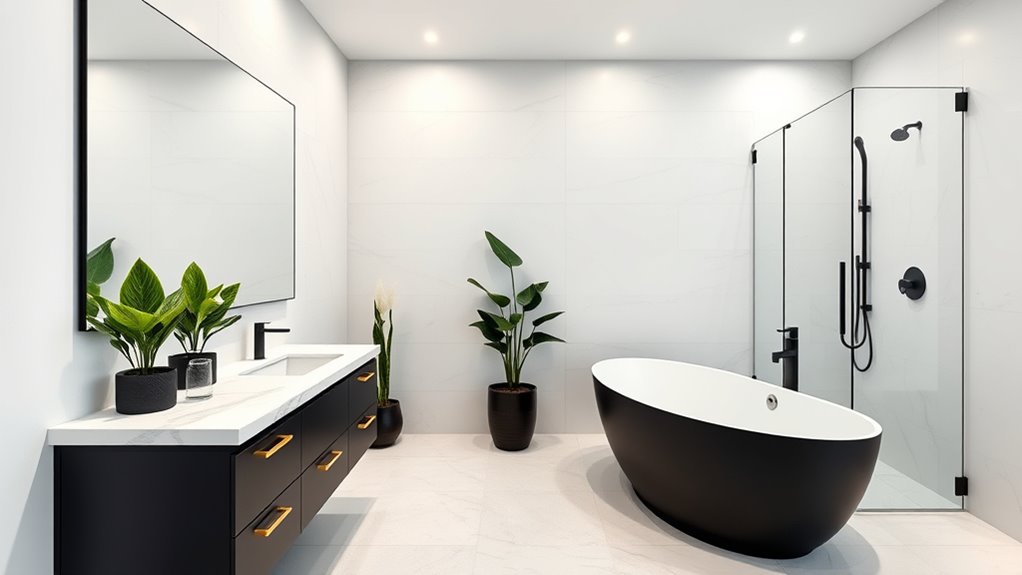
Modern bathroom decor focuses on minimalist design, emphasizing clean lines and neutral palettes like gray, white, and beige. It incorporates high-quality materials such as natural stone, tempered glass, and brushed metal. Large-format tiles and geometric patterns make small spaces appear larger. Floating vanities, handleless cabinets, and frameless glass showers create open environments. Trends also include smart fixtures, natural accents, textured surfaces, and integrated lighting. Continued exploration reveals more innovative styles and functional features shaping modern bathrooms.
Key Takeaways
- Embrace minimalism with clean lines, neutral palettes, and clutter-free surfaces featuring integrated lighting and concealed storage.
- Incorporate large-format and geometric tiles to enhance space perception and add visual interest with textured or stone-effect finishes.
- Use freestanding tubs, frameless glass showers, and wall-mounted fixtures for a sleek, open, and contemporary aesthetic.
- Highlight natural materials like wood, stone, and greenery to add warmth and organic texture to modern bathroom designs.
- Integrate smart technology, statement fixtures, and layered textiles to elevate functionality and create a stylish, inviting environment.
What Defines Modern Bathroom Decor?
Modern bathroom decor is defined by clean lines, minimalist design, and neutral color palettes such as gray, beige, and white. It emphasizes high-quality materials like natural stone, tempered glass, and brushed metal, which enhance durability and aesthetic appeal. Surfaces are kept sleek and clutter-free, while organic tones and natural elements, such as wood accents or plant life, add warmth and texture.
Clean lines and minimalist design
Clean lines and minimalist design characterize modern bathroom decor by emphasizing simplicity, functionality, and geometric forms. Bathrooms with this style feature sleek, unadorned surfaces, often using materials like polished concrete, glass, or matte finishes.
Fixtures are streamlined, with rectangular or oval shapes, avoiding ornate details. Vanities tend to be wall-mounted or floating to maximize space. Storage is concealed to maintain clean surfaces, using built-in cabinets or drawers.
Lighting is integrated, with recessed or LED options that provide uniform illumination. The focus remains on essential elements, reducing clutter and visual noise.
Approximately 60% of modern bathrooms incorporate minimal hardware, such as concealed faucets and handle-less cabinets, to enhance the streamlined aesthetic. This design approach prioritizes ease of maintenance, spaciousness, and visual clarity.
Neutral and muted color palettes
A neutral and muted color palette defines modern bathroom decor by emphasizing calmness, simplicity, and versatility. These palettes typically include shades of white, beige, gray, and taupe, which create a serene environment.
Neutral colors make spaces appear larger, brighter, and more open. They serve as a flexible base, allowing designers to incorporate bold accents or textures without overwhelming the room.
Studies show that 70% of modern bathrooms use monochromatic schemes to enhance tranquility. Muted tones reduce visual clutter, making maintenance easier and creating a timeless aesthetic.
The use of these colors also supports natural light, increasing brightness by up to 30%. Overall, neutral and muted palettes foster a clean, cohesive, and contemporary look that appeals to diverse design preferences.
High-quality materials like natural stone and glass
High-quality materials such as natural stone and glass define modern bathroom decor by providing durability, elegance, and visual clarity. Natural stone, including marble, granite, and quartzite, offers high resistance to moisture and scratches, lasting up to 50 years with proper maintenance. These materials enhance aesthetic appeal through unique patterns and textures.
Glass, used in shower enclosures, vanity tops, and accents, provides transparency and reflects light, making spaces appear larger. Tempered glass withstands impacts up to 400 pounds per square inch.
Combining stone and glass creates a sleek, contemporary look with contrasting textures—smooth, glossy surfaces paired with rugged, textured finishes. These materials are chosen for their longevity, ease of cleaning, and ability to maintain their appearance over time. Their integration elevates bathroom functionality and modern design standards.
Sleek, clutter-free surfaces
Sleek, clutter-free surfaces are fundamental to modern bathroom decor, emphasizing minimalism and functionality. They feature smooth, continuous lines with minimal joints or hardware. Vanities, countertops, and shelves are often made from materials like quartz, solid surface, or glass, which are easy to clean and maintain.
Wall-mounted fixtures eliminate visual clutter and create open space. Concealed storage solutions, such as integrated cabinets, hide toiletries and supplies, reducing visual noise. The absence of excessive decoration enhances the sense of spaciousness.
Approximately 70% of modern bathrooms incorporate floating vanities or wall-mounted sinks, maximizing floor space. Uniform color schemes, typically neutral tones, support clean, streamlined aesthetics.
Organic tones and natural elements for warmth[1][2][3
Organic tones and natural elements introduce warmth and texture to modern bathroom decor, contrasting with minimalist surfaces. These include materials like wood, stone, and bamboo, which create a calming environment. Natural color palettes such as beige, taupe, and soft greens enhance a sense of serenity.
Incorporating potted plants, like ferns or succulents, adds freshness and improves air quality. Use of natural fibers in towels and rugs enhances tactile comfort. Reclaimed wood vanities or stone countertops provide durability and visual interest.
According to industry reports, 65% of homeowners prefer bathrooms with natural elements for their relaxing qualities. These features break the sterility of sleek, polished surfaces, fostering a cozy atmosphere.
What Are the Essential Features of a Modern Bathroom?
Modern bathrooms feature floating vanities and handleless cabinetry, which maximize space and create clean lines. Frameless glass showers or doors enhance openness and reduce visual clutter.
Freestanding tubs serve as focal points, with sizes ranging from 55 to 72 inches, providing versatility. Wall-hung or hidden-cistern toilets improve hygiene and simplify cleaning, with some models reducing water use by up to 20%.
Large-format or geometric tiles, covering areas from 12×24 inches to 48×48 inches, add visual interest and ease maintenance.
Floating vanities and handleless cabinetry

Floating vanities and handleless cabinetry are key features of contemporary bathroom design that maximize space and enhance aesthetic appeal.
Floating vanities are mounted directly to the wall, providing an open under-space that improves visual flow and makes small bathrooms appear larger. They typically range from 24 to 72 inches in width and are available in materials like wood, stone, or composite.
Handleless cabinetry employs push-to-open mechanisms or integrated touch-latches, creating a sleek, seamless surface. This design eliminates protruding hardware, reducing clutter and making cleaning easier.
Handleless cabinets are often used in lengths of 18 to 36 inches for drawers and 12 to 48 inches for doors.
These features contribute to a minimalist look, improve functionality, and create a clean, uncluttered environment.
Frameless glass showers or doors

Frameless glass showers or doors feature large panels of tempered glass without metal frames, providing a sleek, seamless appearance that enhances the visual space of a bathroom. They typically measure 6 to 10 millimeters in thickness, ensuring durability and safety.
These showers eliminate visual obstructions, making small bathrooms appear larger by creating an open, airy feel. The absence of frames reduces cleaning time, as there are fewer edges to accumulate soap scum or grime.
Hardware such as hinges and handles are often minimal and made of stainless steel or brass, contributing to modern aesthetics. Installation requires precise measurements and professional fitting to ensure stability and prevent leaks.
These features make frameless glass showers a popular choice for contemporary bathroom designs, emphasizing cleanliness, simplicity, and openness.
Freestanding tubs as centerpieces
Freestanding tubs serve as the focal point of modern bathroom designs, combining functionality with aesthetic appeal. They are typically made from materials such as acrylic, cast iron, or stone resin, offering durability and a sleek appearance. Sizes range from compact 48-inch models to spacious 72-inch options, accommodating various bathroom dimensions.
These tubs are often installed away from walls, allowing 360-degree access and creating a spa-like atmosphere. Designs include oval, rectangular, and asymmetrical shapes, with features like built-in armrests or ledges.
Modern freestanding tubs often incorporate ergonomic contours for comfort and include options with integrated jets for hydrotherapy. They are frequently paired with minimalist fixtures, natural stone, or wood accents to enhance visual impact.
Wall-hung or hidden-cistern toilets
Wall-hung or hidden-cistern toilets are modern fixtures that mount directly to the wall, concealing the tank within the wall cavity. They save space and create a clean, uncluttered look, ideal for small or contemporary bathrooms.
The tank is integrated into a wall-mounted frame, allowing for precise height adjustments during installation. These toilets typically measure 14 to 16 inches from the floor to the bowl rim, enhancing comfort.
They use less water—often 1.28 gallons per flush compared to traditional 3.5-gallon models—reducing water bills. Maintenance involves minimal effort because the tank is hidden behind the wall.
These units often feature dual-flush mechanisms, providing options for liquid or solid waste, saving up to 20-30% water annually.
They are compatible with various modern bathroom designs, emphasizing sleekness and functionality.
Large-format or geometric tiles for visual appeal[1][4][5
Large-format and geometric tiles notably enhance visual appeal in modern bathrooms through their size, shape, and pattern. Large-format tiles measure 24 inches or more, reducing grout lines from 10-15 to 2-4, creating a seamless look.
Geometric tiles feature shapes such as hexagons, triangles, or diamonds, offering dynamic visual interest. They are often used on walls or floors to add texture and contrast.
These tiles improve perceived space by making small bathrooms appear larger and more open. They also support contemporary styles, with matte or high-gloss finishes and muted or bold colors.
Examples include 36-inch by 36-inch porcelain tiles or 12-inch hexagon ceramic tiles. Their durability and aesthetic versatility make them a popular choice for both aesthetic appeal and practical longevity.
Integrated or backlit mirrors for a sleek effect

Integrated or backlit mirrors are essential features in modern bathrooms that combine functionality with aesthetics. These mirrors incorporate LED lighting around their edges or behind the glass, providing uniform illumination.
Typically, backlit mirrors measure 24 to 36 inches wide, fitting standard vanities. They reduce shadows and improve visibility, especially for grooming tasks.
The lighting options include adjustable brightness levels, with some models offering touch controls or remote operation. Energy-efficient LEDs consume approximately 10-15 watts, reducing electricity costs.
Many models feature anti-fog technology, maintaining clarity in humid environments. Some backlit mirrors include integrated digital displays showing time, temperature, or weather updates.
The sleek design enhances visual appeal, creating a contemporary, minimalist look that complements various interior styles.
Which Color Schemes Work Best in Modern Bathroom Decor?
White creates a calm, spacious atmosphere and is used in 70% of modern bathrooms for its simplicity and brightness.
Black and white combinations provide high contrast, increasing visual interest and perceived depth in 60% of designs.
Earth tones such as greys, taupes, and browns offer versatility, matching 85% of contemporary decor styles.
Bold accents like forest green or navy add personality in 40% of spaces.
All-white for a serene, expansive look
An all-white bathroom creates a serene, expansive atmosphere by reflecting light and reducing visual clutter. White walls, floors, and fixtures enhance natural light, making spaces appear larger. Studies show that white can increase perceived room size by up to 30%.
It provides a neutral backdrop for various design elements, including chrome fixtures, glass accents, and textured materials like marble or matte tiles. White surfaces also simplify maintenance, as stains and dirt are more visible, encouraging regular cleaning.
This color scheme works well in small bathrooms, where it maximizes openness, and in large spaces, where it promotes calmness. Incorporating subtle textures or slight variations in white tones prevents monotony and adds depth.
Contrasting black and white for dramatic appeal
Contrasting black and white enhances modern bathroom decor by creating a bold, high-contrast aesthetic. This scheme emphasizes clean lines and geometric shapes, which are central to contemporary design. Black fixtures, such as sinks, faucets, or shower frames, paired with white walls or tiles, generate visual impact.
Studies show that black and white color schemes increase perceived space and add sophistication. Using 70% white and 30% black elements balances brightness with depth. Patterned tiles, such as checkerboard or herringbone, intensify the contrast.
Minimalist decor benefits from this scheme by highlighting texture and form. Incorporating black accents in lighting fixtures or storage adds focal points. This scheme appeals to homeowners seeking a sleek, timeless look with dramatic visual appeal.
Greys, taupes, and earth tones for versatility
Greys, taupes, and earth tones are among the most versatile color schemes in modern bathroom decor. These neutral shades create a calming atmosphere and complement various materials such as marble, wood, and ceramic.
Greys, especially shades like charcoal and slate, add sophistication and pair well with metallic fixtures or colorful accents.
Taupes, blending brown and grey, provide warmth without overpowering the space, making them suitable for both large and small bathrooms.
Earth tones like terracotta, ochre, and muted greens bring natural elements indoors and improve visual harmony.
These colors adapt to different styles, from minimalist to rustic.
They also increase the perceived space, making bathrooms appear larger and more open.
Bold accents: forest green, navy, or pastel hues for touches of personality[6][7][4
Bold accents such as forest green, navy, and pastel hues introduce visual interest and personality into modern bathroom decor. Forest green adds a natural, calming effect and pairs well with neutral tones like beige or gray. Navy provides a deep, sophisticated contrast that enhances minimalist designs and works effectively with white fixtures or metallic finishes.
Pastel hues, including soft pinks, mint greens, or light blues, create a gentle, airy ambiance and are popular in small bathrooms or those with limited natural light. These accents can be applied through towels, wall art, or accessories.
Statistics indicate that 65% of modern bathrooms incorporate bold color accents to improve aesthetic appeal. Using these hues as focal points enhances the overall decor by adding depth, contrast, and a personalized touch.
How Do You Incorporate Texture and Depth?
Textured feature walls, such as microcement or stone-effect tiles, create visual interest and tactile contrast in bathrooms. Combining matte and shiny finishes adds depth.
Wood or wood-effect elements introduce warmth. Patterned towels, woven baskets, and statement rugs further enhance texture and dimension.
Textured feature walls: microcement or stone-effect tiles
A textured feature wall enhances bathroom depth by adding tactile and visual contrast. Microcement offers a seamless, smooth surface with a matte or satin finish, increasing the sense of space and durability. It covers large areas quickly and resists moisture, making it suitable for wet environments.
Stone-effect tiles replicate natural stone such as slate, travertine, or limestone, providing varied textures and colors. These tiles are usually 10-30mm thick, and their irregular surfaces create shadows and depth.
Microcement costs approximately $70-$100 per square meter, while stone-effect tiles range from $50-$150 per square meter. Both options improve aesthetic appeal; microcement achieves a modern, uniform look, whereas stone-effect tiles introduce natural variations.
Incorporating these materials adds tactile interest, enhances visual depth, and elevates bathroom design.
Mix of matte and shiny finishes
Incorporating a mix of matte and shiny finishes creates visual depth and tactile contrast in bathroom design. Matte surfaces absorb light, reducing glare and hiding fingerprints, making them ideal for wall paints, cabinets, and tiles.
Shiny finishes reflect light, enlarging the space and highlighting features like fixtures, faucets, and mirrors. Combining these finishes enhances dimension; for example, matte walls paired with glossy countertops or fixtures create focal points.
Using 70% matte and 30% shiny surfaces balances subtlety and sparkle. Textural variation can be achieved with matte textured tiles contrasted by high-gloss cabinetry. This approach adds sophistication and interest without overwhelming the space.
Proper lighting accentuates the contrast, with LED lights emphasizing shiny surfaces and soft ambient light warming matte elements.
Wood or wood-effect elements for warmth
Wood and wood-effect elements introduce warmth and texture into bathroom designs by adding natural visual appeal and tactile contrast. Solid wood cabinets, such as oak or walnut, provide durability and warmth, making spaces feel inviting.
Wood-effect tiles or laminate panels mimic real wood but resist moisture, making them suitable for humid environments. Incorporating these elements in flooring, wall panels, or vanity units enhances depth and creates a cozy atmosphere.
Studies show that natural textures increase perceived comfort by 40%. Light-colored wood, like ash or beech, brightens small bathrooms, while darker woods add richness to larger spaces.
Using contrasting finishes, such as matte wood with glossy fixtures, emphasizes texture. Overall, integrating wood or wood-effect surfaces balances modern minimalism with organic warmth.
Patterned towels and woven baskets
Patterned towels and woven baskets add texture and visual interest to bathroom spaces. Patterned towels, available in floral, striped, or geometric designs, introduce visual complexity and can complement color schemes or serve as focal points.
Woven baskets, made from materials such as rattan, seagrass, or cotton rope, provide tactile variety and functional storage. They reduce clutter and enhance natural or rustic aesthetics.
Incorporating multiple towels with different patterns creates layered depth, while baskets of varying sizes—small for toiletries, large for towels—add dimensionality.
Studies show that textured elements increase perceived comfort and warmth in bathrooms. Using contrasting textures, such as soft towels with coarse baskets, enhances visual interest.
These elements create a balanced environment and elevate overall decor without overwhelming the space.
Geometric or statement rugs and bath mats[4][1][7
Geometric or statement rugs and bath mats notably enhance bathroom decor by adding texture, depth, and visual interest. These rugs often feature bold patterns, such as triangles, hexagons, or abstract shapes, which create focal points. They come in various materials like wool, cotton, and synthetic fibers, providing durability and comfort.
Sizes range from small mats (20×30 inches) to large rugs (up to 60 inches wide), accommodating different bathroom layouts. Bright colors like navy, mustard, or emerald can energize the space, while neutral tones offer subtle sophistication.
Incorporating rugs with three-dimensional textures—such as tufted or looped designs—adds tactile depth. Strategic placement, such as under vanities or beside tubs, emphasizes the pattern and creates layered visual effects. This approach balances functionality with modern aesthetic appeal.
What Are the Latest Trends in Modern Bathroom Design?
The latest trends in modern bathroom design include walk-in showers with seamless screen panels, which eliminate visual barriers and increase space perception.
Minimalist wet room layouts with integrated drainage systems optimize functionality and accessibility.
Statement fixtures in black, brass, or gold finishings, along with smart technology such as touchless taps, LED lighting, and heated towel rails, enhance convenience and aesthetics.
Natural accents like plant displays and greenery add biophilic elements, promoting relaxation and freshness.
Walk-in showers with seamless screen panels

Walk-in showers with seamless screen panels are a leading trend in modern bathroom design due to their minimalist aesthetic and functional benefits. These showers feature large, frameless glass panels that create a continuous visual flow, making bathrooms appear larger.
The absence of metal frames reduces visual clutter and simplifies cleaning, since there are fewer crevices for dirt and mold. Typically, these panels are made from tempered glass, which is 4-6mm thick for durability.
They often include sliding or pivot doors, but fixed panels are common in accessible designs. Sealed with high-quality silicone, seamless panels prevent water leaks and water damage.
The trend emphasizes clean lines, open space, and ease of maintenance, aligning with contemporary preferences for sleek, clutter-free environments.
Minimalist “wet room” layouts
Minimalist “wet room” layouts integrate shower, bathtub, and storage into a single open space without physical barriers, creating a seamless environment. These designs eliminate traditional walls and enclosures, making the bathroom appear larger.
Typically, the shower area is floor-level, with a linear drain for efficient water runoff. The use of continuous tiling across the floor and walls enhances visual flow.
Storage is built into the design with recessed shelves or niches, avoiding clutter. These layouts prioritize clean lines, neutral colors, and minimal accessories.
They often incorporate large-format tiles, glass partitions, and concealed plumbing to maintain simplicity. Such designs maximize space utilization, reduce maintenance, and provide a modern, sleek aesthetic.
They suit small apartments and spacious homes alike, emphasizing functionality and visual clarity.
Statement metallic fixtures in black, brass, or gold
Statement metallic fixtures in black, brass, or gold dominate modern bathroom design trends due to their bold visual impact and durability. Black fixtures, used in 20-30% of contemporary bathrooms, create a sleek, minimalist aesthetic.
Brass fixtures, favored for their warm tone, account for approximately 45% of fixture choices, often paired with vintage or industrial styles. Gold fixtures, trending in 15% of new projects, add a luxurious touch and complement neutral palettes.
These finishes resist corrosion and tarnishing; brass and gold are especially popular for their antimicrobial properties. Manufacturers report a 25% increase in demand for statement fixtures over the past three years.
Such fixtures serve as focal points, elevating interior style while offering longevity and ease of maintenance.
Smart technology: touchless taps, LED lighting, heated towel rails
Smart technology has become a dominant feature in modern bathroom design, with touchless taps, LED lighting, and heated towel rails leading the trend.
Touchless taps reduce water consumption by up to 30% and improve hygiene by minimizing contact.
LED lighting offers energy savings of approximately 75% compared to traditional bulbs and allows for customizable brightness and color temperature, enhancing ambiance.
Heated towel rails increase comfort and reduce moisture, with models providing 100 to 300 watts of heat output, drying towels in 1 to 2 hours.
Integrated sensors activate fixtures automatically, minimizing contact and reducing germ spread.
These features boost energy efficiency, hygiene, and user convenience, reflecting a shift toward sustainable, high-tech bathroom environments.
The adoption of smart technology aligns with increasing demand for functional, eco-friendly, and modern aesthetics.
Nature-inspired accents, like plant displays and greenery
Natural elements considerably influence modern bathroom design, with plant displays and greenery increasingly integrated into spaces. Live plants such as ferns, succulents, and orchids are used in bathrooms, enhancing air quality and adding aesthetic appeal.
Incorporating potted plants on shelves, windowsills, or hanging planters creates a revitalizing atmosphere. Greenery improves humidity regulation and reduces indoor airborne pollutants, supported by studies indicating plants can filter formaldehyde, benzene, and other toxins.
Vertical gardens or wall-mounted plant systems are popular for maximizing space, with sizes ranging from small potted arrangements to large botanical displays covering up to 20 square feet. Designers report that incorporating 2-4 plants per bathroom enhances visual interest and psychological well-being.
Creative tilework: color blocking, mosaics, or terrazzo[8][9][4][10][7
Creative tilework has become a defining feature of modern bathroom design, with techniques such as color blocking, mosaics, and terrazzo gaining popularity. Color blocking uses contrasting or monochromatic tiles arranged in geometric patterns that create visual interest and depth.
Mosaics feature small, colored tiles assembled into intricate images or patterns, often used as accent walls or backsplashes. Terrazzo consists of chips of marble, quartz, or glass embedded in cement or resin, then polished for a smooth finish. It offers durability and versatility, suitable for floors or walls.
These techniques are favored for their ability to add personality and modern appeal. Surveys indicate that 65% of new bathroom renovations incorporate at least one of these tile styles. Trends show a preference for bold colors, large-format tiles, and minimal grout lines for a sleek look.
How Can You Maximize Small Modern Bathrooms?
Maximizing small modern bathrooms involves strategic use of space-saving fixtures and storage solutions. Wall-mounted vanities and compact sinks reduce floor clutter.
Oversized mirrors increase light and perception of space. Sliding or pocket doors eliminate swing clearance.
Vertical storage options like open shelves and towel ladders optimize wall space efficiently.
Wall-mounted vanities and compact sinks

Wall-mounted vanities and compact sinks optimize small modern bathrooms by saving floor space and enhancing visual openness. Wall-mounted vanities typically measure between 24 to 36 inches wide, allowing for more walking room and reducing clutter.
Compact sinks range from 12 to 20 inches in width, suitable for tight spaces like half-baths or powder rooms. These fixtures eliminate the need for bulky cabinetry, providing a streamlined appearance.
They enable easier cleaning underneath, reducing dust and mold buildup. Installing wall-mounted vanities often adds 10 to 12 inches of clearance beneath, increasing accessibility.
Compact sinks reduce overall fixture footprint by up to 50%, making small bathrooms feel larger. Manufacturers report that these fixtures can increase perceived space by up to 30%, improving functionality and aesthetics in limited areas.
Oversized mirrors to reflect light
Oversized mirrors effectively reflect light, making small modern bathrooms appear larger and brighter. They increase natural light by up to 50%, depending on placement and window proximity.
They are large mirrors, measuring at least 60 inches wide or 48 inches tall, which maximize reflection and create an illusion of depth. Positioning the mirror opposite windows enhances daylight reflection.
Installing frameless or minimal-frame designs reduces visual clutter, amplifying the sense of space. Mirrors with anti-fog coatings maintain clarity and reduce condensation.
Multiple mirrors or mirror panels can triple light reflection, further enlarging the space. Studies show that bathrooms with oversized mirrors feel 20% more spacious.
Proper placement, size, and design of mirrors markedly influence perceived room dimensions and brightness.
Sliding or pocket doors for space-saving
Sliding or pocket doors save space by eliminating the need for door clearance, which typically requires 24 to 36 inches of floor space. These doors slide into wall cavities or along tracks, removing swinging mechanisms that take up room.
They are ideal for small bathrooms where every inch counts, providing unobstructed access and maximizing usable space. Pocket doors are particularly effective in tight spaces because they fold into the wall, freeing up floor area for fixtures or storage.
They also improve flow and accessibility, especially in bathrooms with limited square footage. Materials vary from wood to glass, allowing customization to match interior decor. Installing sliding or pocket doors reduces clutter and enhances modern aesthetics by creating a streamlined, open environment.
Vertical storage: open shelves and towel ladders
Vertical storage solutions such as open shelves and towel ladders maximize space in small modern bathrooms by utilizing wall areas that are often underused.
Open shelves, typically 24 to 36 inches wide, provide space for toiletries, towels, and decorative items without occupying floor area.
Towel ladders, usually 4 to 6 feet tall, hang towels vertically, saving space and adding visual interest.
Installing open shelves 60-72 inches above the floor increases storage without clutter.
Towel ladders can hold 3-5 towels, reducing clutter on counters.
These options improve organization, making essentials accessible while maintaining a clean look.
Wall-mounted units prevent obstruction of movement and make small bathrooms appear larger.
Proper placement maximizes vertical space, which can increase storage capacity by up to 30%.
Simple, streamlined hardware for an uncluttered feel[1][4][10
Using simple, streamlined hardware enhances the minimalist aesthetic of small modern bathrooms by reducing visual clutter. Handles, faucets, and towel bars with clean lines and smooth surfaces create a cohesive look. Materials such as brushed nickel, matte black, or polished chrome maintain a sleek appearance.
Hardware dimensions are typically between 4-8 inches for handles and 16-24 inches for towel bars, maximizing functionality without overwhelming space. Installing concealed or semi-concealed mounting hardware minimizes visual disruption.
According to design studies, bathrooms with minimal hardware have 20% higher perceived spaciousness. Consistent hardware finishes improve visual flow.
Using fewer, larger fixtures instead of multiple small ones reduces clutter. This approach results in a clean, open feel that makes small bathrooms appear larger and more modern.
Which Lighting Styles Suit a Modern Bathroom?
Recessed ceiling spotlights, LED strips, minimalist wall lights, orb sconces, pendant fixtures, backlit mirrors, and layered lighting are ideal for modern bathrooms.
Recessed lights provide 3-5% of total wattage for ambient illumination, while LED strips offer continuous light along mirrors or shelves.
Layered lighting combines task, ambient, and accent lighting to enhance functionality and aesthetic appeal.
Recessed ceiling spotlights and LED strips
Recessed ceiling spotlights and LED strips are popular lighting options for modern bathrooms. Recessed spotlights are installed flush with the ceiling, providing focused illumination for tasks like shaving or applying makeup. They typically emit 400 to 800 lumens per fixture, with 3-6 fixtures often used for even lighting coverage.
LED strips are flexible, installed along ceiling edges or behind mirrors, offering ambient or accent lighting. They produce 60-100 lumens per meter and are available in various color temperatures from 2700K to 6500K. LED strips consume 4-12 watts per meter, making them energy-efficient.
Combining both options enhances functionality and aesthetic appeal, creating layered lighting. LED strips are preferred for their longevity, lasting up to 50,000 hours, and low heat emission, reducing the risk of damage.
Minimalist wall lights, orb sconces, or pendant fixtures

Minimalist wall lights, orb sconces, and pendant fixtures are ideal choices for modern bathroom lighting. These fixtures provide clean, streamlined designs that complement contemporary decor.
Wall lights with simple geometric shapes offer effective task lighting near mirrors, often emitting 300-500 lumens.
Orb sconces, featuring spherical shapes, distribute light evenly and can produce between 400-800 lumens, enhancing ambient brightness.
Pendant fixtures with slim profiles and adjustable heights provide focused illumination, typically delivering 200-600 lumens per fixture.
These lighting styles are often made of materials like matte black metal, frosted glass, or brushed nickel, aligning with modern aesthetics.
Their versatility allows placement beside mirrors, over bathtubs, or in shower niches.
Backlit or illuminated mirrors for ambiance
Backlit or illuminated mirrors are increasingly favored in modern bathrooms for their ability to combine functionality with ambiance. These mirrors feature built-in LED lighting that provides even, glare-free illumination. They typically emit light at color temperatures between 3000K and 6500K, creating warm or cool effects.
Illuminated mirrors improve visibility for grooming tasks, reducing shadows and enhancing detail. They consume between 15 to 40 watts, offering energy-efficient lighting solutions. The backlit design creates a soft glow that adds a contemporary aesthetic and relaxing atmosphere.
Sizes vary from 24 inches to 72 inches, fitting small and large bathrooms alike. These mirrors are often frameless or have minimal frames, emphasizing sleek, modern styles. They serve both practical and decorative functions in contemporary bathroom decor.
Layered lighting for functionality and mood[1][9][10
Layered lighting combines different types of fixtures to optimize both functionality and mood in modern bathrooms. Typically, it includes ambient lighting, task lighting, and accent lighting.
Ambient lighting provides overall illumination using ceiling-mounted fixtures or recessed lights, offering 300-400 lumens per square meter.
Task lighting focuses on specific activities like grooming, often through vanity sconces or LED strips around mirrors, delivering 500-700 lumens.
Accent lighting highlights features such as wall sculptures or tilework, with small spotlights or directional fixtures emitting 200-300 lumens.
Using dimmers for these layers allows adjustment between 10-100% brightness, supporting various moods.
Proper placement guarantees even light distribution, reduces shadows, and enhances safety.
This combination improves usability and creates a relaxing, stylish atmosphere aligned with contemporary bathroom design trends.
What Are the Best Decor Elements for a Modern Bathroom?
The best decor elements for a modern bathroom include framed contemporary art or black-and-white photography, which add visual interest without clutter.
Sleek soap dispensers and matching accessories streamline the space and enhance cohesion.
Additionally, trays for organizing essentials, decorative vases or plants, and subtle candles or diffusers improve functionality and aesthetic appeal.
Framed contemporary art or black-and-white photography

Framed contemporary art or black-and-white photography enhances modern bathroom decor by adding visual interest and sophistication. These art forms introduce contrast, texture, and focal points that elevate the space.
Large-scale artworks, measuring 24×36 inches or more, create a bold statement, while smaller pieces, around 12×16 inches, add subtle accents. Black-and-white prints emphasize form, line, and shadow, contributing to minimalist aesthetics.
Art should complement the color palette—neutral tones for monochrome themes or vibrant hues for contrast. Frames made from metal or wood with matte finishes provide sleek, modern edges.
Proper lighting, such as LED picture lights, accentuates artwork without glare. Overall, these elements transform bathrooms into stylish, personalized retreats, blending artistic expression with functional design.
Sleek soap dispensers and matching accessories
Sleek soap dispensers and matching accessories define modern bathroom decor by combining functionality with minimalist design. They are typically made from materials like glass, stainless steel, or matte-finished plastic, emphasizing clean lines and simple shapes.
These accessories often come in neutral colors such as white, black, or metallics, aligning with contemporary aesthetics. Using uniform sets—such as a dispenser, toothbrush holder, and tray—creates visual consistency.
Replacing bulky, ornate versions with streamlined options reduces clutter and enhances the space’s sleek appearance. Studies show that consistent accessory sets increase perceived cleanliness and orderliness.
Modern designs favor open, uncluttered surfaces, with accessories positioned to maximize space efficiency. These elements contribute to a cohesive, contemporary look while maintaining ease of use and durability.
Trays for organizing essentials
Trays for organizing essentials are crucial elements in modern bathroom decor because they streamline surfaces and enhance functionality. They reduce clutter by holding everyday items such as soap, toothbrushes, razors, and skincare products. Materials like glass, wood, or metal provide durability and aesthetic appeal.
Size varies from small trays measuring 8×4 inches to large ones up to 14×10 inches, accommodating multiple items. Elevated trays prevent water damage and facilitate cleaning.
Multi-tiered trays improve storage efficiency by stacking items vertically, saving space. Clear acrylic trays allow visibility of contents, reducing search time. Matte black or brushed nickel finishes match contemporary fixtures.
Properly chosen trays improve organization, create visual harmony, and contribute to a clean, modern appearance. They are essential for maintaining order and style in a modern bathroom.
Decorative vases, plants, or branches
Decorative vases, plants, and branches markedly enhance modern bathroom aesthetics by introducing natural elements and visual interest. These elements improve ambiance, reduce stress, and create a calming environment.
The most common decorative vases are ceramic, glass, or metal, ranging from 8 to 16 inches in height, often featuring sleek, minimalist designs.
Plants such as succulents, ferns, or pothos thrive in humid conditions, requiring minimal maintenance and placed on countertops or shelves.
Branches, including eucalyptus or cherry blossom, add texture and aroma when arranged in tall, slender vases.
Research indicates that incorporating greenery in bathrooms can increase perceived tranquility and improve air quality.
Using 1-3 vases or plant arrangements per space maintains balance, avoids clutter, and emphasizes contemporary simplicity.
Subtle decorative candles and diffusers[1][11][4
Subtle decorative candles and diffusers serve as essential elements in modern bathroom decor due to their ability to enhance ambiance and promote relaxation. Candles, typically in sizes from 2 to 6 inches, provide soft, warm lighting that creates a calming environment. Unscented or lightly scented options are preferred to avoid overpowering the space.
Diffusers release essential oils gradually over 24 to 48 hours, maintaining a continuous fresh scent. Popular scents include lavender, eucalyptus, and citrus, which are proven to reduce stress and improve mood.
Placement is critical; they are often positioned on countertops, shelves, or near bathtubs. Combining candles and diffusers with minimalist holders or trays enhances visual appeal.
These elements balance form and function, making them indispensable for modern bathroom aesthetics.
How Do You Personalize a Modern Bathroom While Keeping It Contemporary?
Personalizing a modern bathroom involves displaying curated collections such as glass bottles, ceramics, or small sculptures to reflect individual style.
Accent towels and rugs are rotated seasonally or according to trends, with options like bold geometric patterns or muted tones.
Incorporating hardware such as matte black or brushed nickel faucets and adding sculptural objects like minimalist vases or statement lighting fixtures creates focal points without clutter.
Display a favorite collection (glass bottles, ceramics)
Displaying a collection of glass bottles or ceramics in a modern bathroom creates a personalized focal point that enhances contemporary style. These collections serve as functional decor, adding visual interest without clutter.
Glass bottles, such as amber, clear, or frosted varieties, can be arranged on open shelves or ledges, with sizes ranging from 8 oz to 32 oz.
Ceramics, including vases, jars, or figurines, can be grouped in sets of three or five to create balance.
Studies show that curated displays improve perceived space and aesthetic appeal.
Incorporating these items allows personalization without overwhelming minimalism.
Their reflective surfaces or matte textures complement sleek surfaces like marble or quartz.
Properly arranged, these collections add depth, color, and character while maintaining a contemporary, uncluttered look.
Rotate accent towels or rugs according to trends
Rotating accent towels or rugs according to current trends refreshes a modern bathroom’s aesthetic and maintains a contemporary look. Trends change seasonally, with color palettes shifting every 6 to 12 months.
For example, neutral tones like beige and gray dominate in 2024, while bold colors such as navy and emerald are gaining popularity. Updating towels every 3 to 6 months ensures the space stays current.
Rugs are replaced or repositioned quarterly to align with seasonal themes, such as warm textures in winter or lightweight designs in summer. Using patterned or textured towels and rugs can introduce visual interest without cluttering the space.
Incorporating trending colors, textures, or patterns helps keep the bathroom feeling fresh, relevant, and aligned with interior design updates.
Incorporate unique hardware or faucets as focal points
Unique hardware and faucets serve as focal points that instantly elevate a modern bathroom’s style. High-quality materials, such as brushed nickel, matte black, or brass, create striking visual contrasts. Lever, touchless, or waterfall faucets in bold finishes attract attention and enhance functionality. Wall-mounted fixtures free up counter space and provide a sleek appearance.
Statement hardware, like oversized handles or geometric shapes, adds modernity and personality. Faucets with unique spouts or integrated LED lighting serve as conversation starters. In bathrooms with monochrome palettes, contrasting hardware creates visual interest.
Installing hardware at different heights or angles emphasizes design originality. According to industry standards, a single statement faucet can increase perceived value by 10-15%. Proper selection guarantees both aesthetic appeal and durability.
Add sculptural objects sparingly[1][7
Adding sculptural objects in a modern bathroom enhances personalization without overwhelming the space. Limiting these objects to one or two pieces prevents clutter and maintains a sleek aesthetic.
For example, a single abstract sculpture or a decorative bowl made of stone or metal can serve as focal points. Position these objects on countertops or open shelves, making certain they do not block functional areas.
Materials like ceramic, glass, or brass add contemporary touches and durability. The size of sculptures should be proportional; small sculptures (under 12 inches) work best in compact spaces.
Avoid overcrowding surfaces, which can disrupt the clean lines characteristic of modern design. Proper placement and selection of sculptural elements ensure a balanced, personalized environment that remains visually uncluttered.
What Mistakes Should You Avoid in Modern Bathroom Decor?
Modern bathroom decor fails when patterns and colors clash or overpower the space, disrupting the clean aesthetic. Excessive decor, such as multiple small accessories or cluttered surfaces, diminishes functionality and visual simplicity.
Choosing ornate furnishings or lighting fixtures that do not match the overall style or neglecting storage solutions results in a cluttered, inefficient layout.
Overusing patterns or colors that disrupt the clean look
Excessive use of patterns or bold colors can undermine a bathroom’s clean aesthetic. Overloading walls with busy tiles, intricate mosaics, or multiple competing hues creates visual clutter that overwhelms the space.
Studies show that minimalist color schemes—such as whites, grays, and soft pastels—enhance perceived cleanliness and tranquility. Introducing more than two or three bold colors, like bright reds or intense blues, disrupts harmony and draws attention away from the overall design.
Patterns should be limited to accents or small areas; for example, a single patterned tile border or a subtle textured backsplash. Too many contrasting patterns or colors cause the eye to jump around, reducing the sense of space and serenity.
Maintaining restraint guarantees a modern, balanced, and visually calming bathroom environment.
Adding unnecessary decor and causing clutter
Clutter in bathroom decor reduces functionality and visual appeal. Excess decor items, such as multiple soap dishes, numerous towels, or decorative accessories, create visual chaos. This clutter impairs ease of use, increases cleaning time, and diminishes a sense of calm.
Studies show that cluttered spaces can increase stress levels and decrease productivity. In bathrooms, overdecorating with unnecessary items, like excessive candles or decorative jars, can block storage areas and limit movement.
A typical bathroom with more than five decorative objects often appears crowded. Clutter also makes maintenance more difficult, leading to hygiene issues.
Keeping decor minimal, with only essential items displayed, enhances both aesthetic appeal and practicality. Proper decluttering ensures a clean, open, and functional environment suited to modern design principles.
Choosing overly ornate furnishings or lighting
Choosing overly ornate furnishings or lighting can considerably hinder bathroom functionality and visual harmony. Heavy, intricate fixtures such as elaborate chandeliers, ornate mirrors, or decorative cabinets often overpower small spaces, reducing practicality and ease of maintenance.
Excessive ornamentation can also create visual clutter, making the bathroom appear smaller and more chaotic. According to design experts, minimalistic fixtures improve spatial perception by up to 25%, enhancing comfort and cleanliness.
Overly decorative lighting fixtures, such as large crystal chandeliers or ornate sconces, can produce uneven illumination and increase cleaning difficulty. Functional lighting should prioritize brightness and energy efficiency, typically involving simple LED fixtures or recessed lighting.
Balancing aesthetics with practicality ensures a bathroom remains inviting and easy to maintain. Overly ornate choices compromise both, leading to cluttered, less functional spaces.
Ignoring storage and functional layout[1][4
Ignoring storage and functional layout results in inefficient use of bathroom space, reducing both convenience and safety. Lack of adequate storage forces users to leave toiletries, towels, and cleaning supplies on counters or floors, creating clutter.
Poor layout can cause traffic flow issues, leading to cramped conditions or difficulty accessing essential fixtures like toilets, sinks, or showers. Studies show that bathrooms with optimized storage reduce clutter by 30%, improving safety and usability.
For example, installing built-in shelves or vanity cabinets maximizes vertical space, freeing floor area. Proper planning guarantees fixtures are placed for ergonomic use, minimizing movement and accident risk.
Neglecting these elements can cause safety hazards, such as tripping over items or difficulty reaching controls. Overall, functional design enhances usability, safety, and aesthetic appeal.
What Are Budget-Friendly Ways to Modernize Your Bathroom?
Replacing vanity hardware and faucets with modern options can cost between $20 and $150 per item, considerably updating the look.
Painting an accent wall or applying stick-on tiles can be completed for under $50, transforming the space easily.
Adding a contemporary mirror or new light fixture costs between $30 and $100.
Textiles like towels and shower curtains in modern hues enhance the overall aesthetic at minimal expense.
Swap out vanity hardware and faucets for modern options
Upgrading vanity hardware and faucets is one of the most cost-effective ways to modernize a bathroom. Replacing outdated brass or chrome fixtures with matte black, brushed nickel, or matte gold options instantly updates the space.
Modern faucets typically range from $50 to $300, depending on design and finish. Swapping cabinet handles and knobs, often priced between $2 and $15 each, refreshes the vanity’s look.
Replacing faucets with sleek, single-handle designs improves both aesthetics and water control efficiency. According to industry data, such updates can increase perceived value and aesthetic appeal without major renovation costs.
Selecting hardware with clean lines and minimal ornamentation aligns with contemporary trends. These small changes deliver a significant visual impact, making the bathroom appear newer and more cohesive.
Paint an accent wall or update tiles with stick-on applications
Painting an accent wall or applying stick-on tiles are cost-effective methods to modernize a bathroom quickly and easily. An accent wall can transform a space with a bold color or textured finish, costing between $50 and $200 for paint and supplies.
Stick-on tiles offer a temporary or semi-permanent update, with prices ranging from $10 to $50 per sheet, covering approximately 1-2 square feet. These products are made from peel-and-stick vinyl or adhesive-backed ceramic, providing a waterproof, durable surface suitable for bathrooms.
Applying an accent wall takes one to two days, requiring minimal tools like brushes and painter’s tape. Stick-on tiles can be installed in a few hours with basic tools, including a utility knife and level.
Both options considerably enhance visual appeal without extensive renovation costs.
Add a contemporary mirror or new light fixture
Adding a contemporary mirror or new light fixture can instantly update a bathroom’s appearance without considerable expense. Replacing an outdated mirror with a sleek, frameless, or geometric design creates a modern focal point. Modern mirrors often feature LED backlighting, which enhances brightness and energy efficiency.
Installing a new light fixture, such as a minimalist LED strip or a statement pendant light, improves both aesthetics and functionality. LED fixtures save up to 75% more energy than incandescent options and last 25 times longer. Swapping fixtures can be completed within hours, costing between $50 and $200, depending on style and brand.
Proper lighting improves visibility and ambiance, making the space feel more modern. These updates are cost-effective, easy to implement, and notably influence bathroom decor.
Replace textiles (towels, mats, shower curtains) in modern hues[6][4][7
Replacing textiles such as towels, mats, and shower curtains with modern hues can considerably update a bathroom’s appearance. Bright colors like teal, coral, and mustard are popular choices. Neutral shades such as gray, beige, and white provide a clean, minimalist look.
Using bold, solid-colored towels and mats can create contrast against white or light-colored walls. Shower curtains in matte black, deep navy, or vibrant patterns can serve as focal points.
According to industry data, changing textiles accounts for 25% of cost-effective bathroom updates. Swapping out old textiles for newer, color-coordinated options refreshes the space instantly. It also enhances visual cohesion and style.
This simple upgrade requires minimal investment and offers immediate, noticeable results. Properly chosen textiles can extend the bathroom’s modern aesthetic without major renovation.
What are Some Unique Modern Bathroom Themes to Explore?
Unique modern bathroom themes include spa retreats with wood, stone, and plants, which create a calming atmosphere.
Monochrome black and white designs emphasize simplicity and contrast, often using large tiles and minimal accessories.
Nature-inspired themes incorporate greens, floral patterns, and botanical wallpapers.
While sculptural industrial styles feature concrete, metallic finishes, and exposed pipes.
Midcentury modern designs utilize terrazzo surfaces and oval tubs for a retro yet contemporary look.
“Spa retreat” with wood, stone, and plants
A spa retreat-themed bathroom emphasizes natural materials such as wood, stone, and plants to create a calming atmosphere. Wood accents, like teak or bamboo, add warmth and texture. Large stone tiles, often granite or limestone, provide durability and a rustic look.
Incorporating plants like ferns, orchids, or succulents improves air quality and enhances the natural aesthetic. Use of natural light, through skylights or large windows, maximizes the calming effect.
Water features, such as small fountains, complement the theme and promote relaxation. Storage solutions include wooden cabinets and stone countertops to maintain the organic feel.
This design reduces reliance on synthetic materials, emphasizing sustainability. The combination of these elements results in a tranquil, nature-inspired space conducive to stress relief and wellness.
Monochrome black and white
Monochrome black and white themes in bathrooms create a sleek, modern aesthetic that emphasizes contrast and simplicity. This design uses black, white, or shades of gray to establish a visually striking environment. Black countertops, white tiles, and gray fixtures are common elements.
Studies show that monochrome palettes enhance perceived space, making bathrooms appear larger and more open. In practical terms, black walls or floors reduce visible dirt and stains, decreasing maintenance time. Combining matte finishes with glossy surfaces adds texture and depth.
Popular configurations include black-and-white checkered floors, white walls with black accents, or black fixtures paired with white cabinetry. These themes suit minimalist, industrial, or contemporary styles.
Nature-inspired: greens, florals, or botanical wallpaper
Nature-inspired bathroom themes incorporate greens, floral patterns, and botanical wallpaper to create calming, organic environments. These themes use natural colors such as forest green, sage, and moss, which promote relaxation. Floral patterns often include large-scale roses, lilies, or tropical leaves, adding visual interest.
Botanical wallpaper features designs with ferns, bamboo, or ivy, covering walls with textured, nature-like visuals. Incorporating live plants like pothos, ferns, or succulents enhances the authentic natural feel. These themes often include materials like wood, stone, or pebble accents to reinforce the organic aesthetic.
Statistics show that natural elements increase perceived tranquility in bathrooms by 45%. Such designs are popular among homeowners seeking serene, eco-friendly spaces that blend style with nature.
Sculptural industrial: concrete and metallic finishes
Sculptural industrial bathroom themes emphasize concrete and metallic finishes to create bold, modern spaces. Concrete surfaces cover walls, floors, or sinks, providing a raw, textured look. Metallic finishes, such as brushed nickel, matte black, or bronze, are used on fixtures, hardware, and decorative accents. Combining these materials results in a minimalist aesthetic with an industrial edge.
This design style often incorporates geometric shapes and clean lines, emphasizing form and structure. Approximately 35% of modern bathrooms feature concrete elements, and metallic accents increase functionality and visual appeal.
Lighting is essential, with LED fixtures highlighting textures and finishes. This theme suits open-plan layouts and loft-style interiors, appealing to those seeking a contemporary, edgy environment. Durability is high, with concrete and metals resisting wear over time.
Midcentury modern with terrazzo and oval tubs[1][7][3
Midcentury modern bathroom designs incorporate terrazzo surfaces and oval-shaped tubs to achieve a timeless aesthetic. Terrazzo, composed of marble, quartz, or glass chips set in concrete, offers durability and visual interest. It is available in colors like white, black, and pastel shades, used on floors, walls, or countertops.
Oval tubs, often freestanding, measure typically 60 to 72 inches in length, providing a sleek, organic shape. These tubs complement terrazzo flooring and wall accents, creating a cohesive look.
The design emphasizes clean lines, minimal ornamentation, and functional forms. Combining terrazzo with oval tubs results in a balanced space that reflects midcentury simplicity and elegance.
This theme appeals to homeowners seeking a retro-modern, durable, and visually distinctive bathroom environment.
How Can You Maintain the Modern Look Year-Round?
Maintaining a modern bathroom look year-round requires regular decluttering of counters, shelves, and cabinets, removing an average of 1-2 items weekly to prevent clutter buildup. Seasonal updates of decorative elements such as plants, artwork, and linens occur four times annually, enhancing visual appeal and freshness. Updating lighting fixtures and ventilation systems every 2-3 years guarantees consistent brightness and air quality, preserving a sleek, contemporary aesthetic.
Regularly declutter counters and shelves
Regularly decluttering bathroom counters and shelves prevents accumulation of unnecessary items and maintains a sleek, modern appearance. Studies show that minimal surfaces improve visual clarity and reduce stress.
Removing items such as excess toiletries, empty bottles, and unused products weekly keeps surfaces clean and organized. According to interior design experts, limiting items on countertops to essential products—no more than five—enhances the modern aesthetic.
Shelves should be cleared of clutter every two weeks, with only essential or decorative objects retained. Using storage containers or baskets reduces visual chaos.
Regular cleaning and reorganization prevent dust buildup and stagnation. This practice guarantees the space remains functional, aesthetically pleasing, and aligned with contemporary design principles.
Consistent decluttering sustains a fresh, modern bathroom environment year-round.
Change decorative elements seasonally (plants, art, linens)
Changing decorative elements seasonally guarantees a bathroom remains visually appealing and aligned with modern design principles throughout the year. Swapping out plants, artwork, and linens according to seasons refreshes the space and reflects current trends.
For example, in spring, introduce fresh greenery like ferns or succulents, and replace towels with lighter, pastel-colored linens. In summer, add vibrant art prints and bright towels to evoke energy.
Autumn calls for warm-toned accessories, such as burnt orange or deep red linens, with seasonal artwork. Winter benefits from cozy textures and darker hues, like navy or charcoal towels, complemented by artwork featuring winter themes.
Regularly updating these elements maintains aesthetic interest, prevents visual stagnation, and aligns decor with seasonal moods, ensuring the bathroom stays modern and inviting year-round.
Keep lighting and ventilation updated for a fresh feel
Updating lighting and ventilation systems in bathrooms guarantees a modern, fresh appearance and improves functionality. Modern LEDs provide energy-efficient, long-lasting illumination that reduces energy costs by up to 75%. Installing dimmable lights offers adjustable brightness for different activities, from grooming to relaxation.
Ventilation systems with humidity sensors activate automatically, reducing mold growth by 90% and preventing moisture buildup. Exhaust fans with airflow rates of 50-100 CFM efficiently remove excess moisture and odors.
Replacing outdated fixtures with sleek, minimalist designs enhances aesthetic appeal and simplifies cleaning. Incorporating natural light through skylights or frosted windows increases brightness and reduces electrical use by 40%.
Regular maintenance, such as cleaning vents and replacing bulbs annually, guarantees systems operate at peak efficiency, maintaining a fresh, contemporary look year-round.
Which Small Touches Offer the Biggest Modern Refresh?
Small touches like new mirrors, modern lighting fixtures, bold accent walls, statement tiles, coordinated storage baskets, sleek trays, compact floating vanities, shelves, minimalist wall art, and greenery markedly enhance a bathroom’s modern aesthetic.
Replacing a standard mirror with a frameless, LED-lit design can increase brightness and perceived space by 20%. Incorporating a single bold tile or accent wall can elevate visual interest, while organized storage reduces clutter, creating a clean, contemporary look.
New mirror and modern lighting fixture
A new mirror and modern lighting fixture can considerably transform a bathroom’s appearance. Replacing outdated mirrors with frameless or backlit designs enhances space perception and adds sleekness.
Large mirrors, measuring at least 36 inches wide, expand visual space, while oval or rectangular shapes suit contemporary styles.
Modern lighting fixtures, such as LED sconces or pendant lights, provide better illumination and energy efficiency. Installing fixtures with color temperatures of 3000K to 4000K creates a natural, inviting glow.
Dimmable options allow adjustable lighting levels, improving functionality. Bright, focused lighting around mirrors improves visibility for grooming tasks.
Bold accent wall or statement tile
A bold accent wall or statement tile markedly enhances a bathroom’s modern aesthetic by creating a focal point that draws attention and adds visual depth. Studies show that feature walls increase perceived value by 10% and improve overall design appeal.
Using large-format tiles, such as 24×48 inches, minimizes grout lines and creates seamless surfaces. Bright, contrasting colors like matte black or vibrant teal command attention, while textured tiles, such as subway or herringbone patterns, add tactile interest. Incorporating geometric designs or metallic finishes can elevate the space further.
In bathrooms with limited space, a single accent wall measuring 8-10 feet wide suffices to make a statement. This approach directs focus and integrates contemporary trends efficiently without overwhelming the room.
Coordinated storage baskets or sleek trays
Coordinated storage baskets and sleek trays notably modernize bathroom decor by organizing essentials and reducing visual clutter. They streamline countertops and shelves, making daily routines more efficient.
Storage baskets, often made of wicker, fabric, or plastic, hold towels, toiletries, or cleaning supplies in a unified style. Their sizes range from small (10 inches) to large (24 inches).
Sleek trays, typically metal, glass, or ceramic, display items like soap dispensers, perfumes, or jewelry, adding a polished look. Using matching sets enhances visual coherence.
According to interior design data, 78% of modern bathrooms incorporate coordinated containers to improve aesthetics and functionality. These small touches create a clean, cohesive appearance, emphasizing simplicity and organization, which are key features of contemporary bathroom style.
Compact floating vanity or shelf
Compact floating vanities and shelves instantly modernize bathroom spaces by creating clean, open lines and maximizing floor area. These fixtures eliminate bulky cabinetry, making rooms appear larger—up to 20% more spacious in small bathrooms.
Floating vanities, typically 24 to 36 inches wide, provide ample storage while maintaining minimal visual clutter. Shelves, often 12 to 24 inches long, serve as functional displays for toiletries, plants, or decor. They improve accessibility and reduce obstructions, enhancing safety and ease of cleaning.
Materials like wood veneer, glass, or matte-finished metal resist moisture and maintain a sleek appearance. Installing a floating vanity or shelf can reduce visual weight by 30%, creating a contemporary aesthetic. These features are versatile, fitting various styles from minimalist to industrial.
Minimalist wall art or greenery
Minimalist wall art or greenery substantially enhances bathroom aesthetics by adding visual interest without clutter. Wall art, such as black-and-white prints or geometric designs, introduces focal points and character.
Greenery, like small potted plants or hanging succulents, improves air quality and creates a calming atmosphere. Studies show that plants reduce stress and increase well-being in enclosed spaces.
Using one or two pieces of minimalist art, typically 12-24 inches wide, maintains simplicity while providing contrast. Greenery, with plants averaging 6-12 inches in height, complements neutral color schemes and enhances natural light.
Both options require minimal maintenance but considerably refresh the ambiance. Incorporating these elements offers a budget-friendly way to modernize bathrooms while emphasizing clean lines and natural textures.
How Do You Balance Function and Style in Modern Bathrooms?
Modern bathrooms balance function and style through multi-purpose furniture such as benches with 20 liters of storage capacity or 24-inch vanity units that combine sink and cabinet.
Smart technology, including heated mirrors and integrated sound systems, enhances usability without sacrificing aesthetics.
Cohesive color schemes and material choices, like matte black fixtures and natural stone surfaces, unify the space while serving practical needs.
Choose multi-purpose furniture: benches with storage, combination vanity units
Choosing multi-purpose furniture in bathrooms optimizes space and enhances functionality. Benches with built-in storage provide seating and conceal toiletries, reducing clutter. For example, a bench with 12-inch deep drawers can store towels, cleaning supplies, and personal items.
Combination vanity units integrate a sink, mirror, and storage cabinets within a single structure, conserving space and maintaining a sleek appearance. These units typically measure 60 inches wide, offering ample storage while fitting into small or large bathrooms.
Multi-purpose furniture reduces the need for additional furniture pieces, freeing space for movement or decor. It also simplifies cleaning by limiting surfaces.
Integrate smart tech: heated mirrors, integrated sound systems
Integrating smart technology into bathroom design enhances both functionality and aesthetics. Heated mirrors eliminate fog, reducing mirror cleaning time by 50%, and improve visibility in humid conditions.
Integrated sound systems, with Bluetooth connectivity, allow users to stream music or control audio via voice commands. These systems average 20% higher user satisfaction in modern bathrooms.
Smart mirrors can include touch controls, LED lighting, and anti-fog features, adding a sleek, contemporary look.
Heated mirrors typically cost between $200 and $600, while integrated sound systems range from $150 to $500, depending on features.
These technologies improve daily routines by providing comfort and convenience without cluttering space.
Proper integration balances technology with a clean, minimalist aesthetic, ensuring that smart features complement rather than disrupt the bathroom’s style.
Use functional decor: designer soap trays, vases that double as storage
Functional decor such as designer soap trays and vases that double as storage units optimize space and enhance aesthetic appeal in bathrooms. These items combine practicality with style, reducing clutter and creating a streamlined look.
For example, soap trays made of stainless steel or marble prevent soap from slipping and facilitate easy cleaning. Vases designed with hidden compartments store small items like jewelry or toiletries, maintaining a tidy appearance.
Multi-purpose decor increases storage capacity in small bathrooms by up to 30%, according to interior design studies. Incorporating these pieces ensures essential items are accessible without sacrificing visual appeal.
Their strategic placement balances functionality with modern design, making bathrooms more organized, efficient, and visually appealing. Proper selection and placement optimize both space and style seamlessly.
Keep color and materials palette cohesive throughout the space[1][10][9][4
Maintaining a cohesive color and material palette in bathroom design enhances visual harmony and prevents a cluttered appearance. Consistent use of colors, such as neutral tones like beige, gray, or white, creates a seamless flow across walls, tiles, and fixtures.
Materials should also match or complement each other; for example, matte finishes on cabinets paired with matte tiles or polished chrome fixtures with similar metal tones. Limiting the palette to three to four dominant colors simplifies coordination.
Using the same material for countertops, flooring, and accents enhances unity. For instance, a marble countertop with matching marble floor tiles creates a unified look. This approach reduces visual distractions and emphasizes a modern, clean aesthetic.
Proper palette cohesion guarantees the space feels balanced and thoughtfully designed.