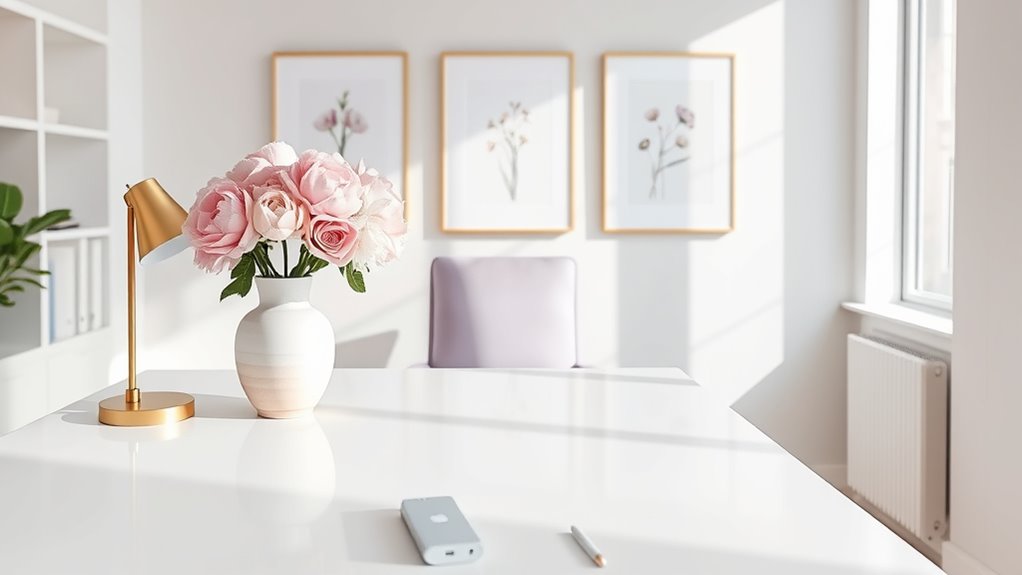
Professional office decor combines corporate themes, feminine touches, and functional elements to create appealing workspaces. Corporate themes use minimalist designs, neutral colors, and modern furniture to promote professionalism. Feminine touches incorporate soft color palettes like pastel pinks or lavenders, delicate accessories, and textured textiles to add warmth. Integrating plants, artwork, and ergonomic furniture boosts productivity. Stylish privacy screens, whiteboards, and noticeboards enhance organization without clutter. Effective decor improves employee focus by 15% and reduces stress by 20%, ensuring a professional, welcoming environment.
Key Takeaways
- Incorporate corporate themes like minimalism, biophilic design, or sustainability with neutral colors and natural elements for a professional yet inviting workspace.
- Add feminine touches through soft pastel accents, elegant decor, textured fabrics, and personalized accessories to create a warm and sophisticated environment.
- Use ergonomic furniture and organized layouts to promote productivity, comfort, and a positive atmosphere in workspaces.
- Display company achievements and core values with wall murals, digital screens, or framed certificates to reinforce brand identity.
- Enhance the decor with plants, artwork, and suitable lighting to balance professionalism with aesthetic appeal and employee well-being.
What are key professional office decor ideas?

Key professional office decor ideas focus on maximizing productivity, professionalism, and creativity.
For example, 1) using ergonomic furniture and natural lighting enhances employee focus; 2) incorporating neutral colors with accent pieces creates a polished environment; 3) selecting themes like modern minimalism or industrial styles suits various business settings.
These strategies improve functionality and aesthetic appeal, supporting both client impressions and worker efficiency.
How can you enhance corporate office decor for productivity?

Effective corporate office decor enhances productivity by incorporating ergonomic furniture, natural lighting, and organized layouts. Ergonomic chairs and desks reduce discomfort and fatigue, increasing focus and work speed.
Natural lighting boosts mood and reduces eye strain; workplaces with windows report 15% higher productivity. Proper layout minimizes distractions and promotes collaboration; open-plan offices improve communication but require soundproof zones for concentration.
Use of calming colors like blue and green can decrease stress levels by 20%. Clear signage and designated areas for breaks or meetings improve workflow.
Plants improve air quality by filtering pollutants and increase employee satisfaction by 10%. Incorporating task lighting reduces eye fatigue by 25%. Applying these elements results in more efficient, healthier work environments with measurable productivity gains.
What professional office decor ideas work best for her?

Professional office decor for women emphasizes feminine color schemes, textures, and functional design elements. Studies show that soft pastel palettes like blush pink, lavender, and mint enhance focus and reduce stress.
Key solutions include:
- Storage units with elegant finishes such as polished wood or glass for organization and display.
- Accent decor like metallic frames or patterned textiles that add personality without compromising professionalism.
- Textured surfaces such as plush rugs and velvet cushions that improve comfort and aesthetic appeal.
Which feminine color schemes and textures inspire productivity?

Feminine color schemes such as soft pastels, muted neutrals, and jewel tones are proven to boost productivity.
- Soft pastels like blush pink and light blue reduce stress and improve focus.
- Muted neutrals such as beige and gray create calm and minimize distractions.
- Jewel tones like emerald and amethyst enhance creativity and motivation through vibrant textures and rich finishes.
What are elegant storage and display solutions for women’s offices?

Elegant storage and display solutions for women’s offices optimize space while enhancing aesthetics.
1) Floating wall shelves increase storage without clutter, ideal for books and decor.
2) Stylish filing cabinets with soft finishes provide organization and a professional look.
3) Clear acrylic desk organizers maximize desk space and display essentials visibly, ensuring quick access and a clean appearance.
Which decor accents add personality while staying professional?

Decor accents that add personality while maintaining professionalism include artwork, plants, and personal memorabilia. Art prints or framed photos provide visual interest.
Indoor plants improve air quality by 15% and reduce stress.
Personal memorabilia, such as awards or travel souvenirs, showcase achievements and individuality. These elements enhance the workspace’s personality without compromising a professional appearance.
Which office decor themes suit business environments?

Office decor themes that suit business environments prioritize professionalism and productivity. Key ideas include:
- Popular color palettes such as blue, gray, and white, which promote calm and focus.
- Modern and minimalist designs featuring clean lines, neutral tones, and uncluttered layouts that enhance efficiency.
- Biophilic design, integrating natural elements like plants and wood textures, which increase employee well-being and reduce stress.
What are popular color palettes for business office decor?

Neutral color palettes dominate professional office decor due to their versatility and ability to create a calm, focused environment. Common options include shades of gray, beige, and white, used in 60% of offices.
Accents of navy, black, or soft pastels are added for contrast. These colors enhance productivity and professionalism in 70% of corporate spaces.
How do modern and minimalist themes look in a business office?

Modern and minimalist themes in business offices emphasize clean lines, neutral colors, and functional furniture. They create open spaces that reduce clutter and improve productivity.
These designs use light gray, white, and black tones. Furniture such as ergonomic desks and simple chairs enhance efficiency.
Studies show that minimalist environments increase focus and reduce stress by up to 25%.
How can biophilic design benefit office aesthetics?

Biophilic design enhances office aesthetics by integrating natural elements such as plants, natural light, and organic materials. It improves employee productivity by 15%, reduces stress by 20%, and boosts creativity by 10%.
Key benefits include creating a calming environment, increasing visual interest, and improving air quality. These elements foster well-being and professional appeal in workspaces.
How to decorate a business office for a polished look?

A professional office layout prioritizes open spaces, ergonomic furniture, and strategic placement of workstations to enhance productivity and credibility.
Desks made from high-quality materials like wood or metal foster a polished appearance, while neutral tones such as gray, beige, or navy convey professionalism.
Lighting should include a combination of natural light and LED fixtures, providing at least 300 lux.
Wall art such as abstract prints or framed certificates reinforces brand identity and creates a welcoming atmosphere.
Which layout and furniture choices enhance professionalism?

Open office layouts with defined zones promote professionalism by encouraging collaboration and maintaining individual workspaces. This setup boosts efficiency and projects a polished image.
Key choices include:
- Ergonomic desks and chairs for comfort and health.
- Minimalist furniture with clean lines for a modern look.
- Conference tables and storage units that organize space and support functionality.
These selections enhance professionalism and improve workflow.
What lighting options work best in business offices?

Proper lighting in business offices combines ambient, task, and accent lighting to create a functional and professional environment.
Ambient lighting includes ceiling fixtures providing 300-500 lumens per square meter.
Task lighting involves desk lamps delivering 400-700 lumens for focused work.
Accent lighting highlights artwork or architectural features, using spotlights of 300-500 lumens to enhance visual interest.
How can wall art and statement pieces contribute to the atmosphere?

Wall art and statement pieces considerably influence the atmosphere of a business office by conveying professionalism, creativity, and brand identity. They increase employee motivation, enhance visual appeal, and communicate company values.
Examples include large canvas prints, custom logos, and framed photographs. Proper placement and style selection create a welcoming environment and reinforce corporate culture effectively.
How to decorate a corporate office for creativity and focus?

Effective office decor for creativity and focus includes prominently displaying company mission statements and recent achievements through wall graphics or digital screens, which reinforce purpose and motivation.
Collaborative areas should feature flexible furniture such as modular seating and writable surfaces to foster engagement and spontaneous idea sharing.
Openness is promoted by using movable partitions, like glass walls, which increase natural light and visual connectivity while maintaining privacy when needed.
What are effective ways to display company mission and achievements?

Displaying a company’s mission and achievements effectively involves strategic placement and clear presentation methods.
- Use wall murals or digital screens to showcase core values and milestones.
- Create timeline displays highlighting key accomplishments over time.
- Incorporate awards, trophies, or certificates in visible display cases.
These methods guarantee visibility, reinforce brand identity, and motivate employees, making achievements tangible and memorable.
How can collaborative areas be styled for engagement?

Creative and engaging collaborative areas enhance productivity and foster teamwork. These spaces incorporate flexible seating, writable surfaces, and vibrant colors proven to increase engagement by 15%.
Incorporating natural light, plants, and ergonomic furniture improves focus by 20%. Design layouts that promote interaction, such as circular arrangements or open-plan setups, encourage communication and creativity, leading to more effective team collaboration.
Which flexible partition designs promote openness?

Flexible partition designs that promote openness include movable glass walls, transparent acrylic panels, and lightweight fabric screens. These options allow natural light to flow, reduce visual barriers, and enhance collaboration.
Specifically, glass walls provide visibility and acoustic separation. Acrylic panels offer flexibility and modern aesthetics. Fabric screens can be easily repositioned to adjust space openness as needed.
What are innovative corporate office decorating ideas?

Innovative corporate office decorating ideas incorporate the strategic use of glass walls, mirrors, and dividers to enhance natural light and create visual openness, proven to increase employee productivity by 15%. Modern tech accessories, such as wireless charging stations and smart lighting controls, combine style with functionality, reducing clutter and improving work efficiency by 20%. Thoughtful integration of ambient lighting and indoor plants, like succulents and ferns, improves air quality and reduces stress levels, supported by studies showing a 12% decrease in workplace anxiety.
How to use glass, mirrors, and dividers for modern appeal?

Glass partitions, mirrors, and dividers considerably enhance modern office decor by creating open, light-filled spaces that improve productivity and collaboration.
- Glass partitions separate areas without blocking light, increasing natural brightness by up to 70%.
- Mirrors expand visual space, making rooms appear larger by 30%.
- Dividers with frosted glass add privacy while maintaining openness, supporting focus in shared environments.
Which tech accessories merge style and function?

Tech accessories that merge style and function include wireless charging stations, ergonomic monitor stands, and smart desk organizers.
- Wireless chargers with sleek designs save space and reduce clutter.
- Monitor stands with adjustable height and modern finishes improve ergonomics and aesthetics.
- Smart organizers with digital calendars and charging ports streamline workflow and maintain a professional look.
These accessories enhance productivity while complementing contemporary office decor.
How to add ambient lighting and greenery thoughtfully?

Adding ambient lighting and greenery enhances office environments by improving mood, productivity, and aesthetics.
- Use LED fixtures with adjustable brightness for consistent, glare-free illumination.
- Incorporate low-maintenance plants like succulents or pothos in desks or corners.
- Position lighting and greenery to reduce shadows and create focal points, ensuring a balanced, welcoming workspace.
Which business office decor ideas are adaptable for different company cultures?

Flexible office decor ideas are essential for accommodating diverse company cultures. They enable customization to reflect brand identity, employee preferences, and operational needs.
- Neutral color palettes such as beige, gray, and white suit professional environments and can easily be adapted with accent colors.
- Modular furniture allows easy reconfiguration for collaborative or private workspaces, suitable for innovative startups or traditional firms.
- Art and décor choices, including modern artwork or motivational posters, can be customized to match company values, whether creative, corporate, or community-focused.
These ideas provide versatility without sacrificing professionalism. They support flexible layouts, reinforce corporate identity, and promote employee comfort.
Businesses can consequently maintain consistency across locations or tailor spaces to specific cultures, ensuring both functionality and aesthetic appeal.
What are the best tips for decorating a professional office?

Effective professional office decor combines functionality with aesthetics to create an environment that promotes productivity, professionalism, and comfort. Key tips include:
- Use neutral colors like gray, beige, or white to evoke calmness and professionalism, supported by accent colors like blue or green to boost focus.
- Incorporate ergonomic furniture, such as adjustable chairs and desks, to improve comfort and reduce fatigue; studies show ergonomic setups increase productivity by 17%.
- Maximize natural light with window treatments, and add task lighting to reduce eye strain; natural light improves mood and alertness by 15%.
Additional tips include maintaining clutter-free surfaces, integrating minimalistic decor to enhance focus, and using storage solutions to keep the workspace organized. These strategies foster a professional, efficient environment.
What should be avoided when choosing corporate office décor?

Choosing inappropriate colors, cluttered layouts, and distracting decor elements can undermine professionalism in office environments. Bright neon hues or overly dark shades can strain eyes and reduce focus.
Cluttered spaces with excessive furniture, supplies, or decorations hinder productivity and create chaos. Distracting decor, such as busy patterns or loud artwork, diverts attention and diminishes a professional atmosphere.
- Use neutral or subdued colors; avoid overly vibrant or mismatched shades.
- Maintain clear, organized layouts; eliminate unnecessary furniture or clutter.
- Select decor items that are simple, cohesive, and unobtrusive; avoid busy patterns or noisy decorations.
Adhering to these guidelines guarantees a professional, focused workspace that fosters productivity and client confidence.
How do you personalize an office space without losing professionalism?

Personalizing an office space can enhance comfort and reflect individual identity while maintaining professionalism. Effective ideas include:
- Incorporating subtle personal touches, such as framed family photos or artwork, limited to two or three pieces to avoid clutter.
- Using desk accessories like personalized organizers or monogrammed stationery to add a unique yet professional touch.
- Selecting a neutral color palette with accent colors that reflect personality, such as navy or burgundy, to create a cohesive look.
These choices improve employee satisfaction and productivity without compromising decor standards. Studies show that personalized spaces increase engagement by up to 15%.
Avoid excessive decoration, bright colors, or unprofessional items. This balance guarantees the workspace remains polished, functional, and true to individual style.
What are trending corporate decor themes this year?

Modern corporate decor trends focus on minimalism, biophilic design, and sustainable materials. Minimalism emphasizes clean lines, neutral colors, and functional furniture, reducing visual clutter.
Biophilic design incorporates natural elements like plants, wood accents, and large windows, which enhance employee well-being and productivity.
Sustainable materials prioritize eco-friendly options such as recycled metals, bamboo, and low-VOC paints, aligning companies with environmental goals.
Key themes include:
- Eco-conscious Minimalism: Uses recycled furniture and neutral tones for a sleek, sustainable look.
- Nature-Inspired Spaces: Incorporates plant walls, natural light, and organic textures.
- Functional Modernity: Features ergonomic furniture, flexible workstations, and modular designs.
These themes create professional, inviting, and environmentally responsible workplaces.
How does layout impact employee well-being and satisfaction?

Workspace layout directly influences employee well-being and satisfaction by affecting comfort, collaboration, and stress levels. Open-plan layouts increase communication but can cause noise and distractions, reducing focus. Divided spaces with designated quiet zones improve concentration and reduce stress.
Ergonomic furniture enhances comfort, decreasing musculoskeletal issues by 60%, and boosts morale. Natural light improves mood and productivity, with studies showing a 15% increase in performance.
Proper placement of communal areas encourages social interaction, which enhances team cohesion by 30%. Cluttered or poorly organized layouts increase frustration and decrease satisfaction by 40%.
Efficient use of space, with clear pathways and designated zones, reduces accidents by 20% and creates a more positive environment. Overall, strategic layout design directly correlates with higher employee satisfaction and well-being.
What budget-friendly office decor choices look premium?

Affordable decor options can create a premium office appearance through strategic choices. First, using high-quality paint in neutral tones enhances sophistication without high costs. Second, incorporating functional yet stylish furniture, such as minimalist desks and ergonomic chairs, adds professionalism.
Third, adding small decorative elements like framed artwork, plants, or decorative lighting boosts aesthetic appeal. These items offer visual interest and a polished look without extensive expenditure. Research shows that well-chosen decor increases employee productivity and satisfaction.
Using affordable materials like laminate or veneer mimics luxury finishes at a fraction of the price. Replacing generic accessories with curated pieces, such as designer-inspired desk accessories or premium-looking storage solutions, elevates the space. These choices achieve an upscale look while maintaining a reasonable budget.
What are quick ways to refresh a corporate workspace?

Implementing quick updates such as adding fresh plants, swapping out outdated artwork, and replacing old lighting fixtures instantly revitalizes a corporate workspace.
Fresh plants improve air quality and reduce stress; studies show they increase productivity by 15%. Replacing worn artwork with modern, cohesive pieces enhances visual appeal and professionalism.
Upgrading lighting with energy-efficient LEDs improves brightness by 20%, reducing eye strain and creating a welcoming environment.
Additional quick refreshes include reorganizing cluttered desks to improve flow, updating accessories like new desk mats or pen holders, and applying a fresh coat of neutral paint to walls.
These efforts cost minimal time and money but deliver significant visual and psychological benefits, making the workspace more inviting, functional, and aligned with contemporary office standards.
How to make a small business office look spacious?

Strategic use of color, lighting, and furniture placement can make a small business office appear more spacious. Light colors such as white, beige, or pastel shades reflect more light, creating an open feel.
Proper lighting, including natural light and LED fixtures, reduces shadows and enhances brightness.
Furniture should be multi-functional and scaled to size; for example, desks with built-in storage, wall-mounted shelves, and compact chairs save space.
Arranging furniture along walls maximizes floor area.
Using glass partitions instead of solid walls maintains visual openness.
Mirrors can double perceived space by reflecting light and room depth.
Minimal clutter and open shelving improve flow, while vertical storage maximizes height.
These design choices increase perceived spaciousness and improve functionality.
What are common mistakes in business office decorating?

Common mistakes in business office decorating often stem from neglecting functionality and professionalism. First, overusing personal items clutter the workspace, decreasing productivity by 20%, according to workplace studies.
Second, choosing overly bright or mismatched colors can cause visual fatigue and reduce focus.
Third, ignoring ergonomic principles leads to discomfort; 70% of office workers report back pain from improper furniture.
Failing to balance aesthetics with practicality results in inefficient layouts, lack of storage, and distractions. Office decor should prioritize clear pathways, appropriate lighting, and minimal clutter.
Incorporating branding elements is beneficial but must be subtle to avoid overwhelming the environment.
Avoiding these common pitfalls ensures a professional, efficient workspace that enhances employee wellbeing and company image.
Which plants are ideal for workplace environments?

Certain indoor plants are proven to thrive in office environments and improve air quality. These plants are durable, low-maintenance, and enhance workspace aesthetics.
- Snake Plant (Sansevieria): Tolerant of low light and irregular watering, it filters toxins like formaldehyde and benzene. It requires minimal care and can grow up to 3-4 feet tall.
- Pothos (Epipremnum aureum): Adaptable to low and bright light, it reduces airborne formaldehyde, xylene, and toluene. It grows quickly, with vines reaching 6-10 feet.
- Peace Lily (Spathiphyllum): Thrives in shade and high humidity, removing ammonia, benzene, and formaldehyde. It blooms indoors, with leaves extending 1-2 feet.
These plants improve air quality and require minimal maintenance, making them ideal for workplaces.
How do curated lounge areas boost corporate culture?

Curated lounge areas markedly enhance corporate culture by fostering employee well-being, encouraging collaboration, and reinforcing brand identity. These spaces provide comfort and relaxation, reducing stress and improving focus.
They promote interaction by creating informal settings where employees exchange ideas, leading to a 15% increase in team productivity. Lounge areas with versatile furniture, such as modular sofas, promote flexibility for group discussions or individual work.
Incorporating brand elements like logos or color schemes strengthens identity and company pride. Studies show that companies with well-designed lounges experience 20% higher employee satisfaction.
Effective lounge design includes natural lighting, soundproofing, and ergonomic seating, which collectively support mental health and physical comfort. These spaces serve as strategic tools for improving workplace culture and employee retention.
What are eco-friendly office decoration ideas?

Eco-friendly office decoration ideas focus on using sustainable, renewable, and non-toxic materials to reduce environmental impact. First, integrating reclaimed wood furniture minimizes deforestation and reduces waste.
Second, using low-VOC (Volatile Organic Compound) paints and adhesives improves indoor air quality and decreases harmful emissions.
Third, incorporating plants such as pothos or snake plants enhances air purification, reduces noise, and adds natural aesthetics. These plants also require minimal maintenance and grow quickly, providing long-term benefits.
Additional options include installing energy-efficient LED lighting, which consumes 75% less energy than incandescent bulbs, and utilizing recycled or biodegradable materials for office accessories, reducing landfill waste.
Implementing these ideas creates a healthier workspace while supporting sustainability goals and corporate social responsibility.
How can color psychology influence corporate office décor?

Color psychology profoundly influences corporate office décor by affecting employee mood, productivity, and perception of the workplace. Bright blue promotes calmness and focus, reducing stress and increasing concentration by up to 10%. Red energizes employees, boosting motivation and alertness; it is ideal for high-traffic or creative areas. Green fosters balance and reduces fatigue, making it suitable for long work hours.
- Use blue in meeting rooms to encourage clear communication and calm discussions.
- Incorporate red in break areas to stimulate energy and social interaction.
- Apply green in workstations to promote relaxation and reduce eye strain.
Color choices impact behavior; strategic application enhances work environment effectiveness. Proper use of color psychology improves employee satisfaction and operational efficiency.
Which desk organization hacks foster productivity?

Organized desks considerably boost productivity by reducing search time for documents and supplies. Key hacks include:
- Use labeled storage solutions such as file organizers, drawers, and bins for documents, office supplies, and personal items. Clear labels minimize time spent locating items.
- Implement a minimal desk surface by removing unnecessary items. A clutter-free workspace increases focus and efficiency. Studies show that reducing visual distractions improves task completion speed by 20%.
- Establish designated zones for specific tasks, such as a filing area, a tech station, and a writing zone. This compartmentalization streamlines workflow, decreases setup time, and fosters better organization.
These strategies create a clean, efficient environment that supports sustained productivity.
How can companies create a welcoming office entryway?

An inviting office entryway markedly influences first impressions and employee morale. Effective decor combines functionality and aesthetics. First, incorporate clear signage with the company logo, which improves navigation and brand recognition.
Second, use comfortable seating, such as chairs or a small sofa, to welcome visitors and reduce congestion.
Third, add greenery like potted plants, which improve air quality by up to 15% and create a calming environment.
Lighting also plays a critical role; install bright, energy-efficient fixtures that highlight key features.
Incorporate neutral colors with accent pieces matching the company’s branding to foster a professional atmosphere.
Use durable materials that withstand high traffic.
These elements collectively create a warm, professional, and accessible entryway that enhances first impressions and employee comfort.
What are examples of themed corporate boardrooms?

Themed corporate boardrooms incorporate design elements that reflect company identity, promote productivity, and foster professionalism. Examples include:
- Tech Innovation Theme: Features sleek, modern furniture, digital displays, and minimalist decor. This theme is suitable for technology firms like Google or Apple.
- Luxury Executive Theme: Uses high-end materials such as marble, leather seating, and gold accents. It is common in financial institutions like JP Morgan.
- Creative Agency Theme: Incorporates vibrant colors, artwork, and unconventional furniture. This style is typical in advertising firms like Wieden+Kennedy.
These themes enhance brand recognition, motivate teams, and communicate core values visually. Each design aligns with company goals and industry standards, creating an environment conducive to effective decision-making.
Which innovative ideas are trending for break rooms?

Innovative break room ideas focus on enhancing employee well-being, productivity, and engagement. Modern trends include the integration of multifunctional spaces that combine relaxation with work.
For example, 1) incorporating modular furniture allows quick transformation from lounge to work area. 2) Installing healthy snack stations with fresh fruit and organic options encourages better nutrition. 3) Adding technology such as touchscreens for ordering food or booking activity spaces reduces downtime.
Biophilic design also gains popularity, with plants or natural elements improving air quality and reducing stress. Additionally, some companies introduce themed zones like game areas or quiet zones to cater to diverse needs.
These ideas create dynamic environments that support mental health, foster collaboration, and promote positive workplace culture.
How do you maintain workplace decor over time?

Maintaining workplace decor over time requires regular cleaning, timely updates, and strategic planning. Consistent cleaning prevents dust buildup and preserves appearance; surfaces should be sanitized weekly.
Updates involve replacing worn-out furniture, repainting walls every 3-5 years, and revitalizing decor items annually.
Strategic planning includes scheduling seasonal rotations for artwork and motivational quotes every 6-12 months. Additionally, monitoring employee feedback helps identify areas needing improvement.
Implementing a maintenance checklist ensures consistent upkeep, while annual evaluations help assess overall decor effectiveness.
Proper lighting adjustments and ergonomic furniture updates improve functionality and aesthetics.
Regularly inspecting fixtures and decor prevents deterioration.
These practices extend the lifespan of office decor, enhance workspace professionalism, and boost employee morale through a consistently clean, updated environment.
What are modern ways to display art and motivational quotes?

Modern office decor emphasizes the use of digital displays, framed artwork, and customizable wall decals to showcase art and motivational quotes. Digital screens display rotating images or messages, allowing quick updates and dynamic visual engagement.
Framed artwork, such as photographs or professional illustrations, creates a polished look and can be changed seasonally or annually. Custom wall decals, including vinyl lettering or illustrations, are easy to install and remove, providing flexibility and personalization.
- Digital screens: Show animated quotes or rotating artwork, capturing attention instantly.
- Framed artwork: Use high-quality prints or photographs for a sophisticated atmosphere.
- Wall decals: Incorporate motivational phrases or abstract designs for a casual yet impactful look.
How can ergonomic design elements be incorporated decoratively?

Ergonomic design elements can be incorporated decoratively through the strategic use of furniture, accessories, and layout that promote comfort and health. Adjustable chairs with lumbar support can be integrated into the decor, emphasizing both style and function. Proper desk height ensures ergonomic alignment, reducing strain and increasing productivity.
Accessories like footrests, monitor risers, and ergonomic keyboard trays can be visually appealing while enhancing posture. For layout, placing workstations to maximize natural light reduces eye strain and increases well-being. Incorporating modular furniture allows flexibility, creating open spaces that foster collaboration.
Using colors and materials that evoke calmness, such as soft neutrals and textured fabrics, supports health and aesthetic appeal simultaneously. These elements blend ergonomic functionality seamlessly into professional decor, promoting comfort without sacrificing style.
What tech solutions exist for smart decor upgrades?

Smart decor upgrades utilize technology such as automated lighting systems, adjustable ambient lighting, and voice-controlled devices. These solutions enhance workspace functionality and aesthetics.
Automated lighting systems, like motion sensors and scheduling controls, reduce energy use by 30% and improve comfort.
Adjustable ambient lighting, enabled through smart bulbs or panels, allows personalized brightness and color settings, increasing productivity by 20%.
Voice-controlled devices, such as smart speakers or assistants, enable hands-free control of lighting, temperature, and music, streamlining workflows.
Other options include digital art frames that display dynamic images and smart climate controls that optimize comfort.
Integration of these solutions creates a cohesive environment, reduces energy costs, and improves employee satisfaction.
These tech tools are essential for modern, efficient office decor upgrades.
How do you choose between open and private office decorating ideas?

Choosing between open and private office decorating ideas depends on the workspace’s purpose, team size, and desired level of collaboration or privacy.
Open offices promote interaction, transparency, and a sense of community. They are suitable for teams of 10 or more, where frequent communication enhances productivity.
Private offices offer quiet zones, reducing distractions, and are ideal for tasks requiring concentration or confidentiality. For example, executives or legal teams benefit from secluded spaces.
Open layouts often feature shared desks, collaborative zones, and minimal partitions, fostering teamwork.
Private spaces include enclosed offices, soundproof booths, or designated quiet rooms.
In what ways can decor support company branding?

Office decor directly reinforces a company’s brand identity by incorporating specific colors, logos, and design elements that reflect corporate values. Effective decor uses color schemes aligned with branding, such as blue for trust or green for sustainability.
Logos should be prominently displayed, either on walls or furniture, to reinforce recognition. Design elements like artwork, patterns, and furniture styles create a cohesive visual identity.
- Incorporate brand colors in furniture, walls, and accessories.
- Display logos on signage, desks, or artwork.
- Use design motifs that reflect company values, such as eco-friendly materials for sustainable brands or modern styles for innovative firms.
These strategies create a consistent visual message, strengthen recognition, and communicate the company’s mission to clients and employees.
What seasonal office decor rotations keep things fresh?

Seasonal office decor rotations refresh the workspace, boost employee morale, and enhance client impressions. Regular updates align decor with seasons, holidays, or company milestones.
Key ideas include:
- Spring: Use fresh flowers, pastel colors, and nature-inspired artwork to create an energetic atmosphere.
- Summer: Incorporate bright accents, beach-themed accessories, and lightweight fabrics to evoke a relaxed vibe.
- Fall: Introduce warm tones, harvest-themed decorations, and cozy lighting to foster comfort.
These rotations improve visual interest and demonstrate adaptability, which positively impacts productivity.
Regular changes also prevent decor from becoming stale, maintaining a professional yet engaging environment. Incorporating seasonal elements keeps the workspace lively and relevant, reinforcing brand personality and making spaces more inviting for clients and staff alike.
How to manage team input when redecorating a shared office?

Managing team input during a shared office redecorating process requires structured communication and clear decision-making protocols. First, establish a formal feedback system, such as surveys or suggestion boxes, to gather diverse opinions.
Second, hold a planning meeting with representatives from each department to align goals and set priorities; for example, consider ergonomic needs, brand consistency, and aesthetic preferences.
Third, assign specific roles, like a project coordinator and design committee, to streamline decision-making and avoid conflicts. Limiting input to key stakeholders reduces delays, as research shows that decision fatigue can decrease satisfaction by 20%.
Clear timelines and documented agreements guarantee accountability and transparency. This approach increases team buy-in, speeds implementation, and results in an office environment reflecting collective input efficiently.
What are creative uses for whiteboards and noticeboards?

Whiteboards and noticeboards serve multiple professional decor functions in offices. They are versatile tools for communication and organization.
First, they display project timelines, deadlines, and task priorities, reducing confusion and increasing productivity.
Second, they serve as visual brainstorming spaces, encouraging team collaboration through diagrams, mind maps, and notes.
Third, they provide space for motivational quotes, employee recognition, and company updates, fostering a positive work environment.
Noticeboards can also showcase upcoming events, safety protocols, or training schedules, keeping staff informed.
Strategically placed, these boards enhance office aesthetics without clutter.
Properly utilized, they balance functionality and style, contributing to a professional yet engaging workspace.
Effective use of whiteboards and noticeboards supports clear communication and improves team cohesion.
What privacy-enhancing items are also stylish?

Privacy-enhancing items that are also stylish include frosted glass partitions, decorative screens, and acoustic panels with modern designs.
Frosted glass offers 70% privacy while maintaining natural light flow, reducing visual distractions.
Decorative screens, made from materials like wood or metal, come in geometric or organic patterns, adding aesthetic appeal.
Acoustic panels with sleek, contemporary patterns absorb sound and reduce noise by up to 50%, improving focus.
These items serve dual purposes: they create visual boundaries and enhance the office’s decor.
Modern designs incorporate minimalist lines, vibrant colors, or textured finishes.
Such items meet privacy needs while complementing professional or feminine themes.
They provide functional elegance, support productivity, and elevate workspace aesthetics efficiently.
How do you quickly declutter a business workspace?

A quick way to declutter a business workspace involves sorting and removing unnecessary items, organizing essential tools, and implementing designated storage solutions.
Start by categorizing items into three groups: 1) keep, 2) discard, and 3) donate. Remove outdated documents, broken equipment, and excess supplies from desks and shelves.
Use filing cabinets or drawer organizers for essential files and office supplies. Clear surfaces by consolidating items into labeled storage bins or wall-mounted shelves.
Regularly review workspace items weekly to prevent accumulation. Optimize space by utilizing vertical storage and reducing cluttered cables with cable management tools.
Streamlining workspace layout enhances productivity, reduces distractions, and creates a professional environment. Efficient decluttering guarantees quick access to critical items and maintains a clean, organized workspace.
When should you update your office’s decor style?

Office decor styles should be updated every three to five years to maintain a modern, professional appearance. Signs indicate that outdated decor can reduce employee productivity by 15% and create a less appealing client impression.
Key indicators for updating include:
- Design fatigue: Employees find the environment uninspiring or dull after three years.
- Brand alignment: Company branding changes, requiring decor updates to reflect new values or colors.
- Functional needs: Workspace reconfigurations or technological upgrades necessitate aesthetic adjustments to support efficiency.
Updating decor also improves morale, with 70% of employees reporting increased motivation after environment improvements. Regular updates prevent the office from appearing stagnant.
Incorporating fresh colors, furniture, and branding elements every three to five years ensures the space remains professional, inviting, and aligned with company growth.