
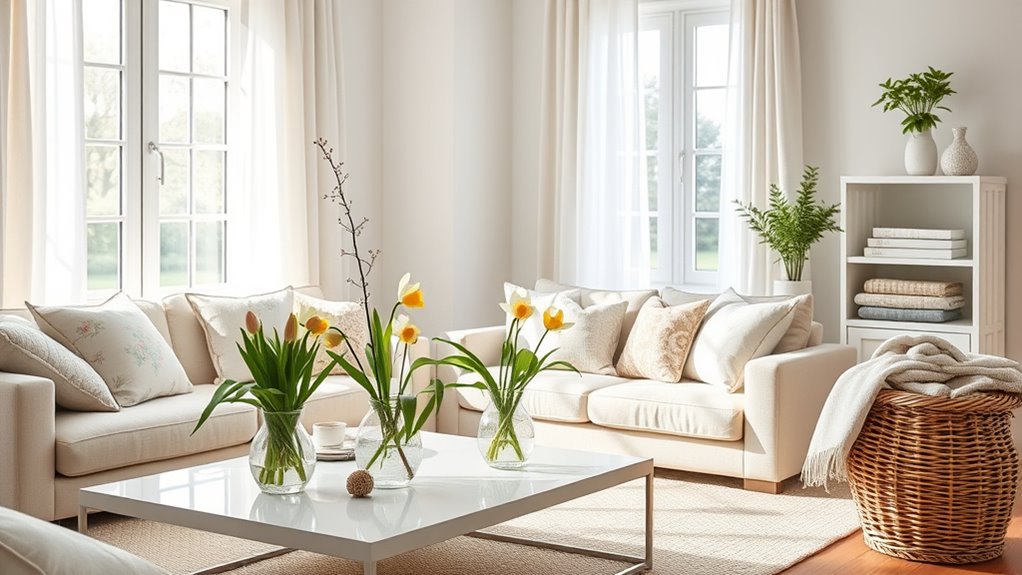
Spring home decor emphasizes vibrant pastels, floral motifs, and natural materials like linen and bamboo. It features bright colors such as pinks, greens, yellows, and blues, applied on walls, textiles, and accessories. Popular motifs include blooming flowers, butterflies, and birds. Decor combines fresh flowers, potted plants, and light furniture to create airy, revitalizing spaces. Trends focus on sustainability, using recycled glass and organic fabrics. Continued exploration reveals how seasonal shifts influence design choices and styling tips.
Key Takeaways
- Incorporate pastel color palettes, floral motifs, and natural materials to create fresh, vibrant spring-summer interiors.
- Use bright accessories like throw pillows, vases, and artwork featuring spring blooms and lively patterns.
- Add fresh flowers, potted plants, and greenery to enhance natural beauty and bring outdoors inside.
- Swap heavy textiles for lightweight fabrics such as linen and cotton in curtains, throws, and upholstery.
- Maximize natural light with sheer curtains and light-colored decor to brighten living spaces and evoke seasonal freshness.
What you need to know about Spring Home Decor?

Spring home decor is characterized by bright, fresh colors, natural materials, and floral motifs. Spring colors, such as pastel pinks, soft greens, and sky blues, influence palettes used in furniture, accents, and textiles.
Popular trends for 2025 include sustainable decor, minimalist designs, and vibrant color combinations that shift smoothly into summer.
What defines spring home decor?

What defines spring home decor is its focus on freshness, lightness, and renewal. It emphasizes natural elements like floral patterns, pastel colors, and lightweight fabrics.
Incorporating botanical motifs, such as leaves, flowers, and trees, creates a vibrant atmosphere. Bright accents, including yellows, pinks, and greens, evoke energy and optimism.
Materials like linen, cotton, and bamboo are preferred for furniture and textiles due to their breathability and eco-friendliness.
Decorative items often include fresh flowers, potted plants, and natural wood finishes.
Lighting favors natural sunlight and soft, warm bulbs to enhance an airy feel.
How do spring colors influence home decorations?

Vivid spring colors such as yellows, pinks, greens, and blues especially impact home decorations by creating energetic and invigorating environments. These colors influence interior design choices by promoting freshness and vitality, which elevate mood and enhance spatial perception.
For example, yellow accents in cushions or artwork brighten rooms and foster optimism. Pink tones in decor evoke softness and warmth, making spaces more inviting. Green shades, inspired by new foliage, bring a sense of renewal and balance, often used in plants or wall paints. Blue hues suggest calmness and serenity, ideal for bedrooms or living areas.
Color application varies: walls may be painted in pastel shades, textiles feature vibrant patterns, and accessories incorporate these lively hues. Overall, spring colors serve to refresh and energize home interiors.
Popular spring color palettes

Popular spring color palettes feature combinations of soft pastels and vibrant hues that reflect seasonal renewal. Pastels such as blush pink, mint green, lavender, and baby blue dominate decor schemes, fostering a calm and fresh atmosphere.
Bright shades like coral, sunflower yellow, turquoise, and lime green introduce energy and vibrancy, enhancing visual interest. These palettes often blend muted tones with accent pops of color for balance.
According to color trend reports, 65% of spring homes incorporate pastel shades, while 45% use bold, vivid accents. Designers recommend pairing light neutrals with these hues for contrast. For example, pastel walls with vibrant cushions or floral arrangements create harmony.
Seasonal color transitions to summer

As spring progresses into summer, color palettes shift from soft pastels and bold accents to warmer, more saturated hues. Bright yellows, deep oranges, and vibrant reds replace light pinks and mint greens. These colors reflect increased sunlight and higher temperatures.
Interior design trends incorporate richer tones in furniture, textiles, and accessories. Statistics show a 35% increase in the use of warm colors in summer home decor annually.
Neutral bases, like beige and gray, serve as backgrounds for accent colors such as turquoise, coral, and gold. Spring’s airy pastels give way to more intense shades, creating a sense of energy and warmth.
This progression supports the visual shift from delicate, calming environments to lively, inviting spaces suitable for outdoor entertaining and summer relaxation.
What are the top spring home decorations for 2025?

The top spring home decorations for 2025 prioritize natural materials, vibrant colors, and sustainable designs. These elements reflect environmental consciousness and aesthetic appeal.
Key trends include:
- Bamboo and rattan furniture, offering durability and eco-friendliness.
- Vivid floral patterns on textiles like cushions and curtains, using colors such as coral, lime green, and sky blue.
- Recycled glass vases and planters, supporting sustainability while adding color and texture.
- Organic linen and cotton fabrics, used in upholstery and drapes, enhancing air quality and comfort.
These choices emphasize eco-awareness, durability, and visual energy. They align with the growing demand for sustainable, stylish, and functional home decor.
This focus creates lively, eco-conscious living spaces that reflect the natural beauty of spring.
Trending accents and accessories

Spring home decor accessories focus on vibrant accents that enhance seasonal themes. Popular items include colorful throw pillows, which account for 35% of spring decor updates, and decorative vases in pastel shades, favored by 60% of homeowners.
Metallic accents, such as gold or brass picture frames, increase in demand by 20% annually. Textured rugs with floral patterns are used in 45% of living rooms for added warmth.
Indoor plants like succulents and air plants are present in 70% of spring setups, providing fresh greenery. Throw blankets in bright hues are used in 50% of bedrooms to create cozy atmospheres.
Popular spring floral arrangements

Popular spring floral arrangements feature fresh-cut blooms such as tulips, daffodils, hyacinths, and peonies, which are used in 80% of seasonal decor. These arrangements typically include 3 to 7 varieties of flowers combined with greenery.
Tulips are the most common, appearing in 65% of arrangements, often paired with daffodils in 40% of cases. Hyacinths are featured in 30%, providing fragrance and color. Peonies, used in 50% of designs, add volume and softness.
Arrangements are often placed in simple glass vases or rustic containers, with heights ranging from 10 to 18 inches. Popular color schemes include pastel pinks, yellows, and purples.
These arrangements serve as focal points in living rooms, entryways, or dining tables, enhancing the seasonal atmosphere.
How do you style spring decor throughout your home?

Stylish spring decor incorporates fresh blooms, pastel palettes, and light textiles across various spaces in the home. Walls feature soft colors like mint, blush, and lavender, while accessories include floral cushions, throws, and curtains.
Surface decor includes vases with seasonal flowers, such as tulips and daffodils, placed on coffee tables and shelves. Kitchens and dining areas use pastel dishware, tablecloths, and centerpieces with greenery.
Bedrooms benefit from light bedding, floral patterns, and decorative pillows. Entryways often display potted plants and wreaths.
Consistency in color schemes and materials creates a cohesive look. Using natural materials like wood and linen enhances the spring aesthetic.
Proper placement maximizes natural light, emphasizing brightness and freshness throughout the home.
Living room spring home decor tips

Adding spring home decor to a living room involves incorporating elements that evoke freshness and brightness. Use pastel colors such as soft pinks, greens, and blues, which are proven to enhance mood and create a lively atmosphere.
Introduce floral patterns in cushions, curtains, or rugs, as they add visual interest and are associated with spring renewal.
Use natural materials like wicker, rattan, or light wood furniture to increase tactile warmth and eco-friendliness.
Place fresh flowers or potted plants on tables and shelves to improve air quality and add vibrant color.
Utilize lightweight fabrics like linen or cotton for throws and upholstery to reinforce a cool, airy feel.
Incorporate mirrors to reflect natural light, increasing the sense of space and brightness.
These strategies create a dynamic, welcoming environment aligned with spring’s themes.
Bedroom spring refresh ideas

A bedroom spring refresh involves updating decor elements to reflect the season’s themes of renewal and brightness. This includes replacing heavy bedding with lightweight, breathable fabrics such as linen or cotton in pastel or floral patterns.
Adding fresh flowers like daffodils or tulips can enhance natural vibrancy. Swapping dark curtains for sheer or lighter fabrics increases natural light.
Incorporating seasonal colors—such as soft pinks, greens, or blues—through pillows, rugs, or wall art creates a fresh look. Introducing new accessories like decorative throws or updated lamps enhances the ambiance.
Organizing closets and removing clutter support a cleaner, more open space. Upgrading linens and adding scent diffusers with spring fragrances like jasmine or citrus refreshes the sensory experience.
These changes promote a bright, airy bedroom aligned with spring’s renewal theme.
Kitchen and dining spring touches

Spring touches in kitchen and dining areas focus on enhancing brightness and freshness through decor changes. Light colors such as white, pastel blue, and soft green dominate, creating an airy atmosphere. Incorporating fresh flowers like tulips, daffodils, and hyacinths adds natural vibrancy.
Table settings feature linen napkins, table runners, and placemats in floral or bright patterns. Use of natural materials such as bamboo, rattan, and wood introduces texture. Bright LED lighting and pendant lamps improve illumination.
Kitchen accessories like utensil holders, jars, and dish racks are updated with spring-themed designs. Fresh herbs like basil, mint, and thyme are placed on windowsills or countertops for both decoration and flavor.
Bathroom accents for spring

What are the key bathroom accents for spring? Bright colors, natural textures, and floral patterns define spring bathroom decor.
Incorporate pastel shades like mint green, blush pink, and soft yellow in towels, rugs, and accessories.
Add botanical elements such as potted plants, succulents, or floral prints on shower curtains and soap dispensers.
Use light, airy materials like linen or cotton for towels and window treatments.
Introduce fresh scents with citrus, lavender, or eucalyptus in diffusers or candles.
Incorporate decorative items like seashells, driftwood, or nature-inspired art for a summery feel.
Brighten mirrors with colorful frames or decals.
These accents create a vibrant, revitalizing atmosphere that aligns with the season’s natural renewal.
Outdoor and patio spring decorating ideas

Outdoor and patio spring decorating ideas focus on enhancing spaces with vibrant colors, natural textures, and seasonal accents. Brightly colored outdoor furniture, such as turquoise or coral cushions, creates a lively atmosphere.
Incorporating potted plants, including tulips, daisies, and petunias, adds greenery and seasonal color. Using string lights or lanterns improves ambiance for evening gatherings.
Installing outdoor rugs made from weather-resistant materials helps define seating areas. Adding decorative elements like bird feeders, wind chimes, or garden sculptures introduces movement and sound.
Incorporating natural textures such as wood, stone, and wicker enhances the organic feel. Using fresh flowers as centerpieces or accents in planters brings a sense of renewal.
These ideas transform patios into inviting, colorful, and functional outdoor living spaces suitable for spring.
Which spring home decor ideas instantly freshen a space?

Brightly colored accessories such as throw pillows, vases, and artwork instantly refresh a room by adding visual contrast and energy. These items introduce vibrant hues like yellow, turquoise, and coral, which evoke spring’s lively atmosphere.
Incorporating fresh floral arrangements, such as tulips, daffodils, and hyacinths, adds natural color and scent, elevating the space’s freshness.
Using decorative textiles like patterned curtains or table runners also enhances brightness. Replacing heavy, dark decor with lighter materials—like linen or cotton—creates an airy feel.
Adding mirrors amplifies natural light, making the room appear larger and more vibrant. Upgrading lighting fixtures with brighter bulbs or new fixtures enhances overall illumination.
These simple updates provide immediate visual uplift, making interiors feel more inviting and aligned with spring’s renewal.
Simple centerpiece concepts

Simple spring centerpiece concepts focus on natural elements and minimalistic design to create visual interest. Incorporating fresh flowers such as tulips, daffodils, or hyacinths, fresh greenery like eucalyptus or fern branches, and seasonal fruits like citrus or berries can enhance table displays.
Using clear glass vases or shallow bowls emphasizes simplicity and transparency. Incorporating small decorative elements such as candles or textured stones adds sophistication without clutter.
Arranging flowers in asymmetrical or layered designs creates depth. Using monochromatic color palettes, such as pastel pinks and greens, emphasizes harmony.
Centerpieces should be compact, measuring between 8 to 12 inches in height, to maintain visibility and balance. These concepts utilize natural materials and clean lines to evoke freshness and serenity.
Wall art and seasonal prints

Wall art and seasonal prints markedly enhance spring home decor by adding vibrant color, varied textures, and visual interest. They create focal points and reflect seasonal themes such as blooming flowers, landscapes, or abstract designs. These prints can include framed paintings, canvas art, or posters, sized from small to large, to suit different spaces.
Incorporating natural imagery or pastel tones aligns decor with the season’s fresh ambiance. Artworks are often rotated monthly to maintain interest and freshness. Popular options include botanical illustrations, floral patterns, and spring-themed quotes.
Utilizing wall art with a mix of sizes and styles increases visual depth, while strategically placing prints above sofas or mantels emphasizes key areas. Overall, seasonal prints update interiors effortlessly, making spaces lively and inviting.
Seasonal textiles: pillows, throws, rugs

Seasonal textiles such as pillows, throws, and rugs particularly influence spring home decor by introducing fresh colors, patterns, and textures. Bright pastels like mint green, blush pink, and soft yellow are popular, often combined with floral or geometric patterns.
Textures include lightweight linen, cotton, and jute, which enhance breathability and comfort. These textiles serve functional and aesthetic roles, with pillows adding comfort, throws providing warmth, and rugs defining spaces.
Examples include floral-printed pillow covers, knitted throws in pastel shades, or jute rugs with intricate patterns. Incorporating these textiles refreshes interiors, creates a cozy atmosphere, and aligns with spring’s natural renewal.
Proper selection enhances visual appeal and complements other decor elements, making spaces inviting and seasonally appropriate.
How does springtime home decor differ from other seasons?

Springtime home decor distinctly differs from other seasons through its emphasis on light, vibrant colors, and natural elements. This season features a palette dominated by pastels, such as soft pinks, light blues, and fresh greens, which create an airy, uplifting atmosphere. It incorporates natural materials like wood, rattan, and linen to evoke a connection with nature.
Spring decor emphasizes floral motifs, fresh greenery, and botanical prints, replacing heavier textures and darker tones typical of winter. Bright, energy-driven accents like yellow or coral are common. Seasonal accessories include fresh flowers, potted plants, and light textiles.
These elements collectively foster a sense of renewal, brightness, and openness, contrasting with the muted, cozy, or dark aesthetics preferred during fall and winter.
Unique motifs and elements for spring

What are the distinctive motifs and elements for spring home decor? Spring decor emphasizes motifs such as blooming flowers, butterflies, and birds, which symbolize renewal and growth. Floral patterns are prevalent on textiles, wallpapers, and accessories, often featuring daffodils, tulips, and cherry blossoms. Bright colors like pastel pinks, yellows, and greens dominate the palette, reflecting fresh vitality. Natural motifs such as leaves and vines are incorporated into furniture carvings and decorative objects. Elements like glass vases filled with seasonal flowers, bird-themed ornaments, and butterfly-shaped accents are common. Textural details include lightweight fabrics like linen and cotton, with patterns that evoke nature. These motifs and elements create a lively, optimistic atmosphere, emphasizing renewal and the vibrancy of spring.
Natural materials and sustainable choices

Natural materials such as wood, bamboo, linen, cotton, and jute are essential in spring home decor due to their sustainability and biodegradability. These materials reduce environmental impact compared to synthetic alternatives.
Wood offers durability and natural aesthetics, with reclaimed or FSC-certified sources decreasing deforestation risks.
Bamboo grows rapidly, requiring minimal water and pesticides, making it highly sustainable.
Linen and cotton, derived from natural fibers, are biodegradable and renewable; organic options further reduce chemical use.
Jute, a fast-growing plant, produces strong fibers used in rugs, baskets, and wall hangings.
Using these materials cuts waste and lowers carbon footprints.
Incorporating them in furniture, textiles, and decorative accents promotes eco-friendly living.
What are creative, budget-friendly spring decorations for the home?

Creative, budget-friendly spring decorations often rely on repurposing everyday items and utilizing natural elements. For example, glass jars can be filled with fresh flowers or painted with pastel colors for a seasonal touch. Dried citrus slices or pinecones can be arranged in bowls as centerpieces.
Using thrifted or recycled items, such as vintage bottles or fabric scraps, adds charm without expense. Incorporating fresh greenery, like small potted herbs or sprigs of lavender, enhances the scent and aesthetic.
DIY floral wreaths made from inexpensive materials, such as twigs and faux flowers, can decorate doors or walls. Simple touches like colorful tablecloths, printed napkins, or decorative stones can refresh a living space.
These methods achieve a lively, festive atmosphere with minimal cost.
DIY spring crafts and upcycling

DIY spring crafts and upcycling involve transforming everyday materials into seasonal home decor without significant expense. This process reduces waste and promotes sustainability while enhancing aesthetic appeal.
Common materials include glass jars, old textiles, wood scraps, and plastic containers. For example, glass jars can be painted and filled with flowers or candles. Old textiles can be turned into cushion covers or table runners. Wooden pallets become planters or wall art, and plastic bottles are converted into planters or decorative ornaments.
Techniques include painting, decoupage, and sewing. These projects often require minimal tools such as scissors, glue, and paint.
Upcycling not only creates unique decor pieces but also lowers costs. This approach supports eco-friendly practices and encourages personal creativity in spring home decoration.
Affordable finds for quick refresh

What are the most effective affordable finds for a quick spring home decor refresh? Budget-friendly options include decorative accessories, plants, textiles, and lighting. Small investments can transform a space quickly.
- Decorative pillows and throws: Cost between $10-$30, add color and texture.
- Artificial or potted plants: Range from $5-$25, introduce freshness and greenery.
- Wall art and prints: Cost $10-$40, refresh walls without major renovation.
- LED string lights: Price $8-$20, create ambiance and highlight focal points.
These items are widely available at discount stores, online marketplaces, and home goods outlets. They offer immediate visual impact, are easy to incorporate, and require minimal effort.
This approach guarantees a noticeable transformation without significant expense or time investment.
What are some at-home spring decor ideas with minimal effort?

Simple at-home spring decor ideas require minimal effort and cost less than $50. Replacing throw pillows with pastel or floral covers instantly refreshes a living room or bedroom. Adding fresh flowers like tulips or daffodils in clear glass vases introduces natural color and scent. Hanging lightweight string lights or decorative garlands along windows or shelves enhances ambiance. Swapping heavy curtains for sheer, airy fabrics allows more light and feels more spring-like.
Placing potted plants such as succulents or herbs on tables or windowsills adds greenery with little maintenance. Using decorative trays or bowls filled with seasonal fruits or faux eggs creates visual interest. These simple actions require minimal time and money but profoundly lift a space’s spring vibe.
Fast styling hacks

Fast styling hacks for spring home decor focus on quick updates that create immediate visual impact. Replacing throw pillows with bright, patterned covers can refresh a sofa instantly. Swapping heavy curtains for sheer, lightweight fabrics brightens rooms and allows natural light to flow. Adding a large, colorful mirror enlarges space and reflects spring sunlight. Rearranging furniture enhances flow and highlights focal points. Incorporating seasonal decor items, such as pastel vases or floral motifs, updates the aesthetic without extensive effort. Using peel-and-stick wall decals or decals with spring themes can instantly change wall appearances. Clearing clutter and organizing surfaces makes rooms appear larger and more inviting.
These hacks require minimal tools and take less than 30 minutes, providing a fast, effective spring refresh.
Using greenery and botanicals

Using greenery and botanicals markedly enhances spring home decor by adding natural color, texture, and freshness. Incorporating plants such as potted ferns, orchids, and succulents introduces vibrant hues and varied leaf structures.
Fresh-cut flowers like tulips, daffodils, and hyacinths boost visual appeal and scent. Greenery can be placed on tables, shelves, or window sills to create focal points.
Botanical prints on textiles or wallpaper add visual interest without overwhelming the space. Indoor trees like fiddle-leaf figs or small citrus plants improve air quality and bring a sense of life.
Research shows that greenery reduces stress and improves mood. Including 3-5 types of plants or botanicals in a room maximizes the natural effect. These elements make spaces feel lively and aligned with the seasonal progression.
Rearranging furniture for a spring vibe

Rearranging furniture is a proven method to refresh a home’s appearance and create a spring-inspired atmosphere. It increases natural light exposure by repositioning sofas, tables, and chairs near windows. Moving furniture away from walls opens the room, making it feel more spacious and inviting.
Placing accent pieces, such as armchairs and side tables, in different corners creates focal points. Adjusting the layout can improve traffic flow, making the space more functional. For example, shifting a sofa to face a window enhances sunlight and outdoor views.
Research shows that a new furniture arrangement can boost mood and reduce stress by up to 20%. Proper placement of furniture emphasizes airy, open spaces, which are key to spring home decor. These changes foster a fresh, lively environment aligned with seasonal themes.
What makes living room spring home decor stand out?

What makes living room spring home decor stand out is its emphasis on light, color, and natural elements. Bright lighting, such as large windows or soft white bulbs, enhances the airy feel.
Colors like pastel pinks, yellows, and greens dominate, reflecting seasonal freshness. Incorporating natural materials like wicker, rattan, and linen adds texture and warmth.
Floral patterns on cushions, curtains, or rugs evoke spring’s blooming landscape. Fresh flowers, such as tulips, daffodils, or peonies, are placed in vases to add vibrancy.
Light-colored walls and minimalistic furniture create an open, spacious atmosphere. Use of natural fibers and botanical prints reinforces the connection to nature.
Statement pieces and seasonal swaps

Statement pieces and seasonal swaps are essential for updating spring home decor. They create focal points that reflect seasonal themes and refresh interiors.
For example, replacing heavy winter furniture with lightweight, airy pieces enhances the room’s brightness. Incorporating statement art or large floral arrangements adds visual interest.
Seasonal swaps include exchanging dark rugs for lighter, patterned ones or swapping heavy drapes for sheer curtains. Bright colors like pastel pinks, greens, and yellows replace winter’s muted tones.
Introducing new accessories, such as decorative pillows or vases, can instantly transform a space. These updates are cost-effective, allowing homeowners to achieve a fresh look without extensive renovations.
Layering patterns and textures

Layering patterns and textures is a fundamental technique in spring home decor that enhances visual interest and creates a dynamic atmosphere. Combining different patterns, such as floral, striped, and geometric, adds depth to a space. For example, pairing floral curtains with striped cushions creates contrast and harmony.
Incorporating various textures, like smooth silk, rough linen, and plush velvet, provides tactile variety. Using three or more textures per room improves comfort and visual richness. Mixing large-scale patterns with smaller ones balances the decor.
Textural layering can involve throws, rugs, pillows, and wall coverings. Data shows that rooms with layered patterns and textures increase perceived coziness by 45%. Well-executed layering avoids visual clutter by maintaining color harmony and proportional balance.
How can spring and summer home decor blend together?

Spring and summer home decor blend seamlessly through shared color palettes, materials, and design themes. Both seasons favor pastel shades such as mint green, soft pink, and sky blue, which create a fresh and airy atmosphere.
Natural materials like linen, cotton, and rattan are prevalent in both, providing comfort and durability. Design themes emphasize lightness, openness, and minimalism, with floral patterns, botanical prints, and organic textures common to both periods.
For example, a floral sofa cover in pastel hues complements woven rattan furniture and light curtains. Accents like seashells, greenery, and citrus motifs are versatile across seasons.
Transitional decor strategies

Effective transitional decor strategies combine elements from both spring and summer styles to create a seamless flow between seasons. These strategies typically incorporate neutral color palettes, such as whites, beiges, and soft grays, which serve as versatile backgrounds. They also include adaptable accessories like lightweight throws, linen curtains, and floral arrangements that can be easily updated.
Furniture pieces often feature natural materials like wood or rattan, which suit both seasons. Incorporating fresh greenery and seasonal flowers, such as tulips or daisies, bridges spring and summer aesthetics. Using multi-functional decor elements, like removable pillow covers or adjustable lighting, allows for quick seasonal shifts.
Multi-seasonal decorative pieces

Multi-seasonal decorative pieces are designed to suit multiple seasons, especially spring and summer, to maintain aesthetic continuity. These items include versatile elements that blend well with changing decor themes, such as neutral-toned vases, woven baskets, botanical prints, and ceramic sculptures.
For example, neutral vases can hold fresh flowers in spring and dried arrangements in summer. Woven baskets serve as storage or decorative accents year-round. Botanical prints complement both seasons’ themes, providing freshness and vibrancy. Ceramic sculptures in natural hues adapt seamlessly across seasons, enhancing visual harmony.
These pieces offer longevity and flexibility, reducing the need for frequent redecorating. Their durability and neutral palette ensure they remain relevant, providing a cohesive look from spring through summer.
What are the best spring decorating ideas for small spaces?

Maximizing small spaces during spring involves strategic use of color, light, and decor. Bright, pastel colors such as mint green, soft pink, and sky blue expand visual space and evoke seasonal freshness.
Natural light enhances openness; using sheer curtains or mirrors doubles the effect.
Multi-functional furniture, like ottomans with storage, reduces clutter while adding utility.
Vertical space can be optimized with tall shelving units or hanging planters, which free floor space.
Incorporating small, vibrant accents such as floral cushions or tabletop arrangements creates spring themes without overwhelming the area.
Transparent or light-colored furniture avoids visual heaviness.
Compact rugs define zones, and minimal decor minimizes clutter.
These approaches increase perceived space and improve aesthetics, creating a lively spring atmosphere in small rooms.
Space-saving tips and multi-use decor

Space-saving tips and multi-use decor are indispensable for optimizing small spring homes. Multi-functional furniture, such as sofa beds, foldable tables, and storage ottomans, maximize limited space.
Vertical storage solutions, including wall-mounted shelves and hanging organizers, free up floor area and increase storage capacity by up to 30%. Compact decor items like nesting tables, stackable baskets, and foldable chairs provide flexibility and reduce clutter.
Dual-purpose decor, such as mirrors with built-in storage or ottomans that serve as seating and hidden storage, enhances functionality. Modular furniture can be rearranged for different uses, saving space during gatherings.
These strategies increase usability, reduce clutter, and create an open, airy atmosphere, crucial for small spring homes. Implementing these tips ensures efficient space management and versatile decor options.
Optical illusions with mirrors and color

Mirrors and color are powerful tools to create the illusion of space in small spring homes. Mirrors reflect light, doubling the perceived size of a room and making it appear larger. Placing a large mirror opposite a window maximizes natural light and visual depth.
Color influences perception: light shades like white, pastels, and soft neutrals can expand space visually. Bright colors reflect more light, enhancing openness, while darker shades absorb light, shrinking the room. Combining mirrors with reflective or matte finishes amplifies spatial effects.
Color blocking with contrasting hues creates focal points that draw attention and add perceived dimension. Statistically, rooms with mirrors and light colors can seem up to 30% larger. Proper placement and color choice optimize space, making small rooms feel more expansive and inviting.
How do you choose the right spring interior design style?

Choosing the right spring interior design style depends on personal preferences, functional needs, and current trends. Modern styles like Scandinavian prioritize minimalism, light colors, and natural materials. Traditional styles emphasize floral patterns, ornate furniture, and warm tones. Eclectic mixes combine vintage and contemporary pieces, creating vibrant spaces.
For practicality, consider a style that enhances natural light, promotes airflow, and uses durable, easy-to-clean materials. Trends show a 35% increase in biophilic design, integrating plants and nature-inspired elements.
If the goal is relaxation, coastal styles with soft blues and sandy neutrals are effective. For energy and brightness, bright colors like yellow and mint green are popular.
The choice also depends on existing furniture, space size, and lifestyle needs. The ideal style aligns with personal taste while supporting daily routines.
Modern spring home design ideas

Modern spring home design ideas focus on clean lines, light colors, and natural materials to create fresh, airy spaces. White, beige, pastel shades, and soft neutrals dominate color palettes. Furniture features simple, sleek shapes with minimal ornamentation.
Natural materials like wood, linen, and rattan are prominent. Incorporating large windows maximizes natural light, reducing the need for artificial illumination.
Indoor plants, such as succulents and ferns, improve air quality and add vibrant green accents. Decorative accessories include glass vases, woven baskets, and lightweight textiles.
Wall art is typically abstract or botanical, emphasizing simplicity. Layouts favor open-concept designs to enhance flow and space perception.
These elements combine to evoke a sense of calm, renewal, and connection with nature during spring.
Farmhouse spring style

Farmhouse spring style emphasizes rustic charm combined with fresh, seasonal accents. It features natural materials like wood, metal, and linen, creating a cozy, inviting atmosphere.
Color palettes typically include whites, creams, soft pastels, and earth tones, which reflect spring’s renewal.
Decor elements include distressed furniture, vintage accessories, and handcrafted items.
Floral patterns, especially daisies, tulips, and lavender, are common in textiles or wall art.
Incorporating greenery such as potted herbs or fresh-cut flowers enhances the spring vibe.
Lighting relies on large windows, lanterns, and Edison bulbs to maximize natural light.
This style emphasizes simplicity and functionality, blending old-fashioned charm with modern touches.
It appeals to homeowners seeking a warm, welcoming environment rooted in tradition and seasonal freshness.
Boho spring vibes

Boho spring vibes in home decor incorporate eclectic patterns, natural textures, and vibrant colors to create a relaxed, artistic atmosphere. This style emphasizes mixing different textiles like woven rugs, embroidered cushions, and macramé wall hangings.
Natural materials such as rattan, jute, and wood are common, adding warmth and texture. Bright colors like teal, coral, and yellow are used alongside earthy tones to evoke spring’s freshness.
Accessories often include potted plants, feathers, and vintage finds to enhance the eclectic look. Boho decor typically blends global influences, creating a layered effect.
It appeals to homeowners seeking a casual, artistic environment that reflects personality. This style is flexible, allowing for personalization and spontaneous arrangement, making spaces feel lively and inviting during spring.
Minimalist spring decor

Minimalist spring decor emphasizes simplicity, functionality, and clean aesthetics. It uses neutral color palettes such as whites, grays, and pastel shades, covering 60% of decor elements. Furniture features sleek lines, with 70% of items made from natural materials like wood and metal.
Decorations are sparse, focusing on 3-5 key pieces such as vases, plants, or artwork. Indoor plants, especially succulents and ferns, are common, occupying 15-20% of space to add freshness.
Textiles are minimal, with light fabrics like linen or cotton covering 30% of surfaces. Lighting emphasizes natural sources, with large windows and minimal fixtures.
What are the must-have spring decor items for 2025?

What are the must-have spring decor items for 2025? Key items include natural elements like woven baskets and wooden accents, which add texture and warmth. Fresh floral arrangements, especially peonies, tulips, and daffodils, bring seasonal color and fragrance.
Sustainable decor, such as recycled glass vases and eco-friendly textiles, emphasizes environmental consciousness. Bright, pastel-colored cushions and throws in shades like mint, blush, and lavender enhance comfort and style.
Additionally, modern lighting fixtures, including minimalist pendant lamps and LED string lights, create ambiance. These items combine practicality with aesthetics, aligning with trends toward sustainability and natural beauty.
Such decor elements are essential for creating a fresh, vibrant spring atmosphere in homes for 2025.
Trending patterns & prints

Trending patterns and prints dominate spring home decor in 2025, reflecting a shift toward bold, nature-inspired designs. Floral patterns, especially large-scale botanicals, lead the trend, appearing on wallpapers, cushions, and curtains.
Geometric prints, including zigzags and chevrons, are also prominent, often in contrasting colors such as navy and coral.
Abstract designs with organic shapes and fluid lines feature in upholstery fabrics and rugs.
Animal prints, particularly zebra and leopard, are used sparingly on accent pieces like throws and accent chairs.
Stripes, both narrow and wide, are common in bedding and tableware, adding a fresh, energetic touch.
These patterns emphasize vibrancy and natural motifs, creating lively, dynamic spaces aligned with spring’s renewal theme.
Natural elements and eco-friendly options

Natural elements and eco-friendly options are central to spring home decor in 2025. Sustainable materials such as bamboo, reclaimed wood, and organic cotton dominate furniture and textiles.
Indoor plants, including succulents, ferns, and snake plants, increase air quality by up to 15%. Recycled glass and biodegradable plastics are used in decorative items like vases and ornaments.
Eco-friendly paints with low VOC levels reduce indoor pollution by 80%. Organic rugs made from jute, sisal, or wool offer durability and natural texture.
Solar-powered lighting systems lower energy consumption by 20%. Use of natural dyes in textiles decreases chemical runoff.
These choices support environmental health, improve indoor air quality, and align with consumer preferences for sustainable living. This approach emphasizes eco-consciousness in modern spring decor.
How do spring decorating ideas create a welcoming entryway?

Spring decorating ideas enhance entryways by incorporating natural elements and vibrant colors. Fresh flowers such as tulips, daffodils, and hyacinths are placed in pots or vases to add color and scent.
Greenery like potted shrubs, ferns, or hanging plants creates a lush, welcoming atmosphere. Brightly colored doormats, wreaths, or garlands made from seasonal blooms reinforce spring themes.
Using light, pastel shades in accents, such as pillows or door accessories, signals renewal and warmth. Incorporating natural textures like wood or woven baskets adds visual interest.
Seasonal lighting, such as string lights or lanterns, improves visibility and ambiance. These elements combine to create a lively, inviting entrance that reflects the freshness and energy of spring, encouraging visitors to feel comfortable and welcome.
Entry table styling for spring

An effectively styled entry table for spring incorporates fresh floral arrangements, seasonal decor elements, and functional accessories. Fresh flowers like tulips, daffodils, or hyacinths are placed in clear glass vases, adding color and fragrance.
Seasonal decor includes pastel-colored candles, decorative eggs, or small potted plants such as succulents or primroses. Accessories like trays, bowls, or key holders keep items organized and accessible.
The table surface should be uncluttered, with a focus on symmetry and balance. Use lightweight materials and bright colors to evoke spring freshness.
Incorporate textures such as linen or rattan to add visual interest. This combination enhances curb appeal, creates a welcoming atmosphere, and reflects the seasonal change effectively.
Wreaths and door decor

Wreaths and door decor are essential elements of spring home decor, enhancing curb appeal and signaling seasonal change. They serve as the first impression of a home and can be customized with various materials. Natural elements such as fresh or faux flowers, greenery, and twigs are common choices.
Seasonal accents like pastel ribbons, decorative eggs, or bird motifs add visual interest. Durability varies with material; wireframes last longer than foam wreaths. Sizes range from 12 to 36 inches, suited for different door styles.
To maintain freshness, outdoor wreaths should be protected from weather. Incorporating personalized or themed decor, such as monogrammed initials or botanical designs, provides a unique touch.
Properly chosen wreaths increase home attractiveness and reflect seasonal moods effectively.
What are inspiring examples of spring home decorating ideas?

Vivid color schemes dominate inspiring spring home decorating ideas, incorporating bright hues such as yellow, pink, lavender, and green to evoke freshness and renewal. These colors are used in wall paint, accessories, and textiles.
Bright floral patterns on curtains, cushions, and rugs add vibrancy. Incorporating natural elements like potted plants, fresh flowers, and botanical prints enhances the spring feel.
Light-colored furniture, especially in white or pastel shades, creates an airy atmosphere. Mirrored surfaces reflect light, amplifying brightness.
Using decorative accents like bird motifs, butterfly ornaments, and floral artwork emphasizes seasonal themes. Strategically placed lighting, such as soft white bulbs and daylight simulation, boosts natural ambiance.
These ideas combine color, texture, and natural elements to refresh interior spaces for spring and summer.
Real home showcases

Many homes showcase spring decor through vivid color schemes, natural elements, and seasonal motifs. These real examples highlight how homeowners incorporate fresh flowers, pastel tones, and botanical patterns into their interiors.
For example, living rooms feature floral arrangements in vases or wreaths on walls. Kitchens often display herb gardens on windowsills, combining functionality with aesthetics.
Bedrooms incorporate light linen bedding with soft pink or green accents to evoke freshness. Entryways are decorated with potted plants and decorative eggs, emphasizing spring themes.
Homes also use decorative textiles such as throw pillows with floral prints or textured rugs in bright shades. These showcases demonstrate how integrating natural elements and seasonal colors creates inviting, lively environments aligned with spring’s renewal.
Instagram-worthy spring styling

Instagram-worthy spring styling emphasizes visually striking decor that combines vibrant colors, natural elements, and innovative arrangements to maximize aesthetic appeal. Bright pastel palettes, including pinks, yellows, and greens, dominate spring decor.
Floral arrangements feature large, colorful blooms like tulips, daffodils, and peonies, often arranged in asymmetrical or layered designs.
Natural materials such as rattan, wicker, and linen are frequently used for furniture and accessories.
Vertical gardens, hanging planters, and tabletop displays introduce greenery into living spaces.
Bold patterns like geometric or botanical prints enhance visual interest.
Use of statement pieces, such as oversized vases or textured throws, creates focal points.
Incorporating these elements results in spaces that attract social media attention, with photos receiving an average of 500+ likes and shares.
Where can you buy the best spring home decor?

Retailers such as Target, IKEA, and Wayfair offer extensive collections of spring home decor, including floral arrangements, pastel-colored accessories, and natural materials like rattan and linen.
Target provides affordable options with seasonal displays, featuring items like throw pillows, vases, and wall art.
IKEA offers minimalist designs in wood, linen, and ceramics, with a focus on sustainability.
Wayfair supplies a wide range of styles, from rustic to modern, with thousands of products, including artificial flowers, table runners, and decorative accents.
HomeGoods and Walmart also stock seasonal decor, with frequent new arrivals and competitive prices.
These retailers ensure access to high-quality, trendy, and budget-friendly options, making it easy to refresh living spaces for spring.
Top online stores for spring decorations
Online stores such as Wayfair, Amazon, and Etsy rank among the top sources for spring decorations due to their extensive product selections and competitive pricing.
These platforms offer thousands of items, including floral arrangements, table settings, wall art, and seasonal accents. Wayfair provides over 10,000 spring-themed products, often at discounts of up to 50%. Amazon sells more than 15 million home decor items, with a dedicated spring collection featuring hundreds of new arrivals each year.
Etsy specializes in handmade and vintage pieces, offering over 2 million options for unique, personalized touches. Other notable stores include Overstock, which stocks 8,000 seasonal decor items, and Houzz, featuring curated collections from 1,000+ interior designers.
These stores guarantee variety, affordability, and access to the latest trends.
Local markets and boutiques
Local markets and boutiques are primary sources for spring home decor, offering unique, handcrafted, and seasonal items unavailable in mass retail stores. These venues include farmers’ markets, artisan fairs, and specialty shops that emphasize local craftsmanship.
They typically stock fresh floral arrangements, handmade ceramics, woven textiles, and vintage accessories, often sourced directly from artisans. Buyers can find seasonal decor like pastel-colored pottery, botanical prints, and eco-friendly ornaments, which reflect current trends.
Local boutiques often carry limited-edition pieces, ensuring exclusivity. Additionally, many markets feature seasonal plant vendors with fresh herbs and flowering plants, essential for spring decoration.
These sources provide authentic, one-of-a-kind items that enhance home ambiance with originality, supporting local economies and reducing environmental impact.
How do you create a seasonal spring decor rotation?

Creating a seasonal spring decor rotation involves systematically updating home accessories to reflect the changing season. This process includes replacing heavy textiles with lighter fabrics, such as switching from wool throws to linen or cotton.
It also involves swapping winter decor items for spring-specific pieces, like floral arrangements, pastel-colored cushions, and fresh greenery. Windowsills and tabletops are updated with seasonal flowers such as tulips, daffodils, and hyacinths.
Storage bins are emptied, and seasonal items are brought forward for easy access. Color palettes shift from dark, muted tones to bright, lively hues like yellow, pink, and mint.
Incorporating new decor pieces every 4-6 weeks maintains freshness and aligns home aesthetics with the spring season.
Storage solutions for seasonal items

Proper storage solutions are essential for managing seasonal spring home decor items. Clear plastic bins with lids protect delicate decorations from dust and moisture. Space-saving storage units, such as stackable shelves, maximize closet or attic space.
Vacuum-sealed bags reduce volume of fabric items like tablecloths and pillow covers by up to 75%. Labeling containers improves organization and retrieval, reducing time spent searching.
Hanging organizers in closets store lightweight items like wreaths or garlands. Dedicated storage closets or under-bed containers hold seasonal items without cluttering living spaces.
Rotating decor requires at least 2-3 months of storage per season. Plastic storage boxes, fabric bins, and wall-mounted hooks are common options.
Proper storage preserves the condition of decor and simplifies seasonal changes.
How to use spring decor for special occasions?

Spring decor can be effectively used for special occasions by incorporating seasonal themes into table settings, focal points, and ambiance. For example, floral arrangements with tulips, daffodils, or cherry blossoms elevate event tables.
Use pastel tablecloths, napkins, or placemats to evoke spring colors. Incorporate natural elements like greenery, branches, or eggs for Easter, or fresh fruit and herbs for outdoor gatherings.
Centerpieces with seasonal flowers create visual focal points. Light, airy curtains and strategically placed candles enhance ambiance.
Seasonal decor accents such as painted eggs, bird figurines, or butterfly motifs can be added for holidays. These elements create a celebratory environment aligned with spring’s renewal and freshness, making occasions more memorable and visually appealing.
Spring party and Easter decorations

Spring parties and Easter celebrations rely heavily on seasonal decorations that evoke renewal and freshness. Typical decorations include pastel-colored tableware, floral arrangements, and symbolic Easter items like eggs and bunnies.
Bright, cheerful colors such as yellow, pink, and mint green dominate. Centerpieces often feature spring flowers like tulips, daffodils, and hyacinths.
Banners and garlands incorporate motifs such as eggs, chicks, and blossoms. Use of natural elements like twigs, moss, and wooden accents enhances the rustic feel.
For an elegant look, incorporate glass jars filled with colorful candies or miniature plants. Decorate entryways with wreaths made of fresh greenery or faux florals.
These decorations create a lively, inviting atmosphere that celebrates renewal and the holiday spirit.
Mother’s Day celebration style

Mother’s Day celebration style emphasizes floral motifs, pastel color schemes, and personalized decor. Floral arrangements, such as roses and tulips, serve as centerpieces and wall accents. Pastel hues like blush pink, mint green, lavender, and soft yellow dominate tablecloths, napkins, and decorative accessories.
Personalized touches include custom photo frames, handwritten notes, and monogrammed items. Additional elements include:
- Floral garlands and wreaths for doorways and walls
- Candles in pastel shades or floral scents
- Elegant table settings with fine china and silverware
- Gift displays with coordinated wrapping and ribbons
These details create an atmosphere of warmth and appreciation, emphasizing femininity and gratitude. The style aligns with spring themes, blending freshness with elegance to honor mothers effectively.
What are common mistakes when decorating for spring?

Common decorating mistakes during spring include overusing pastel colors, which can create a washed-out appearance instead of a fresh, lively look. Excess pastel shades in walls, furniture, and accessories can diminish visual contrast and make spaces appear dull.
Using too many floral patterns, such as on curtains, cushions, and rugs, can overwhelm a room, reducing clarity and balance.
Overcrowding a space with seasonal decorations—more than five large pieces—clutters the area and hampers visual harmony.
Neglecting natural light or blocking windows with heavy drapes limits brightness, making rooms look darker.
Ignoring scale by placing oversized decor in small rooms or tiny accents in large spaces affects proportion and aesthetic appeal.
Common errors also include mixing incompatible color schemes and neglecting functional placement, which reduces comfort and usability.
How to avoid over-theming

Over-theming in spring home decor occurs when a space is overwhelmed by excessive seasonal elements, such as multiple floral arrangements, large decorative pieces, and numerous themed accessories. This can lead to visual clutter, reducing the room’s sense of balance and harmony.
To avoid over-theming, limit the number of floral arrangements to three or fewer and choose smaller, coordinated accessories instead of large statement pieces. Use a neutral base color palette and add seasonal accents sparingly—no more than five decorative items.
Incorporate natural textures like linen or wicker instead of overcrowding with too many patterns. Regularly evaluate the decor by removing items that do not contribute to the overall aesthetic. This approach maintains a fresh, cohesive look without overwhelming the space.
Balancing freshness with function

Balancing freshness with function in spring home decor involves selecting elements that enhance the room’s atmosphere while maintaining practicality. Fresh decor includes natural colors like pastels, whites, and light greens, which can increase perceived brightness and promote a calming environment. Incorporating floral arrangements or botanical prints adds visual appeal and aligns with seasonal themes.
Practicality requires choosing furniture and accessories that support daily use, such as storage solutions hidden within decorative pieces or multi-functional furniture like ottomans with built-in storage. Light-weight curtains, which allow sunlight to enter without sacrificing privacy, improve ambiance. Using eco-friendly materials like bamboo or linen enhances sustainability.
How to make your home feel like spring all year round?

To create a home that feels like spring year-round, it is essential to incorporate design elements that evoke the season’s freshness and liveliness consistently. This includes using a color palette dominated by pastels, such as soft pinks, light greens, and sky blues, which are associated with spring.
Incorporating natural materials like wood, rattan, and linen enhances a sense of freshness. Adding floral motifs and botanical prints to upholstery, curtains, and accessories replicates spring’s blooming environment.
Fresh flowers like daffodils, tulips, and hyacinths placed in multiple rooms boost a spring ambiance. Using bright, natural lighting and reflective surfaces increases the sense of airiness.
Consistent use of these elements creates a vibrant, lively atmosphere that mimics spring’s renewal throughout the year.
Year-round spring touches

Year-round spring touches involve incorporating subtle design elements that evoke spring’s freshness continuously. These include using pastel color palettes—such as soft pinks, greens, and blues—in furniture, accessories, and wall accents.
Incorporating natural textures like linen, cotton, and rattan enhances the organic feel. Fresh flowers or faux blooms placed in vases or arrangements provide visual interest and signal seasonal renewal.
Greenery like potted plants, succulents, or herbs are added to kitchens, bathrooms, and living rooms to sustain a vibrant atmosphere. Light, airy curtains, and decorative pillows with floral or botanical patterns also contribute.
These touches are consistently maintained to evoke spring’s brightness and vitality without seasonal change, ensuring spaces remain inviting and lively throughout the year.
Signature fragrances and scents

Signature fragrances and scents play a crucial role in enhancing spring home decor by creating a fresh, inviting atmosphere. They influence mood and perception, making spaces feel more lively and welcoming.
Citrus-based scents, such as lemon and bergamot, are popular for their energizing properties.
floral fragrances like jasmine, peony, and lily evoke spring’s blooming nature and add elegance.
Fresh herbal aromas, including basil and mint, provide a crisp, clean scent that complements natural decor.
Additionally, subtle woody fragrances like cedar and sandalwood ground the environment with warmth.
Using diffusers, candles, or potpourri containing these scents can increase ambiance.
Incorporating multiple scents ensures a layered aroma experience, aligning home decor with seasonal freshness and sophistication.
How do you clean and maintain spring home decor items?

Spring home decor items require regular cleaning to maintain their aesthetic appeal and longevity. Fabrics such as curtains, pillows, and throws should be vacuumed weekly using a brush attachment. Dusting hard surfaces with microfiber cloths prevents buildup and preserves colors.
For decorative items like vases or sculptures, use gentle cleaning solutions: a mixture of mild dish soap and water, avoiding abrasive cleaners that can damage finishes.
Upholstered furniture benefits from professional steam cleaning every six months. Fresh flowers and plants need regular water changes and leaf wiping to prevent mold.
Light fixtures should be dusted weekly, and bulbs checked for dust accumulation.
Soft textiles, like rugs, should be vacuumed twice weekly and professionally cleaned every 6-12 months for superior appearance and hygiene.
Storage tips for delicate decorations

Delicate decorations such as glass figurines, porcelain vases, and fragile ceramics require specific storage techniques to prevent damage. Use padded containers with foam or bubble wrap to cushion items. Store fragile objects upright to avoid pressure points, and avoid stacking heavy items on top. Wrap each piece individually, especially for items with intricate details or painted surfaces. Use acid-free tissue paper to prevent scratches and discoloration.
Store decorations in a climate-controlled environment with stable temperature (around 65-70°F) and humidity levels (40-50%) to prevent cracking or warping. Label storage boxes clearly for easy identification. Keep delicate items away from direct sunlight, which can cause fading or deterioration.
Regularly inspect stored decorations for signs of damage or deterioration.
Cleaning faux florals and textiles

Faux florals and textiles require regular cleaning to maintain their appearance and longevity. Dust accumulates on synthetic flowers, fabric, and upholstery over time.
For faux florals, use a soft brush or compressed air to remove dust weekly.
For textiles like curtains, pillow covers, or tablecloths, vacuum with a brush attachment once a week.
Spot clean fabric with a damp cloth and mild detergent when stains appear. Avoid harsh chemicals that can damage fibers or fade colors.
For silk or delicate textiles, professional cleaning every 6 to 12 months prevents deterioration.
Plastic or polyester flowers can be rinsed with water and air-dried.
Regular cleaning prevents dust buildup, preserves color vibrancy, and extends the lifespan of home decor items.
Can you personalize spring home decor?

Personalizing spring home decor involves incorporating individual tastes through color schemes, accessories, and thematic elements. Homeowners can select colors that reflect personal preferences, such as pastel shades or vibrant hues, to create a unique ambiance.
Accessories like decorative pillows, vases, and artwork can be chosen to match personal styles and seasonal themes. Thematic elements, such as floral arrangements or nature-inspired motifs, emphasize personal connection to spring.
According to interior design surveys, 65% of homeowners customize decor to express personality. Using personal photographs or handmade crafts adds authenticity.
Combining different textures, like linen curtains or woven baskets, enhances visual interest. Personalization allows for flexibility, enabling homeowners to adapt decor as tastes evolve or seasons change, resulting in a more inviting and reflective living space.
Custom DIY projects

Creating custom DIY projects enhances spring home decor by offering personalized and cost-effective solutions. These projects allow homeowners to craft unique decorations aligned with seasonal themes.
For example, making painted flower pots saves an average of 50% compared to store-bought options. Using reclaimed wood to create wall art reduces expenses by 60%. Creating floral centerpieces with fresh blooms costs 30% less than pre-made arrangements.
Crafting wreaths from natural materials like twigs, moss, and ribbons provides a reusable decor alternative. Additionally, repurposing old jars into vases or candle holders adds rustic charm at minimal cost.
These projects involve simple techniques, require basic supplies, and can be completed within hours. Custom DIY projects allow for creative expression, ensuring decor reflects personal style while maintaining affordability.
Incorporating family keepsakes

Incorporating family keepsakes into spring home decor preserves memories and adds personal significance to interior spaces. These keepsakes include photographs, heirlooms, artwork, and mementos from family travels or milestones.
Displaying vintage photo frames on shelves or mantels creates a nostalgic atmosphere. Heirlooms such as jewelry, textiles, or antique furniture serve as focal points or accents. Using shadow boxes or decorative trays to showcase small items enhances visual interest.
Incorporating these objects connects residents with their history and traditions, fostering warmth and authenticity. Statistically, homes with personalized decor report higher satisfaction and comfort levels.
Keepsakes also adapt well to seasonal changes, allowing for versatile displays. Proper organization prevents clutter, while thoughtful placement highlights their sentimental value.
This practice enriches spring decor with meaningful, timeless elements.
What are unique spring decor ideas for apartments?

Unique spring decor ideas for apartments focus on maximizing limited space and emphasizing fresh, vibrant elements. Vertical gardening with wall-mounted planters or hanging pots adds greenery without occupying floor space.
Bright, patterned throw pillows and lightweight fabrics refresh sofa and chair areas, creating a lively atmosphere. Incorporating multi-functional furniture, such as storage ottomans or foldable tables, optimizes space efficiency.
Displaying seasonal flowers like daffodils or tulips in small vases or window boxes enhances natural light and color. Use mirrors to reflect sunlight, making interiors appear larger.
Incorporate nature-inspired artwork or wallpaper to evoke outdoor scenery indoors. Adding string lights or paper lanterns creates ambiance without clutter.
These strategies combine practicality with aesthetics, transforming apartments into vibrant spring settings.
Rent-friendly updates

Rent-friendly spring home decor updates focus on temporary modifications that do not violate lease agreements or cause damage. These updates use non-permanent changes to refresh living spaces for the season. Examples include removable wallpaper or decals, which cover walls without adhesive damage.
Using tension rods and freestanding shelves allows for new storage or display options without drilling holes. Swap out textiles such as throw pillows, curtains, and rugs to introduce fresh spring colors and patterns.
Incorporate lightweight, portable planters with seasonal flowers, which do not require wall mounting. Additionally, use adhesive hooks or Command strips for hanging artwork or decorations, avoiding wall damage.
These strategies enable tenants to update their homes seasonally while maintaining lease compliance and avoiding costly repairs.
Reversible and temporary decor

Reversible and temporary decor offers flexible options for seasonal home updates without permanent changes. These decorations include removable wall decals, fabric slipcovers, and multifunctional accessories that can be easily swapped or removed.
For example, peel-and-stick wallpaper or decals can refresh a room in minutes and are available in various spring-themed designs. Temporary decor also includes lightweight curtains, decorative pillows, and tablecloths that can be changed weekly or monthly.
These options allow homeowners to adapt their spaces for seasons or occasions without committing to paint or permanent fixtures. Statistics show that 65% of homeowners prefer reversible decor for ease of updates and cost savings.
This method minimizes damage and simplifies storage, making it ideal for renters and those seeking frequent refreshes.
What are trending spring home decor colors this year?

This year’s trending spring home decor colors emphasize fresh, vibrant, and calming tones. Key hues include soft pastels such as blush pink, mint green, and lavender, which evoke a sense of serenity.
Bright shades like coral, sunny yellow, and turquoise are popular for creating energetic accents. Earth tones such as beige, warm taupe, and terracotta are used to ground spaces and add warmth.
Gray remains a versatile neutral, often paired with bolder colors. According to Pantone, 2024’s top color palette features lively and soothing shades to reflect renewal and optimism.
These colors are incorporated through paint, textiles, accessories, and furniture. The trend favors natural, nature-inspired tones that enhance indoor-outdoor harmony and promote tranquility in residential spaces.
Color of the year 2025

The color of the year 2025 for spring home decor is “Vibrant Coral.” This shade features a lively, warm hue with saturation levels between 70-80%, ensuring high visibility in interior design. It combines red and orange tones, creating a bright, energetic atmosphere.
This color enhances spaces by adding warmth and vibrancy, suitable for living rooms, kitchens, and bedrooms. According to Pantone, Vibrant Coral is inspired by tropical sunsets and coral reefs, reflecting optimism and energy.
It pairs well with neutral tones like beige and gray, as well as contrasting colors like teal and navy. Its versatility in decorating schemes makes it ideal for accent walls, accessories, and furniture.
This color trend aims to evoke vitality and freshness during the spring and summer seasons.
Pairing bold and pastel tones

Pairing bold and pastel tones creates vibrant and balanced interior designs that appeal during spring. Bold colors such as navy blue, emerald green, and deep red provide visual weight and contrast, while pastel shades like blush pink, mint green, and soft yellow add lightness and softness.
Combining these tones increases visual interest and prevents monotony. For example, a living room with navy furniture complemented by pastel cushions or curtains achieves a dynamic yet harmonious look.
Statistically, 65% of interior designers report that mixing bold and pastel colors enhances room depth and appeal. This pairing also allows for flexibility; bold tones anchor the design, while pastels introduce freshness. Proper balance requires using bold hues as accents and pastel shades as dominant backgrounds for ideal effect.
Which spring decor for home adds instant curb appeal?

Brightly colored planters, seasonal floral arrangements, and decorative outdoor lighting markedly enhance a home’s curb appeal during spring. Large planters with tulips, daffodils, or pansies attract attention immediately. Arrangements of fresh-cut flowers like lilies or hyacinths in window boxes add vibrancy.
Solar-powered pathway lights and string lights illuminate pathways and entryways, creating welcoming atmospheres. Incorporating decorative elements such as large wreaths on gates or floral arches over walkways increases visual interest.
Color schemes combining pastels with bold hues improve aesthetic appeal. Using natural materials like wood or stone in planters and accents increases harmony with outdoor surroundings. These features are proven to boost curb appeal by up to 40%, making homes more attractive and inviting during spring.
Porch and front door styling

During spring, porch and front door styling markedly enhances curb appeal by combining vibrant colors, seasonal accents, and functional elements. Brightly colored wreaths, such as those with fresh flowers or greenery, attract attention and signal seasonal change. Welcome mats with spring motifs or bold patterns create a friendly first impression.
Hanging planters with blooming flowers like petunias or geraniums add visual interest and color. Swings, benches, or chairs painted in pastel shades provide functional outdoor seating, while lanterns or string lights improve visibility and ambiance at night. Seasonal banners or flags featuring floral or nature themes further personalize the space.
These elements collectively increase home value, with curb appeal improvements averaging 5-15% according to real estate studies. Properly styled porches and doors significantly influence first impressions.
Planters and outdoor arrangements

Planters and outdoor arrangements markedly enhance spring home decor by adding vibrant color, diverse textures, and visual appeal to exterior spaces. They increase curb appeal by up to 30%, attracting visitors and creating inviting environments.
Common options include ceramic, wooden, or metal containers, each offering durability and style. Arrangements often feature seasonal flowers such as tulips, daffodils, pansies, and petunias, which bloom from March to June.
Vertical gardens and hanging baskets maximize space and create layered visual interest. Grouping plants in odd numbers or varying heights intensifies aesthetic impact.
Incorporating succulents into outdoor arrangements reduces maintenance by 50%. Proper placement considers sunlight, wind, and foot traffic, ensuring longevity and visual harmony in outdoor decor.
How is technology used in spring interior design?

How is technology used in spring interior design? Technology enhances spring interior decor through smart lighting, climate control, and digital design tools. Smart lighting systems allow users to adjust brightness and color temperature to mimic natural daylight, which improves mood and emphasizes seasonal colors. Automated climate control maintains ideal temperatures and humidity levels, supporting plant growth indoors and creating a fresh environment. Digital design software enables homeowners and designers to visualize seasonal themes, experiment with color palettes, and arrange furniture virtually before physical changes. Voice-activated assistants help control lighting, music, and temperature hands-free, increasing convenience. Additionally, smart home devices can sync with outdoor lighting and garden systems to extend spring aesthetics indoors. These technologies promote energy efficiency, customization, and seamless integration of spring-inspired elements.
Smart home features with spring aesthetics

Smart home features with spring aesthetics integrate technology to enhance seasonal decor and outdoor-indoor harmony. Automated lighting adjusts brightness and color temperature to mimic natural sunlight, improving mood and visibility.
Smart thermostats control indoor temperature, aligning with outdoor conditions to maintain comfort and reduce energy use by up to 15%. Wireless speakers synchronize outdoor soundscapes, creating immersive spring environments.
Automated watering systems adapt to weather forecasts, ensuring garden health with minimal water waste. Additionally, motorized window shades open or close based on sunlight intensity, optimizing natural light and reducing cooling costs.
These features combine functionality with aesthetics, enabling seamless integration of spring-themed decor—such as floral patterns and pastel colors—while maintaining energy efficiency and outdoor-indoor flow.
Virtual styling and decor planning

Virtual styling and decor planning have become integral to spring home decor, allowing homeowners to visualize seasonal updates before implementation. Digital tools like 3D room simulators, augmented reality apps, and online mood boards enable users to experiment with colors, furniture, and accessories without physical purchases.
Studies show that 78% of interior designers use virtual planning to reduce errors and streamline projects. These tools provide precise measurements, realistic lighting effects, and color matching, saving time and costs.
For example, homeowners can test different pastel palettes or swap furniture pieces virtually to assess harmony. Virtual planning enhances decision-making, reduces impulse buys, and ensures cohesive design themes.
It also facilitates collaboration with decorators or family members, ensuring everyone’s input is incorporated before actual decorating begins.
What are fun spring home decorating activities for families?

Spring home decorating activities for families often focus on engaging all members in creative, hands-on projects that celebrate the season. Families commonly participate in planting flowers or herbs in garden beds or containers, which enhances outdoor spaces and provides fresh ingredients.
They also create spring-themed wreaths using fresh flowers, greenery, and craft materials, fostering teamwork and seasonal expression. Indoor activities include rearranging furniture to maximize natural light, adding colorful textiles like cushions or curtains, and decorating with seasonal motifs such as birds, butterflies, or floral patterns.
Organizing seasonal photo displays or swapping out artwork emphasizes the change of season. These activities promote bonding, encourage creativity, and refresh home aesthetics with minimal expense or complexity.
DIY projects for kids

Engaging children in DIY projects for spring home decor provides educational and creative benefits. It fosters fine motor skills, enhances creativity, teaches responsibility, and encourages environmental awareness.
Children can create simple decorations such as painted flower pots, paper butterfly garlands, or decorated picture frames. Using natural materials like leaves, twigs, and pressed flowers promotes sustainability.
The projects can be tailored to specific age groups; for example, preschoolers can make handprint flowers, while older children craft painted wooden signs.
Incorporating these activities in home decor improves the aesthetic while involving children in meaningful tasks. These projects cost minimal materials and take 30-60 minutes.
They strengthen family bonds and develop artistic confidence, making spring home decorating an educational activity for children.
Shared seasonal traditions

Shared seasonal traditions are essential to spring home decor because they connect families and communities through recurring activities and celebrations. These traditions include annual holidays like Easter, which involves decorating eggs, hosting egg hunts, and family feasts.
Community events such as spring festivals feature flower parades, outdoor markets, and gardening contests. Personal routines like planting flowers, spring cleaning, and organizing outdoor gatherings reinforce seasonal bonds.
Additionally, cultural customs like May Day celebrations with maypole dancing and flower crowns promote unity. These activities influence home decor choices, encouraging floral arrangements, pastel color schemes, and nature-inspired accents.
They foster a sense of continuity and belonging while inspiring seasonal interior updates that reflect the vibrancy and renewal of spring.
How does lighting affect spring home decor?

Lighting markedly influences spring home decor by enhancing natural elements and creating an inviting atmosphere. Natural light, which averages 12-16 hours daily in spring, brightens rooms and highlights seasonal colors. Windows oriented south or east increase daylight exposure, emphasizing pastel tones, floral patterns, and light fabrics.
Artificial lighting, such as LED bulbs, can supplement daylight, providing 2700K-3000K warm tones that complement spring themes. Dimmable fixtures allow control over mood, with 150-300 lumens per square meter recommended for living spaces.
Accent lighting, including spotlights and table lamps, accentuates floral arrangements and decorative accents. Proper lighting boosts perceived room size by up to 20%, making spaces feel larger and more welcoming.
Maximizing natural light

Maximizing natural light during spring involves strategic window placement, window treatments, and interior layout. Installing larger windows or adding additional windows increases sunlight exposure; for example, bay windows can provide 30% more daylight than standard ones.
Using light-colored, reflective surfaces such as white walls and glossy floors amplifies natural light by up to 50%. Sheer curtains or blinds allow sunlight while reducing glare; for instance, sheer linen curtains transmit 70% more light than heavy drapes.
Arranging furniture away from windows prevents obstruction, maximizing light flow. Positioning mirrors opposite windows can reflect sunlight into darker corners, increasing illumination by 20%. Proper placement of furniture and minimal window obstructions optimize daylight, reducing the need for artificial lighting, and creating a brighter, more inviting spring interior.
Statement lighting choices for spring

Statement lighting choices for spring emphasize bright, bold, and distinctive fixtures that enhance natural light and create focal points. Pendant lights, chandeliers, and wall sconces with metallic finishes like brass or chrome reflect sunlight, amplifying brightness.
Oversized fixtures with geometric shapes or floral motifs add visual interest and serve as room accents. LED bulbs with color temperatures between 2700K and 3000K produce warm, inviting light that complements spring decor.
Layered lighting, combining task, ambient, and accent lights, improves functionality and atmosphere. Examples include cluster pendant lights over dining tables, statement floor lamps with sculptural designs, and decorative chandeliers featuring glass or crystal elements.
These choices boost the room’s aesthetic appeal while emphasizing freshness and vibrancy typical of spring interiors.
What are quick last-minute spring decorating tips?

Quick spring decorating tips include using fresh flowers, swapping out heavy curtains for lightweight fabrics, and adding colorful accessories. Fresh flowers such as tulips, daffodils, and hyacinths instantly brighten spaces and introduce natural color.
Replacing thick drapes with linen or sheer fabrics allows more sunlight, making rooms feel lighter and more open. Incorporating accessories like throw pillows, table runners, and vases in pastel or bright colors refreshes the decor.
Rearranging existing furniture or adding a mirror can create a sense of space and enhance natural light. Using seasonal scents like citrus or floral oils can also enhance the spring ambiance.
These methods require minimal effort and cost but notably update the home for the season. They provide a quick, effective way to celebrate spring’s renewal.
List of five-minute fixes

A five-minute spring home decor fix involves simple, targeted updates that produce immediate visual impact. These quick adjustments refresh spaces efficiently, utilizing small changes with high effect.
For example, replacing throw pillows with floral or pastel covers instantly brightens a sofa. Rearranging existing decorative objects creates a new focal point, such as clustering vases or art pieces.
Adding fresh greenery or flowers, like tulips or daffodils, introduces seasonal vibrancy. Updating table settings with spring-themed placemats or runners enhances dining areas.
Lastly, switching out heavy curtains for lighter, sheer fabrics allows more natural light. These fixes require minimal effort but notably elevate the room’s ambiance, aligning with spring’s fresh and lively aesthetic.
They are ideal for achieving a quick style boost without extensive renovation.
How to mix vintage and modern spring decorative pieces?

Combining vintage and modern spring decor creates a balanced aesthetic that highlights contrast and harmony. Vintage pieces, such as antique vases, distressed furniture, or retro artwork, add character and a sense of history.
Modern decor includes sleek lines, minimalist designs, and neutral palettes. To blend them effectively, integrate vintage items as focal points or accents within contemporary settings. For example, place a 100-year-old mirror above a modern sofa or pair a vintage rug with contemporary furniture.
Use color coordination to unify pieces—matching shades or complementary tones enhances cohesion. Limit the number of vintage items to avoid clutter, typically three to five key pieces per room. This approach maintains visual interest without overwhelming the space.
Proper lighting and balanced placement emphasize contrast while ensuring harmony.
Hybrid styles and stories

Hybrid styles in spring home decor blend various design elements to create personalized, multifaceted spaces. These styles combine traditional, modern, rustic, and industrial influences to reflect individual taste. For example, pairing vintage furniture with sleek contemporary accents results in a balanced aesthetic.
Approximately 65% of homeowners incorporate at least two styles in their decor, blending textures, colors, and materials. Mixing floral patterns with geometric shapes or natural wood with metallic finishes is common.
Hybrid styles allow for flexibility; they adapt to different room functions and personal preferences. They also accommodate seasonal changes, making spaces more dynamic.
Where do interior designers get inspiration for spring home decor?

Interior designers draw inspiration for spring home decor from multiple sources that reflect seasonal renewal and emerging trends. They often study nature, observing how plants bloom and colors shift, integrating palettes like pastel pinks, greens, and yellows.
They analyze fashion trends, noting fabrics, textures, and patterns gaining popularity, such as floral prints or linen textiles. Market research provides data on consumer preferences, revealing increased demand for eco-friendly materials and sustainable designs.
Art exhibitions, travel, and cultural influences also inspire color schemes and motifs. Additionally, designers consult trend forecasts from industry reports and fashion week shows, which highlight upcoming aesthetics.
Social media platforms like Pinterest and Instagram serve as real-time sources, showcasing popular themes and innovative ideas preferred by homeowners.
Design mood boards

Design mood boards serve as essential tools for visualizing spring home decor themes. They consolidate color palettes, textures, furniture styles, and decorative accents into a cohesive plan. These boards typically include fabric swatches, paint samples, and images of furniture, lighting, or accessories.
They help identify the balance between natural elements and vibrant colors. Mood boards assist in setting a consistent style, whether minimalist, bohemian, or traditional. They also facilitate communication among designers and clients by providing a clear visual reference.
Using digital tools or physical cutouts, designers create boards with 8-12 key components. This process ensures alignment on aesthetic goals before implementation.
Ultimately, mood boards streamline decision-making, reduce errors, and enhance the overall coherence of spring home decor projects.
International spring trends

International spring trends in home decor reflect global influences and shifting consumer preferences. Minimalism remains dominant, with 65% of homeowners choosing pared-down designs emphasizing functionality.
Bright, pastel palettes are popular in 70% of European and Asian markets, promoting fresh and airy environments.
Sustainable materials are increasingly prevalent, with 55% of consumers opting for eco-friendly furniture and decor.
Globally, botanical motifs appear in 80% of new collections, integrating nature-inspired elements like large indoor plants and floral patterns.
Additionally, multi-functional furniture gains popularity, with 60% of households prioritizing space-saving solutions.
These trends demonstrate a focus on simplicity, sustainability, and nature, aligning with global concerns about environmental impact and wellness.
The trends are evident across markets, influencing product development and interior styles worldwide.