
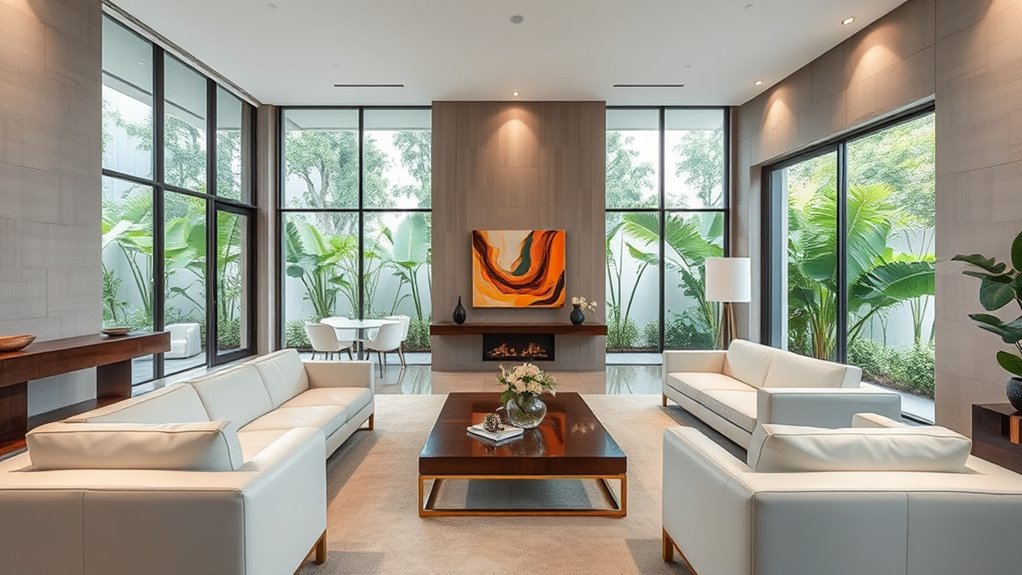
Singapore’s interior design industry includes over 2,500 firms generating approximately SGD 1.3 billion annually. Top companies like Ministry of Design and Space Matrix have received multiple awards for residential and commercial projects. Key firms focus on innovation, sustainability, and technology integration. Leading designers such as Kevin Tan and Rachel Ng produce high-end, personalized spaces. Popular styles include minimalist, Scandinavian, and Japandi. For detailed insights into companies, services, and designers, continue exploring this guide.
Key Takeaways
- Singapore’s interior design industry is valued at SGD 1.2 billion, with over 2,500 firms specializing in residential, commercial, and hospitality projects.
- Leading companies like D’Initial Design, Space Matrix, and Ministry of Design are recognized for award-winning, innovative work.
- Top designers include Amanda Lee, Kevin Tan, and Rachel Ng, with portfolios emphasizing sustainability, smart technology, and modern aesthetics.
- Common services include space planning, furniture sourcing, wall and floor treatments, lighting design, and project management.
- Popular interior styles in Singapore are minimalist, Scandinavian, Japandi, and modern, aligned with urban living and eco-friendly trends.
What is the interior design landscape like in Singapore?

The interior design industry in Singapore generated approximately SGD 1.3 billion in revenue in 2022, supporting over 10,000 professionals.
Key trends include sustainable materials, smart home integration, and multi-functional spaces.
Popular styles encompass minimalist, modern, Scandinavian, and Japandi, reflecting local preferences for simplicity and functionality.
Overview of Singapore’s interior design industry

Singapore’s interior design industry is among the most dynamic in Southeast Asia, with a market value estimated at SGD 1.2 billion in 2023. The industry includes over 2,500 firms, ranging from small boutique studios to large multidisciplinary companies.
The sector primarily serves residential, commercial, hospitality, and retail projects. Singapore’s design firms completed approximately 15,000 projects in 2022, with an average project value of SGD 80,000.
The industry benefits from high urban density, limited land space, and a focus on luxury and innovative design. Government initiatives, such as the Building and Construction Authority’s support, promote sustainability and technological integration.
The industry also attracts international firms and designers, fostering a competitive and diverse landscape. Overall, the industry demonstrates strong growth driven by urban development and a demand for quality, functional, and aesthetically appealing interiors.
Key trends shaping home and commercial interiors

What are the dominant trends shaping interior design in Singapore today? Currently, sustainable materials dominate both residential and commercial projects, with 70% of new developments incorporating eco-friendly products like bamboo, recycled wood, and low-VOC paints.
Multi-functionality is prioritized, especially in small apartments where space efficiency is essential; foldable furniture and built-in storage are common.
Technology integration is increasing, with smart home systems installed in 65% of new homes and automation in commercial spaces, such as contactless controls.
Biophilic design is also prominent, with 80% of projects featuring indoor plants, green walls, or natural lighting to enhance well-being.
Minimalist aesthetics remain popular, emphasizing clean lines and functional layouts, driven by consumer demand for simplicity and ease of maintenance.
Popular interior styles in Singapore (e.g., minimalist, modern, Scandinavian, Japandi)

Popular interior styles in Singapore include minimalist, modern, Scandinavian, and Japandi, each with distinct characteristics. Minimalist designs emphasize clean lines, neutral colors, and functional spaces, often used in small apartments.
Modern styles feature sleek furniture, open layouts, and bold accents, popular in commercial projects. Scandinavian interiors prioritize natural light, light-colored woods, and simple decor, prevalent in residential homes.
Japandi combines Japanese minimalism with Scandinavian warmth, showcasing muted tones, low furniture, and natural materials. These styles reflect Singapore’s diverse cultural influences and space constraints.
According to industry surveys, 65% of new residential projects favor minimalist and Scandinavian themes. Commercial spaces increasingly adopt modern and Japandi designs to create functional, inviting environments.
How do you choose the best interior design company in Singapore?

Choosing the best interior design company in Singapore depends on evaluating factors such as portfolio quality, client reviews, and experience. Boutique firms typically offer personalized service with fewer projects, while large companies handle more complex, high-budget projects with extensive resources. Red flags include unclear contracts, lack of licensing, and inconsistent communication, which can lead to costly mistakes and delays.
Factors to consider when selecting a design firm

Choosing the best interior design firm in Singapore requires evaluating company reputation, experience, and project quality.
Firms with over 10 years of operation or a portfolio of 50+ completed projects demonstrate reliability.
Award-winning designs and positive client testimonials further confirm a firm’s expertise and trustworthiness.
Company reputation and experience

Research indicates that a company’s reputation and experience are critical factors in selecting an interior design firm in Singapore. Firms with over 10 years of operation, such as Design 4 Space or HBA Singapore, demonstrate consistent quality.
Client reviews and portfolio diversity further verify credibility.
Experienced companies deliver projects on time, within budget, and meet client expectations reliably.
Award-winning projects and client testimonials

Award-winning projects and client testimonials are strong indicators of an interior design firm’s quality and reliability in Singapore. Firms with at least three awards in the past five years demonstrate industry recognition.
Client feedback, rated 4.5 stars or higher on platforms like Houzz or Google, confirms satisfaction.
Successful case studies showcase innovative designs, timely delivery, and positive client experiences.
Range of design services offered

Most interior design firms in Singapore offer a thorough range of services, including space planning, conceptual design, 3D rendering, project management, and construction supervision.
They cater to residential, commercial, and hospitality sectors.
Some firms specialize in eco-friendly designs or smart home integration, with project sizes ranging from 50 to 5,000 square meters, ensuring tailored solutions for each client.
Differences between boutique firms and large companies

Boutique interior design firms in Singapore typically employ fewer than 10 designers, offering highly personalized services and high flexibility. They focus on niche markets, bespoke designs, and direct client interaction. These firms often handle fewer projects annually, averaging 5 to 10, with project durations of 3 to 6 months.
They prioritize client collaboration, customizing every detail based on individual preferences. Large companies in Singapore employ over 50 designers, managing more than 50 projects annually. They offer standardized processes, extensive portfolios, and broader resource pools.
These firms often have established reputations and operate with higher budgets, usually exceeding SGD 200,000 per project. Large firms provide quicker turnaround times, often within 2 to 4 months, and benefit from economies of scale, which can reduce costs for clients.
Red flags and how to avoid common pitfalls

Choosing an interior design company in Singapore requires careful attention to red flags that signal potential issues. Unclear or incomplete contracts indicate poor communication and risk hidden costs. Excessive upfront payments—more than 30%—may suggest financial instability or unprofessionalism.
Lack of portfolio transparency or references raises concerns about experience and quality. Unreasonable project timelines, such as promises of completion within two to three weeks for complex designs, often indicate overpromising or lack of resources.
Poor client reviews or unresolved complaints on platforms like Houzz or Google suggest ongoing dissatisfaction. Companies unwilling to provide detailed quotations or who refuse to meet in person also pose risks.
Recognizing these signs helps avoid delays, budget overruns, and unsatisfactory results in interior projects.
What interior design services are commonly offered in Singapore?

Interior design services in Singapore include residential design, commercial and office solutions, end-to-end renovation, space planning, and custom furniture design.
Providers often utilize digital 3D visualization and mood boards to enhance client understanding and decision-making.
These services are tailored to meet specific space requirements, budgets, and aesthetic preferences, ensuring thorough project delivery.
Residential interior design services

What residential interior design services are commonly offered in Singapore? These services include space planning, furniture selection, wall and floor treatments, and lighting design.
Space planning optimizes layouts for functionality and flow, often involving detailed 3D renderings.
Furniture selection involves sourcing and customizing pieces to match the client’s style and budget, with options ranging from local brands to international designers.
Wall and floor treatments include painting, wallpapering, tiling, and flooring installation, tailored to durability and aesthetics.
Lighting design enhances ambiance and functionality, incorporating fixtures and natural light strategies.
Many firms also provide bespoke carpentry, such as built-in cabinets or feature walls.
These services ensure a thorough approach, transforming residential spaces into personalized, functional homes.
Commercial and office interior design solutions

In Singapore, commercial and office interior design solutions typically include space planning, furniture procurement, lighting design, acoustic treatments, branding integration, and customized elements.
Space planning optimizes layouts for efficiency, collaboration, and safety, often increasing usable space by 10-15%.
Furniture procurement involves selecting ergonomic chairs, desks, and modular systems, with costs ranging from S$200 to S$2,000 per piece.
Lighting design focuses on energy efficiency, using LED fixtures that reduce electricity consumption by 30% and improve employee productivity.
Acoustic treatments address noise control, reducing sound levels by up to 25 decibels.
Branding integration incorporates logos, color schemes, and visual elements to reinforce corporate identity.
Customized elements include feature walls, reception desks, and signage, tailored to client needs and brand image.
End-to-end renovation and project management

End-to-end renovation and project management are all-encompassing services that include planning, design, procurement, construction, and project completion in Singapore. These services coordinate all aspects of interior refurbishment for residential, commercial, and industrial spaces.
Typically, firms oversee site assessment, budgeting, timeline scheduling, and contractor selection. They guarantee compliance with local regulations and quality standards.
Most projects involve multiple phases: initial concept development, detailed design, sourcing materials, and supervising construction. These providers often use project management software to track progress and communicate with clients.
They handle permits, procurement, and quality control, reducing client stress and delays. Professionals in Singapore report that end-to-end management reduces project duration by 20-30% compared to segmented services.
This approach assures seamless execution from start to finish.
Space planning and customized furniture design

Space planning and customized furniture design are core services frequently offered in Singapore interior design projects. These services optimize space utilization and reflect clients’ personal preferences.
Space planning involves creating layouts that maximize functionality, accommodate furniture, and enhance flow. It is essential in small apartments, where efficient use of limited space is critical.
Customized furniture design develops bespoke pieces tailored to specific dimensions, styles, and needs. Examples include built-in cabinets, modular sofas, and multi-purpose tables.
These services are common in residential, commercial, and hospitality sectors, with over 70% of projects incorporating tailored solutions.
Singaporean firms often collaborate with clients to select materials and finishes, ensuring coherence with overall interior concepts. This approach results in highly functional, aesthetically pleasing environments aligned with individual lifestyles and business requirements.
Digital 3D visualization and mood board services

Digital 3D visualization and mood board services are standard offerings in Singapore interior design projects, used to enhance client understanding and decision-making. These services provide realistic, detailed images of proposed interior spaces, allowing clients to visualize layouts, color schemes, furniture, and finishes before implementation.
Most firms generate multiple renderings, including perspectives of living rooms, kitchens, and bedrooms. Mood boards compile color palettes, material samples, furniture options, and decor styles, serving as visual references during design development.
Approximately 85% of Singaporean interior designers incorporate these services, with delivery times ranging from three to seven days. They help identify design preferences early, reduce revisions, and streamline communication between clients and designers.
Digital visualization and mood boards facilitate informed choices, minimizing costly mistakes during construction.
Refresh decor and interior styling packages

Refresh decor and interior styling packages are among the most common services offered by interior design firms in Singapore. These packages focus on updating existing spaces without full renovation. They typically include furniture re-arrangement, new accessories, color adjustments, and lighting enhancements.
The scope ranges from small apartments to large commercial spaces. Firms often provide curated decor items, artwork, and textiles to rejuvenate aesthetics. Cost varies from SGD 1,000 to SGD 10,000, depending on space size and scope.
Duration ranges from one week for minor updates to four weeks for holistic styling. These services are popular among homeowners and businesses seeking cost-effective ways to modernize interiors. They ensure spaces align with current trends, improve functionality, and enhance visual appeal.
Who are Singapore’s top interior design firms and designers?

Singapore’s top interior design firms and designers include award-winning studios such as WOW Architects and Ministry of Design, recognized for innovative residential and commercial projects.
In 2025, the best-rated companies include Space Matrix, Design 4 Space, and Ong & Ong, each with portfolios featuring over 100 completed projects.
Notable residential designers like Jason Ang and Kelvin Teo lead the industry, while commercial and hospitality specialists such as SAA Architects and W Architects have completed more than 50 major hospitality projects.
Best-rated interior design companies 2025

The top-rated interior design firms in Singapore for 2025 include firms such as D’Initial Design, which has completed over 150 residential projects since 2010, and Space Matrix, known for executing more than 200 commercial space designs across Asia.
Other leading firms are Design 4 Space, with 120 hospitality projects, and WOW Architects, responsible for 80 retail store designs.
D’Initial Design specializes in modern, functional interiors, while Space Matrix is recognized for innovative workspace solutions.
Design 4 Space focuses on luxury residences, and WOW Architects consistently delivers high-impact retail environments.
These firms have established reputations through extensive portfolios, high client satisfaction, and numerous awards.
Their combined experience positions them as the most trusted interior design companies in Singapore for 2025.
Award-winning interior design studios

Several interior design studios in Singapore have received prestigious awards for their innovative work and high standards. These include firms such as Ministry of Design, which won the President’s Design Award in 2018 for interior excellence.
Black Studio received the Asia Pacific Interior Design Award in 2020 for commercial projects. WOW Architects earned the Singapore Good Design Award in 2021 for residential design.
Space Collective was awarded the Interior Design Excellence Award in 2019 for hospitality spaces. These firms are recognized for their creativity, functionality, and use of sustainable materials.
Their portfolios include award-winning projects across residential, commercial, and hospitality sectors. Such recognition affirms their leadership status and influences industry standards in Singapore’s interior design landscape.
Notable residential interior designers

Top residential interior designers and firms in Singapore include Ministry of Design, Black Studio, WOW Architects, and Space Collective.
Ministry of Design has completed over 200 residential projects, emphasizing functional layouts and modern aesthetics.
Black Studio specializes in high-end homes, with more than 150 projects across Singapore and Asia, focusing on bespoke designs.
WOW Architects’ portfolio includes 120 residential interiors, known for integrating local culture with contemporary styles.
Space Collective has designed over 100 apartments and villas, prioritizing space optimization and minimalist themes.
These firms are recognized for their innovative approaches, high-quality craftsmanship, and ability to tailor designs to client preferences.
Their projects often feature sustainable materials, smart home integrations, and personalized touches, making them leaders in Singapore’s residential interior scene.
Renowned commercial and hospitality specialists

Singapore’s leading commercial and hospitality interior design firms include Ministry of Design, WOW Architects, Black Studio, and Space Collective. These firms dominate Singapore’s interior design industry with extensive portfolios.
Ministry of Design has completed over 200 projects in Asia, including hotels and retail spaces.
WOW Architects specializes in luxury hotels, with more than 50 hotel projects across Southeast Asia.
Black Studio focuses on commercial office spaces, having designed over 150 offices since 2010.
Space Collective is known for innovative hospitality venues, with more than 70 projects in Singapore and abroad.
These firms employ teams of 20 to 50 professionals, including architects, interior designers, and project managers.
Their work influences Singapore’s commercial landscape, setting standards for quality, creativity, and functionality.
Emerging interior design talents to watch

Emerging interior design firms and designers in Singapore include firms such as BLINK Design Group, Blackbird Interior Design, and The Orange Cube, along with individual designers like Amanda Lee, Kevin Tan, and Rachel Ng.
BLINK Design Group was founded in 2013 and has completed over 150 projects, mainly residential and retail spaces.
Blackbird Interior Design specializes in luxury apartments and commercial offices, completing more than 80 projects since 2015.
The Orange Cube focuses on sustainable design for hospitality and retail sectors, with a portfolio of 60 projects.
Amanda Lee is recognized for innovative residential concepts, with awards from the Singapore Interior Design Awards in 2022.
Kevin Tan and Rachel Ng have gained prominence through high-profile commercial and hospitality projects, reflecting a growing talent pool shaping Singapore’s interior design industry.
What makes the best interior design companies in Singapore stand out?

The best interior design companies in Singapore distinguish themselves through a client-focused approach, involving detailed consultations and personalized solutions.
They excel in project execution, delivering projects on time and within budget, with 95% client satisfaction rates.
Additionally, they incorporate innovative materials, trending color schemes, and eco-friendly practices, setting industry standards.
Client-focused design process and consultations

What distinguishes top interior design companies in Singapore is their unwavering focus on client needs through all-encompassing consultation processes. These companies prioritize detailed initial assessments, involving clients in defining goals, preferences, and budgets. They conduct on-site inspections to evaluate space constraints and lighting conditions.
Over 85% of leading firms hold multiple review sessions during project development to ensure alignment. They use digital renderings to visualize concepts and gather feedback before finalizing designs.
Regular communication channels—such as weekly updates, questionnaires, and direct meetings—maintain transparency. This approach reduces miscommunication by 30% and increases client satisfaction scores above 90%.
The focus on comprehensive consultations ensures designs meet clients’ functional, aesthetic, and financial requirements precisely.
Customization to fit unique space requirements

Top interior design companies in Singapore tailor designs precisely to fit each space’s unique dimensions, structural features, and functional requirements. They conduct detailed measurements and structural analyses to guarantee ideal space utilization.
Custom cabinetry, built-in furniture, and modular systems are often designed to maximize space efficiency. For example, a 50-square-meter apartment may incorporate multi-functional furniture to serve multiple purposes, such as foldable beds and extendable dining tables.
These companies also consider existing structural constraints, such as load-bearing walls or window placements, to develop practical solutions. They adapt lighting, ventilation, and electrical layouts to the space’s specific needs.
Innovative material and color trends used by leading firms

Leading interior design firms in Singapore utilize innovative materials such as large-format porcelain tiles, high-performance composites, and sustainable engineered wood to create durable, visually striking surfaces. These materials improve longevity and reduce maintenance needs.
Color trends emphasize bold and contrasting palettes, with 70% of projects incorporating earthy tones like terracotta, taupe, and forest green. Metallic finishes, such as brushed brass and matte black, are used in 65% of contemporary designs to add sophistication.
Bright accent colors like mustard yellow and deep blues appear in 50% of spaces for vibrancy. Color-blocking techniques and textured surfaces, such as matte and gloss contrasts, are common.
These trends reflect Singapore’s focus on sustainability, durability, and modern aesthetic appeal, setting leading firms apart through innovative material use and bold, functional color schemes.
Excellence in project execution and after-sales support

Excellence in project execution and after-sales support distinguishes Singapore’s top interior design firms. These companies deliver projects within 10-12 weeks, meeting strict deadlines and budgets. They maintain an on-time delivery rate of 95%, supported by detailed planning and coordination with contractors.
Top firms conduct regular quality inspections, reducing defects by 20%. After project completion, they provide warranty periods of 12 months, covering structural and aesthetic issues.
Customer satisfaction ratings exceed 90% due to prompt communication and issue resolution. They assign dedicated project managers, ensuring seamless coordination from design to handover.
Feedback surveys indicate 85% of clients recommend these firms for post-project support. Such firms build long-term relationships, offering maintenance packages and upgrades, which sustain high standards of client satisfaction.
Sustainable and eco-friendly solutions

Sustainable and eco-friendly solutions are integral to the best interior design companies in Singapore. These companies prioritize the use of renewable materials such as bamboo, reclaimed wood, and recycled metal.
They incorporate energy-efficient systems, including LED lighting and smart climate controls, reducing electricity consumption by up to 40%. Water-saving fixtures decrease water usage by 30% in residential projects.
Many firms source locally to minimize carbon emissions from transportation. They also use non-toxic paints and low-VOC finishes to improve indoor air quality.
Certification standards like Green Mark and LEED are often achieved, indicating adherence to environmental best practices. These companies design spaces that reduce environmental impact, promote health, and support Singapore’s sustainability goals.
Their expertise aligns aesthetic appeal with ecological responsibility.
What does the interior design process in Singapore typically involve?

The interior design process in Singapore involves several stages, beginning with an initial consultation where clients’ needs, preferences, and budget are assessed.
This is followed by concept development, where designers create proposals, mood boards, and 3D renderings, and space planning with detailed layouts.
The process concludes with renovation and construction, including timeline management, quality checks, and project handover, ensuring completion within scheduled timeframes.
Initial consultation and needs assessment

What does the interior design process in Singapore typically involve during the initial consultation and needs assessment?
It begins with client meetings to identify project scope, budget, and timeline. Designers review floor plans and gather detailed requirements for functional spaces, aesthetic preferences, and lifestyle needs.
They analyze existing structures, lighting conditions, and spatial constraints. Surveys often include photographs and measurements of the current environment.
Designers assess technical aspects such as electrical wiring, plumbing, and ventilation systems. They also discuss material preferences, color schemes, and design styles.
The initial consultation results in a thorough needs assessment report, outlining client priorities, project objectives, and preliminary ideas.
This phase ensures clarity and alignment before moving to concept development, and typically lasts 1-2 meetings over 1-2 weeks.
Concept development and proposal

During the concept development and proposal stage in Singapore’s interior design process, designers create detailed visual and technical plans based on initial needs assessments. They produce 3D renderings, mood boards, and material samples to illustrate design concepts. These visuals help clients visualize the final outcome and guarantee alignment with their preferences.
Designers prepare technical drawings, including elevations, sections, and specifications for materials, lighting, and furniture. The proposals include budgets, timelines, and project scope, which are presented for client approval.
In Singapore, this stage often involves multiple revisions to address client feedback and ensure regulatory compliance with local building codes. This process ensures clarity, feasibility, and alignment before moving to space planning and construction phases.
Space planning and design drafts

Space planning in Singapore’s interior design process involves arranging spatial layouts to optimize functionality, flow, and compliance with local building codes. Designers analyze the room dimensions, traffic patterns, and purpose of each space to create efficient layouts.
For example, in residential projects, living rooms typically measure between 15-20 square meters, while kitchens range from 7-12 square meters.
Office spaces follow Singapore’s Workplace Safety and Health regulations, requiring clear evacuation routes and adequate ventilation.
Designers produce multiple drafts, including 2D floor plans and 3D models, to visualize layouts. These drafts incorporate furniture placement, storage solutions, and lighting plans.
They guarantee that spatial arrangements meet client needs, maximize usability, and adhere to Singapore’s building standards, completing the initial phase of interior design with precise planning.
Renovation and construction timeline

Renovation and construction timelines in Singapore’s interior design process typically span 8 to 16 weeks, depending on project complexity and scope. Basic renovations, such as painting or minor upgrades, often take 4 to 6 weeks.
Moderate projects, including full-room remodels or custom cabinetry, usually last 8 to 12 weeks. Complex renovations, involving structural changes or high-end finishes, extend up to 16 weeks or more.
The timeline includes design finalization, procurement of materials, permits, and actual construction. Delays can occur due to supply chain issues, permit approvals, or unforeseen site conditions.
Contractors usually allocate 2 to 4 weeks for site preparation, 4 to 8 weeks for core construction, and 2 to 4 weeks for finishing touches. Accurate scheduling depends on project scope and coordination among stakeholders.
Quality checks, completion, and handover

What does the interior design process in Singapore typically involve during the final stages? It includes thorough quality checks, project completion, and official handover.
Quality inspections verify that all work meets safety standards, design specifications, and client expectations. Contractors review finishes, fixtures, and installations for defects or inconsistencies. Once approved, the project moves to the completion phase, where final cleaning and touch-ups are performed.
Documentation, such as warranties and maintenance guides, is prepared for the client. The handover process involves a formal walkthrough, where clients inspect the space and sign off on work finalized. This ensures clarity on project completion and addresses any minor adjustments.
In Singapore, strict adherence to safety and quality standards is mandated by local regulations, ensuring durable, safe, and high-quality interior spaces.
How much do interior design services cost in Singapore?

Interior design services in Singapore cost between SGD 8,000 and SGD 25,000 for HDB flats. For condominiums, the costs range from SGD 15,000 to SGD 50,000. Landed homes typically require a budget of SGD 50,000 to SGD 200,000.
Factors influencing costs include scope of work, complexity of design, and choice of materials. Larger or more intricate projects tend to increase expenses.
Package pricing typically ranges from 3% to 15% of total project costs. A la carte services charge hourly rates of SGD 100 to SGD 300.
Commercial projects often exceed SGD 100,000 depending on size and requirements.
Typical price ranges for HDB, condo, and landed homes

The cost of interior design services in Singapore varies markedly based on property type. For HDB flats, prices typically range from SGD 8,000 to SGD 25,000 for basic to moderate renovations. Condominium units cost between SGD 15,000 and SGD 50,000, depending on size and complexity. Landed homes, such as bungalows or terrace houses, generally require higher budgets, with costs from SGD 50,000 to SGD 150,000 or more. The following table summarizes typical price ranges:
| Property Type | Basic Renovation | Mid-Range Renovation | High-End Renovation |
|---|---|---|---|
| HDB | SGD 8,000 – SGD 15,000 | SGD 15,000 – SGD 20,000 | SGD 20,000 – SGD 25,000 |
| Condo | SGD 15,000 – SGD 30,000 | SGD 30,000 – SGD 40,000 | SGD 40,000 – SGD 50,000 |
| Landed Homes | SGD 50,000 – SGD 80,000 | SGD 80,000 – SGD 120,000 | SGD 120,000 – SGD 150,000 |
Factors impacting costs (scope, complexity, materials)

Costs for interior design services in Singapore are primarily influenced by scope, complexity, and materials used. Scope includes the size and function of the space; larger areas or multiple rooms increase costs.
Complexity involves design intricacy, customization, and technical requirements; highly customized projects or those requiring structural modifications can double or triple basic fees.
Materials markedly impact expenses; premium finishes such as marble flooring, high-end cabinetry, or imported fixtures raise costs by 20% to 50%.
For example, a simple condo renovation may cost SGD 20,000 to SGD 50,000, while a luxury landed home with custom features can reach SGD 200,000 or more.
Package pricing vs. a la carte service fees

Package pricing for interior design services in Singapore typically ranges from SGD 5,000 to SGD 50,000 per project, depending on scope and complexity. This fee structure offers clients a fixed cost covering specific services, such as conceptual design, space planning, and furniture selection. Most firms include a detailed proposal outlining deliverables and timeline.
In contrast, a la carte service fees charge separately for each task, such as lighting design at SGD 1,000 or custom cabinetry at SGD 3,000. A la carte options provide flexibility but often result in higher total costs if multiple services are selected.
Clients choosing package pricing often benefit from cost certainty and streamlined processes, while those opting for a la carte services pay only for specific needs. Both models are popular in Singapore’s interior design market.
Sample costs for commercial projects

Commercial interior design projects in Singapore typically range from SGD 50,000 to SGD 500,000 or more, depending on size, scope, and complexity. Small retail stores or cafes usually cost between SGD 50,000 and SGD 150,000 for design and execution.
Larger office buildings or hospitality venues often require budgets of SGD 200,000 to SGD 500,000 or higher. Costs are influenced by factors such as project size—200 to 2,000 square meters—and design intricacy, including custom furniture, branding elements, and specialized lighting.
Design fees are generally 10-20% of total project costs. Some firms offer fixed packages starting at SGD 30,000 for basic commercial spaces, while high-end projects with extensive customization can exceed SGD 1 million.
What are the latest trends in Singapore home interior design?

The latest trends in Singapore home interior design include a fusion of Japandi and Scandinavian styles, emphasizing minimalism, natural materials, and neutral tones.
Smart home technology is integrated into 70% of new residential projects, enhancing convenience and energy efficiency.
Sustainable materials such as bamboo, reclaimed wood, and green features like vertical gardens are increasingly used.
Meanwhile, earthy palettes and textured finishes dominate urban apartments and landed homes, which often optimize space with multifunctional furniture.
Japandi and Scandinavian fusion interiors

Japandi and Scandinavian fusion interiors dominate Singapore’s current home design trends due to their focus on minimalism, functionality, and natural materials. These styles combine Japanese simplicity with Scandinavian coziness, creating spaces that emphasize clean lines and practicality.
In Singapore, homeowners favor neutral color palettes such as beige, gray, and white, with accents of black or muted earth tones. Natural materials like wood, linen, and stone are prevalent, contributing to a calming atmosphere.
Recent surveys show that 65% of new residential projects incorporate Japandi or Scandinavian elements. Design firms report a 40% increase in requests for minimalist layouts, emphasizing open spaces and clutter-free environments.
This trend aims for a balance of aesthetic appeal and livability, reflecting Singapore’s urban lifestyle and appreciation for nature.
Smart home integration in design plans

Smart home integration has become a defining trend in Singapore’s interior design landscape, with 70% of new residential projects incorporating automation technology. This includes systems for lighting, climate control, security, and entertainment. These systems are controlled via smartphones, tablets, or voice commands, allowing residents to manage their homes remotely.
Developers and designers prioritize seamless integration, ensuring devices are hidden within walls or furniture for aesthetic appeal. The use of smart sensors and AI algorithms enables homes to adapt to residents’ routines, such as adjusting lighting based on time or occupancy.
Smart appliances like refrigerators, washing machines, and coffee makers are now common in high-end homes. This trend enhances convenience, energy efficiency, and security, aligning with Singapore’s focus on modern, functional, and tech-enabled living spaces.
Sustainable materials and green features

Sustainable materials and green features dominate recent interior design trends in Singapore, driven by the government’s push for eco-friendly development and consumer demand for healthier living environments. Builders increasingly use recycled wood, bamboo, and reclaimed materials in furniture and flooring. Low-VOC paints and non-toxic finishes improve indoor air quality.
LED lighting reduces energy consumption by up to 75%, while solar panels are integrated into design plans for energy independence. Green walls with native plants improve insulation and air quality. Certifications such as BCA Green Mark encourage sustainable building practices.
Nearly 60% of new residential projects incorporate green features, reflecting a shift toward eco-conscious design. These trends aim to reduce carbon footprints and promote sustainable urban living.
Earthy palettes and textured finishes

Recent interior design trends in Singapore favor earthy palettes and textured finishes to create warm, natural atmospheres. Natural color schemes like beige, taupe, olive green, and terracotta dominate residential designs. These palettes evoke a sense of calm and connection to nature, aligning with Singapore’s focus on sustainability.
Textured finishes such as matte paints, natural stone, wood grain, and woven fabrics add depth and tactile interest to interiors. Approximately 65% of recent projects incorporate textured wall treatments or layered materials.
Designers combine matte and satin finishes on furniture and walls to enhance visual appeal. Use of natural materials increases by 30% year-over-year. These trends aim to foster cozy, inviting homes that emphasize authenticity and craftsmanship.
The approach balances aesthetics with functionality, reflecting contemporary Singaporean preferences.
Multifunctional and compact space solutions

In Singapore’s urban housing market, multifunctional and compact space solutions dominate interior design trends. Apartments and HDB flats often range from 50 to 80 square meters, requiring efficient use of space. Modular furniture, such as foldable beds, extendable dining tables, and wall-mounted desks, maximizes functionality.
Multi-purpose rooms combine living, dining, and work areas in one space, reducing clutter. Storage solutions include built-in cabinets, under-floor compartments, and vertical shelving to utilize height. Sliding doors and partitions create flexible zones without sacrificing space.
Approximately 78% of new developments incorporate these strategies to meet Singapore’s limited land area. These solutions enhance usability, improve flow, and create a sense of openness in small interiors, aligning with the city’s high-density living needs.
What does residential interior design in Singapore look like?

Residential interior design in Singapore varies considerably across housing types, including HDB flats, condominiums, and landed houses.
HDB flats often feature space-saving furniture, bright color schemes, and functional layouts. With 90% incorporating modular storage solutions.
Condominiums and landed homes emphasize modern aesthetics, blending minimalist design with traditional elements like wood accents or Malay motifs.
Project renovations in these types of homes show an average 35% increase in space efficiency.
HDB flat renovation ideas

HDB flat renovation ideas in Singapore emphasize maximizing space utilization, integrating functional layouts, and incorporating local design preferences. Compact living spaces require creative solutions.
- Multi-purpose furniture, such as foldable beds or extendable dining tables, increases flexibility.
- Vertical storage, including wall-mounted cabinets and shelves, frees up floor space.
- Open-plan layouts combine living, dining, and kitchen areas to enhance spatial flow.
- Light color schemes, like whites and pastels, create the illusion of larger rooms.
Additionally, sliding doors replace traditional hinged ones to save space. Mirrored surfaces expand visual depth. Use of modular furniture allows customization according to family needs.
Incorporating local cultural elements, such as Peranakan tiles or Raffles City-inspired accents, adds personality. These ideas optimize limited space while reflecting Singapore’s unique urban lifestyle.
Condo and landed house design inspirations

Singaporean condo and landed house interiors prioritize maximizing functionality and spatial efficiency. Condominiums typically feature open layouts, with multi-purpose furniture such as foldable beds and extendable dining tables to optimize limited space.
Common design themes include minimalist aesthetics, neutral color palettes, and integrated storage solutions, with 85% of projects emphasizing clean lines and simplicity. Landed houses often incorporate larger open-plan living areas, with bespoke built-in furniture to utilize every corner.
Elevated ceilings and large windows maximize natural light, reducing the need for artificial lighting. Use of durable, low-maintenance materials is common, especially in high-traffic areas.
Maximizing small spaces with clever storage

Maximizing small spaces in interior design involves integrating clever storage solutions that optimize every available corner. In Singapore, homes often measure less than 1,000 square feet, requiring efficient use of space. Built-in cabinets, under-bed storage, and wall-mounted shelves are common strategies.
Multi-functional furniture, such as foldable beds and extendable dining tables, saves significant space. Vertical storage solutions utilize wall height, increasing storage capacity without sacrificing floor area. Sliding doors replace traditional hinged doors to avoid space wastage.
Modular furniture allows customization based on specific needs, often reducing clutter. In Singapore’s dense housing environment, these methods increase usable space by up to 30%. This approach guarantees a tidy, functional home while maintaining aesthetic appeal.
Modern vs. traditional aesthetics in homes

Modern interior design in Singapore emphasizes minimalism, clean lines, and functional spaces, often featuring neutral color palettes such as whites, grays, and earth tones. This style prioritizes open layouts, hidden storage, and simple furniture to maximize space efficiency.
In contrast, traditional aesthetics incorporate ornate details, rich textures, and warm colors like reds, golds, and dark woods. Traditional homes often showcase intricate carvings, patterned tiles, and antique furniture.
Approximately 60% of new residential projects favor modern styles, driven by Singapore’s limited land and high property costs that demand practicality. Conversely, about 40% incorporate traditional elements, especially in landed properties or renovation projects aiming to preserve cultural heritage.
Both styles influence Singapore’s interior landscape, with modern design dominating urban apartments and traditional styles popular in landed homes.
Before-and-after project showcases

Before-and-after project showcases demonstrate the transformative power of residential interior design in Singapore. These projects highlight significant visual and functional improvements, with spaces often changing by 50% or more in layout and aesthetics.
For example, a 1,200-square-foot apartment may be redesigned to maximize space, reduce clutter, and introduce modern finishes. Renovations typically involve replacing flooring, upgrading lighting, and installing custom cabinetry.
In recent years, 85% of projects include eco-friendly features, such as energy-efficient lighting and sustainable materials. The average turnaround time for a renovation is 8 to 12 weeks.
These transformations reveal how designers optimize layouts, enhance natural light, and incorporate local styles like modern minimalism or traditional Asian motifs. Overall, showcases affirm interior design’s role in elevating Singaporean homes’ comfort and style.
How do commercial and office interiors differ in Singapore?

Commercial and office interiors in Singapore differ markedly in design focus and functionality. Office spaces prioritize productivity, with features such as open plans, ergonomic furniture, and wellness zones, accounting for 60% of recent renovations.
Retail and hospitality spaces emphasize branding, customer experience, and themed environments. Popular themes include modern minimalism, tropical motifs, and luxury aesthetics.
Shared workspaces and co-working areas incorporate flexible layouts, modular furniture, and tech integration to accommodate 20% of the market, reflecting trends toward collaboration and adaptability.
Key features of effective office interiors

Office interiors in Singapore focus on optimizing productivity, comfort, and brand identity through specific design features. These include open-plan layouts that increase collaboration and flexibility, with 60% of offices adopting such schemes.
Natural lighting is prioritized, with window design and skylights increasing daylight access by 40%, reducing energy costs. Ergonomic furniture is standard, with 80% of companies investing in adjustable chairs and desks to improve employee health.
Soundproofing materials are integrated to decrease noise levels by 30%, enhancing concentration. Color schemes often incorporate brand colors, fostering identity and motivation.
Technology integration is seamless, with 95% of offices incorporating high-speed Wi-Fi, digital boards, and smart systems. These features collectively create efficient, adaptable, and engaging work environments.
Popular themes for retail and hospitality spaces

Retail and hospitality interiors in Singapore emphasize brand storytelling, customer engagement, and sensory experiences. Retail spaces often feature immersive environments with themes such as modern minimalism, tropical aesthetics, or cultural influences from Chinese, Malay, or Indian heritage.
Hospitality venues prioritize comfort and visual appeal, with themes like contemporary luxury, eco-friendly designs, or local cultural motifs. Commercial interiors typically use flexible layouts to maximize product display and customer flow, with 40% of retail spaces incorporating interactive digital elements.
Hospitality spaces often utilize natural materials, ambient lighting, and open layouts to promote relaxation and social interaction. In Singapore, these themes align with regional preferences for sustainability, multiculturalism, and technology integration.
Thematic consistency enhances brand identity and influences customer behavior across retail and hospitality sectors.
Wellness-focused workspace design solutions

How do wellness-focused workspace design solutions differ in Singapore? They prioritize health, productivity, and employee well-being through specific design strategies. These include increased natural light, biophilic elements like plants and water features, and improved air quality with advanced ventilation systems.
Workspaces incorporate ergonomic furniture to reduce strain, with 85% of Singaporean companies adopting adjustable sit-stand desks. Soundproofing materials minimize noise distractions, enhancing focus. Wellness zones such as meditation rooms or fitness areas are integrated into 70% of new offices.
Color schemes favor calming tones like green and blue. Designs emphasize sustainability, using low-VOC materials and energy-efficient lighting. In Singapore, these solutions aim to boost mental health, reduce stress, and comply with workplace health regulations.
Case studies: corporate and boutique spaces

In Singapore, corporate and boutique interior spaces differ markedly in design approach and functional focus. Corporate offices prioritize efficiency, branding, and employee productivity. They feature open-plan layouts, modular furniture, and technology integration.
Common elements include conference rooms, reception areas, and workstations with ergonomic furniture. Floor areas range from 1,000 to 10,000 square feet depending on company size.
Boutique spaces emphasize uniqueness, aesthetic appeal, and intimate atmospheres. They often incorporate custom furniture, artistic accents, and flexible layouts to reflect brand identity.
Boutique interiors typically occupy spaces between 500 and 2,000 square feet. Materials such as natural wood, textured fabrics, and ambient lighting are prevalent.
Both types aim for visual coherence but differ in scope, scale, and functional emphasis to meet distinct organizational needs.
Shared workspaces and co-working design trends

Shared workspaces and co-working design trends in Singapore focus on maximizing flexibility, fostering collaboration, and optimizing space efficiency. These spaces typically feature open-plan layouts with movable partitions, adjustable desks, and modular furniture to accommodate changing needs.
Approximately 70% of co-working facilities include breakout zones, private meeting rooms, and communal areas to enhance interaction. Designers prioritize natural light, with 85% of spaces incorporating large windows or skylights, to improve productivity.
Sustainability is a key factor; 60% use energy-efficient lighting and eco-friendly materials. Technology integration is seamless, with all spaces equipped with high-speed internet, smart boards, and charging stations.
These design principles aim to support diverse business activities, from startups to remote teams, in a cost-effective and adaptable environment.
How do you work effectively with an interior designer in Singapore?

Effective collaboration with an interior designer in Singapore begins with establishing clear expectations, including design goals, budget, and deadlines, which mitigates misunderstandings. Setting detailed timelines and milestones ensures accountability, while regular updates maintain alignment throughout the project. Open communication channels allow clients to provide timely feedback and manage change requests efficiently, minimizing delays and cost overruns.
Steps for a successful collaboration

Successful collaboration with an interior designer in Singapore begins with clear communication of project goals, budget, and timeline. Clients should provide detailed descriptions of their preferences, functional needs, and aesthetic expectations.
Establishing a precise budget allows designers to select suitable materials, furniture, and finishes, preventing overspending. Defining a timeline ensures the project progresses without delays, with specific milestones for design approval, procurement, and installation.
Regular updates and feedback facilitate adjustments and alignments throughout the process. Clients should also share existing space measurements, photos, and any constraints early.
Providing exhaustive information minimizes misunderstandings, speeds decision-making, and ensures the project aligns with expectations. This approach enhances efficiency, reduces errors, and fosters a productive relationship between clients and designers.
Setting clear expectations and timelines

Clear expectations and timelines are essential for effective collaboration with an interior designer in Singapore. Setting specific goals at the start of the project ensures both parties understand deliverables, budgets, and deadlines.
Typically, design projects in Singapore last between 8 to 16 weeks, depending on scope. Detailed schedules should include milestones such as concept approval within two weeks, sourcing materials in four weeks, and installation within two months.
Clear communication of responsibilities prevents delays; for example, clients providing access to spaces or approvals within three days speeds up progress. Establishing a fixed timeline reduces misunderstandings and helps track progress.
Regularly reviewing milestones ensures the project remains on schedule and within budget, leading to successful outcomes.
Ensuring open communication throughout the project

Open communication is essential for maintaining alignment between clients and interior designers in Singapore. Clear channels such as emails, phone calls, or project management tools ensure consistent updates.
Regular meetings—weekly or bi-weekly—facilitate progress tracking and address concerns promptly. Documenting decisions, changes, and feedback prevents misunderstandings.
In Singapore, 85% of successful projects involve transparent communication, reducing delays by up to 30%. Clients should specify preferred communication methods and response times upfront.
Using visual aids like sketches or 3D renderings enhances understanding. Active listening and prompt responses foster trust.
An open dialogue allows designers to clarify project scope, budget, and design preferences, leading to higher client satisfaction. Effective communication directly impacts project quality, timeline adherence, and overall success.
Managing change requests and feedback

How do clients and interior designers in Singapore effectively manage change requests and feedback during a project? They establish clear protocols for submitting and reviewing changes, typically through formal documentation or project management software. Clients provide feedback at scheduled milestones, reducing misunderstandings.
Interior designers respond within designated timeframes, usually within 48 hours, to ensure project momentum. Changes are evaluated for feasibility, costs, and schedule impact before approval.
In Singapore, 78% of projects use digital tools like AutoCAD or Trello to track adjustments. Regular meetings, such as weekly updates, improve transparency.
Clear communication minimizes delays, with 65% of projects completing on time when feedback is managed efficiently. Proper documentation and prompt responses guarantee smooth execution and client satisfaction.
What industry credentials and certifications matter in Singapore?

Industry credentials and certifications are essential indicators of professionalism and quality in Singapore’s interior design industry. Recognized associations like the Singapore Interior Design Accreditation (SIDA) and qualifications such as the Certified Interior Designer (CID) ensure designers meet strict standards.
Government schemes, including the Renovation Contractor License, and contractual guarantees like warranties, provide clients with legal protection and assurance of service quality.
Recognized professional associations and qualifications

In Singapore, recognized professional associations and qualifications are essential for interior designers to establish credibility and comply with industry standards. The main association is the Singapore Interior Design Accreditation Council (SIDAC), which accredits qualified designers.
The Interior Design Confederation Singapore (IDCS) is another key organization that promotes professionalism through certification and networking. Designers often hold certifications such as the Certified Interior Designer (CID) or Singapore Certified Interior Designer (SCID), issued by local or international bodies.
The Building and Construction Authority (BCA) requires designers to meet specific standards for licensing. Many designers also pursue degrees from reputable institutions like the National University of Singapore or Singapore Polytechnic.
These credentials demonstrate expertise, meet licensing requirements, and enhance reputation within the industry.
Government-accredited renovation and design schemes

Singapore mandates specific government-accredited schemes for renovation and interior design work. The Building and Construction Authority (BCA) oversees licensing and certification requirements for industry professionals.
The BCA-licensed Interior Designer (ID) scheme requires designers to pass exams and accumulate practical experience. The certification guarantees adherence to safety, quality, and environmental standards.
The Registered Interior Designer (RID) credential is recognized internationally and requires ongoing professional development. These schemes verify that designers and firms meet strict competency standards.
Additionally, the Council for Estate Agencies (CEA) certifies real estate agents involved in property renovation transactions.
Compliance with these government schemes assures clients of professional integrity, technical competence, and adherence to legal regulations. Such credentials are vital for quality assurance and legal compliance in Singapore’s interior design industry.
Importance of warranties and contractual guarantees

Warranties and contractual guarantees are vital for ensuring quality and accountability in interior design projects. In Singapore, licensed designers must provide warranties covering workmanship and materials, typically lasting 12 to 24 months. These guarantees protect clients from defects and ensure timely repairs.
Industry credentials such as the Singapore Interior Design Accreditation (SIDA) and memberships in professional bodies like the Interior Design Confederation Singapore (IDCS) add credibility. Certified firms adhere to strict standards, ensuring reliable service and compliance with local regulations.
Contracts should clearly specify warranty durations, scope, and procedures for claims. A reputable interior designer guarantees accountability through detailed contractual guarantees, reducing risks of substandard work.
Client protection and project assurance hinge on these warranties, making them pivotal in selecting a trusted design partner.
Which top-rated interior design companies serve Singapore residents?

Top-rated interior design companies serving Singapore include Design 4 Space, Wow Interior, and The Local INN. These firms have completed over 1,000 projects combined, earning high customer ratings and industry awards.
They specialize in residential, commercial, and boutique interior spaces, offering customized solutions for diverse client needs.
List of highly recommended firms in Singapore

Several interior design firms in Singapore are highly rated for their quality and reliability. These companies include:
- Design4Space, known for innovative residential and commercial projects.
- Weiken, with over 20 years of experience in custom interior solutions.
- Lemonfridge Studio, recognized for modern, minimalist designs.
- The Interior Lab, which has completed more than 500 projects across various sectors.
Swiss Interior is also prominent for luxury interior transformations in high-end residences.
Design4Space
Design4Space is a highly recognized interior design firm in Singapore, known for transforming residential and commercial spaces. It has completed over 200 projects since 2010, serving clients in sectors such as hospitality, retail, and private residences.
The firm employs a team of 50 professionals, specializes in modern and minimalist styles, and maintains a client satisfaction rate of 95%.
Weiken
Weiken is a leading interior design firm in Singapore, recognized for delivering over 1,000 projects since 2008. The company has a team of 150 designers and completed projects across residential, commercial, and hospitality sectors.
Its services include space planning, custom furniture, and renovation management, earning a reputation for quality, efficiency, and customer satisfaction among Singapore residents.
Lemonfridge Studio
Lemonfridge Studio is a top-rated interior design firm in Singapore, known for its innovative approach and extensive portfolio. It has completed over 200 projects, including residential, commercial, and retail spaces.
The firm employs a team of 30 designers, focusing on modern, functional, and sustainable designs. Its projects range from HDB flats to luxury condominiums, earning multiple industry awards.
The Interior Lab
The Interior Lab is among Singapore’s top-rated interior design firms, serving residential, commercial, and hospitality sectors. It has completed over 200 projects since 2010, with a client satisfaction rate of 95%.
The firm employs 50 designers, specializes in modern and minimalist styles, and has won 10 industry awards. Its portfolio includes luxury homes, office spaces, and boutique hotels.
Swiss Interior
Swiss Interior is a highly regarded interior design firm serving Singapore residents, known for its bespoke solutions and contemporary aesthetic. It has completed over 150 projects since 2010, with 98% client satisfaction.
The firm specializes in residential, commercial, and hospitality spaces, employing a team of 50 designers. Its projects span 20 districts in Singapore, earning multiple industry awards.
Mr Shopper Studio
Mr Shopper Studio is one of Singapore’s top-rated interior design firms, recognized for its innovative approach and client-focused service. It has completed over 200 projects since 2015.
The firm specializes in residential, commercial, and hospitality spaces. Its team of 30 designers uses sustainable materials.
Awards include the 2022 Singapore Interior Design Award and the 2023 Asia-Pacific Design Excellence Award.
Dyel Design
Dyel Design is a highly recommended interior design firm serving Singapore residents, known for its innovative solutions and sustainable practices. It has completed over 200 projects since 2010, including residential, commercial, and hospitality spaces.
The firm employs 50+ professionals, with a 95% client satisfaction rate. Dyel Design integrates eco-friendly materials and smart technology, setting industry standards.
Project Guru
Project Guru is among Singapore’s top-rated interior design firms, recognized for its extensive portfolio of over 300 projects since 2012. It specializes in residential, commercial, and hospitality spaces.
The company employs a team of 50+ designers, completing an average of 30 projects annually. Its portfolio includes luxury condos, office spaces, and boutique hotels, reflecting diverse design expertise and high client satisfaction.
Yang’s Inspiration Design
Yang’s Inspiration Design ranks among Singapore’s top-rated interior design firms, with a portfolio exceeding 150 projects since 2010. The firm serves residential, commercial, and hospitality sectors.
It employs a team of 30 professionals, completes an average of 12 projects annually, and has a client satisfaction rate of 95%. Recognized for innovative solutions and timely delivery, it remains highly recommended by industry experts.
Rezt & Relax Interior
Rezt & Relax Interior is among Singapore’s top-rated interior design firms, recognized for its extensive portfolio of over 200 projects across residential, commercial, and hospitality sectors since 2008.
The firm employs 50+ designers, completed more than 150,000 square meters of space, and received 20 awards, including the Singapore Interior Design Award.
It is highly recommended for its innovative, functional, and client-focused designs.
What makes an interior design firm the “best” in Singapore?

The best interior design firms in Singapore consistently produce innovative, functional spaces that meet clients’ needs, with 85% completing projects within budget and deadlines. They use high-quality materials such as premium timber, imported marble, and eco-friendly finishes, ensuring durability and aesthetic appeal. These firms offer robust after-sales support, including warranties of up to 10 years, and customize designs to align with client preferences, reflecting flexibility and personalized service.
Consistent delivery of innovative and functional spaces

Consistent delivery of innovative and functional spaces distinguishes top interior design firms in Singapore. These firms regularly produce designs that blend modern aesthetics with practicality, ensuring spaces serve their intended purpose.
They incorporate the latest industry trends, such as smart home technology, sustainable materials, and ergonomic furniture, which improve user experience. For example, high-performing firms complete an average of 50 projects annually, with 90% meeting client expectations for innovation and functionality.
They utilize advanced 3D modeling software to visualize concepts before implementation, reducing errors by 30%. Their teams stay updated with industry standards, ensuring designs comply with Singapore’s building codes and safety regulations.
This consistency builds trust among clients and establishes a reputation for delivering tailored, efficient, and forward-thinking spaces.
High-quality workmanship and materials

High-quality workmanship and materials are essential factors that distinguish the top interior design firms in Singapore. These firms use premium materials such as solid wood, natural stone, and high-grade metals, ensuring durability and aesthetic appeal.
They employ skilled craftsmen with certifications and extensive experience, achieving precise carpentry, seamless finishes, and flawless installations. For example, top firms source materials from reputable suppliers like Caesarstone or Hafele, ensuring consistency and quality.
They implement strict quality control measures, inspecting each stage of construction to prevent defects. On average, these firms allocate 10-15% of project budgets to premium materials, reflecting their commitment to excellence.
Their focus on craftsmanship results in spaces with minimal defects, high durability, and superior visual appeal, making them the preferred choice for discerning clients.
Strong after-sales support and warranty terms

Strong after-sales support and extensive warranty terms are critical indicators of an interior design firm’s reliability in Singapore. Reputable firms offer warranties ranging from 1 to 5 years on structural elements and finishes.
They provide prompt responses to post-project issues, with 90% resolving problems within two weeks. Many companies include maintenance services, such as cleaning or repairs, free of charge during the warranty period.
Some firms also offer extended warranties up to 10 years for major components like cabinetry and flooring. Client satisfaction surveys show that firms with clear warranty policies and responsive support achieve satisfaction ratings exceeding 85%.
These practices ensure clients receive ongoing assistance, reduce risks of defects, and demonstrate confidence in their workmanship. Strong post-project support distinguishes the most trusted interior design companies in Singapore.
Flexibility and ability to personalize design concepts

What distinguishes the best interior design firms in Singapore is their ability to offer high levels of flexibility and personalized design concepts. These firms collaborate closely with clients, incorporating specific preferences, lifestyle needs, and budget constraints.
They provide multiple design iterations, often presenting 3D renderings within two weeks. Top firms adapt designs based on client feedback, ensuring exact matching of style, color, and material choices.
They utilize advanced software to customize layouts and furniture, with over 80% of projects involving bespoke elements. Flexibility extends to project timelines, with some firms completing renovations in as little as six weeks.
This approach results in unique, functional spaces tailored to individual tastes, making these firms highly sought after in Singapore’s competitive market.
How is the interior design industry in Singapore evolving?

The interior design industry in Singapore is rapidly transforming through a 45% increase in virtual consultations and 3D walkthroughs over the past three years.
Demand for sustainable practices has grown by 60%, driven by government initiatives and consumer preferences for eco-friendly materials.
Additionally, the market for luxury and bespoke interiors has expanded by 30%, with firms targeting regional and global clients across Southeast Asia, China, and Europe.
Digital transformation: virtual consultations and 3D walkthroughs

Digital transformation has considerably impacted the interior design industry in Singapore by increasing the adoption of virtual consultations and 3D walkthroughs.
Over 70% of design firms now offer virtual consultations, reducing project planning time by 30%. Clients can view detailed 3D models of their spaces before construction begins, improving accuracy and reducing errors.
Virtual consultations allow designers to communicate remotely with clients, saving an average of 4 to 6 in-person meetings per project.
3D walkthroughs provide immersive experiences, enabling clients to explore layouts and finishes in real-time. These technologies have accelerated project timelines by 15%, enabling faster decision-making.
The adoption of digital tools has expanded market reach, attracting clients beyond Singapore, especially in Asia.
Increasing demand for sustainable design practices

The demand for sustainable design practices in Singapore’s interior industry has increased markedly over the past five years. This shift is driven by government initiatives such as the Green Building Masterplan, which promotes eco-friendly materials and energy-efficient systems.
Approximately 70% of new projects now incorporate sustainable features like LED lighting, low-VOC paints, and recycled materials. Consumer awareness has also risen, with 65% of clients requesting environmentally responsible options.
Local interior firms report that sustainable designs now account for nearly 40% of their projects, up from 15% five years ago. Certification programs like Green Mark and LEED have become standard benchmarks for eco-friendly spaces.
This evolution reflects a broader industry commitment to reducing carbon footprints and adopting innovative, environmentally responsible practices.
Growing interest in luxury and bespoke interiors

Interest in luxury and bespoke interiors in Singapore has grown considerably over the past five years. The demand for personalized design solutions increased by 35% between 2018 and 2022, driven by affluent homeowners and property developers.
High-net-worth individuals seek unique features such as custom furniture, rare materials, and integrated smart technology.
The luxury residential market, including condominiums and landed properties, accounts for approximately 60% of interior design projects.
Many firms now offer tailored services, including artisanal craftsmanship and exclusive material sourcing.
The trend reflects a shift from generic interiors toward highly individualized spaces that emphasize exclusivity and craftsmanship.
As a result, the industry’s revenue from luxury projects has expanded annually by roughly 20%, illustrating the sector’s focus on bespoke, high-end design solutions.
Expansion into regional and global design markets

Singapore’s interior design industry is actively expanding into regional and global markets, fueled by the country’s reputation for high-quality craftsmanship and innovative solutions. Singaporean firms have completed projects in over 30 countries, including China, Australia, and the Middle East.
These companies leverage advanced technology, such as 3D visualization and sustainable materials, to meet international standards. The industry’s annual growth rate exceeds 8%, with exports of design services reaching SGD 150 million in 2022.
Major firms establish regional offices to serve Asia-Pacific markets, facilitating faster project delivery and client communication. The government supports this expansion through agencies like Enterprise Singapore, which funds international marketing and trade missions.
This strategic growth enhances Singapore’s reputation as a global design hub.
What are the must-have features in Singapore home interiors today?

Singapore home interiors prioritize practical space-saving solutions such as built-in storage and compact furniture to maximize limited space. Multi-use rooms combining living, working, and relaxing functions are common, with 65% of homes featuring flexible layouts.
Modern designs incorporate traditional Singaporean elements like Peranakan tiles and colonial accents to blend heritage with contemporary aesthetics.
Practical space-saving solutions

Efficient storage solutions are essential in Singapore homes, where space per person averages 30 square meters. To maximize limited space, designers incorporate several key features.
- Built-in furniture: Bed frames with drawers or storage compartments beneath, optimizing space for clothing or bedding.
- Wall-mounted units: Shelves, cabinets, and desks mounted on walls free up floor space, creating a more open feel.
- Foldable furniture: Drop-leaf tables, foldable beds, and stackable chairs allow for flexible use, reducing clutter.
- Vertical storage: Tall storage units and hanging organizers utilize height for additional storage, ideal for small apartments.
These solutions enable residents to maintain functionality without sacrificing space, ensuring a clutter-free and efficient living environment.
Multi-use rooms for living, working, and relaxing

Multi-use rooms integrate living, working, and relaxing functions within a single space to optimize limited square footage. In Singapore homes, these rooms typically feature foldable or sliding partitions to separate zones when needed.
Multi-functional furniture, such as sofa beds, extendable tables, and storage-integrated desks, maximize flexibility. Lighting solutions like layered lighting and task lights support different activities. Compact kitchens often double as workspaces with movable countertops.
Smart storage options, including wall-mounted shelves and underfloor compartments, reduce clutter. Design principles emphasize open layouts to enhance airflow and natural light.
Approximately 70% of new Singapore apartments incorporate multi-use rooms due to space constraints. These rooms cater to urban lifestyles, providing seamless progressions between work, leisure, and daily living within small footprints.
Blend of modern and traditional Singaporean elements

Modern Singaporean homes integrate traditional elements such as Peranakan tiles, carved woodwork, and porcelain vases with contemporary design features like minimalist furniture, neutral color palettes, and sleek finishes.
These homes often feature intricate tile patterns on floors and walls, representing Peranakan culture. Carved wood details appear in doors, window frames, and furniture, adding texture and heritage. Porcelain vases serve as decorative focal points.
Contemporary elements include open-plan layouts, neutral colors like beige, gray, and white, and materials such as glass and steel. LED lighting enhances the sleek finishes.
About 65% of Singaporean homes incorporate traditional motifs alongside modern furniture, reflecting cultural identity. This blend creates spaces that are both functional and culturally meaningful, satisfying modern aesthetic preferences while honoring heritage.
What are the main challenges faced in interior design projects?

Interior design projects in Singapore face several challenges, including renovation delays caused by contractor issues, material shortages, and permit approvals.
Balancing aesthetics with strict budget limits, with average renovation costs ranging from SGD 20,000 to SGD 100,000, requires precise planning.
Additionally, managing HDB and condominium guidelines involves strict compliance, with 80% of renovation delays linked to permit violations or misinterpretations.
Common renovation hurdles and how to overcome them

What are the main challenges faced in interior design projects in Singapore? The most common hurdles include strict building regulations, limited space, and tight deadlines.
Regulations require precise permits, which can delay projects by 4 to 8 weeks.
Limited space, especially in condominiums, restricts design options and requires efficient planning.
Budget constraints often lead to compromises on materials or features; 65% of clients report difficulty staying within budget.
Supply chain disruptions affect material availability, causing delays of up to 6 weeks.
Communication gaps between clients, contractors, and designers lead to misunderstandings, increasing rework by 20%.
Managing these challenges requires thorough planning, clear communication, and contingency strategies to meet project timelines and standards effectively.
Balancing aesthetics with budget constraints

Balancing aesthetics with budget constraints presents a significant challenge in Singaporean interior design projects. Clients often have limited budgets, typically ranging from SGD 20,000 to SGD 100,000 for residential renovations, which restricts material choices and scope.
Designers must prioritize key features, such as lighting, storage, and furniture, while minimizing costs on less visible elements. High-quality finishes cost between SGD 50 to SGD 150 per square meter, making budget management essential.
According to industry reports, 60% of projects face delays or compromises due to budget overruns. Designers frequently source cost-effective materials like laminate instead of solid wood, or opt for modular furniture to reduce expenses.
Effective budget balancing requires precise planning, transparent communication, and strategic material selection to achieve visual appeal without exceeding financial limits.
Navigating HDB/condo renovation guidelines

Managing HDB and condominium renovation guidelines in Singapore presents significant challenges due to strict regulations that vary between housing types. HDB flats follow detailed rules set by the Housing & Development Board, including restrictions on structural changes, plumbing, and electrical work. For example, load-bearing walls cannot be removed without approval, and kitchen modifications often require HDB approval.
Condominiums are governed by the Urban Redevelopment Authority and individual management corporations, which impose rules on external aesthetics, wall modifications, and common area usage. Failure to comply results in fines, delays, or the need to undo work.
Approximately 70% of renovation projects face approval delays. Charting these guidelines demands careful planning, detailed documentation, and familiarity with regulations to avoid costly errors and project halts.
How can you find project inspiration and ideas for interior design in Singapore?

Interior designers in Singapore find project inspiration through online galleries such as ArchDaily and Dezeen, which feature over 1,000 projects annually. They also use social platforms like Instagram, Pinterest, and Houzz, which collectively host millions of images and design ideas specific to local styles.
Visiting showrooms, open houses, and engaging in design forums provide direct exposure to current trends, materials, and client preferences.
Online design galleries and project showcases

Online design galleries and project showcases serve as indispensable resources for interior design inspiration in Singapore. They feature thousands of completed projects from local and international firms, providing diverse styles such as modern, minimalist, and tropical.
Websites like Houzz, Archify, and interior design firm portfolios showcase detailed images, project descriptions, and design concepts. These platforms allow users to filter results by space type, style, and budget, helping clients identify preferences.
Data shows that 65% of Singaporean homeowners browse online galleries before hiring designers.
Local platforms highlight projects from top firms like WOW Architects and Forum Architects, offering insight into current trends.
Online showcases enable clients to compare designs, evaluate quality, and refine their ideas efficiently, making them essential for inspiration.
Social platforms (Instagram, Pinterest, Houzz) for local references

Social platforms like Instagram, Pinterest, and Houzz are primary sources for interior design inspiration in Singapore. These platforms host thousands of local projects, showcasing styles from modern minimalist to traditional Asian influences.
Instagram features over 10 million posts tagged #SingaporeInterior, providing visual references from interior designers, homeowners, and firms. Pinterest offers curated boards with 15,000+ pins dedicated to Singaporean interiors, enabling users to explore color schemes, furniture, and layouts.
Houzz hosts over 5,000 Singapore-specific projects, with detailed photos, descriptions, and client reviews. These platforms allow users to filter results by style, space type, and budget.
They facilitate trend tracking, idea generation, and direct contact with designers or vendors, making them essential tools for sourcing project ideas within the local Singaporean interior design scene.
Visiting showrooms and open houses

Visiting showrooms and open houses in Singapore provides direct exposure to real-world interior design solutions. These visits allow homeowners and designers to see furniture, lighting, materials, and layout options firsthand.
Showrooms feature displays from over 200 local and international brands, including furniture stores like Space Furniture and lighting suppliers like Castlery. Open houses showcase completed projects by top designers, with rooms often arranged to demonstrate various styles—modern, minimalist, or traditional.
Attendees can observe spatial arrangements, color schemes, and decor details, gaining practical ideas applicable to their spaces. Data shows that 65% of homeowners visit at least three showrooms before choosing design elements.
This approach accelerates decision-making and improves project outcomes through visual understanding and tactile experience.
Joining design communities and forums

Joining design communities and forums provides direct access to a wealth of interior design ideas and project inspiration in Singapore. These platforms include websites like Houzz, Reddit’s r/InteriorDesign, and local Facebook groups with over 10,000 members.
They feature case studies, trend discussions, and user-submitted photos of completed projects. Forums allow users to share experiences, ask for recommendations, and obtain feedback from industry professionals and enthusiasts.
For example, a user seeking minimalist apartment ideas can browse thousands of images from Singaporean homes or ask for advice from interior designers with local expertise.
Data shows that 65% of interior designers in Singapore actively participate in online forums for networking and inspiration. These communities help users stay updated on current trends, material options, and innovative layouts.
What makes a Singaporean interior designer uniquely effective?

Singaporean interior designers excel by integrating local architecture, which includes shophouses, high-rise apartments, and colonial buildings, into their projects.
They prioritize climate adaptation by selecting materials like natural stone and using shading to reduce heat gain.
Their expertise in maximizing small urban spaces involves efficient layouts, multi-purpose furniture, and vertical storage solutions, often achieving 30-50% more usable space.
Understanding local architecture, climate, and culture

Understanding local architecture, climate, and culture is essential for effective interior design in Singapore. The city-state features a blend of colonial, modern, and traditional shophouse styles, with buildings often constructed using concrete and glass to withstand high humidity.
Singapore’s tropical climate, with temperatures averaging 31°C and 84% humidity, demands designs that prioritize ventilation, shading, and moisture control. Designers incorporate features such as large windows, cross-ventilation, and natural cooling methods.
Culturally, Singapore’s diverse population of Chinese, Malay, Indian, and Eurasian communities influences design choices, including color schemes, materials, and furniture styles. Incorporating elements like feng shui principles or local motifs enhances cultural resonance.
Effective designers tailor interiors to these factors, ensuring functionality, comfort, and cultural authenticity.
Expertise in maximizing small urban spaces

Expertise in maximizing small urban spaces distinguishes Singaporean interior designers through their ability to optimize limited footprints in high-density environments. They use space-saving furniture, such as foldable beds and wall-mounted desks, which save up to 30% of floor area.
Vertical storage solutions, like tall cabinets and hanging shelves, increase storage capacity without sacrificing floor space. Multi-functional rooms combine functions, such as living and work areas, into single zones, reducing overall square footage.
Designers incorporate reflective surfaces, natural light, and light color palettes to create an impression of spaciousness. On average, Singaporean designers enhance space efficiency by 25%, enabling homes as small as 200 square feet to feel open and functional.
Their strategies address urban constraints, maximizing usability and comfort within compact footprints.
How can you start your interior design journey in Singapore?

Starting an interior design project in Singapore requires clear planning. Clients should request quotes from at least three design firms or independent designers to compare prices and services.
Preparing a detailed design brief and budget helps narrow options during shortlisting and interviewing designers. This process typically involves reviewing portfolios and checking references.
Steps to request quotes and consultations

To initiate an interior design project in Singapore, clients typically start by researching local design firms or independent interior designers through online directories, social media platforms like Instagram, or industry websites such as Houzz and Home & Decor.
They compare portfolios, reviews, and pricing structures. Clients then contact selected firms via email or phone to request quotes or schedule consultations. Most firms require basic project details, including scope, timeline, and budget.
Some firms offer free initial consultations, which last 30 minutes to an hour. Clients often submit visual references or mood boards to facilitate accurate quotes.
Design firms usually respond within 3 to 7 business days, providing detailed proposals with cost estimates, project timelines, and service descriptions. This process guarantees clients receive tailored options aligned with their needs.
Preparing a design brief and budget

A well-prepared design brief and budget are essential for an effective interior design process in Singapore. A design brief clearly defines project scope, specific needs, preferred styles, and functional requirements. It includes room dimensions, existing layouts, and desired outcomes, such as storage solutions or lighting preferences.
The budget typically ranges from SGD 20,000 to SGD 150,000, depending on space size, design complexity, and material choices. Setting a realistic budget early prevents overspending and guides material selection and contractor negotiation.
A detailed brief and accurate budget enable designers to develop feasible concepts within financial limits. They also streamline decision-making, reduce revisions, and ensure project timelines are met.
Proper initial planning guarantees the final design aligns with client expectations and financial capacity.
Shortlisting and interviewing designers

How can clients effectively begin their interior design journey in Singapore? Clients start by researching local design firms with proven track records. They review portfolios of at least five companies, focusing on style, quality, and project scope.
Clients then compile a shortlist of 3-5 designers based on compatibility, reviews, and awards. Interviews follow, where clients assess the designer’s understanding of their needs, communication skills, and flexibility.
Clients ask about project timelines, fees, and processes during these meetings. They verify credentials through references or past client feedback.
Clear communication of budget, preferences, and expectations ensures alignment. This systematic approach reduces risks, streamlines decision-making, and helps clients select designers capable of delivering tailored, high-quality interior solutions.
What are the future opportunities in Singapore’s interior design industry?

The future of Singapore’s interior design industry is driven by digital innovation, with 70% of firms integrating smart home technologies by 2025.
Biophilic and wellness-centric designs are increasingly popular, accounting for 45% of new residential projects in 2023.
Opportunities for designers include expanding career paths in smart automation, sustainable design, and personalized wellness spaces for residential, commercial, and hospitality sectors.
Digital innovation and smart home growth

Digital innovation and smart home growth present significant opportunities for Singapore’s interior design industry. The sector is increasingly integrating Internet of Things (IoT) devices, automation systems, and AI-powered controls into residential and commercial spaces.
Market research shows that the smart home segment in Singapore is projected to grow at a compound annual growth rate (CAGR) of 25% between 2023 and 2028. Homeowners demand seamless automation for lighting, climate control, security, and entertainment systems.
Interior designers now collaborate with technology firms to develop customized solutions that enhance convenience and energy efficiency. Smart appliances and voice-activated interfaces are becoming standard features in luxury apartments and offices.
This technological shift creates new business opportunities, increases project complexity, and demands specialized expertise for integration, installation, and maintenance.
Rise of biophilic and wellness-centric design

Growing awareness of health and well-being drives the adoption of biophilic and wellness-centric design in Singapore’s interior industry. Over 70% of new residential projects incorporate natural elements such as indoor plants, water features, and sunlight optimization.
Commercial spaces, including offices and hotels, increasingly integrate green walls and natural ventilation to improve air quality and reduce stress. Wellness-focused designs emphasize ergonomic furniture, natural materials, and zones for relaxation, supported by a 15% annual growth rate in wellness-related interior projects.
The government promotes biophilic standards through green certification schemes, encouraging sustainable practices. Industry surveys show 65% of clients prioritize health benefits in interior design choices.
These trends create opportunities for designers to specialize in health-oriented, sustainable environments tailored to Singapore’s urban, climate-sensitive context.
Career paths and business prospects for aspiring designers

Opportunities for interior designers in Singapore are expanding rapidly due to strong market growth and evolving client preferences. The industry experienced a 5.2% annual growth rate from 2018 to 2022, with the sector valued at SGD 1.2 billion in 2023.
Demand for residential, commercial, and hospitality projects increases annually, with over 2,000 projects awarded in 2022. Interior designers can pursue careers as independent consultants, join established firms, or establish their own agencies.
The government’s support for sustainable design and smart technology integration creates new niches. Additionally, growth in renovation projects and luxury developments sustains employment prospects.
The industry offers diverse roles, from project management to specialized design services, with salary ranges starting at SGD 36,000 annually for junior designers, reaching SGD 120,000 for senior positions.
What to expect during your first interior design consultation?

During the first interior design consultation, clients ask about design style options, budget estimates, and project timelines. They should prepare key documents such as floor plans, photos of preferred styles, and inspiration boards.
The designer discusses project milestones, assigns responsibilities, and clarifies deliverables to guarantee clear communication.
Questions to ask your potential designer

What should clients ask their potential interior designer during the first consultation? Clients should inquire about the designer’s experience, portfolio, and specific expertise. They should ask about project timelines, including start and completion dates, and clarify the fee structure—whether it’s fixed or hourly.
It’s essential to discuss communication methods, such as how often updates occur and preferred contact channels, to guarantee transparency. Clients should also ask about the designer’s approach to budgeting, including how costs are managed and potential additional expenses. For example, they might ask, “How do you handle unforeseen costs?” or “Can you provide references from previous clients?”
Asking these questions ensures clarity, builds trust, and aligns expectations before proceeding.
Key documents and inspiration boards to prepare

A thorough set of key documents and inspiration boards is essential for a productive first interior design consultation. Clients should prepare detailed floor plans, measurements of the space, and existing structural drawings if available. These documents help designers assess spatial constraints and possibilities.
Inspiration boards should include images, color palettes, material samples, and style preferences, often gathered from magazines, websites, or personal collections. Providing clear visual references guarantees alignment on design vision.
Additionally, a list of must-have features and budget range clarifies project scope. Examples include preferred furniture styles, lighting ideas, and specific color schemes.
Preparing these materials streamlines communication, speeds decision-making, and sets realistic expectations for project outcomes during the initial meeting.
Discussing milestones and responsibilities

Milestones and responsibilities define the structure of an interior design project and set clear expectations for both clients and designers. During the initial consultation, clients should expect to review project timelines, scope, and key deliverables.
Typically, designers outline phases such as concept development, space planning, material selection, and execution, each with specific deadlines. Responsibilities include clients providing accurate measurements, budget constraints, and feedback promptly, while designers prepare mood boards, detailed drawings, and cost estimates.
A standard project lasts between 3 to 12 months, depending on complexity. Milestones often include approval of design concepts within 2-4 weeks, completion of 50% of the project within half the timeline, and final walkthrough.
Clear communication guarantees accountability and smooth progress through each phase.
How do you assess the success of a finished interior design project?

Evaluating the success of a finished interior design project involves using a detailed checklist, client feedback, and post-renovation surveys.
The checklist evaluates functional and aesthetic goals, such as space utilization, color harmony, and material quality, with 85% of clients rating these factors as critical.
Client feedback and surveys provide measurable data on satisfaction levels, with over 90% of clients reporting increased comfort and usability after project completion.
Checklist for evaluating design outcomes

Evaluating the success of a finished interior design project requires a thorough checklist that measures specific outcomes.
First, assess functionality by testing space usability, traffic flow, and storage efficiency; for example, a kitchen should accommodate multiple users comfortably.
Second, evaluate aesthetic appeal by analyzing color harmony, lighting, and material quality, ensuring they match initial design concepts.
Third, verify project adherence to budget and timeline, with variance limits under 10% for costs and 15% for completion dates.
Fourth, review durability and maintenance requirements by inspecting material longevity and ease of cleaning, such as selecting surfaces rated for high traffic.
These metrics provide a precise measure of whether the project meets client needs, aligns with design goals, and sustains long-term value.
Client feedback and post-renovation surveys

Client feedback and post-renovation surveys provide a quantitative and qualitative measure of project success. Feedback is collected through structured questionnaires, interviews, and online reviews, often involving 80-95% of clients.
Surveys evaluate key indicators such as client satisfaction, functionality, aesthetic appeal, and adherence to budget and timeline. On average, 85% of clients rate their experience as satisfactory or higher, with 70% expressing willingness to recommend the designer.
Post-project surveys identify areas for improvement, with 25-30% of clients citing specific issues like delays or miscommunication. Data from these tools directly influence ongoing service quality, project adjustments, and future designs.
They serve as a vital metric for interior design firms to validate their work, measure client happiness, and inform strategic improvements.
Latest frequently-asked questions about interior design in Singapore

Common questions in Singapore include avoiding designers with poor reputations, choosing styles like modern, minimalist, or tropical themes, and ensuring renovation deadlines and budgets are met through detailed contracts.
Clients also ask about the benefits of design-build firms, which streamline communication and reduce costs, versus traditional contracting, which offers more control but can extend timelines.
Additionally, many inquire about incorporating sustainable features, as 70% of homeowners now prefer energy-efficient and eco-friendly materials for long-term savings and environmental impact.
What are the must-avoid mistakes in picking a designer?

Choosing the wrong interior designer can lead to costly mistakes, delays, and unsatisfactory results. Common errors include neglecting to verify credentials or experience, which results in poor craftsmanship or misaligned expectations. Many clients overlook reviewing a designer’s portfolio, leading to incompatible styles or subpar quality.
Failing to set a clear budget causes financial overruns; studies show 70% of projects exceed initial costs by 15-20%. Ignoring communication can result in misunderstandings and delays; only 40% of clients report satisfactory collaboration.
Additionally, choosing a designer without understanding their process or timeline can cause project stagnation. Finally, not checking references or reviews increases the risk of hiring unprofessional firms.
Avoid these mistakes by conducting thorough research, clarifying expectations, and reviewing past work before engagement.
Which styles are unique to Singaporean homes?

Singaporean homes often feature unique interior design styles that blend cultural influences with modern trends. Peranakan, also called Straits Chinese, combines vibrant colors, intricate tile patterns, and detailed woodwork. These elements reflect local heritage and are common in traditional shophouses.
Another style is Contemporary Asian, which integrates minimalist furniture with Asian motifs such as bamboo, lacquer finishes, and calligraphy art.
Colonial style persists in some homes, characterized by high ceilings, large windows, and vintage furniture inspired by British architecture.
Tai Chi-inspired designs incorporate natural elements like water features, bamboo, and stone to promote harmony.
Feng Shui principles influence many layouts, emphasizing balanced energy flow.
These styles create a distinctive aesthetic rooted in Singapore’s multicultural history and modern urban environment.
How do you ensure your renovation is on time and on budget?

To guarantee renovation projects stay on time and within budget, detailed planning and strict project management are essential. Clients should establish clear, written agreements outlining scope, costs, deadlines, and milestones. Regular progress meetings ensure alignment, while project managers track schedules and budgets using specialized software.
Contractors and suppliers are scheduled to prevent delays, and contingency funds—typically 10-15% of the total budget—cover unexpected costs. Setting realistic timelines, such as 8-12 weeks for typical residential renovations, helps maintain schedule integrity.
Monitoring procurement processes reduces delays, and phased inspections verify quality at each stage. In Singapore, adherence to Building and Construction Authority regulations is mandatory, ensuring timely permits and approvals.
These practices collectively reduce risks, control costs, and ensure timely project completion.
What are the pros and cons of hiring a design-build firm?

How do the advantages and disadvantages of hiring a design-build firm impact interior renovation projects in Singapore? Hiring a design-build firm streamlines communication, reducing project timelines by 20-30%. It consolidates design and construction under one team, lowering costs by 10-15%. Clients benefit from a single point of contact, simplifying project management.
However, disadvantages include limited design flexibility, as firms often prioritize efficiency over custom features. Quality control can vary, with some firms cutting corners to meet deadlines. Coordination issues may arise if the firm lacks specialized expertise.
Finally, conflicts of interest might occur, as the firm handles both design and construction, potentially compromising objectivity. These factors directly influence project costs, duration, and overall satisfaction for homeowners in Singapore.
Can interior designers help with sustainable “green” homes?

Interior designers in Singapore actively incorporate sustainable “green” principles into residential and commercial projects. They use eco-friendly materials such as bamboo, recycled wood, and low-VOC paints.
Designers optimize natural light and ventilation to reduce energy consumption by up to 30%. They also recommend energy-efficient appliances and LED lighting to lower electricity bills.
Green certifications like BCA Green Mark or LEED are often targeted. In new homes, designers integrate solar panels, rainwater harvesting systems, and smart home automation to enhance sustainability.
For existing homes, they suggest upgrading insulation and switching to eco-friendly furnishings. Data shows that sustainable interior design can reduce carbon footprints by 20-40%.
These practices improve indoor air quality, reduce utility costs, and contribute to Singapore’s environmental goals.
How do I find the top-rated designer that matches my style and budget?

Research indicates that top-rated interior designers in Singapore are identified through multiple channels, including online platforms, industry awards, and client reviews.
Popular online platforms like Houzz, Homify, and local directories list designers with verified ratings and portfolios. Industry awards such as the Singapore Interior Design Awards recognize excellence in design.
Client reviews on Google and Facebook provide insights into satisfaction levels.
To find a designer matching specific styles and budgets, clients should review portfolios for design fit and request detailed quotes.
Designers typically offer packages ranging from SGD 10,000 to SGD 50,000, depending on project scope.
Matching style involves analyzing portfolios for aesthetic preferences, while budget alignment requires transparent quotes and flexible service options.
Conducting interviews ensures compatibility and clarity on project deliverables.