Wooden home decor combines durability, natural beauty, and sustainability. Hardwoods like oak, maple, and cherry are popular for their durability; softwoods such as pine and cedar are affordable and easier to finish. Styles range from Scandinavian with light, reclaimed wood to Mid-century with darker, sleek designs. Popular decor elements include wall art, shelving, and furniture like beds and tables. Incorporating various materials, personal touches, and avoiding common mistakes enhances aesthetic and longevity. Further details follow.
Key Takeaways
- Explore various wood types like oak, walnut, reclaimed, bamboo, and cork for diverse aesthetic and sustainability options.
- Discover popular styles such as Scandinavian, Mid-century, Farmhouse, Modern, and Industrial, and how they influence decor choices.
- Incorporate creative DIY projects like upcycled furniture, wall art, and decorative accessories using reclaimed or scrap wood.
- Use mixed materials like metal, glass, and stone with wood to enhance durability and visual interest in home decor.
- Maintain wooden decor with proper cleaning, sealing, and finishing techniques to ensure longevity and preserve natural beauty.
What makes wooden home decor timeless and appealing?
Wood is favored in home decor for its durability, natural beauty, and versatility across styles like rustic, modern, and traditional. Its aesthetic appeal comes from unique grain patterns and warm tones that enhance interior design.
Additionally, wood is renewable, with sustainable forestry practices increasing its environmental benefits and reducing carbon footprints.
Why is wood a popular choice for home decoration?
The popularity of wooden home decor stems from its durability, versatility, and natural aesthetic appeal. Wood lasts for decades with proper maintenance, with some hardwoods like oak and teak enduring over 50 years. It offers diverse styles, from rustic to modern, fitting residential, commercial, and outdoor spaces.
Wood’s natural grain and warm tones create a welcoming environment, reducing stress and promoting well-being. It is easily customizable; furniture, wall panels, and accents can be stained, painted, or carved to match various tastes.
Approximately 70% of interior designers incorporate wood in their projects due to its sustainability and eco-friendliness. Its ability to blend with other materials, such as metal or glass, enhances design flexibility. These qualities make wood a timeless, dependable choice for home decoration.
How does wooden decor fit different interior design styles?

Wooden decor seamlessly integrates into various interior design styles due to its adaptable nature and inherent aesthetic qualities. In modern minimalist spaces, light-colored woods such as maple or ash create clean, airy environments.
Traditional interiors favor darker woods like mahogany or walnut, adding richness and warmth.
Rustic styles rely on rough-hewn or reclaimed wood to evoke a sense of nature and history.
Scandinavian designs incorporate pale, smooth woods with simple lines for functionality and brightness.
Industrial styles combine aged or weathered wood with metal accents for contrast.
Contemporary interiors may blend woods with sleek finishes for versatility.
Studies show that 70% of homeowners include wooden elements in their decor for timeless appeal.
Wood’s natural variations, textures, and tones ensure it complements diverse design aesthetics effectively.
What are the environmental and sustainability benefits of using wood?

Sustainable forestry practices guarantee that wood resources are replenished faster than they are consumed, making wooden home decor a renewable resource. Certified forests, such as FSC and PEFC, ensure responsible harvesting, maintaining biodiversity and reducing environmental impact.
Wood sequesters carbon dioxide during growth, helping mitigate climate change; mature forests absorb approximately 2.5 metric tons of CO2 per hectare annually. Using sustainably sourced wood reduces reliance on non-renewable materials like plastics and metals, which require high energy for extraction and processing.
Life cycle assessments show wooden furniture and decor products typically have lower carbon footprints—up to 30% less—compared to synthetic alternatives. Additionally, wood’s biodegradability prevents long-term waste accumulation, reducing landfill impact.
Which types of wood are best for home decor?
Hardwoods such as oak, maple, and walnut are preferred for home decor due to their durability, attractive grain patterns, and color consistency.
Softwoods like pine and cedar are also used for their affordability and ease of finishing, with grain and stain options influencing appearance.
Reclaimed woods from hardwood floors or barn wood, along with eco-friendly options like bamboo, offer sustainable choices with unique textures and color variations.
What are the most common wood species used in home decorations?

Hardwoods are preferred for durable, high-quality home decor. They are known for their strength and attractive grain. The most common hardwoods include oak, maple, and cherry.
Softwoods offer lighter, cost-effective options. They are favored for their ease of work and affordability. Softwoods such as pine, cedar, and fir are popular choices.
- Hardwoods: Oak, maple, cherry
- Softwoods: Pine, cedar, fir
- Usage: Hardwoods for furniture, softwoods for paneling
Hardwoods vs. softwoods for decor
Choosing the right wood type is essential for home decor durability and aesthetic appeal. Hardwoods like oak, maple, and cherry are dense, durable, and resistant to scratches, ideal for furniture and flooring. Softwoods such as pine, cedar, and fir are lightweight, less resistant to wear, and suited for decorative accents and paneling.
| Hardwood | Softwood |
|---|---|
| Oak, Maple, Cherry | Pine, Cedar, Fir |
| Dense, durable, scratch-resistant | Lightweight, easier to work with |
| Used for furniture, flooring | Used for decorative panels, accents |
How do wood grains, colors, and finishes influence the look?

Wood grains, colors, and finishes considerably determine the aesthetic of home decor. Grain patterns vary from straight, uniform lines in maple to swirling, complex patterns in walnut.
Light-colored woods such as pine and birch create a bright, airy look, while darker woods like mahogany and ebony add richness and depth.
Finishes like matte, satin, or gloss impact the visual texture; matte reduces glare, satin offers a soft sheen, and gloss enhances color vibrancy.
Natural finishes preserve wood’s true appearance, while stained finishes alter hues, from pale blond to deep chocolate.
The choice of grain, color, and finish influences the overall style—modern, rustic, or traditional.
Combining these elements creates visual harmony or contrast, shaping the mood and character of interior spaces.
Which reclaimed or eco-friendly options are available for home use?

Reclaimed and eco-friendly woods are increasingly popular for home decor due to their sustainability and unique characteristics. Reclaimed woods include oak, pine, maple, and chestnut, collected from demolished buildings, furniture, or pallets. These woods typically have aged patinas, knots, and weathered textures, adding character to decor pieces.
Eco-friendly options include FSC-certified woods, bamboo, and cork. Bamboo grows rapidly, reaching maturity in 3-5 years, making it a highly renewable resource. FSC certification ensures responsible forestry practices.
Cork, harvested from oak trees without cutting, regenerates annually. These materials reduce environmental impact, support conservation efforts, and provide durable, aesthetic options for furniture, flooring, and accents.
Their availability varies by region, but all offer sustainable choices for environmentally conscious home decorators.
What are popular styles of wooden home decor?
Rustic wooden decor features rough, distressed finishes and natural imperfections, emphasizing a cozy, country aesthetic. Modern wood accents use sleek lines, smooth surfaces, and minimal ornamentation, creating a contemporary look.
Scandinavian, mid-century, and farmhouse styles each have distinct characteristics: Scandinavian emphasizes light woods and simplicity, mid-century includes tapered legs and geometric shapes, and farmhouse incorporates reclaimed wood and vintage elements.
Boho, industrial, and minimalist styles utilize wood by combining ornate patterns, raw textures, or clean lines to achieve specific visual effects.
How does rustic wooden decor differ from modern wood accents?

Rustic wooden decor emphasizes natural, weathered, or reclaimed wood. It features rough textures, visible knots, and imperfections. This style often includes large, chunky furniture and antique finishes, creating a warm, cozy, and vintage appearance. It is common in cabins and country homes, using materials like logs, barn wood, or pallets.
Conversely, modern wood accents focus on clean lines, smooth surfaces, and minimal ornamentation. They incorporate engineered wood, light finishes, and geometric shapes. Modern designs prioritize functionality and simplicity. Examples include sleek shelving, streamlined furniture, and subtle wall panels.
What defines Scandinavian, mid-century, and farmhouse wooden decor?

Scandinavian, mid-century, and farmhouse wooden decor each represent distinct design styles characterized by specific materials, construction techniques, and aesthetic principles. Scandinavian decor emphasizes light-colored woods such as pine, with minimal ornamentation and functional forms. It features clean lines, smooth surfaces, and natural finishes, often using reclaimed wood. Mid-century style uses darker woods like walnut and teak, with sleek, geometric shapes and tapered legs. It integrates innovative construction techniques, such as molded plywood and veneering. Farmhouse decor favors rough-hewn, distressed woods like oak or barn wood, with visible grain and imperfections. It combines practicality with rustic charm, often incorporating painted or stained finishes. Each style maintains unique proportions, textures, and finishes, reflecting cultural origins and functional priorities.
How can you achieve boho, industrial, or minimalist looks using wood?

Boho, industrial, and minimalist wooden decor each achieve distinct visual effects through specific design choices. Boho style emphasizes natural, textured finishes, layered with vibrant textiles and eclectic furniture.
Industrial decor incorporates raw, unfinished wood with metal accents, exposing structural elements.
Minimalist design uses smooth, sleek wood surfaces with simple lines, minimal ornamentation, and neutral tones.
To create boho looks, use reclaimed wood with distressed finishes and mix with woven baskets and colorful rugs.
For industrial styles, select rough-sawn or weathered wood combined with black metal fixtures and vintage lighting.
Achieving minimalist aesthetics involves using light-colored woods like birch or maple, with clean-cut edges, integrated storage, and monochromatic color schemes.
These approaches allow each style to highlight wood’s natural character while aligning with specific visual themes.
What types of wood decorations are ideal for living rooms?
Wooden wall art, such as carved panels and abstract sculptures, adds visual interest and warmth to living rooms.
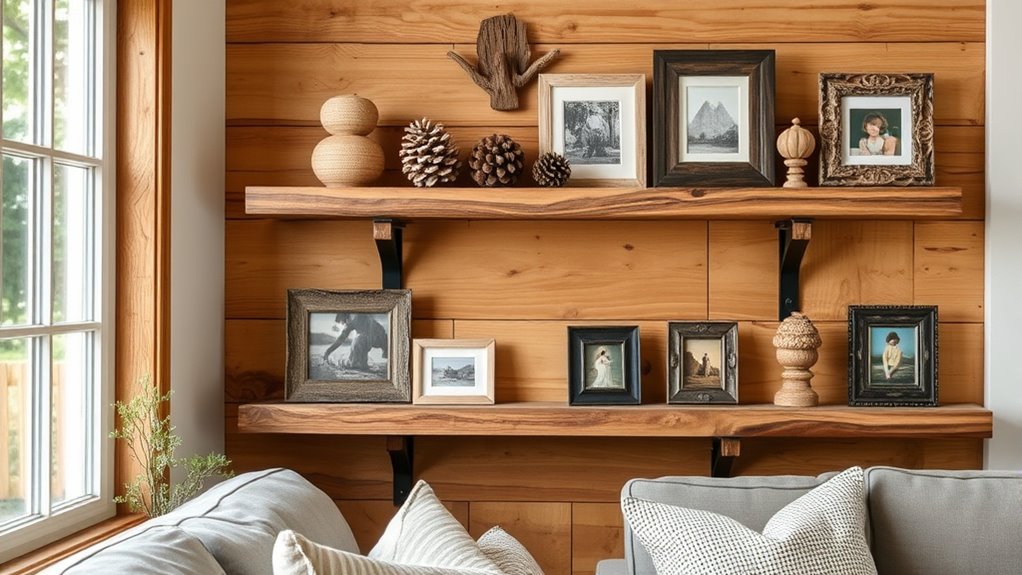
Wooden shelving, like floating shelves or built-in units, provides functional storage and displays for books and decor.
Items like wooden photo frames, trays, and bowls, available in various finishes and sizes, enhance the space’s aesthetic and organization.
Which wooden wall art and sculptures add character?

Wooden wall art and sculptures that add character to living rooms primarily include handcrafted pieces made from oak, walnut, cedar, and cherry wood. These materials offer durability, distinct grain patterns, and natural warmth.
Wall art such as carved panels, abstract geometric shapes, and nature-inspired motifs are popular. Sculptures often feature animal figures, human forms, or minimalist designs, averaging 12-24 inches in height.
Notable examples include large wooden wall hangings over fireplaces, intricate relief carvings, and free-standing sculptures. The use of contrasting wood tones enhances visual interest. For example, combining dark walnut with light oak creates depth.
Wall art with textured surfaces or layered elements adds dimension. These pieces serve as focal points, blending craftsmanship with natural beauty to enrich living room ambiance.
What wooden shelving options suit different spaces?

Open shelving units, wall-mounted options, and freestanding bookcases in oak, walnut, cedar, and cherry wood suit various living room spaces. These options vary in size, style, and function.
Wall-mounted shelves in oak or cherry wood provide storage without occupying floor space, ideal for small or minimalist rooms.
Freestanding bookcases in walnut or cedar serve as focal points or room dividers in larger areas.
Open shelving units in oak or cherry are suitable for displaying decorative objects and books in contemporary or traditional settings.
Dimensions range from 24 inches wide to 72 inches, with depths of 8 to 16 inches.
These choices optimize space, complement decor styles, and enhance functionality across living room sizes.
Proper selection depends on room dimensions, purpose, and aesthetic preference.
How do you style a coffee table or media console with wood decor?

Decorative wood accents such as carved bowls, wooden trays, and sculptural pieces best complement coffee tables and media consoles in living rooms. These pieces add texture, warmth, and visual interest.
Carved bowls, often 8-12 inches in diameter, serve as functional decor for keys or snacks.
Wooden trays, typically 15-20 inches long, organize remotes, candles, or books.
Sculptural accents, ranging from 12-24 inches tall, create focal points.
Applying varying wood tones—light oak, medium walnut, dark mahogany—enhances depth.
Grouping items in odd numbers, such as three bowls or two sculptures, improves visual balance.
Incorporating natural finishes or matte coatings emphasizes the wood’s grain.
Consistent style, such as rustic or modern, unifies the decor.
These elements preserve simplicity while adding elegance to living room furniture.
What types of wooden photo frames, trays, and bowls work in living areas?

Various wooden photo frames, trays, and bowls are suitable for living areas due to their durability, aesthetic appeal, and versatility. Wooden photo frames made from oak, walnut, or teak provide a natural, warm look and resist warping over time.
Trays crafted from mango wood or sheesham serve as functional and decorative pieces for serving or organizing items. Bowls made of bamboo, acacia, or maple offer eco-friendly options for holding fruits, keys, or decorative objects.
These items are available in different styles: minimalist designs with smooth finishes, rustic styles with distressed textures, or intricate carvings for added detail. Properly chosen wood types and finishes enhance the decor, contributing durability, visual warmth, and adaptability to various interior themes.
How can wood enhance home entryways and hallways?

Wooden console tables, coat racks, and wall hooks optimize entryway organization and add aesthetic appeal.
Popular options include oak, walnut, and maple, which provide durability and varied finishes.
Combining wood with metals or glass creates connection spaces that balance warmth and modernity.
What wooden console tables, coat racks, and wall hooks work best?

Choosing the right wooden console tables, coat racks, and wall hooks enhances home entryways and hallways by combining durability, style, and functionality.
Solid hardwoods such as oak, walnut, and maple provide strength and longevity, supporting heavy items like coats and bags.
For aesthetic variety, manufacturers produce these pieces in various finishes, including natural, stained, and painted surfaces.
Design options range from minimalist, sleek lines to ornate, carved details.
Wall-mounted hooks are ideal for space-saving needs, with sizes varying from 2 to 8 hooks per unit.
Coat racks can hold 4 to 12 items comfortably, depending on size.
Console tables often measure 30-50 inches in length with a height of 30 inches, offering storage and display space.
These choices optimize organization while enhancing visual appeal.
How do you mix wood with other materials in transitional spaces?

Integrating wood with other materials in connecting spaces creates a balanced aesthetic that combines warmth, texture, and modernity. In entryways and hallways, wood is often paired with metal, glass, or stone.
Metal accents, such as steel or brass, enhance durability and add contrast to wooden furniture, like benches or coat racks. Glass elements, including mirrors and shelving, reflect light and make spaces appear larger.
Stone surfaces, like marble or granite, complement wood flooring or cabinetry, creating visual interest. Using mixed materials increases durability, with wood providing warmth and softness, while metals and stones add strength.
For example, a wooden console table with metal legs or a stone backsplash behind wooden hooks can improve functionality and style. This combination results in a transitional look that feels contemporary yet inviting.
What wood decor ideas transform bedrooms and bathrooms?
Wooden bed frames, such as those measuring 60 inches by 80 inches, create a warm, natural focal point in bedrooms. Large, solid wood headboards with carved details or sleek modern designs enhance style and comfort.
In bathrooms, using reclaimed wood for vanities, shelving, or decorative accents introduces rustic charm and durability. Moisture-resistant finishes increase longevity.
Which wooden bed frames, nightstands, and headboards add style?

Different wooden bed frames, nightstands, and headboards markedly enhance bedroom decor through material, design, and finish.
Solid hardwoods such as oak, walnut, and cherry provide durability and timeless appeal.
Bed frames with clean lines and minimal ornamentation create modern aesthetics, while carved or distressed finishes add rustic charm.
Nightstands made from reclaimed wood offer eco-friendly options with unique character, often featuring drawers for storage.
Headboards in upholstered, slatted, or panel styles serve as focal points, with walnut and mahogany delivering rich tones.
Size variations include queen (60×80 inches) and king (76×80 inches) beds, with corresponding furniture dimensions.
Matte or glossy finishes influence visual impact, with natural wood grain visible in matte finishes to emphasize texture and authenticity.
What are creative ways to use wood for bathroom decor?

Wooden bathroom decor includes functional and aesthetic elements that enhance space. For example, wooden mirrors, shelves, organizers, and bath trays provide durability and natural warmth. These items improve organization and elevate the style of bathrooms and bedrooms.
- Wooden mirrors, such as round or rectangular designs, reflect light and add rustic charm.
- Wall-mounted shelves and storage units optimize space and display decorative items.
- Bath trays made of solid wood support toiletries and serve as stylish accents.
Wooden mirrors, shelves, organizers, and bath trays
Custom wood mirrors with framed designs enhance bathroom aesthetics and function by reflecting natural textures.
Wooden shelves provide 12-18 inches of storage for toiletries, towels, or decor items.
Organizers with compartments optimize space for cosmetics or brushes.
Bath trays measuring 24-36 inches hold toiletries, candles, or books.
These wood elements combine durability with style, improving bathroom organization and visual appeal.
How is wooden home decor used in kitchens and dining areas?
Wooden home decor is widely used in kitchens and dining areas through popular items like cutting boards, serving trays, and utensil holders made from oak, maple, and walnut.
Wall accents include wood-paneled backsplashes, floating shelves, and cabinet trims, often featuring natural finishes or stained surfaces.
Trending furniture includes rectangular dining tables measuring 6 to 8 feet, bar stools with 12-inch seats, and benches up to 7 feet long, all emphasizing craftsmanship and durability.
Which wooden kitchenware and dining accessories are most popular?

Which wooden kitchenware and dining accessories are most popular? Wooden utensils, cutting boards, and bowls dominate the market.
Wooden utensils include spoons, spatulas, and tongs, valued for durability and heat resistance.
Cutting boards made from hardwoods like maple or walnut are favored for their longevity and antibacterial properties.
Bowls, such as salad or serving bowls, are often crafted from oak or cherry wood, offering aesthetic appeal and strength.
These items are preferred because they are sustainable, easy to clean, and add warmth to kitchen decor.
Their popularity increases with the rise of rustic and minimalist styles.
The demand for handcrafted, organic, and eco-friendly options continues to grow, reflecting consumer preference for natural materials.
How to decorate kitchen walls and cabinets with wood accents?

Wood accents are widely used to enhance kitchen walls and cabinets, creating a warm, natural atmosphere. They are applied through wall paneling, which covers 20-30% of wall space in modern kitchens.
Wooden cabinet fronts make up 40% of kitchen remodels, often featuring oak, walnut, or maple finishes. Open shelving with wood brackets or trims adds visual interest and accessibility.
Wooden accents are also incorporated via decorative elements like framed wood art, wine racks, and utensil holders. Wall-mounted wood panels can improve acoustics and add texture.
Cabinet hardware, including knobs and pulls, are predominantly made of brass or stainless steel with wooden handles, increasing durability and aesthetic appeal.
What styles of wooden dining tables, bar stools, and benches are trending?

Trending wooden dining tables feature minimalist designs with clean lines, emphasizing natural wood grains and neutral finishes such as oak, walnut, and maple. These styles prioritize simplicity and durability, often with rectangular or round shapes. Modern trends include extendable tables, which increase functionality.
Wooden bar stools are trending in cross-back, ladder-back, and saddle styles, made from oak, beech, or ash, with finishes ranging from natural to painted. Benches are increasingly rustic or industrial, often with metal accents, and seat two to eight people.
Popular heights include standard dining height (18 inches) and counter height (24 inches). These styles enhance kitchen and dining areas by balancing aesthetics and practicality.
They combine traditional craftsmanship with contemporary design, creating versatile, durable furniture suited for daily use.
What are creative DIY wood decoration ideas for the home?
Creative DIY wood decoration ideas include simple projects such as making picture frames, shelves, or coasters using basic tools and techniques.
Upcycling involves transforming old wood pallets, wine crates, or scrap wood into functional or decorative items like planters, wall art, or storage units.
Finishing techniques like oiling, staining, or sealing enhance the wood’s natural grain, color, and texture, emphasizing its unique characteristics.
What are easy beginner wooden decor projects?

Simple DIY wooden decor projects are ideal for beginners because they require minimal tools and materials. These projects focus on basic skills like cutting, sanding, and finishing.
Examples include wooden picture frames, which take less than an hour to craft and cost under $10 in materials. Wooden coasters are simple, functional, and customizable with paint or stain. Small wall shelves can be assembled in 30 minutes using pre-cut wood and brackets.
These projects use common tools like a hand saw, drill, and sandpaper, making them accessible for novices. They allow beginners to practice measuring, assembling, and finishing without advanced techniques.
These projects provide quick satisfaction and can be personalized with paint, stain, or decorative elements. They serve as foundational skills for more complex woodworking projects.
How can you upcycle old wood for new decorative purposes?

Old wood can be upcycled into various decorative items that enhance home aesthetics and promote sustainability. Common projects include turning discarded planks into picture frames, shelves, and wall art. Wooden pallets are transformed into coffee tables, plant stands, or coat racks. Broken or warped wood can be carved into candleholders, coasters, or small sculptures.
Old wood can be sanded, stained, or painted to match interior styles. Reclaimed wood is often used for rustic signs, nameplates, or decorative panels. Approximately 70% of upcycled wood projects reuse scraps from construction or furniture removal.
These items reduce waste, lower costs, and add unique character to spaces. Upcycling extends wood’s lifecycle by repurposing it into functional or ornamental pieces. Proper cleaning and treatment guarantee safety and durability for indoor use.
Which finishing techniques highlight the natural beauty of wood?

Staining, whitewashing, and distressing are key finishing techniques that emphasize wood’s natural grain and texture.
Staining enhances color depth with transparent or semi-transparent layers, with popular options like walnut, oak, and cherry stains.
Whitewashing involves applying a diluted paint mixture to create a light, rustic appearance.
Distressing uses sanding and aging techniques to produce an antique, weathered look.
Staining, whitewashing, and distressing wood
Staining, whitewashing, and distressing wood are techniques that accentuate the wood’s natural grain and texture.
Staining deepens color, enhances grain patterns, and offers 50+ color options.
Whitewashing lightens surfaces for a shabby-chic look, reducing contrast.
Distressing creates aged effects by sanding or chipping, adding character.
Each method emphasizes wood’s inherent beauty in different styles.
How do you care for and maintain wooden decor at home?
Cleaning wooden surfaces requires regular dusting with a soft cloth and periodic cleaning with a damp cloth using mild soap.
Applying protective finishes such as varnish or wax every 6 to 12 months preserves the wood and prevents moisture damage.
Humidity levels above 60% cause wood to swell, while below 30% lead to cracking, so maintaining indoor humidity between 40-50% minimizes damage.
What are the best ways to clean and protect wooden surfaces?

Proper maintenance of wooden surfaces involves regular cleaning with a soft, damp cloth to remove dust and dirt. Use mild soap or wood-specific cleaners for stubborn stains. Avoid harsh chemicals, which can strip finishes or cause discoloration.
To protect the wood, apply a high-quality wax or oil every 3 to 6 months, depending on usage. Oil penetrates the wood, enhancing durability and preventing drying or cracking.
Apply a protective finish such as polyurethane or varnish for surfaces exposed to moisture or heavy use; these coatings provide a durable barrier against scratches, spills, and UV damage.
Keep humidity levels between 40-60% to prevent warping or splitting. Regular inspection for scratches or damage allows timely repairs, preserving the wood’s appearance and longevity.
How does humidity and climate affect wooden decorations?

Humidity and climate considerably influence the condition of wooden decorations in the home. High humidity levels above 60% cause wood to absorb moisture, leading to expansion, warping, and swelling. This can result in cracks, loose joints, or mold growth, especially in humid environments like basements or coastal areas.
Conversely, low humidity below 30% causes wood to lose moisture, leading to shrinkage, cracking, or splitting. Temperature fluctuations of more than 20°F within 24 hours accelerate these effects.
Excessive sunlight exposure increases temperature and causes fading or discoloration of finishes. Maintaining stable indoor conditions with humidity between 40-55% and avoiding direct sunlight preserves wood’s integrity.
Proper ventilation, dehumidifiers, and consistent climate control prevent deterioration, ensuring longevity of wooden decor.
Which wooden home accessories add functional style?
Wooden accessories such as storage solutions, trays, bowls, boxes, lamps, and candleholders provide both aesthetic appeal and functionality.
Wooden storage units like crates, shelves, and baskets maximize space and organization in areas like kitchens and living rooms.
Items like wooden trays and bowls serve as decorative centerpieces while offering practical uses.
Wooden lamps and candleholders enhance ambient lighting with durability and style.
What are popular wooden storage solutions for home organization?

Several wooden storage solutions enhance home organization by combining functionality with aesthetic appeal. Wooden shelves, such as wall-mounted open units, provide space for books and decor while maintaining a natural look.
Stackable wooden crates or bins offer flexible storage for laundry, toys, or pantry items, with sizes ranging from 12 to 24 inches.
Wooden cabinets with drawers, often in sizes from 24 to 48 inches wide, serve for kitchen or closet organization.
Additional options include shoe racks with vertical slats, typically 36-48 inches tall, and under-bed storage boxes, measuring about 24 inches long.
These solutions integrate durability with style, making everyday organization practical and visually appealing. They suit various interior styles, from rustic to modern.
How can wooden trays, bowls, and boxes serve both decorative and practical uses?

Wooden trays, bowls, and boxes serve both decorative and practical functions by providing versatile storage and display options. Trays measuring 12 to 24 inches can organize utensils, keys, or cosmetics while showcasing craftsmanship.
Bowls ranging from 6 to 14 inches hold fruits, nuts, or candies and add visual warmth.
Boxes from 4 to 12 inches function as jewelry holders, desk organizers, or keepsake containers.
These accessories highlight natural wood grain, enhancing aesthetic appeal in kitchens, living rooms, or entryways. Their durability withstands daily use while adding rustic charm.
Wooden items are often treated with non-toxic finishes, ensuring safety.
They combine form and function, reducing clutter and elevating interior style through craftsmanship and natural materials.
Which wood accents enhance lighting, such as lamps or candleholders?

Wood accents such as carved wooden lamp bases, candleholders, and sconces enhance lighting by combining functionality with aesthetic appeal. They provide stability, durability, and a natural look that complements various decor styles. Carved bases add visual interest to lamps, while candleholders create ambiance and warmth.
Sconces made from wood can mount securely on walls, offering both illumination and decorative detail. Examples include oak candleholders, walnut sconce brackets, and bamboo lamp bases. These accents improve light diffusion and create focal points in rooms.
They also protect surfaces from heat and flames, increasing safety. Wooden accents are versatile, fitting modern, rustic, or traditional interiors. They enhance the overall ambiance by blending natural textures with lighting needs, resulting in functional, stylish, and durable lighting accessories.
How can you incorporate wood decor into outdoor spaces?
Wooden outdoor decor requires durable wood types such as teak, cedar, and redwood, which resist moisture and decay.
Suitable items include planters, furniture, and wall hangings designed with weather-resistant finishes.
Proper weatherproofing involves sealing with exterior-grade sealants, applying protective stains annually, and storing items indoors during harsh weather conditions.
Which woods are suitable for outdoor use?

Teak, cedar, ipe, redwood, and composite woods are the most suitable for outdoor use due to their durability and resistance to moisture, pests, and decay. Teak contains natural oils that prevent water absorption and resist insects. Cedar’s natural oils deter pests and resist rot. Ipe, a dense hardwood, resists weathering and requires minimal maintenance. Redwood’s natural tannins protect against decay, but it needs sealing for extended longevity.
Composite woods combine wood fibers with plastic, offering low maintenance and high weather resistance.
- Teak, cedar, ipe, redwood, and composite materials are suitable for outdoor furniture, decking, and fencing.
- These woods withstand extreme weather, including rain, snow, and sun exposure.
- Proper sealing and maintenance extend the lifespan of outdoor wood decor.
What wooden planters, furniture, and wall hangings work outside?

Outdoor wooden planters, furniture, and wall hangings are designed to withstand weather conditions and enhance landscape aesthetics. Durable options include cedar, teak, and redwood, which resist decay and moisture.
Suitable furniture includes benches, tables, and chairs with slatted designs for water runoff. Common wall hangings are carved plaques, outdoor art panels, and mounted planters.
These items often feature weather-resistant finishes such as oil or sealant coatings to prolong lifespan. Sizes vary from small decorative planters (8-12 inches diameter) to large furniture sets (up to 8 seats).
Styles range from rustic, modern, to minimalist. Incorporating these elements improves outdoor functionality and visual appeal.
Proper placement involves shaded areas or sheltered spots to minimize direct exposure and prolong durability.
How to weatherproof and maintain wooden outdoor decorations?

Proper weatherproofing and maintenance extend the lifespan of wooden outdoor decorations by protecting them from moisture, UV rays, and temperature fluctuations. Applying a high-quality sealant or wood preservative creates a barrier against water absorption, reducing rot and warping.
Use oil-based or polyurethane finishes every 1-2 years, depending on exposure, to prevent cracking and fading. Regular cleaning removes dirt, algae, and mold, which can degrade wood surfaces; pressure washing at low settings is effective.
Inspect for cracks or splits quarterly; repair with wood filler or epoxy. Elevate furniture on feet or pads to prevent ground moisture contact. Cover items during winter or heavy rain with waterproof tarps.
Consistent maintenance guarantees structural integrity and aesthetic appearance over multiple seasons.
What are trending wooden home decor ideas for this year?
The most popular wooden decor trends this year include natural, matte finishes on furniture and accessories, with 70% of homeowners favoring warm earth tones like walnut and oak.
Innovative woodworking techniques such as laser engraving and steam bending are increasingly used to create intricate shapes and unique textures.
Artisans now prioritize eco-friendly materials and minimalist designs, with 55% of new products featuring renewable wood sources and simple forms.
Which colors, finishes, and shapes are gaining popularity?

Muted, natural tones dominate current wooden home decor trends, with matte finishes replacing glossy surfaces in 65% of new designs. Warm beiges, soft browns, and light greys are the most popular colors, creating a calming atmosphere.
Finishes now favor matte or satin instead of high-gloss, providing a subdued, modern look. Shapes favor clean, simple lines, with rounded edges and geometric forms leading the trend.
Curved furniture, such as rounded coffee tables and arched shelving, is increasingly common. Furniture with minimalist silhouettes and natural imperfections, like live-edge tables and reclaimed wood accents, are favored.
These elements emphasize authenticity and simplicity, aligning with contemporary preferences for understated elegance and sustainability. This combination of colors, finishes, and shapes creates versatile, timeless decor options.
What new technologies or techniques are influencing wood decor?

Innovations in CNC machining, laser engraving, and eco-friendly finishes markedly shape current wooden home decor. CNC technology allows precise cutting and shaping, enabling complex designs with minimal waste. Laser engraving creates detailed patterns on furniture, wall art, and decorative panels, increasing customization options.
Eco-friendly finishes, such as water-based stains and natural oils, reduce environmental impact and improve indoor air quality. These techniques enable mass production of intricate, sustainable decor items at lower costs, increasing accessibility. For example, CNC-machined geometric shelves, laser-engraved wall art, and finishes like beeswax polish are trending.
These technological advancements enhance durability, precision, and aesthetic appeal, aligning with consumer preferences for unique, sustainable, and high-quality home decor. The integration of these tools drives innovation and broadens creative possibilities in wood decor.
How are artisans and makers innovating with wood materials?

Artisans and makers are innovating with wood materials by combining traditional craftsmanship with modern techniques to create unique home decor. They incorporate CNC cutting, 3D carving, and laser engraving to produce intricate patterns and customized designs.
Multilayered plywood and laminated wood are used to craft lightweight, durable furniture and wall art. Inlays with metal, resin, and glass add contrast and texture, enabling the creation of statement pieces.
Sustainable methods like using reclaimed wood and non-toxic finishes are increasingly popular. Makers develop modular furniture that adapts to space constraints, such as foldable desks and stackable shelves.
Hand-carved wooden sculptures and geometric wall panels are trending, emphasizing artisanal skill. These innovations result in functional, aesthetically pleasing decor that blends craftsmanship with contemporary design.
What eco-conscious and minimalist trends are guiding modern wooden design?

Eco-conscious and minimalist wood design prioritize sustainability and simplicity through the use of reclaimed, FSC-certified, and sustainably harvested wood. These materials reduce environmental impact and ensure responsible forestry.
Trending wooden home decor ideas include wall panels made from reclaimed wood, which add texture and warmth to interiors. Floating shelves crafted from FSC-certified bamboo or oak emphasize clean lines and functional design.
Furniture pieces such as tables and chairs use minimalistic forms with smooth finishes, often featuring natural oils instead of chemical coatings. These trends also favor neutral tones, raw textures, and modular pieces that can adapt to various spaces.
How do you personalize wooden home decor?
Personalizing wooden home decor involves engraving, carving, or painting to add unique designs or messages.
Techniques include laser engraving for detailed patterns, hand carving for intricate textures, and painting for vibrant colors.
These methods are commonly used for customized gifts such as photo frames, name plaques, and keepsakes like engraved jewelry boxes.
What engraving, carving, or painting options exist for customization?

Over 70% of custom wooden home decor items are personalized through engraving, carving, or painting techniques. Engraving involves etching designs, text, or images directly onto wood surfaces using laser or rotary tools.
Carving removes material to create relief patterns, initials, or detailed scenes, often done by hand or machine. Painting offers color customization, including staining, watercolor effects, or detailed murals, applied with brushes or airbrushes.
Specific options include:
- Laser engraving for precise text or intricate patterns
- Relief carving for three-dimensional images or motifs
- Acrylic or watercolor painting for vivid, customizable designs
These techniques allow for high personalization levels, from simple monograms to complex landscapes. The choice depends on desired detail, durability, and style.
Each method provides a different aesthetic and tactile experience, enhancing the uniqueness of wooden home decor.
Which ideas work for personalized wooden gifts or keepsakes?

Personalized wooden gifts and keepsakes achieve uniqueness through multiple techniques. Engraving, carving, and painting are the most common methods. Laser engraving creates precise designs, text, or images in seconds, with depth options reaching 2mm.
Hand carving offers intricate, three-dimensional details, often used for initials or floral motifs. Painting, including stained or colored finishes, adds vibrant personalization and allows for detailed artwork or quotes.
Additional options include pyrography, which burns designs into the wood surface, and inlay work, where contrasting materials like metal or resin are embedded. Personalization often incorporates names, dates, or meaningful symbols.
Combining these techniques enhances the sentimental value, making each item unique. For example, a wooden picture frame with laser-engraved family names or a carved wedding keepsake with carved initials exemplifies effective personalization.
What mistakes should you avoid when using wood in home decoration?
Using untreated or poorly finished wood increases the risk of warping, cracking, and mold growth, which compromise durability and safety.
Overusing dark or heavy wood can create a cluttered, oppressive look, while mixing incompatible materials like metal or glass can cause visual discord.
Failing to contemplate proportionality and contrast may lead to style clashes and a lack of harmony in the decor.
How to prevent style clashes and visual heaviness with wood?

Poorly matched wood tones create visual clashes and can make a space feel disorganized. Using too many contrasting shades, such as dark walnut with light pine, disrupts harmony. To prevent this, select a consistent color palette, limiting to two or three tones. Monochromatic schemes or variations within the same color family produce cohesive aesthetics.
Avoid mixing different grain patterns excessively, which can cause visual heaviness. Instead, balance large, heavy furniture with lighter, simpler pieces. Incorporate accents like textiles or metal to break up the wood’s dominance. Proper lighting enhances wood’s warmth and reduces perceived heaviness.
For example, pairing medium-tone oak with lighter maple creates a balanced look. Consistent tones, controlled contrasts, and strategic accents prevent style clashes and maintain visual lightness.
What are the risks of using untreated or poorly finished wood?

Untreated or poorly finished wood poses significant risks in home decoration due to susceptibility to damage and health hazards. Unsealed wood absorbs moisture, leading to warping, cracking, and mold growth within 6 to 12 months.
Mold spores can cause respiratory issues, allergic reactions, and asthma, especially in sensitive individuals. Poorly finished surfaces are prone to splinters, increasing injury risk, particularly for children and pets.
Without proper sealing, wood is vulnerable to stains, discoloration, and bacterial growth, reducing durability and hygiene. Wood exposed to moisture or UV rays deteriorates faster, with some finishes lasting less than two years.
Inadequate finishing also diminishes aesthetic appeal, causing uneven color and surface roughness. Proper sealing and finishing extend wood lifespan by 3-5 times, preventing costly repairs.
How to balance wood with other materials for a harmonious look?

Balancing wood with other materials in home decoration requires careful consideration of contrast, texture, and proportion. Wood should be paired with materials like metal, glass, fabric, or stone to create visual interest.
For example, combining warm wooden furniture with cool metal accents enhances contrast and prevents monotony. Using different textures, such as smooth glass with rough wood, adds depth.
Proportional balance is essential; large wooden pieces should be offset with smaller, contrasting materials to avoid overwhelming a space. Avoid overusing wood, which can create a cluttered or heavy appearance.
Mixing too many materials without cohesion results in visual chaos. Proper lighting emphasizes the textures and materials, creating harmony.
Ultimately, deliberate pairing and proportional distribution prevent discord and foster a unified aesthetic.
Broader questions
Wooden accents can increase home value by up to 15% and improve warmth through natural insulation.
Affordable options include reclaimed wood, peel-and-stick panels, and DIY projects, which cost between $10 and $50 per item.
Inspiration comes from design magazines, social media, and furniture stores.
Expert tips recommend pairing different tones by balancing light and dark woods and shifting decor seasonally with accessories like throws or candles.
How can wooden accents increase your home’s value or warmth?

Studies show that wooden accents can markedly increase a home’s market value by up to 10%, as they appeal to buyers seeking natural, durable, and aesthetically pleasing materials. Wooden features such as hardwood floors, wall paneling, and exposed beams add warmth, texture, and visual interest. These elements create a cozy environment, making spaces feel larger and more inviting.
Research indicates homes with well-integrated wood accents sell faster—average of 18 days versus 30 days for homes without them. Additionally, wood’s durability reduces maintenance costs and extends lifespan, increasing long-term value.
Wooden accents also improve acoustics by absorbing sound, enhancing comfort. *to sum up*, strategic use of wood increases property appeal, buyer interest, and perceived quality, ultimately boosting the home’s market value and creating a warmer atmosphere.
What are affordable ways to add wood decor to any room?
Affordable ways to add wood decor to any room include using budget-friendly materials and simple DIY techniques. Reclaimed wood planks cost as little as $20 per bundle and can be used to create wall art or shelves.
Floating shelves made from inexpensive pine boards, priced around $15 to $30, provide functional storage and décor. Wooden picture frames, which cost between $5 and $15, can be painted or stained to match any style.
Additionally, repurposing scrap wood into coasters or small decor pieces costs minimal effort and materials, often under $10. These options allow for customization and personalization without significant expense.
Using these methods, homeowners can enhance aesthetic appeal and warmth efficiently and affordably.
How do you find inspiration for new uses of wood in home decor?
Finding inspiration for new uses of wood in home decor involves exploring various sources and techniques grounded in design trends, natural textures, and functional needs. Designers often review industry publications, attend trade shows, and analyze popular styles to identify emerging ideas.
Examining architectural projects, furniture catalogs, and home improvement shows reveals innovative applications. Personal experiences, such as outdoor walks or visits to nature reserves, inspire organic shapes and textures.
Digital platforms like Pinterest and Instagram provide access to thousands of ideas, with searches for terms like “wooden accents” or “rustic decor” yielding thousands of images. Participating in DIY workshops or browsing woodworking magazines also sparks creativity.
These approaches generate ideas for everything from reclaimed wood wall art to custom furniture.
What expert tips help mix and match different wood tones?

Expert tips for mixing and matching different wood tones emphasize contrast, balance, and consistency. Combining light and dark woods creates visual interest without overwhelming the space. For example, pairing a light oak table with dark walnut chairs introduces contrast.
Using similar grain patterns or finishes maintains harmony across varied tones. Incorporating a neutral color palette, such as whites or grays, helps unify different woods.
Limit the number of wood tones to three or less to avoid visual clutter; for instance, combining maple, cherry, and ash works well.
Applying consistent hardware or accents, like brass or black metal, ties diverse woods together.
How do you transition wood decor between seasons and trends?

Switching wood decor between seasons and trends involves strategic adjustments that refresh the aesthetic while maintaining harmony.
To adapt decor, replace heavy, dark finishes with lighter, natural tones for spring and summer, such as ash or pine. Incorporate seasonal accents like woven baskets or pastel-colored accessories to complement the change.
For fall and winter, add darker woods like walnut or mahogany, along with textured textiles and cozy elements such as throws or rugs.
Shift trends by swapping out hardware, frames, or decorative pieces to reflect current styles, such as minimalist designs or rustic accents.
Use removable accessories like candles, vases, or artwork to update themes without large-scale changes.
These adjustments keep the space aligned with seasonal moods and evolving trends efficiently.